This prairie dog seems to be enjoying munching on prairie grasses in the Wichita Mountains National Wildlife Refuge. I took this photograph about an hour before sundown, hence, the long shadow.

This prairie dog seems to be enjoying munching on prairie grasses in the Wichita Mountains National Wildlife Refuge. I took this photograph about an hour before sundown, hence, the long shadow.
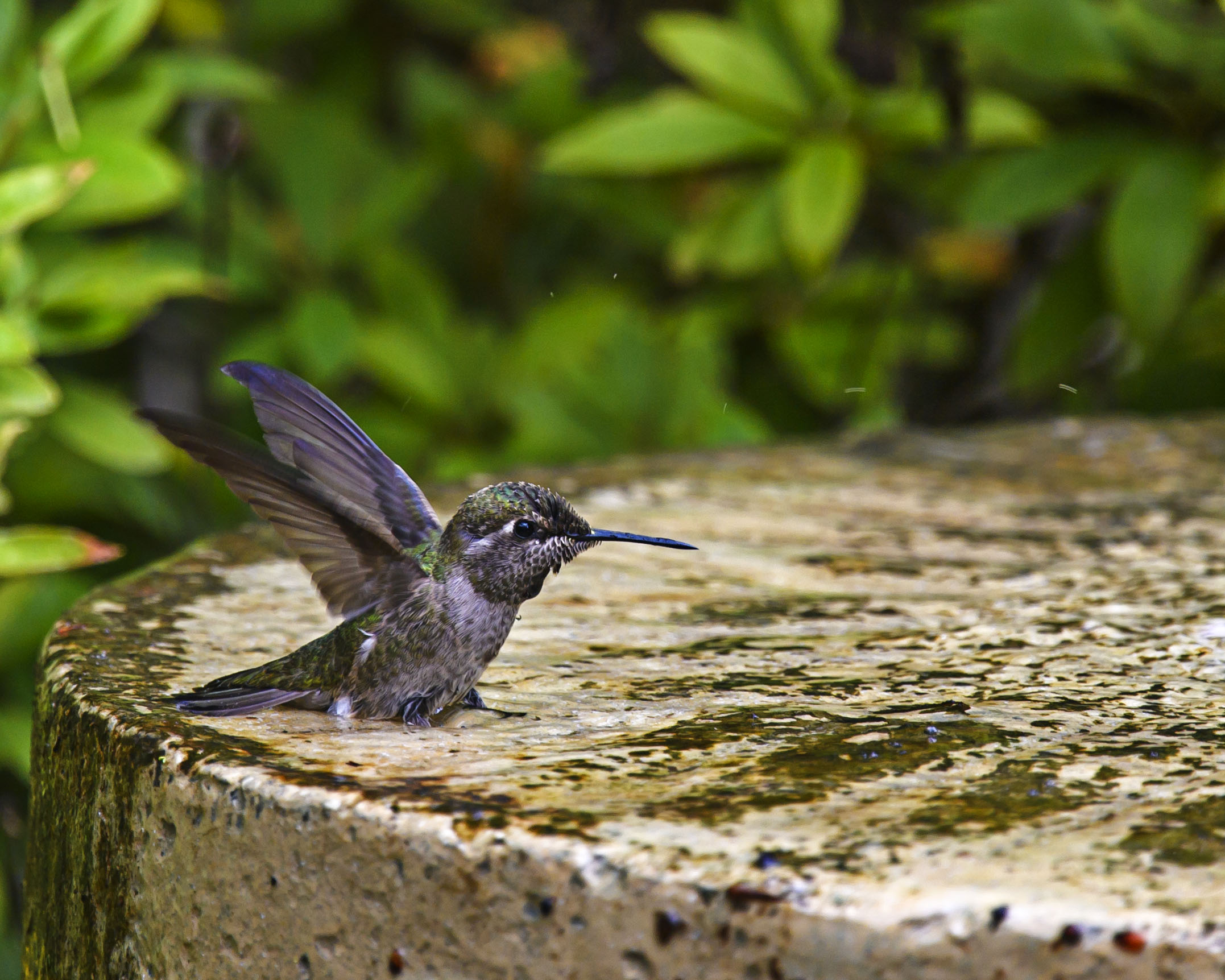
The female hummer was bathing in the fountain when I got home from the gym Sunday morning so I went out with my D5, 300mm, and 1.4x teleconverter for some flight practice. She’d been getting nectar from flowers and the yellow pollen remains on the upper part of her beak despite her bath. The other two shots were taken a couple of days ago.

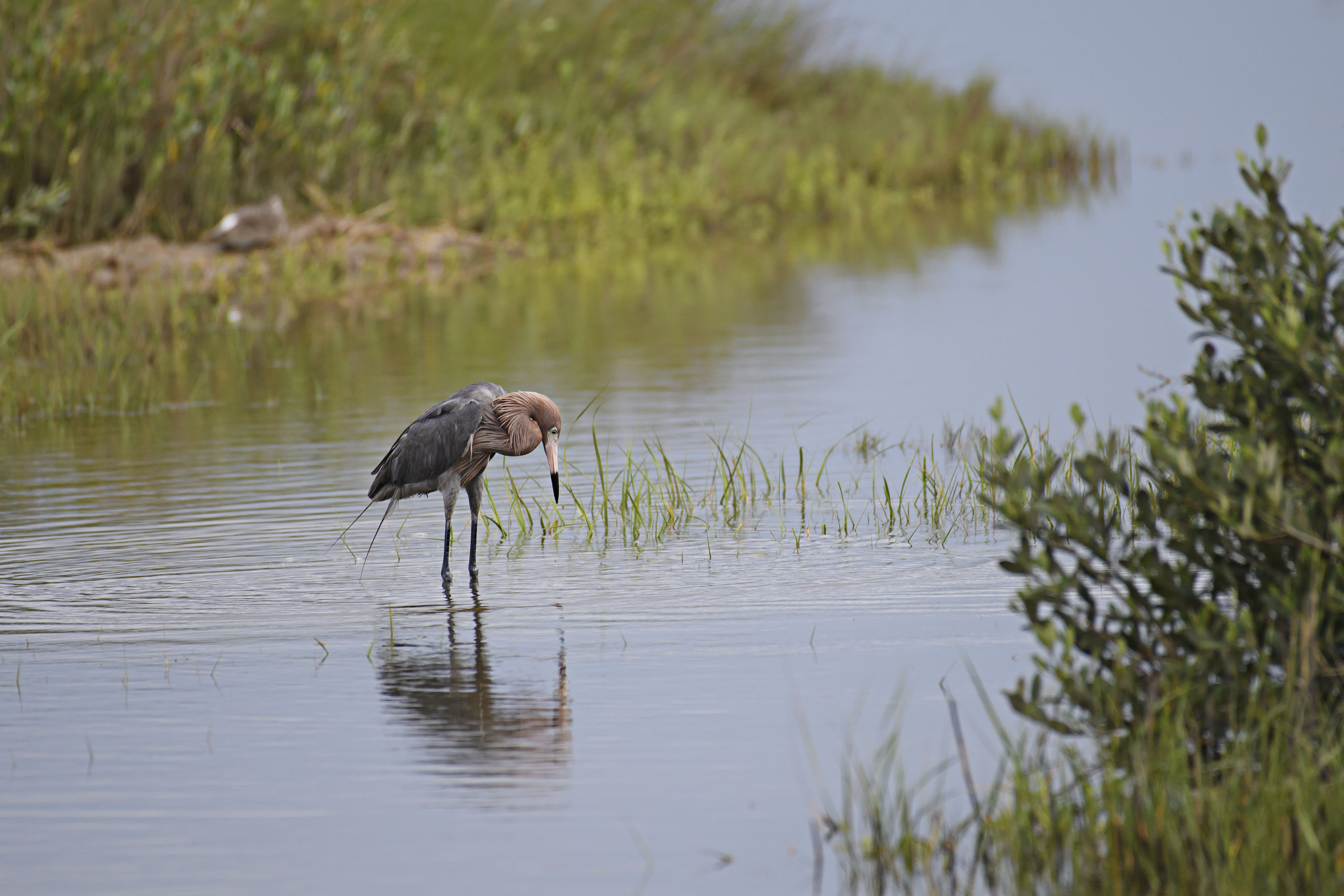
On Galveston Island, Texas, this Reddish Egret was stalking something to eat. It was the first time I had used the Nikon 200-500mm lens that I rented for the trip and I was having a time getting used to hand holding the lens. It is not nearly as beefy as Big Bertha, so it was relatively easy to hand hold but I still got many more out of focus shots than in focus. Reddish egrets are fascinating to watch when they are fishing because they are extremely animated. I missed most of the livelier shots.

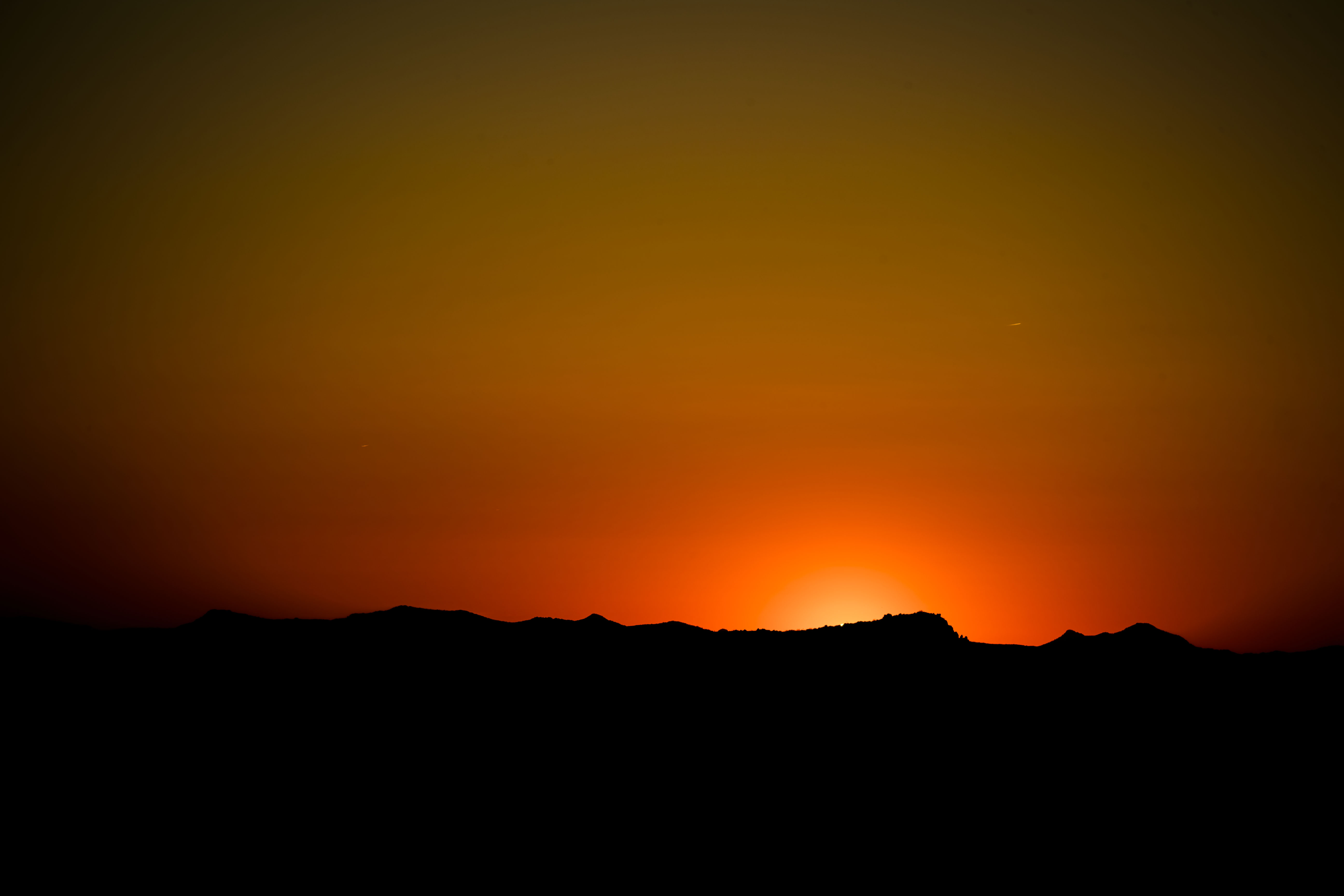
After a week of cloud filled skies, thunder storms, hail, and super cells our last couple of days in Oklahoma were cloudless. On Monday evening, we drove to
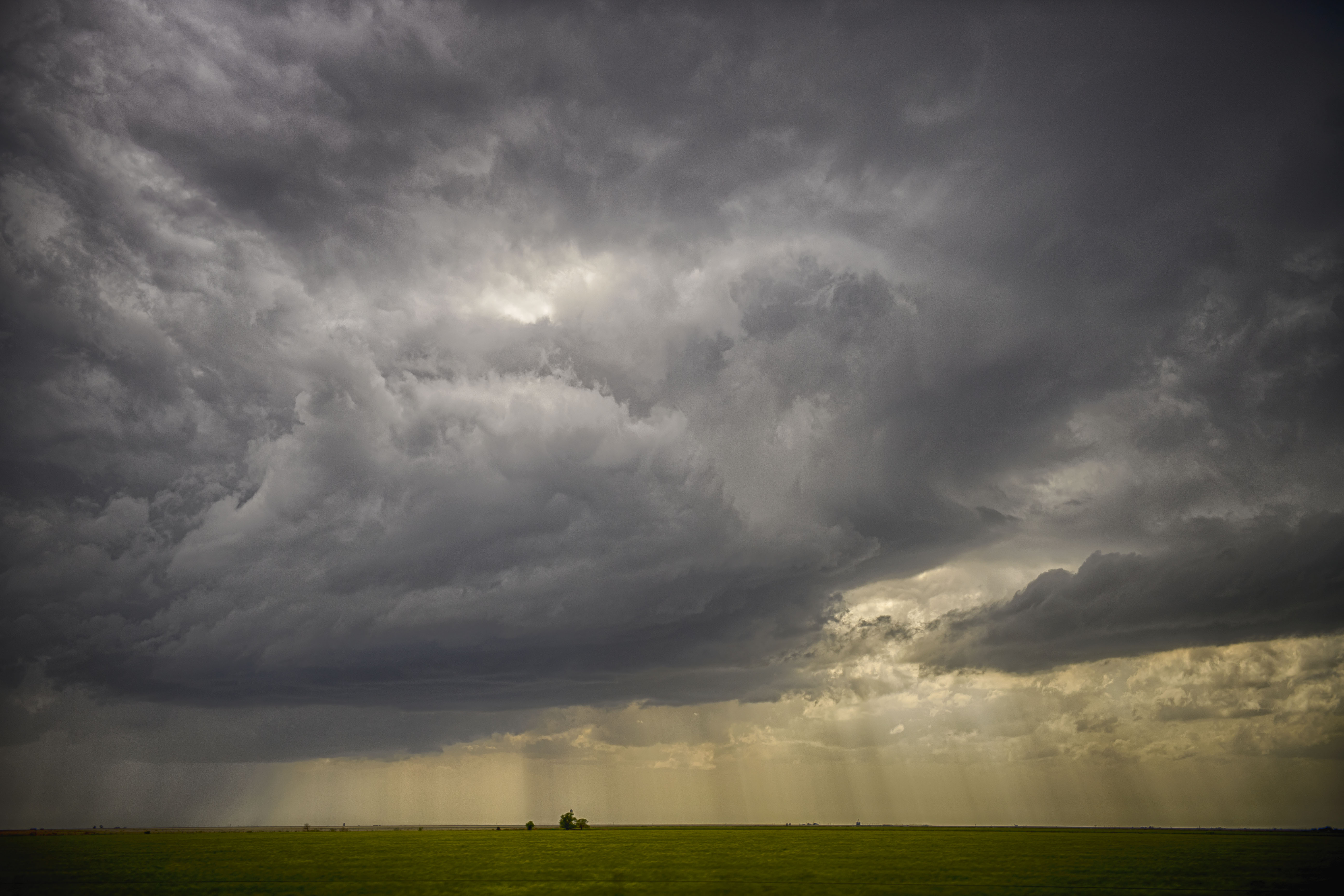
This is one of the first storms we chased on Thursday, April 28. I edited it using an HDR preset in HDR Efex Pro 2.
The commotion out on the patio caught my attention this morning as a concerned parent scrub jay squawked loudly and flitted nervously in the branches of the xylosma. There, perched on one of the shrub’s thin branchlets was a baby scrub jay, possibly out on its first foray from the nest. A hummingbird was aggressively asserting its disapproval of this new bird in the area, hovering inches away from the young bird. But, although I had already affixed the 300mm and 1.4X teleconverter to the D5 in anticipation of getting some hummingbird shots, this scenario eluded me. I did get a couple of shots of the baby jay on the branch through the open patio door. Then I watched as this little bird crash landed onto the fountain and stared at the bubble with fascination. But, when I stepped out onto the patio in the hopes of photographing its first bath, it launched itself awkwardly into the azalea behind the fountain and disappeared from sight.

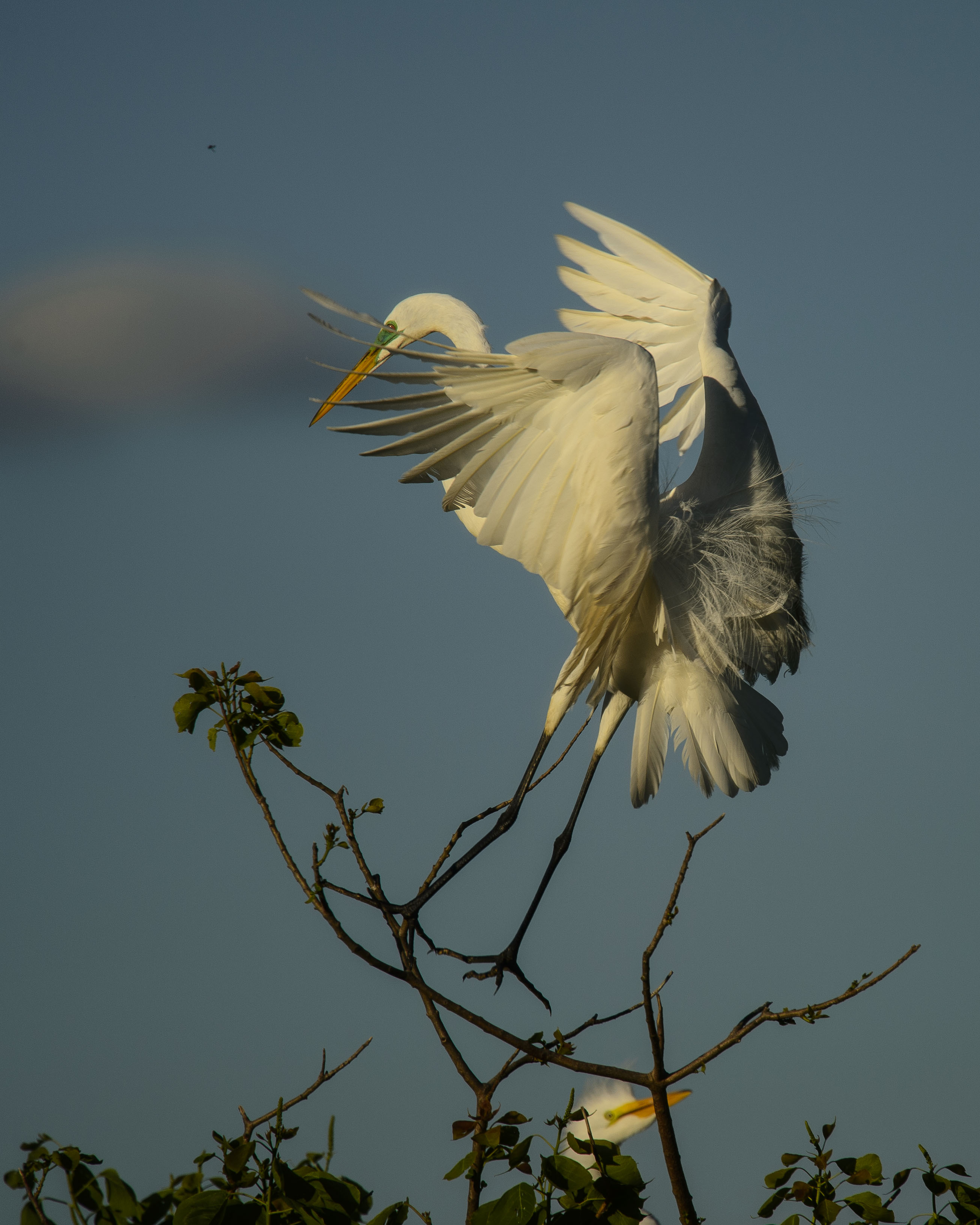
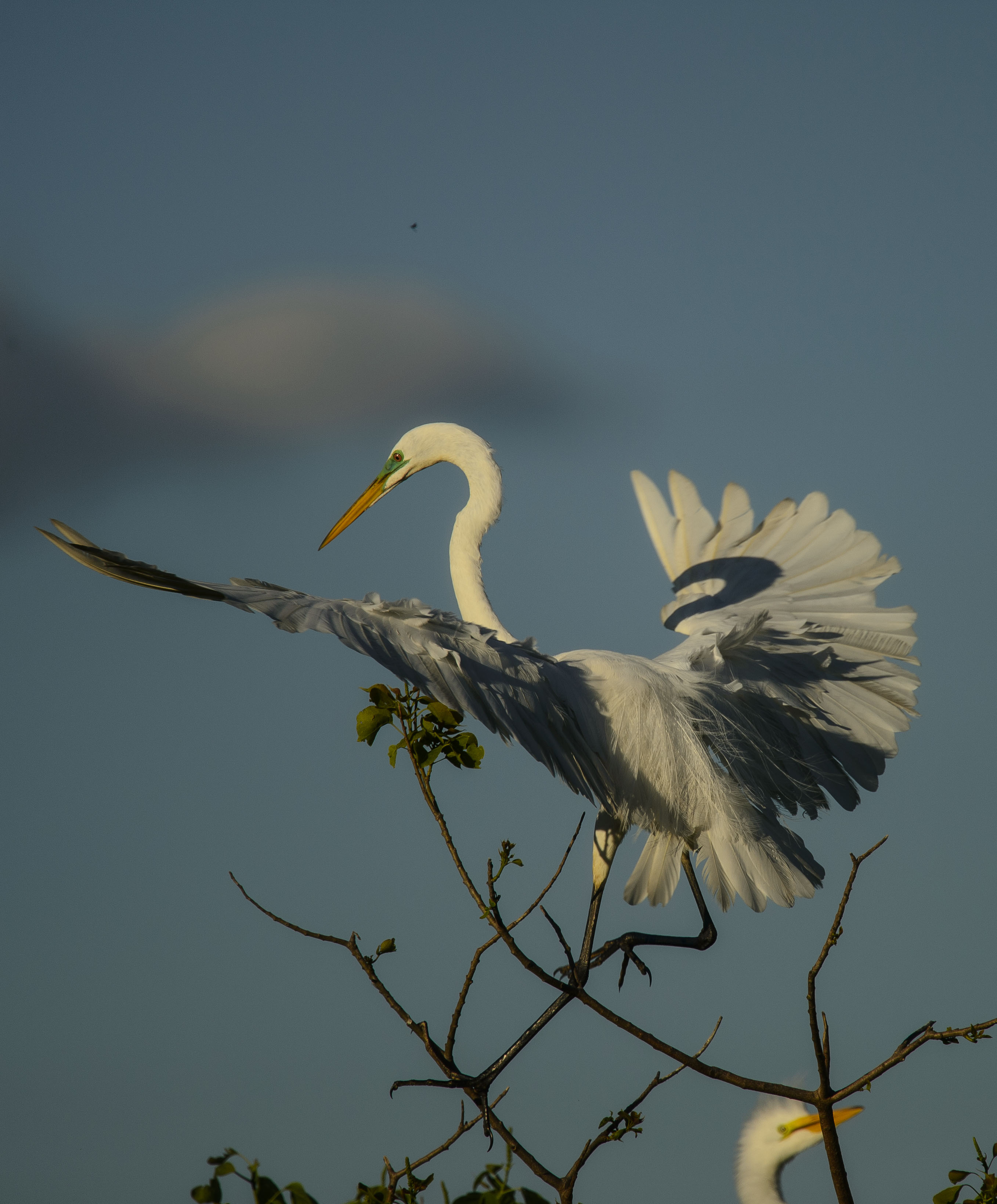
I don’t know what happened to my earlier post today but I obviously did something wrong so I’ll try again. I’m back home in California but just spent two fun weeks in Texas, Oklahoma, and Kansas photographing birds, storms, and other critters. These shots are from the Smith Oaks (no relation) Rookery on High Island, TX where Connie McNabb and I spent hours on a couple of different days photographing nesting great egrets and a few other species. The sun was setting when I took these shots of a Great Egret coming in for a landing. I took them with my Nikon Df (I took only 25 shots using the Df on this trip) and my 300mm lens with the 1.7X teleconverter.

We’re back in Oklahoma. The storms have dissipated and the skies are blue and almost cloudless. Our storm chasing is over for this trip. We drove 529 miles on Monday from Uvalde, Texas to Lawton, Oklahoma. When we arrived in Lawton, OK about 6:30PM we drove to the Wichita Mountains National Wildlife Refuge for sunset photos. As we drove through the refuge, home to herds of bison and longhorns , we came across some prairie dog colonies. The prairie dogs seemed quite undisturbed by human presence as they hopped around the meadow and to the edge of the parking lot to forage on the grasses, looking at us curiously, then ignoring us completely. One particularly shy prairie puppy (?) whose burrow was dug at the edge of the asphalt, kept poking his head out, looking around, and disappearing down the hole, unable to gather the courage to emerge from the safety of his burrow. That went on the entire 15 minutes of our visit. I captured him during one of his braver moments.

We traveled to the Mexican border in search of storms and found a few promising ones to follow in and around Del Rio, TX near the Lake Amistad Dam International Crossing between Mexico and the United States. There were several storms that we followed on Sunday but none produced the hoped for tornado. The clouds formed into wall clouds, developed briefly into supercells, then dissipated into heavy rains, hail, and thunderstorms. We’d drive a few miles and pull over to watch as the storms tantalized, then fizzled. We all came prepared with lightning triggers to use during daylight storms. The lightning triggers anticipate the lightning strike and fire the camera’s shutter release. None of us could get our triggers to function properly so we resorted to standing with our cameras focused on a probable lightning strike, then firing in the hopes of capturing a lightning strike. I took 173 shots in bursts of five or so shots over a 3 minute period and managed to capture two strikes out of ten or fifteen that we witnessed. No one else fared better. Here is the better of the two lightning shots I captured.

Saturday was a travel day. We drove from Ardmore, Oklahoma to Sonora, TX via Dallas/Fort Worth to drop off one of our companions who had to leave the Storm Chasing Tour due to a family emergency. Until Friday, we’d traveled with another van but on Friday we went our separate ways for a couple of days. The storms have lessened in our reasonably reachable chase area and the best chance of finding another storm before the tour ends is in southwest Texas. I took no Nikon photographs on Saturday. So, I had a chance to look back at some of the photographs I took at the Smith Oaks Rookery on High Island on the east side of Texas.
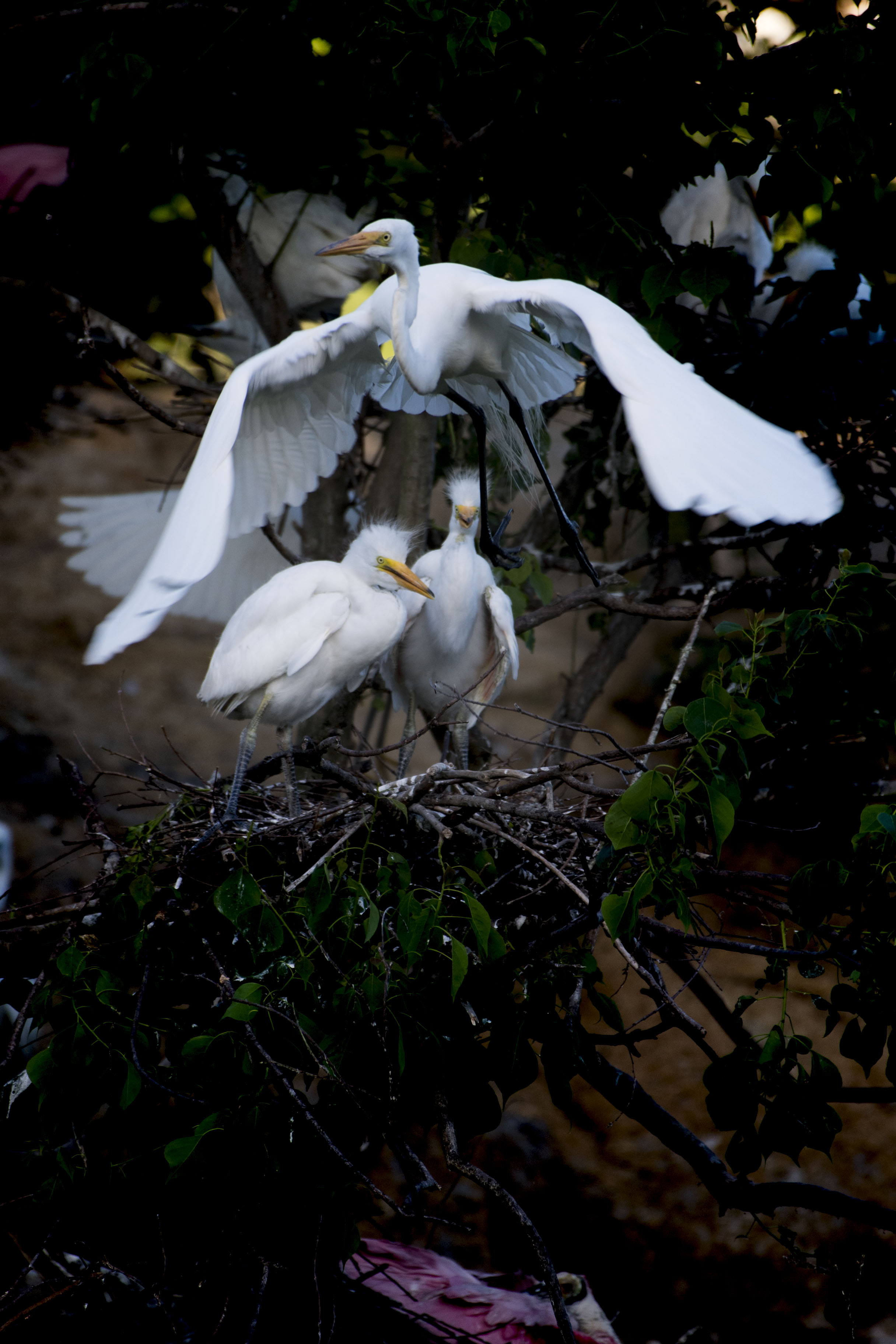
Connie and I were at the rookery late in the afternoon on both Thursday and Friday of the previous week. Many of the great egret chicks are quite large and their antics as they try to get food from their parents are very amusing. I trained my camera on a pair of very eager, very hungry chicks who pummeled their parent mercilessly for several minutes until the patient adult could take no more and flew off.