2018—Stormy Weather

At last, Northern California is getting rain.  The storm in the past two days has elevated our year-to-date rain levels to 88% of normal.   Sacramento recorded 3.5 inches from Monday through Tuesday at 5 PM.  This is a substantial boost but it is still far from where we need to be and just  a fraction of what he had last year at this time when everyone was quick to declare the drought over.  I believe the declaration last year that the drought was over was short-sighted and until a couple of days ago, it appeared we had no hope of getting normal precipitation.  But, things are looking up and we’re embracing the stormy weather here.  The storms reminded me of my trip to the Oregon coast in early November.  We had some stormy weather there for a couple of days and had to be persistent in order to keep our lenses free of rain drops.  Actually, I took this photograph in California on our first day of the trip, about 3 miles south of the Oregon border, just off Highway 101.
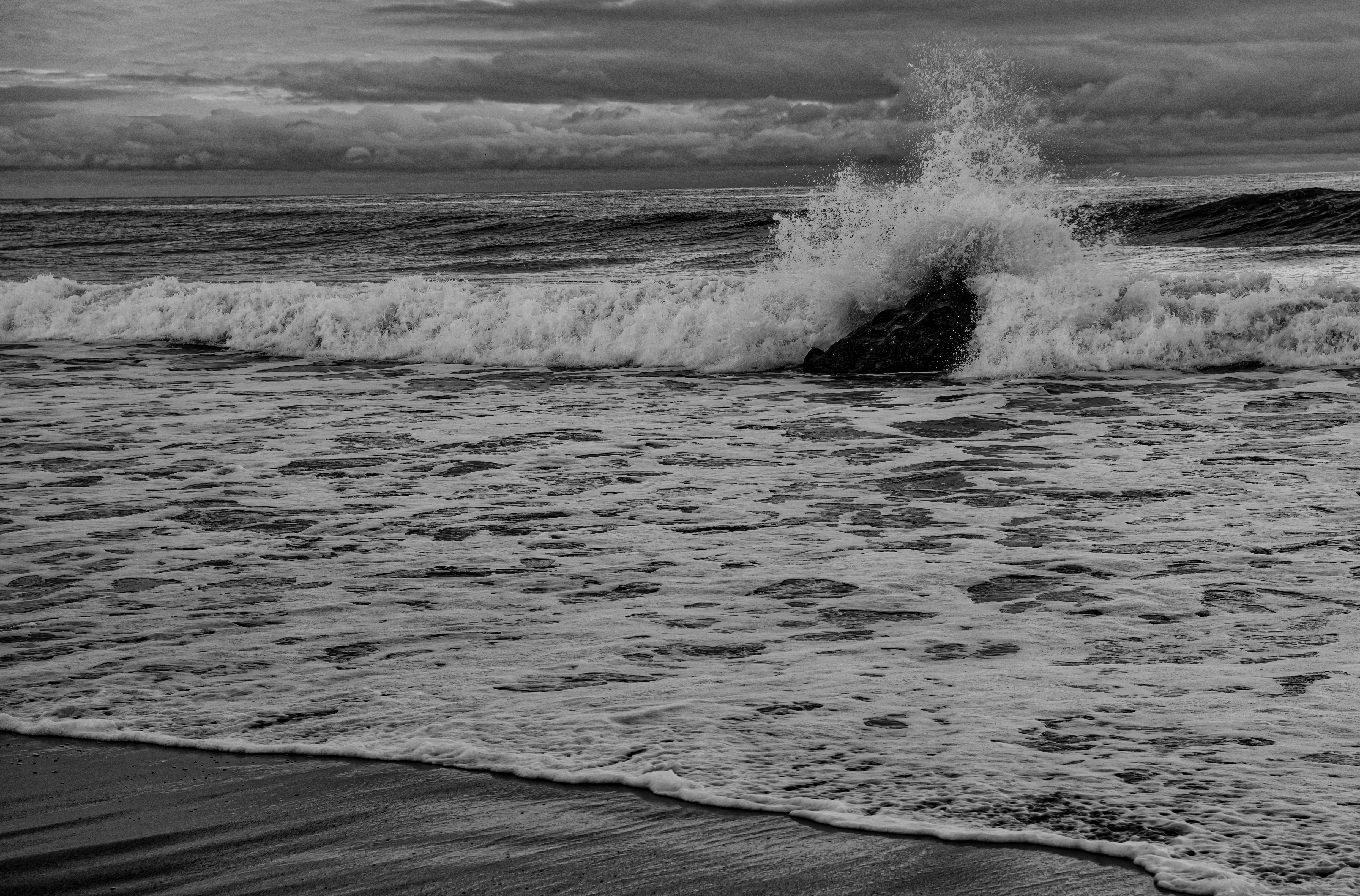
LA-CA-OR Coast-001.jpg

2018—Frustrations Of Autofocus

Regular readers of this blog know that I love to photograph hummingbirds and I feature them quite frequently, the past few days for example. Regular readers might also recall that last summer after my return from Madera Canyon, I added several pots of salvia near the hummingbird feeders so that I could capture the hummers feeding at a natural source instead of at a feeder.  My numerous hummingbird photographs probably all look the same to most people but I know what I’ve done to get the shots and to me, these photographs represent my progress as a bird and wildlife photographer.

At Madera Canyon,  I discovered that Nikon’s Auto Area AF is the perfect way to capture fast moving hummingbirds and maintain focus on them…some of the time.  My efforts in Madera Canyon turned out to be mostly a learning experience and I came away from that trip with very few photographs that I felt were good.  I’m looking forward to a return trip this summer and hope to redeem myself.  While the camera’s ability to lock on a subject and track it is one of the most amazing aspects of Auto Area AF, it is also one of the most frustrating aspects.  Today’s photographs illustrate  a case in point.

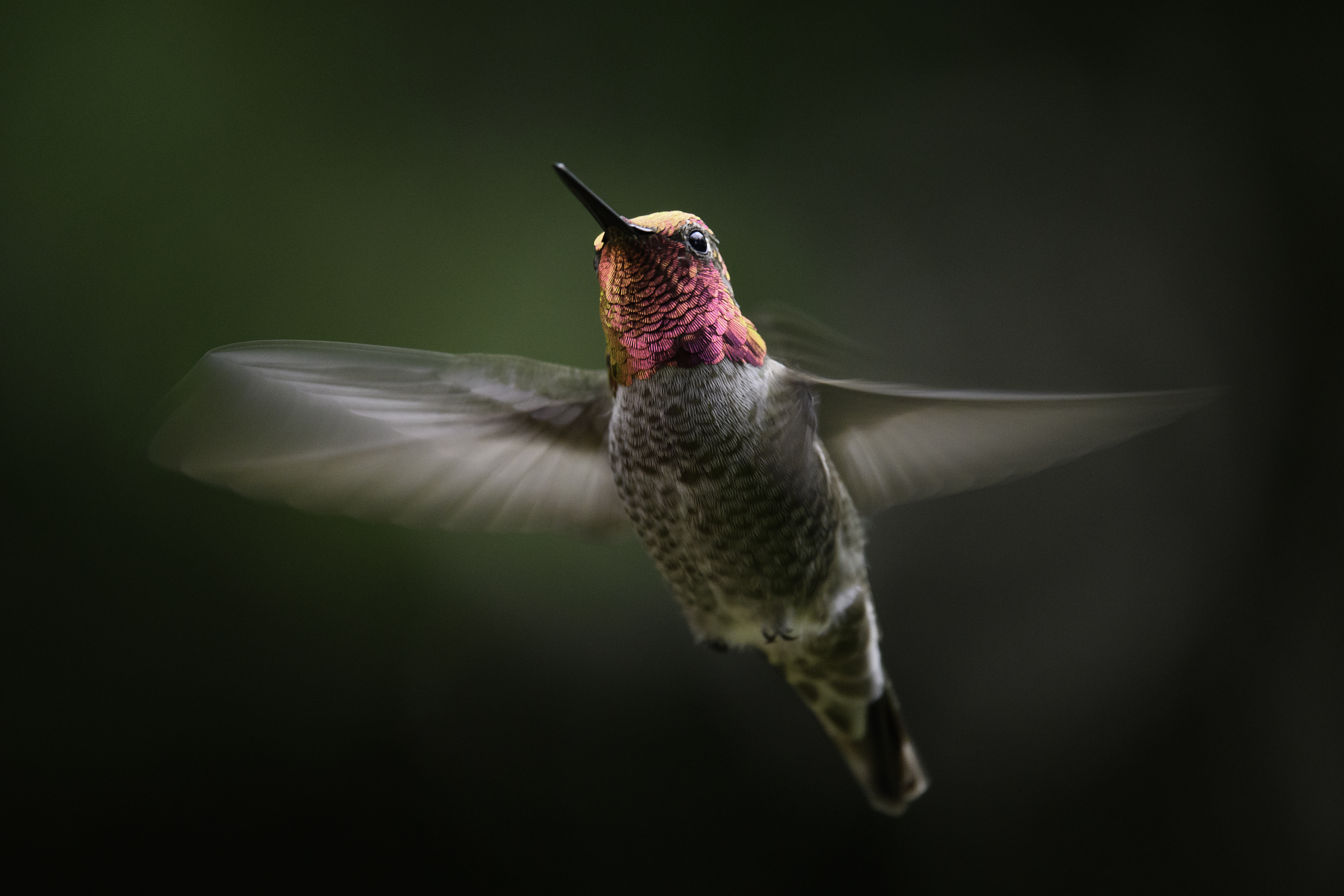
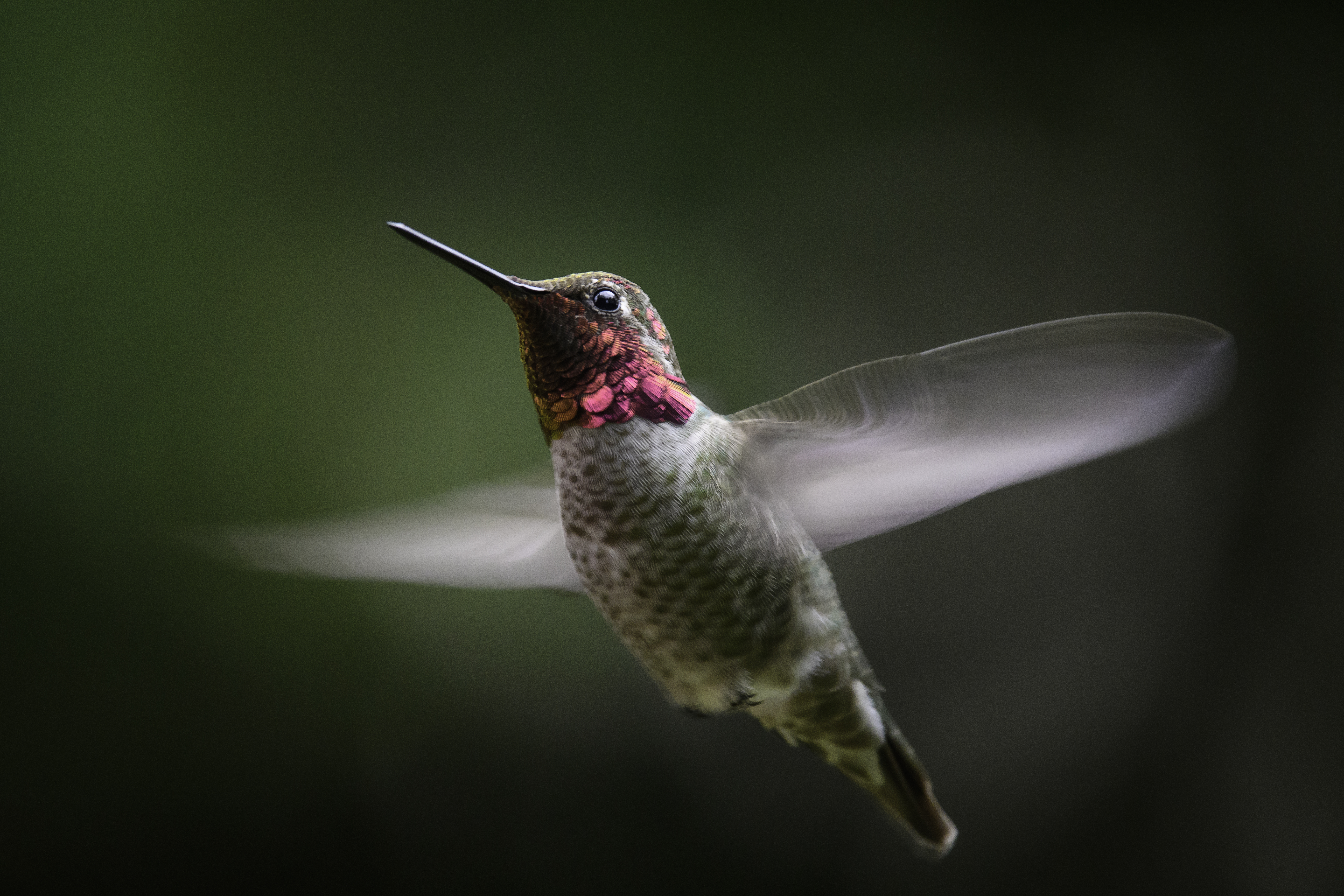
For years, one of my photographic goals has been to photograph a male Anna’s Hummingbird face on, wings outspread, feeding at a flower.   A photograph similar to the photograph I posted yesterday but with him actually feeding or hovering near a flower. I had quite a few opportunities on Sunday to get this shot.  Several times Homer investigated the salvia for nectar instead of flying to the feeders and I was there, camera poised, heart fluttering, helplessly viewing an out-of-focus hummingbird in the exact pose I wanted, gorget flaming pink with his natural feeding source slightly in front of him, focus locked on the flower.  My frantic attempts to adjust the focus ring so that focus moved to the bird were too slow to make a difference.  It wasn’t until a couple of seconds later when he moved an inch or two away and was in the same plane as the flower, that I could lock focus on him.  But by this time, he’d moved to a sideways position and his flaming gorget looked like dying embers.

Of course there are ways to achieve what I am trying to achieve but that will take  lots more practice.  In Madera Canyon, we started by using manual focus instead of auto focus but that approach turned out to be a disaster for me.  I think, however, it is something I might need to practice and perfect so that I can avoid the frustrations of autofocus when I want something that autofocus can’t readily deliver.

BH AN 182-1

BH AN 180-1

2018—Gorget

Homer was  back defending his territory Sunday afternoon.  He wasn’t defending against other hummingbirds but against the pesky and persistent Ruby-crowned Kinglet.  It was quite comical to watch.  I went outside to try to capture some of the drama in my camera but ended up just enjoying the antics of both birds.  The Kinglet tried to hide himself in the shrubs and dart over to the feeders when he thought the hummer wasn’t looking.  The hummer finally perched himself  on a highly visible branch in the open and eventually the Kinglet gave up the day’s pursuit.  I’m certain he’ll be back tomorrow.

When Homer finally realized he was free of invaders for the time being, he spent quite a bit of time at the feeders and even at what remains of the salvia.  His gorget was quite gorgeous, even in the overcast light with no flash.

BH-AN 198

BH-AN 213

2018—Lady Anna

The female Anna’s Hummingbird has been spending time at the feeder not being harassed by Homer, or Homer, Jr.   Either Junior has developed a fully colored gorget or Senior has returned to claim his rightful branch.  Whichever male Anna’s dominates my backyard right now, there appears to be an uncharacteristic truce and my Lady Anna is able to feed in peace without being chased away or having to keep an eye out for an attack.

BH AN 005-1BH AN 004-1

2018—Spa 2018

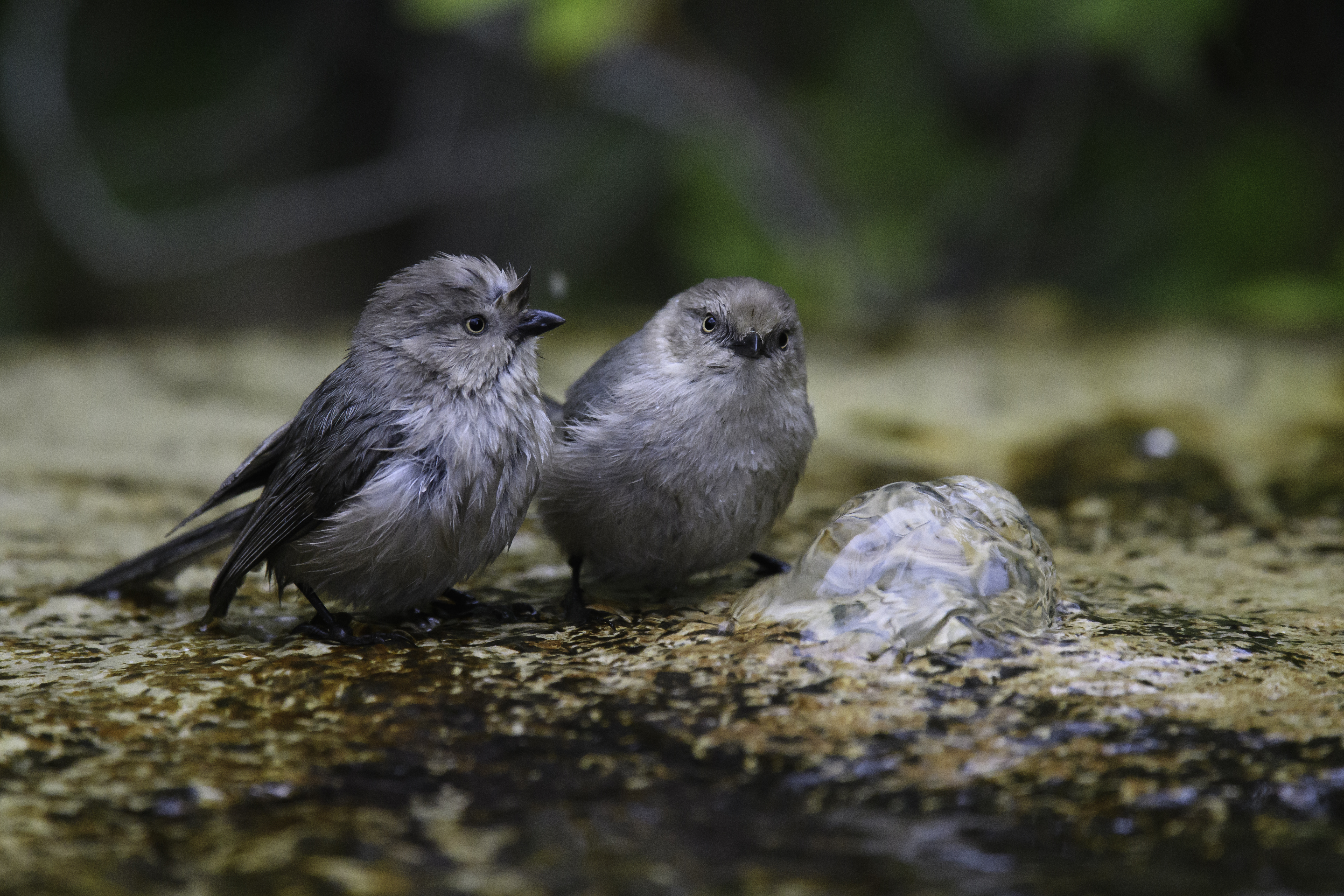
This is the first of what I suspect will be many photographs of bathing Bushtits during 2018.  They come every day, sometimes twice a day to bathe in the fountain and are particularly fond of the bubble.  I think they spend much of their time in the live oak tree in front of my house because I usually hear them tittering in the early morning when I go out to get the newspaper but the backyard is their spa.  I noticed the azaleas behind the fountain start to quiver which is an indication of birds approaching the fountain.  When it starts to quiver everywhere, I know it’s the Bushies who arrive in groups of ten or fifteen.  I picked up my D500, with the 300mm and 1.4x TC already attached and walked toward the fountain slowly.  I sat down on a garden chair about 6 feet away from the fountain and waited.  One by one, they emerged from the safety of the shrubs.  I even managed to get a few photographs of them getting ready to hop down from the azalea.  It’s hard to photograph them there because the twigs on the azaleas are what the autofocus grabs onto, not the birds.  I had to manually focus to capture the one bird.

BZ BT 001-1

BZ BT 126-1

2018—Pink Spot

It’s rare to see the ruby crown of a male Ruby-crowned kinglet unless he’s courting a female in the spring.  I have seen it recently while watching him bathing enthusiastically but have not been able to capture an in-focus shot.  On New Year’s Day,  the tiny kinglet kept trying to glean something from the hummingbird feeders.  In this shot, he is peering down at the feeders suspended below him, apparently trying to decide which was the best way to get to them.  It was only after I downloaded the images that I noticed one of his ruby feathers is peeking out from the top of his head.  It’s a bright pink spot that almost looks like it’s a chromatic aberration.  It is not.  In the best of worlds, the entire top of his head would be this color.

BZ RK-017.jpg

2018—A New Year’s Tradition

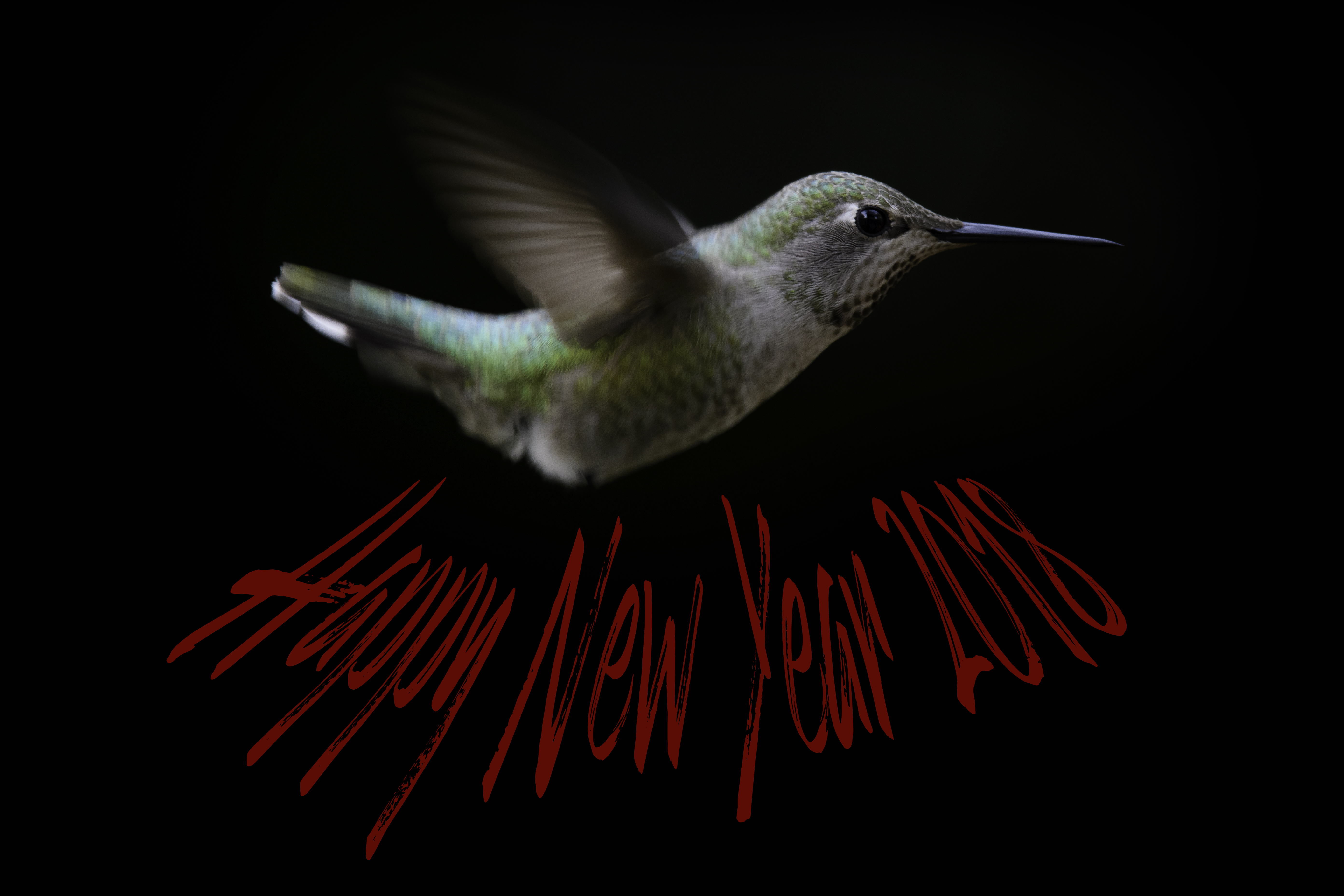
Happy 2018!! With this post, I’m continuing what has become an annual tradition at In Focus Daily, a New Year’s Day photo of a hummingbird.  This is a female Anna’s Hummingbird.  I took this photograph two days ago.   The Annas live in my yard year round so they are frequent photographic subjects of mine this time of year.

I’m starting my eighth year of documenting my photographic journey on In Focus Daily. Although I miss a day here and there, to date, I’ve published 2,436 posts, which is, on average, 348 posts per year.  And, I plan to continue as long as my passion for photography drives me.

Happy New Year Hummer.jpg