Jordy is Chris and Susan’s newest family member, a 100 pound 9 year old Golden Retriever rescued a few months ago back home in Wisconsin. Jordy is sweet and slobbery and he loves the new Kong Wubba toy I brought him.


Jordy is Chris and Susan’s newest family member, a 100 pound 9 year old Golden Retriever rescued a few months ago back home in Wisconsin. Jordy is sweet and slobbery and he loves the new Kong Wubba toy I brought him.
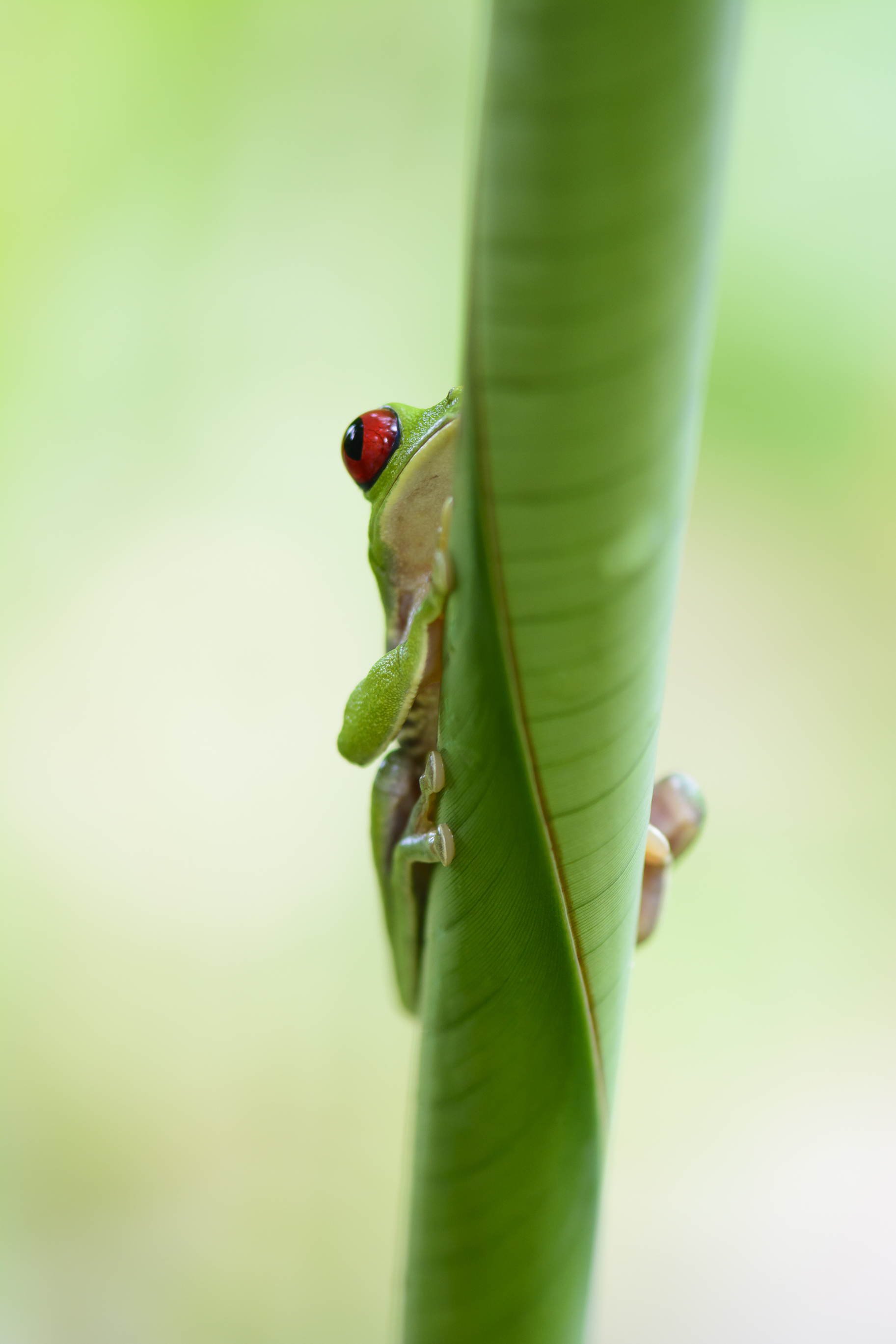
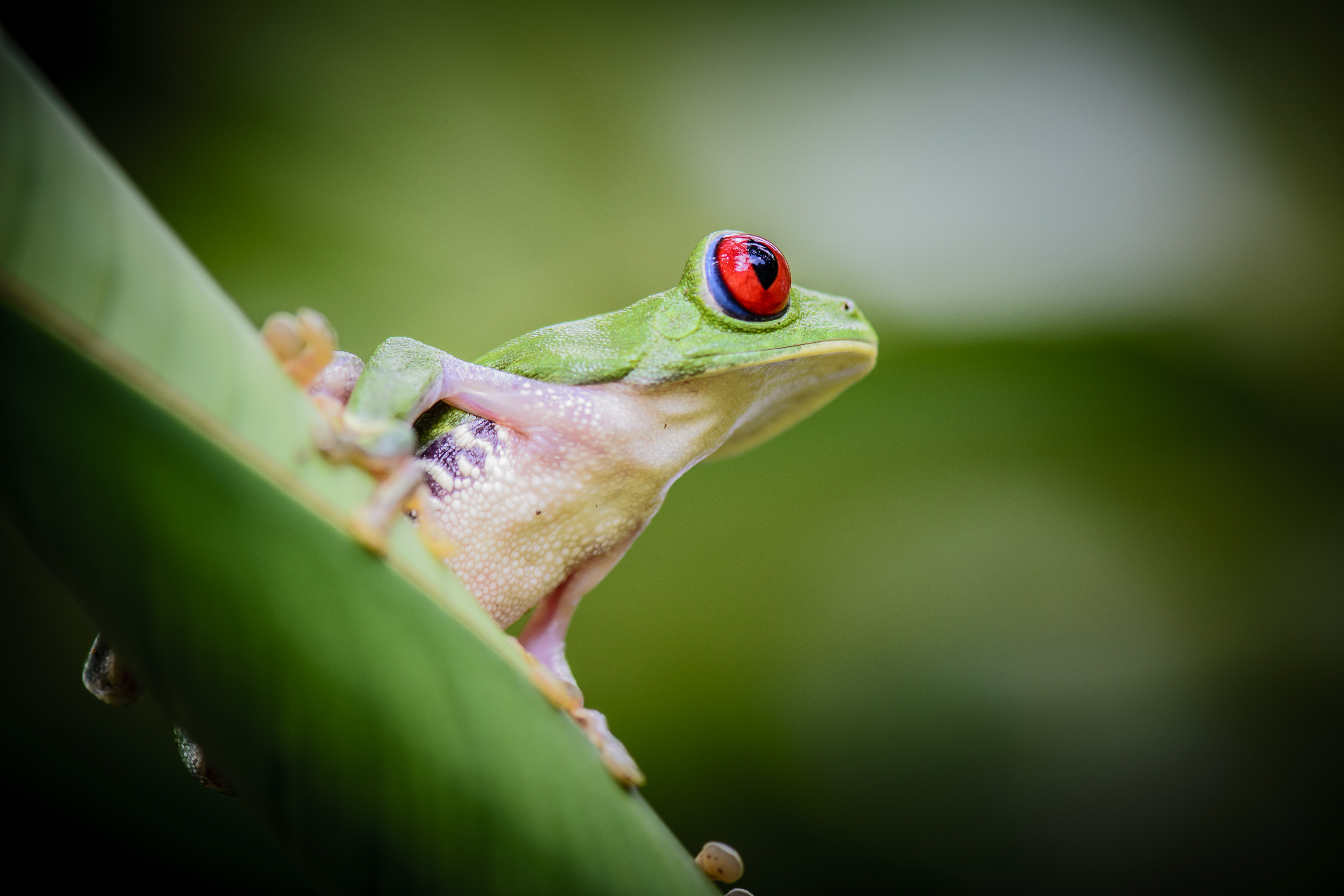
We had another chance to photograph the red-eyed tree frog, this time during daylight, without flash, but with our macro lenses again. We all jostled for position to capture this cute little creature, bumping into each other and moving the monstera leaf that the frog was on so that keeping focus was quite difficult. I did manage to get a few that I liked. I think it’s interesting that I went to Costa Rica to photograph birds and my favorite photographs were of frogs.


A mother two-twoed sloth and her baby lounged high up in a tree about a hundred feet away from my bungalow for the entire week we were at Luna Lodge moving not more than a few inches the entire time. All of my shots the first few days were photos of fur. On Friday, I went alone to see if I could get better shots and it was so hot and steamy that my view finder fogged up so I couldn’t see what I was photographing. I thought I had just taken more shots of fur. On Saturday morning, before we left for San José, I returned to see if I could get one more shot and the tree was empty. It wasn’t until Saturday evening when we were reviewing photos back at the Hampton Inn in San José before our flights home Sunday morning that I realized I had captured the faces of both the mother and the baby sloth. I used my speed light with the Better Beamer attached so that the flash beam reached far enough to illuminate the animals.

On our last visit to the beach near the lagoon, Gary rescued a just hatched sea turtle that had been trapped in its nest when another baby turtle succumbed and blocked its passage out. We had been seeing egg shells and lots of baby turtle tracks heading to the water on our previous visits and Gary followed the newest set of tracks back to the nest to see if any needed rescuing. Green sea turtles hatch at night and immediately make their treacherous journey to the water because the cover of darkness helps them avoid predators lurking everywhere. I guess it could be said that we interfered with Mother Nature with the rescue of this turtle which would have died soon without us, but it made us feel wonderful to give this little guy a chance. In the first shot, the turtle’s egg tooth, with which he breaks out of his shell, is clearly visible. Gary was careful to make sure the turtle had the strength to swim once it made it to the water so he let the turtle struggle through the sand for a few minutes, then picked it up and moved it back a few feet. That was all it took. The little guy was noticeably stronger and within a couple of minutes, he crossed the sand and disappeared into the sea, after a well documented journey for life.


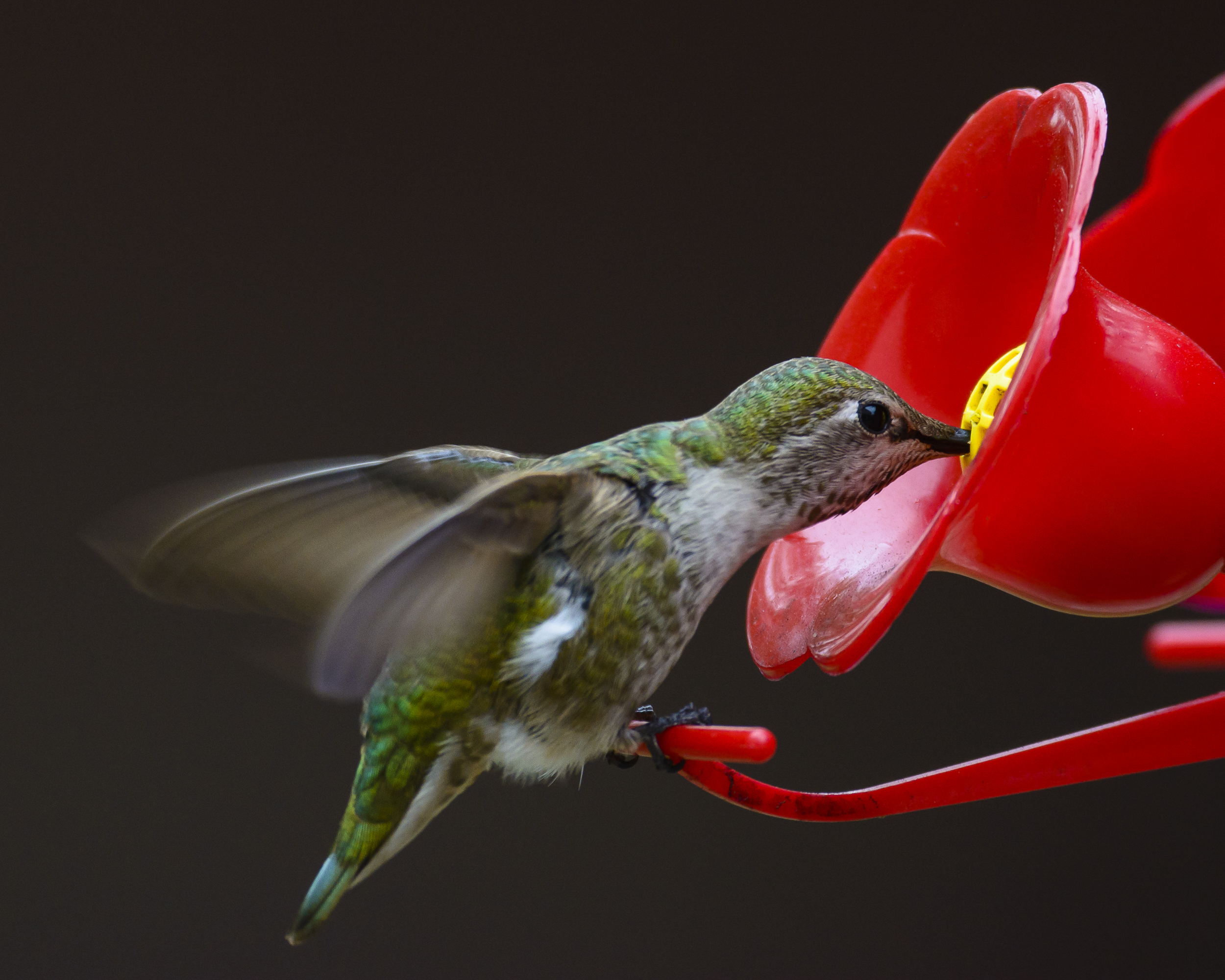
I’m still going through my thousands of photographs from Costa Rica and will be posting many more on the blog but this afternoon I was itching to take a few new photographs and wanted to try out some of my new equipment and ponder some of the advice we got from Moose in Costa Rica about bird photography. 1) Don’t center the subject; 2) look for gestures; 3) be careful of the background. I saw the hummer at the feeder and since I failed to capture any decently focused hummingbirds in Costa Rica despite their being constantly around us including feeding often just outside our bungalows, I decided I needed to photograph my hummingbirds.
Also, I am trying to improve the quality of some of my equipment. Not the cameras or lenses…I’m happy with my lenses and my cameras. I discovered that my smallish tripod and my awkward to maneuver ball head were not up to the task of serious bird photography. I have my new ball head (a Really Right Stuff BH-55) but my new tall sturdy tripod (a Gitzo) will arrive tomorrow. I got all new mounting clamps and plates for the new ball head and decided to replace the mounting clamp on my Manfrotto ball head with a Really Right Stuff Arco-Swiss type plate. I can already see a significant improvement. The ball head, while still awkward to maneuver quickly, suffered from its quick release clamp which did not hold the camera or long lenses firmly enough, jiggling with the slightest touch. Not a good thing so I’m very pleased with the new plates.
I set the D7100 with the 80-400mm lens attached with the hummingbird feeder prefocused in the viewfinder and set the camera to “live view” and turned on the remote shutter release. All I had to do was click the remote when the hummer appeared at the feeder. As it turned out, I had only two chances to photograph the hummer after setting up and no chances after I set up the flash for remote operation. Even with all my planning, it was still difficult to capture the birds in flight which is the gesture I wanted to photograph. And, when I realized light was too dim and I set up the flash to trigger remotely, the hummer didn’t return to the feeder. As a result, the shots I did get were underexposed and I had to increase the exposure by half a stop. Finally, I hate to admit it but despite my considering the composition, the hummer still appeared smack dab in the middle of the shots so these are all cropped. Practice, practice, practice.


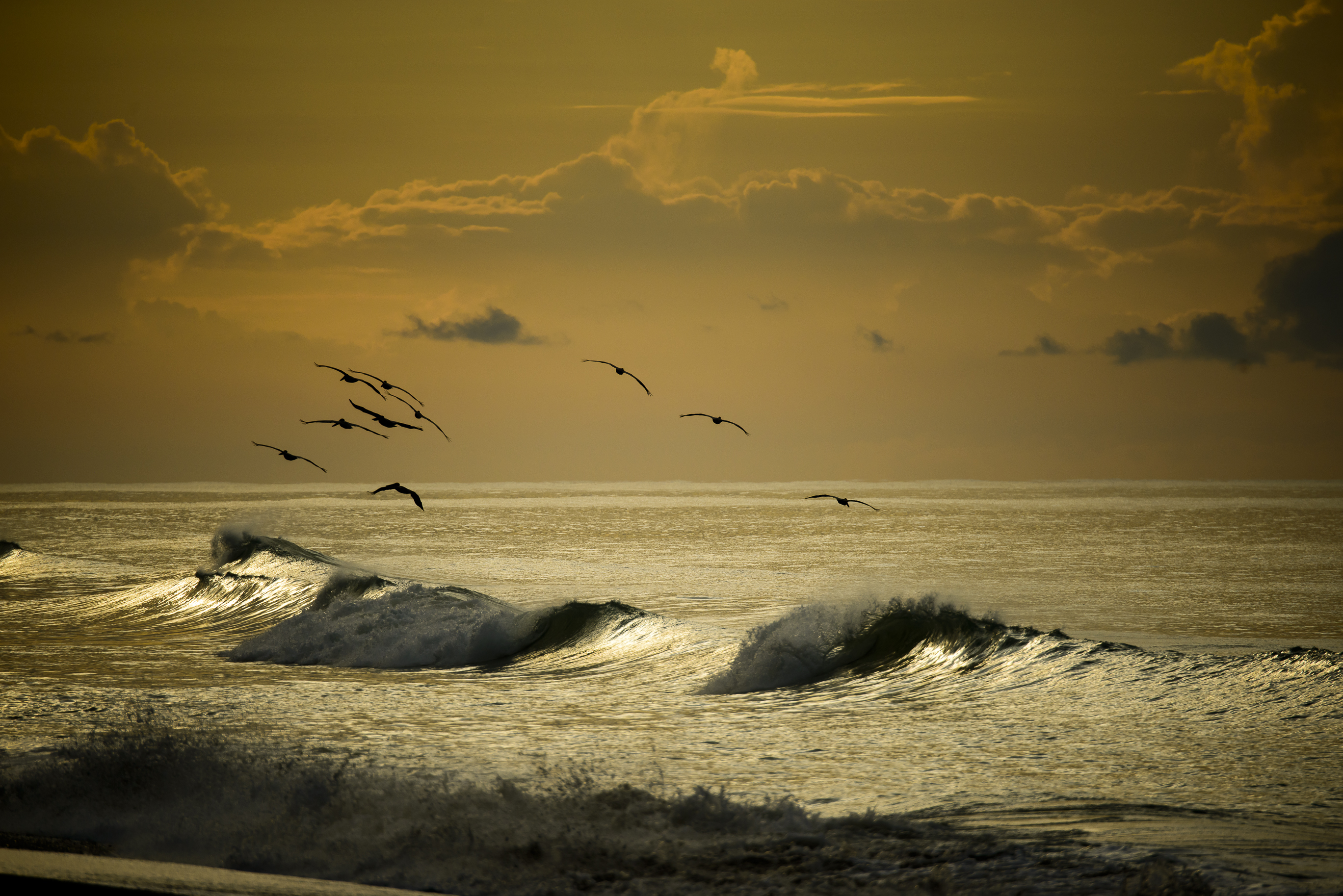
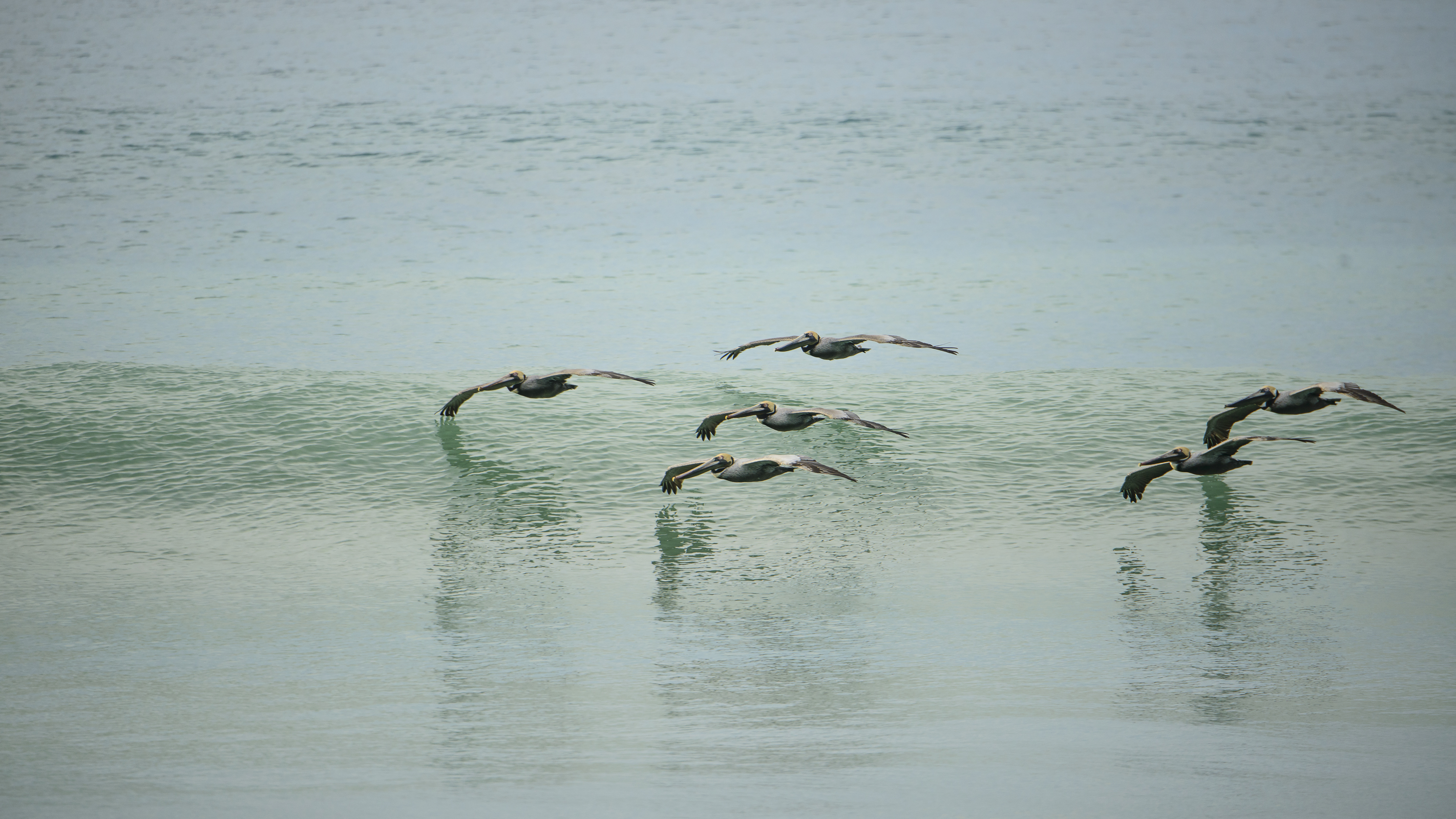
Squadron after squadron of brown pelicans seemed to be strafing the waves in the early mornings as we watched from the beach. Moose admonished us about getting tips and tails while photographing birds in flight. That means the edges of the photos have wingtips and tails of otherwise unseen birds detracting from the composition. I found that hand holding the camera with a long lens and panning to follow a squadron of birds in flight while avoiding tips and tails and still managing to get them in focus is not a particularly easy thing to do.
I love the colors in the first shot, one I took facing east just after the sun rose, which silhouettes the pelicans. In the other shots, the pelicans are flying toward the rising sun.



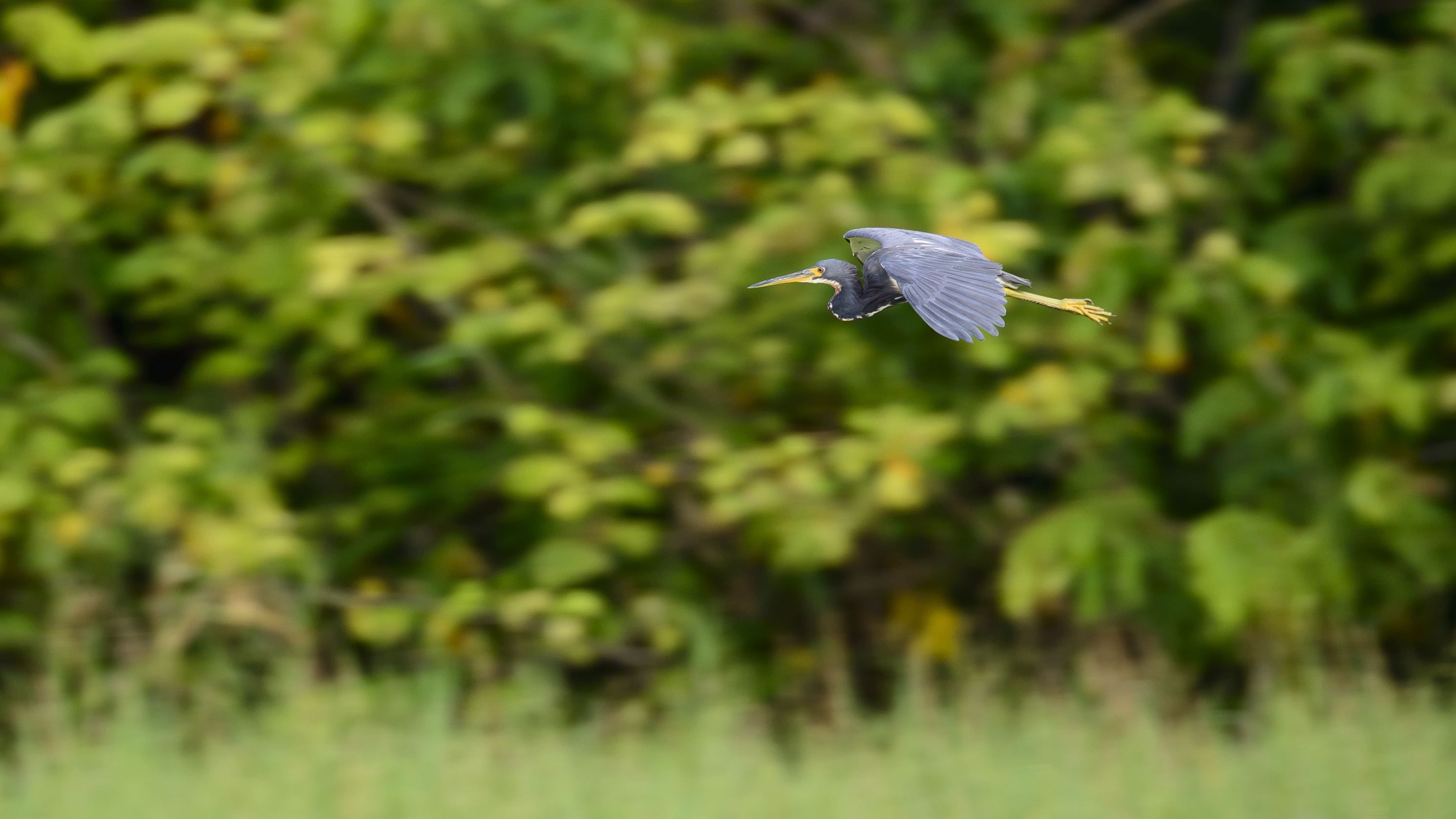
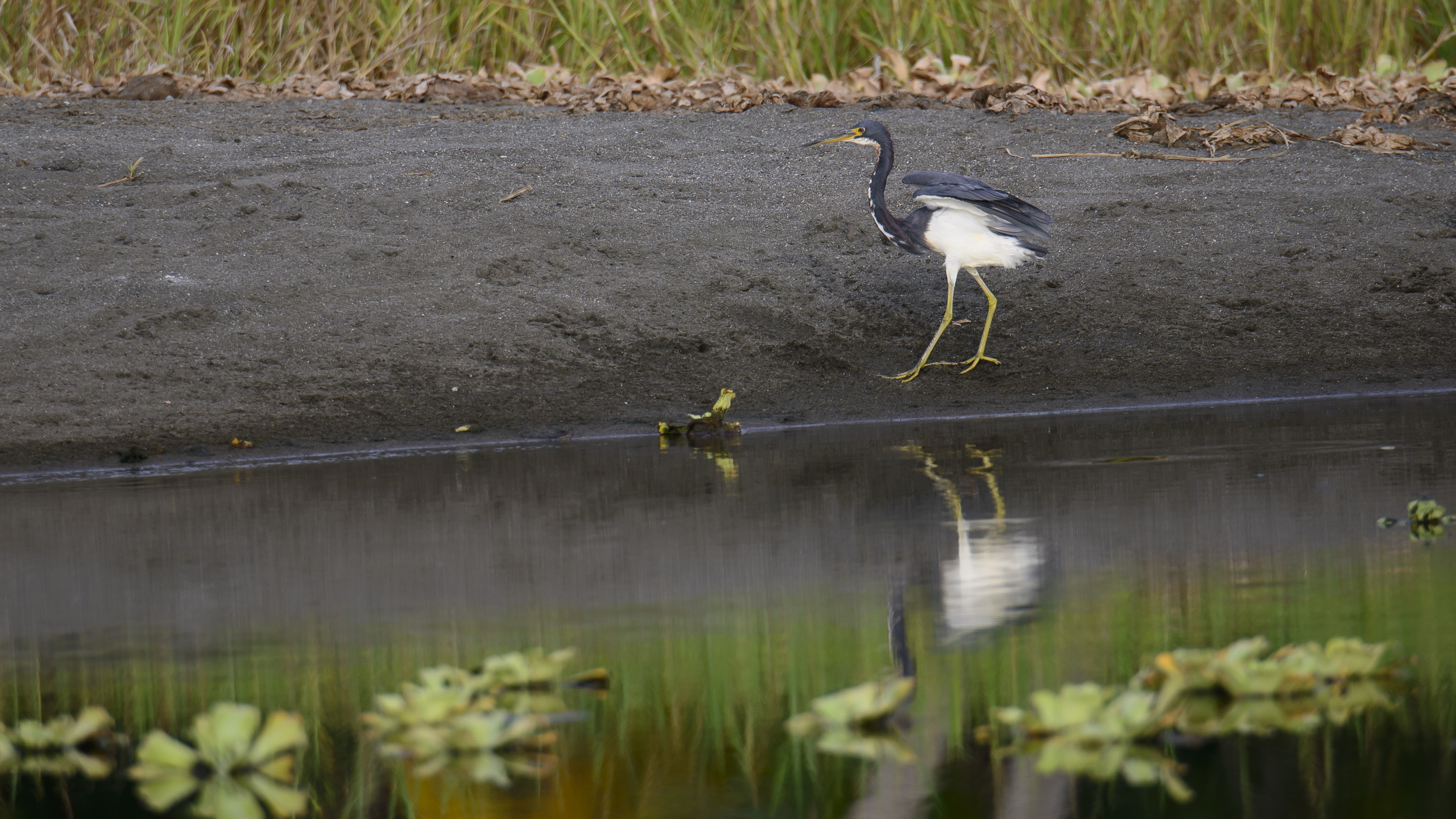
Back at the lagoon, my favorite place in Costa Rica, we got up close and personal with lots of different kinds of herons. The one that displayed the most animation, however, was this tricolored heron who flew in and stomped through the shallow waters at the shoreline pursuing breakfast.


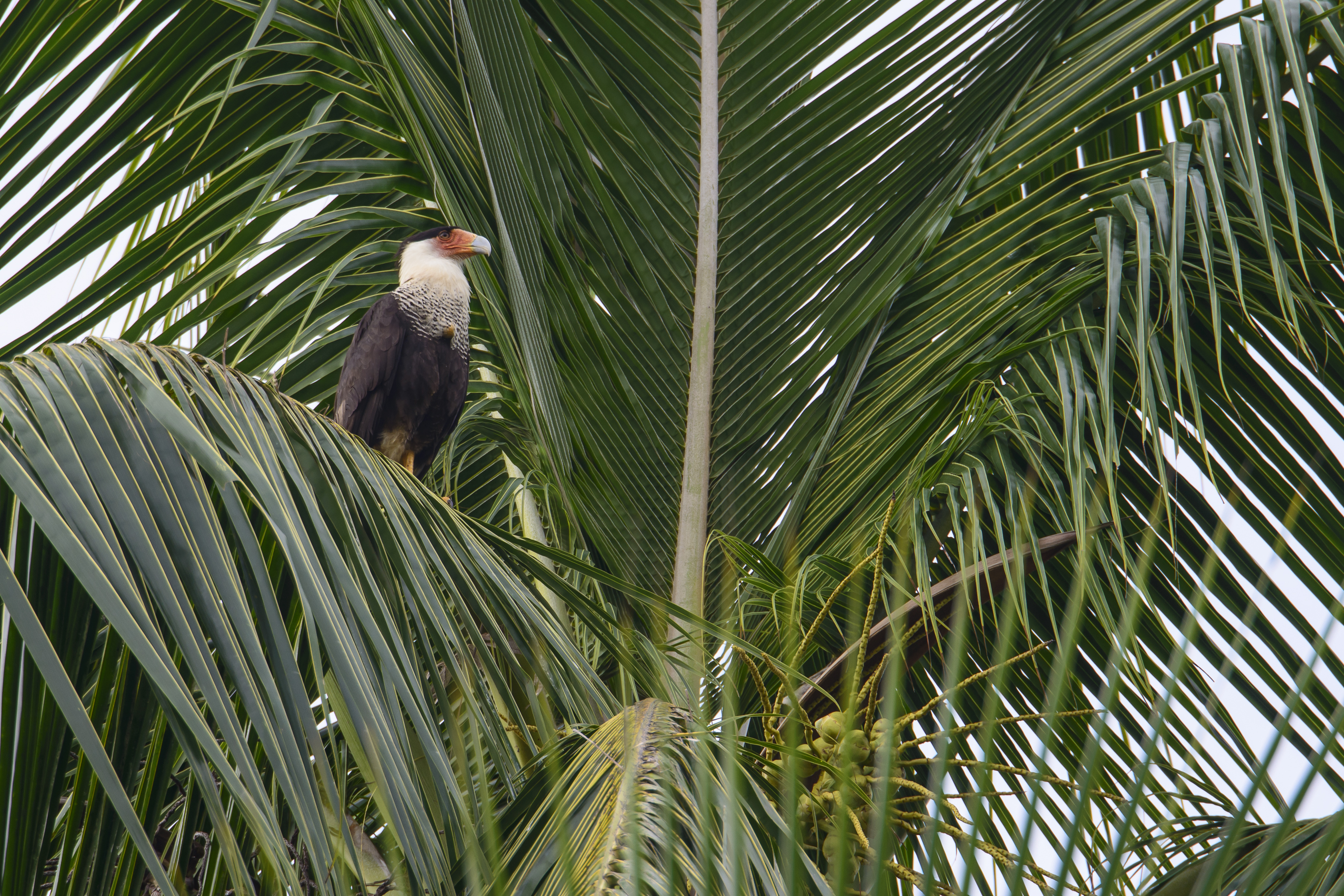
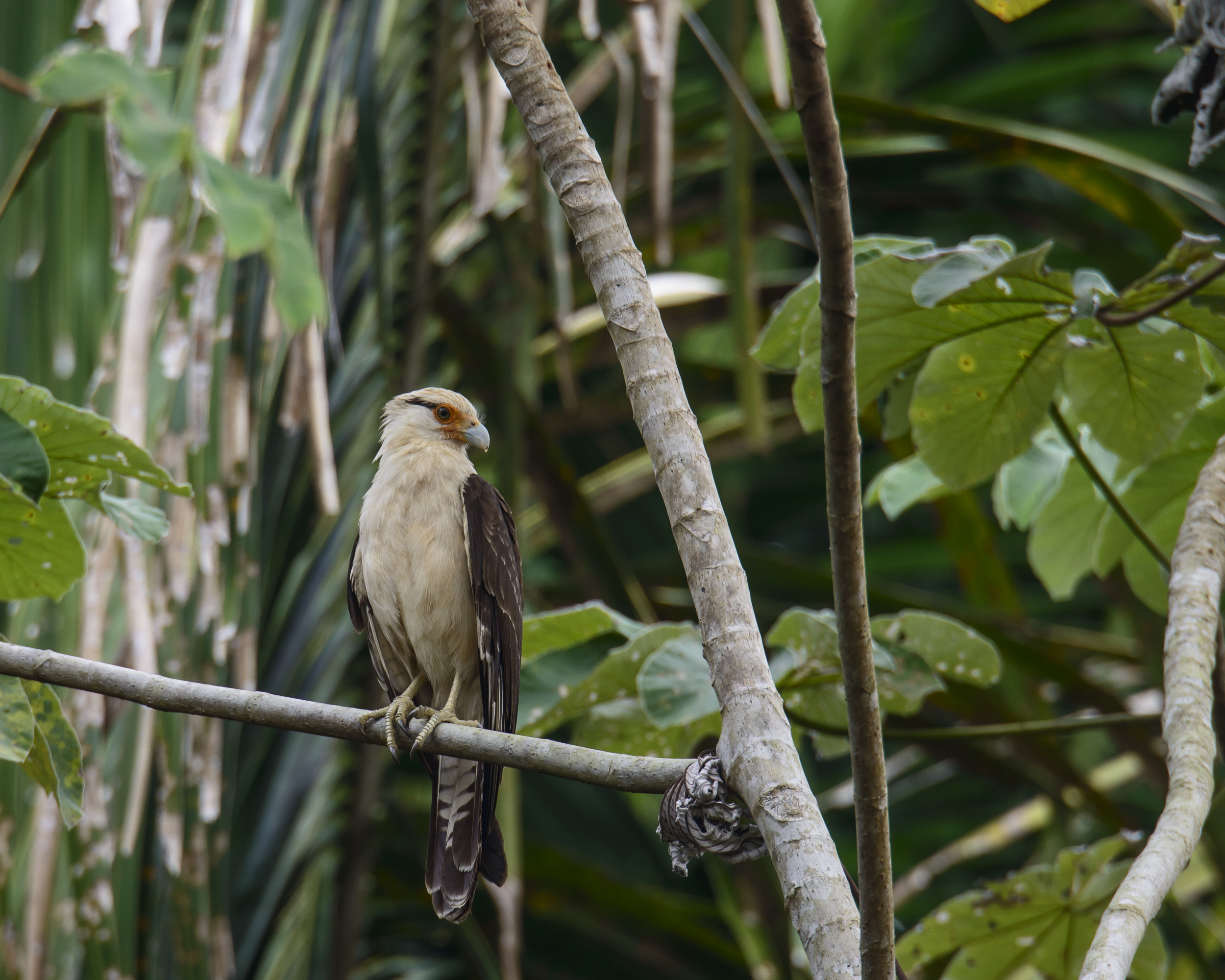
We had quite a few Caracara sightings in Costa Rica. I took these shots within minutes of each other near the lagoon. The first is a crested caracara who, with its mate, was building a nest in the palm tree. The bird apparently had eaten recently, the protruding lump on its breast indicating a full crop. The second photograph is of a yellow-headed caracara and it was only after I reviewed the photographs of it that I realized that this bird seems to have a chunk missing from the tip of its beak.
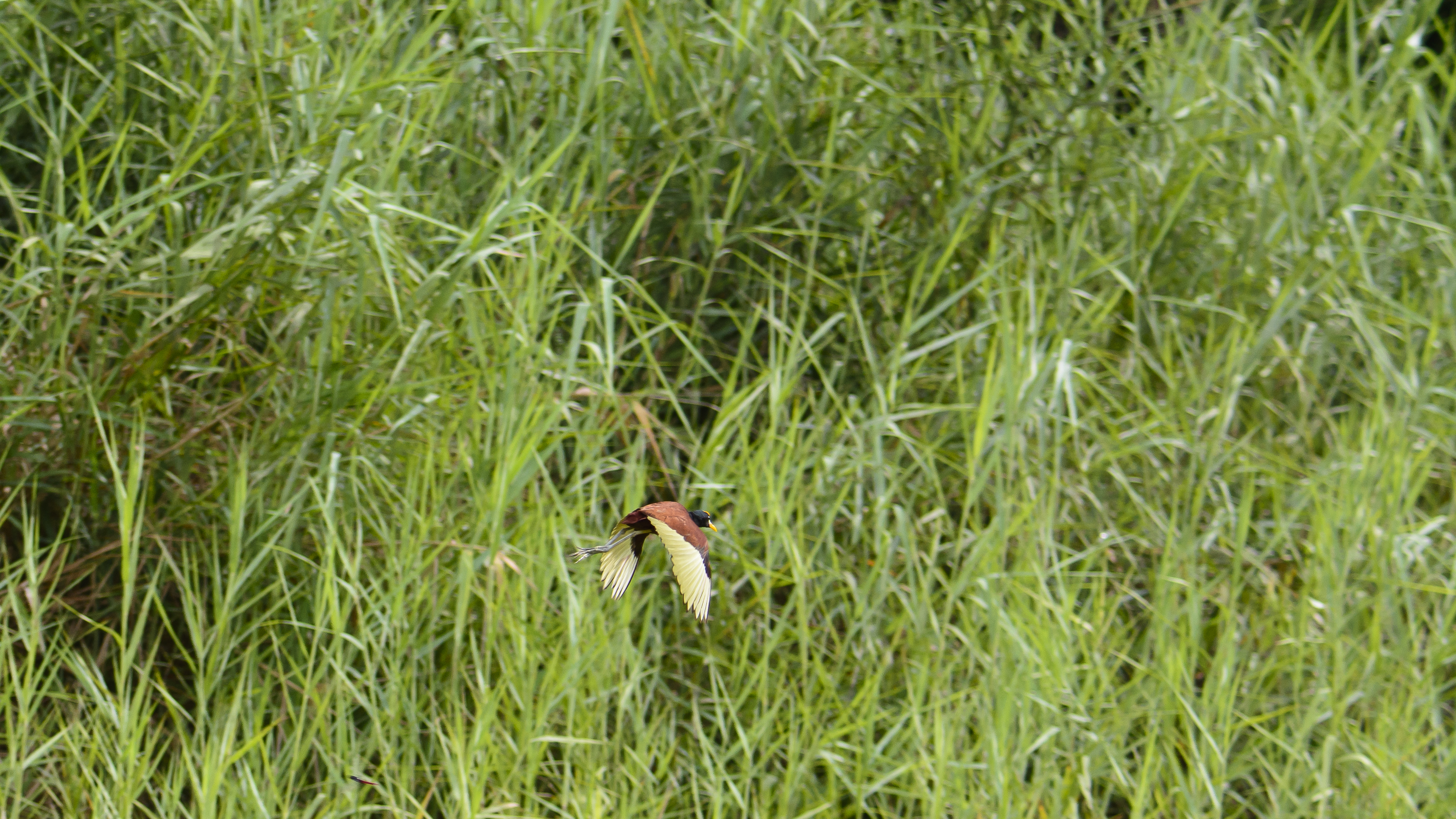
Kayaking on the lagoon was my favorite activity and my favorite means of photographing birds and other creatures during my visit to Costa Rica. The kayak enabled me to be at eye level with the birds and the birds allowed us to dock our kayaks in the floating vegetation that attracted them, mere feet away. The jacanas were everywhere and were delightful to watch. They have very long toes that enable them to navigate safely across the floating rafts of vegetation while they look for food in the water and on the vegetation. They would often leap into the air, wings aloft, then settle down again. Sometimes they’d fly from raft to raft. Moose was constantly after us to watch for “gesture” when we photographed any birds and to avoid placing our subjects dead center. Neither admonition was easy to follow. In reviewing my photos from the lagoon, and in particular, those of the jacanas, I was surprised to see that quite a few had a gesture that made the shot more interesting and not all were dead center. I have to confess, however, that I did crop a few shots to 8X10 and moved the subject out of dead center. Jacanas are about 9 inches tall. The males and females look alike. The juveniles are light colored.



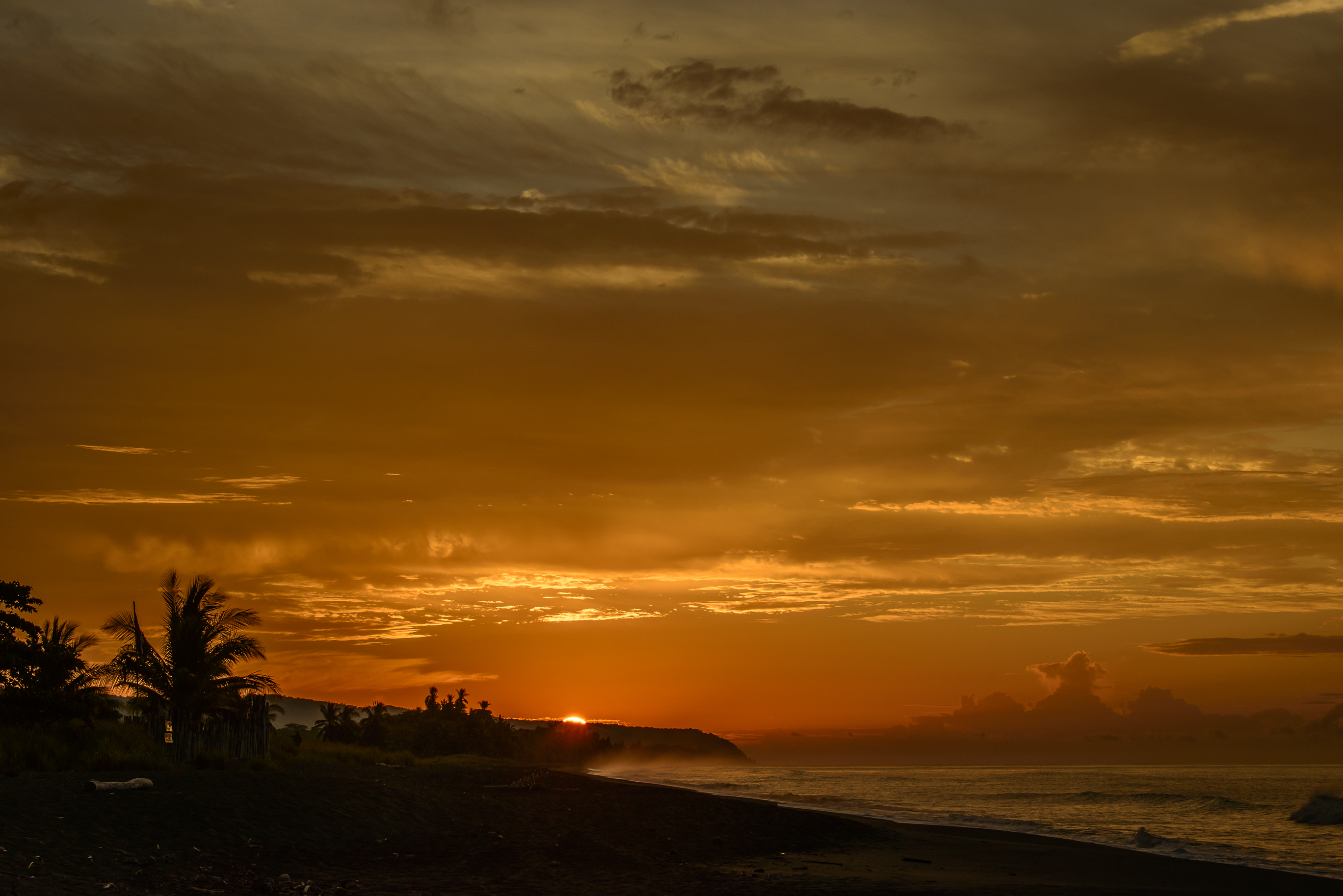
The proximity of Costa Rica to the Equator apparently makes the sun appear and disappear quickly so the glorious colors of sunrises and sunsets are there only a very brief time. We did manage to photograph the very brief sunrise and the very brief sunset a couple of times on the beach. Here are my favorites from those photo shoots. I shot the last sunset with my fisheye lens.
Sunrise:
Sunset:

Sunrise:

Sunset:

We visited Laguna Peje Perrito three times and kayaked on it twice. It is about a half hour away from Luna Lodge, right behind the sand dunes which separate it from the Pacific Ocean. Those kayaking outings were just about the coolest thing I’ve ever done. First of all, the kayaks were sit atop plastic, very stable kayaks. They weren’t really sea kayaks like the ones I took lessons in a few years ago and failed the self rescue part of the class. I felt very comfortable on them and my lessons stood me in good stead as I was able to maneuver my paddles easily. This was a very empowering trip because we had with us only a beach towel to keep the water off our cameras. We didn’t even take straps. Wow. I gained lots of confidence taking photographs this way. What was so incredible about these outings was that we were mere feet away from the wildlife. The shore birds ignored us, the white face monkeys tolerated our presence while they foraged for nectar from flowers in the trees, and the crocodile, yes, the crocodile, didn’t even acknowledge our presence. We were only a hundred feet or so away from the croc as it surfaced from beneath a patch of bubbles that gave away its location. I didn’t hear any ticking so I guess it’s not the same croc that chomped on Captain Hook.
