2017—Juvenile Yellow-crowned Night Herons

We were disappointed that we didn’t see as many birds at the Costa Rican Osa Peninsula lagoon as we’ve seen in past years. Perhaps it was the time of year…May instead of January and some birds had probably migrated north…or perhaps it was the devastation from Hurricane Otto in November…or perhaps it was the unexpected early onset of the rainy season that raised the level of the lagoon much higher than in the past, covering the lily pads that usually crowd the edges of the lagoon.  Whatever the reason, there were far fewer opportunities to photograph birds there this time.

We did see several juvenile Yellow-crowned Night Herons that relaxed in the early morning sunshine, however,  Here are two views of one of one bird and on another branch, a second bird a few yards away as the kayak paddles, standing on one leg,  its beak covered with down from preening and its partially closed nictitating membrane visible.

juv yellow crowned night heron front

juv yellow crowned night heron left

juv Yellow Crowned night heron beak open nictating membrane.jpg


2017—Just Stay Calm

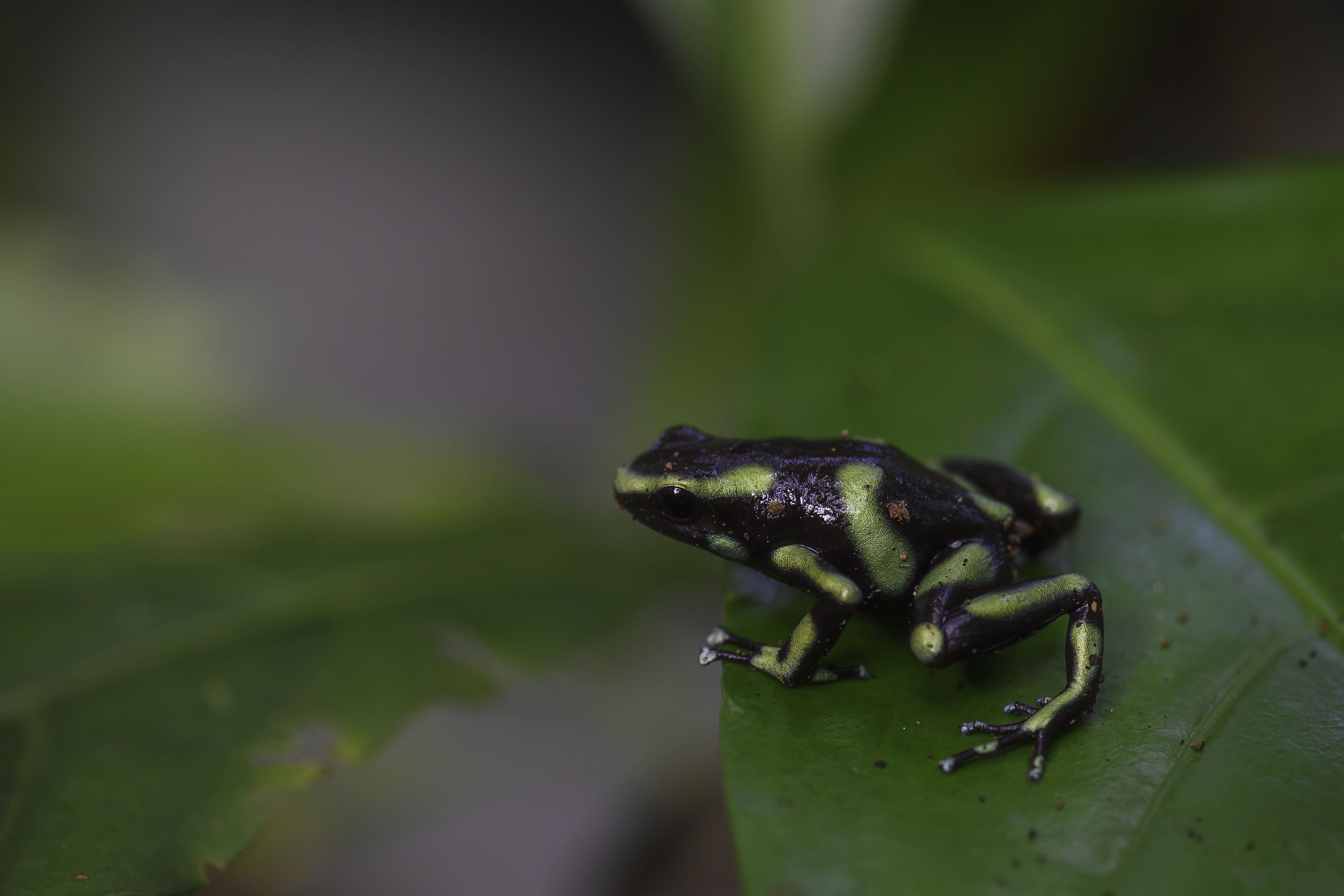
Late Friday afternoon we ventured out in search of a poison dart frog.  We were at a place called La Leona, near the entrance to Corcovado National Park, the place where I came close to suffering heat stroke on my last visit there.  But that was on an all day hike;   this was only about 30 or 45 minutes.  There must be something about the oppressive humidity that makes it feel like an all-day hike and I was feeling the effects after just 20 minutes.  Luckily, I brought GU electrolyte tablets with me this time and a half hour into the walk, I added one to my water bottle which took effect immediately and I was fine.  At least we didn’t have our tripods with us, just a single camera with two lenses so our load was fairly light, but negotiating the slippery muddy path across tree roots and up inclines and over streams made me nervous.  Erick our guide, whose nickname is El Fuerte, Strong One, even offered to carry me (!) across the wider streams because he wore rubber boots.  I refused to let him do that lest my weight disable him and leave us without a guide so he placed large flat rocks strategically in the fast moving stream then took my hand and walked me across.   Then, deep in the rainforest, Erick found our target frog.

It is said —of course, if you read it on the Internet then it must be true— that if you are calm when you handle Dendrobates Auratus, the Green and Black Poison Dart Frog, it is safe to do so.  Despite this bit of trivia (which I didn’t know until I wrote this blog post after reading about it on the Internet) when Erick, who was always relaxed while handling the frog, finished handling it, he doused his hands with water, then with alcohol hand cleaner as a precaution.  After all, the frog got its name for a reason.

This tiny frog is less than an inch long. According to Wikipedia (so it must be true) males are about 3/4 of an inch and females, slightly longer than an inch.  Erick thought this was a juvenile.  It looks harmless enough but its skin packs a punch.  I chose not to touch it.  I wouldn’t have been calm like Erick with a frog in my hand whether it was poisonous or not.


poison dart frog.jpg

2017—In The Cecropia Tree

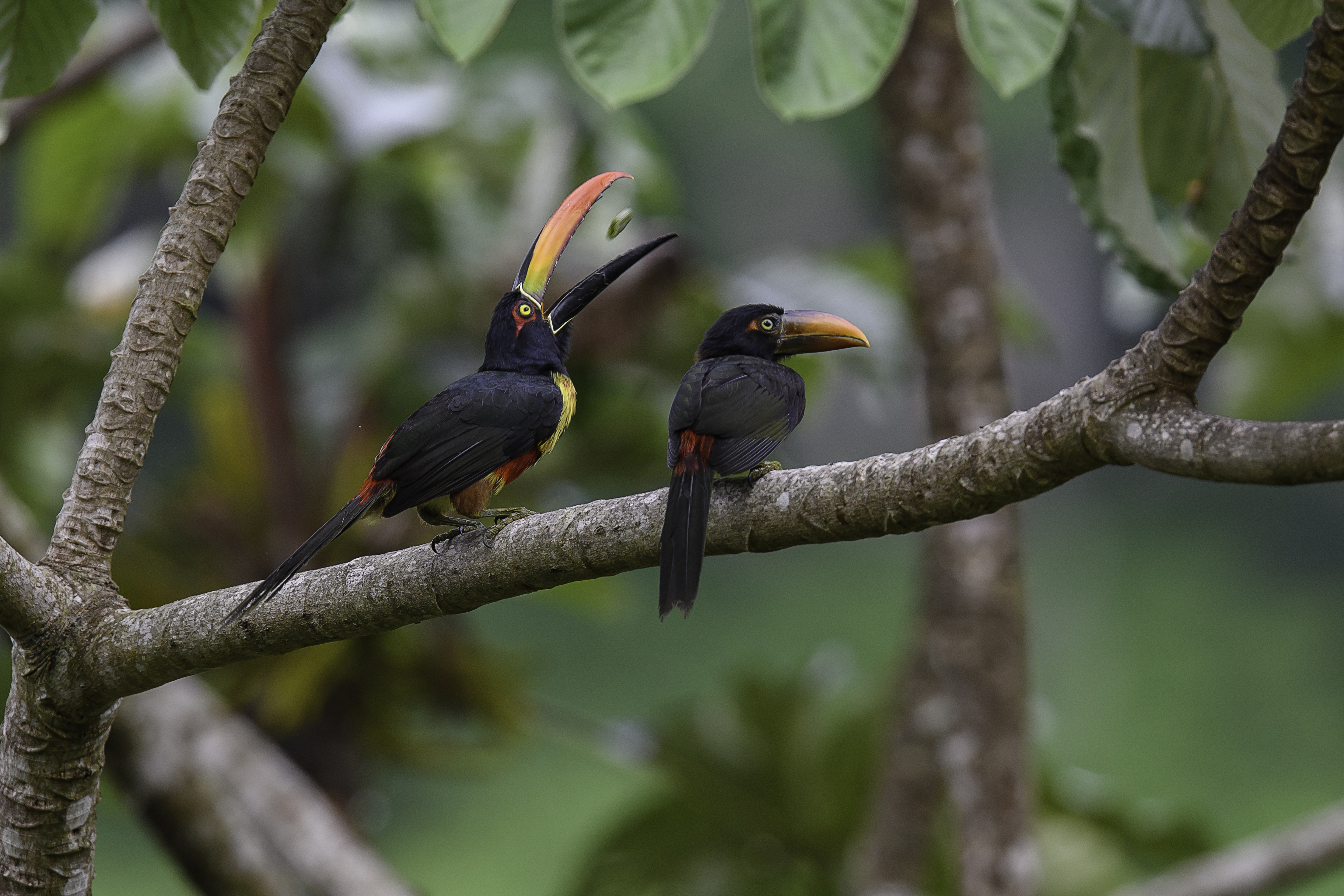
The Cecropia tree is a fast growing tropical tree that has enormous leaves and bears fruit in the form of catkins that attracts lots of different bird species.  The Cecropia’s open canopy provides excellent views of bird activity so we were able to get photographs without obstruction from twigs and leaves that has been so common and frustrating in the Costa Rican rain forest.  Early one morning, we watched a Cecropia tree from an observation platform on the Luna Lodge property when daily activity was at its peak.  Black-mandibled Toucans, Crested Guan, and Fiery-billed Aracari fed on the catkins.  A brightly colored adult Fiery-billed Aracari fed the Cecropia fruit to its offspring after ingesting it briefly and then flipping it up into the tip of its bill so the baby Aracari could easily reach it.

Aracari feeding 1


Aracari feeding 2


Aracari feeding 3


Aracari feeding 4


Aracari feeding 5

2017—Frog

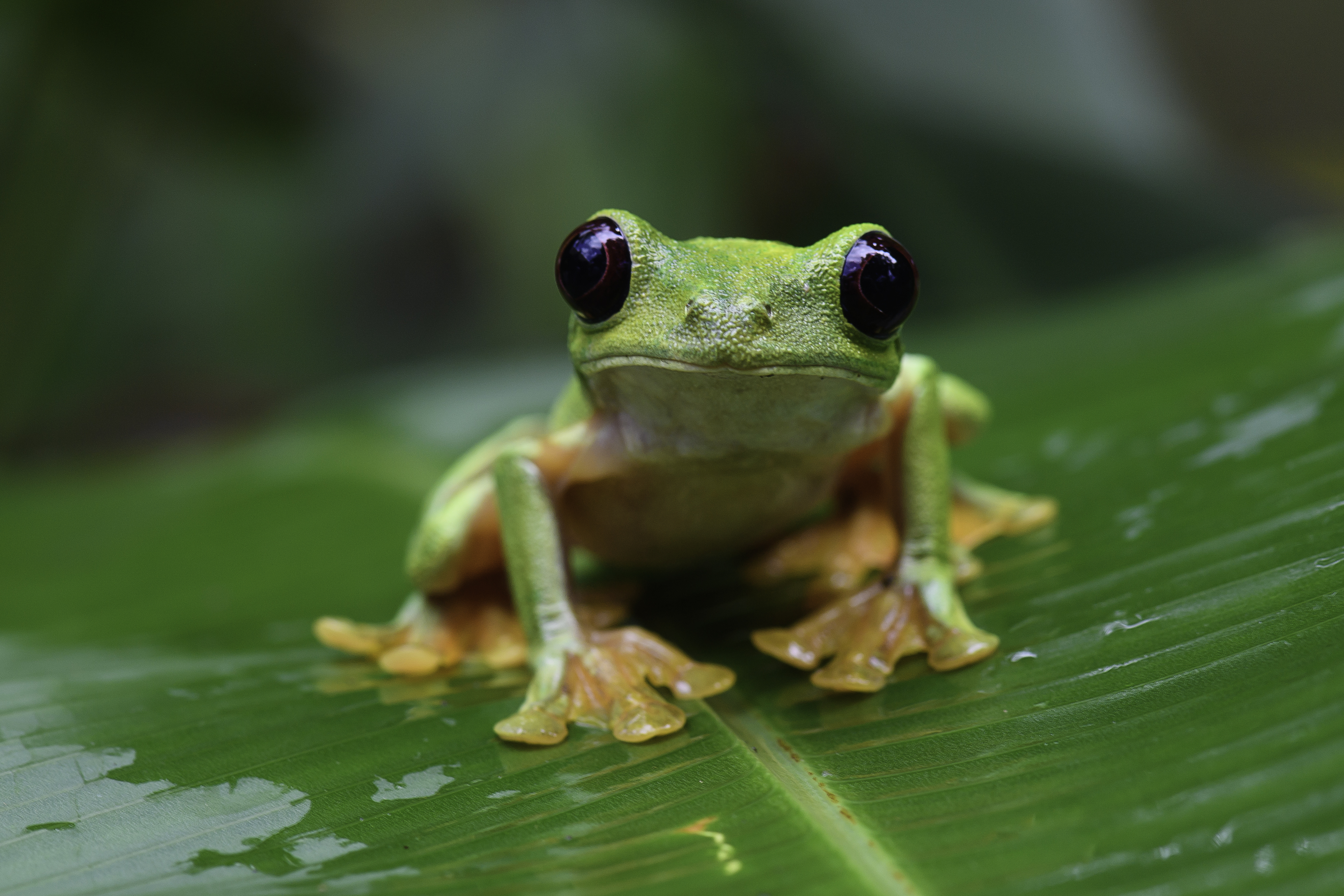
Although my primary reason for coming to Costa Rica is to photograph birds, my favorite photographs have been the ones I’ve taken of the Red-eyed Tree Frog on the night walks to the frog ponds at Luna Lodge.  On our first day here, I told Eric, our guide, that I would love to be able to photograph a Red-eyed Tree Frog in the daylight, something we did on our first visit to the lodge in 2015.  Eric said he would find me a frog.  Thursday night was our scheduled night walk.  This year, I chose not to take the night walk because I was nervous about walking on the treacherous, slippery, steep, narrow, tree root covered trails in the dark because of the recent rains.  True to his word, though, Eric found not one but two tree frogs for me.  The Red-eyed Tree Frog escaped before we could photograph it in the daylight but the Spurrel’s Flying Tree Frog stayed just long enough for us to get some shots.  His eyes aren’t as fiery red as the Red-eyed Tree Frog and his legs are orange not white but he is just as adorable.  He was anxious to get back to his pond and after a few minutes, Eric returned him to his pond.


spurrel's flying frog 2

2017—The Ants Go Marching. . .

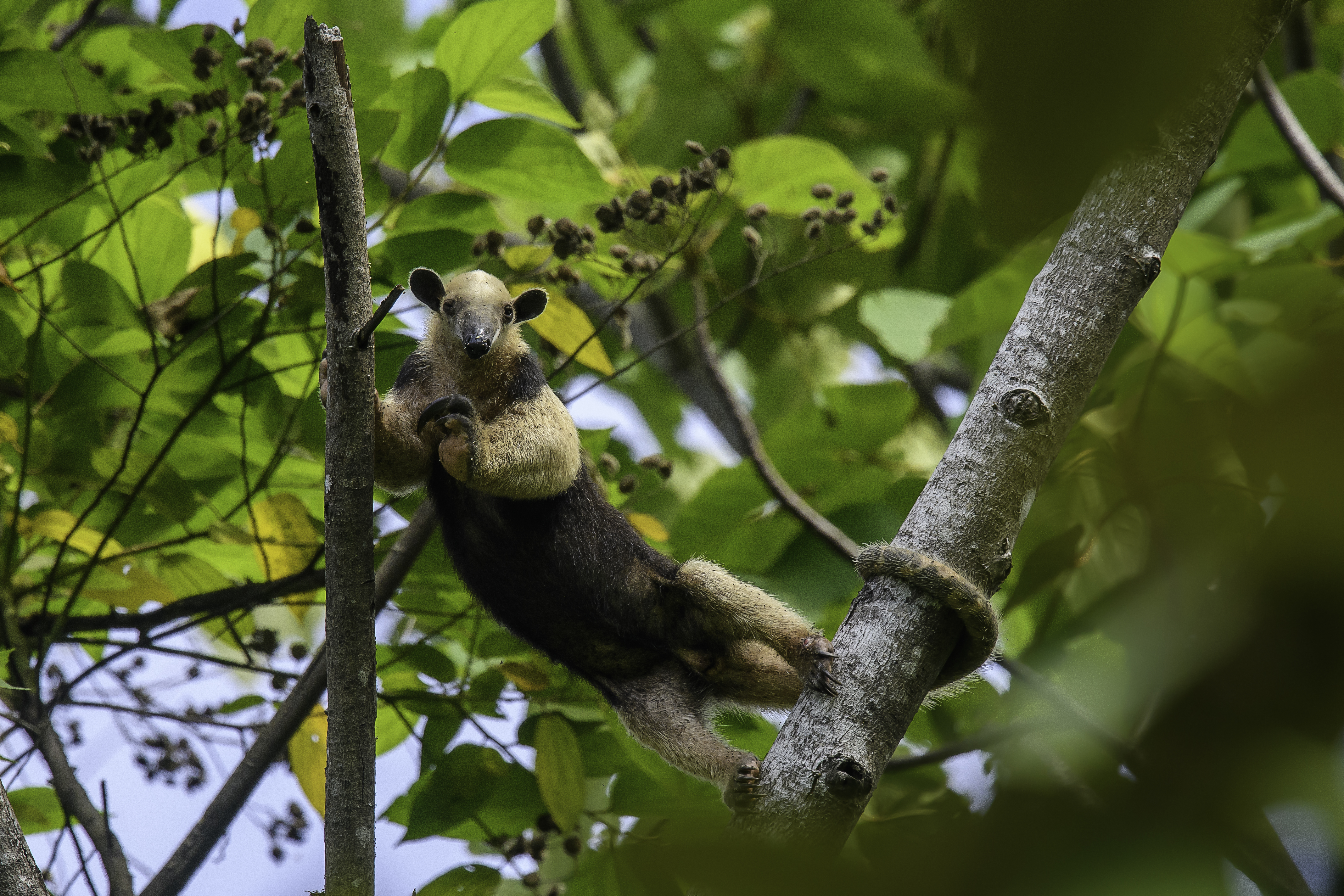
. . . all over the anteater.  This Northern Tamandua, also known as the Lesser Anteater, ambled across the road to Puerto Jimenez and climbed into the nearest tree.  His arms and head were covered in ants and he continued eating as the ants crawled among the branches and swarmed over his body.  Here, he takes a break to check us out as we stood beneath his tree, lenses aimed directly at him.

Lesser Anteater.jpg

2017—Vacation With Bobo

The road to Puerto Jimenez was bumpy and rutted as we spent the day searching for birds and critters.  Along the way, Eric our guide, whom I had previously alerted to search for Red-lored Amazons, found a noisy group along the side of the road.  I felt like I was on vacation with Bobo.

Bobo in Costa Rica.jpg