2015—1943
Finding myself with some free time Monday, I decided to look over my father’s “coin” collection, such as it is. My brothers, my nephew, and I have agreed to divide it equally among ourselves although I’m not sure how to accomplish that task fairly. The valuable coins (in particular, 1909 S VDB Lincoln Pennies) were sold long ago although I’m certain that there is value, if only face value, in the remaining coins.
As I sorted through the plastic bags of coins that my parents stored in old fruitcake tins and other unlikely containers, I came across a bag of 1943 steel pennies. The United States Mint temporarily suspended use of copper in pennies to ration the metal for use in war materials. When I was little, I was always fascinated by those steel pennies that in the 1950’s were still fairly common. But, until I came across my dad’s stash, I hadn’t seen a steel penny for decades. I quickly lost interest in the coin collection and, after getting my rare earth magnets, began to string the coins together magnetically. It struck me that I should take a photo of the coins dangling in the air so I set out to accomplish that task instead of figuring out how to divide up the coin collection. That will have to happen another day.
I wanted to show the coins dangling in the air, seemingly without support, but I had trouble showing that. I discovered that without some perspective they appeared to be laying on a black background. So I threw a few coins underneath the dangling cluster. That helped a little. The coins are all different colors, ranging from bright silver (they’re coated with zinc) to black to rust. Some even have a golden look. I discovered that the value of circulated steel pennies ranges from 20¢ to 50¢ a piece. This collection of steel pennies might be worth as much as 7, maybe 8, dollars! Woot! Let’s see; divided four ways that’s . . . .

2015—Nap Time
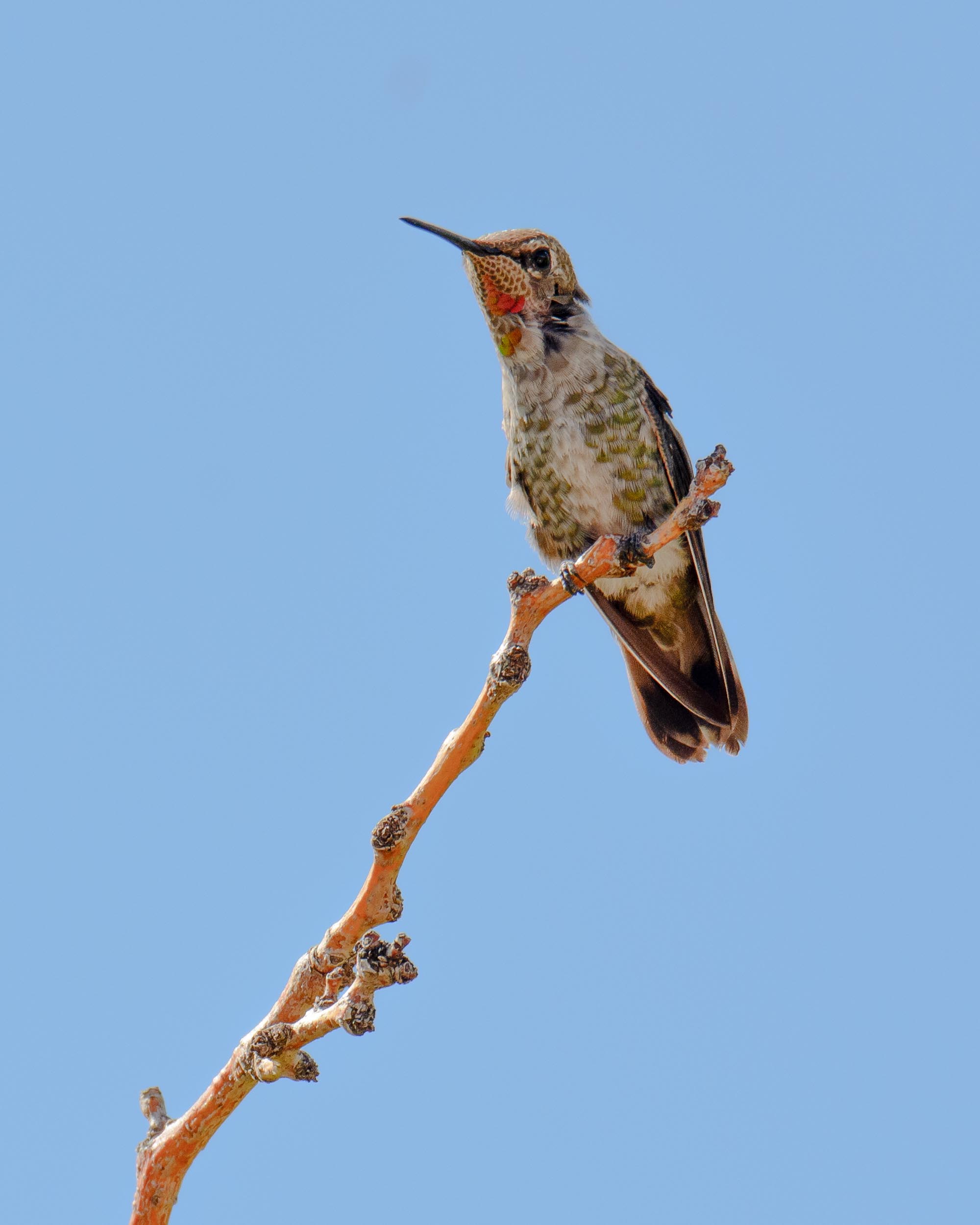
I took these four shots of the same hummer over a two minute period while he rested his eyes between trips to the feeder.

2015— Halictinae Halictini Halictus
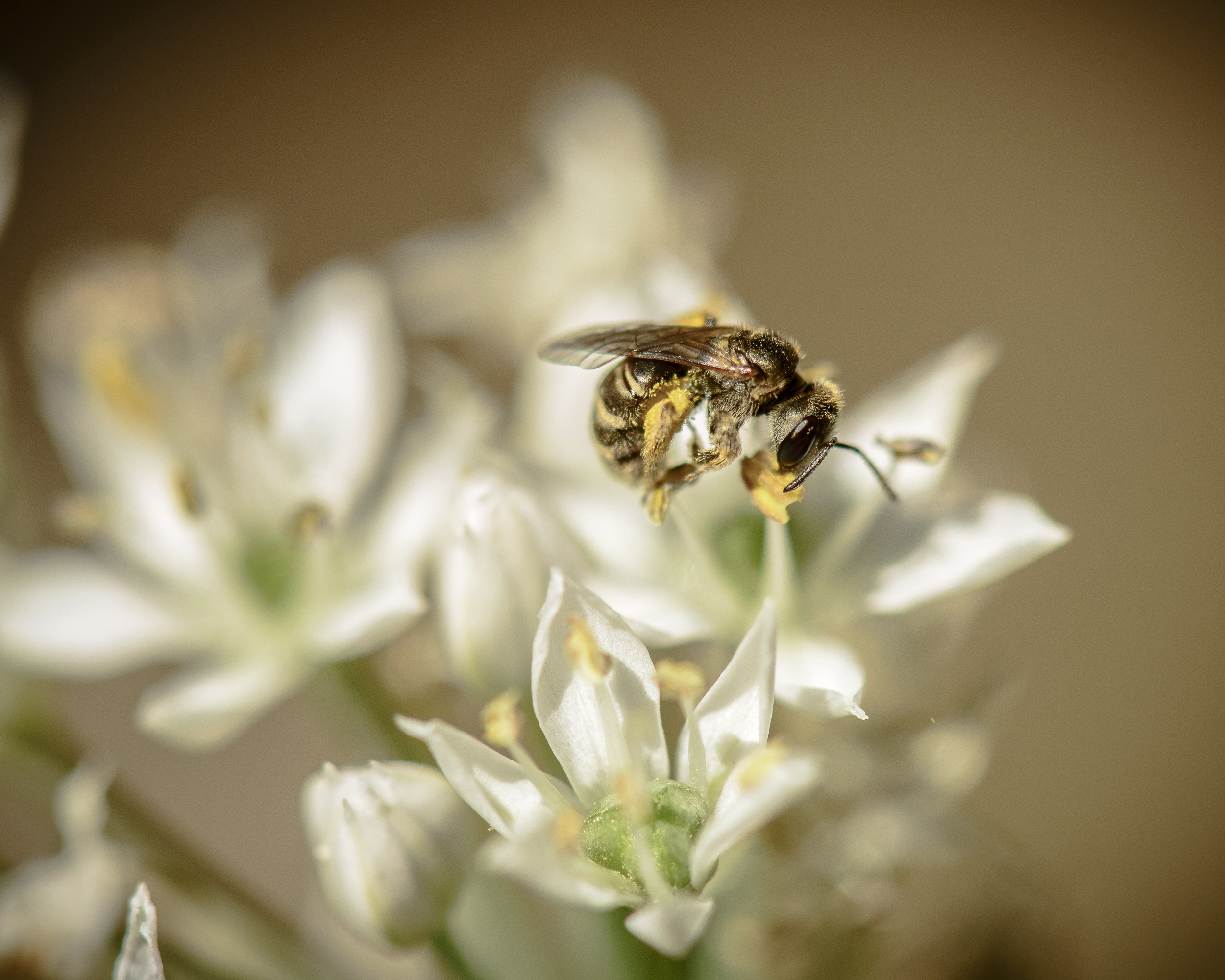
I was outside trying out a technique I just learned for creating a long exposure look without using a Neutral Density filter. It’s a good technique for creating a silky look for moving water but I don’t have the kind of moving water needed to use this technique effectively so I was distracted by the garlic chive blooms and all of the tiny creatures they attract. I got my macro lens to photograph the tiny flying things and was amazed to see they were busy as bees collecting nectar and pollen from the tiny garlic chive flowers. And, in fact, they are bees. I had no idea bees could be this tiny. These were between 1/4 and 5/16 of an inch in length but they look and act exactly like honey bees. A little on-line research revealed they are probably a kind of sweat bee [specifically, Halictinae (Subfamily) Halictini (Tribe) Halictus (Genus)] so called because they hover around people and collect moisture and salt from sweat on a person’s body. They seemed intent on collecting pollen and nectar from the chives and none hovered to collect any sweat from me because I wasn’t sweating (or should I say “glowing,” after all, horses sweat, men perspire, and women glow).
Here is a shot of that tiny bee, pollen sacs filled, seeking more pollen and nectar on the garlic chives.
2015—Golden Hour At Willow Lake
One of the advantages of a visit with Melinda is the inspiration I get from her to edit my photos. When I started my blog, I was so intent on mastering the technical aspects of photography——the exposure triangle: aperture, ISO, shutter speed; and of course focus——that I rarely made any edits to my photos, expecting shots straight out of the camera to be perfect. What I didn’t understand at the beginning was that photographers have always edited their photographs in some way. The act of developing a negative (or a digital raw file) requires edits in some form or other. I was very slow to pick up on that but over the years, and with Melinda’s encouragement, I have begun to edit my photos, sometimes discovering stunning beauty where I thought none existed. While I was in Arizona, Melinda and I visited Willow Lake at golden hour. I was disappointed by the light that evening and my shots seemed dull and lackluster. Then, I decided to see if editing would help. I turned up the “dehaze” filter (my new favorite Lightroom editing tool) and saw improvement immediately so I began to tweak other sliders.
Here are two shots from that evening, the first facing away from the setting sun and the second taken about 15 minutes later facing the setting sun. With these edits, they don’t seem dull and lackluster to me any longer.


2015—Saguaro
The saguaro cactus grows only in the Sonoran Desert which has altitudes under 4000 feet. That means there are no saguaro cacti in Prescott, Arizona which has an altitude of about 5400 feet, well over the highest elevation where saguaro cacti can thrive. As Lonnie and Melinda drove me to Phoenix to catch my flight home, saguaro cacti began to appear along the highway as the elevation dropped and we got closer to Phoenix. I commented that on my next visit, I wanted to photograph some of these iconic symbols of the Southwest with their anthropomorphic tendencies. No sooner said, than done. Lonnie pulled into a shopping center that features quite a few of these interesting succulents, many with cactus wren nests tucked in the crooks of the plants’ arms, including the one I photographed. We even saw a cactus wren. I tried to photograph the cactus with a neutral background so that the shopping center buildings didn’t show. The only way I could do it was to aim up. None of the saguaro cacti that we saw in the center had arms with an unusual pose so the shot isn’t particularly interesting but after I edited it in Perfect Effects Black and White to give it an old look, I liked it better.

2015—Looking Back
Melinda and I took a walk at Willow Lake during golden hour Tuesday evening, hoping to capture some beautiful light on the lake and on the granite Dells, the unusual rock outcroppings that rim one side of Willow Lake in Prescott, AZ. What I found instead was an adorable pup on a bench where his owner was resting along a path to the lake. I was instantly smitten with this little dog as he looked back at me over the bench. I edited the photo in Topaz Glow using one of its “feathers and fur” filters.

2015—Arizona Hummers
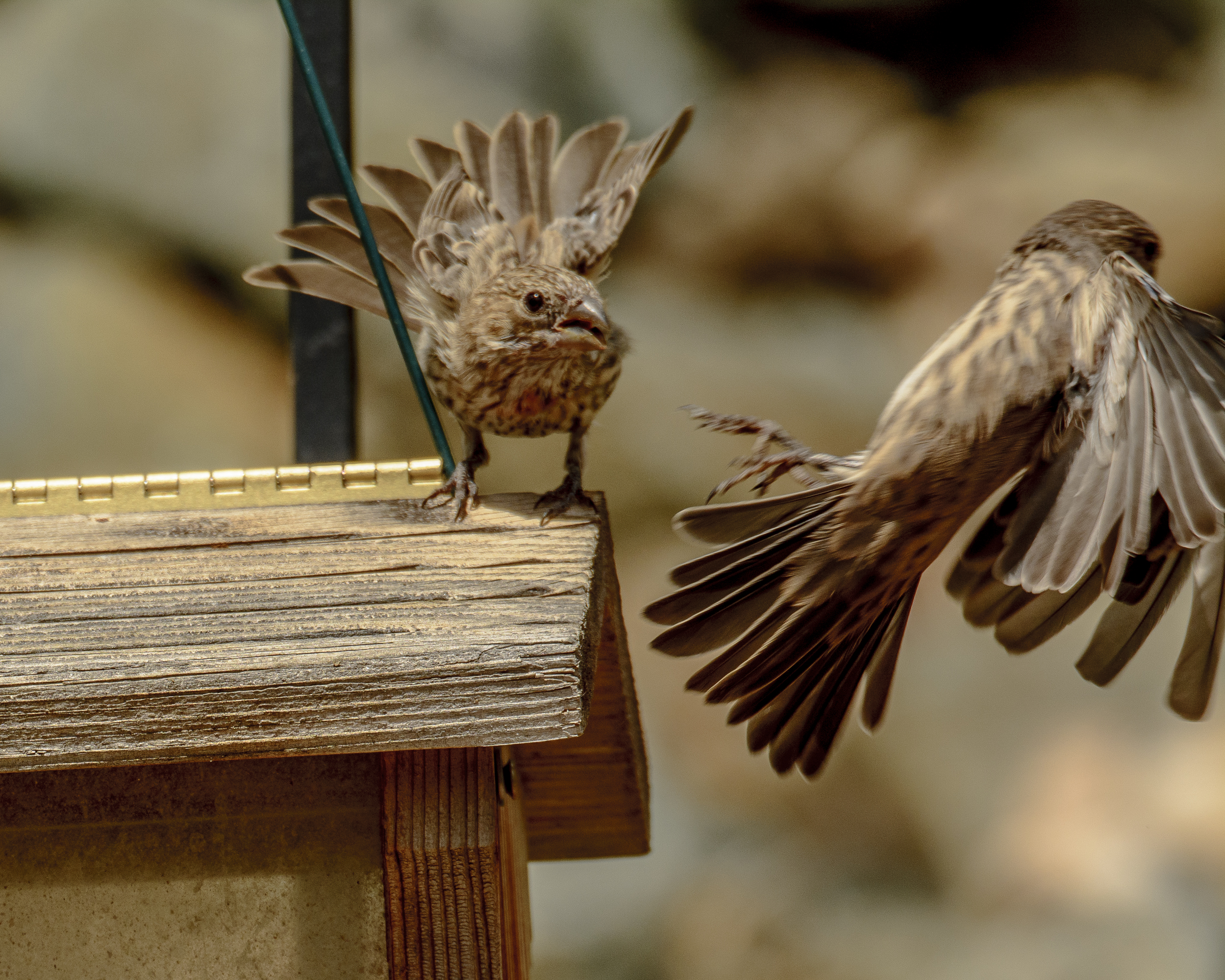
Regular readers of this blog know that I obsess about hummingbirds and take seemingly endless photos of them. While visiting in Prescott, I’ve had daily opportunities to photograph the hummers that feed in Lonnie and Melinda’s yard. I posted a shot of one of the hummers (or was it two different hummers?) here. I couldn’t identify those hummers, but I was convinced that the hummer I photographed on Monday was a female broad-tailed hummingbird because on close examination of the photos, the bird had some rufous coloring on the tail feathers, which only the female broad-tailed hummers have. A rufous colored tail feather is barely visible in the first photo. But I’m not sure anymore because the wings, which extend to the tip of the tail, don’t extend that far in broad-tailed hummers according to The Sibley Guide to Birds (Second Ed.). Another possibility is the black-chinned hummer whose wing tips extend further but the females don’t have rufous coloring on the tail. Then Tuesday I took shots of a hummer at the feeder but I have no idea what it is. It could be one of the same hummers I photographed over the past few days . . . or not.


2015—Twister
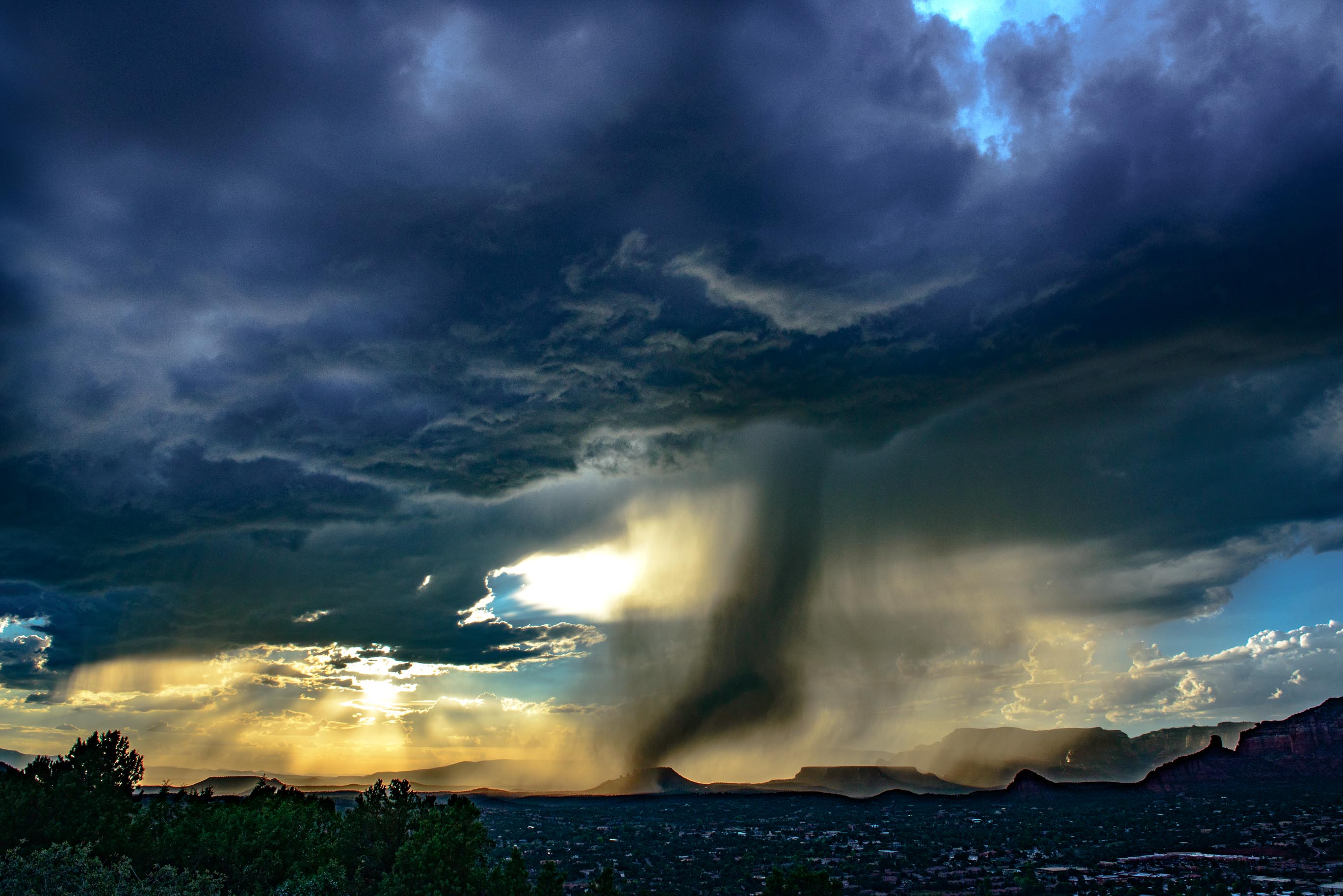
I didn’t think I could top my lightning photographs from Sunday evening but the Arizona Monsoon Gods have been good to me. Lonnie, Melinda, and I drove to Sedona Monday afternoon to wander through shops, have dinner, and find a good spot to view the sunset. The clouds promised a spectacular sunset. During dinner, eating on the patio of El Rincon in Sedona, the winds were literally blowing up a storm. We wondered if the weather would be too stormy for photography. Lonnie has become our photography muse and as Melinda and I finished eating our fajita salads, Lonnie was immersed in his iPhone. It turned out he wasn’t being rude; he was searching for the best sunset views in Sedona. And, he found a good one.
We drove to the Airport Scenic Overlook with views of Coffee Pot Rock, Sugar Loaf, Thunder Mountain, Chimney Rock, and Cockscomb. We parked in the lot across the street and joined the twenty or so other visitors lined up waiting for the sun to set. Melinda and I were the only photographers using cameras and tripods. Everyone else had a phone or a tablet so we were viewed as real “photographers” and they stepped aside when we approached the edge of the lookout to set up.
It was raining in the distance and I wanted to capture the entire scene with the dramatic clouds and the rain over the distant rock formations. As I looked at the rain I marveled at the dark core in the center of the downpour. As we watched, Lonnie and I discussed whether it might be a tornado. After viewing the sequence of photos ——I took 17 in about a 6 minute period—— we both believed we had witnessed a tornado.
I have no idea if what we witnessed really was a tornado but it sure looks like one to me. What makes this event doubly exciting for me is that next April I’ll be joining Moose Peterson on a storm chasing expedition during peak tornado season in the Central Plains so this is a little practice for me.
In the first shot it is about to touch down, in the second, it touches the rock formations, in the third it lifts off, and in the last, it dissipates. The rain is swirling at the right of the dark area.