2025—Balancing Act

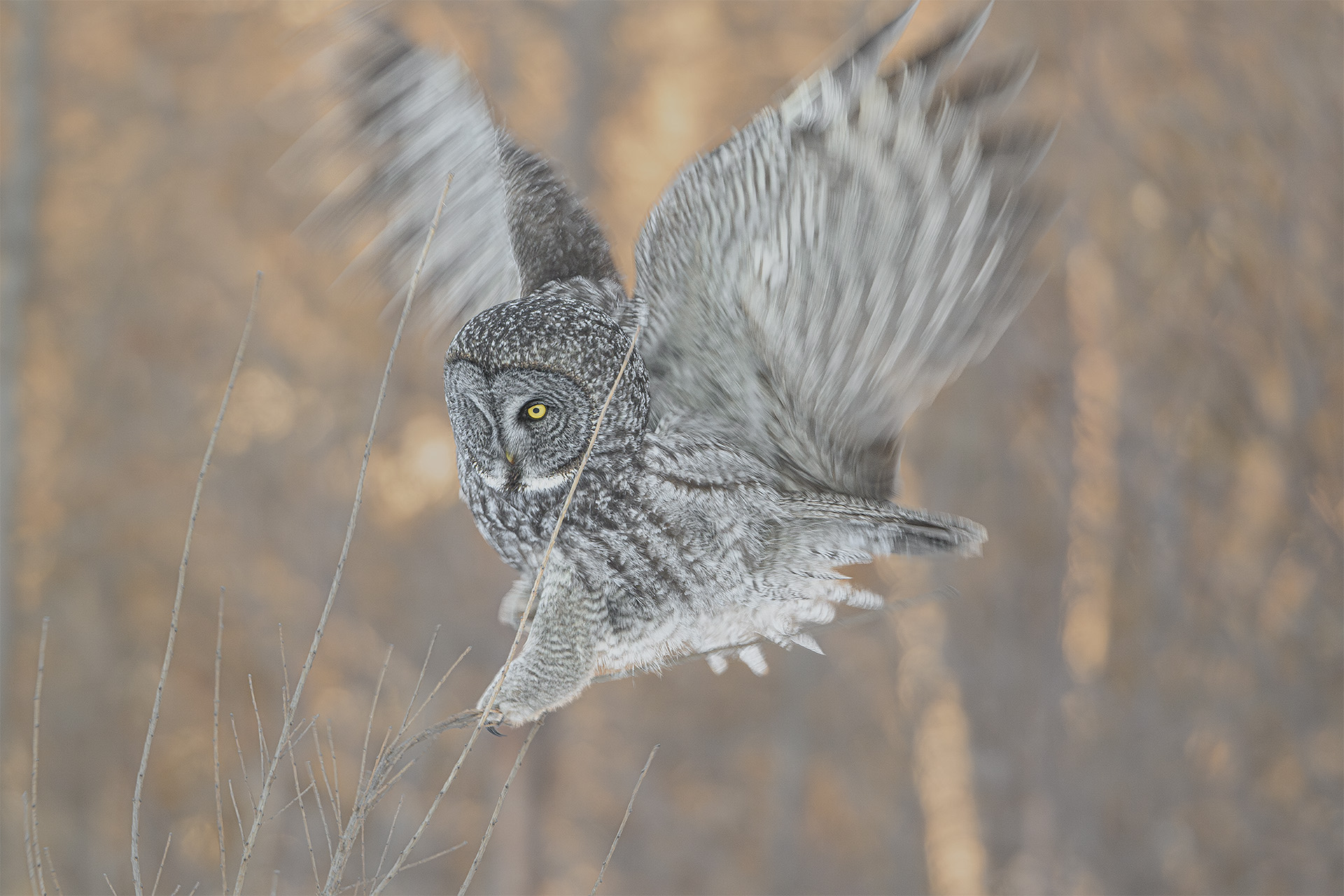
Great Gray Owls, at about 24 inches in length, are North America’s largest owl by length but, not by weight. We watched this Great Gray Owl move from perch to perch over a four-hour period on our last afternoon at Sax-Zim Bog as he sometimes dozed and sometimes listened for prey beneath the snow. When he chose this perch in a spindly leafless shrub close to the ground, a perch that seemed so flimsy I was surprised the owl stayed there, it must have seemed ideal because he performed a balancing act, twirling around until he finally settled down and balanced perfectly on the twig.

2025—Sunrise on the Madison

We had only one colorful sunrise in Yellowstone National Park last week when the temperatures hovered below zero and the skies were clear. On our last day, a few clouds formed in the skies, portending the storms predicted for the weekend. As the sky turned red, we stopped at a pullout along the Madison River. The colorful sunrise lasted mere minutes and when we walked a few feet further to get more of the river into the photograph, the color disappeared. I was lucky to get the few shots that I did. It was colorful enough to reflect a bit of color in the water as the steam rose into the frigid air.

2025—The Gaze

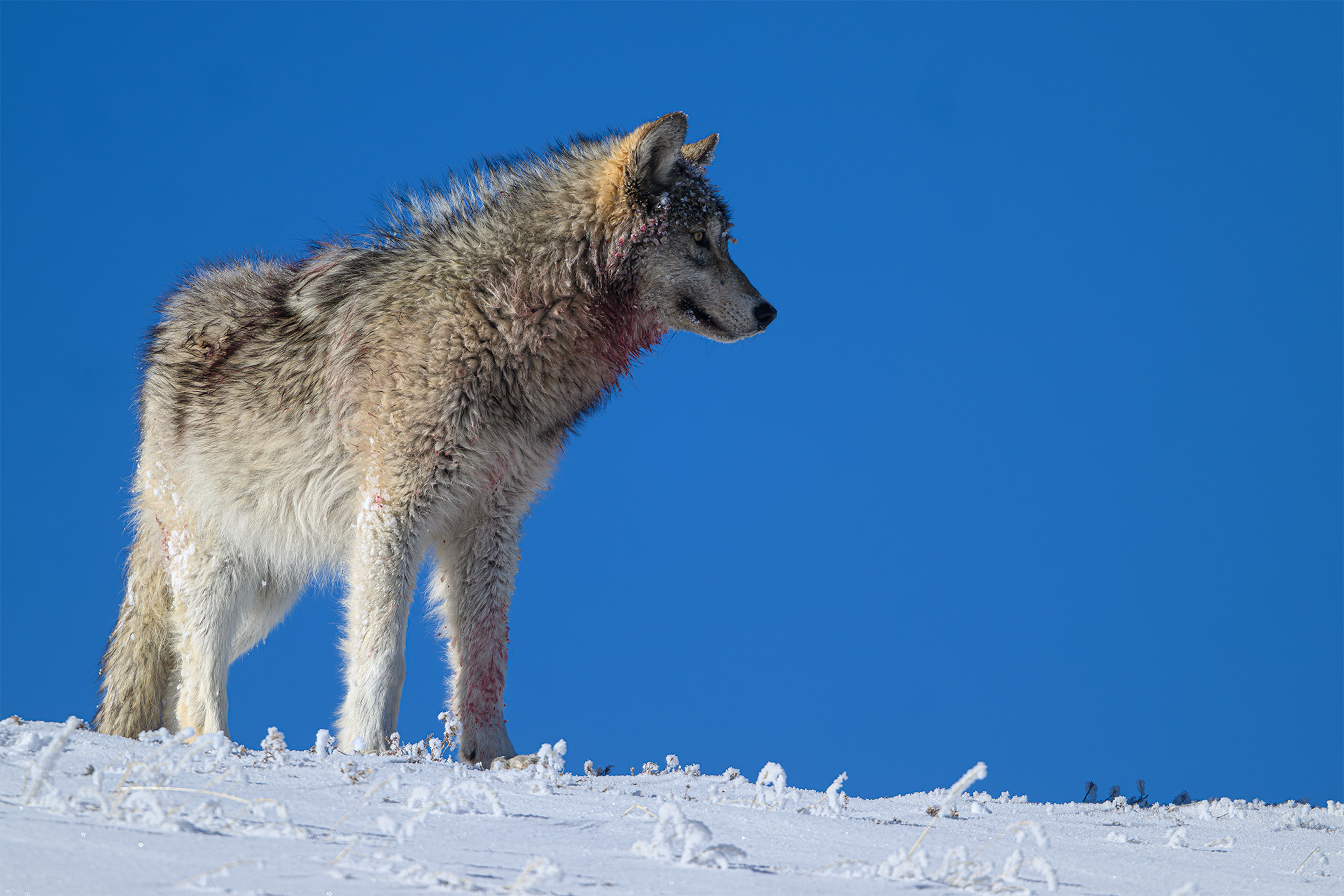
I’m still awed by the scenario we encountered last week in Yellowstone National Park when a pack of Gray Wolves harassed a group of Bison, then killed one they had singled out, right before our eyes. A lone Coyote had the nerve, maybe I should say hubris, to skulk around the periphery but quickly made an exit when one of the Gray Wolves that had already consumed a meal of Bison, went up the ridge to make sure the interloping Coyote changed its mind about trying to access the kill site and left the area. The Gray Wolf’s steady gaze was enough to keep the Coyote going in the opposite direction of the kill.

2025—Floofing Raptor

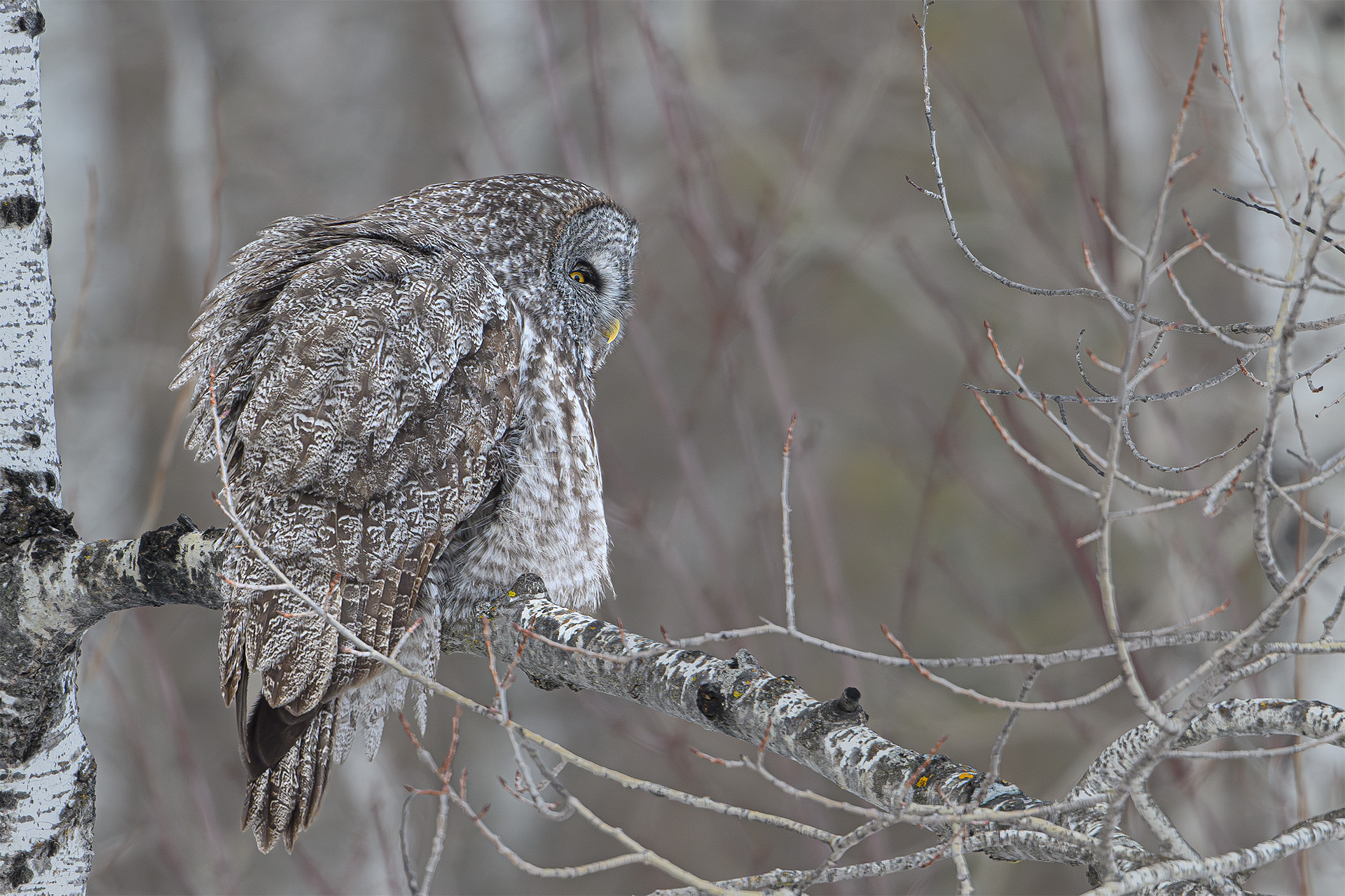
The Audubon Society’s definitions of “Birbs” continues to amuse me and often, when I see a bird, that bird’s appearance in relationship to those definitions is on my mind. Audubon clarifies the online avian classification of “Birb” as birds that are small, round, and the always cute. They go on to define “Borbs” (fat birds), and “Floofs” (fluffed up birds). Most birds of prey are usually, though not always, excluded from “Birbness” and “Borbness,” but they can, and do, “floof” at will so ruffled birds of prey can definitely be “Floofs.” Audubon clarifies that “Birb” and “Borb” are nouns and “Floof” can be either noun or verb. “Floof” is definitely more of an action on the bird’s part. When this majestic Great Gray Owl at Sax-Zim Bog fluffed its feathers a few weeks ago, it suddenly took on the appearance (to me) of a “Birb” or at least a “Borb” and most definitely a “Floof.” In fact, I think that it is round enough and cute enough that it should qualify as both a “Birb” and a “Borb” too.

2025—A Yellowstone Raven

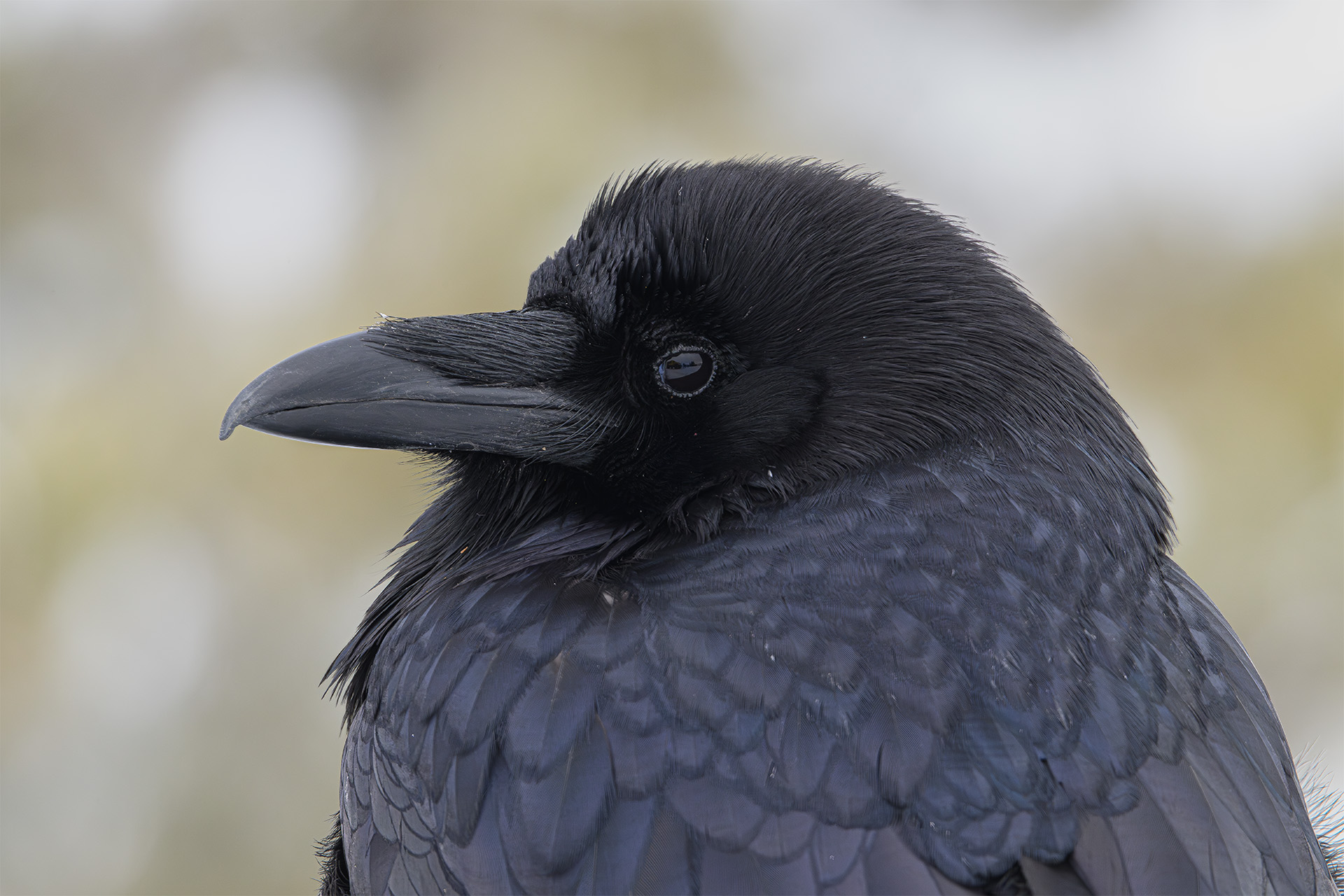
Common Ravens are quite common in Yellowstone National Park. The Ravens are opportunists. Wherever food might be available, there they are. This is very likely one of the Ravens that scavenged the carcass of the Bison that we witnessed the Wapiti Lake Pack of wolves attack and kill on Monday. I photographed this Raven on Friday in the parking pullout, near where we stood to photograph the Gray Wolves on Monday. By Friday, the Wapitis had moved on and almost nothing was left at the kill site. A pair of Coyotes and a few Common Ravens scavenged what few remnants remained. This Raven was perched on a log fence surrounding the parking area, not at all concerned with our presence and he moved only his head to look around occasionally. Maybe he was thinking that we might be a source of food. We were not, but if you look closely, you can see our snow coach reflected in his eye and me standing in front of it photographing him. He was probably trying to figure out how to get into our snow coach to ransack it for any food we might have inside.