
Many of the birds at Wakodahatchee Wetlands in Florida sported breeding plumage. The Glossy Ibis were no exception. Here’s a double dose of the colors on this bird with its reflection in the water.
Many of the birds at Wakodahatchee Wetlands in Florida sported breeding plumage. The Glossy Ibis were no exception. Here’s a double dose of the colors on this bird with its reflection in the water.
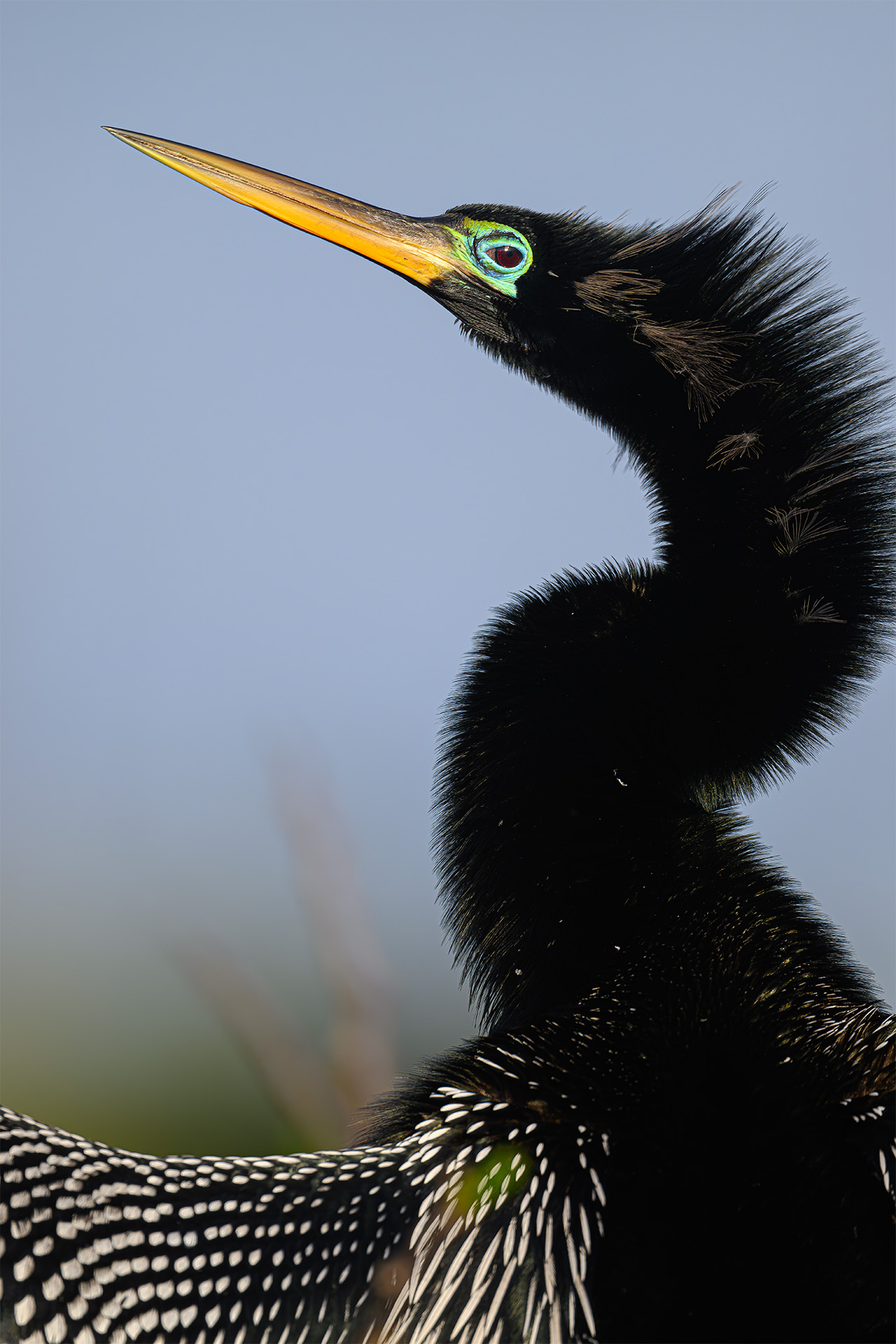
This haughty-looking Anhinga, also sometimes known as a Snakebird, seemed to be posing, wings outstretched, last week at Wakodahatchee Wetlands in Florida, but posing with an attitude based on this over-the-shoulder glance. I was close enough that only his snake-like neck, his head with the skin around his eye sporting the brilliant blue-green of a male in breeding plumage, and just a portion of the top of his left wing were showing. These large slender water birds are related to Cormorants and, like Cormorants, they stand with wings outstretched to dry their wings. Anhingas were nesting in large numbers in trees in the wetlands along with Wood Storks and Great Blue Herons. I saw one small yellow chick’s head peeking from beneath its mother’s breast feathers one morning but saw no others during the week. Their display with black and white dotted wings outstretched is eye-catching but I love the closeup of just his head and neck, emphasizing why he got his common name, and of course the gorgeous colors surrounding his eye.
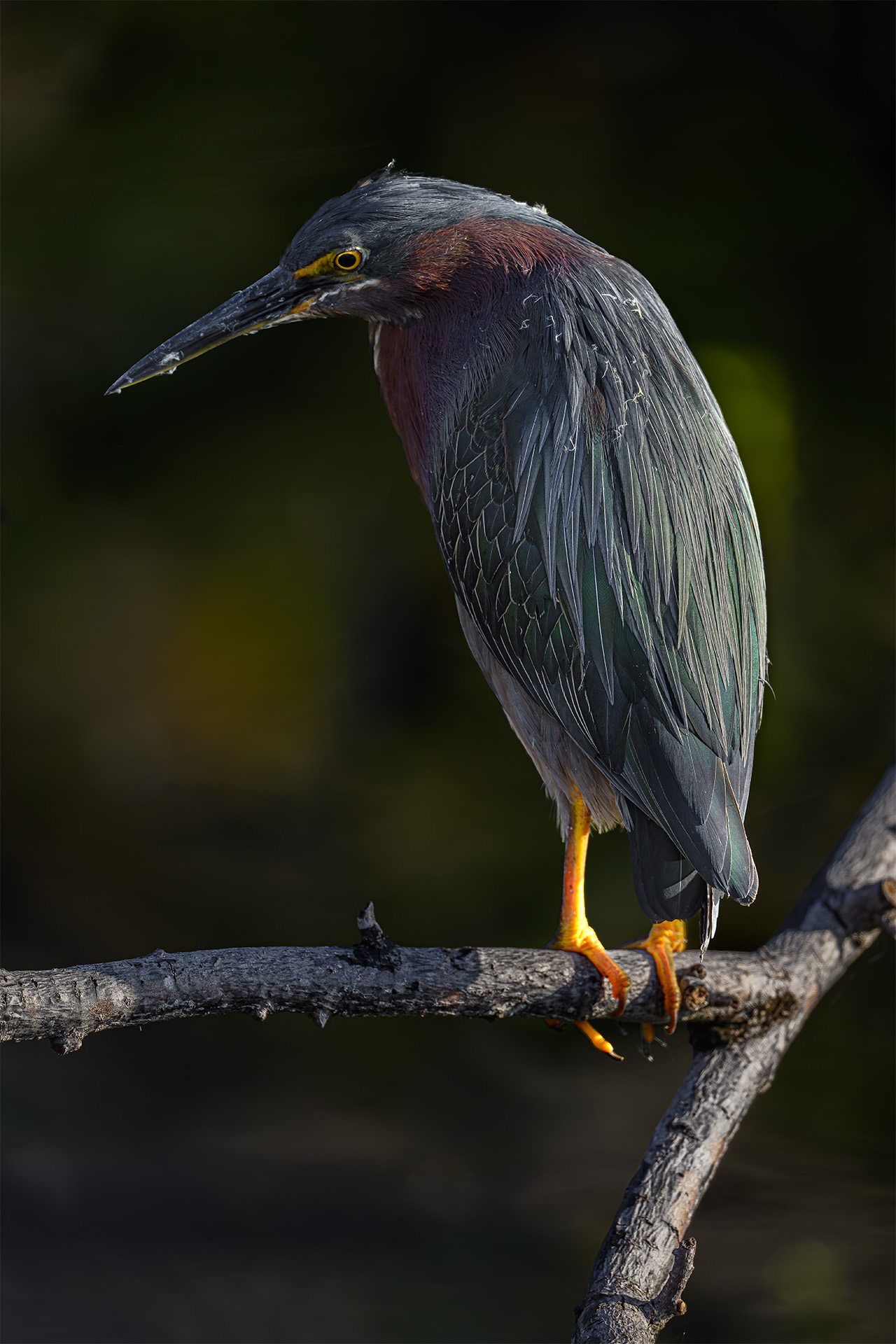
Green Herons, like all herons, are great hunters. They stand motionless for long periods as they watch the water beneath their perches. At the perfect moment, they plunge into the water, more often than not emerging with the prey they saw and gulp it down. There were quite a few Green Herons at Wakodahatchee Wetlands in Florida, almost all, like this one, perched with their attention focused on the murky waters below.
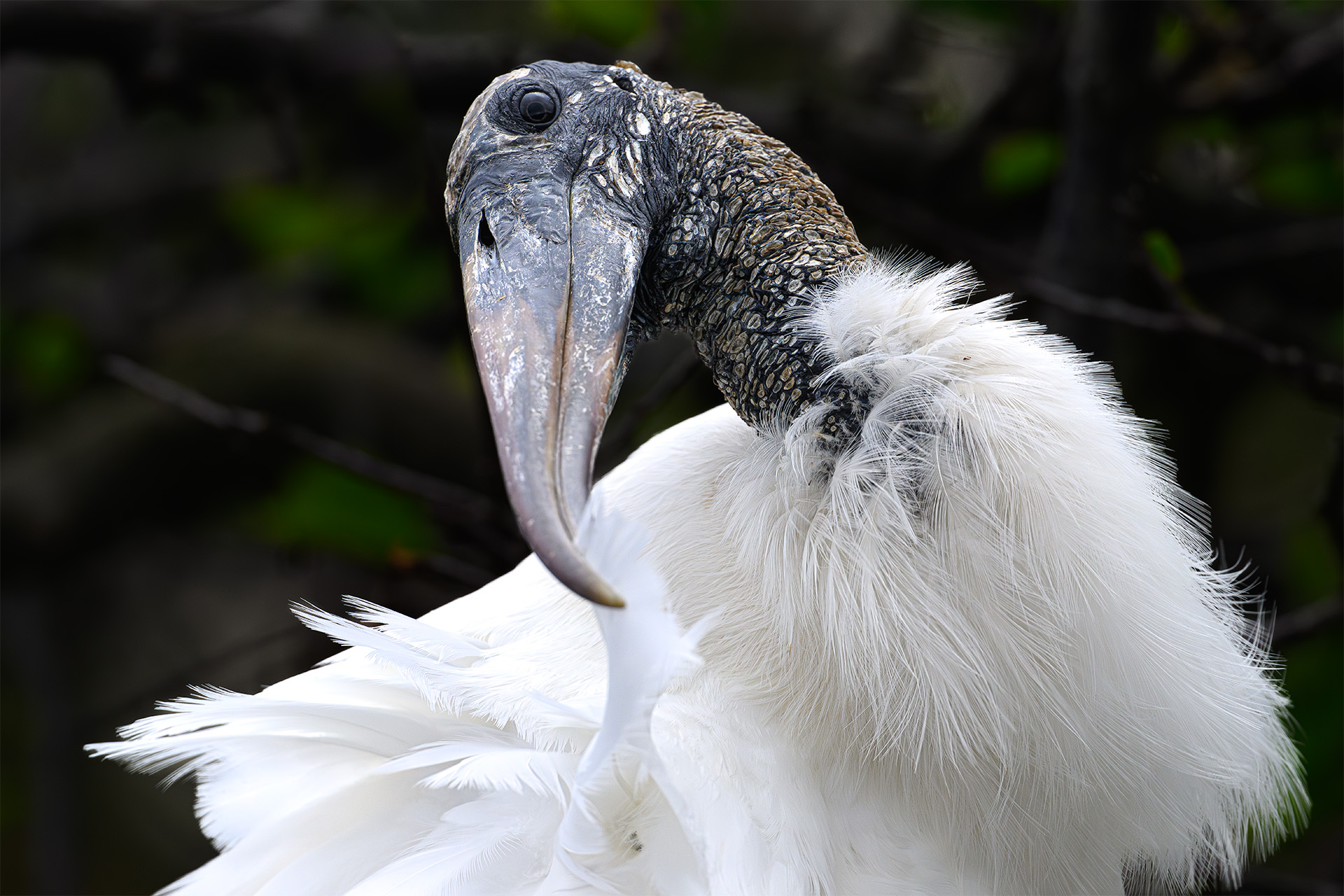
Let’s be frank. Wood Storks are just plain ugly. They are large, ungainly, and bald. But they’re not just bald. Their heads and necks are covered with lumpy scale-like grayish skin with no feathers. This preening Wood Stork looks very Pterodactyl-like, even more so than the also prehistoric appearing Brown Pelican. Despite their unappealing looks, Wood Storks are considered a “keystone species,” meaning they are critical to the overall successful functioning of ecosystems in Florida, according to the Florida Fish and Wildlife Commission. And they are listed as threatened on both the Florida and Federal Endangered Species lists. The Wood Storks are right at home at Wakodahatchee Wetlands. The wetlands serve as a giant rookery and most of the clusters of trees that sprout from small islands in the middle of the marshes are dotted with the scores of pairs of Wood Storks that have built nests in each tree.
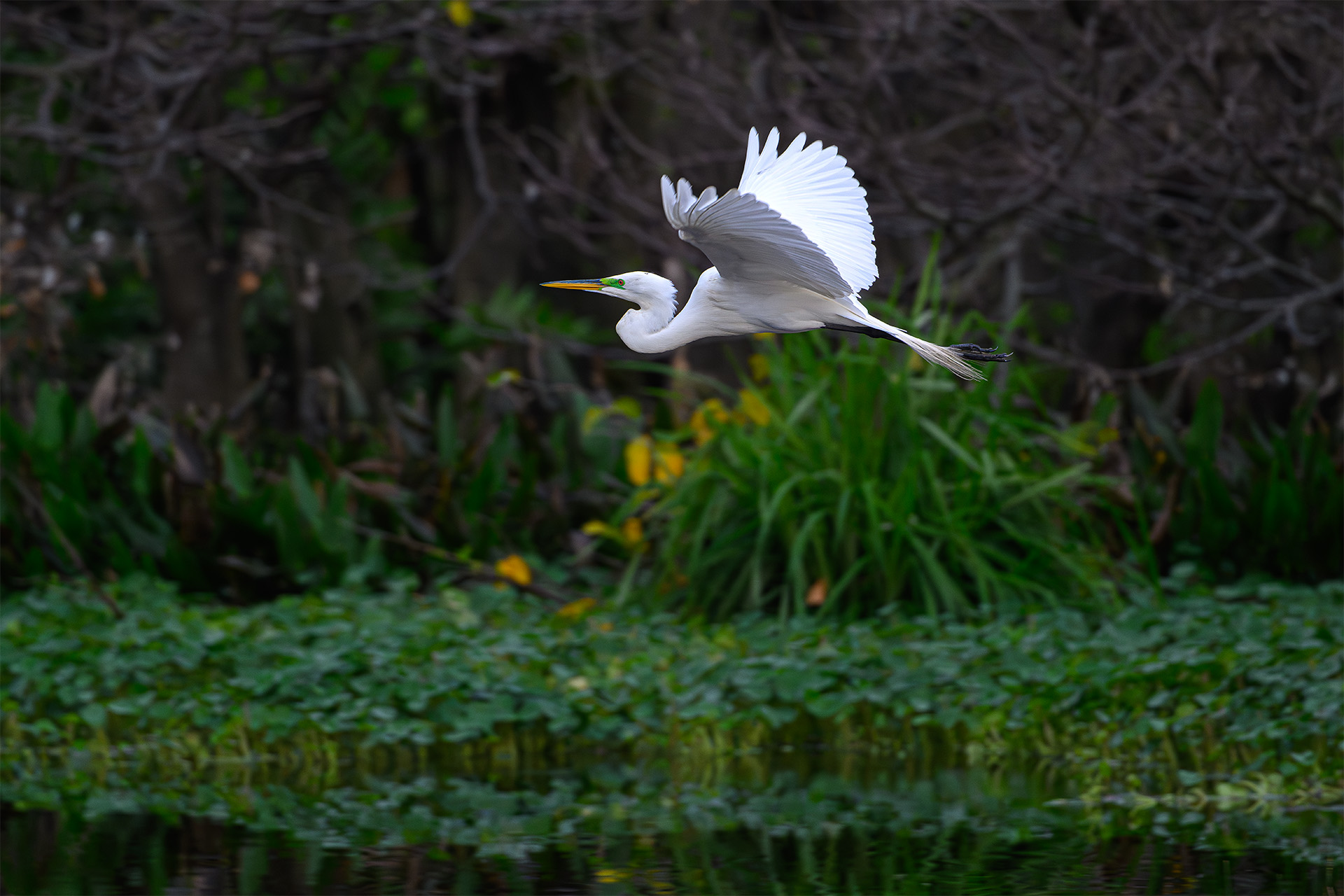
Great Egrets in full breeding plumage sport long plumes called aigrettes that create lacy umbrellas when they perform their courtship rituals. Their yellow beaks become brighter yellow and the top mandible turns almost black. But most amazing is that their lores, the area between their eyes, turns from a dull yellow to a bright neon lime green. As I watched this Great Egret flying over the Wakodahatchee Wetlands in Florida last week, aigrettes streaming out behind, I noticed that the yellow of the beak and the green of the lores matched perfectly with the background foliage behind him. You gotta love nature.

Burrowing Owls are so captivating that they’ll keep a smile on your face the entire time you’re watching them but when two of them are together, oh my! Which one do you focus on?? This pair kept their eyes on the surrounding fields, whatever was in the sky above them, and, us. My Sibley Birds App has kept me apprised of relevant information about the birds we photographed in Florida, including the Burrowing Owls. In fact, while Burrowing owls tend to occupy dens and burrows abandoned by other critters, in Florida, they often dig their own burrows. The soil is very sandy and the owl on the left spent some time remodeling the burrow, sending waves of sand into the air behind him and onto his mate who sat unmoving as the sand cascaded over and around.
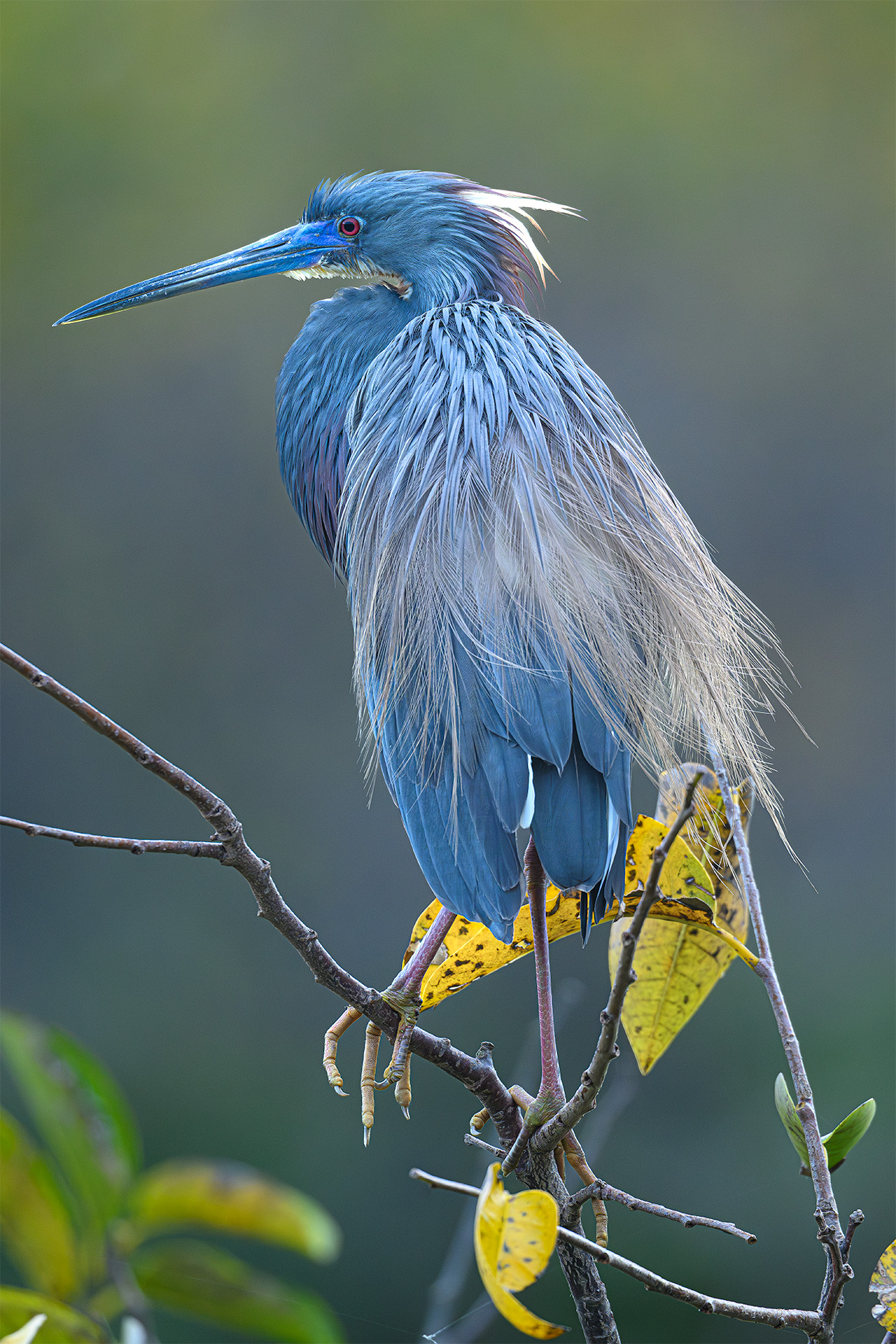
My Sibley Birds app notes that the beaks of Tricolored Herons turn blue when they’re in breeding plumage but it also notes that when the beak is this electric blue, it indicates courtship color in an adult. That difference is not described in detail but my guess is that the electric blue means that this particular Tricolored Heron is still working on attracting a mate and so its beak color is enhanced. I did notice that while some of the Tricolored Herons at Wakodahatchee Wetlands in Florida had blue beaks, only a few sported such an intense blue.
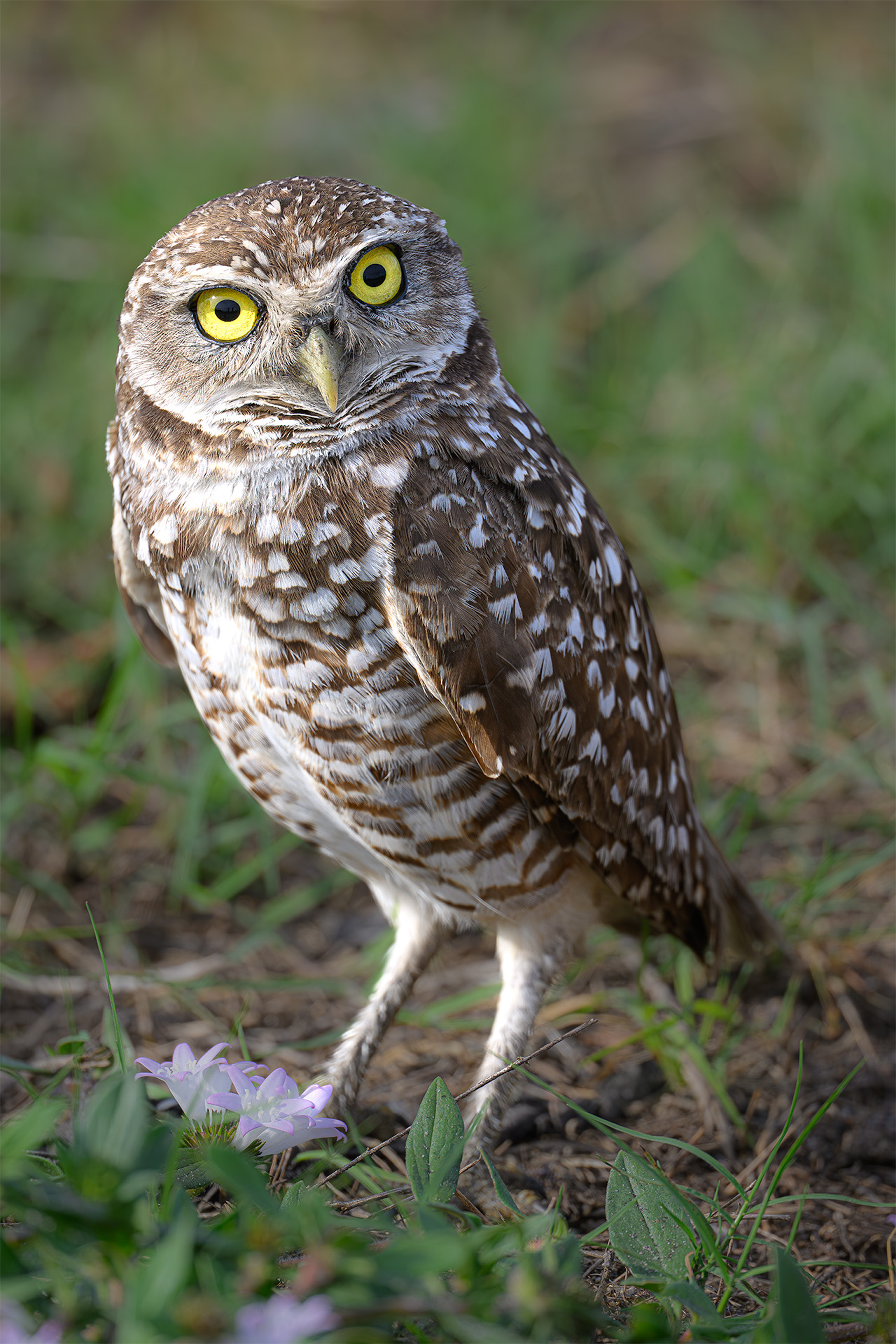
As we were leaving Wednesday afternoon, one of the Burrowing Owls at Brian Piccolo Park flew to the burrow across the walking path. When we returned yesterday afternoon, we were surprised to find two Burrowing Owls in one burrow and the other burrow appeared to be vacant. At one point, one of the owls emerged from the burrow and climbed to the edge. They have such expressive faces and the surrounding park grasses provided a soft green background. Their eyes changed constantly from wide open like in this image to half closed to sleeping and all of the appealing owl looks in between. We ended our trip on a high note, spending a couple of hours with the Burrowing Owls at Brian Piccolo Park.
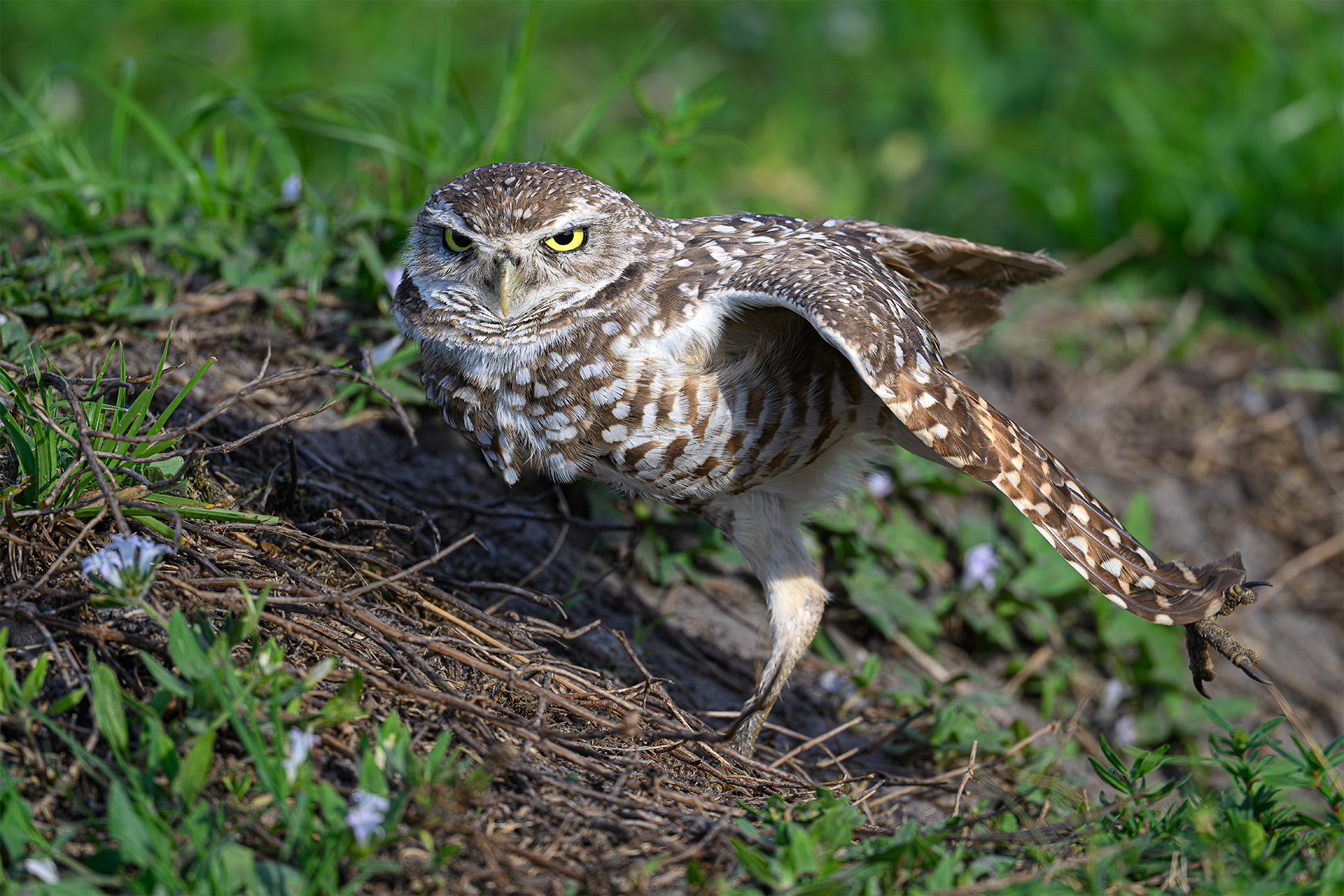
On Wednesday afternoon, instead of returning to Wakodahatchee Wetlands, we decided on a change of pace and drove an hour south to Brian Piccolo Park where a number of Burrowing Owl burrows are cordoned off to protect the owls but the burrows are visible in the midst of soccer fields and other park amenities. The park’s popularity for walking and soccer practices, seemed not to bother the Burrowing Owls. Their burrows were spread out throughout the park, in the midst of soccer fields and on either side of the main pathways. We watched a couple of the burrows for a couple of hours yesterday afternoon and the owls were not bothered with our presence nor with the nearby soccer practices going on but they were concerned about the Turkey Vultures soaring overhead. Two different owls poked their heads out of their burrows several times during our two hour visit there. Both emerged from their burrows and surveyed the area for quite a while, completely exposed. This owl did a leisurely wing stretch after emerging from its burrow. It then proceeded to watch the surrounding area before eventually returning to its burrow. Just before we left for the afternoon, it suddenly leapt forward and flew in a low trajectory across the walking path and to the burrow of its neighbor. The neighbor didn’t emerge and we had to leave so we didn’t see what transpired after that.
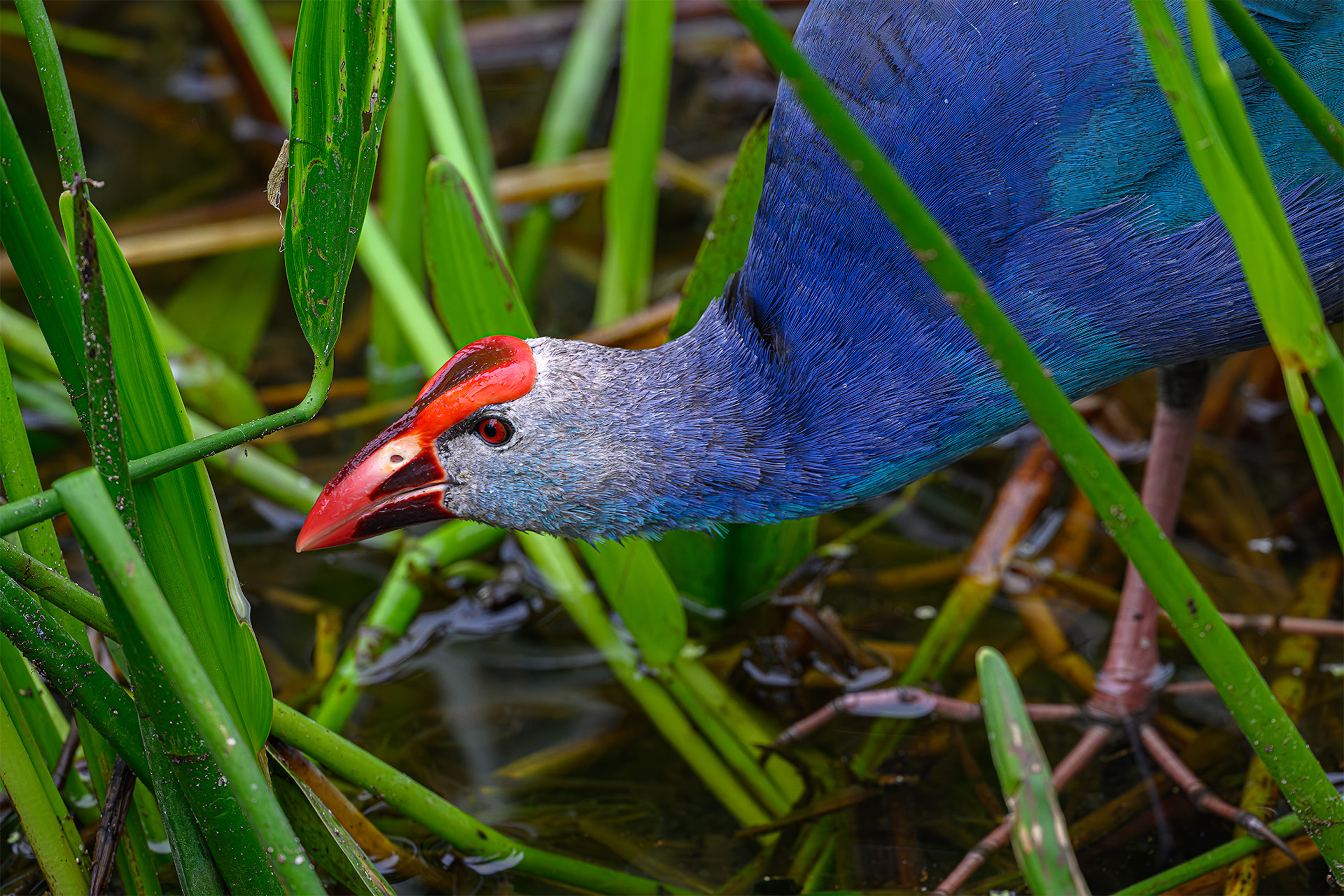
And another birding adventure started off with a spectacular first day yesterday at Wakodahatchee Wetlands, a park in Delray Beach, Florida created from unused utility land and transformed into a recreation wetlands that is part of the Great Florida Birding Trail. The light was with us with overcast skies most of the day, avoiding the harsh shadows that are especially problematic in an environment that is filled with sticks and leaves and busy backgrounds. Over 150 species of birds have been seen in the wetlands and on our first day, I photographed 15 different species which is about 10% of the species that live in or visit Wakodahatchee. We were excited to find a pair of normally elusive Gray-headed Swamphens, also sometimes called a Purple Swamphens, along the area beneath the boardwalk with mud and lots of aquatic plants like pickerel weed that the Swamphens love to pluck out of the water and munch. This image shows the Swamphen as it foraged through the weeds searching for the perfect stem to pluck and consume. As one of them approached the boardwalk to walk under it, I managed to get a few close up images before I exceeded the minimum focusing distance of my lens. The bird’s impossibly large toes which allow it to walk across the plants on the surface of the water are visible.
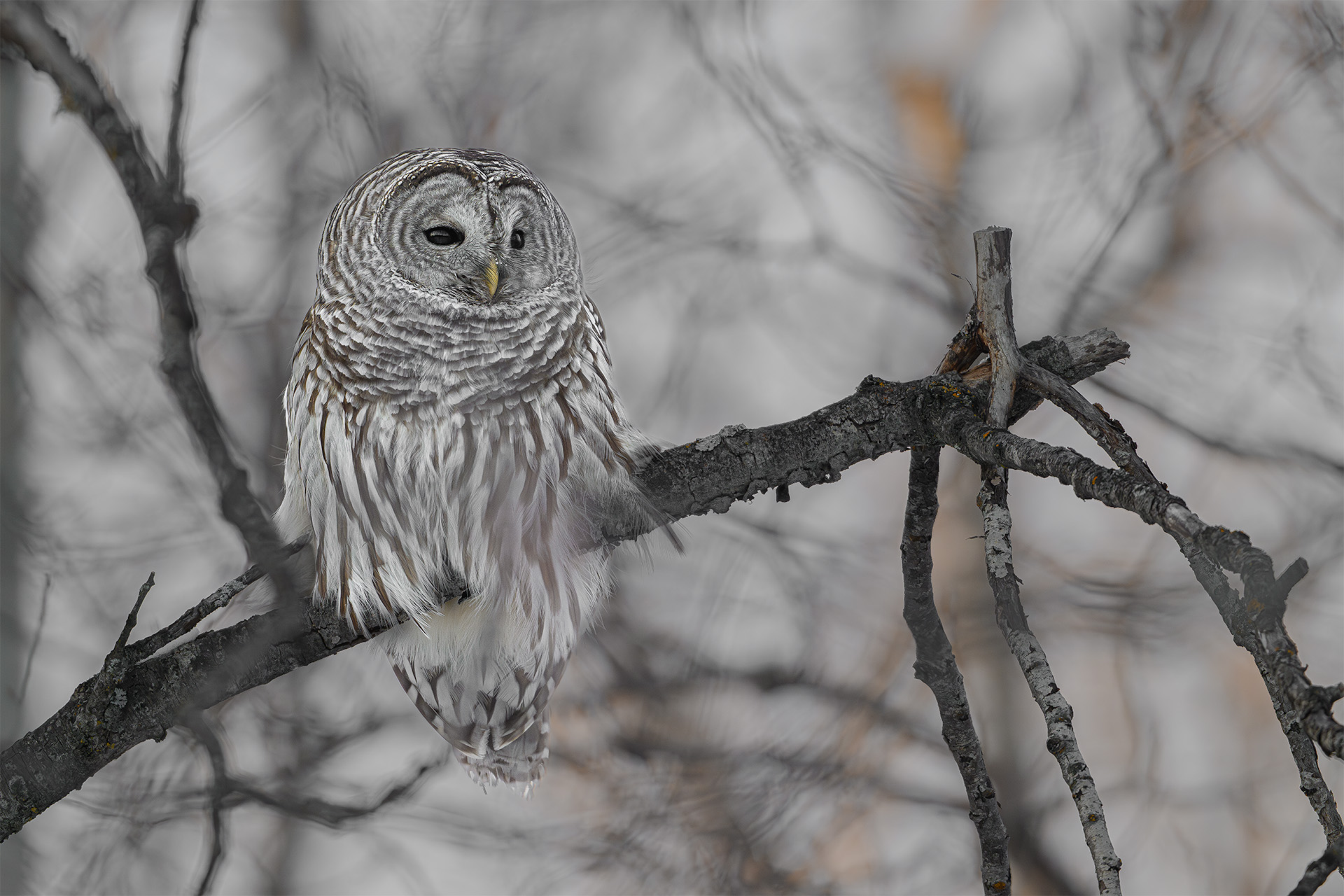
The Barred Owl that we photographed in Sax-Zim Bog last month has a very different look than the Great Gray Owl. Not only is it smaller with different coloring in its feathers, the eyes are very different. Instead of a yellow iris with a dark pupil that the Great Gray Owl has, the Barred Owl has distinctive large dark eyes. The Barred Owl’s dark eyes give it a softer, less intense look than that of the larger Great Gray.
Oh, a wondrous bird is the pelican,
His bill can hold more than his belican,
He can take in his beak,
Food enough for a week,
But I’m damned if I see how the helican.
—Dixon Lanier Merritt — 1910
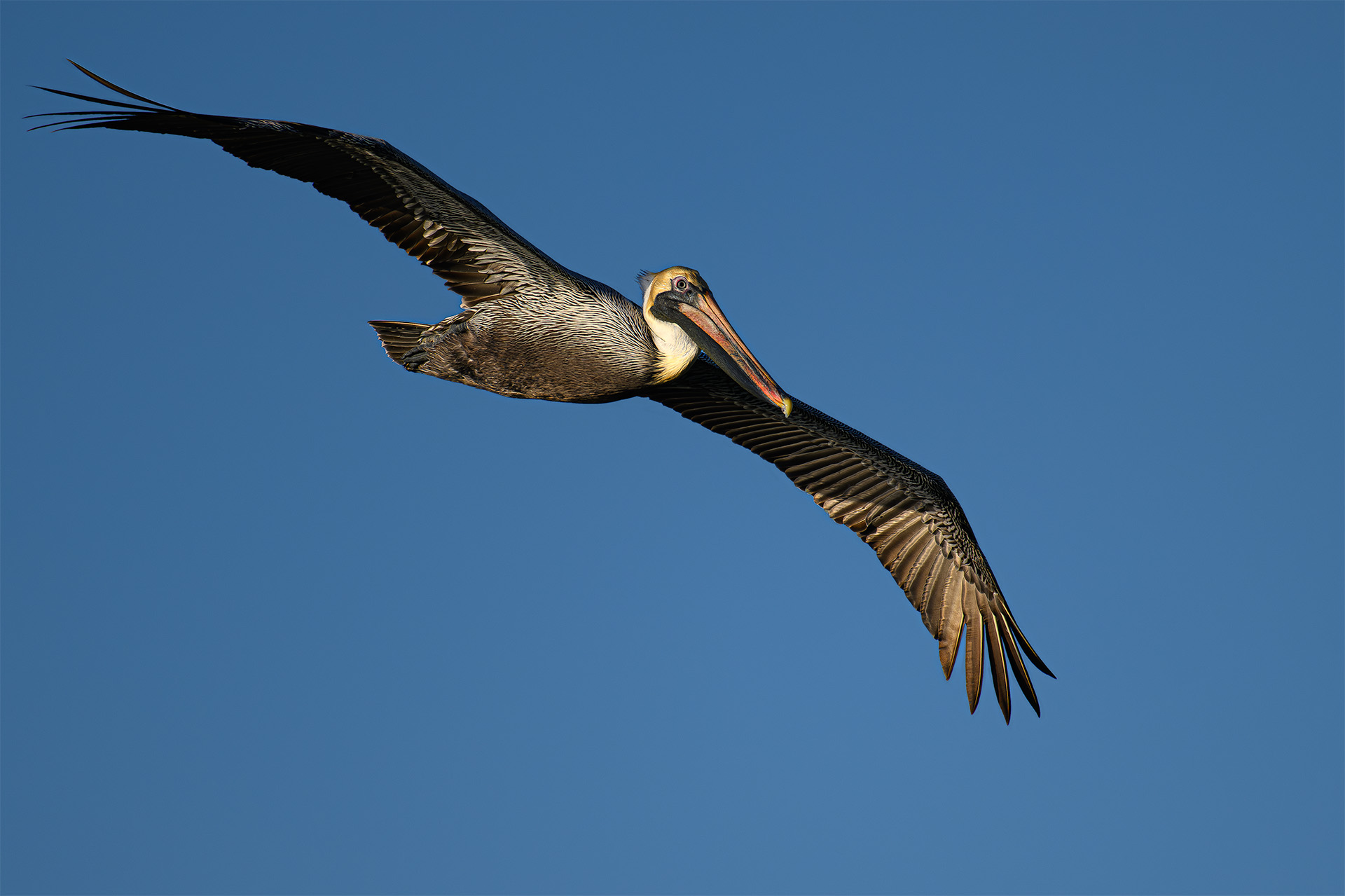
Brown Pelicans fascinate me, and, they have always struck me as looking very prehistoric. I recently stumbled across a “fun” fact sheet by California Audubon that included references to the above limerick which I first heard years ago. But it also pointed out that Brown Pelicans have a prehistoric look because their basic features have remained practically unchanged in the past 30 to 40 million years. That led me to a BBC reference to an article from fifteen years ago in the Journal of Ornithology that described how researchers, examining the fossilized remains of a Pelican, concluded at that time that the ancient pelican was almost identical to the modern species. In fact, their huge beaks have survived almost unchanged. Could Dixon Merritt’s poem unwittingly explain this phenomenon? That their huge beaks, which contort to accommodate whatever the Pelican catches, has always provided a practical and effective way to store and eat food so there has never been a reason to evolve further thus assuring their survival. Hmmm. Maybe the last line of the limerick, in reference to the Pelcian’s flexible beak, should read “And I’ll be damned, I can see how the helican.”
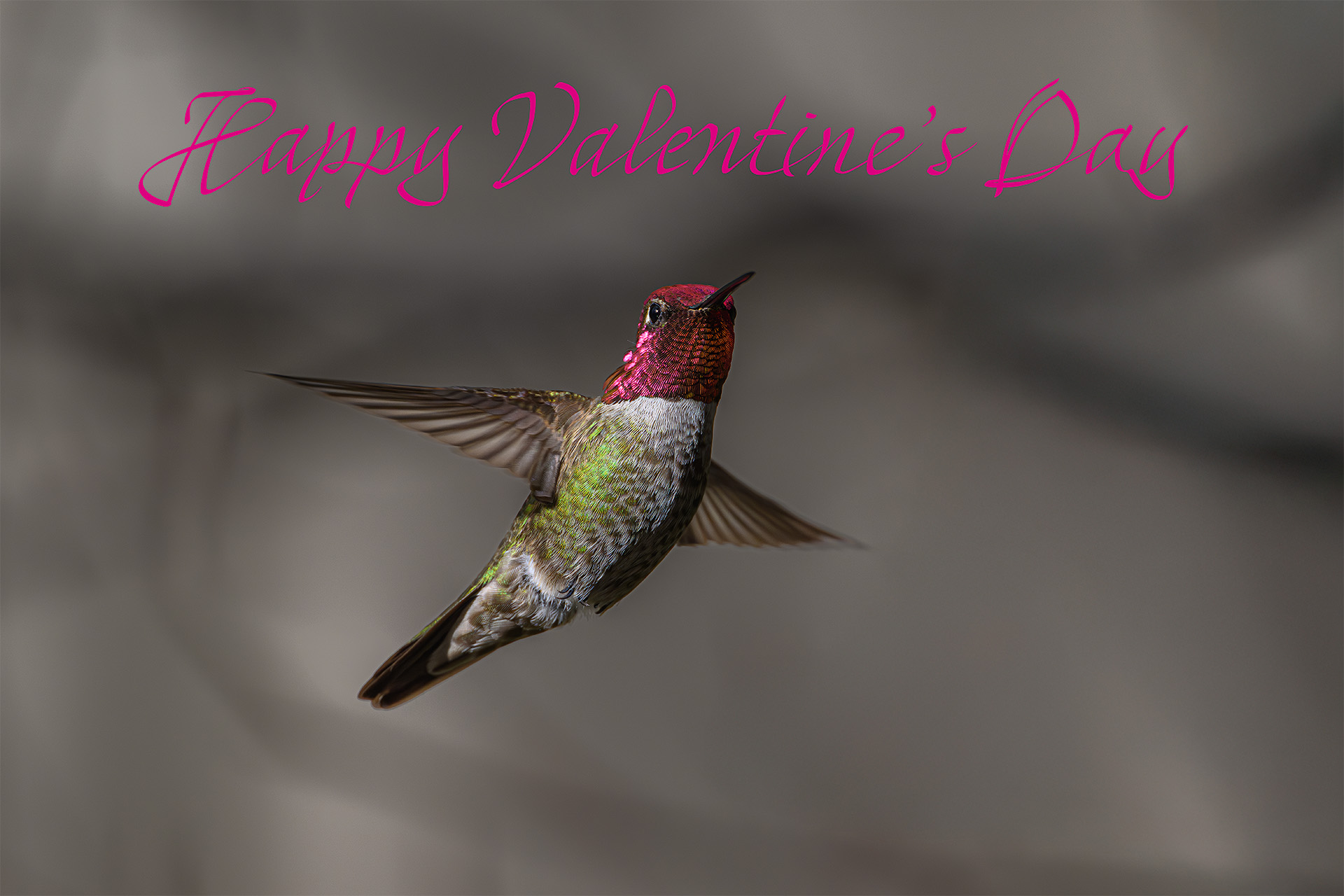
Happy Valentine’s Day! This male Anna’s Hummingbird’s gorget glowed a glorious pink yesterday afternoon when the sun peeked through the clouds briefly, and the light struck his gorget just right so that it glowed solid pink, unlike the day before—perfect for Valentine’s Day. Despite the heavy rains and high winds here yesterday, the Anna’s Hummingbirds remained feisty and combative around the backyard feeders. I went out for only a few minutes, blissfully sheltered by the patio roof and the thick pillars that hold it up. This belligerent male Anna’s would not let any of the others close to his feeders even as wind gusts caused those same feeders to swing in an arc so steep that some of the nectar spilled out. As the gusts slowed to a tolerable breeze, he hovered near the feeder and his gaze at me seemed more confrontational than welcoming even though I had just refilled the feeders only moments before.

It’s been a while since I’ve posted any Hummingbird updates. The male Anna’s Hummingbirds in my yard are fully feathered now and their gorgets are gorgeous. It was overcast and the light was diffused so the way the light was hitting the feathers affected the colors of the iridescence. Instead of all pink, the gorget had tones of copper, green, and gold. This guy was on alert and keeping track of the other male Anna’s that were in the vicinity. He didn’t perch for long.
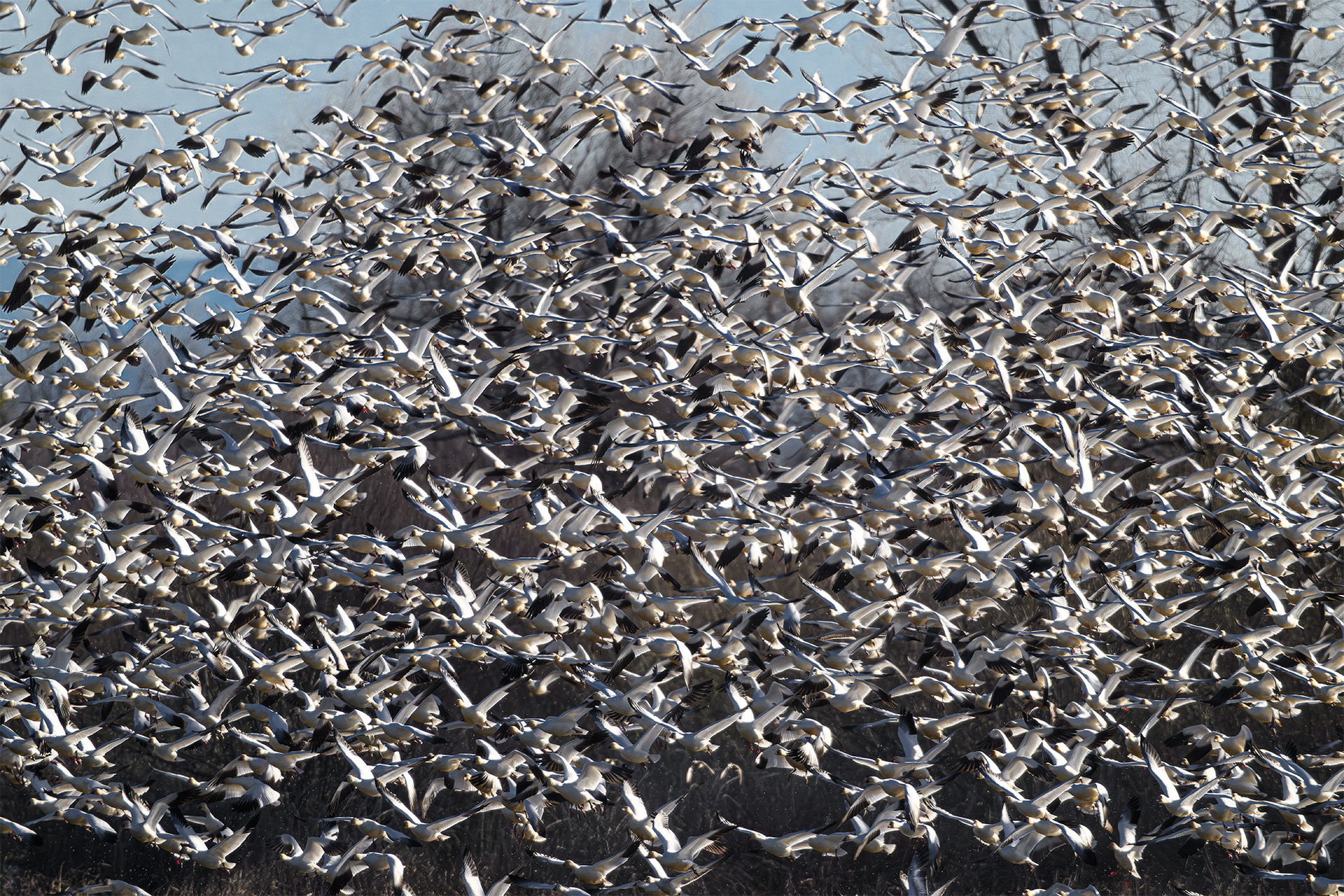
Every time I witness a blastoff of Snow Geese, I am awestruck. Thousands of geese rise in unison and take to the air in a swirling mass of wings. It is a noisy spectacle as well because as they ascend, the thunder of their wingbeats almost drowns out the nasal honking that announces the event. Snow Geese blastoffs usually occur early morning or approaching sunset when thousands of geese are triggered into taking off at once. Sometimes the blast off announces time to return to the fields to feed, sometimes it spreads the alert of a predator patrolling in the area, sometimes it signals time to return to the night’s roosting spot. The Snow Geese blastoffs at Gray Lodge in January were not as big as those I’ve seen at Bosque del Apache in New Mexico but they were impressive just the same.
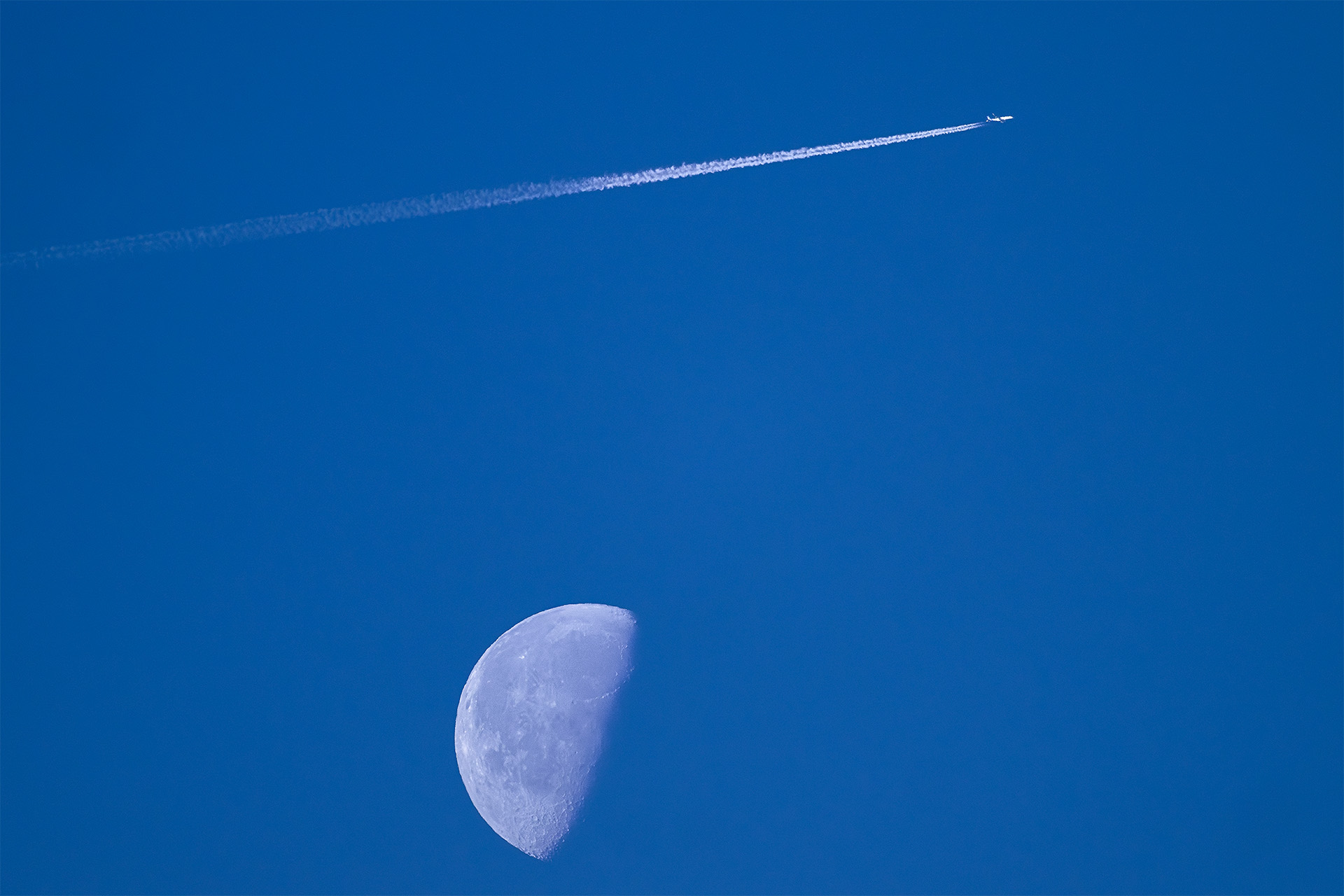
A couple of weeks ago at Gray Lodge, as I watched an Alaska Airlines plane flying over the moon, still visible in the blue morning sky, I kept hearing Frank Sinatra’s voice singing “Fly me to the moon” in the background.
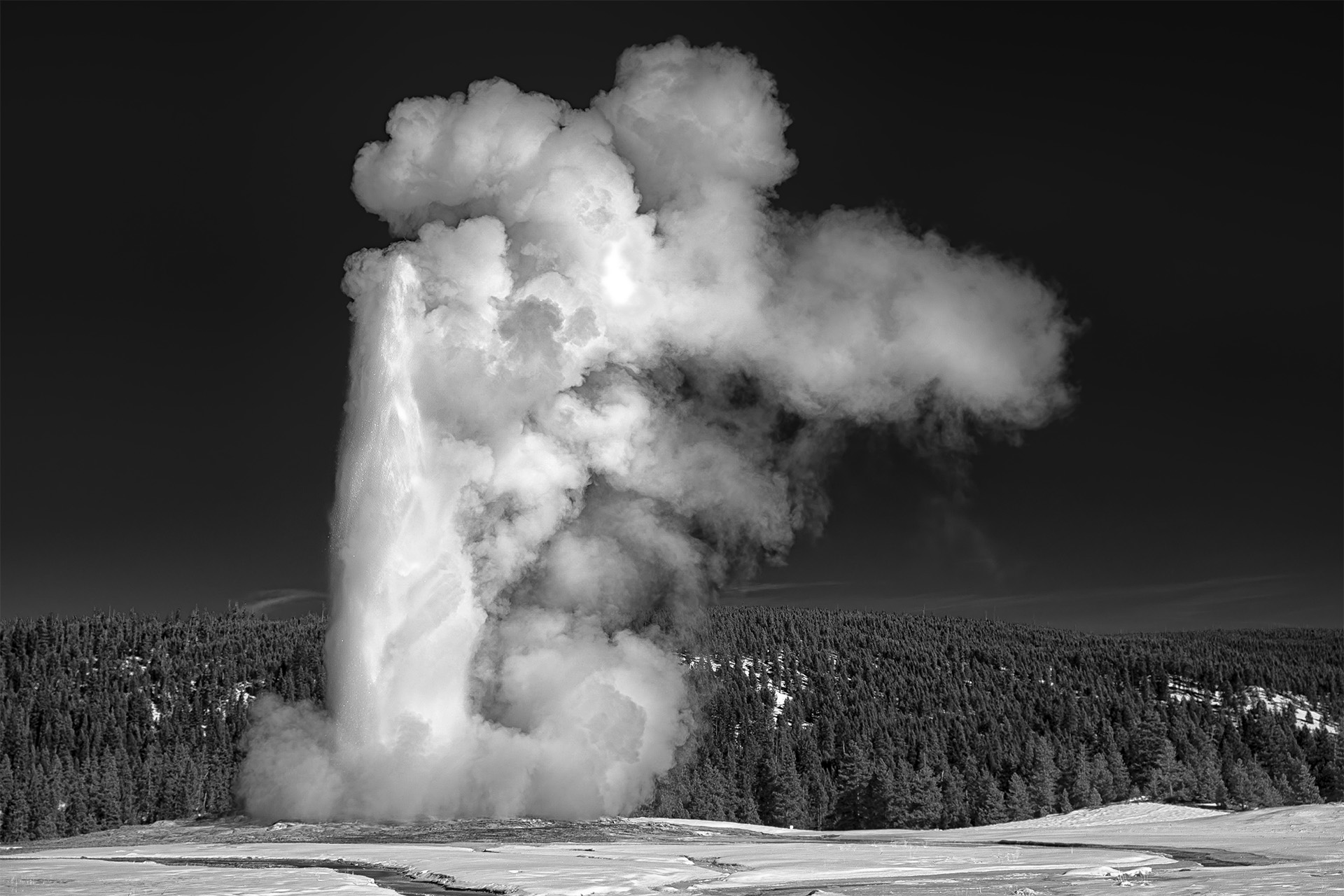
The geysers in Yellowstone National Park are some of its most iconic attractions and heading the list of those iconic geysers is Old Faithful, once known as “Eternity’s Timepiece” because it was thought to erupt every hour on the hour. It apparently has never done that but the National Park Service does its best to predict eruptions for those who want to be there for the show. They always give eruption times with a caveat, + or – 10 minutes. Old Faithful generally erupts at 70 to 90 minute intervals and the eruption lasts from about a minute and a half and up to five minutes, spewing steam and water vapor into the air to well over 100 feet. The NPS was spot on for this eruption, predicted for 12:09 PM a couple of weeks ago. It’s first spurt was at 12:08:33; I took this about 10 seconds later and the show was over in three minutes. Sometimes if you blink, you miss it but after all, it is Old Faithful so give it another hour or so and you’ll get another chance to see the show.
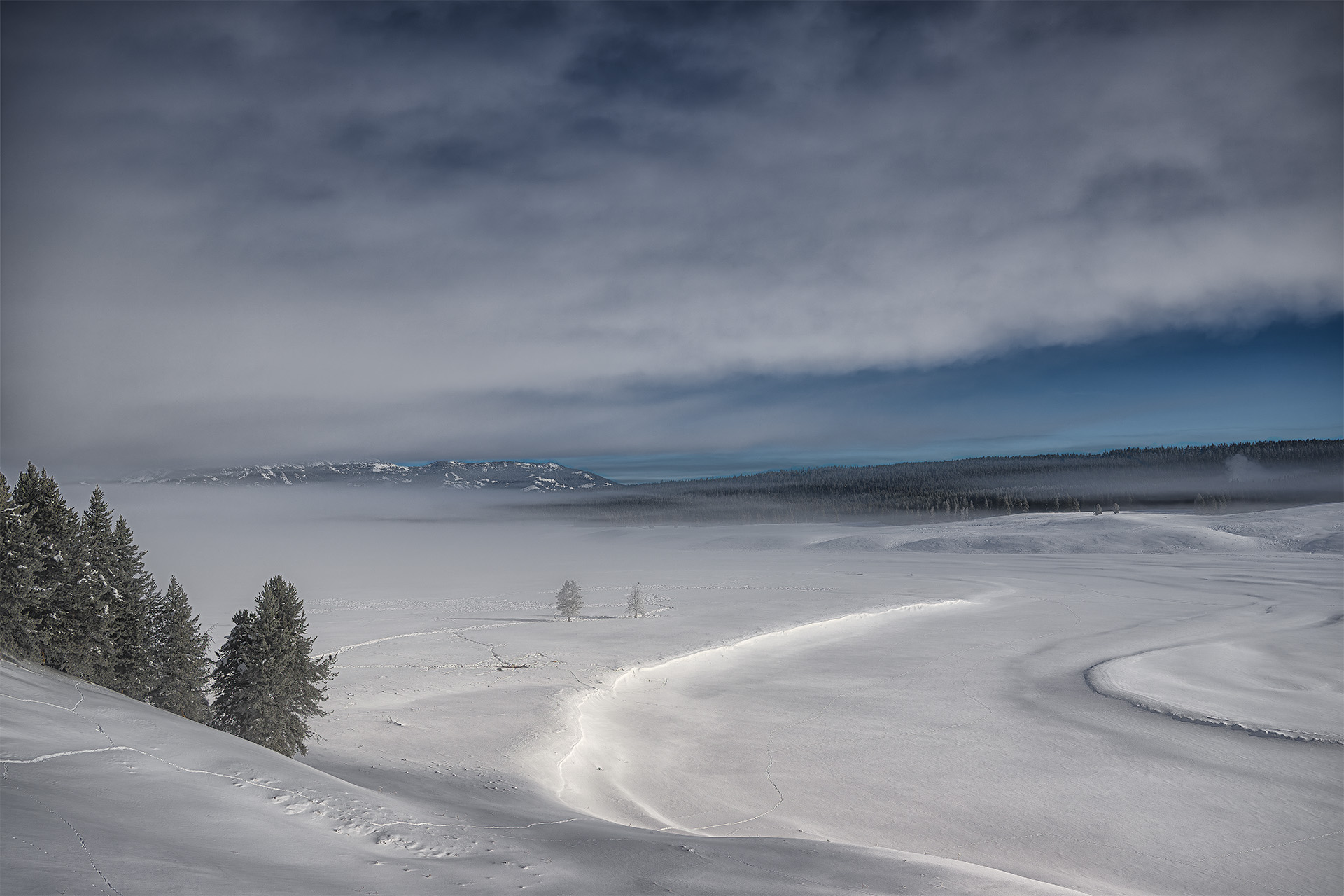
An idyllic looking scene of the frozen Yellowstone River as it winds through Hayden Valley was not so serene just a few days before I took this photograph. What remains of the life and death battle scene from four days earlier is barely visible from this distance. The Wapiti Lake Pack killed a 700 plus pound Bison cow and at least 23 members of the pack feasted on the carcass. After four days, most of the pack have moved on and only a few Gray Wolves are still at the site of the carcass. A lone Bald Eagle waits patiently atop a leafless tree to the right of the site. Very little is left of the carcass and the scavengers are waiting in the shadows to descend on the remains of the day.

The fumaroles, mud pots, and hot springs around Dragon’s Mouth Spring in Yellowstone National Park last week spewed steam and mist into the air, creating a dense fog that clung to the ground. A lone Coyote crossed silently in front of us, seemingly unbothered by the limited visibility.

The first couple of days in Yellowstone National Park last week were pretty chilly — it was minus 26 on Monday and minus 16 the day I took this photograph. Temperatures were relative because different parts of the park registered different temperatures, some even colder. Suffice it to say that the temperatures were cold enough that the breath of this Coyote showed while it was poised on the ridge behind us, slightly backlit, as it did reconnaissance of the kill site where the day before members of the Wapiti Lake Pack had taken down a Bison cow. Coyotes come to the kill after the wolves have finished. At the time, there were still a couple of wolves gnawing on what was left of the carcass, and most of the rest of the pack were still in the area, the older wolves lazing in the snow, the younger wolves romping around them.