Oh, a wondrous bird is the pelican,
His bill can hold more than his belican,
He can take in his beak,
Food enough for a week,
But I’m damned if I see how the helican.
—Dixon Lanier Merritt — 1910
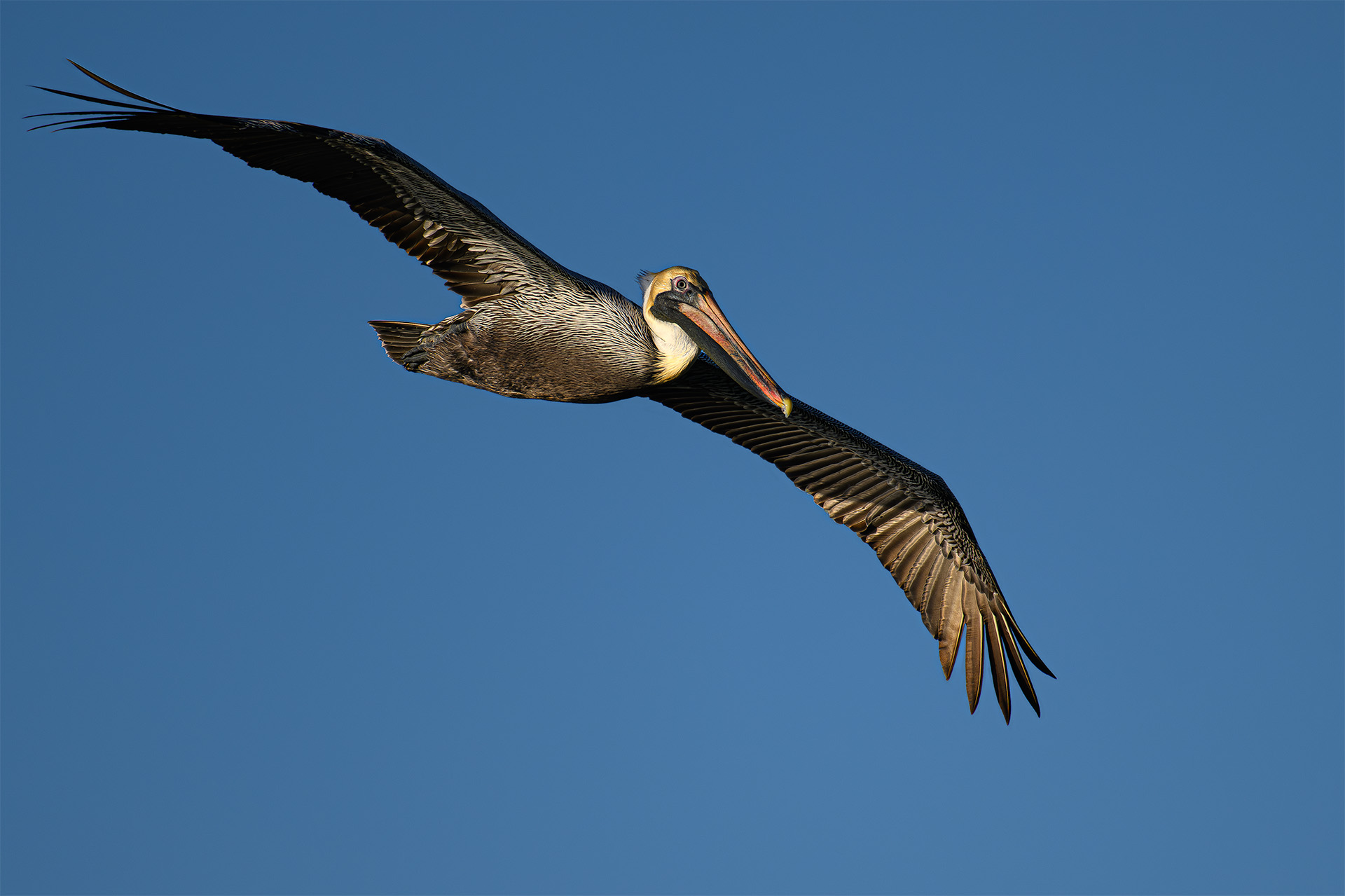
Brown Pelicans fascinate me, and, they have always struck me as looking very prehistoric. I recently stumbled across a “fun” fact sheet by California Audubon that included references to the above limerick which I first heard years ago. But it also pointed out that Brown Pelicans have a prehistoric look because their basic features have remained practically unchanged in the past 30 to 40 million years. That led me to a BBC reference to an article from fifteen years ago in the Journal of Ornithology that described how researchers, examining the fossilized remains of a Pelican, concluded at that time that the ancient pelican was almost identical to the modern species. In fact, their huge beaks have survived almost unchanged. Could Dixon Merritt’s poem unwittingly explain this phenomenon? That their huge beaks, which contort to accommodate whatever the Pelican catches, has always provided a practical and effective way to store and eat food so there has never been a reason to evolve further thus assuring their survival. Hmmm. Maybe the last line of the limerick, in reference to the Pelcian’s flexible beak, should read “And I’ll be damned, I can see how the helican.”