
The view of the setting sun from Steptoe Butte in The Palouse is nothing short of spectacular. The sky is painted with brilliant reds, oranges, and yellows that seem surreal.
The view of the setting sun from Steptoe Butte in The Palouse is nothing short of spectacular. The sky is painted with brilliant reds, oranges, and yellows that seem surreal.
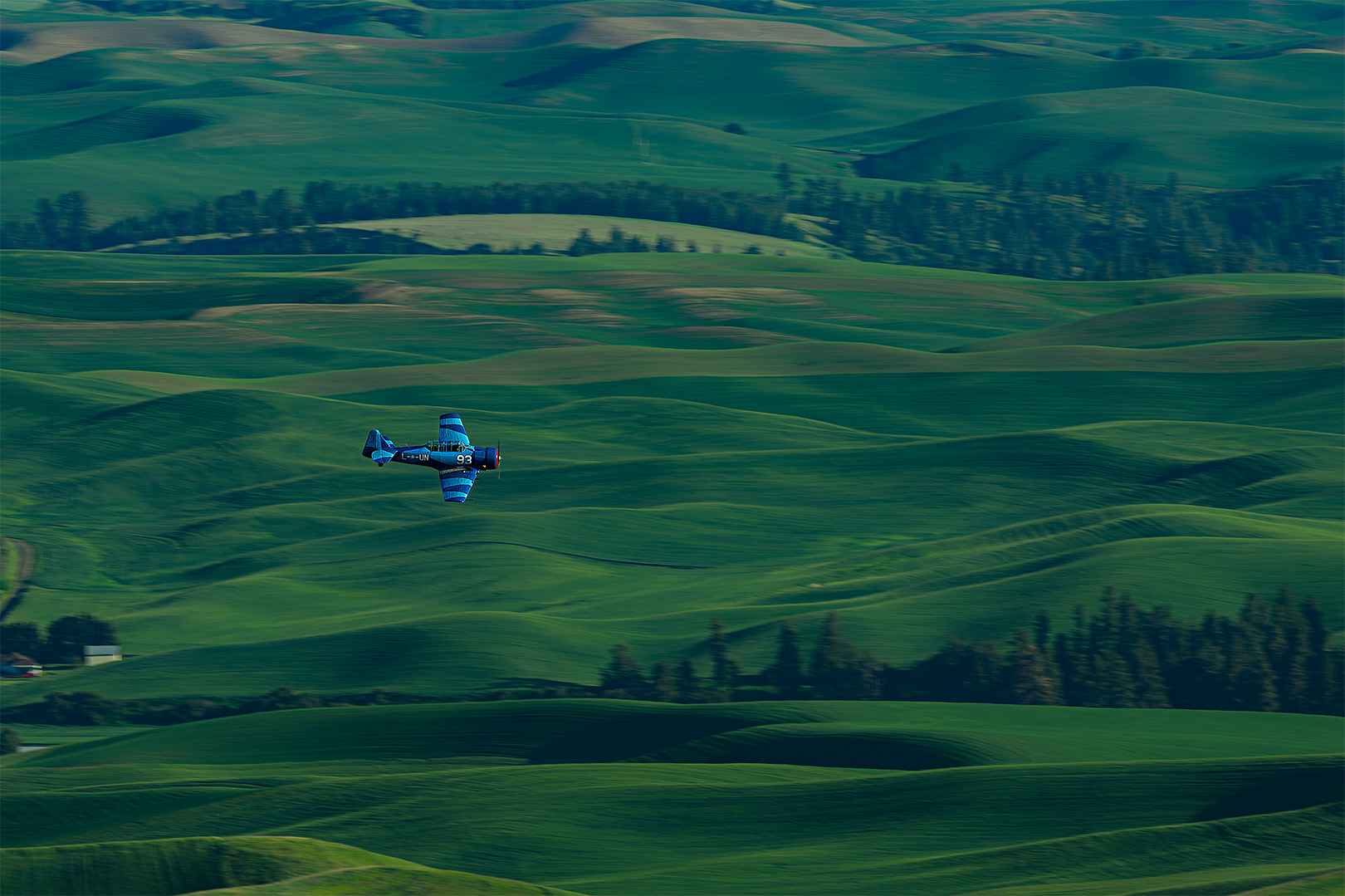
Steptoe Butte in The Palouse offers stunning views of the unique landscape below with its seemingly endless undulating hills, green with wheat and other crops grown there. And then, what a surprise it was to see a vintage World War II AT-6 Trainer flying beneath us with the green, rolling hills as a backdrop to the blue airplane. Moose had coordinated with a friend to circle Steptoe Butte in his vintage warbird a couple of times, giving us a unique vantage point to photograph a flying aircraft from above it.
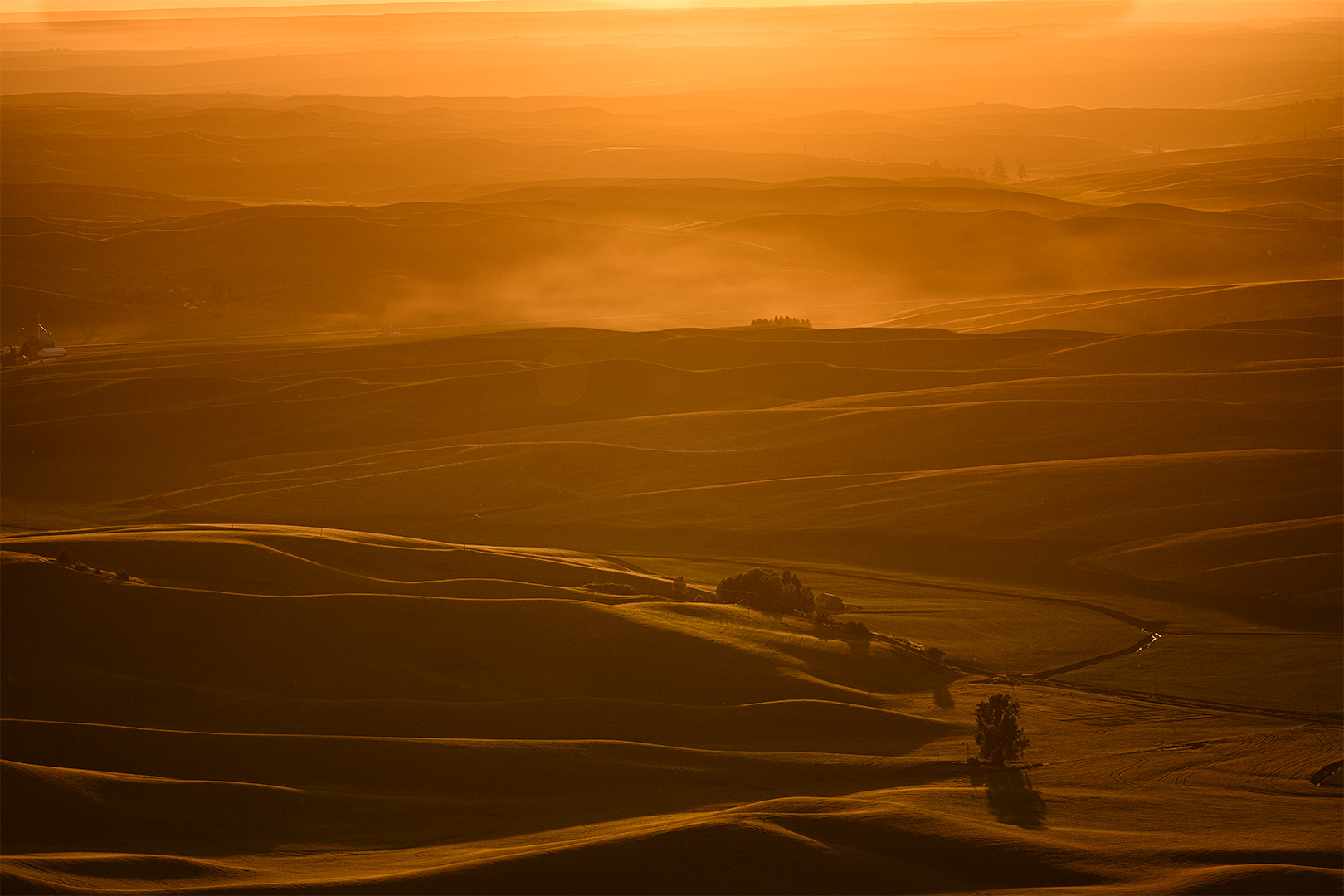
There is something mystical about the views from Steptoe Butte, a thimble-shaped hill that juts about a thousand feet in the midst of the undulating hills of the Palouse. There is a 360° view of the Palouse from the top of Steptoe that encompasses the rolling hills covered in low-growing crops. Although there was rain off and on during the first couple of days of our visit, the ground dried quickly and by the fourth day, the skies were clear, the sun was bright, and the fields dried quickly. Dust, an ever-present phenomenon in the Palouse when the weather is dry, is visible in cloudy trails behind John Deere tractors that plow the fields or as in this instance, when the breezes sweep across the hills, illuminated by the setting sun.
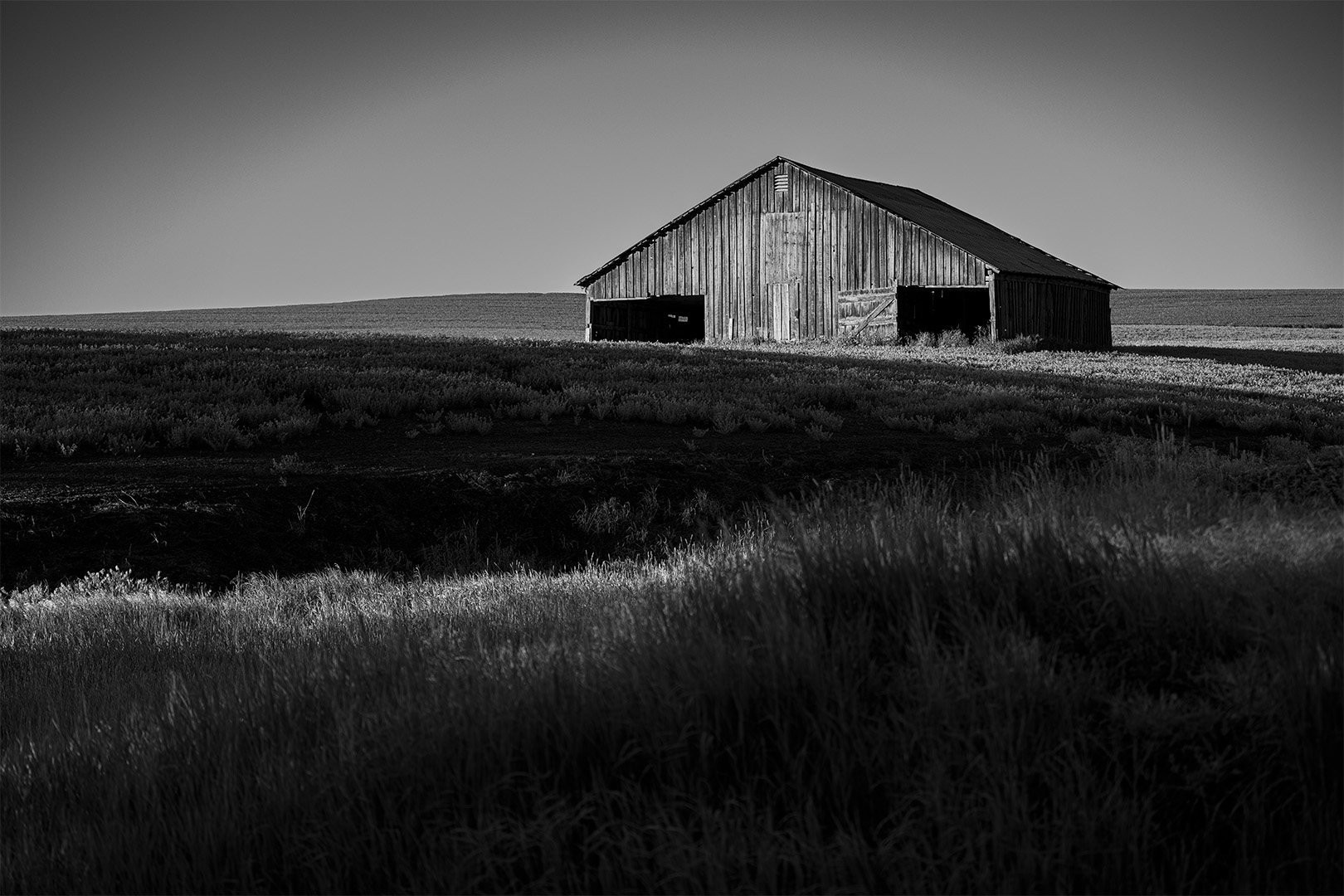
The Palouse is an agricultural landscape of gently rolling, mostly treeless, hills planted with low-growing crops like wheat and alfalfa in south-east Washington extending into western Idaho. Since the late 19th Century, the Palouse has been an important agricultural region and with that brings barns and other outbuildings. Over time, some buildings fall from use but they have such character that they continue to contribute to the region, not as a functional building, but one that is full of charm. They don’t detract from the landscape. Rather, they contribute to it. This old abandoned structure, peeking over the top of a couple of hills undulating in front of it, caught our attention.
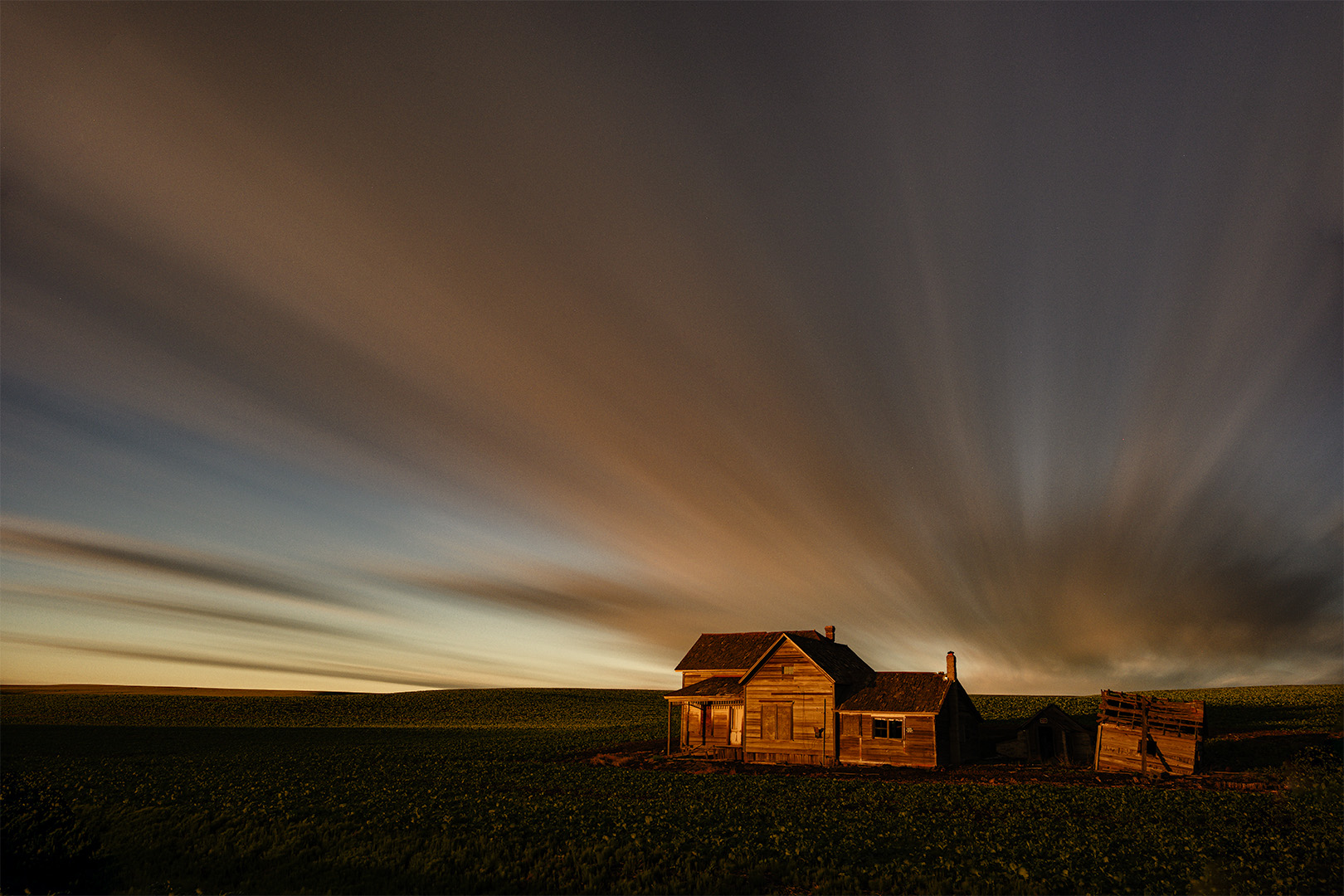
As time goes by, abandoned buildings fall into decay. This decaying building is known as the Weber House on the Palouse. It was once a family homestead in the middle of fields of wheat, garbanzos, and rapeseed. While the building is not lived in now, its unique character makes it a popular place for photographers to visit. On a visit here several years ago, we met a family member of the original homeowners and they continue to live nearby and still farm on the Palouse. Although the home is no longer used, almost every inch of farmland surrounding the decrepit building is in use. One of the Palouse’s major crops, rapeseed, from which canola oil is derived, is planted there and a current crop surrounds the building. Moose suggested a long exposure for this image, something I hadn’t done in quite some time so I followed his lead and took several images over the next hour and a half as the sun began to set. The clouds were scudding through the sky over top of the building and the long exposure, in this case, 12 minutes (720 second shutter speed) created cloud streaks instead of cloud puffs. The 12 minute exposure was made possible because I had attached two neutral density filters to the lens that reduced the amount light entering the camera by 16 stops. This allowed me to use a long shutter speed and blurred anything moving through the frame. The long shutter speed created a visual illustration of time going by.
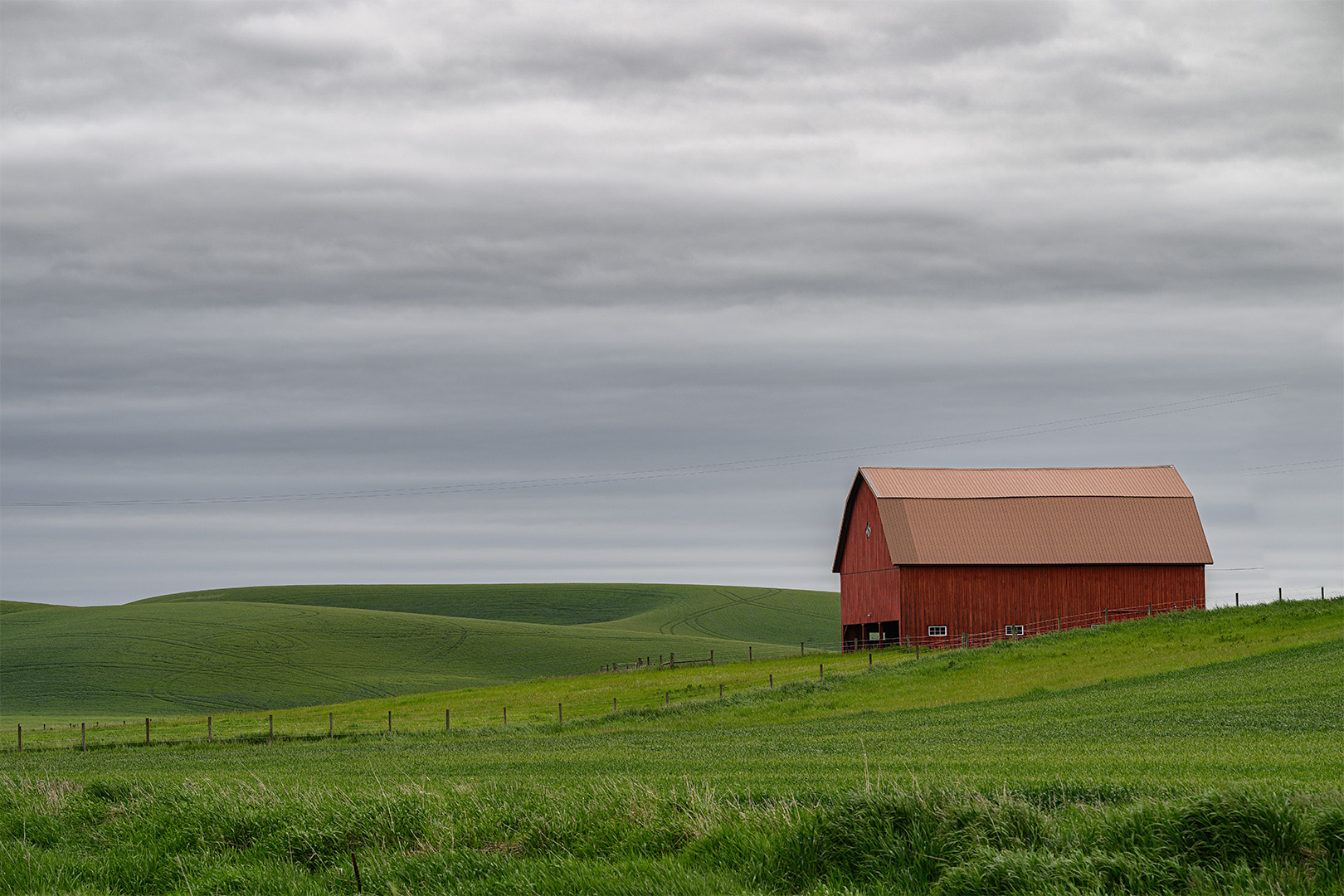
A red barn stands amidst crop fields on the Palouse in Eastern Washington. The red wheat, rapeseed, and garbanzo bean plants fill the fields on the rolling hills with rich greens.

A bear behind. Sorry, I couldn’t resist!
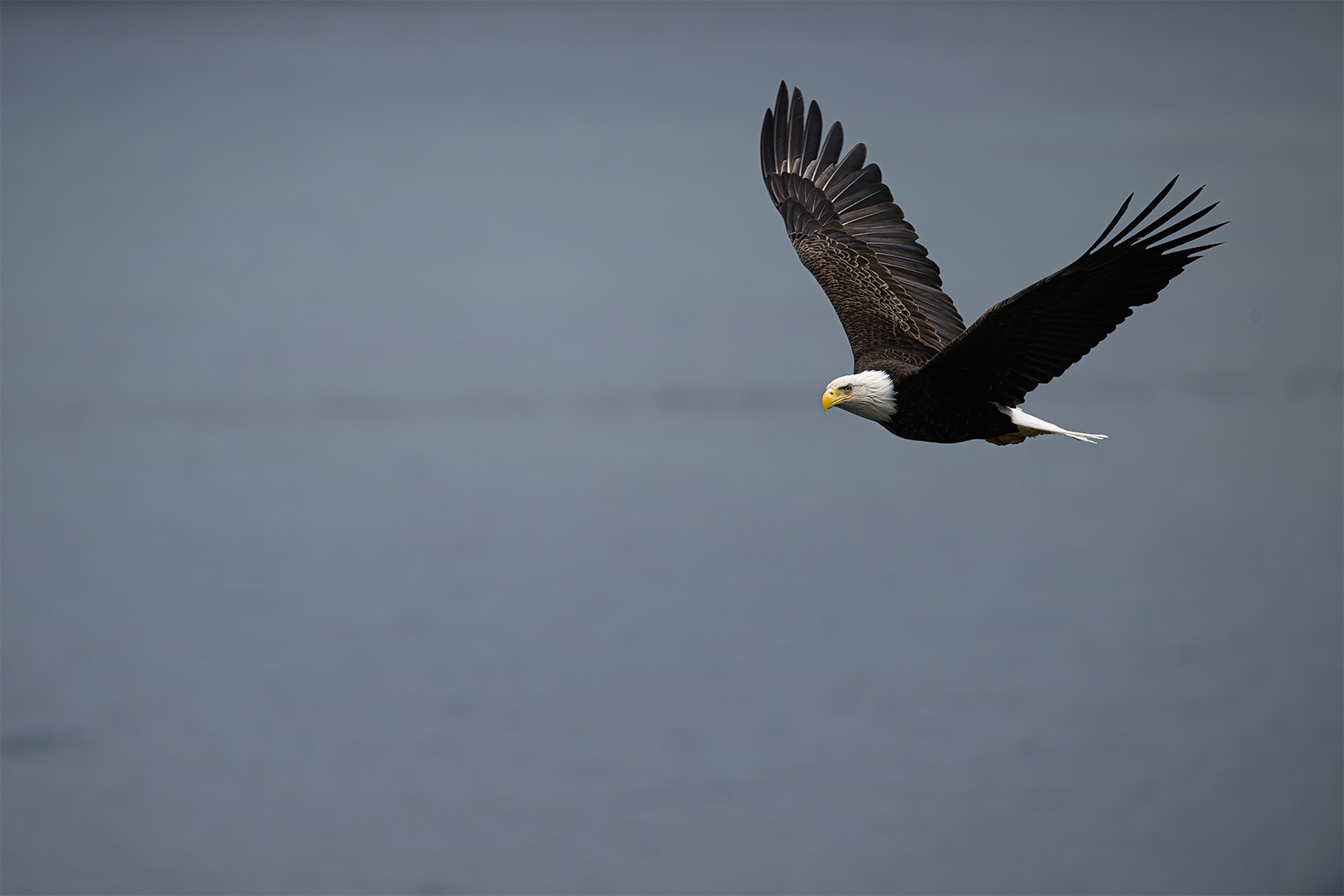
A magnificent mature Bald Eagle gains altitude with Mush Bay in the background in Kodiak, Alaska a couple of weeks ago.
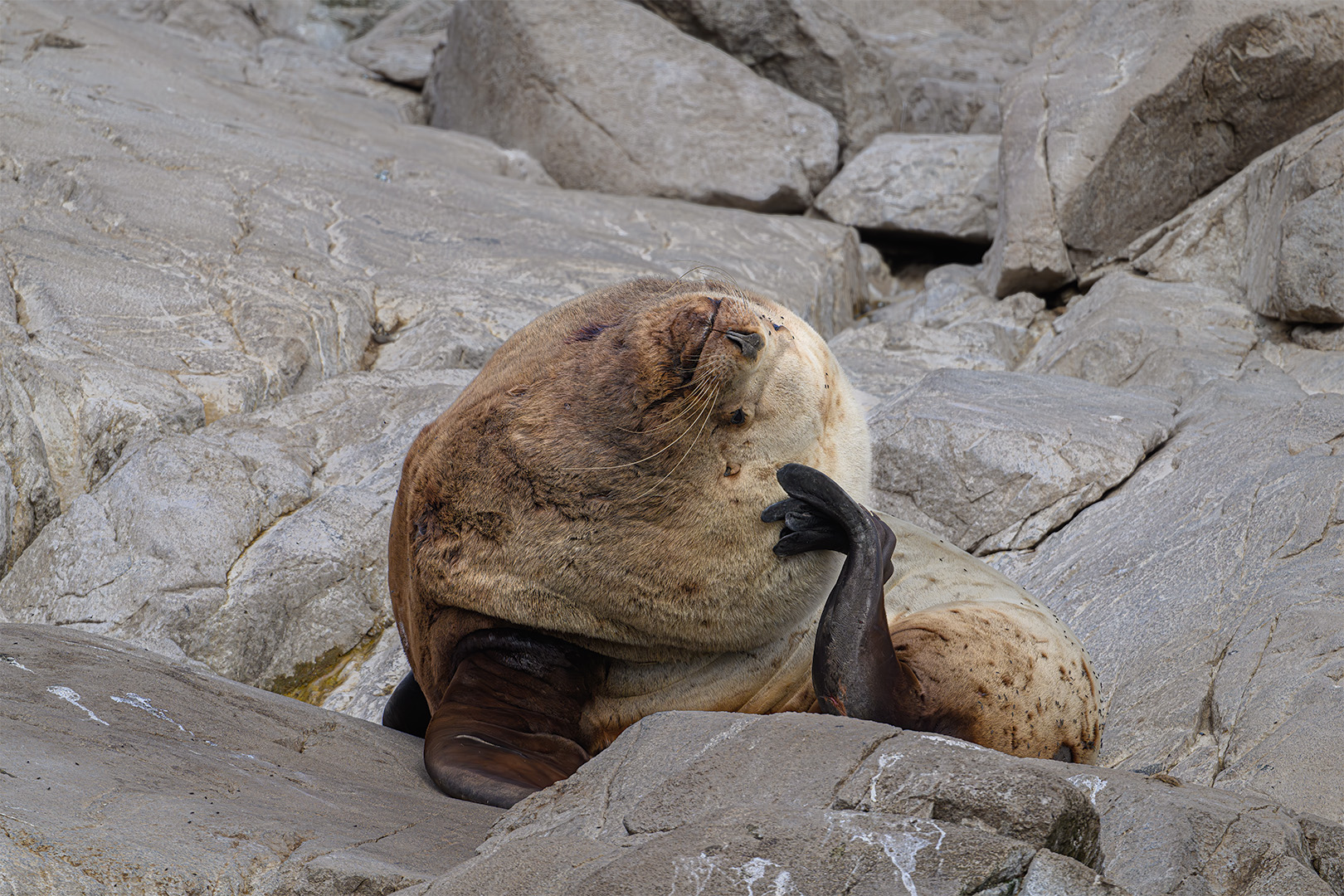
This massive Steller’s Sea Lion that we saw near Kodiak Island a couple of weeks ago seems to be in some sort of Sea Lion Ecstasy while he scratches the top of his head. Lately, I have photographed many birds scratching their heads and ears while preening and this big guy’s flipper reminded me of that so I decided I would add him to my collection of “scratch that itch” photographs. Watching them maneuver their massive hulks around the rocky outcroppings where they haul out of the water to sun themselves is fascinating. How do they do it? I wondered as I watched them. The males can weigh upwards of 1250 pounds, sometimes more. As to what causes the itch, I have no idea but looking closely at his head and haunch, there are clusters of tiny black flies on him. Maybe he’s just using his flipper as a fly swatter.