2024—Through a Window

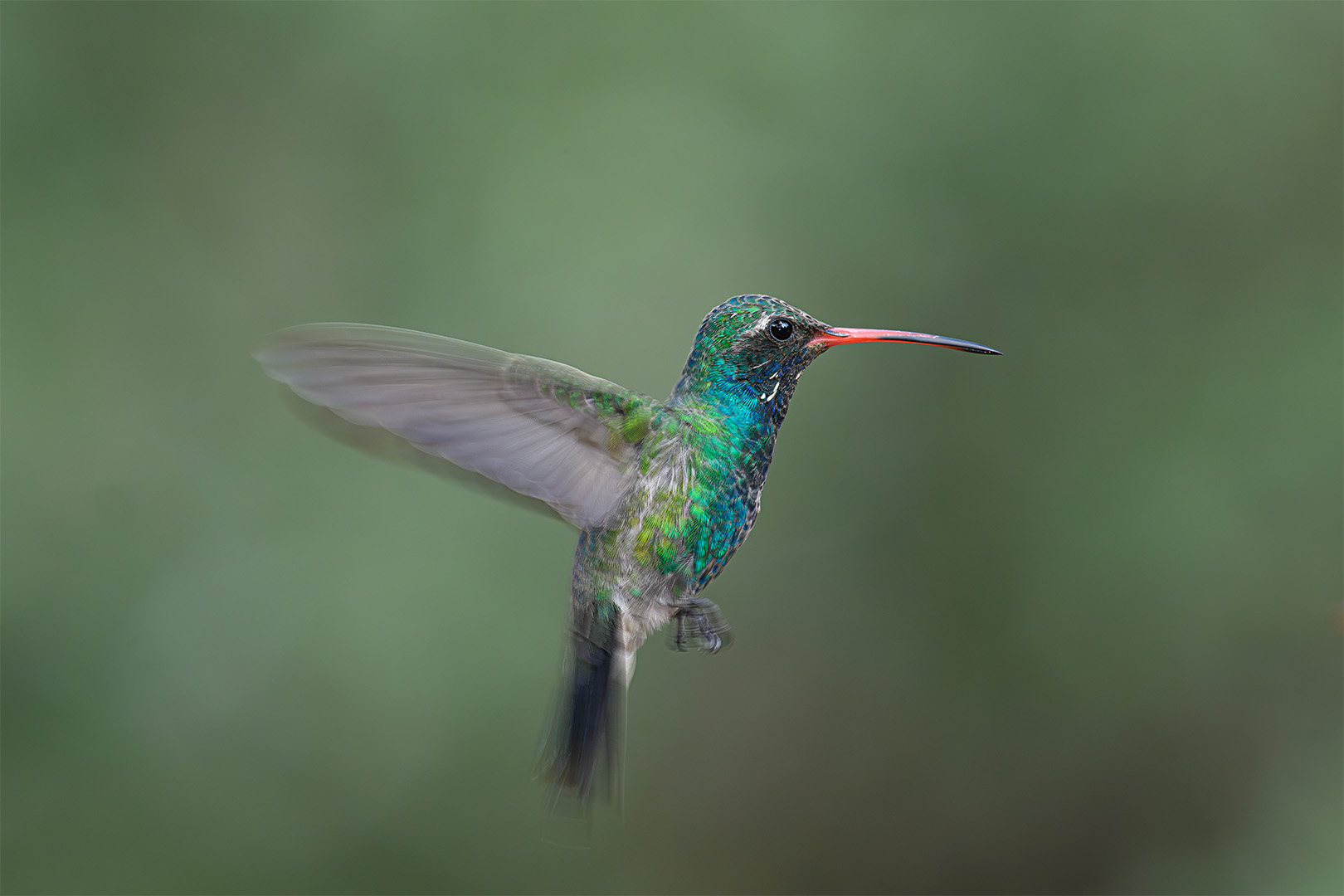
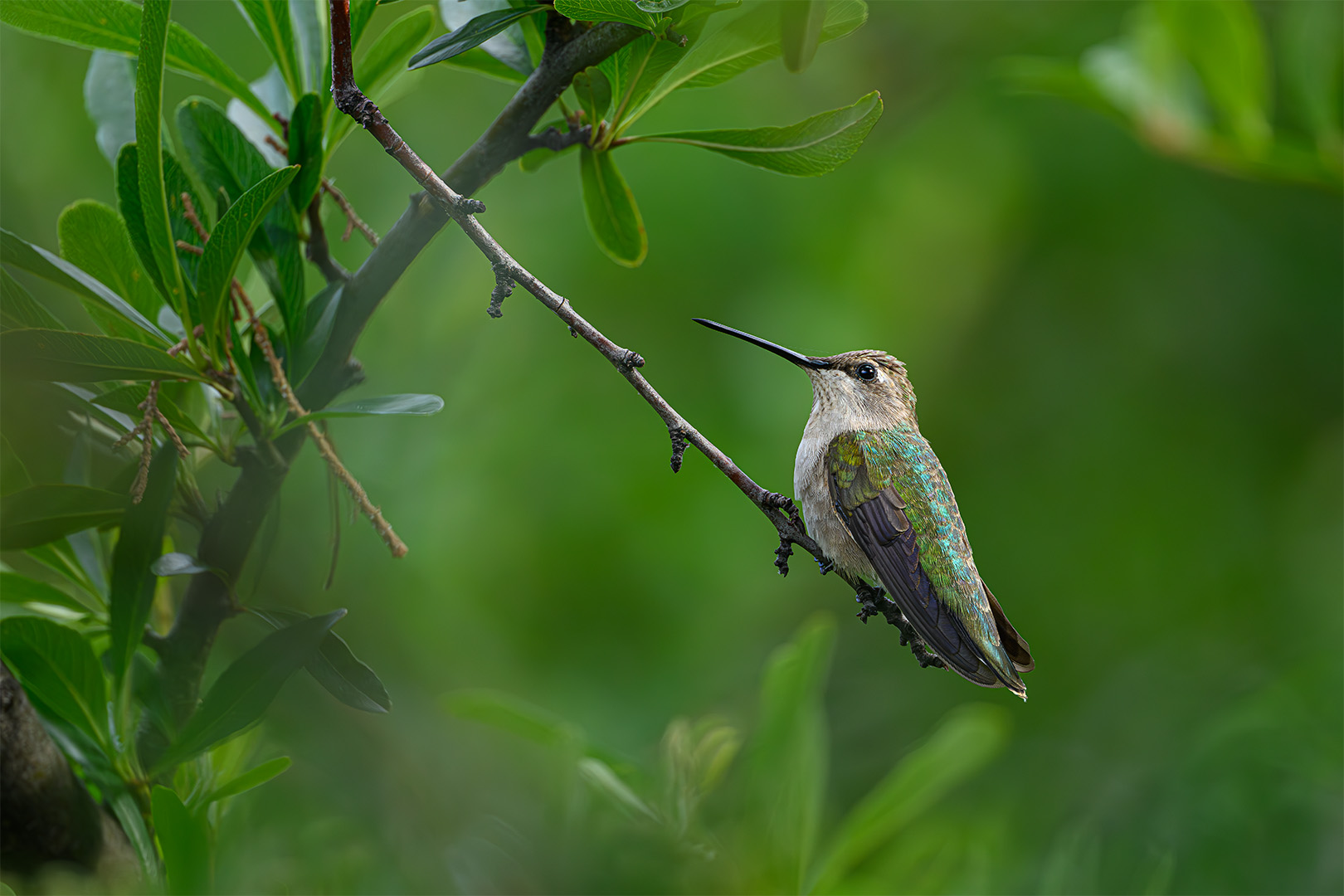
An immature Black-chinned Hummingbird sought refuge in a dense Pyracantha shrub just off the deck at Santa Rita Lodge in Madera Canyon a couple of days ago. Although the shrub was dense, I found a small window that allowed me to focus through the leaves on a single twig with perfect light on it that seemed to be favored by the Black-Chinned and Broad-billed Hummingbirds near a busy feeder. The “focus recall” button on my Nikon Z600PF worked perfectly to refocus on that twig, which was just inches beyond minimum focusing distance of the lens. When I spotted a hummer perched on the twig, all I had to do was point my lens in that direction, press the recall button and there was the hummer, in perfect focus, on that twig. If I hadn’t had the recall button set to that focal point, the auto focus would have searched and found the leafy edges in front of the small window clearing and I more than likely would have missed the shot.
2024—Ever Vigilant

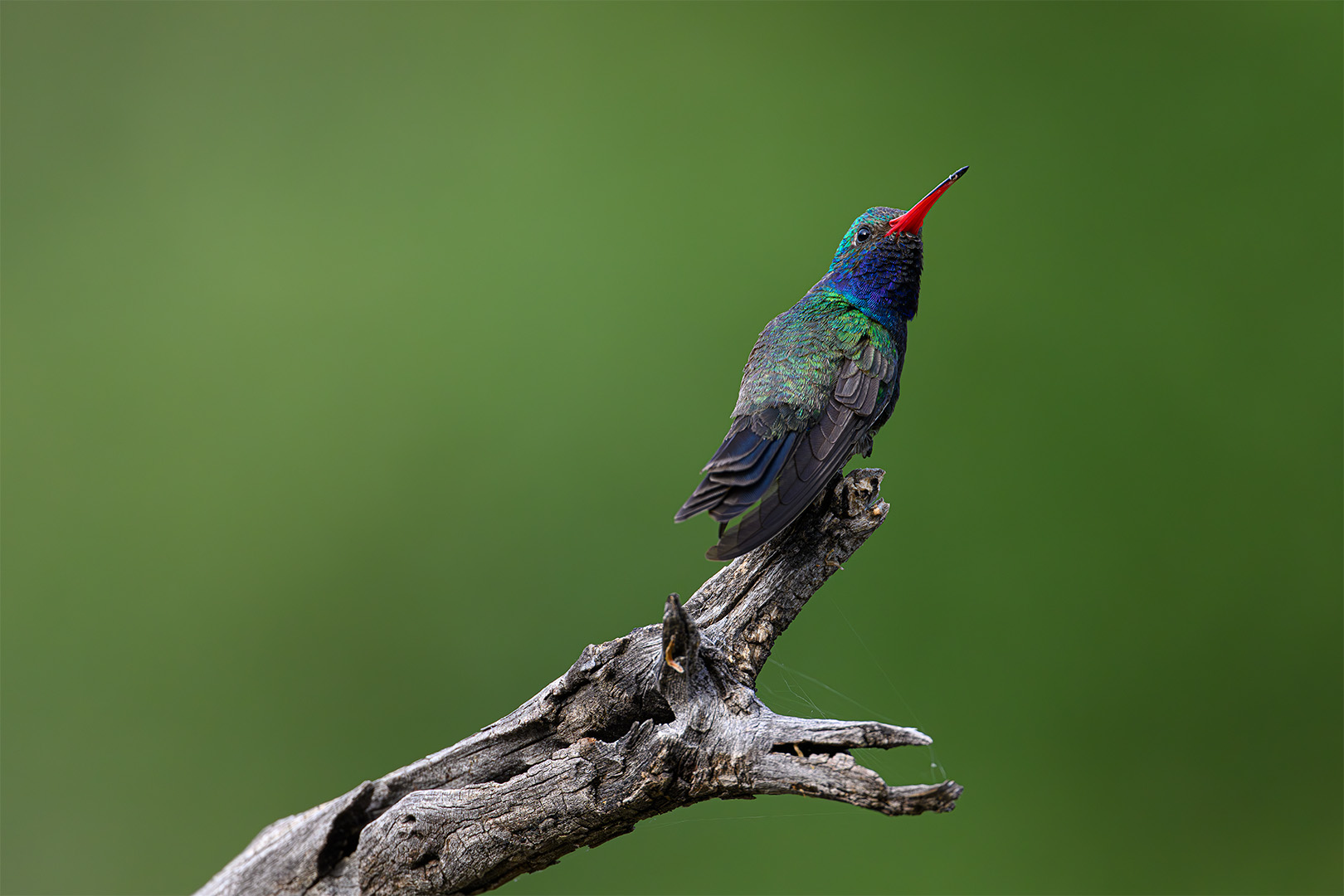
Our week in Madera Canyon went by so quickly. Although there seemed to be fewer birds this year, and we didn’t see some of the species we’ve photographed in past years, there was still plenty of activity around the feeders. This year, more than my experience in past years, the territorial disputes seemed much more prevalent. The birds didn’t know our feeders were temporary, so they had to lay claim to them. With attacks coming from any side, and whether they were on a feeder perch or a natural perch, like this one, the hummers were on a constant vigil watching for, and expecting, an attack from above. Sometimes we would hear the clash of beaks as they connected while flying full speed and zooming over our heads or maneuvering between our tripods. Some seemed more apt to harass others and even the Rivoli’s Hummingbird seemed to have taken on a new role as harasser instead of harassee. In past years, despite its large size, the Rivoli’s was always targeted by much smaller species, but not so this year. On our last morning in the Canyon, with our tripods and flash rigs already packed, we watched from the deck at the lodge with our longest lenses to capture the last few minutes of hummingbird heaven. This male Broad-billed Hummingbird was ever vigilant as he perched near a feeder. He was soon chased off but he kept returning to this perch. And, like that Broad-billed Hummingbird, we, too, will return next year.

2024—Taking a Break

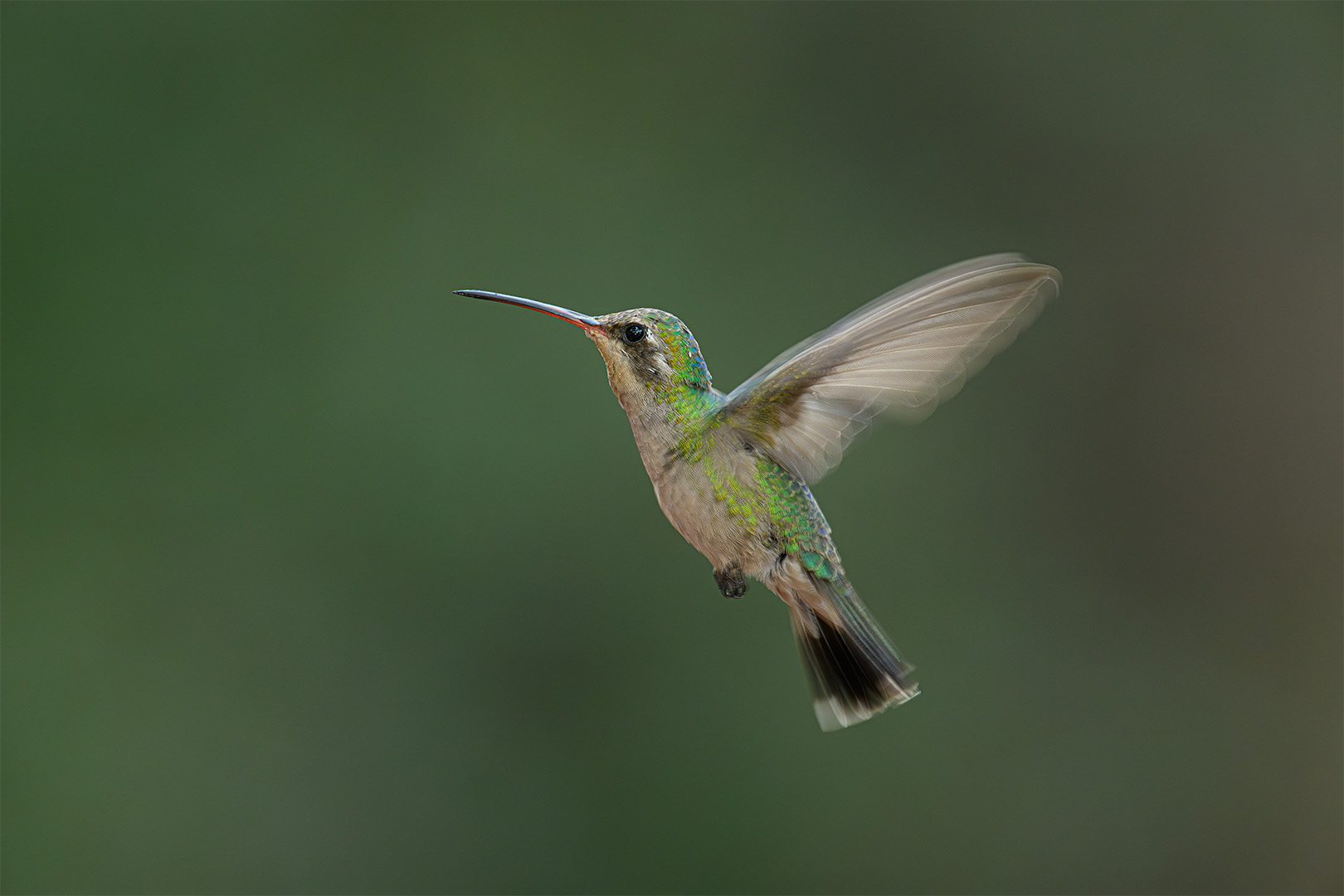
Hummingbirds refuel about every ten to fifteen minutes throughout the day. That means they will return again and again to a known source of food. Because of this, they’re predictable in where you can expect to see them. However, despite that predictability, their feeding frenzy, their erratic territorial chases, and their speed can make it really frustrating to photograph them in flight without distractions, like feeders, or bright backgrounds, or weird placement in the frame. Luckily, they do take breaks from their frenzied flight or their chasing one another away from the feeders. This female Broad-billed Hummingbird rested briefly although she kept her eye on potential threats to her respite.

2024—Jewels of the Canyon

Madera Canyon is the home to both migrating Hummingbirds and those that are permanent residents. One of the residents is the gorgeous Broad-billed Hummingbird. As is the case with many birds, the males exhibit much more colorful plumage than the females. In the case of Broad-billed Hummingbirds, the males are a jewel like sapphire with emerald accents. The female lacks the emerald and sapphire colors but she still is a jewel, exhibiting the more subdued yellow-green of the gemstone peridot. Both of the birds shown here are sporting new plumage in the form of white pin-feathers. Soon those white “pins” will be as colorful as the rest of the feathers on these birds. They are indeed, Jewels of the Canyon.

2024—It’s Going to Be a Great Week!

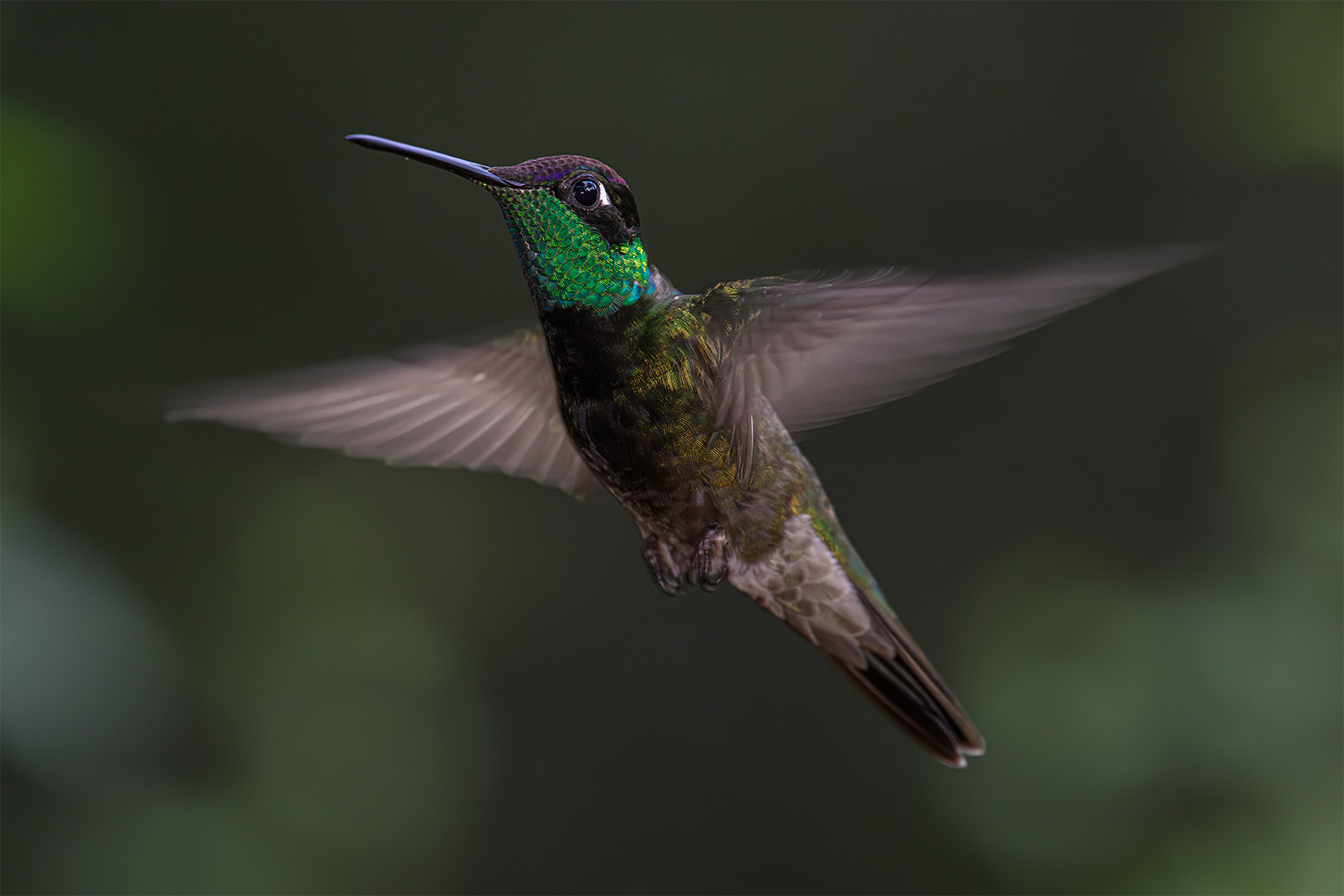
We’re off to a great start at Madera Canyon this week. The previously predicted 100° plus temperatures have not materialized and the monsoons are keeping the sun from broiling us, at least in the morning. . The Rivoli’s Hummingbird, one of the largest that visits the United States, was one of the first hummers to visit the feeders yesterday morning. The hummers are not yet acclimated to our presence but as the day progressed, they became more used to us. Not only did the Rivoli’s visit us, but the Broad-billed Hummingbird was the most frequent visitor and we also had visits from Anna’s Hummingbirds, Black-chinned Hummingbirds, Broad-tailed Hummingbirds, and even the rare and elusive Beryline Hummingbird, who stopped by and sipped for an extended period at one of the feeders. It’s going to be a great week.

2024—Jacobin in the Garden

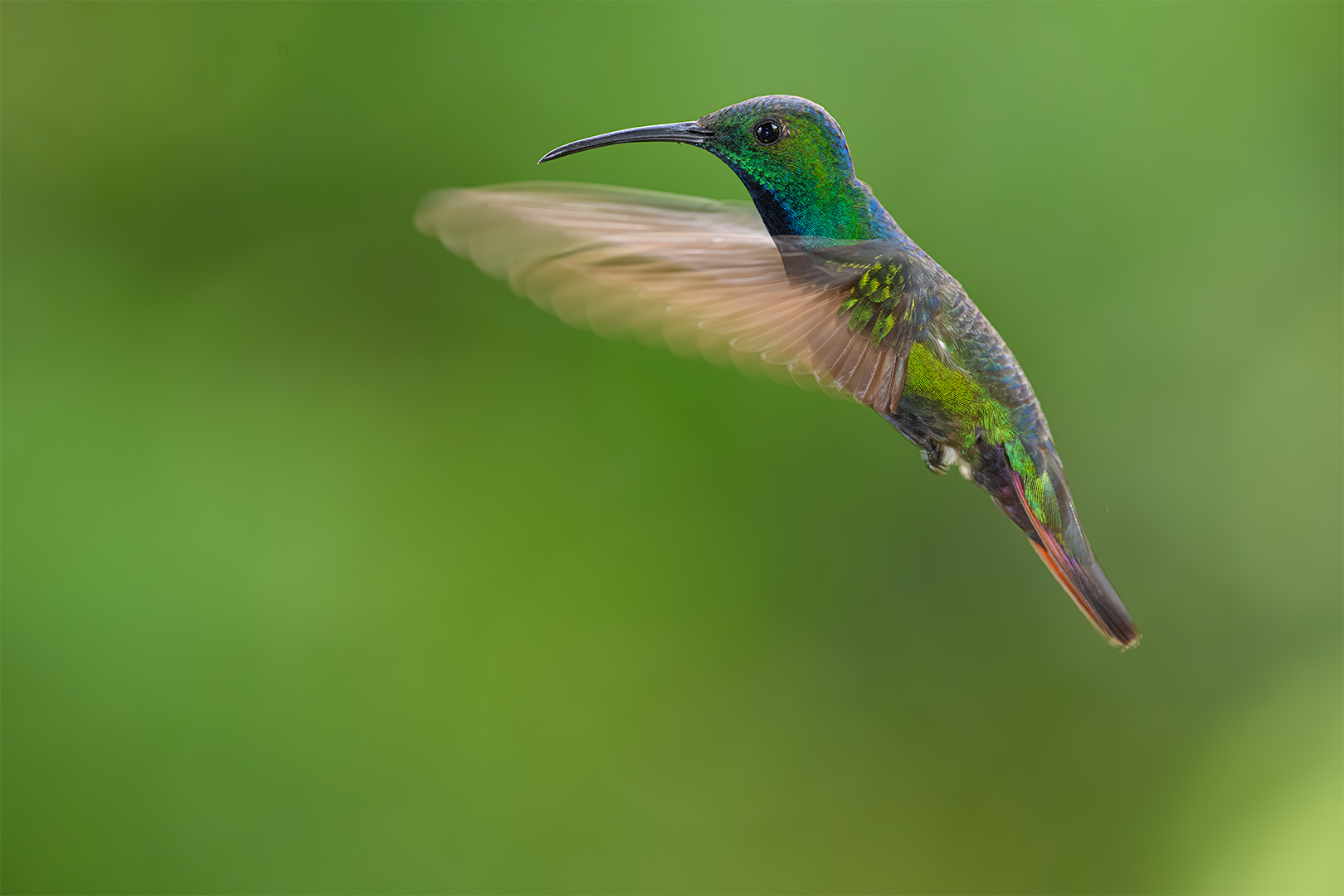
Once again I’ve been thinking about Hummingbirds as I travel to Madera Canyon, AZ to photograph the many migratory species that visit there. I’ve been reviewing my hummingbird images from my March trip to Costa Rica and have discovered a many that I had overlooked when I took them. The garden surrounding the lodge at the Rancho in Costa Rica was lush and dense. This male White-necked Jacobin appears to be searching for a blossom filled with nectar. The Jacobins and the Mangos were the most frequent visitors to the garden feeders there. I wonder which hummers will dominate the feeders in Madera Canyon this year? Watch this space.

2024—Gems

Today, I’m heading back to Santa Rita Lodge in Madera Canyon, AZ for hummingbird photography. I had some practice earlier this year in March when I visited Costa Rica and had a chance to use my two-flash hummingbird rig, something I’ve done in Arizona for several years but it was a first time using it in Costa Rica. The purpose of the flash is to add a kiss of light to bring out the bird’s colors. This is a male Green-breasted Mango, looking like a cross between an emerald and a sapphire. This is a hummingbird that does not migrate north to Madera Canyon so I won’t see it in Arizona. But lots of other wonderful hummers do visit there so I’m looking forward to seeing some of my old favorites like the Broad-billed Hummingbird and the Rivoli’s Hummingbird both with colors so iridescent that they look like flying gems. And, speaking of flying gems, perhaps a few of the rarer hummers like the Blue-throated Mountain Gem might make an appearance. Watch this space.

2024—Monet Impressions

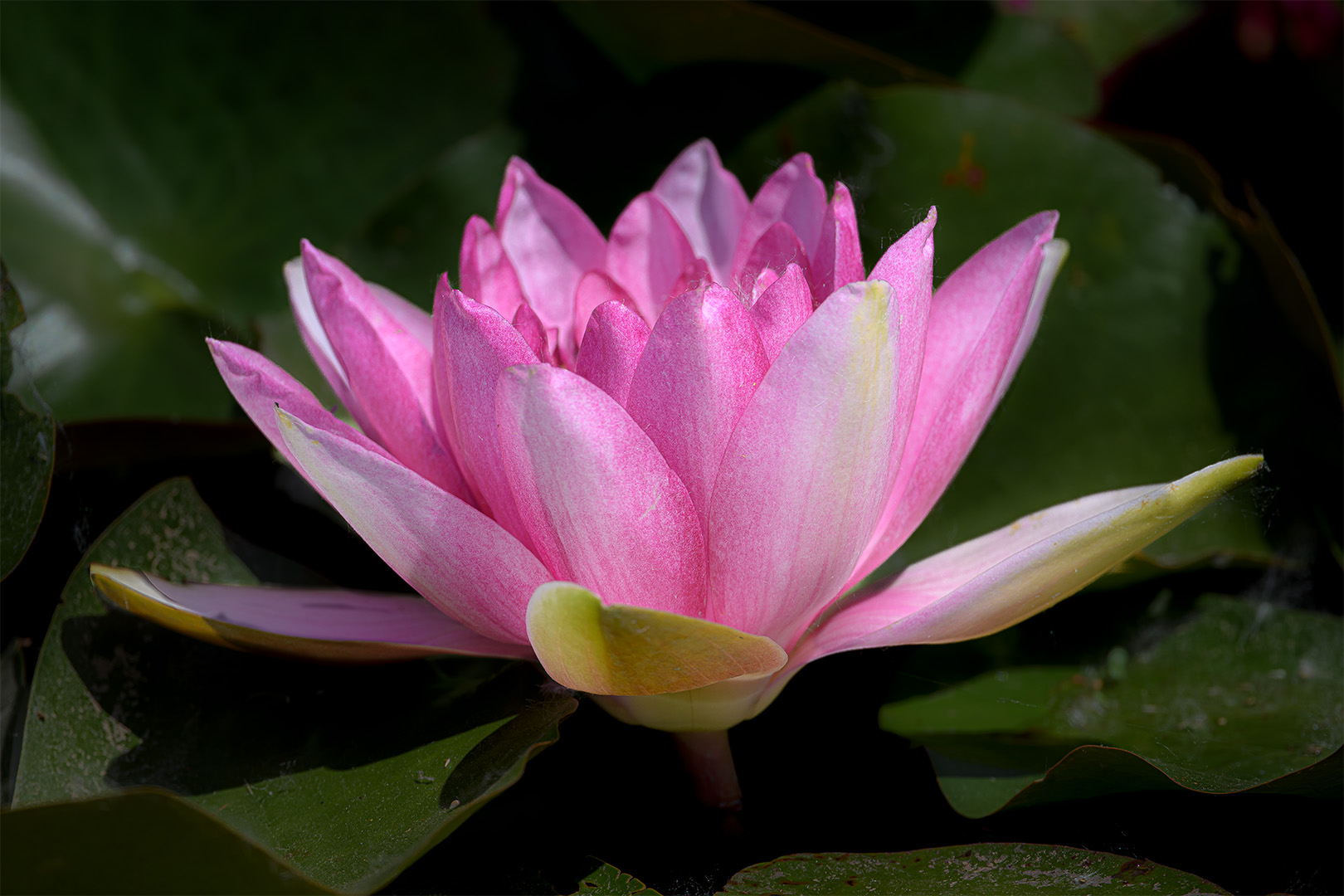
Ten years ago, I stood transfixed facing Claude Monet’s water lily murals at the Musée de l’Orangerie in Paris. To this day, whenever I see water lilies, I think of that awe-inspiring visit and of his inspirational Impressionist paintings that I studied more than 50 years ago in college. My photograph is not impressionistic at all but it still reminds me of that memorable visit to Paris and of being in the presence of those gorgeous murals featuring Monet’s ethereal water lilies.

2024—Another Blue Dasher

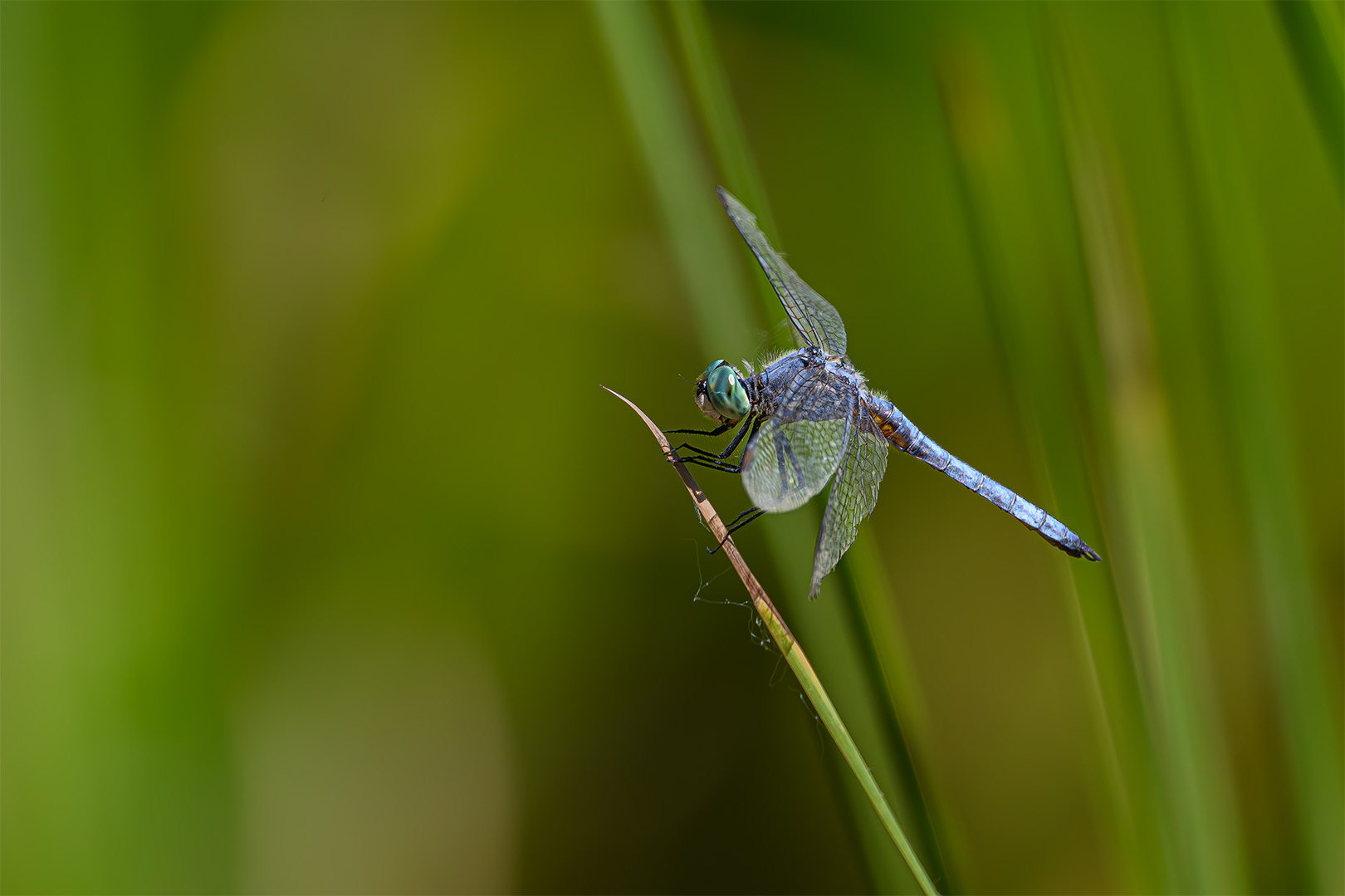
The Blue Dashers were everywhere on the lily pond at my friend Dennis’ house the other day. I tried unsuccessfully to photograph them in flight but I did manage to get them perched when they made very brief rest stops on some of the vegetation in the pond. This one appears to be peeking through his right wing at me as I crouched in front of him.

2024—A Dashing Sight

He’s a dashing sight, a male Blue Dasher, a type of common dragonfly. But yesterday at my friend Dennis’ house, there were an awful lot of males dashing around and I didn’t see a single female Blue Dasher, which have red eyes and a black and yellow body so they are quite different from the males and would have been easy to spot. These dragonflies seemed as difficult to photograph sitting still as flitting about because they didn’t stay put long enough on the lily pond which was full of lily pads and lotus blossoms. They darted about in search of those elusive females only alighting for what seemed like nanoseconds. The harsh afternoon sun didn’t help the situation either and it caused bright spots on the lily pads that made it challenging to find a solid area of green without distracting reflections. I packed it up pretty quickly.

2024—Bluebird Mystery

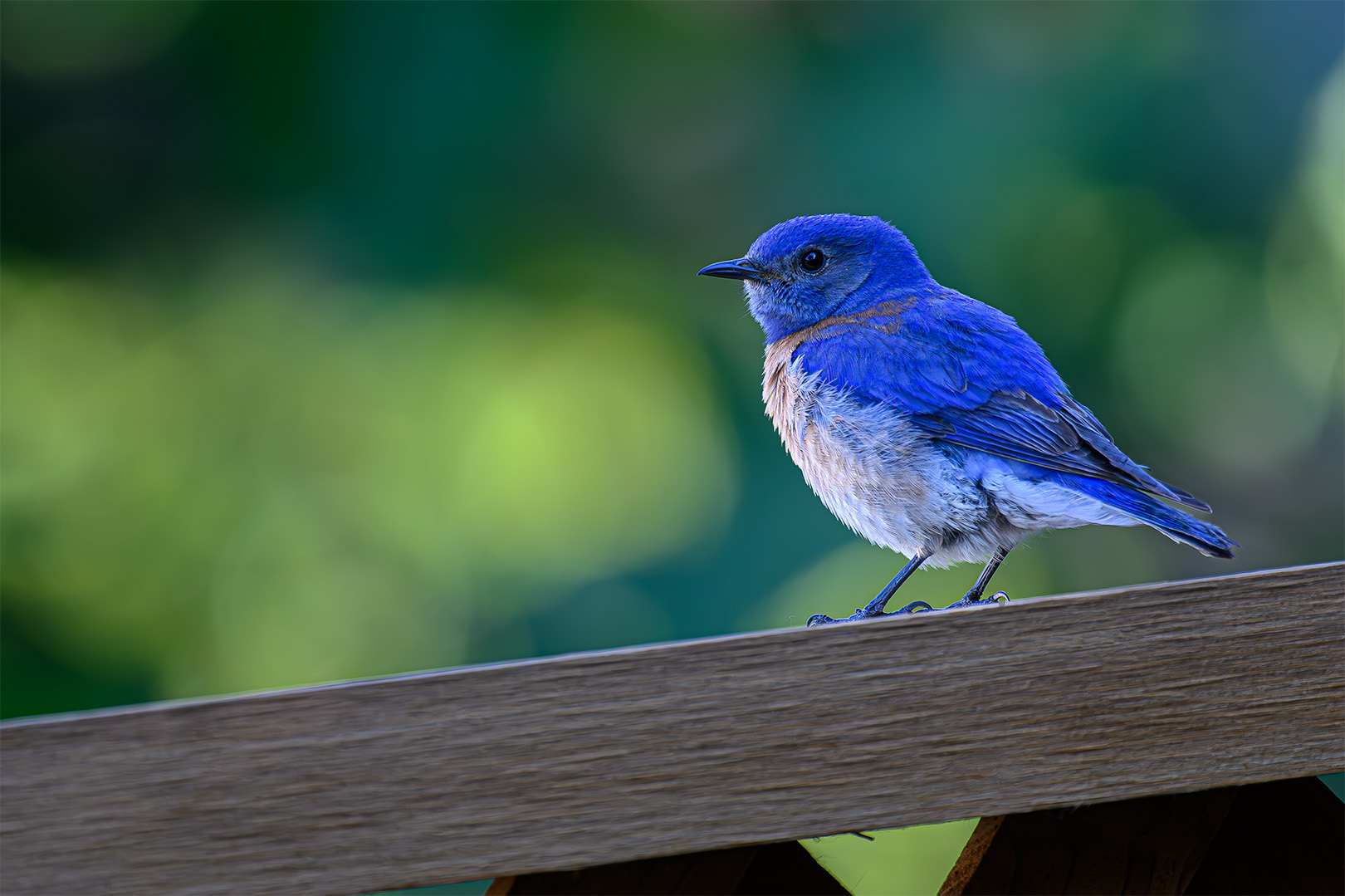
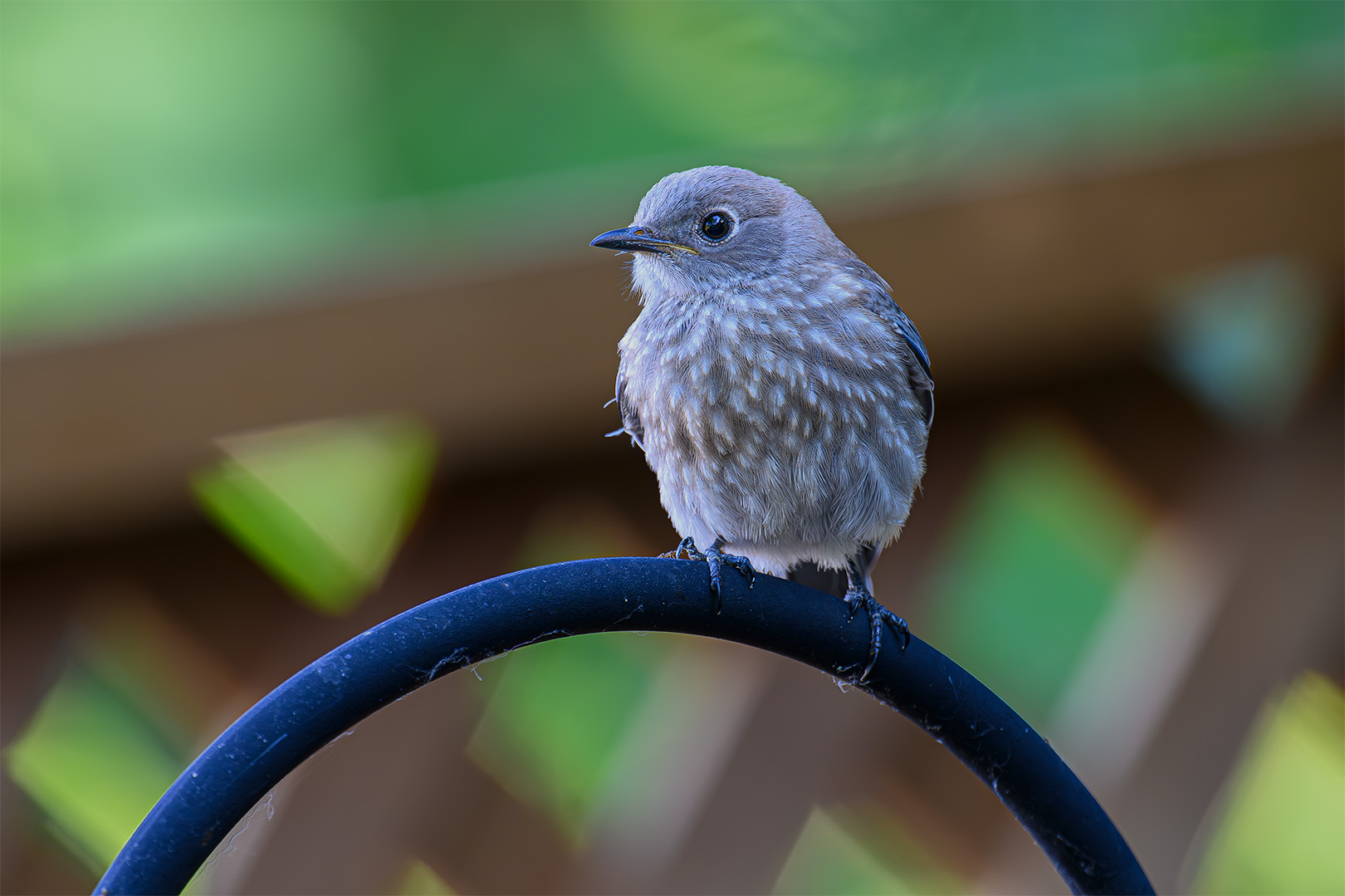
When I moved into my new home in Lincoln, my friend Truman put up two bluebird boxes as a housewarming gift. Until yesterday, I’d never seen any activity around either bird box. Then, yesterday morning, I noticed an unfamiliar bird, clinging to the front of the bird box that is visible from my sliding door. It was peering into the hole in the box. When the bird flew to the nearby shepherd’s hook, I picked up my camera and stepped outside. The bird did not seem fazed by my appearance and didn’t move as I inched slowly closer. When it flew to the top of the bird box, it paused briefly, then returned to the shepherd’s hook. I thought it might be inspecting a potential nest site. Then I noticed a male Western Bluebird perched nearby where the fence slopes up away from the nest box. Yay! It was the first time I had seen Bluebirds in my yard. At first I thought the unfamiliar bird must be a female and they were looking for a nest. After a few minutes, the male flew off, followed a few seconds later by the other bird. Later though, when I looked at my images, I realized that the first bird I’d seen was not a female but rather a juvenile Western Bluebird, still in spotted juvenile plumage and with that Walt Disneyesque baby bird beak. I don’t know what the juvenile bird was doing at the nest box. Is it possible that I completely missed bird activity in that box? Was it a parent still looking after a fledgling? I travel frequently but I do go into my yard often and the Bluebird nesting box is near where I hang several Hummingbird feeders. I think I would have noticed birds coming and going to and from the nest box. I kept my eye on the box the rest of the day to no avail. I hope I will be able to solve the mystery soon.

2024—The Birds and the Bees

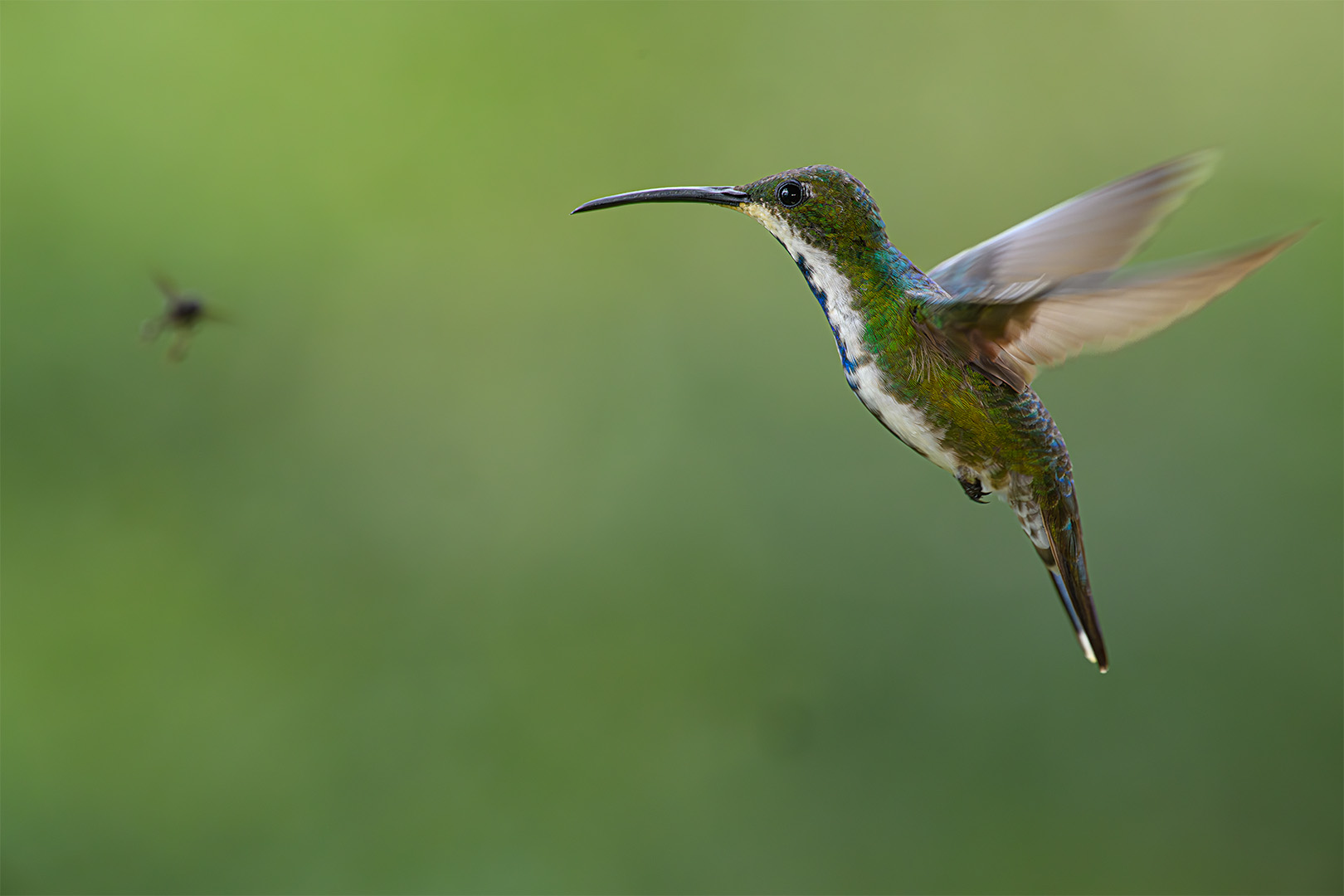
There was a constant battle over the feeders between the Green-breasted Mangos and the bees. For that matter, all the hummers at the Rancho in Costa Rica faced the same dilemma. That battle ensues wherever there are hummingbirds and hummingbird feeders although I’ve also witnessed hummingbirds reacting to bees at flowers both in my backyard and in Costa Rica. The female Green-breasted Mango backs away from the feeder as a large bee approaches it.

2024—All Red

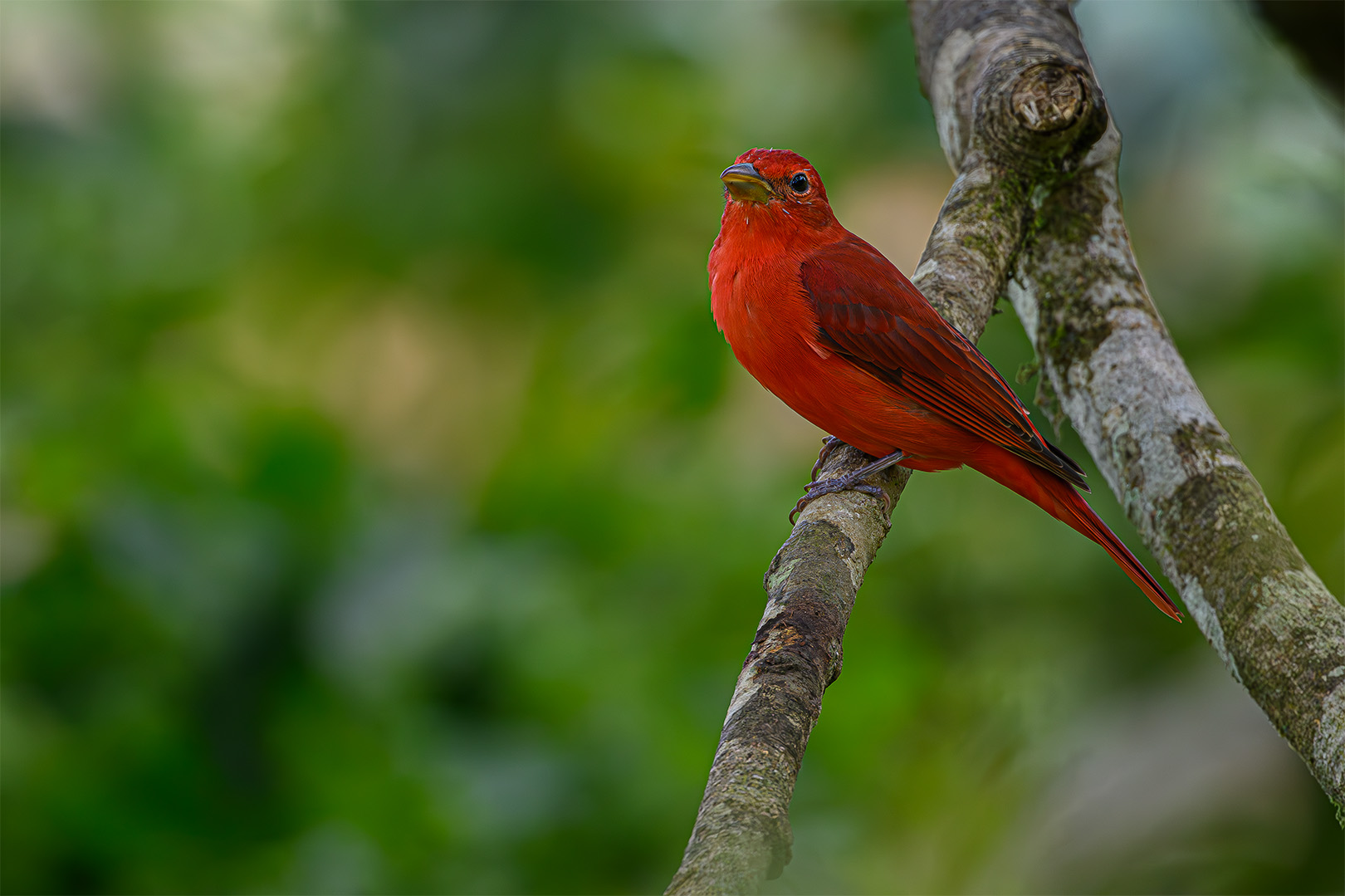
The male Summer Tanager is a bright red bird, all red, like the Northern Cardinal without the black face mask. These brightly colored birds are quite striking against the green foliage in the Costa Rican rain forest where this bird lives.

2024—Palouse Red Barn in Alpenglow

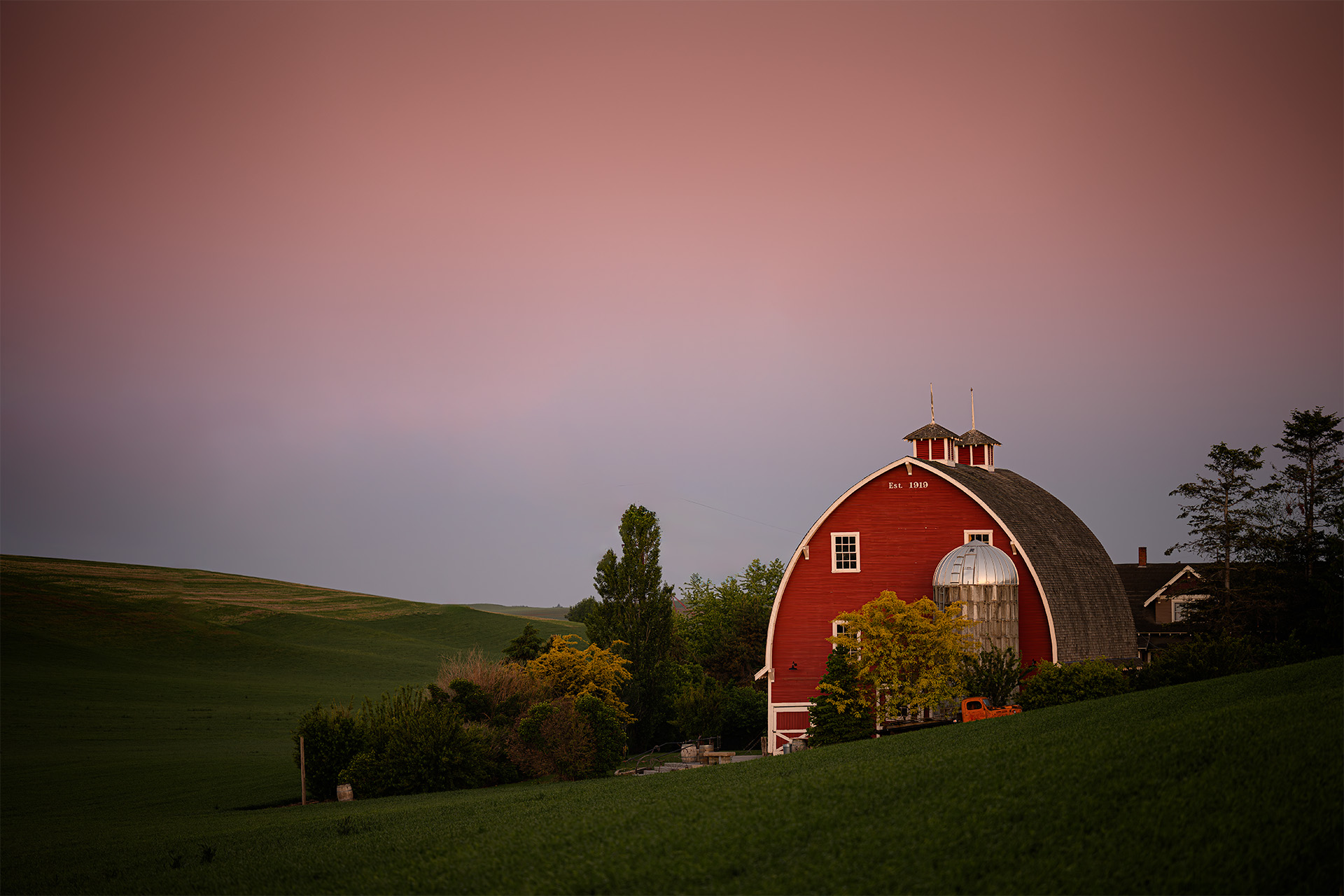
On a cloudless morning in The Palouse a couple of weeks ago, before the sun rose above the horizon, the alpenglow took center stage, a pinkish wash in the morning skies. It is lovely to see. The red barn nestled amidst the rolling hills planted in wheat and a small copse of trees basks in the glow.

2024—Raindrops Are Fallin’ on My Head

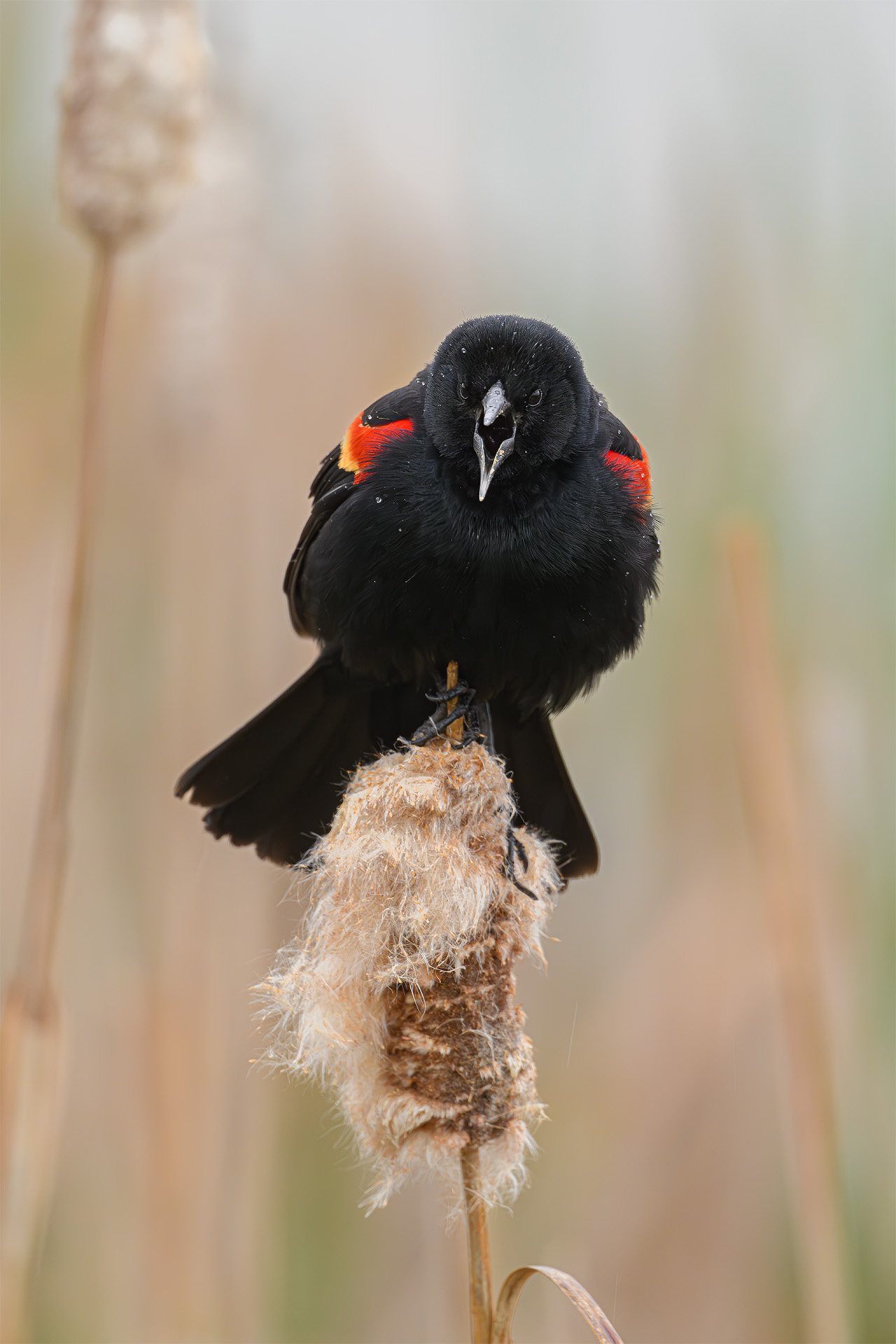
This male Red-winged Blackbird seems to be singing, “Raindrops are fallin’ on my head.” The rain fell softly at Lee Metcalf National Wildlife Refuge in Montana a few weeks ago but that didn’t deter these birds from singing their hearts out in hopes of capturing the attention of a female. Spending several days watching them made me realize how much I enjoy watching and listening to Red-winged Blackbirds. Not only is their melodic warbling captivating (and hopefully for the bird, successful in captivating a mate) but their mating displays and territorial skirmishes are really fun to watch. As Moose and I drove slowly along the refuge’s main road that fronted a small pond surrounded by cattails, we stopped when one of the birds was close enough to the road as this one was. The passenger window was down and I was ready with my camera positioned out the window to capture close up images when their expressions were priceless.

2024—Red Barn #2

Red Barn #2, (I’m calling it Red Barn #2 because it was the second red barn we photographed on The Palouse on our first morning there) seems to me to be the quintessential red barn. Perched amidst the planted crops, wheat I think, its red facade stands out from the lush green of the undulating hills surrounding it. The face of the barn is in full sun in this image but while we were shooting, the clouds drifted across the sky, casting changing light onto the front of the barn and moving it from sunlit to shade and back to sunlit again. I’m not sure why the need for a sign affixed to the front of the barn that declares it “Palouse Country.” It seemed pretty obvious to me without the sign.

2024—Palouse Falls—Washington’s Official Falls

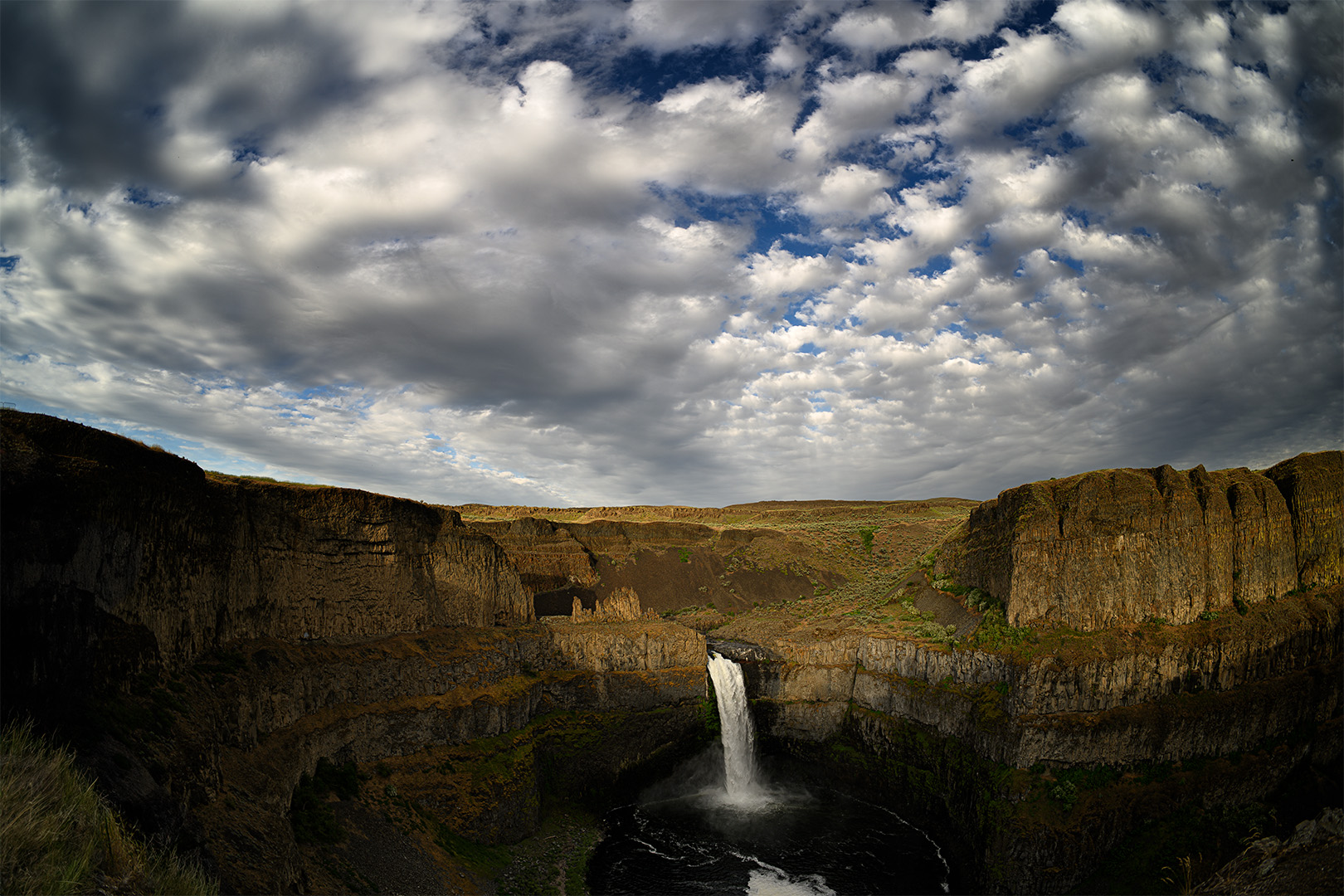
We stopped at Jimmy John’s for sandwiches to fortify us on the almost 2 hour drive to Palouse Falls late in the afternoon on our first full day in The Palouse. Palouse Falls is a designated Washington State Park Heritage Site and the Falls is Washington’s Official Water Fall. It takes an effort to see the falls as the road to the falls is long, narrow, and winding and the cascade itself is not visible until you walk to the fence overlooking the canyon. The Palouse River runs through a narrow passage at the top of the canyon and creates the falls when it drops 200 feet into a churning pool below. From there, the river moves through a winding gorge and merges into the Snake River.  I alternated between long exposures to make the waterfall look silly and short, like this one, to show the power of the water cascading down.

2024—Wait. What?

This past week was my fourth visit to The Palouse. My first three visits were between 2016 and 2020. If the “No Traffic Signs” were there on my previous visits, I was totally oblivious to them. When we stopped to photograph this one after spotting it early on our first morning, I assumed it was one of those odd signs that was erected for some obscure and specific reason. But, as we traveled on, we discovered they were everywhere and not peculiar after all. Well, I should correct myself. I think they were peculiar. I have never driven down a sign-less road and thought “I wonder where the traffic signs are?” The odd thing is that when we did venture down a couple of the roads designated as “no traffic sign” roads, there was indeed a sign or two. Go figure.

2024—Grumpy Bird?

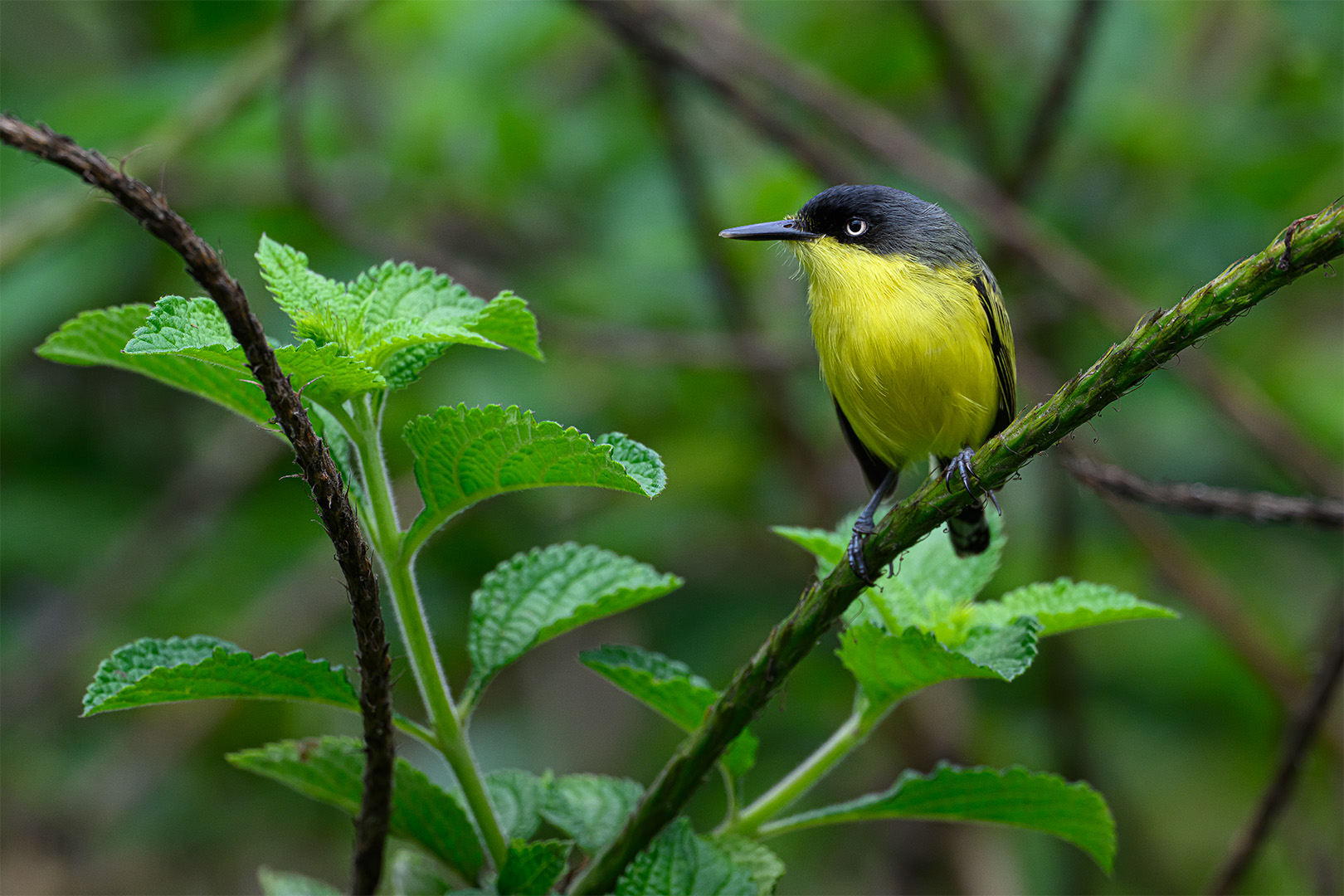
The Common Tody-flycatcher is a small bird that thrives in the tropics such as in Costa Rica where I took this photograph. The Tody was a resident of the same hedge that drew the elusive Snowcap, the hummingbird that brought us to the hedge in the first place. To me, the small Tody’s large beak and large eye with the sclera visible around its black pupil, gave it a grumpy look.