2024—Teddy Bear

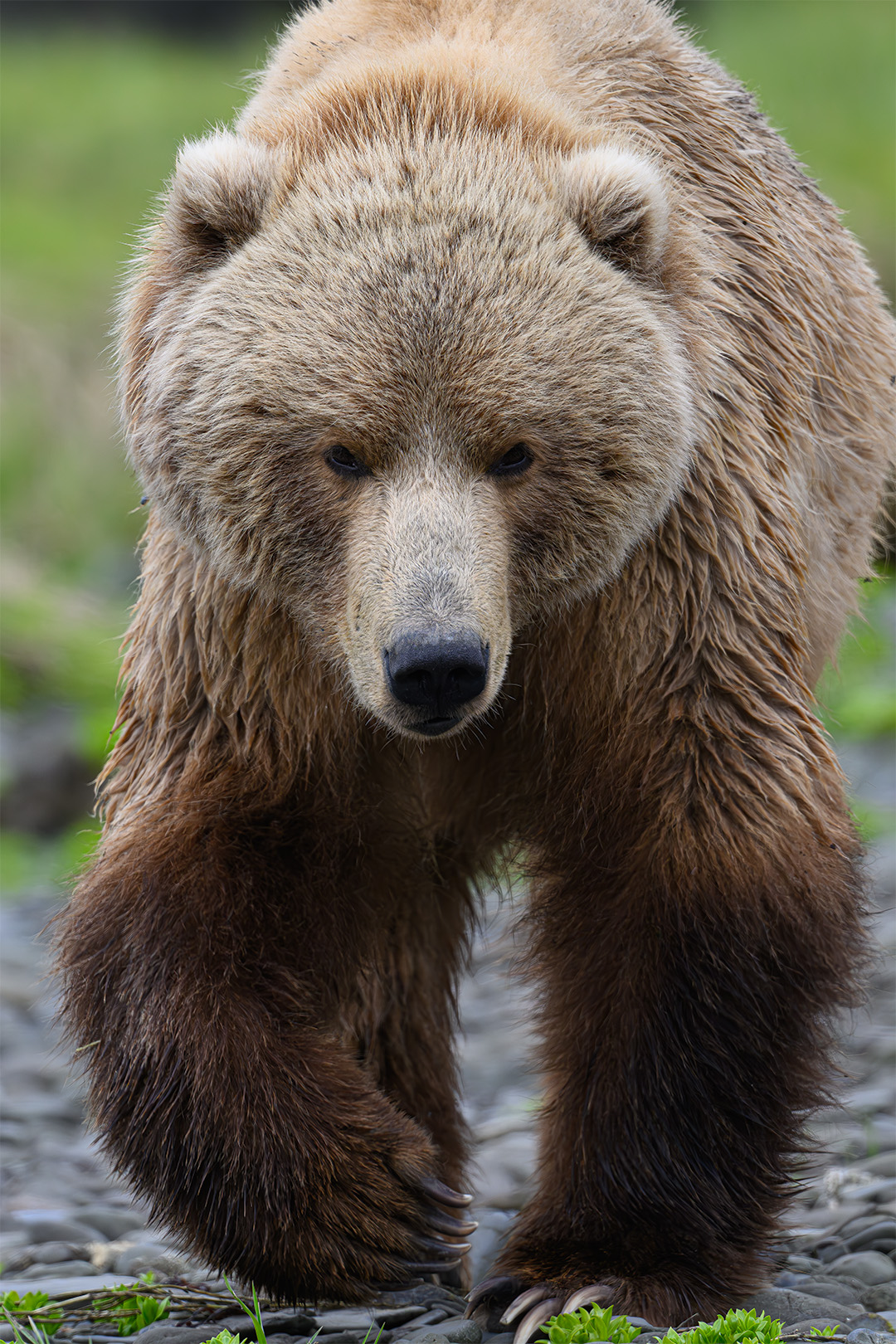
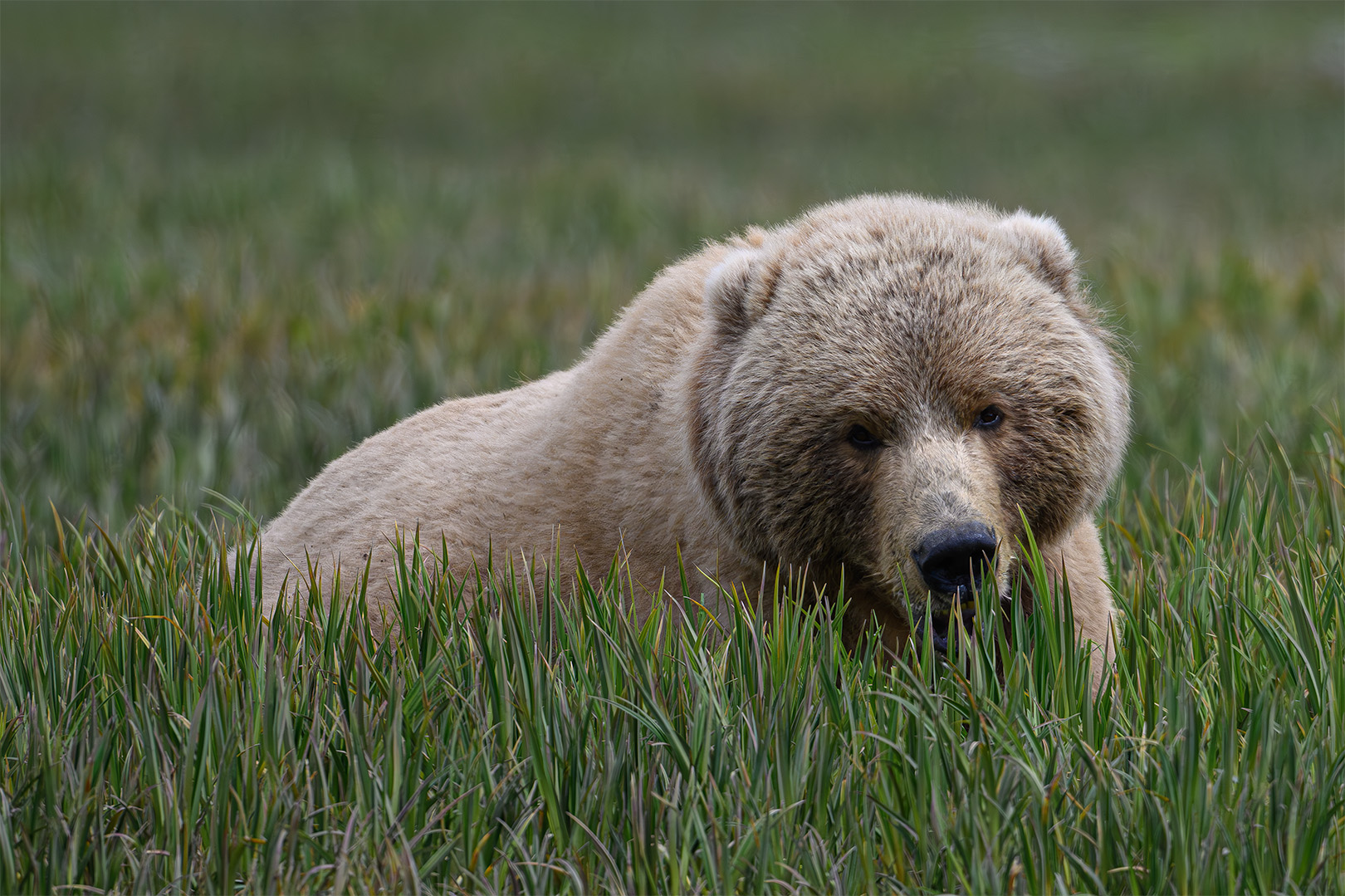
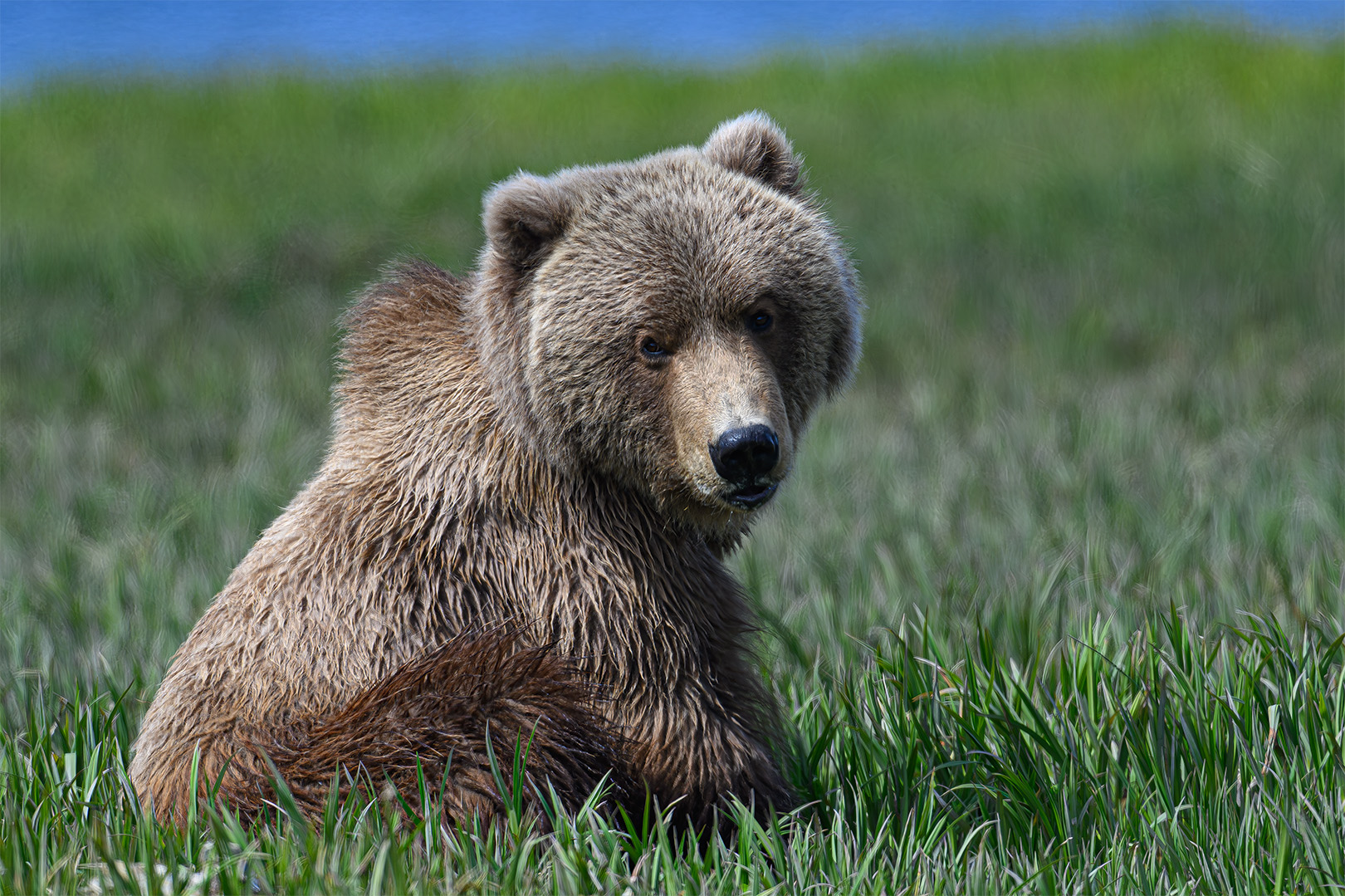
She instantly reminded me of a Teddy Bear with that adorable round face, inquiring eyes, and fuzzy ears. I just love these Kodiak Brown Bears and really enjoyed my time with them in their world. We got to Kodiak just as the nutritious grasses on which they graze were beginning to flourish. Every day, we could see that the grass was quickly growing taller before our eyes. In just a few short weeks, the grass will be too tall to go onto the flats to see the bears because it will completely hide them from view, making it too dangerous for us or the bears. I’m so glad that we got there at just the right time to see these adorable Teddy Bears in their natural habitat.
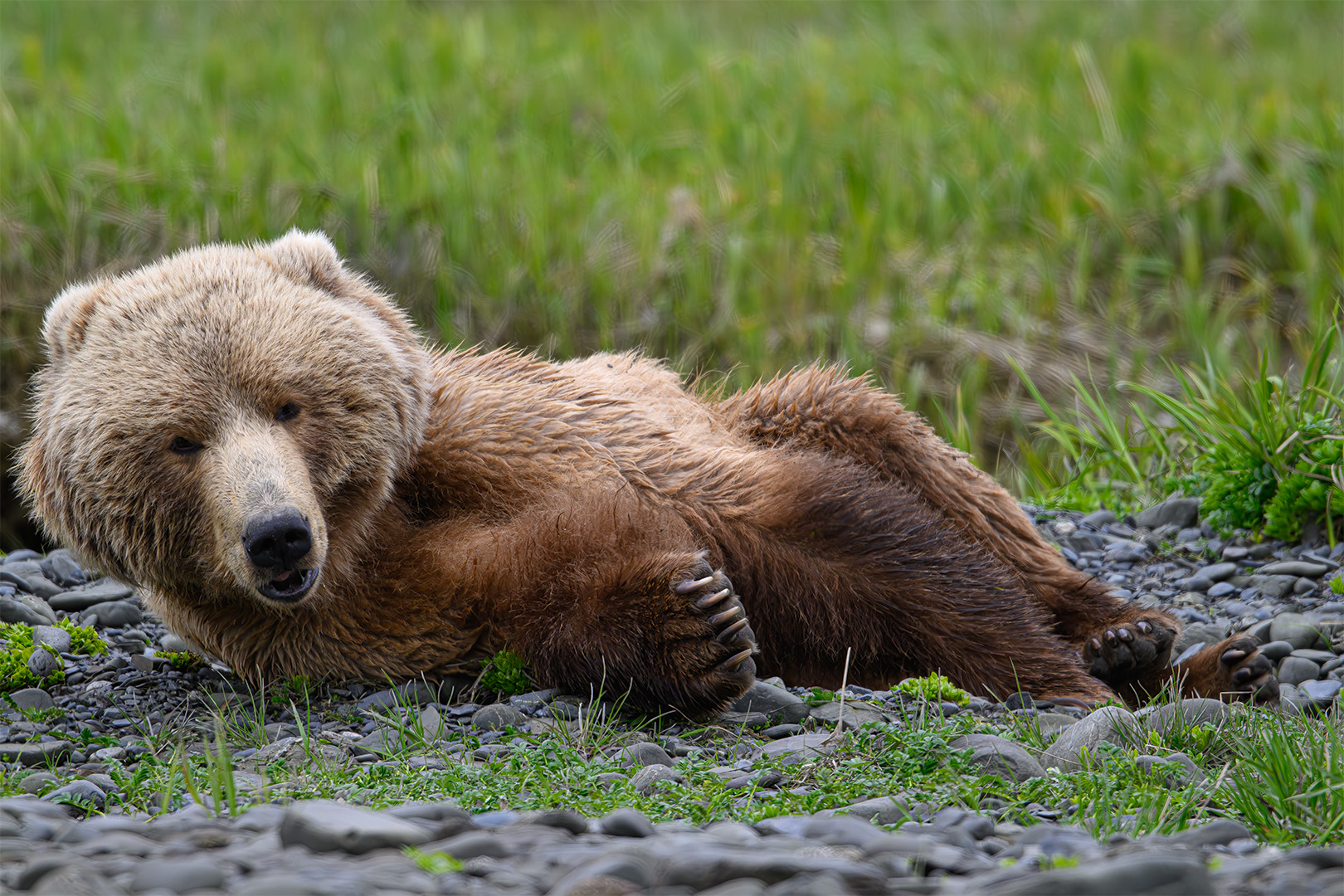
2024—Lazy Dog

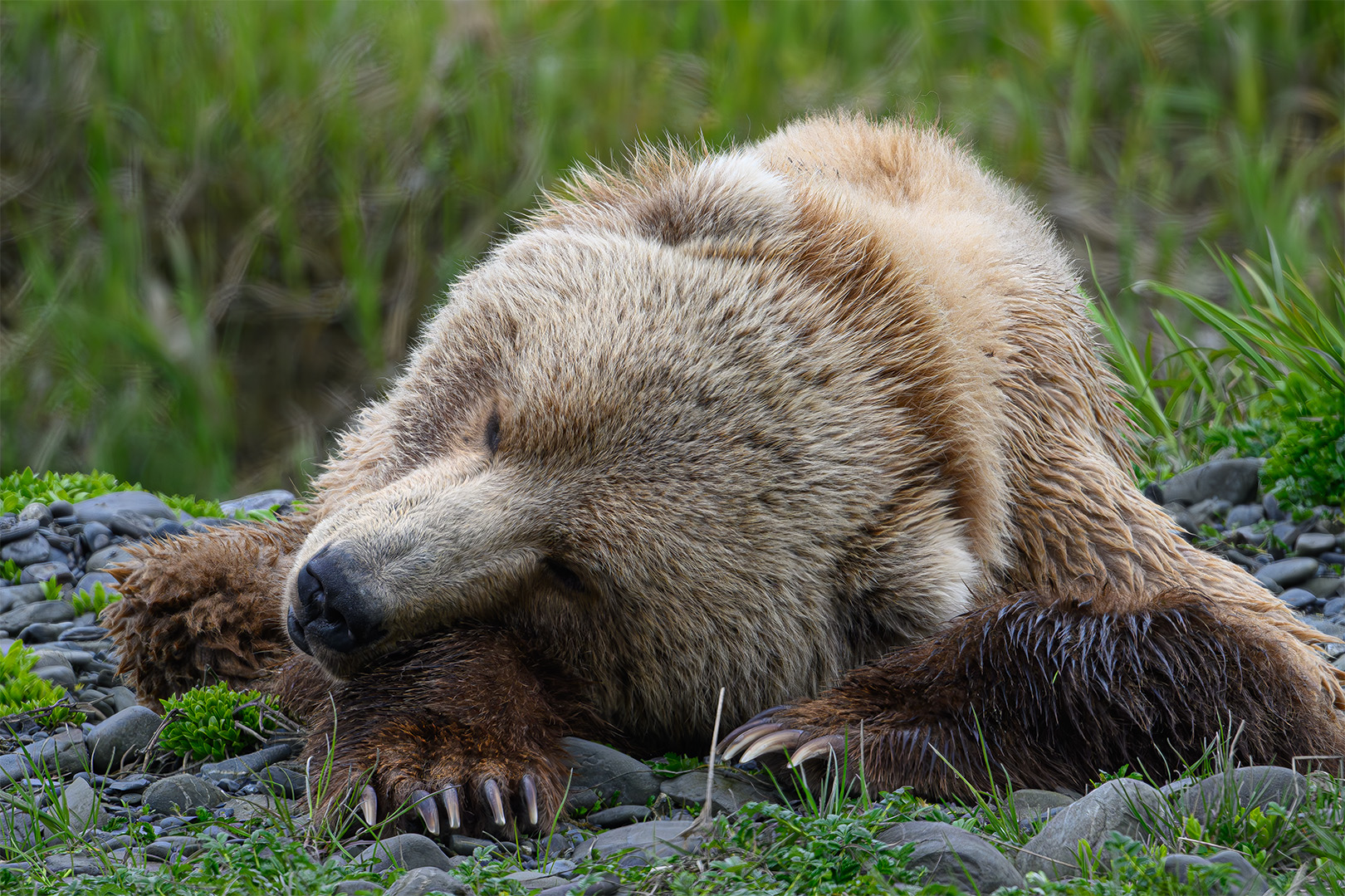
It doesn’t seem possible that barely a week ago I was so close to these magnificent creatures — these Kodiak Brown Bears. This sleepy sow showed us that she was not to be feared as she napped, her eyes heavy when she did open them. She stretched and yawned and rolled around. When she turned to face us directly, then slumped down again and dropped her head to rest on her paws, I couldn’t help but think, “she’s adorable.” My first memory of a Kodiak Bear is from the Saddle and Sirloin Restaurant in Montgomery Village in Santa Rosa, California where I grew up. The owner was a big game hunter and his restaurant was filled with the mounted treasures he had taken over the years. I remember being very wary of the huge Kodiak Bear that was standing on its two hind legs, forearms stretched out menacingly. I was about five or six when I first saw that bear and it made quite an impression on me. So much so that a few years later, at about age 9, when we were camping in the Sierras, my mother woke me up to tell me she thought there was a bear outside our tent. Of course the only bear I’d ever seen was the massive Kodiak Bear at the Saddle and Sirloin and they are definitely not in California but that is what I thought I saw in every shadow as I peered through the screened window covering of the tent. As it turned out, she heard deer outside our tent, not bears. When I first visited Kodiak to photograph these bears three years ago, I was glad to discover that they are not the menace that my old memories had conjured. I discovered that these bears are more like grazing cattle, teddy bears, and lazy dogs. The hour we spent with this bear were definitely in the lazy dog category.

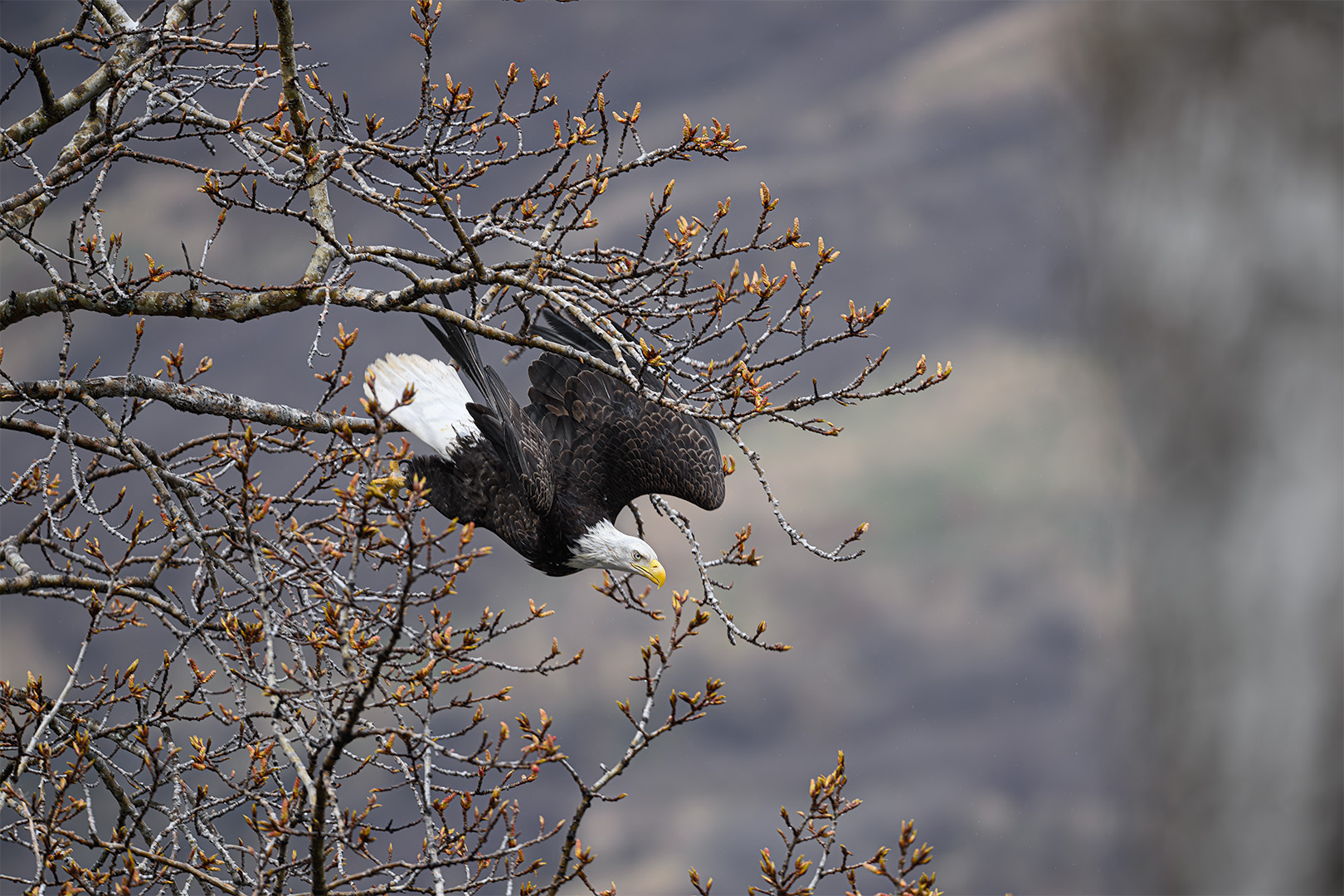
2024—Take-off

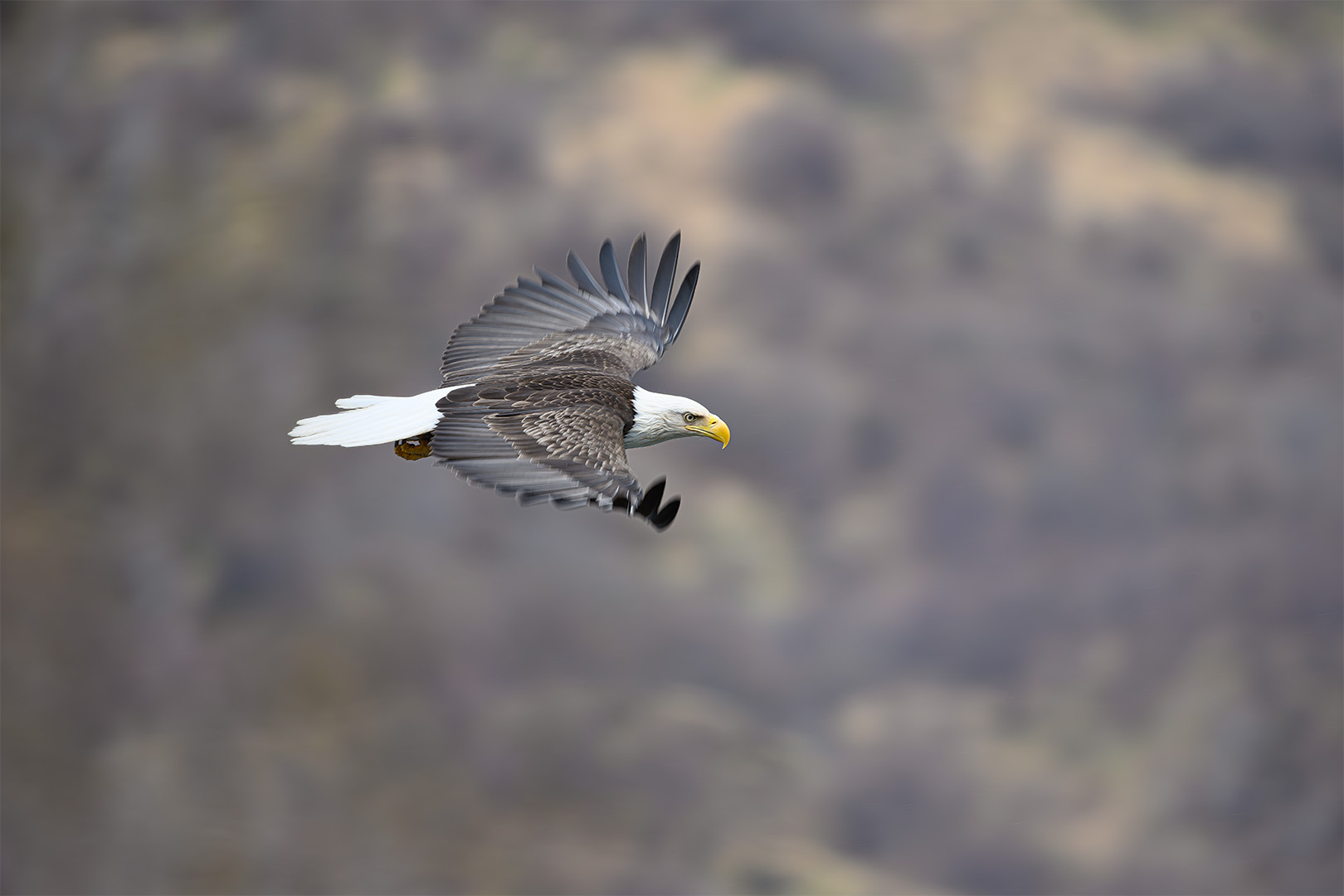
When we arrived at Rohrer Bear Camp on Kodiak Island in Alaska a couple of weeks ago, the Bald Eagles were perched on trees surrounding the camp’s deck. We had great views so we stood on the deck with our 600mm lenses photographing the Eagles when they flew by. I caught this Bald Eagle just as it launched from the tree.

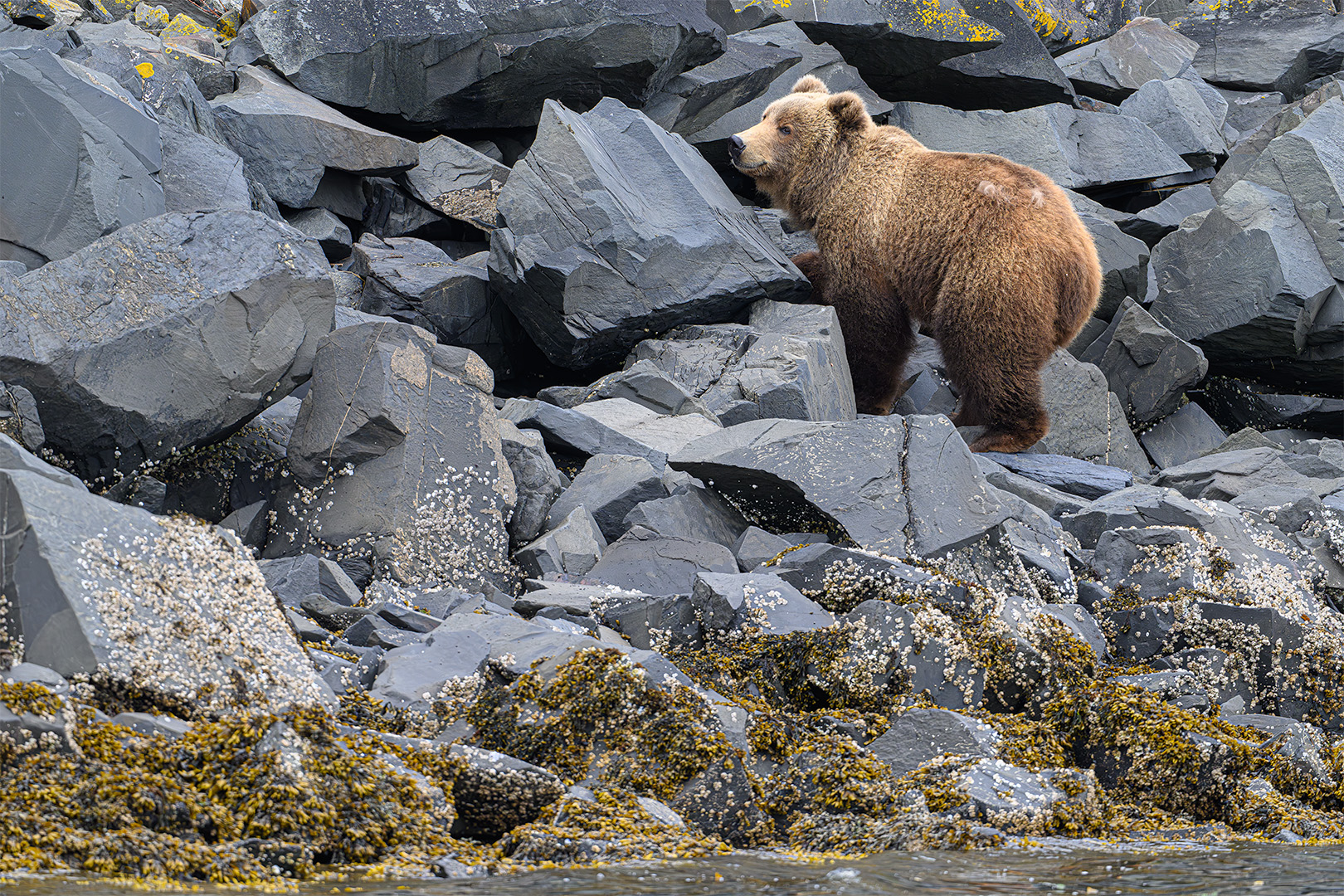
2024—Lions and Tigers and Bears, Oh My!

Lions and Tigers and Bears, Oh My! Well, maybe there weren’t any tigers, but there were lions (Steller Sea Lions to be exact) and bears (Kodiak Brown Bears) when we ventured on Sam’s boat out of the relative calmness of Mush Bay and into more open waters. We watched Steller Sea Lions, an endangered species, from the boat as they lolled on the rocky outcropping, eventually splashing into the water. The bears appeared on the nearby rocky shore foraging for seaweed and barnacles. They quickly disappeared up the rock slopes because they were not used to seeing or hearing the boat.

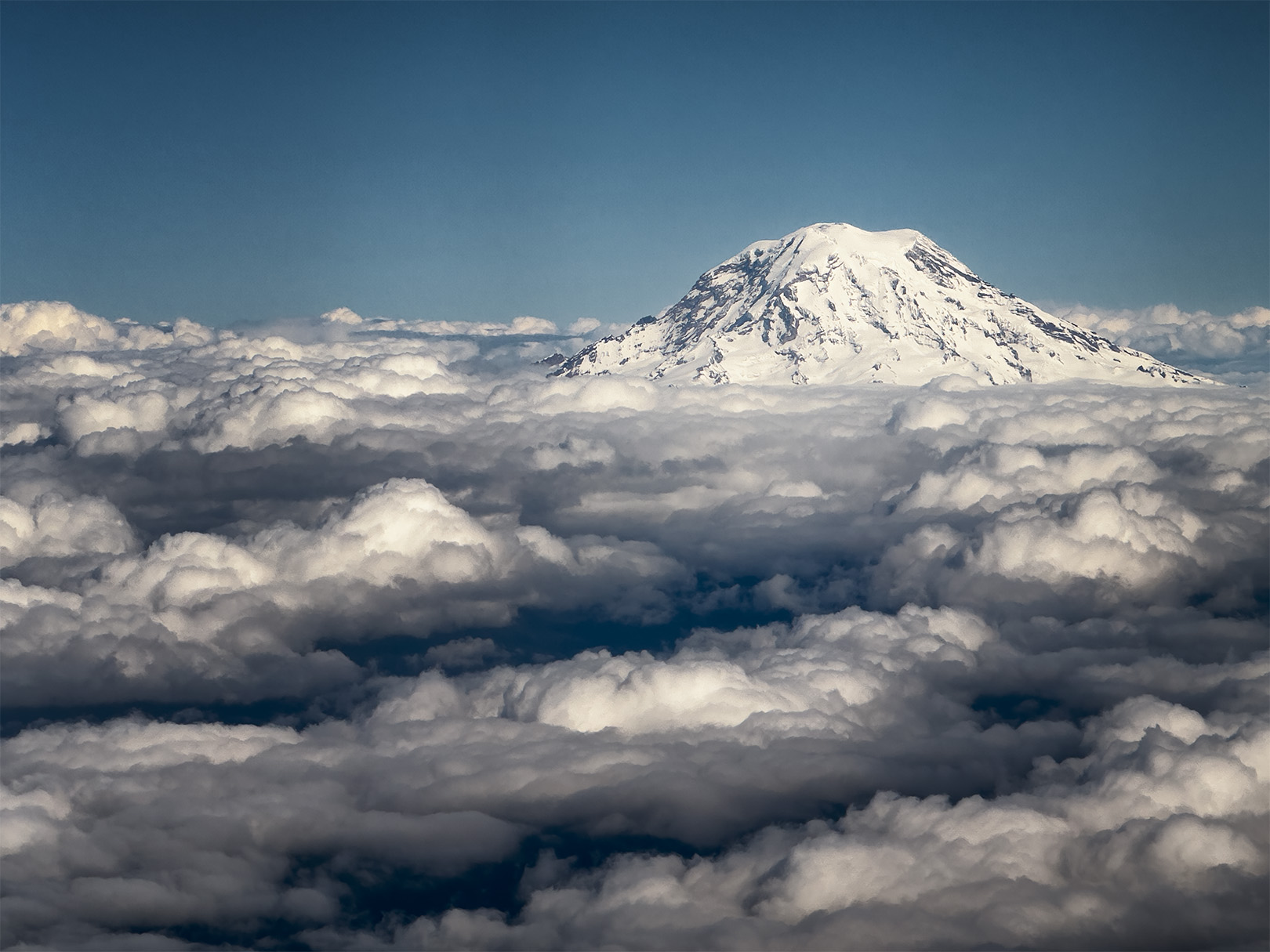
2024—The Mountain Is Out

The mountain is out——above the clouds, anyway. I’m told that people from Washington will say, “the mountain is out” when Mt. Rainier, AKA Tahoma, is visible on the ground. When I flew out of Seattle the other day heading south to Sacramento, the clouds were so thick that I wasn’t expecting to see much from my window seat on the plane. As we flew through the clouds to cruising altitude, I looked out and was stunned to see Mt. Rainier, its 14,411 feet emerging through the clouds, just outside my window. What a spectacular sight. And a little further south, there was Mount St. Helens a little more than half the height of Rainier but it, too, peeked through the clouds. The mountain was certainly out for me but I’m sure no one could see it from the ground.

2024—Aptly Named

There is no doubt how the Greater Yellowlegs got its name. It is certainly aptly named. This Greater Yellowlegs (yes, there is a Lesser Yellowlegs) showed up noisily on the shore near us as we were photographing Kodiak Brown Bears across the river. Whatever it was finding to eat seemed plentiful and almost every time it dipped its beak in the water, it came up with a morsel.

2024—Sleepy Time Bear

We arrived at the flats on the Uganik River the other day to find a Kodiak Brown Bear sound asleep in what I consider its lazy dog persona — would that be a double anthropomorphic reference? In any event, it was the same bear that approached us and that Hiram persuaded to change course. We photographed her for most of an hour before she got up and approached us. We watched as she napped, chin on paws, or lolled on her back or side, or grabbed and pushed at a rock that seemed to be in her way, barely opening her eyes. She occasionally looked up at us or to one side or another if she heard something, then, realizing there was nothing to worry about, she flopped her head back down and went to sleep again. Observing this intimate part of this bear’s day to day existence was a very special experience for me. Most of the time, we would see the bears either grazing on grass or walking to and from someplace to graze. Photographing a sleepy time bear was something I’ll never forget.

2024—Wet Bear

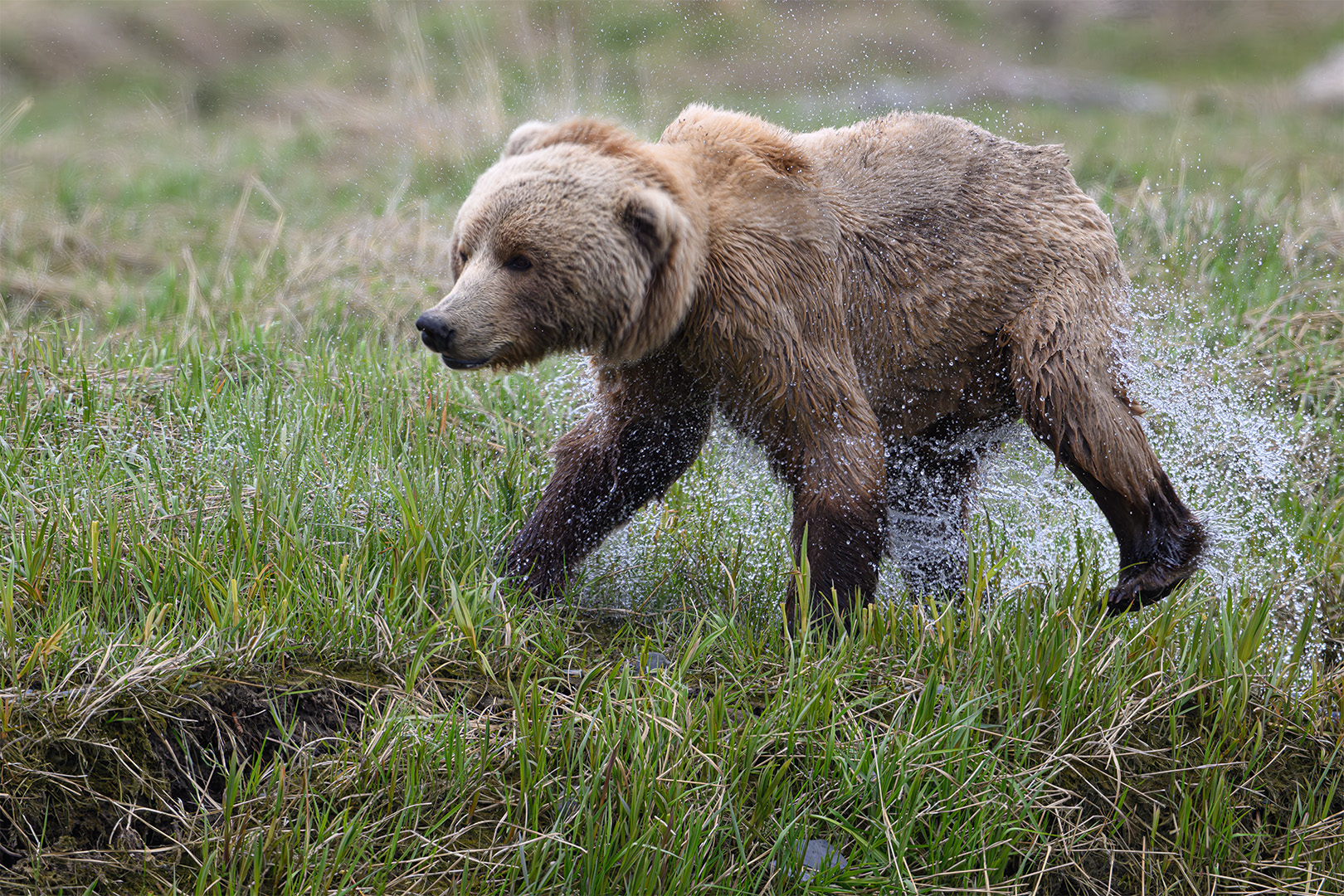
After this Kodiak Brown Bear sow waded across the river, just like every dog you’ve ever seen after it gets out of the water, she shook vigorously to dry off. But, the fur of an 400 pound Kodiak Brown Bear holds lots more water. I was glad that I was across the river so the spray didn’t reach me. What a privilege it’s been to observe these bears going about their daily activities while ignoring our presence.

2024—”Hey, That’s Close Enough!”

“Hey, that’s close enough” our guide Hiram said calmly, without raising his voice to the Kodiak Brown Bear walking directly toward us. That’s all it took. The bear made a right turn and headed away from us to the river a few yards away. “Thank you!” said Hiram to the bear. Hiram told us that sometimes the younger bears will try to see how much they can get away with. If they succeed in frightening someone off, they will try that behavior again. If, as in this case, they do not succeed, the next time they will likely head away from the humans instead of toward them. This is my sixth week spent at Rohrer Bear Camp since 2021 and I have never felt afraid of the bears. In my mind, they are more like grazing cattle, lazy dogs, or teddy bears, not to be feared. In fact, just seconds before this Kodiak Brown began to walk toward us, it had been napping about 200 feet away from us. As it lolled lazily on the grass, stretching, yawning, and resting its huge head on its paws, all I could see was a big brown lazy dog.

2024—They’re Baaaaack

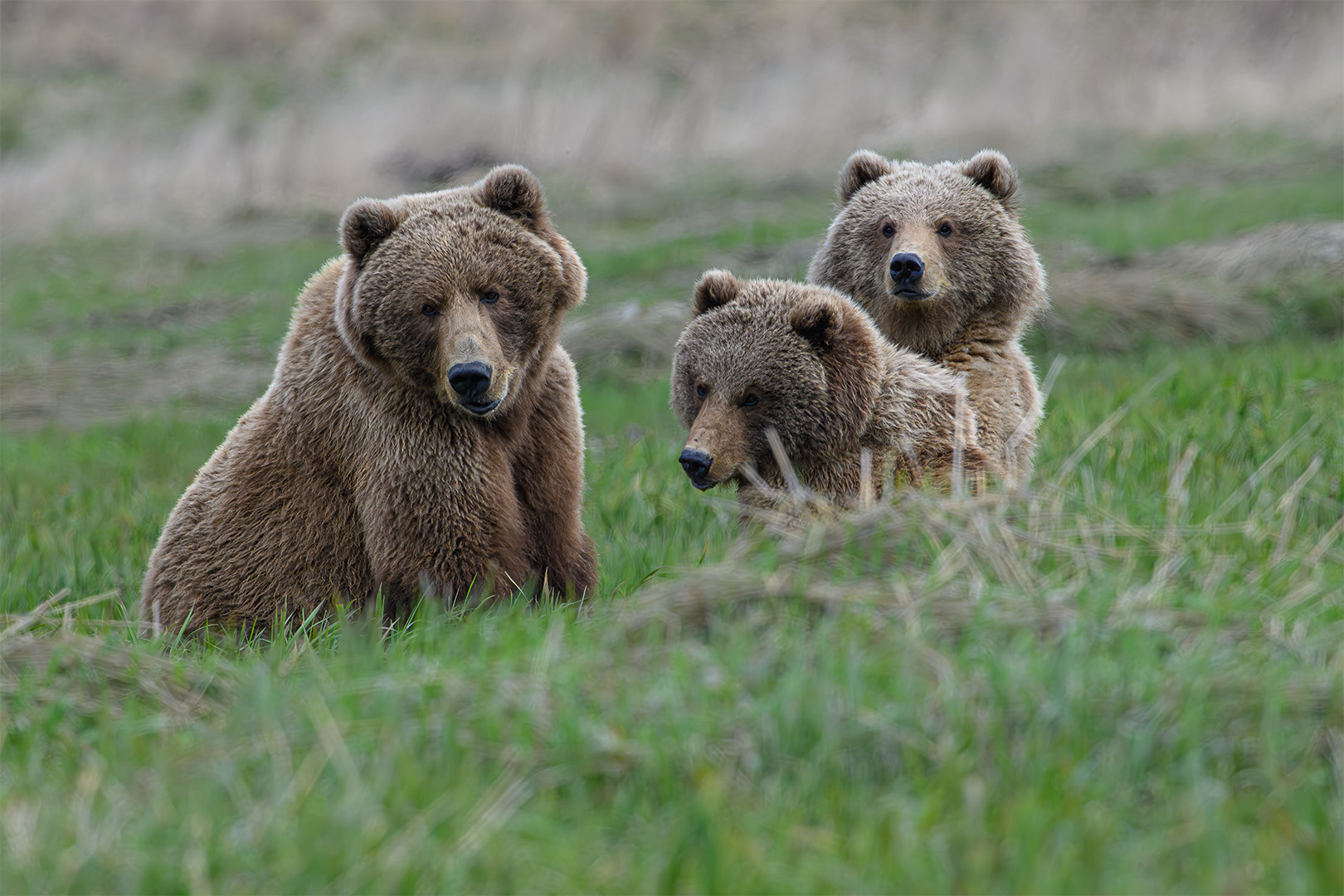
A mother Kodiak Brown Bear and her three cubs were on the flats yesterday shortly after we arrived late in the morning. We recognized her as the mother we’ve seen the past couple of visits to Rohrer Bear Camp. Only two of the cubs are visible in this image. The third, a boy our guide told us, seems to have a mind of his own and usually trails far behind the rest of the family. This trio was on alert as there was quite a bit of bear activity on either side of the river while we were there, a total of eight bears.

2024—Teddy Bear’s Picnic

We’re back in Kodiak at Rohrer Bear Camp. Yesterday was our second day on the Uganik River and we spent some time with our favorite Teddy Bears. It’s that time of year when the Kodiak Brown Bears have recently ventured out of their winter dens. The nutritious grasses along the river banks are starting to flourish and they provide the necessary nutrients for the bears. Blondie was grazing across the river from us yesterday. She hunkered down and made herself a picnic of the grasses surrounding her. It’s great to be back. Blustery winds and spitting rain cut our visit short yesterday but we’ll be back today.

2024—Meanwhile, Back in Alaska

Yesterday, we returned to Rohrer Bear Camp on Kodiak Island in Alaska. While we stood on the deck, happy to be back here and savoring the beauty and serenity of this pristine corner of the world, a number of Bald Eagles were flying over Mush Bay in front of us so we got our cameras out and began to shoot. My friend Eric stood a few feet away from me. We shot for most of an hour despite the light rain. Later in the afternoon when we downloaded our images, Eric and I discovered that we had identical images we took at the same instant. We were both shooting with @NikonZ9 and 600mm lenses but Eric’s lens is the spectacular #NikkorZ600mmf/4 TCVRS and mine is the also spectacular but much lighter, slightly slower, and much less expensive #NikkorZ600mmf/6.3VRS lens. Although Eric is 6 feet 4 inches tall and I’m 5 feet 8 inches, we somehow got the Eagle positioned at the same place in the frame and when we were amazed to realize that the wings and wingtips are in the identical positions. Only the very abstract background is slightly different because we were standing a few feet apart. To see Eric’s shot click here.

2024—Tyger! Tyger!

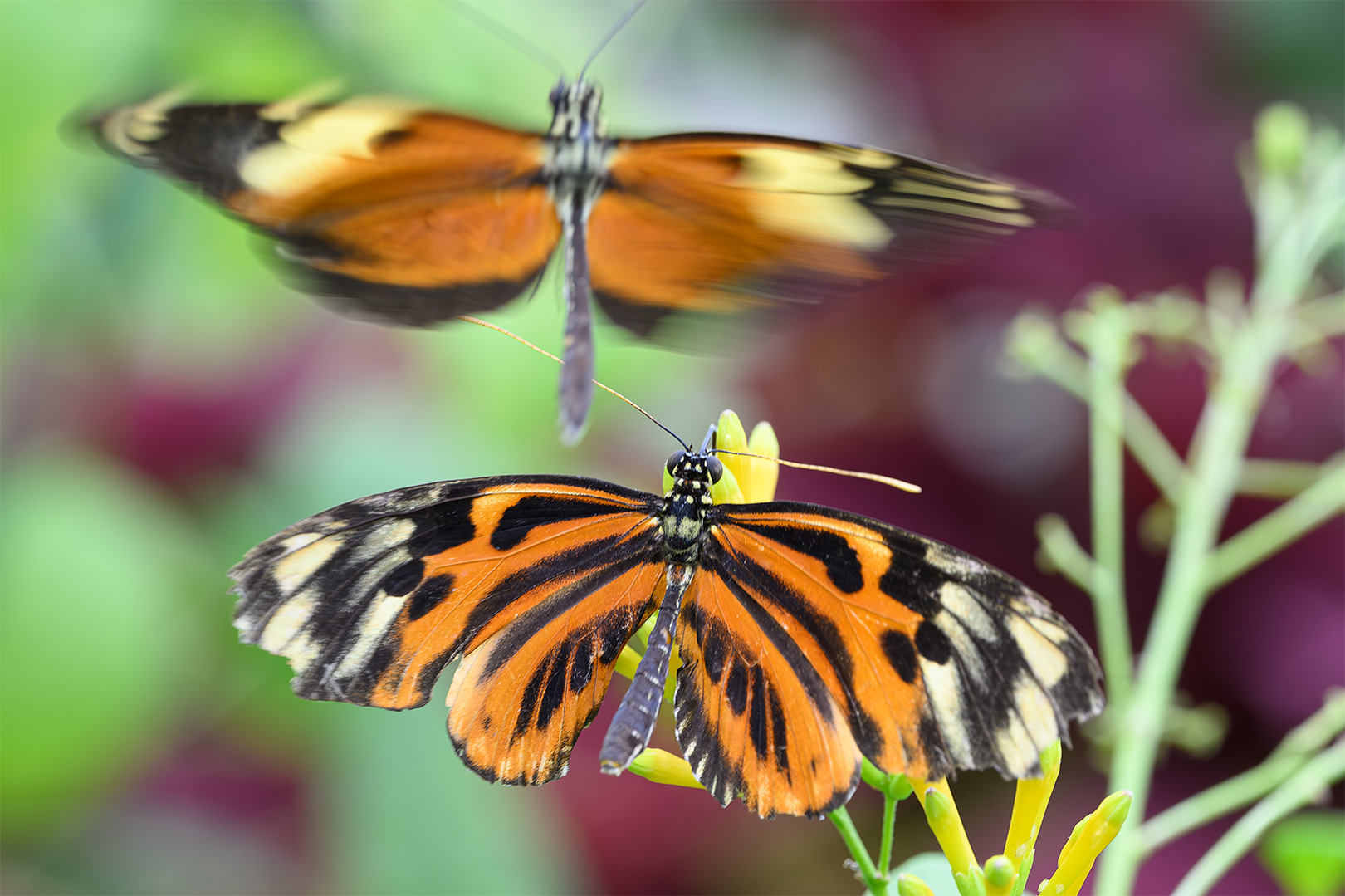
Tyger! Tyger! burning bright, in the forests of the night. With apologies to William Blake, but with two Tiger-striped Long Wing butterflies in a single image, I couldn’t resist calling this post Tyger! Tyger! Of course a butterfly is not a ferocious tiger, (or a tyger as Blake used a spelling already archaic when he wrote his poem The Tyger in 1794, his reason left to scholars to debate) but their coloration certainly mimics the colors and patterns of their namesake. And they were not in a forest but in the Missoula Butterfly House although they are Central American butterflies so it is possible when not in captivity they live in a rainforest. But, in my mind, the first two lines of that poem seem to fit this image perfectly.

2024—Expression

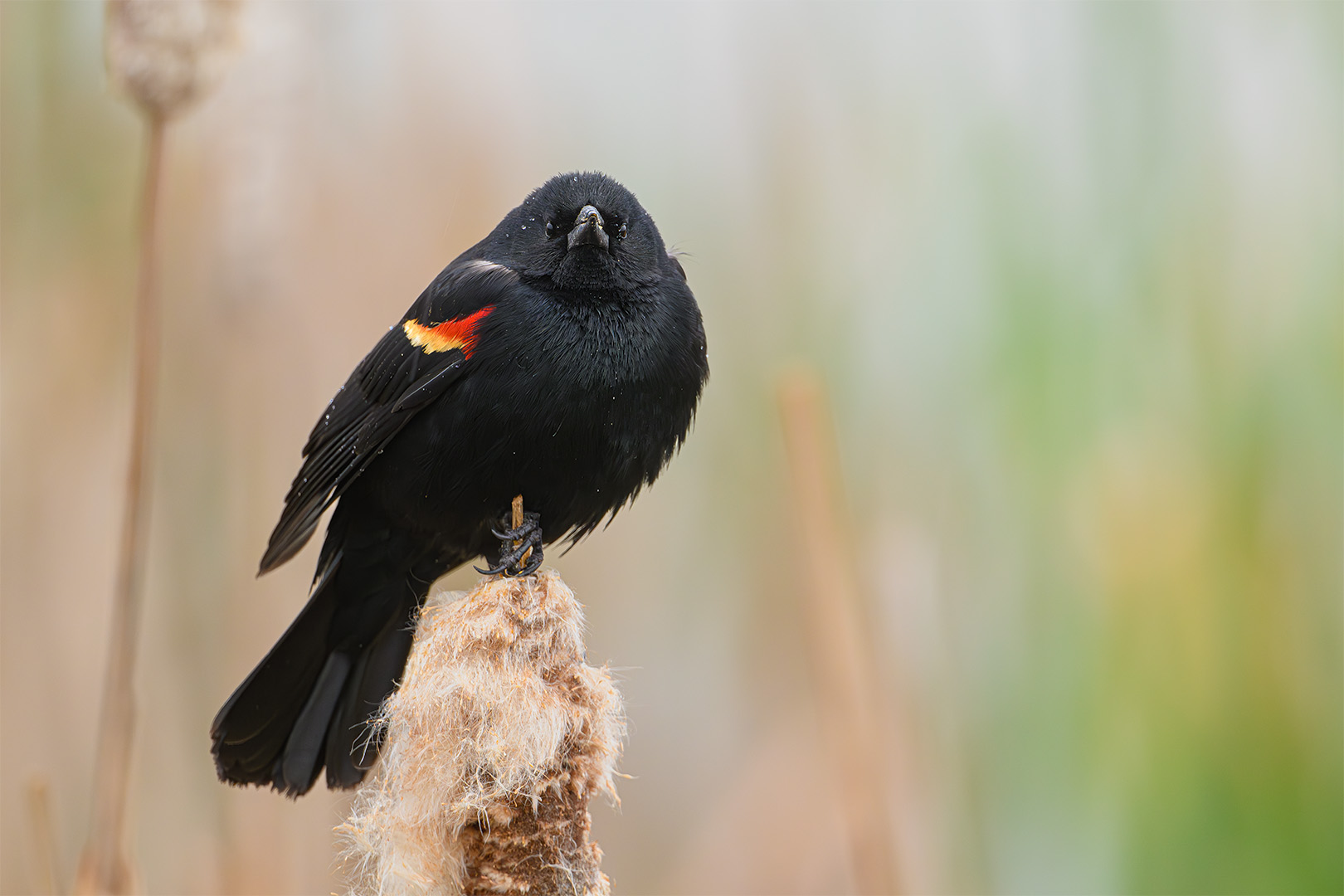
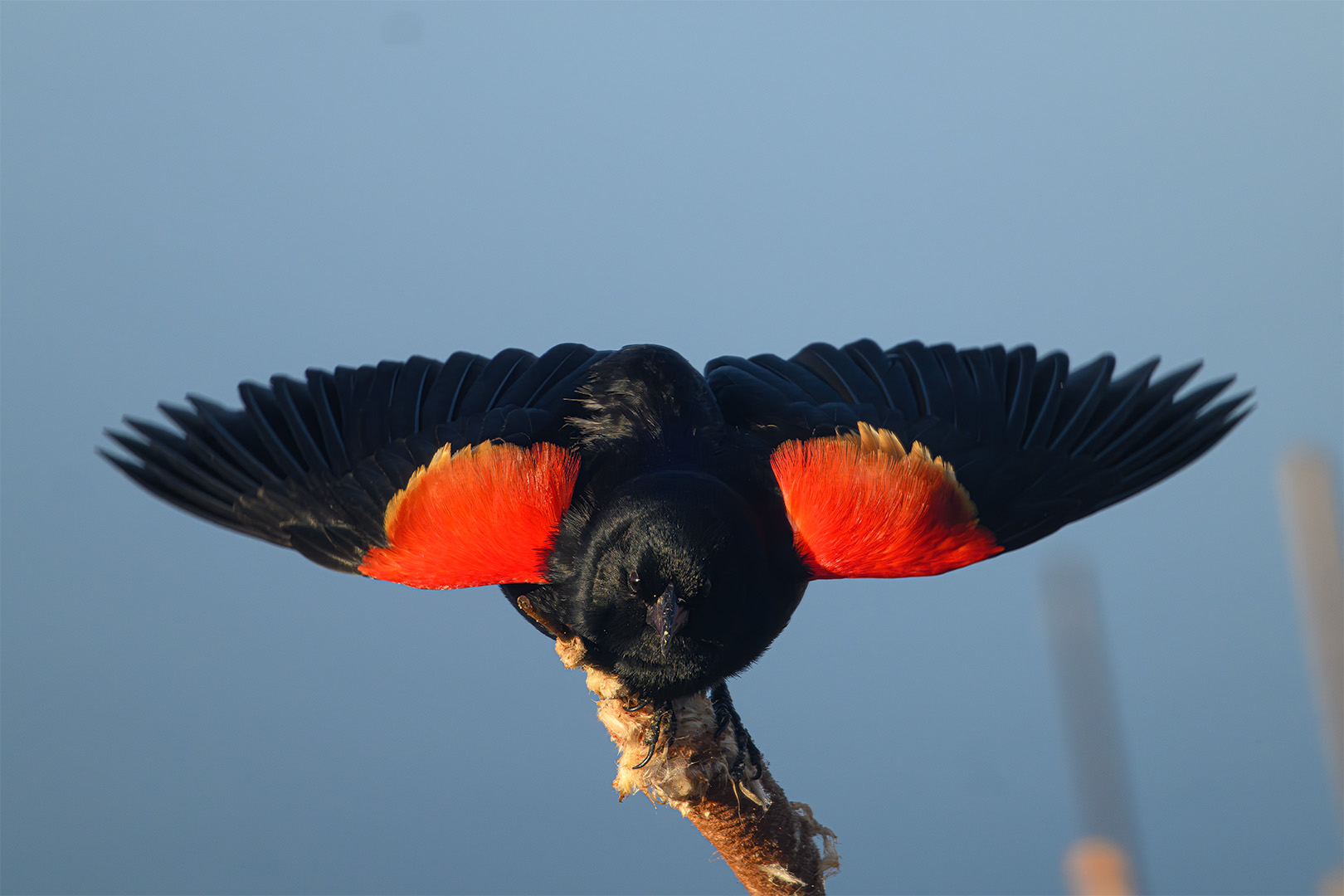
Last week in Montana, I spent more time with both Red-winged Blackbirds and Yellow-headed Blackbirds than I have ever spent with either species. After watching the drama between the two species, whether it was for territory or for a female that may or may not have been one of their own, I have come to really love both of these fairly common blackbirds that when it is not mating season, can be easily overlooked. The expressions on their faces, whether they’re warbling their mating call or just giving menacing looks, as in this image, are priceless.

2024—Emerald Swallowtail

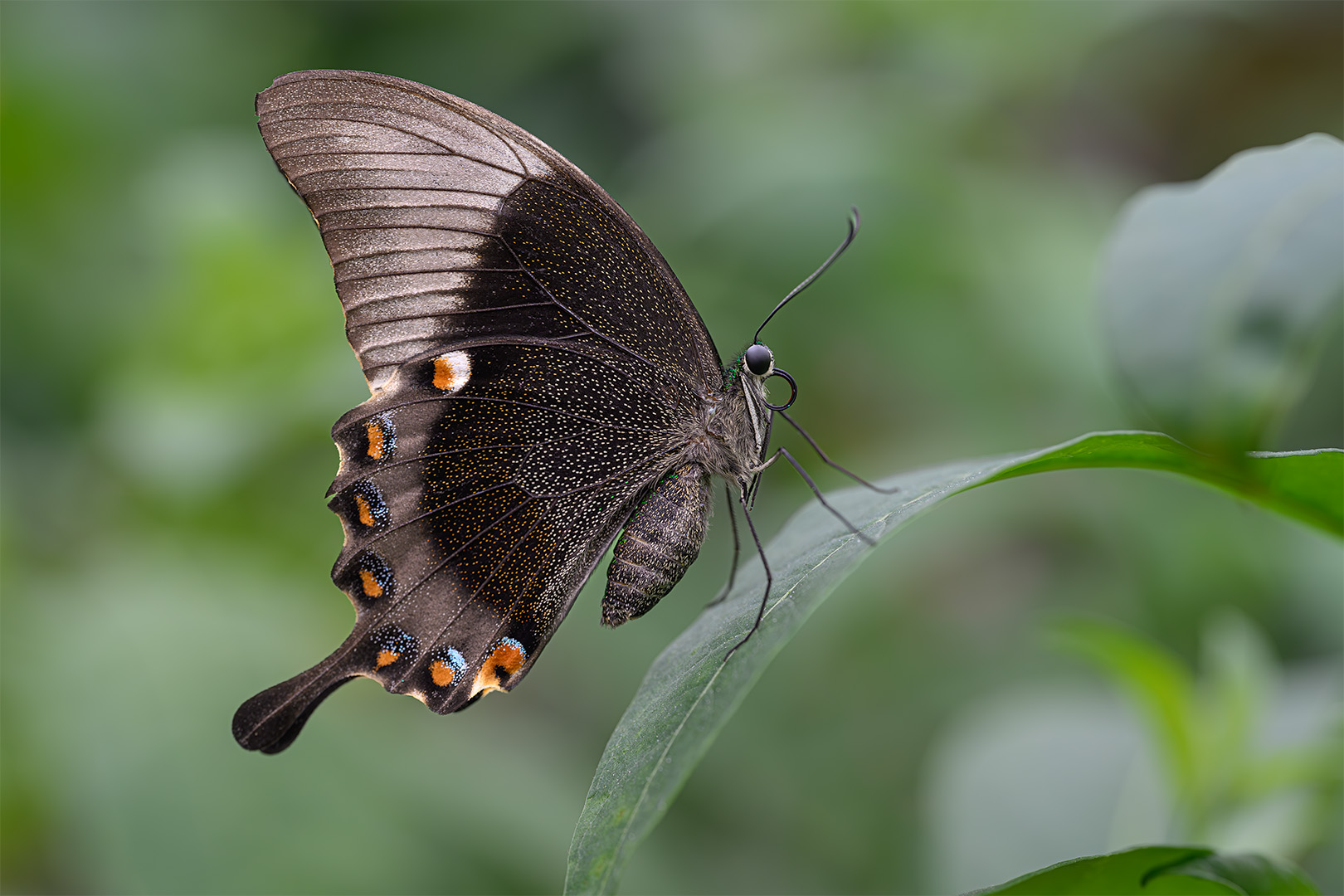
I love the challenge of photographing things with wings. Because things with wings have the ability to fly they don’t always sit still long enough to capture a perched image of them. For me, the erratic flight patterns of butterflies make it much more difficult to photograph them in flight than most birds. When they are flitting about, they don’t have a predictable pattern of movement that I can rely on to capture them in flight. Sometimes though, like birds, they will perch for a brief period. I was pleased when this Emerald Swallowtail, a native of Asia, stopped flitting and perched on a leaf at the Missoula Butterfly House last week. Its spectacular wings with their iridescent emerald markings on the front side are hidden when its wings are closed as in this image. The undersides of its wings are much more subdued than the tops. However, the recognizable swallowtail shape of the wing along with the curled up proboscis and black buggy eye are interesting details that can be easily overlooked when the bright dazzle of the emerald markings on the front of the wings are visible.

2024—Scarlet and Black

The Missoula Butterfly House and Insectarium is a marvelous place in Montana to experience the incredible beauty of butterflies, most from Asia, Central America, and Africa. The display is filled with hundreds of different butterflies, in different colors and sizes including the giant Blue Morpho that I had just as much difficulty photographing at the Butterly House as I did in its native country of Costa Rica. This is a male Scarlet Mormon. I was struck by the similarity of the scarlet on his wings to the scarlet on the flower from which he sipped nectar. And, as a bonus, an orange Ladybug (part of the Insectarium, I suppose) was visiting the same flower.

2024—On Display

This time of year, the Red-winged Blackbirds put on quite a display. At Lee Metcalf National Wildlife Refuge in Montana, all along the edge of the pond, perched on the tips of cattails, the male Red-winged Blackbirds call out to potential mates, or perhaps to announce territorial boundaries to rivals. The mating call is a melodic warble. And, when a rival or potential mate comes into view, his visual display goes into high gear. His red and gold epaulets suddenly flare and his wings flap and he rotates on the tip of the cattail, facing what he perceives is his rival.