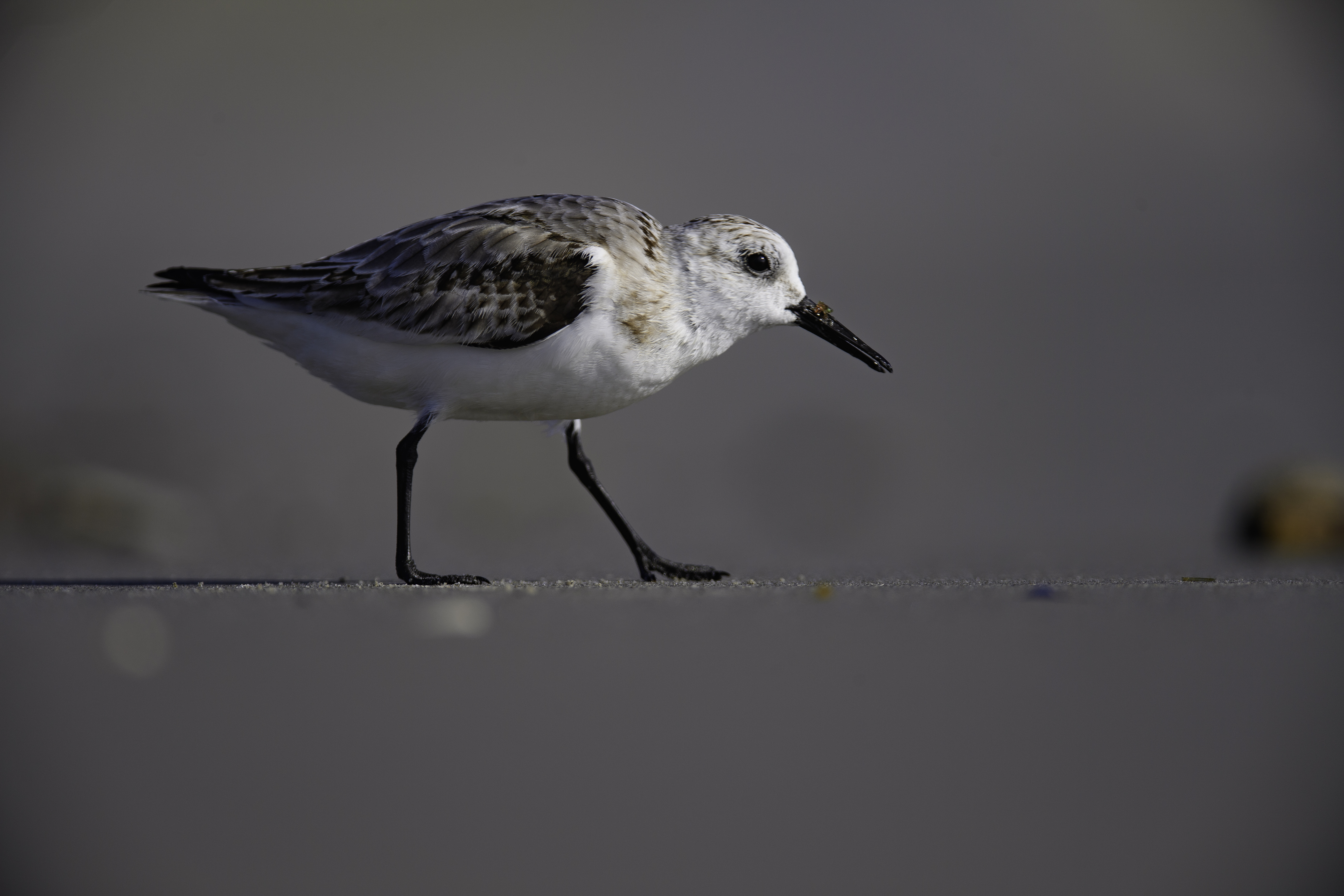
The way this willet is walking makes me think of Robert Crumb’s Zap Comics cartoon “Keep on truckin.'” It’s one of the first shots I took on my Texas Coast adventure last week. I was using the tripod, before I discovered the magic of beach panning.

The way this willet is walking makes me think of Robert Crumb’s Zap Comics cartoon “Keep on truckin.'” It’s one of the first shots I took on my Texas Coast adventure last week. I was using the tripod, before I discovered the magic of beach panning.
Saturday on the Gulf was windy and the birds were elusive. We had to cancel our morning beach panning due to high winds. Later, driving through the wildlife preserves, we found very few birds to photograph and those that we found were too far away from our lenses to get decent shots. After a disappointing day of bird photography, we called it quits and headed to dinner. On the way, Moose stopped so we could get one last look at the Gulf of Mexico, listen to the roar of the surf, and enjoy the setting sun. I took a few shots and Moose said, “Carol, let me see your camera for a second.” He turned the camera vertical and took a few frames. When I looked at the viewfinder, I thought, “Wow!” It was obvious after seeing his shots that vertical framing was definitely the way to go in this scenario. I normally think of landscapes, and in particular sunrises and sunsets, as horizontal shots. Once again Moose had me thinking about photography in new ways. I took a place holder photo so I would be sure not to confuse my shots with his, not that there could be a chance that I would confuse my mediocre efforts with his brilliant composition. Of course, my shots weren’t as gorgeous as his, and he did acknowledge that he’d been doing this a few more years that I have but, still. And, his shots have shorebirds in the foreground. They’d flown off by the time I turned my camera vertical but there is a fisherman standing in the surf far down the beach.

These sanderlings are a little small in the frame but I loved their gestures: 1) marching toward me; 2) scooping up something to eat; 3) eating.
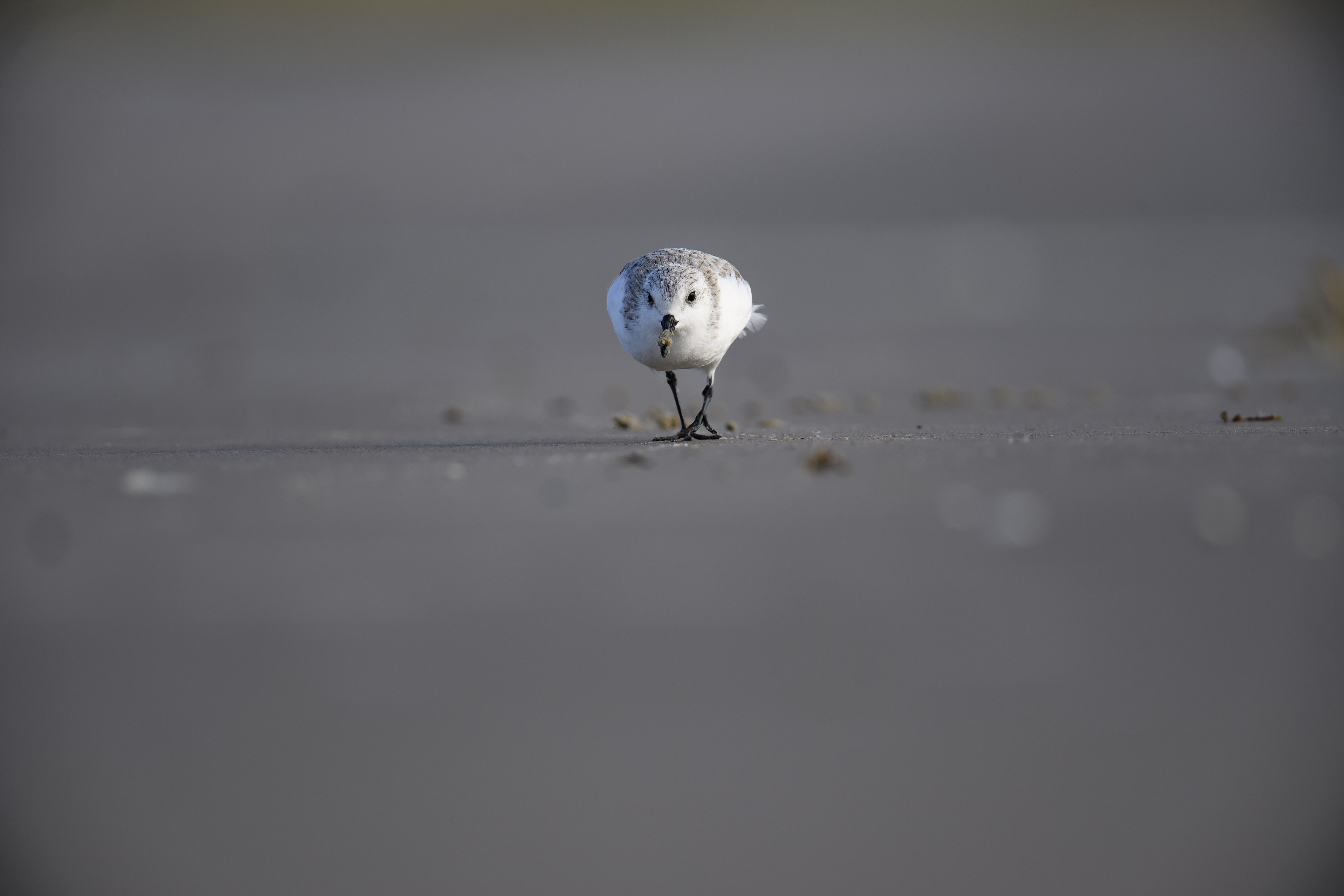
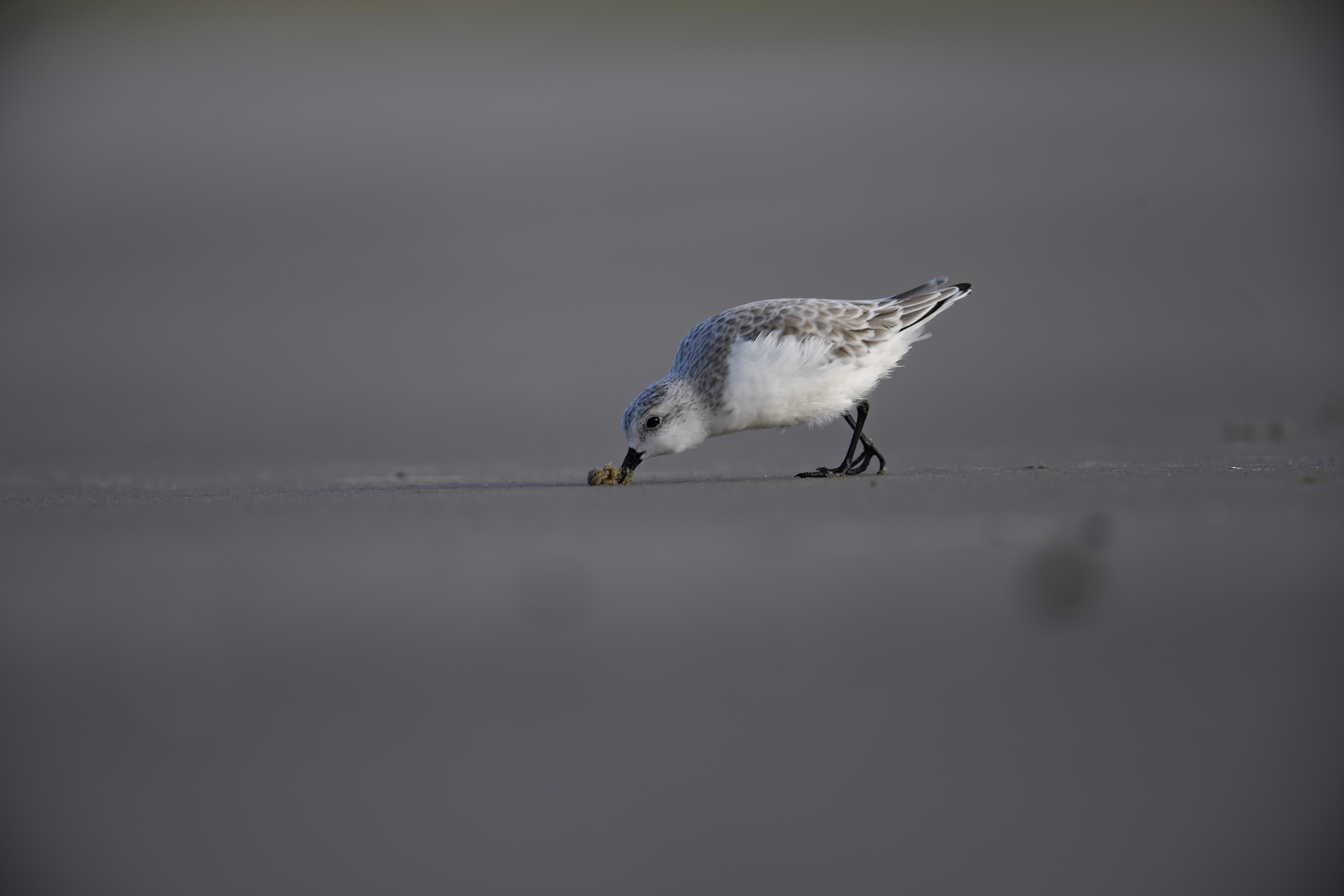

I can’t get enough of sanderlings. I’ve said before they’re my favorite shore birds. They are so cute and so quick and so much fun to watch as they chase the waves and are chased by the waves. This one looks as if it’s trying to decide which way to go. This photograph was taken panning down low on the beach. And, yes, once again, I got drenched and loved every minute of it.

To make a long story short, I now have my very own panning plate, thanks to a couple of strings pulled by Mr. Peterson, so my new toy arrived at the hotel on Thursday morning. Friday was my first chance to try it out after my friend Richard affixed it securely to a Texas A&M branded frisbee. I lay on the sand, stretched out on my belly, happily getting sandy and drenched while I watched sanderlings and ruddy turnstones and gulls and dunlins through my bird’s eye level view finder. This technique creates such a unique perspective and delineates such a narrow focal plane that photographs taken with this technique are vastly different from photos taken from a tripod. They may look similar in some ways, but they are not, nor are they nearly as dramatic. The subject is completely isolated from the surroundings. After my first day’s experience, I quickly gained confidence that I wouldn’t damage my camera gear and I was so mesmerized with the unique point of view that I hardly noticed the sand or water or the awkward body position. Someone always shouted “wave!” when there was a possibility of inundation so I would just brace myself and lift up the camera.
After about 45 minutes of trying out my own panning plate, I heard Moose shouting my name. With the surf roaring loudly, it was hard to hear what he was shouting but I knew whatever it was, I was doing something wrong. It turns out that in my exuberance to try out the new panning plate and to familiarize myself with operating the camera gear in such an awkward and precarious position, I completely forgot about the light so most of my ground level photos to that point were marginal at best. Moose insisted I move across the beach to work next to him so that he could guide me better and help me improve my performance by observing what he was doing and how he was doing it. What a difference that made. After Friday morning’s experience, I was more excited than ever to discover the wonders of this new perspective for wildlife photography.
But, after only twenty minutes or so, the winds picked up alarmingly and fine sand began to blow across the beach. That fine grit would quickly damage our lenses and cameras so we had no option but to quit. Moose stopped the session and we packed up and drove to breakfast. But Moose assured me I would work next to him again Saturday morning so he could continue helping me improve and I was looking forward to that opportunity. Because I enjoyed using the technique so much and embraced it so quickly after I was so adamant that I would never try it, I was disappointed to quit early Friday. And, when strong winds continued into Saturday, our beach panning ended altogether. But, as Moose pointed out the obvious to me, California does have its own beaches, so……
This is one of several successful panning photographs I took with Moose’s direction. It’s a Dunlin in non-breeding plumage. The focal plane is not level. I discovered that keeping a level plane is one of the many difficult aspects of this technique. But, despite the tilt, I think the photograph works and, when I shared it with Moose, he agreed.


Something I had no intention of ever trying has turned out to be one of the most rewarding and exciting, photographically speaking, aspects of my trip to photograph Texas birds so far. That would be “beach panning.” It involves attaching my longest lens (my Nikon 600mm with a 1.4 X teleconverter) and camera body (my Nikon D5) to a flat panning plate settled into a Frisbee and placing this awkward-looking apparatus directly on the sand. Yes, you read that right, an inexpensive plastic Frisbee is all the protects my expensive camera gear from total destruction by sand and surf. Once the apparatus is on the sand, the shooter, and that, as it turned out, would be me, stretches out on the sand, making sure to avoid any traces of sand getting on my hands or the camera. Awkward? yes! Difficult? yes! Rewarding? You bet! One of the side effects of this camera technique is that the shooter inevitably gets drenched when the surf rushes in, not to mention covered with sand.
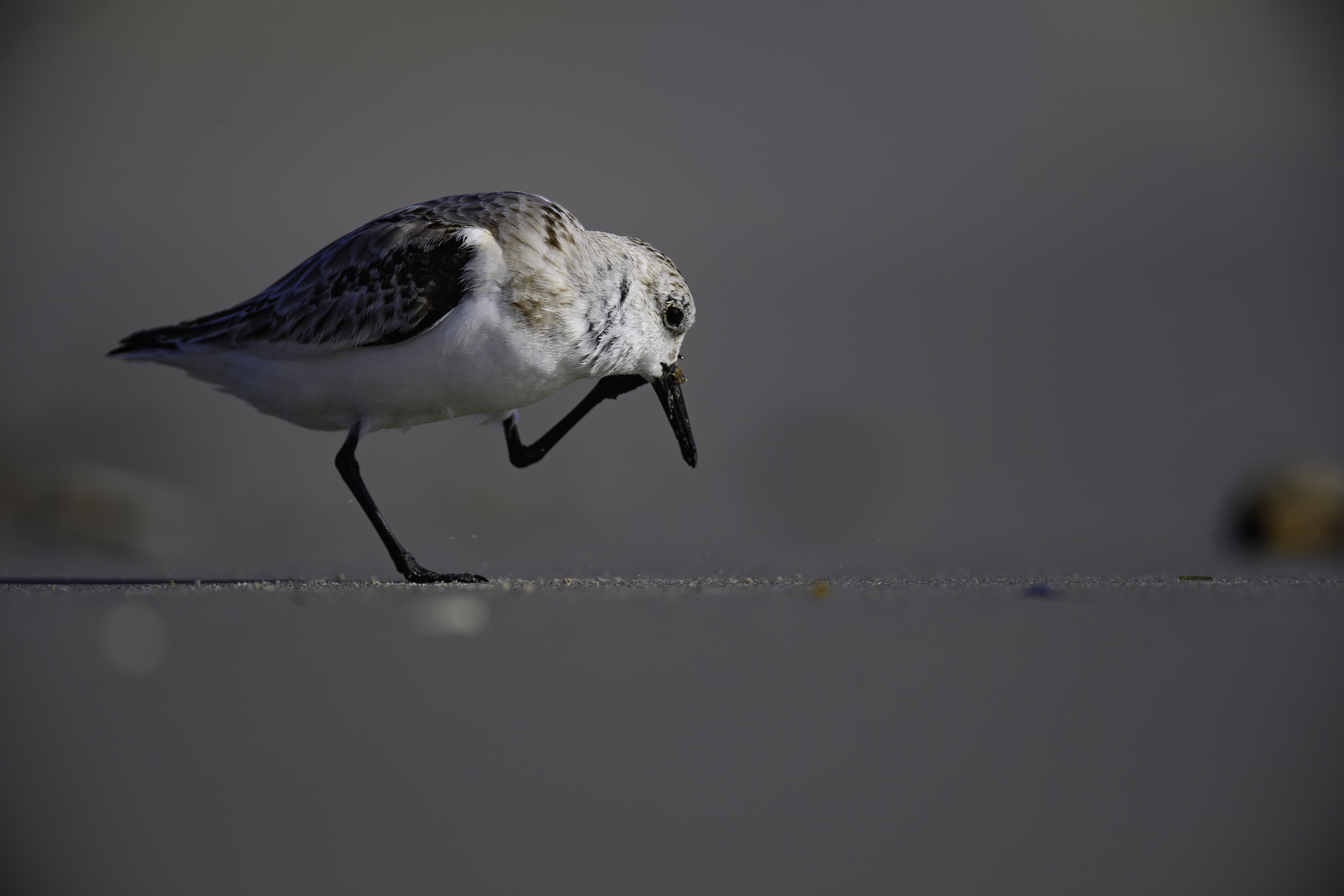
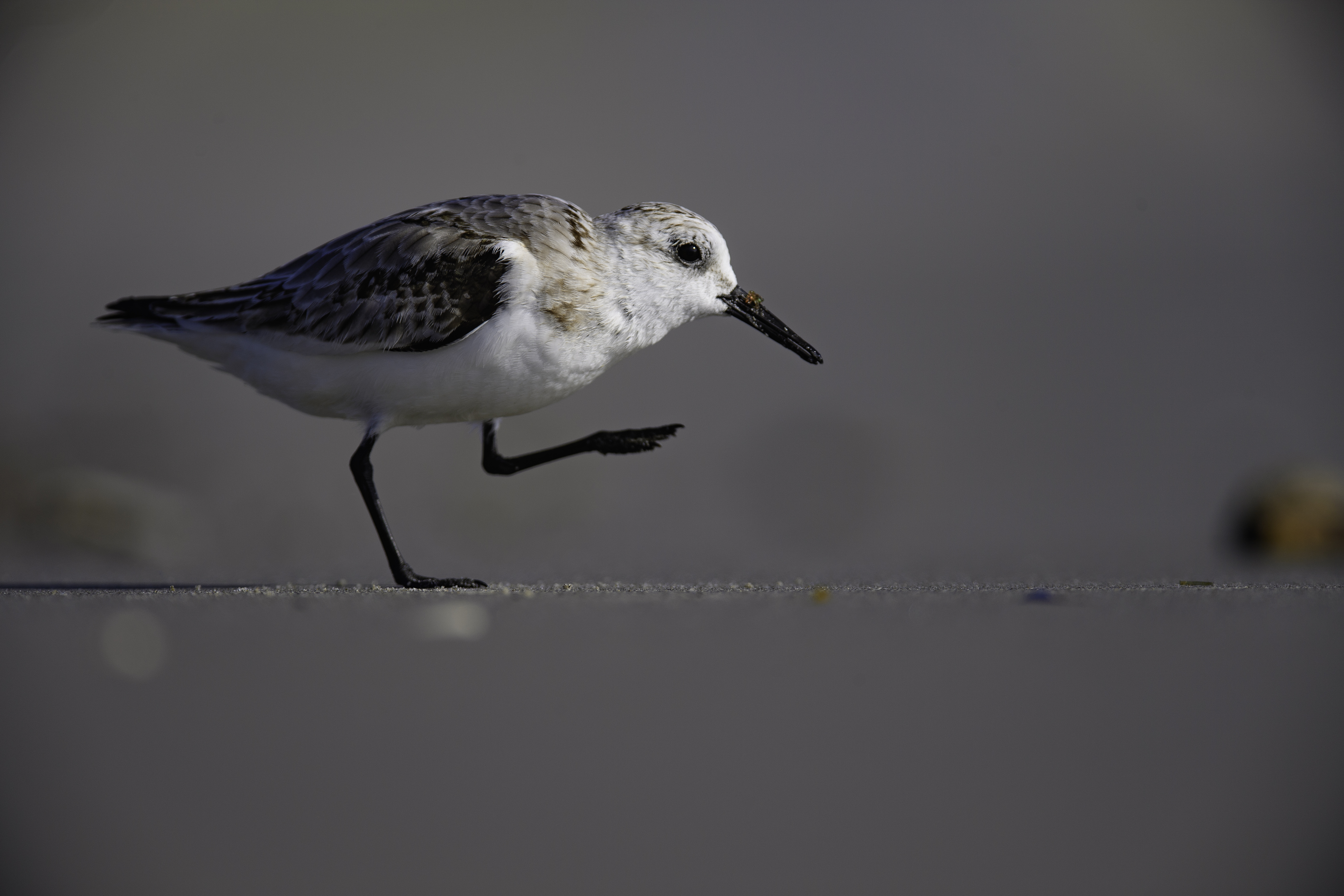
I’m on a photography trip on the Texas Gulf Coast with Moose Peterson. When I read the suggested equipment for the workshop, I knew I wouldn’t try this technique because I didn’t trust myself not to tip over the entire rig into the sand and surf. I told Moose I had no intention of trying it. But he cajoled me into trying and I discovered it was an exhilarating way to view birds on a beach. Here is a series of 3 photos of a sanderling, one of my all time favorite Texas shore birds and one of the smaller shore birds (about 7 or 8 inches) that I try to photograph every time I come here. But I’ve never seen them like this. The photographic perspective is quite unique. Talk about a bird’s eye view!
I’m stepping back in time a little, back to June 2016 when I visited Bodie, CA with a couple of friends. Bodie is a California ghost town of sorts maintained by the State as a decaying relic of its glory days as a boom town. I took this shot through a window into the interior of a decaying general store there.

I was amused by the words on this tiny flag in a flower bed in the parking lot near the gym where I meet my trainer. Of course, PG&E should be warning people about the dangers of their underground system of pipes and cables given the tragic results of explosions caused by aging pipes needing repair and the real possibility of digging into an electrical conduit but this tiny flag (about 4 inches square) is hardly much of a signal. I took the photograph because I was drawn to the backlighting of the flag though, not its message.
