2020—Expected Big—Went Small

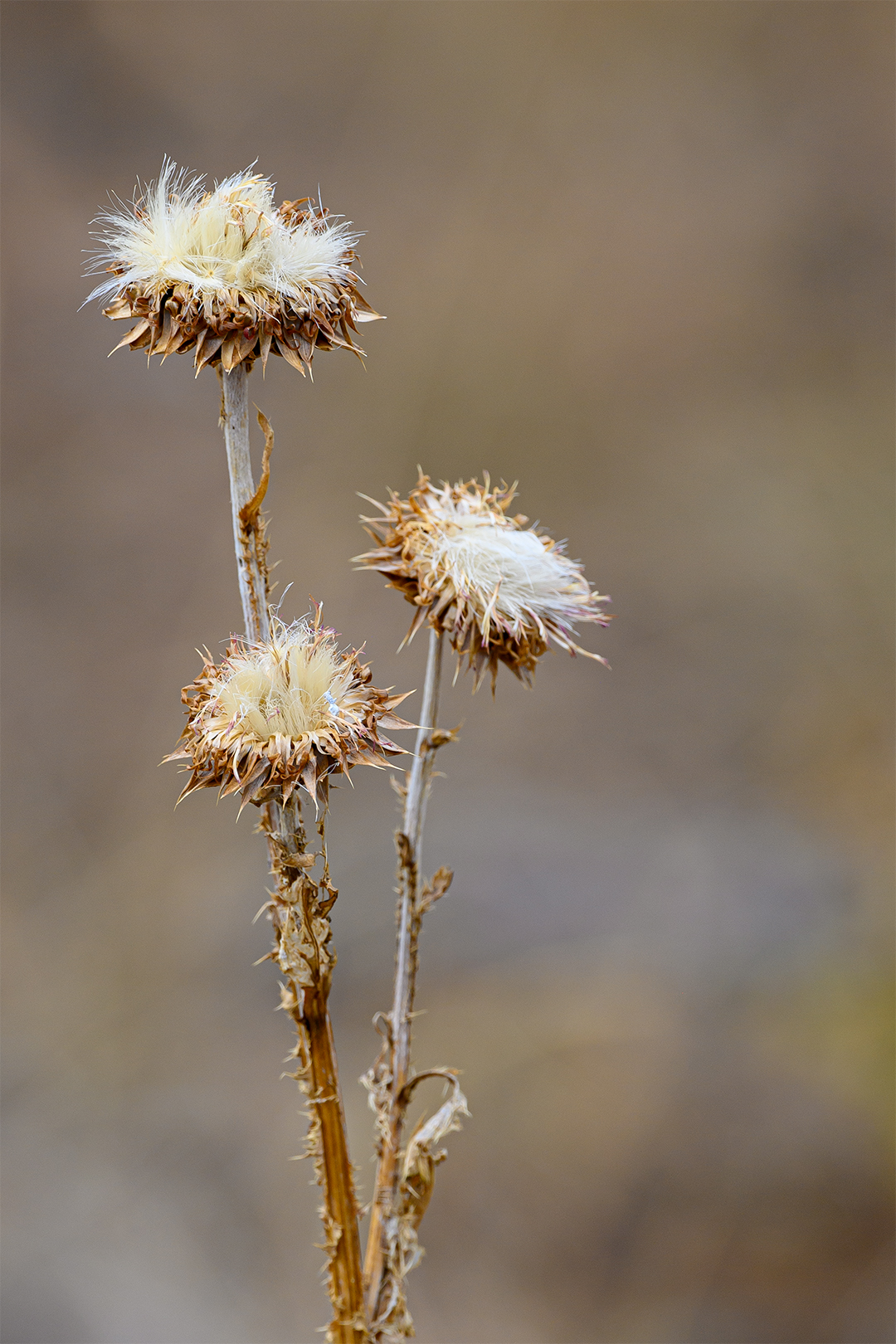
Bighorn Sheep were the target of our visit to Flaming Gorge last month. However, for the first couple of days we did not see any Bighorn Sheep. There was a sighting close to our lodging so we followed the trails in search of them only to come up short. At one point, we waited on a fallen log hoping that the sheep we knew were nearby might return. While I sat, this Nodding Thistle caught my attention. Using the Nikon D6 and the Nikkor 500mmPF, I was able to isolate them and the telephoto lens created a creamy, smooth background with no distractions. I was expecting a big subject. Instead, I found a small one.

2020—The Elegant Egret

What a beautiful sight to see Great Egrets perched in the moss-draped Bald Cypress trees on Caddo Lake far above the shallow water where they wade and search for fish to eat. The massive trees and the pendulous Spanish moss dwarfed these large birds with 5 their foot wingspans. One hundred years ago, these magnificent birds with their elegant plumes were threatened with extinction primarily because of the fashion of the day. Women’s hats were decorated with plumes from Great Egrets and other birds — sometimes even entire birds would decorate a hat. Great Egrets and Snowy Egrets had the most valuable feathers and plume hunters went to great lengths to supply the millinery trade with feathers killing thousands of birds in the process. The Audubon Society and other conservation groups fought the trend for nearly 50 years as they saw entire species of birds hunted to the brink of extinction merely for women’s fashion. When the governments of the United States and Great Britain signed a treaty that protected birds from people in 1916, the fashion trend, with its demands for the slaughter of countless birds, ended. In 1918, the United States codified the treaty into the Migratory Bird Treaty Act. Now, one hundred years later, we can appreciate the beauty and elegance of these gorgeous birds alive and in full feather. Sadly, many species were not so lucky.

2020—Young Buck

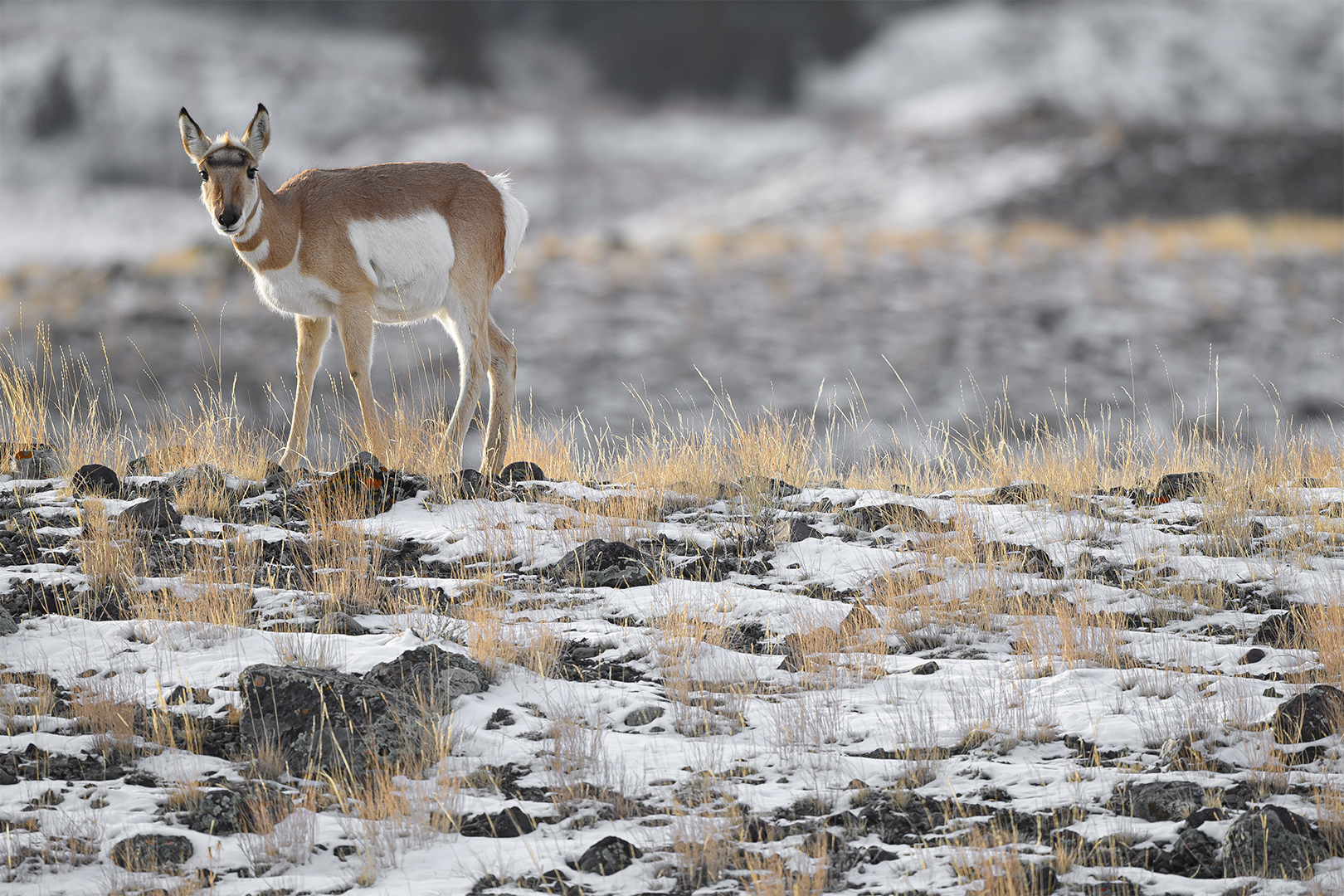
Lewis and Clark were the first to scientifically identify the American Pronghorn. On September 17, 1804, Merriweather Lewis wrote that Pronghorn movements were “…more like the flight of birds than the movement of an earthly being” with “a speed equal to that of the most distinguished race-horse.” Pronghorn are small and graceful. We watched a herd disappear as they fled from predators. Their movements were similar to a flock of birds and they were gone in an instant. This young buck was alert but not threatened so he watched us without concern. The small buds on his head have yet to grow into the heart-shaped set of antlers that are so distinctive of Pronghorn bucks.

2020—Ram Tough

Bighorn Sheep are among my favorite critters to photograph. I’ve had lots of opportunities to see and photograph them this year. What’s fascinating to me about them is that if you “play their game” and respect their space, they actually recognize you and the vehicle you’re in and go about their business knowing you are not a threat to them. Just outside Yellowstone National Park last week we had the opportunity to photograph a herd of Bighorn Sheep. We counted 9 mature rams in the herd as well as several young rams. The mature rams mostly banded together in groups or three or four but I caught this one while he was alone and gazing across the road. Shot with my Nikon D6 and Nikkor 500mmPF lens.

2020—Fox Hunt

Last week in Yellowstone, this Red Fox was the hunter, not the hunted. It was fascinating to watch her mousing. She would cock her head listening for a vole under the snow, then she would leap into the air and land face first deep into the snow emerging with the vole protruding from her jaw. Once she had made her catch, she would pace deliberately across the snow, deposit the prey into a snow bank for a future feast, mark the place by urinating, and go back to mousing again.

2020—Curlicue

The Bighorn Sheep herd from Yellowstone National Park that we saw on Old Yellowstone Road has at least nine mature rams. This little band of three rams was together every time we saw the herd. Each of them has a distinctively different set of horns from tightly curled like the ram looking up to flared out or more loosely swept. The more tightly curled the horns, the less likely that brooming will be visible on the tips. Brooming is the wearing down of the horns from rubbing on rocks and the ground or clashes with other rams. The tight curled horns of the ram on the right seem to have kept the tips in good condition.

2020—Fast on her Feet

It’s been an exciting few days in Yellowstone National Park. So much to see and so much to photograph. We’ve seen Pronghorn every day since Monday’s drive from Bozeman and we spent a little time with a small herd of them on Old Yellowstone Road on Wednesday when I photographed this doe who seemed curious, but not alarmed, about us. However the next day, we witnessed something as we approached the park entrance at Roosevelt Arch that I will never forget. Pronghorn are the fastest land animals in North America. They can run at speeds close to 60 miles an hour. When we saw a large herd of Pronghorn running down a hillside at top speed we wondered what might be chasing them. We pulled over to watch an incredible drama ensue. In the opposite direction of the retreating herd, a lone Pronghorn was running for its life pursued by two Coyotes. The chase lasted a few short minutes as the coyotes drove the Pronghorn, already injured or ill, across the road in front of us to the hillside next to the road and overpowered it. It did not end well for the Pronghorn but those few minutes of real life in the wild is seared in my brain. I felt as if I were on the Serengeti in Africa, not on a road leading to Yellowstone in Montana. It is life in the wild and survival of the fittest is true whether you’re on an African savannah or in a National Park. I choose to believe this little doe was fast enough that day.

2020—Foxy Lady

We drove though the Roosevelt Arch at the north entrance to the park Tuesday morning in search of wolves and instead found a Red Fox pursued by another photographer atop a small hill. The gorgeous vixen was mousing and not concerned about anything but the vole she was stalking. We drove by and turned around and watched from the vehicle when suddenly she was crossing the road in front of us and heading to the meadow. We photographed her for about half an hour as she pounced on at least five unsuspecting voles and emerged from the snow with her prey each time. She crossed the road near us a couple of times, once passing so closely between us as we stood on the side of the road that my camera couldn’t focus on her. What fascinated us about this Red Fox was that after each successful pounce, she carried the prey, legs and tail protruding from her jaws, and cached them in different areas of the meadow and the hillside behind us. She is apparently well fed so she was not hungry but she wasn’t taking any chances so she stored her food for future meals.

2020—The Bayou

The Bayou is such a beautiful place. Cypress trees with their wide bases sport the glorious bronze color of fall. Gray-green Spanish moss drapes almost every branch of the same cypress trees. Lily pads float atop still waters. White Ibis flock over head while Great Egrets and Great Blue Herons fish at the shallow edges of the swamp. It is peaceful and mysterious and intriguing.

2020—GBH on the Bayou

Our last morning on Caddo Lake was capped with the sighting of this Great Blue Heron perched on the edge of a Cypress amidst the hanging Spanish moss in the perfect light. We were heading back to the dock when we came across the GBH comfortably tucked away in a sheltered area and unconcerned with the sound of our camera shutters.

2020–Lone Cypress Surrounded

This time of year, the feathery leaves of Bald Cypress trees, conifers that thrive in wet soil in the southeastern United States, begin to change to an intense bronzy orange color. But this lone cypress is surrounded by a noxious plant floating on the surface of the water that was only very recently discovered on Caddo Lake. In 2006, the Giant Salvinia, an invasive aquatic fern from Brazil that was first imported for use as an ornamental plant, was found in the lake. It can double its biomass in days and threatens the health of the ecosystem in which it thrives. Locals call it the “lake-eating monster.” Efforts to control the Salvinia have been partially successful and the introduction of a weevil that feeds only on Salvinia has been a potential solution that might eventually eradicate the problem.

2020—Another Bayou Sunrise

This intense red of the rising sun on our second day on Caddo Lake was nothing short of stunning. A storm front added some clouds that made the scene more dramatic than the previous day’s sunrise. This is such a gorgeous place and words cannot adequately describe its beauty.