2025—Sunset at Lake Davis

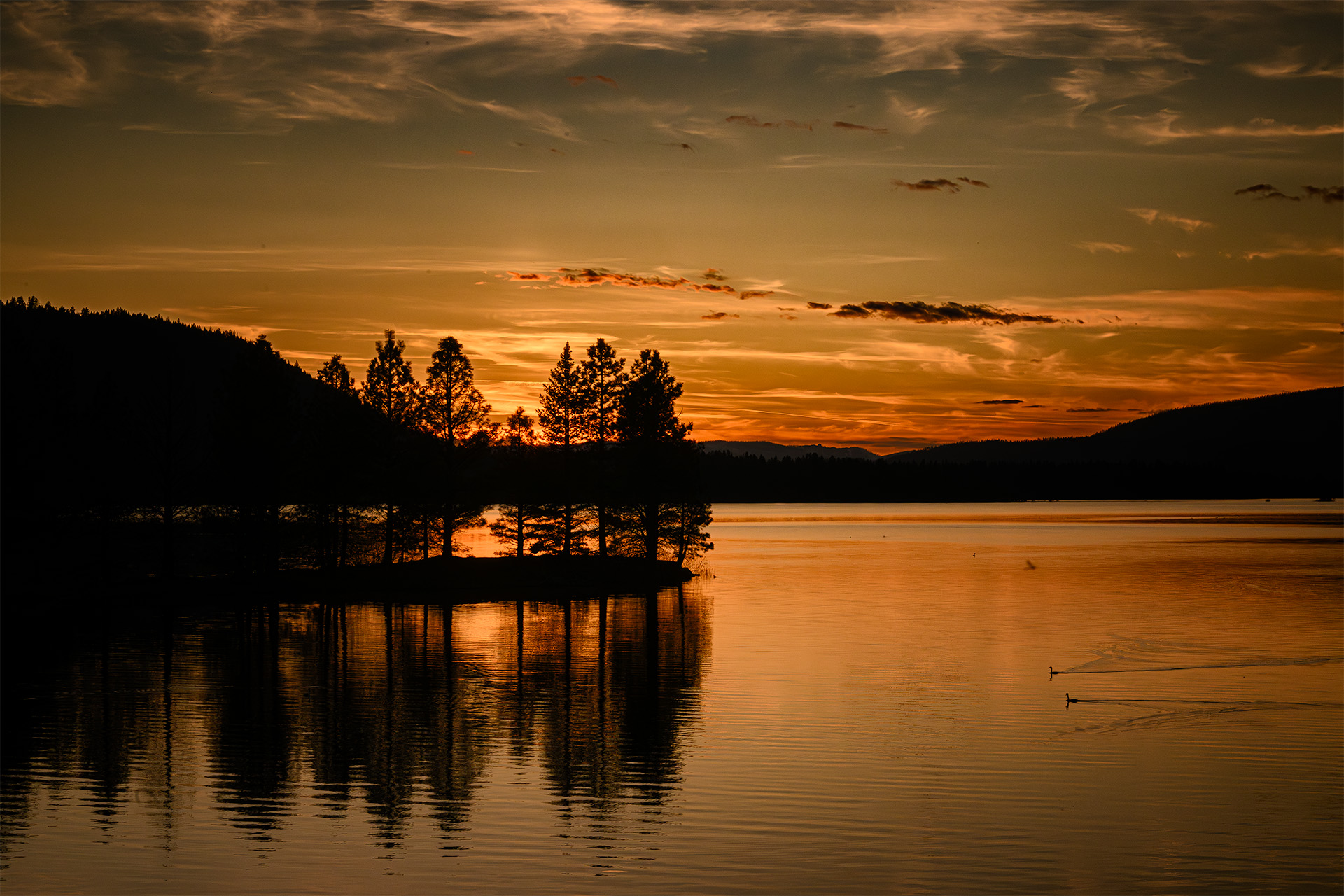
Sunset at Lake Davis Monday evening was quite spectacular. Situated in Plumas National Forest, the lake was built in 1967 to enhance the area’s fishery and to develop recreation. Its water flows into Grizzly Creek and to the Middle Fork of the Feather River. There were several fishermen at the lake when we photographed the sunset there Monday. They admitted to having varying degrees of success catching the lake’s Rainbow Trout.
2025—Sage Thrasher

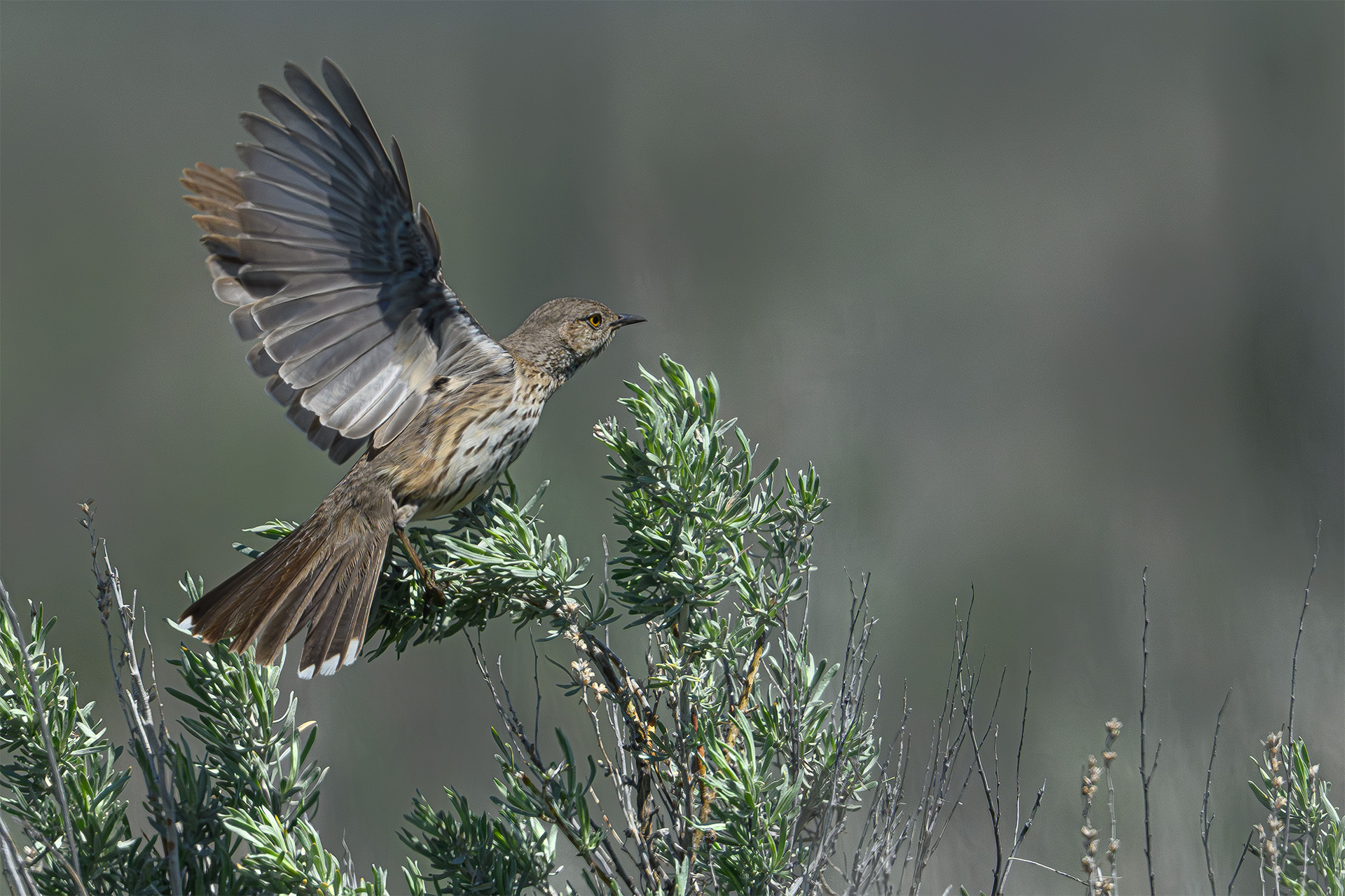
On my first visit to Sierra Valley Preserve, I discovered a new-to-me bird. It’s a Sage Thrasher, a bird that perches atop sage (or in this case, I believe this is a plant called Greasewood with a similar appearance) and sings its heart out. We were in an area that is covered with these plants and there were several Sage Thrashers protecting their respective territories. I’m discovering new territories, as well. This valley is located on the eastern edge of the Sierra Nevada range between mountains. And it is gorgeous.

2025—Sun City Sunrise

The other morning, I arrived at Angler’s Cove just as the sun cleared the skyline. There were wispy clouds in the sky. What amazes me is that it appears that sunspots (if indeed that’s what they’re called) appear on the surface of the sun. I double-checked other images and the same spots appeared in the same place (upper right quadrant) on the sun in all images I took, regardless of where in the frame the sun was. There are a couple smaller spots as well. I used my Nikon Z9 with the Nikkor 600PF lens and the 2x teleconverter to get this huge orb low in the morning sky.

2025—Ryan Gosling?

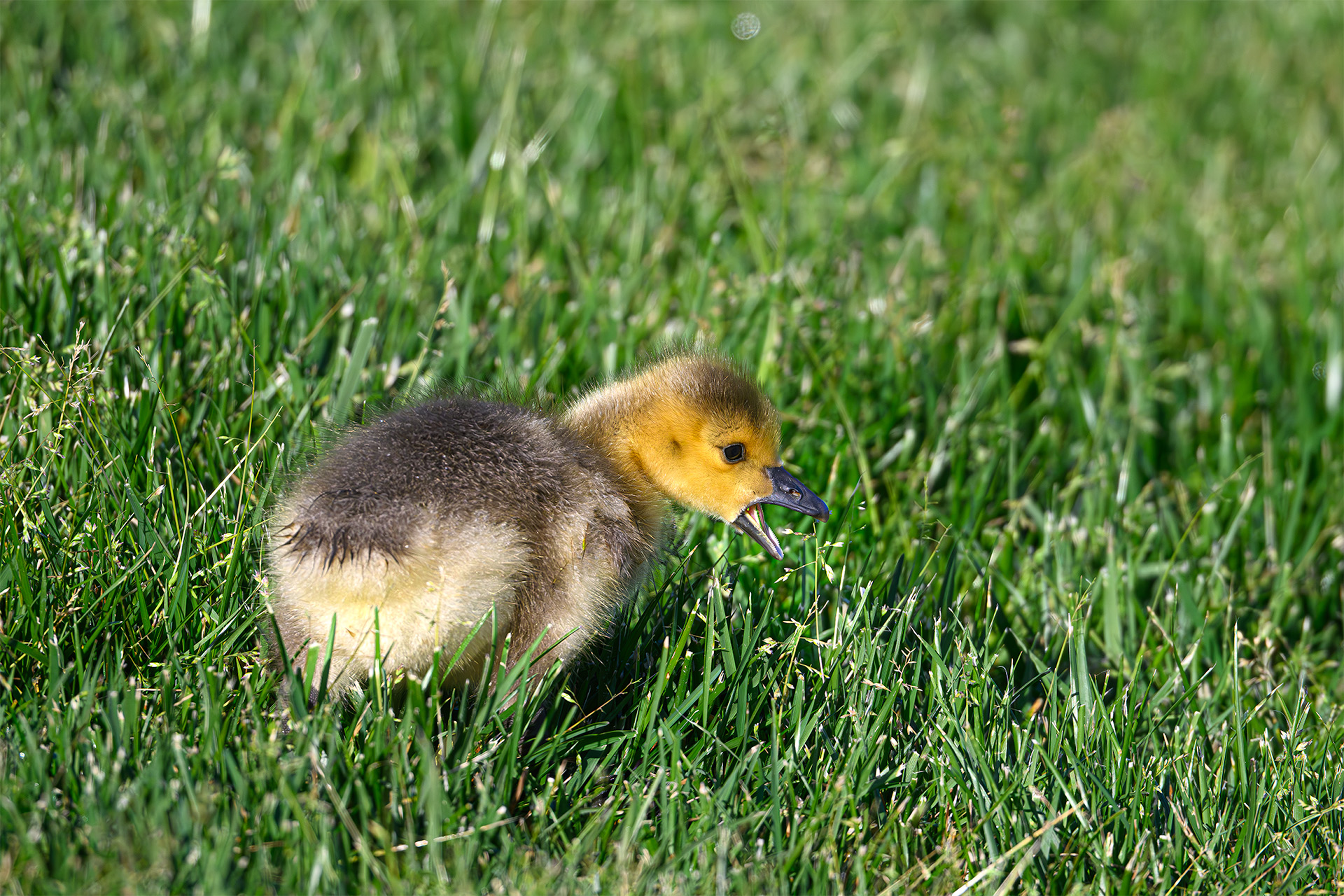
I have no idea if this is a male or female gosling but I call it Ryan Gosling regardless. This little guy is about to munch on some grass seeds. It’s been a few days since I’ve seen the Canada Geese Goslings and they won’t stay small for long. To be clear, these are the ubiquitous-in-Lincoln golf course Canada Geese, not the truly wild Canada Geese, but they are adorable just the same, kind of like the real Ryan Gosling.

2025—On the Run

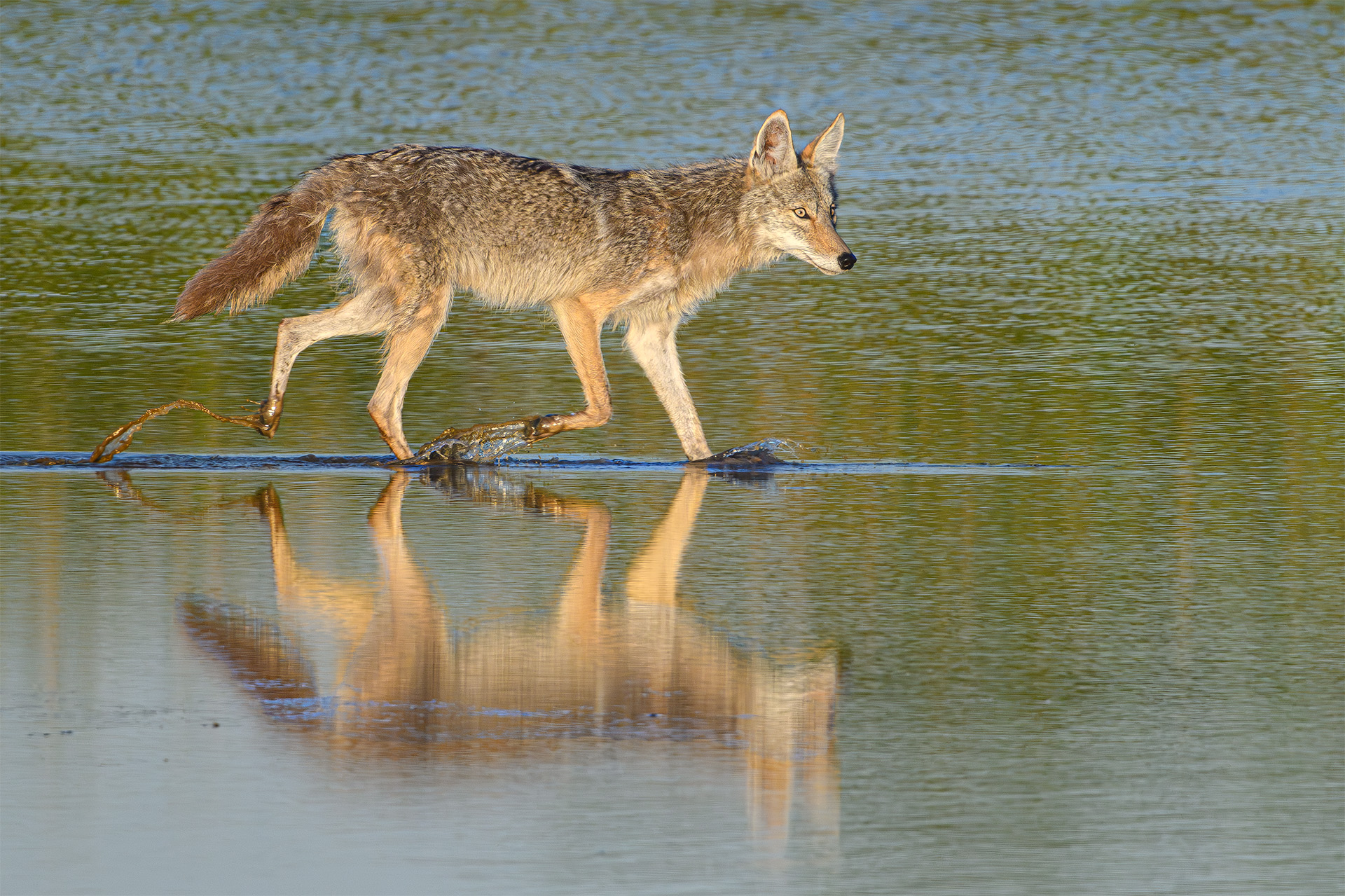
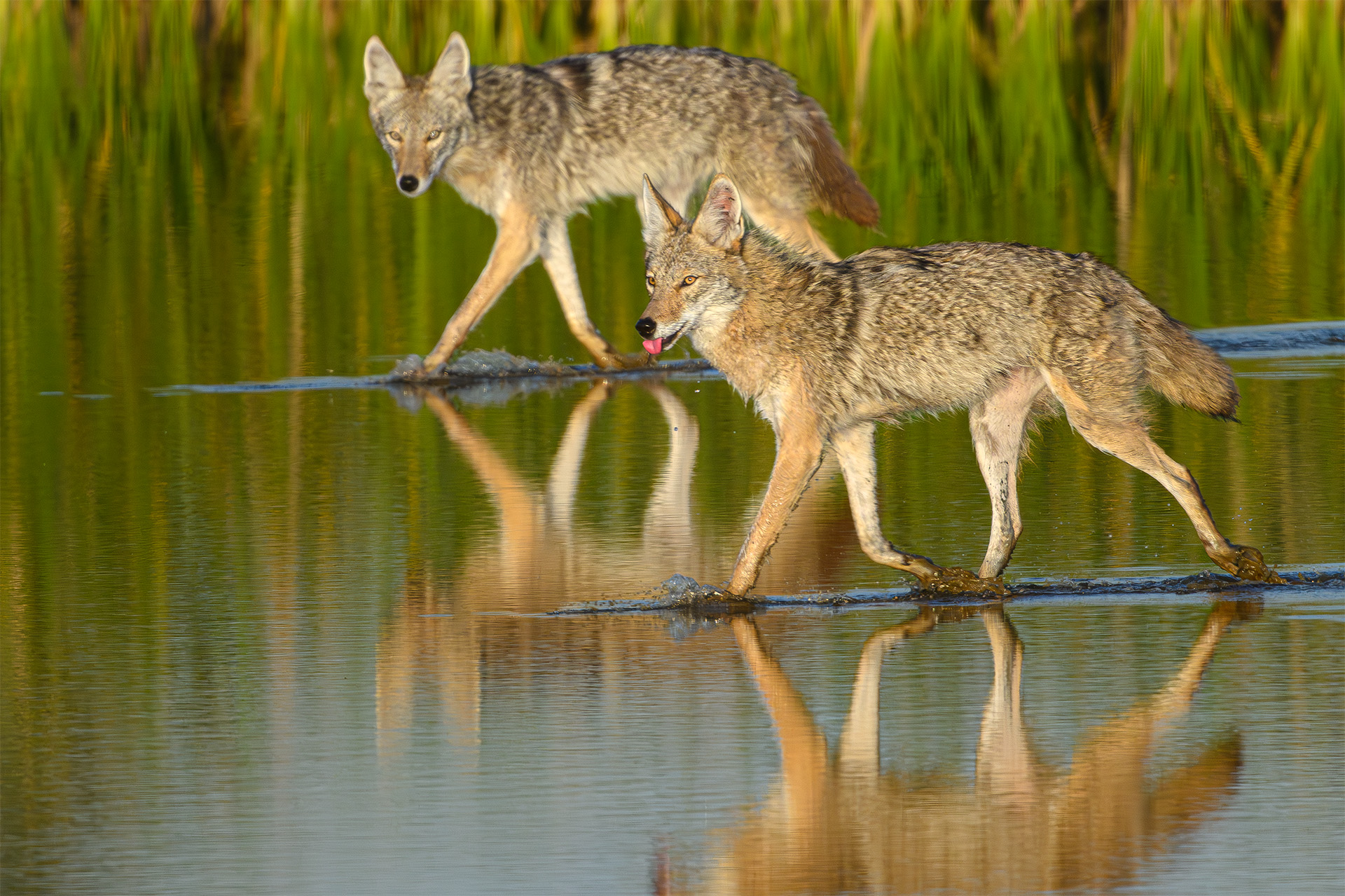
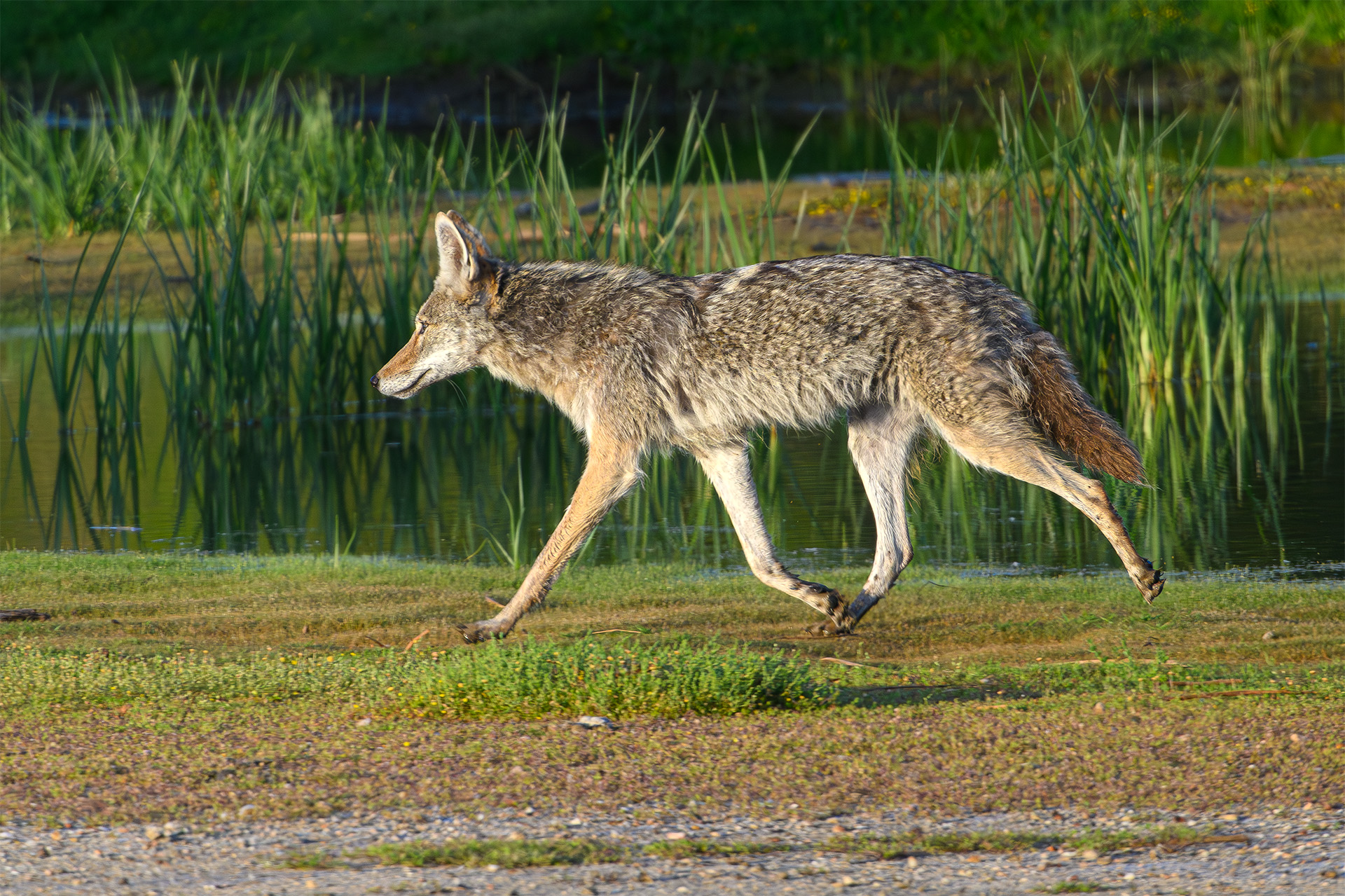
The Ingram Slough Coyotes were on the run yesterday morning. Still no pups in view, but it was a four dog day. We saw Mom and Dad along with two yearlings. They criss-crossed the Salt Pond a few times, running when they did. And, once through the water, they loped across the grass to join the family group lolling on a nearby knoll.

2025—Don’t Even Think About It!

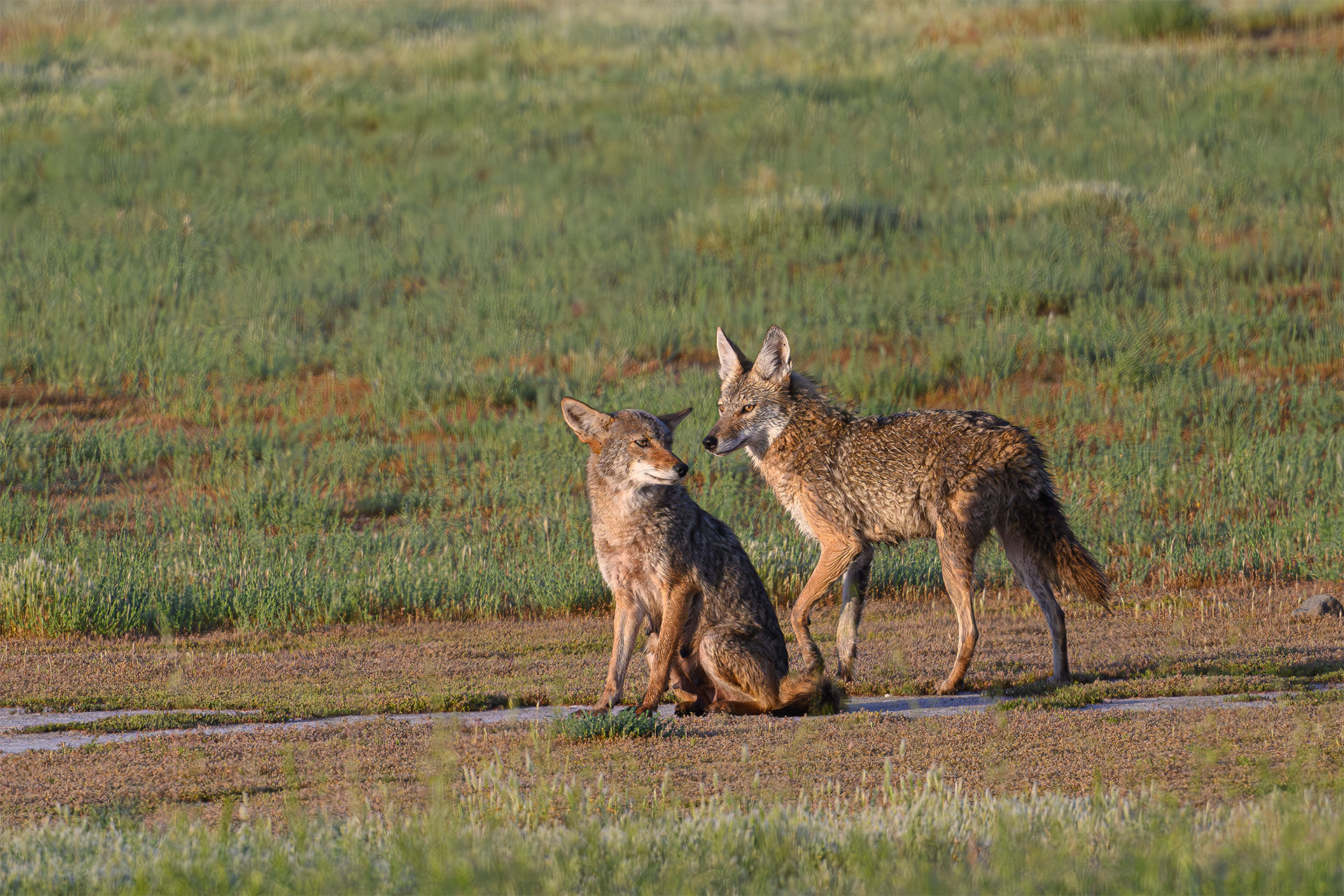
The mother Coyote keeps a watchful eye on her mate to make sure there are no shenanigans. When he approached her, he indicated he wanted to play by leaping and wagging his tail but she would have nothing to do with it. If you look closely, she is a nursing mom. She has five pups. Watching the Coyotes along Ferrari Pond Trail is fascinating. Yesterday morning, we witnessed a very interesting interaction among three Coyotes, this pair and a third that I believe to be a pup from last year. It was submissive to both adults even though it was the same size as they are. But watching them actually romp and seem to play was quite a revelation to me. I know she has five very tiny pups, three of which I saw a few days ago. I have read that some pups from the previous year, which I think this pup is, hang around and even help with feeding the new pups.

2025—Perfect Reflection

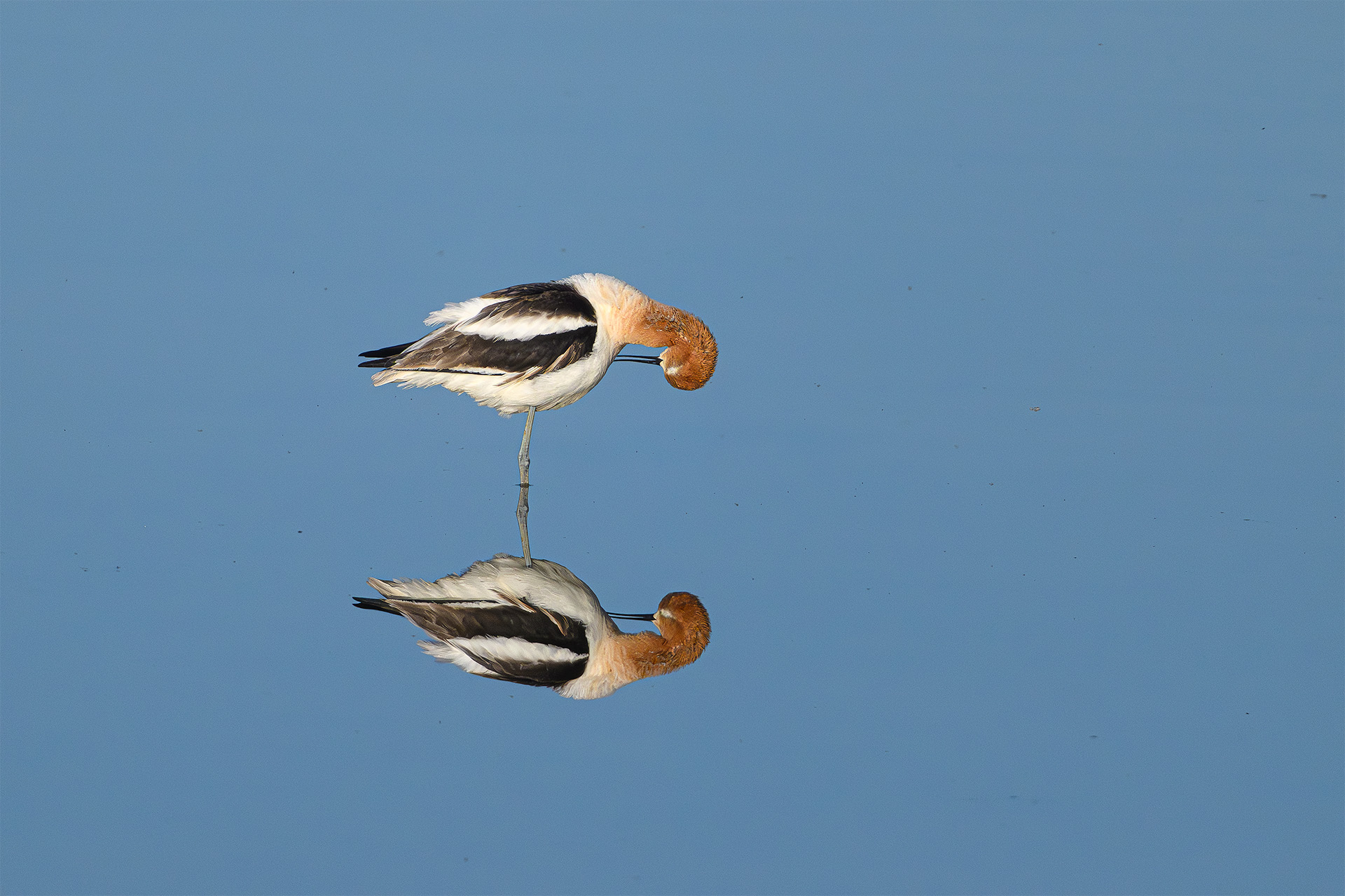
When the water in the Salt Pond on the Ferrari Pond Trail is perfectly still, the reflections are like mirrors. Yesterday, as I watched this American Avocet as she preened (I think it is the female because her bill seems more curved so I’ll use that pronoun) while standing in the shallow pond, I was amazed at how identical the reflection was to the real bird. And the blue sky reflected perfectly in the pond as well, creating a very even colored background. If it weren’t for the barely visible specks scattered on the pond’s surface, you’d almost think this is not real…but it is.

2025—An Easter Treat

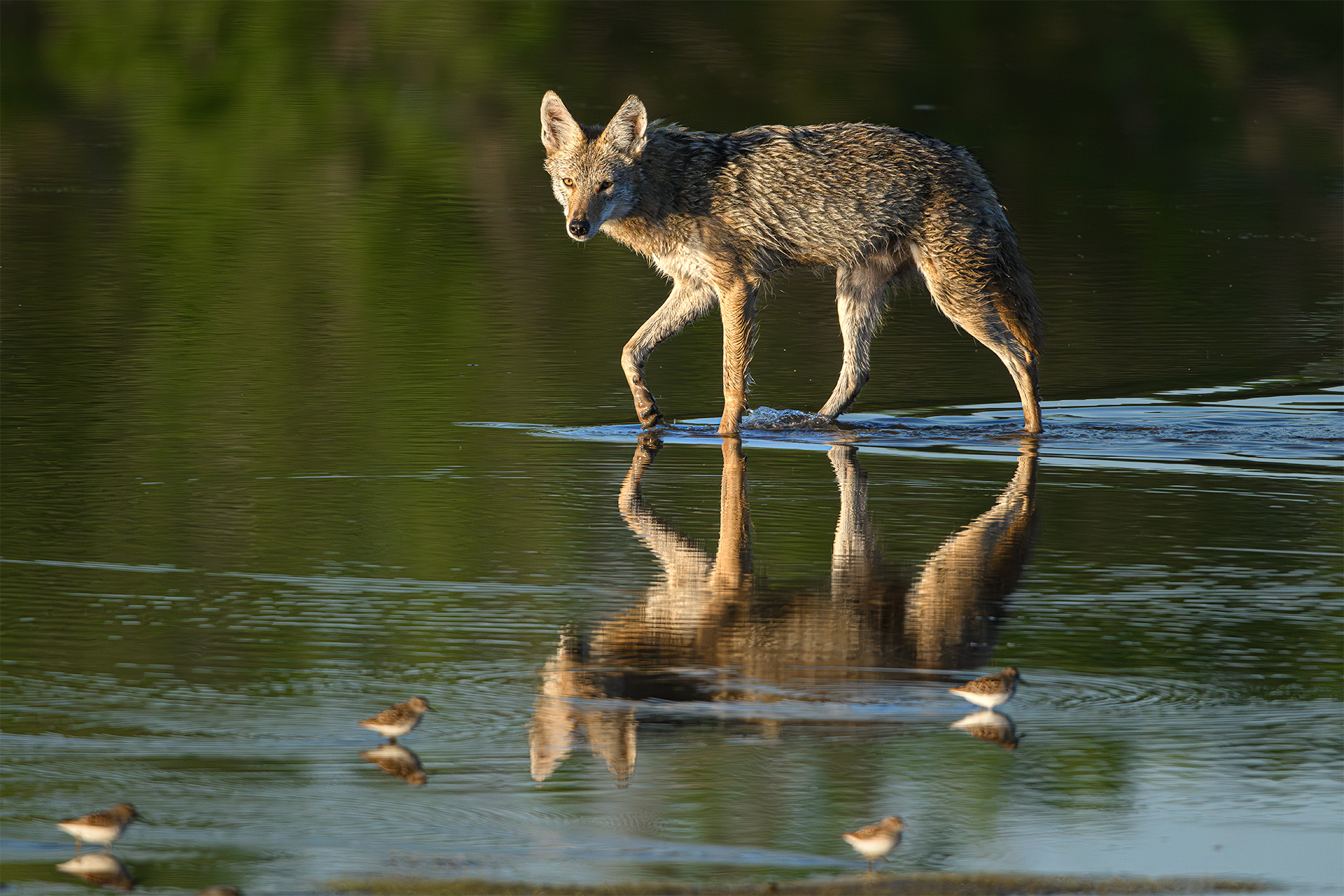
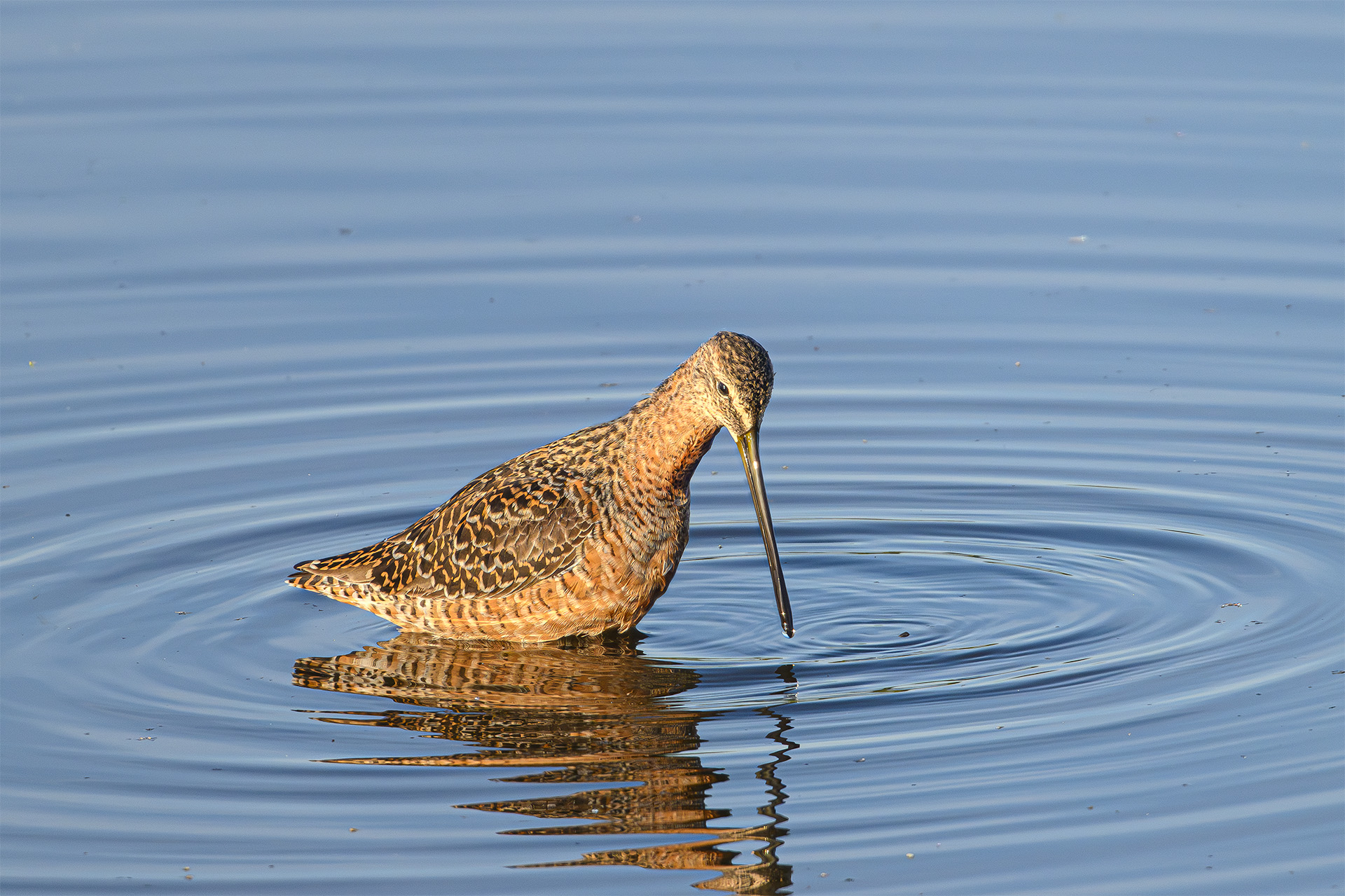
Just Truman and I were out on Ferrari Pond Trail early Easter morning. As we turned to head back, passing the Salt Pond a second time, Truman said, “look at those ears, it must be a jack rabbit!” As I looked up, two eyes and a pair of enormous ears peeked over the tall grasses on a knoll. I realized immediately it was one of our Coyotes but when I put my camera to my eye, he had disappeared. Then Truman turned and headed back to the Salt Pond saying that the coyote would cross the water. Sure enough, when I turned, there he was, already in the water walking near the bullrushes. As he headed into open water, passing the Long-billed Dowitchers and Least Sandpipers, he never even glanced at the birds. The birds ignored him as well. What a treat to have on Easter morning. And, fewer calories than a chocolate Easter bunny.

2025—It’s About Time!

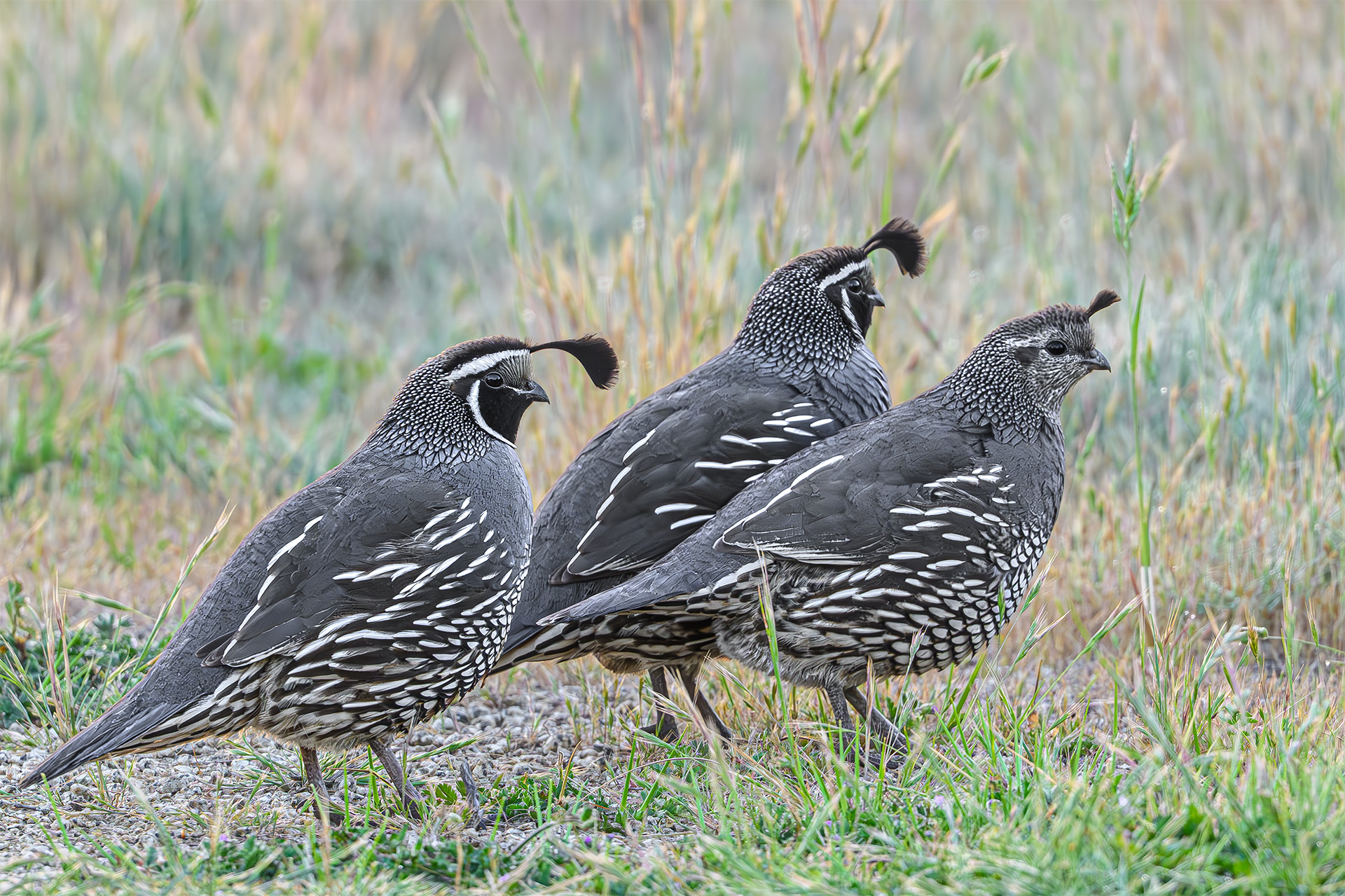
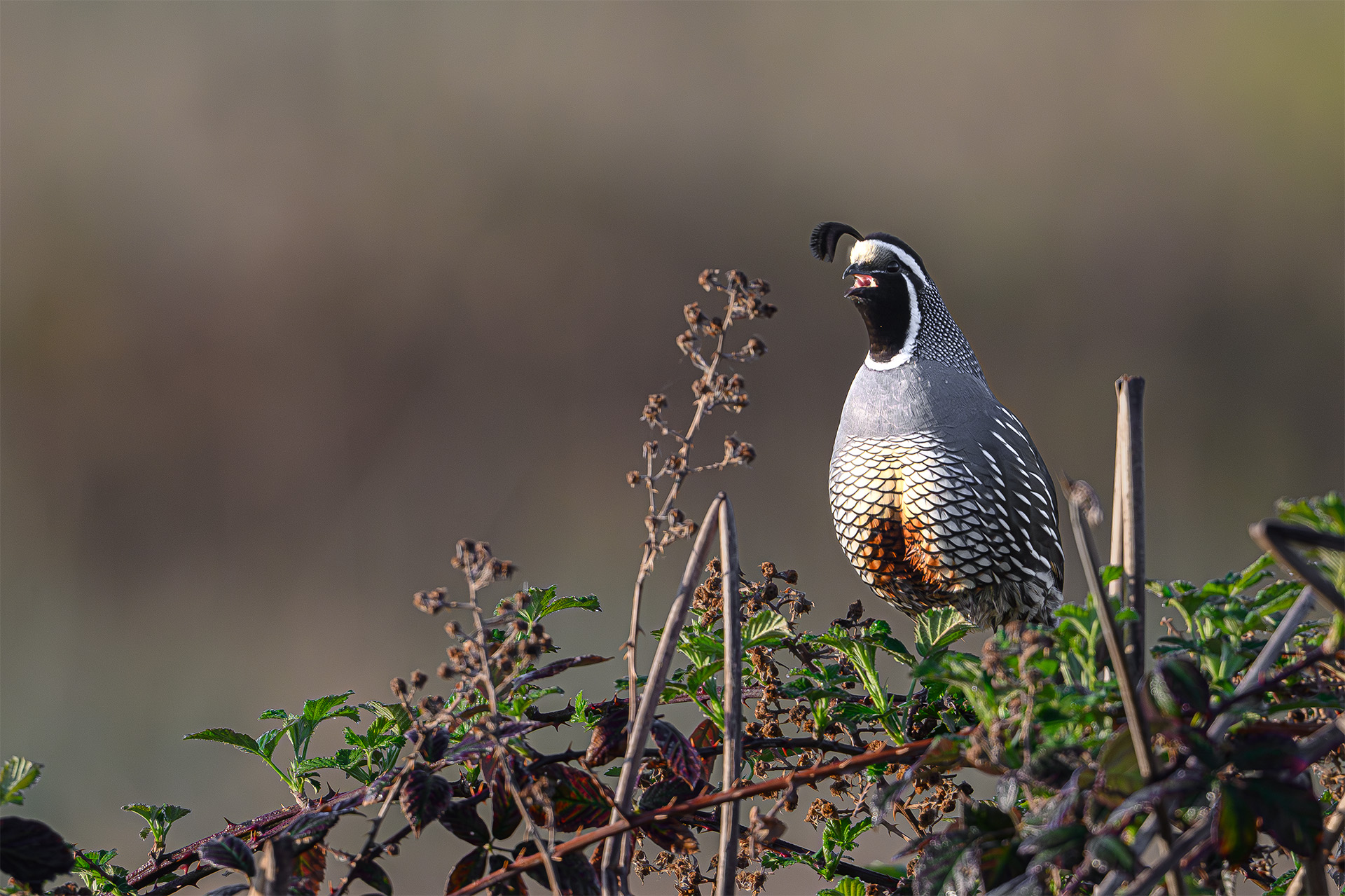
A few years ago, after photographing a number of birds designated as state birds around the country, I decided I would try to photograph each state bird within its respective state. A couple of days ago, I finally photographed California’s state bird, the California Quail, practically in my own backyard. And, it’s about time! There are quite a few California Quail along the Ferrari Pond Trail near my home so I was happy when this trio, two males and a female, crossed our path and posed for a moment in the grasses along the side of the trail. In the second shot, a male sings from a high perch to attract a female or maybe just to assert his dominance. By the way, I have abandoned my fanciful quest to find each state’s bird within that state’s boundaries. Because many states have designated the same birds to represent their state, I have photographed 44 state birds plus the District of Columbia but only four birds in their respective states: the Nene in Hawaii, the Cactus Wren in Arizona, the Northern Mockingbird in Texas, and now the California Quail in California. I have upcoming trips to South Dakota (the Ring-necked Pheasant) and Delaware (the Blue Hen Chicken) so maybe I’ll get lucky and find those birds while I’m there. If I do, I’ll have just four to go: Alabama’s Yellowhammer; Colorado’s Lark Bunting; Georgia’s Brown Thrasher; and South Carolina’s Carolina Wren.

2025—Patiently Waiting

It’s been only a week since I first met the Ingram Slough Coyotes (not sure what they’re actually known as) and I’m smitten. I’ve seen them each morning I’ve been walking there and I now know the pair, which I’ve seen several times, has five pups. This one kept its eyes on us for quite a while the other morning while its mate was resting on a small knoll a ways away but no pups were visible. In the mean time, I’m impatiently waiting to meet the pups.

2025—Posturing

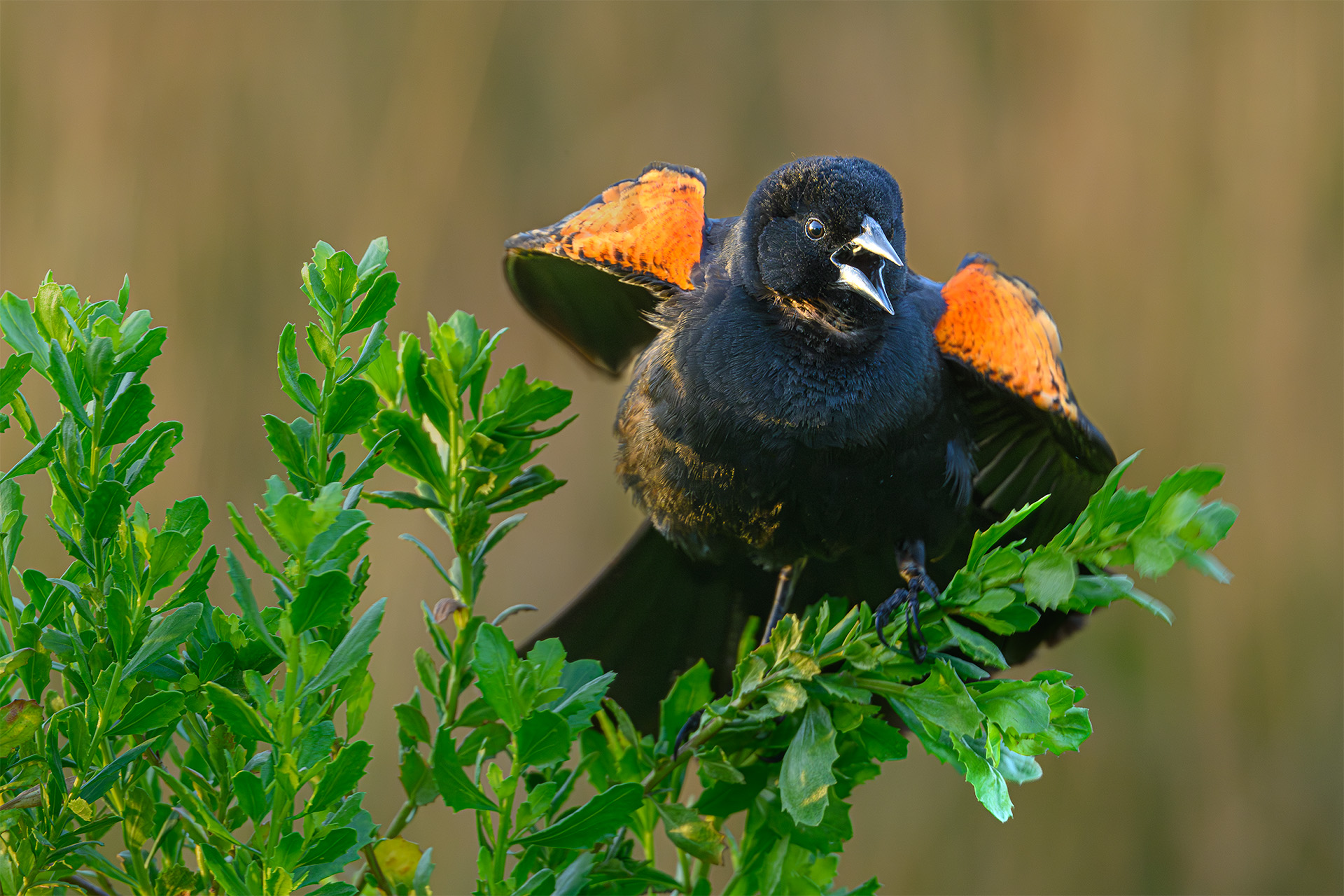
The posturing of a Red-winged Blackbird in breeding season is fascinating to watch. This male Red-winged Blackbird (although his epaulettes appear more orange than red) calls out a warning, puffs up his body feathers, and flares the epaulettes on his shoulders so that other males in the area are aware of his presence. Although there were quite a few male Red-winged Blackbirds along the Ferrari Pond Trail yesterday, I saw only one female and she seemed to be staying out of sight.

2025—One Dog Day

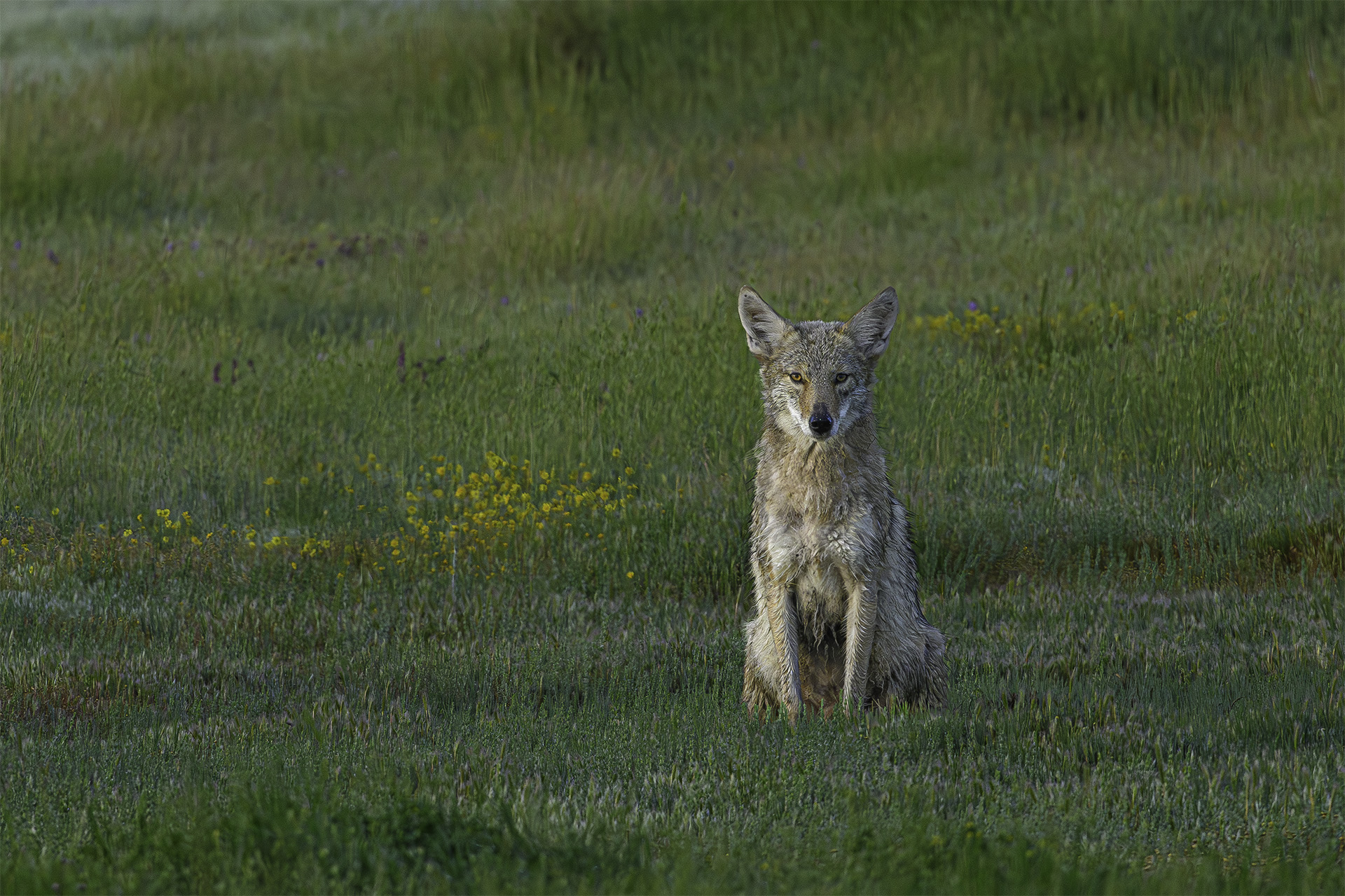
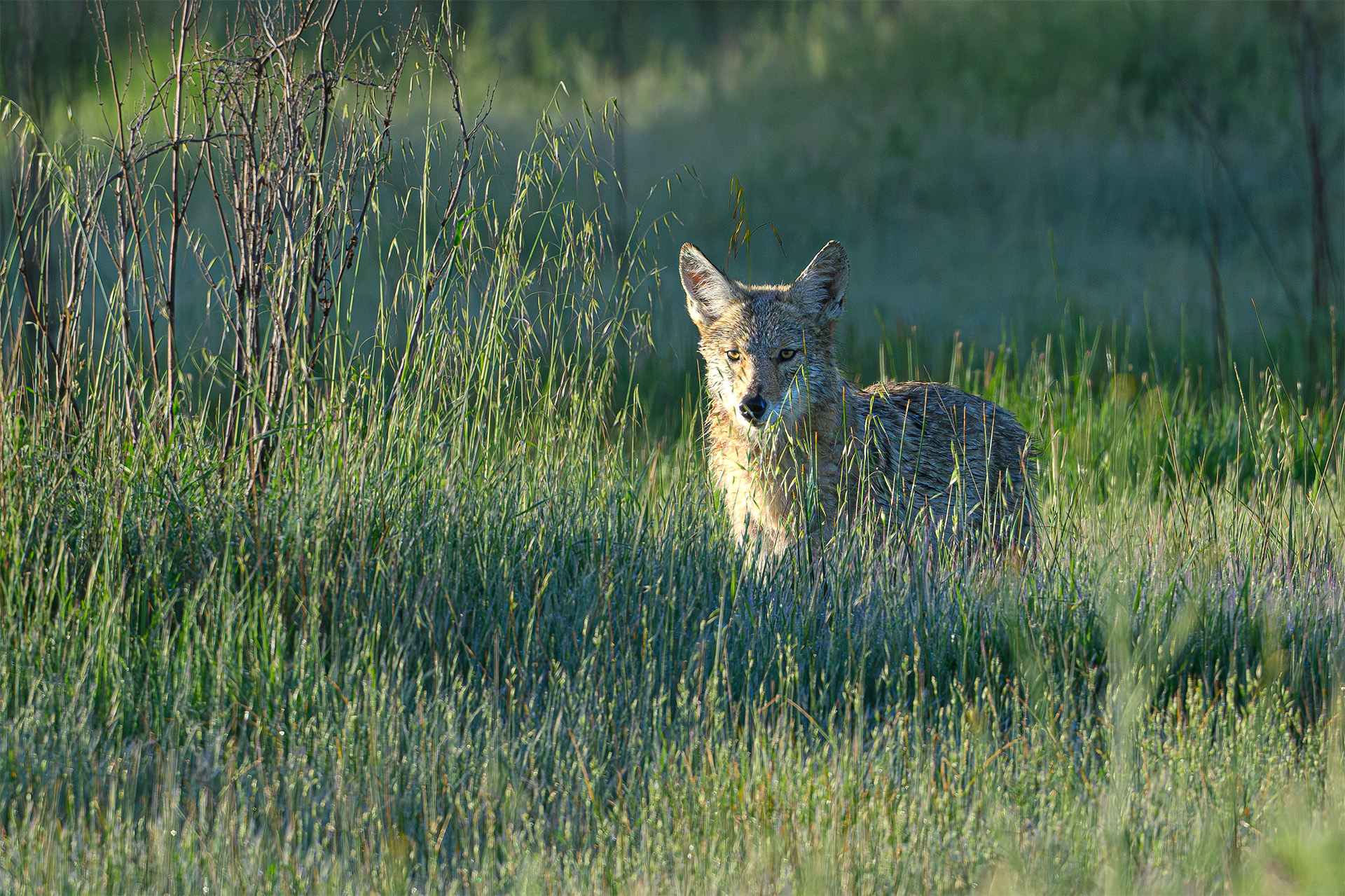
In January, I posted about a twenty-eight dog day in Yellowstone National Park that included twenty-three members of the Wapiti Lake Pack of Gray Wolves, one Red Fox, and four Coyotes. Yesterday here in Lincoln Hills, I had a one dog day—I saw one Coyote from the Ferrari Pond Trail near the Salt Pond. But, to me, it was almost as meaningful as the twenty-eight dog day because this was right in my own backyard. A moment after I took this shot, the Coyote moved behind the taller grasses to the left where I could just barely see it leap and pounce on a vole. I’m so glad I’ve finally convinced myself to be out walking early in the morning, meeting up with friends and discovering what’s right in my own backyard. And the best part, I was outside enjoying the wildlife, I walked three miles, and I was home shortly after 8 AM. Life is good.

2025—An Almost Perfect Reflection

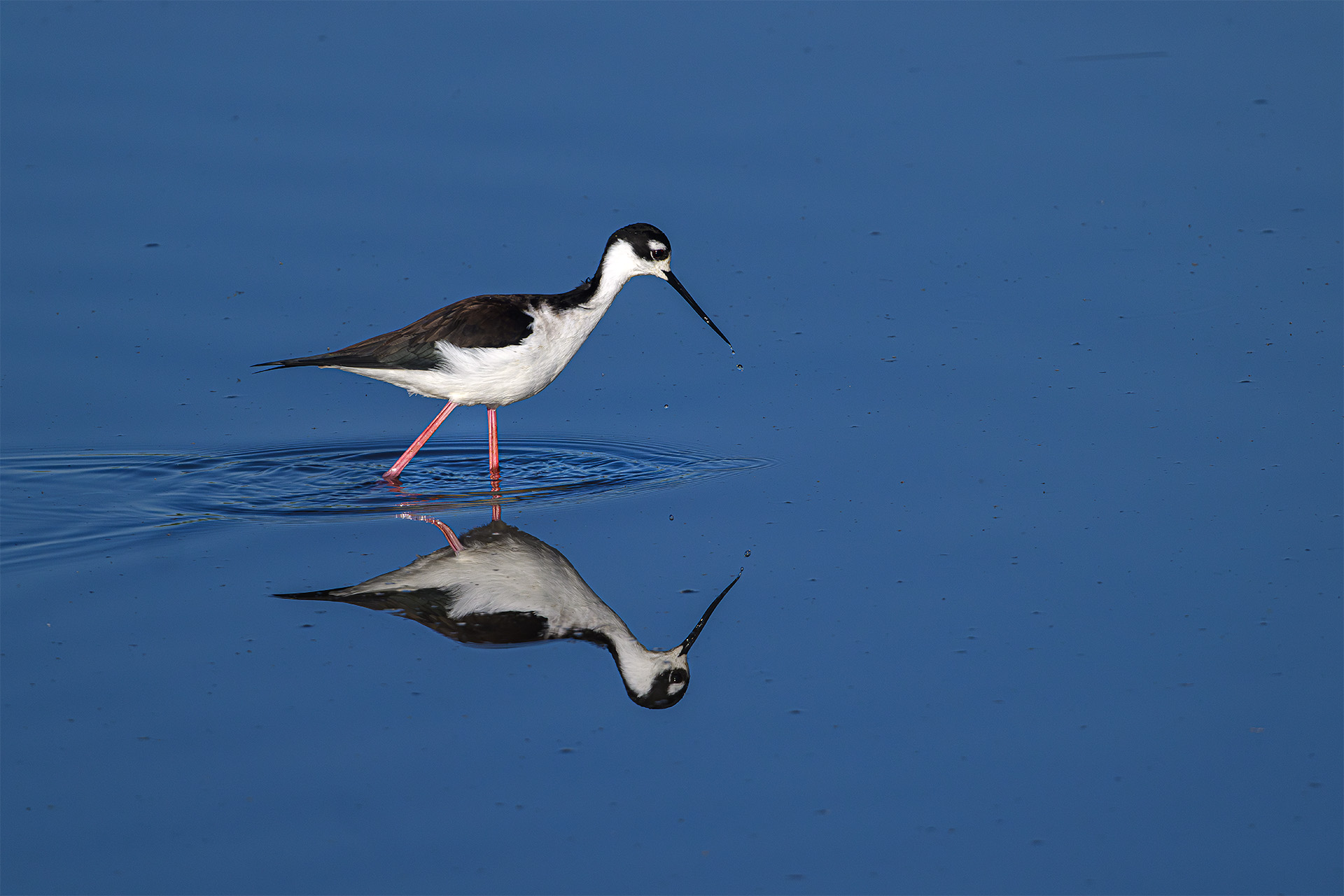
The Salt Pond along the Ferrari Pond Trail in Lincoln Hills has lots of shorebirds, including a pair of Black-necked Stilts. The morning was sunny and the pond was still, resulting in an almost perfect reflection of the Stilt as it foraged through the shallow Salt Pond in search of its next meal. Both the bird and the drops from its beak are almost perfectly replicated in the calm waters.

2025—More Discoveries on the Trail

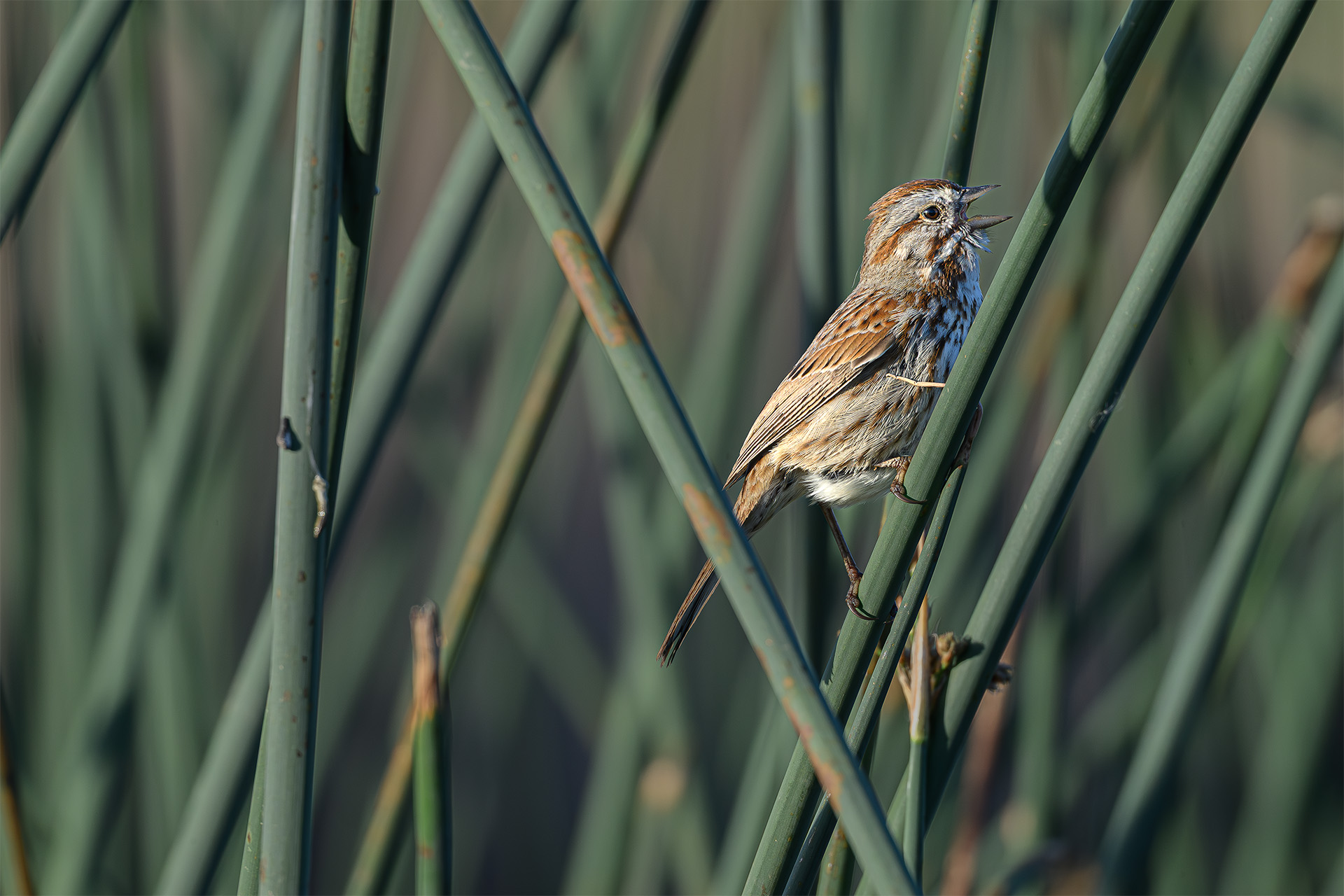
The trails near my home are filled with new discoveries for me. Yesterday morning, I came across a Song Sparrow singing its heart out in the reeds along the slough to a potential mate in the distance to the right. Although the Song Sparrow is one of the most common sparrows the US, I don’t think I have ever photographed one until yesterday. The Red-winged Blackbird is a favorite of mine because of its melodic voice and gorgeous epaulettes. Never tire of photographing them.

2025—Half Hidden

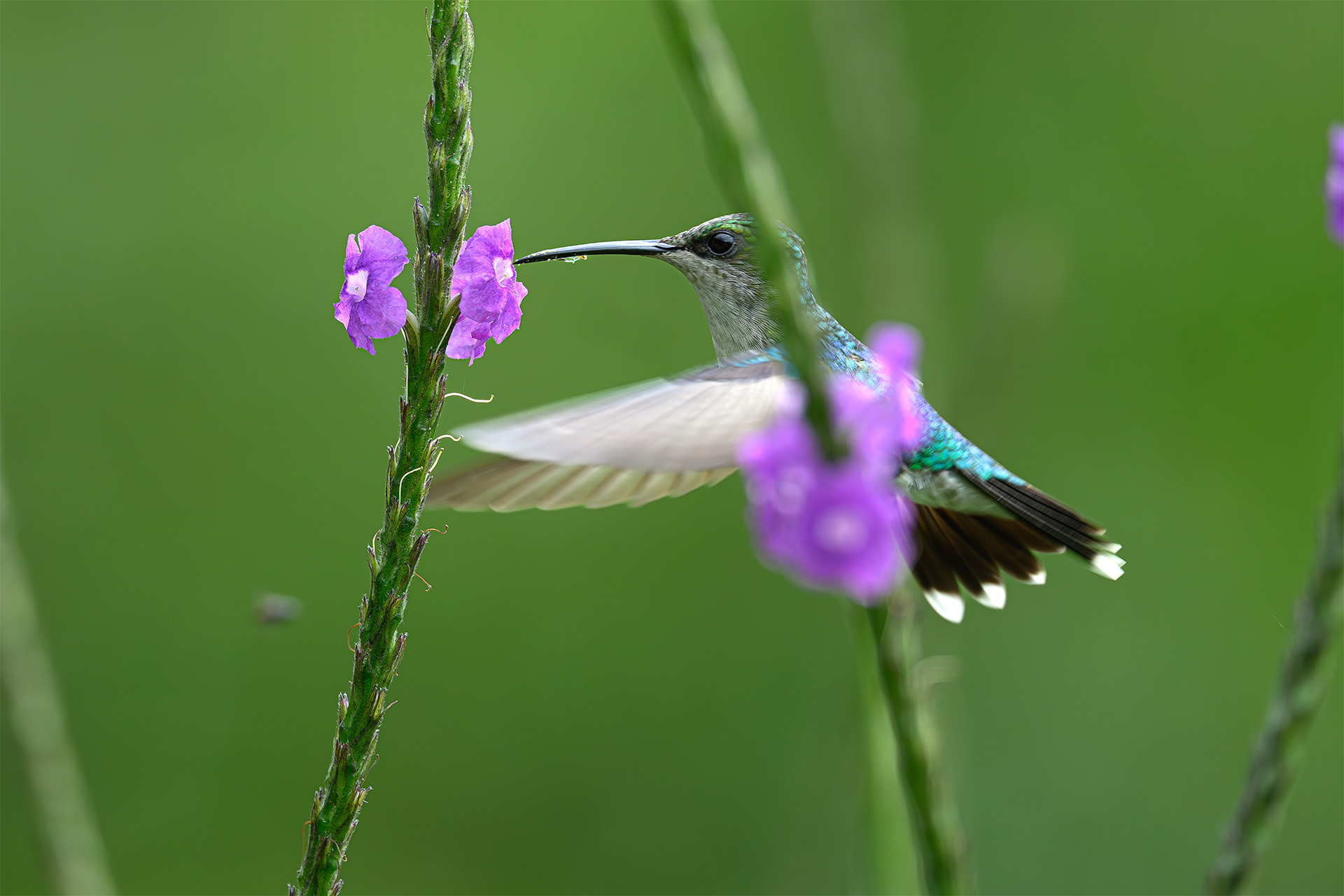
The Blue Porterweed hedges in Costa Rica were home to lots of hummingbird species because they provide a source of both nourishment and protection. The stems of the plant are long and skinny with the occasional flower cluster popping out in the middle of a stem. The hummers tended to stay in the middle of the hedges, protected by the stems. It was quite a challenge to photograph them while they were surrounded and protected by the stems and clusters. I was delighted to be able to isolate this female Violet-crowned Woodnymph as she foraged deep in the midst of the Porterweed hedge, half hidden by the stems.

2025—Construction Supply Site

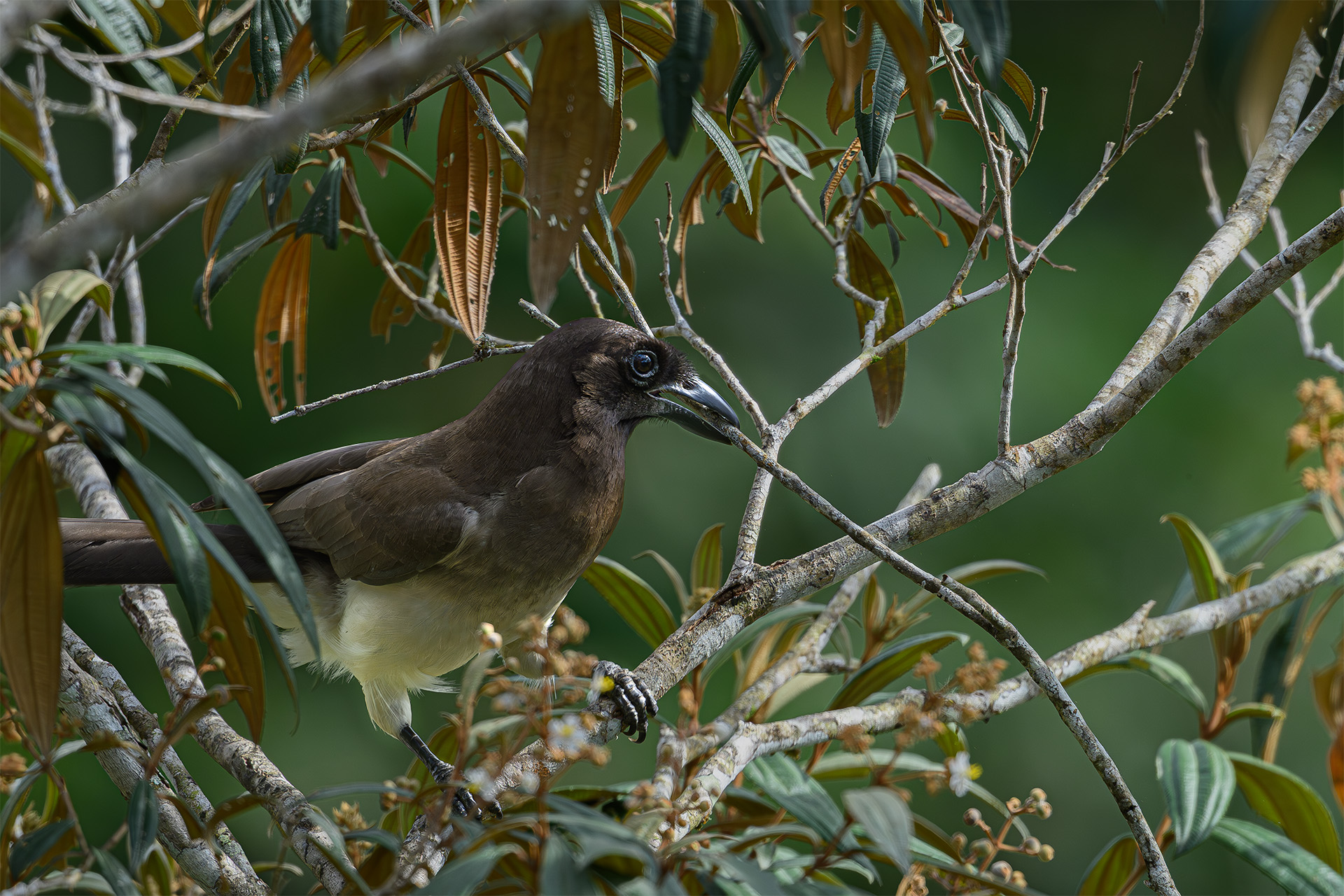
Springtime is nest building time. In Costa Rica this past March, the birds were in full construction mode. This Brown Jay drew my attention away from the hummingbirds in the Blue Porterweed hedge. The Jay was in a tree beyond the hedge and he was intent on extracting this large stick. The stick was long and unwieldy but he eventually managed to ease it through an opening and flew off to his nest that was under construction somewhere else. He returned over and over during the afternoon to find more supplies for his nest.