2025—A Worthwhile Walk

Yesterday I finally joined my friend Truman for an early morning walk from Angler’s Cove to the Salt Pond and back, about a 3 mile round trip through some of the best birding and wildlife parts of Sun City Lincoln Hills. I’ve lived here almost 18 months and this is only the 3rd time I’ve walked there, despite being cajoled and prodded to meet the group for almost that entire 18 months. It was a great walk. I finally saw two of the five coyotes that live in the area. There was great excitement from other walkers we met that the coyotes might be raising pups nearby. When we got to the Salt Pond, a pair of American Avocets had nested in plain view right on the edge of the Salt Pond. We saw and photographed at least a dozen birds including this White-crowned Sparrow, one of my favorite spring birds.
2025—Head-on Feeding

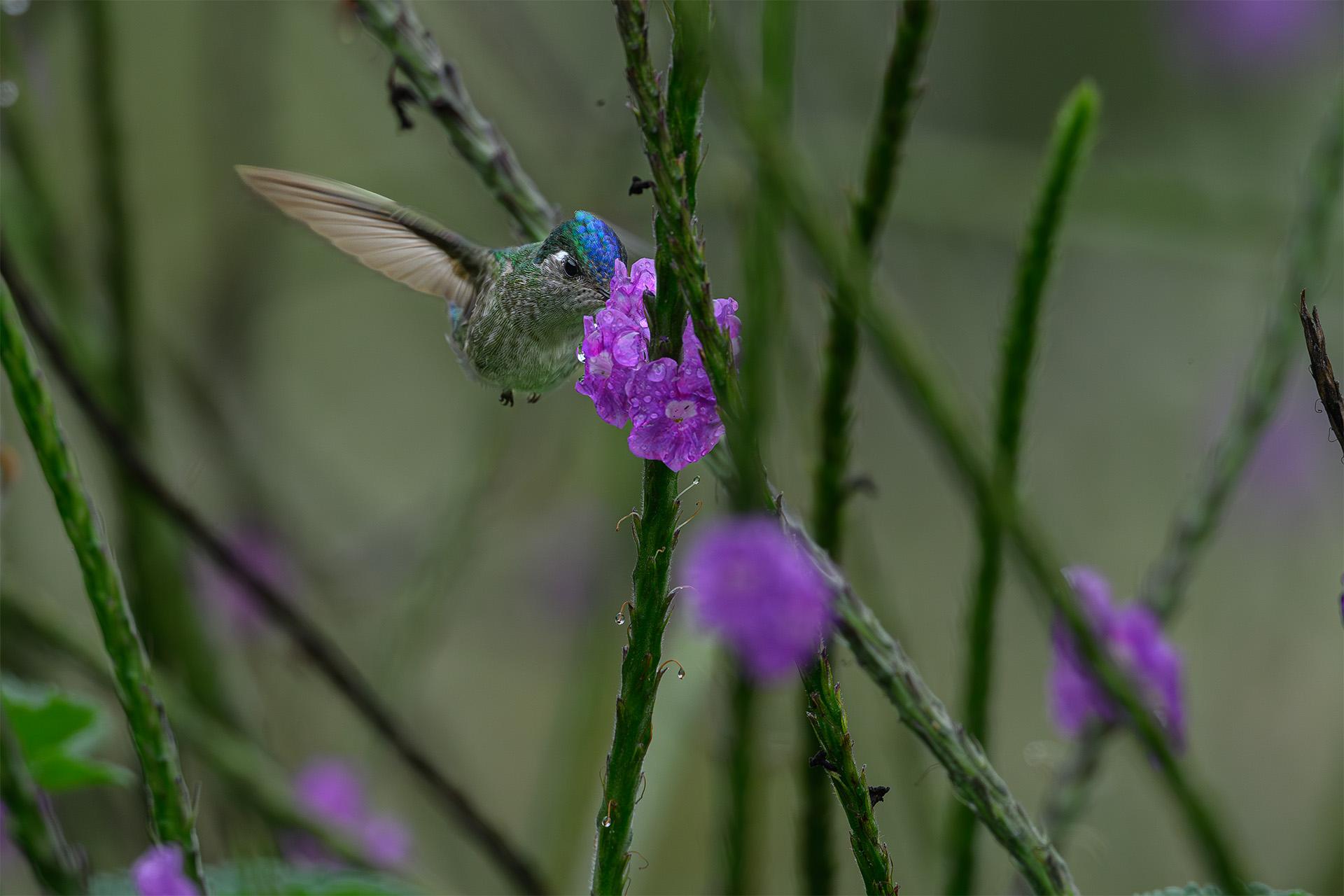
The first few days in Costa Rica were wet. When we walked down to the Blue Porterweed hedge to seek out the more elusive hummingbirds, the rain did not deter the hummers. This is a Violet-headed Hummingbird, so intent on filling up on nectar from the flowers on the Porterweed that it was not bothered by the water-laden flowers from which it sipped nectar. Although this image shows only half the hummingbird, I liked that it is primarily a head-on view. Most feeding shots I get are side views.

2025—Meet Mr. and Mrs. Jacobin

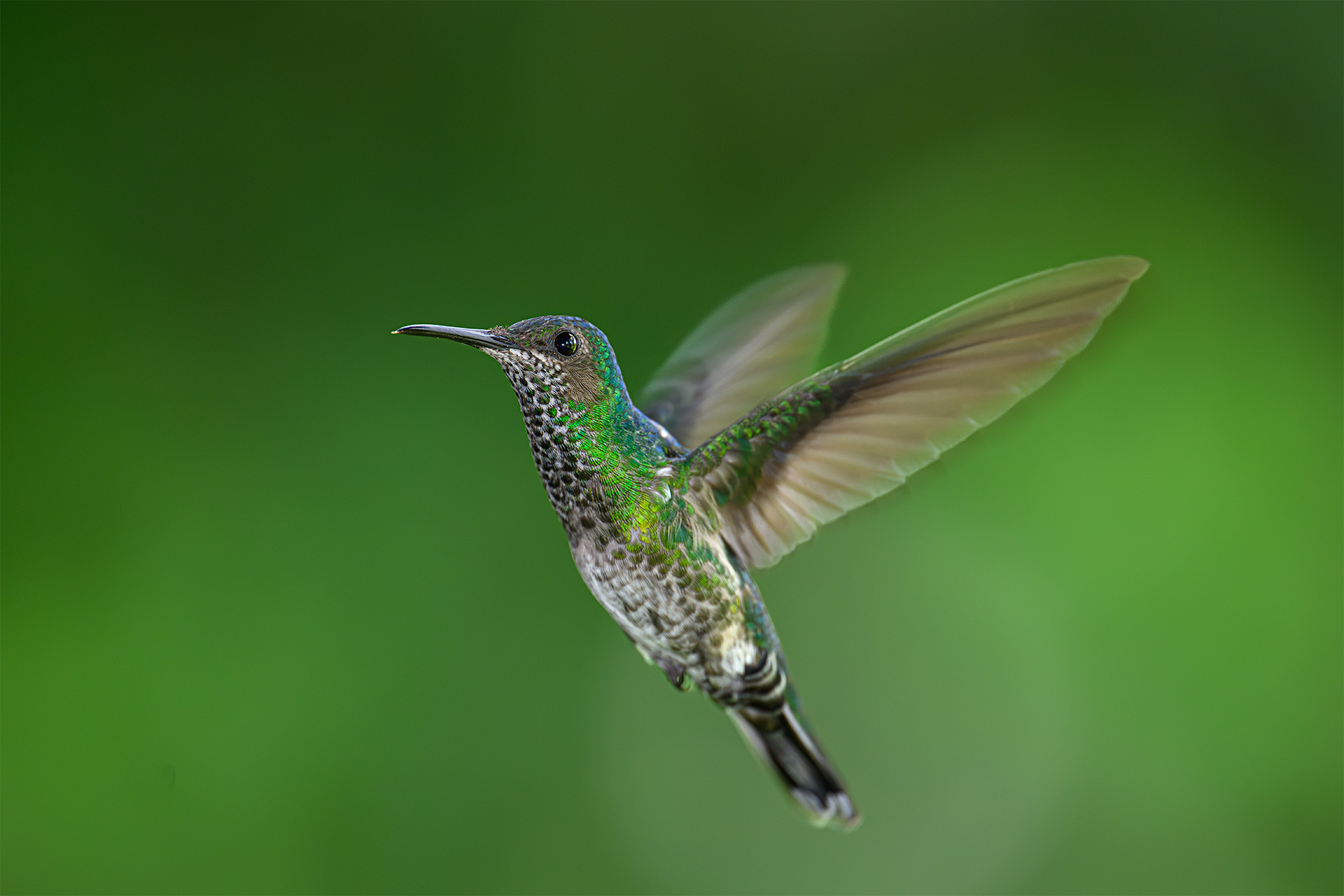
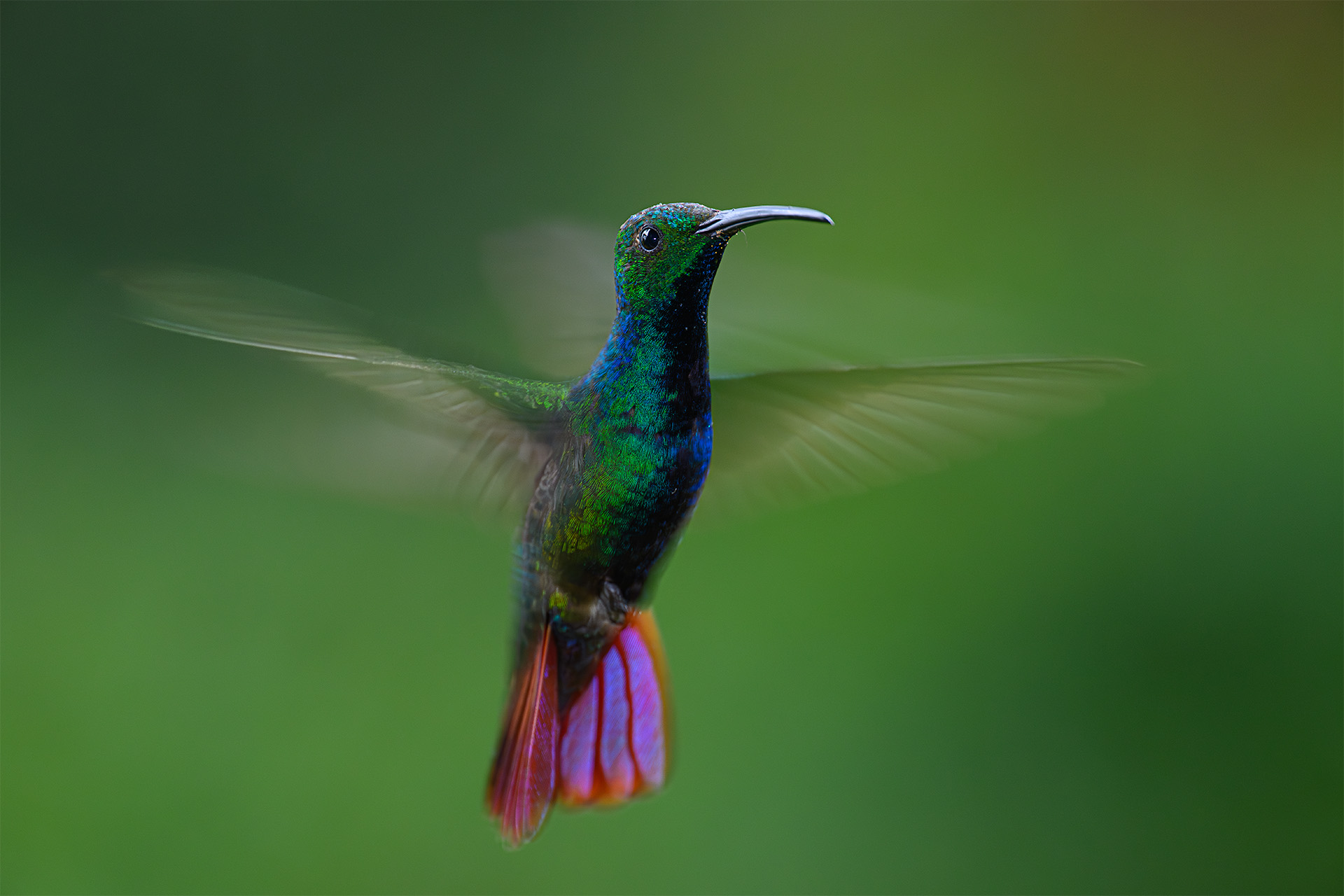
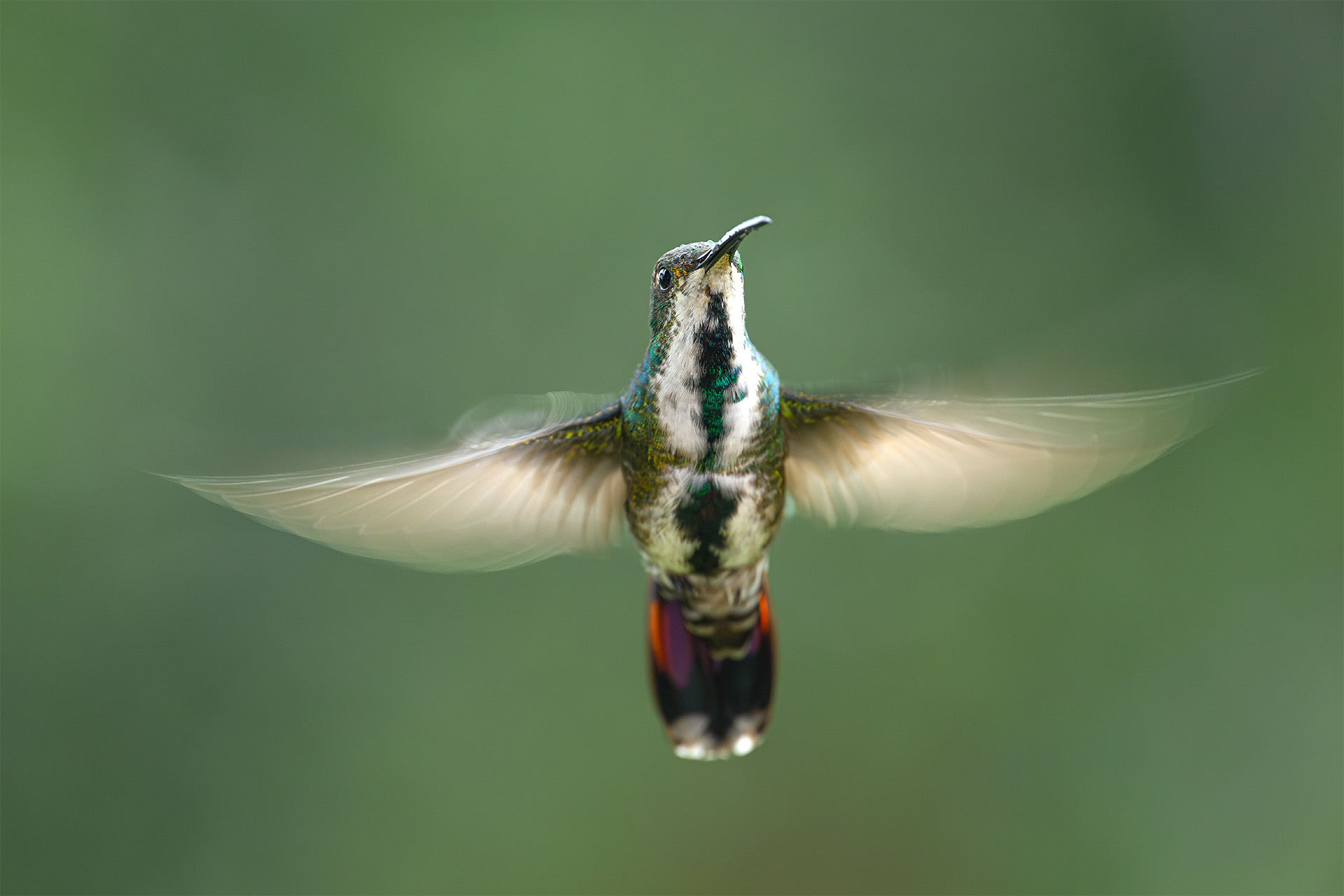
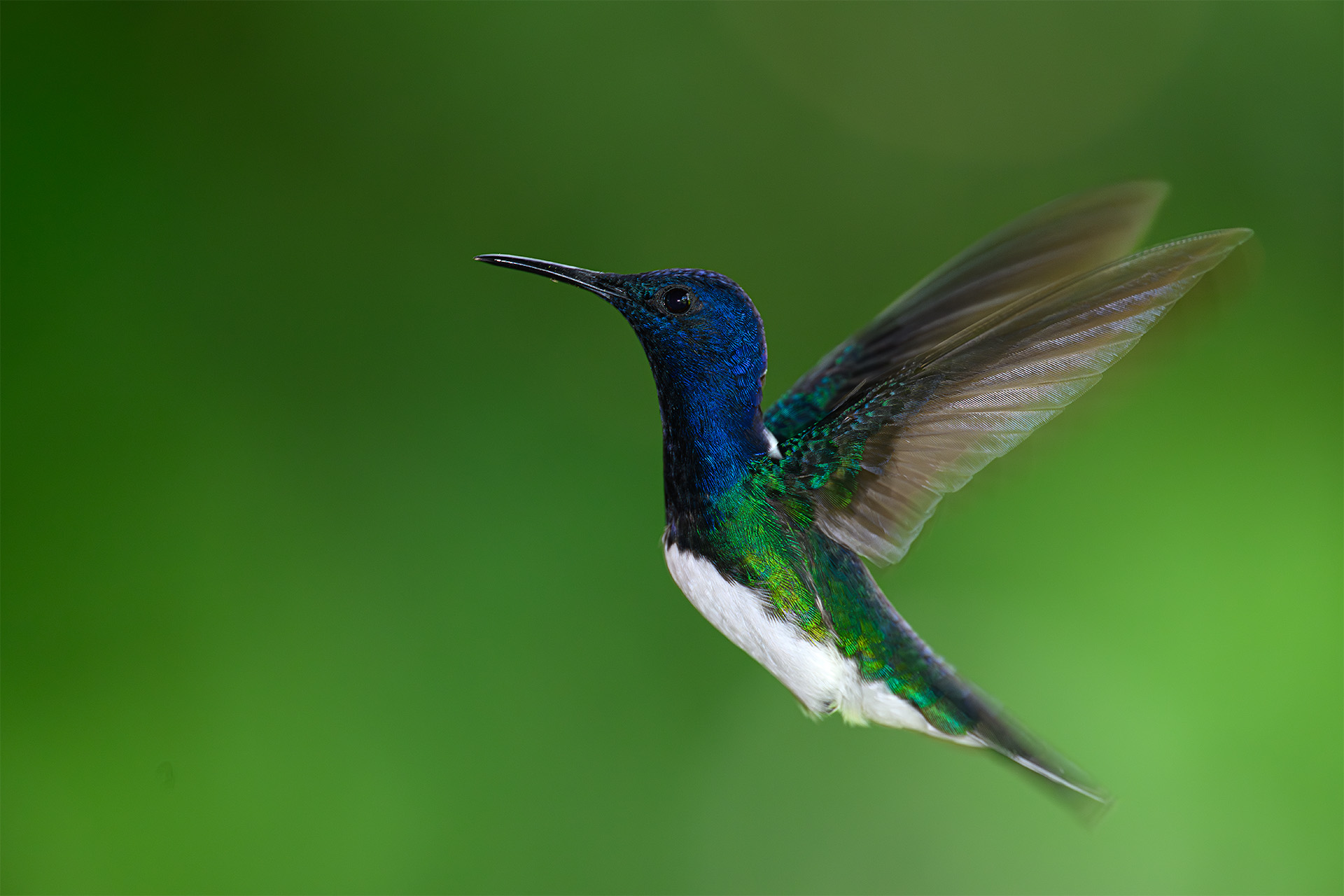
Meet Mr. and Mrs. Jacobin. Yes, another hummingbird in Costa Rica does not have “hummingbird” as a part of its common name. There are hummingbirds that are mangoes and woodnymphs and coquettes and thorntails. This is the White-necked Jacobin, one of the most frequent visitors to the feeders at Costa Rica’s Rancho Naturalista. I got to wondering about its name. I know the word Jacobin as it relates to Dominican monks who were nicknamed Jacobins in the Middle Ages when their first convent was located on the Rue Sainte-Jacques (Jacobus in Latin). As it turns out, the White-necked Jacobin was given that name because of the similarity of his deep blue/black head and neck feathers to the black hooded cape that the Jacobins wore over their white robes. Of course the females don’t have that distinction but are beautiful just the same.

2025—Diminutive Snowcap

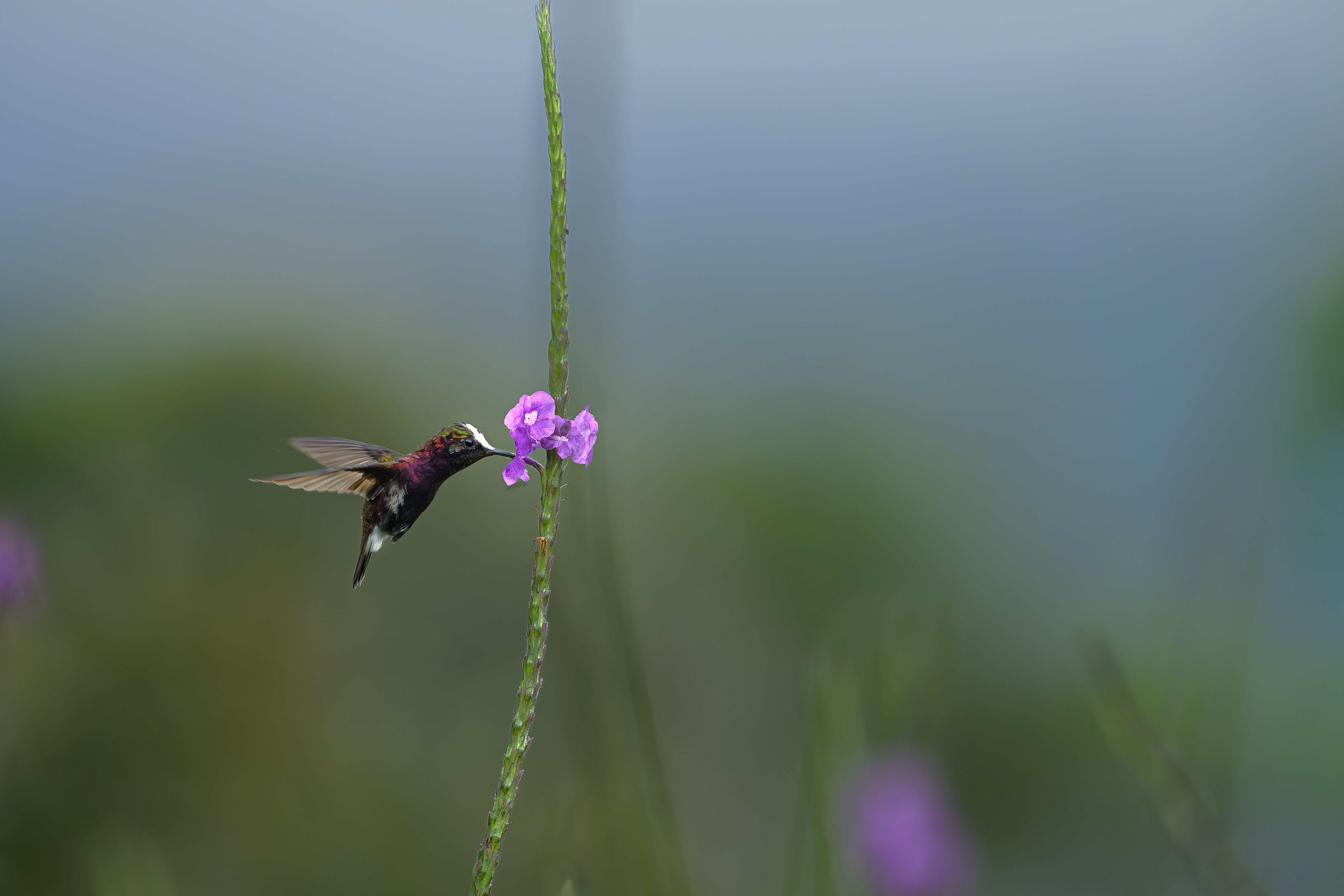
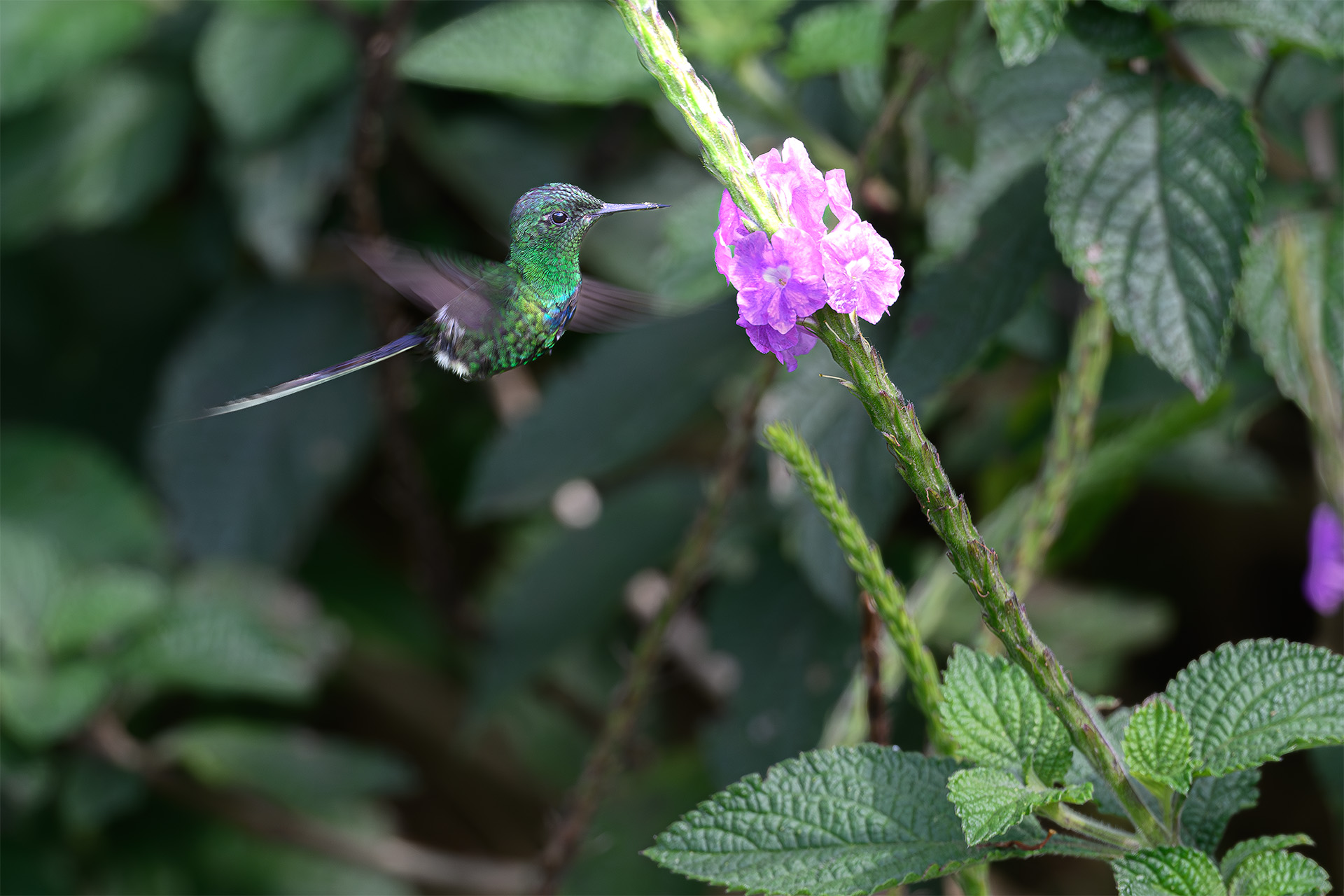
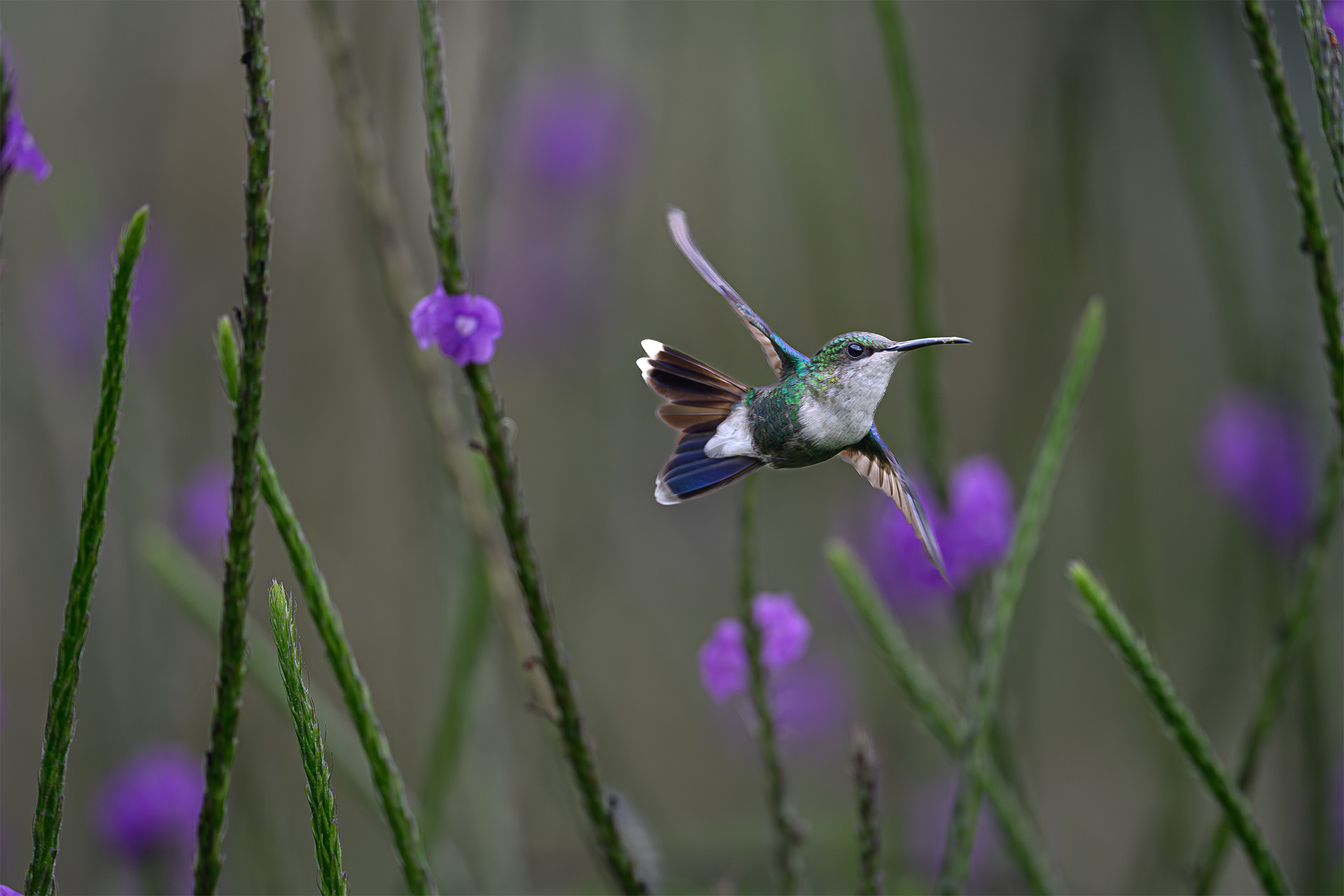
The diminutive Snowcap is Costa Rica’s smallest hummingbird and at 2 1/2 inches is just a quarter inch longer than the world’s smallest hummingbird, the Bee Hummingbird of Cuba. The few times I’ve seen a Snowcap in Costa Rica, it has always been the midst of a Blue Porterweed hedge that usually is a mass of stems and leaves and flowers, making it difficult to see the tiny Snowcap amidst the chaos. I was lucky that he briefly flew to an isolated flower stem with no distractions. Although I captured other images of the Snowcap that were closer, those images had lots of distractions. In the end, I think having the Snowcap so small in the frame illustrates just how tiny he is and shows the environment in which he lives, and, with the clean background, you can’t help but see him.

2025—Wing Stretch

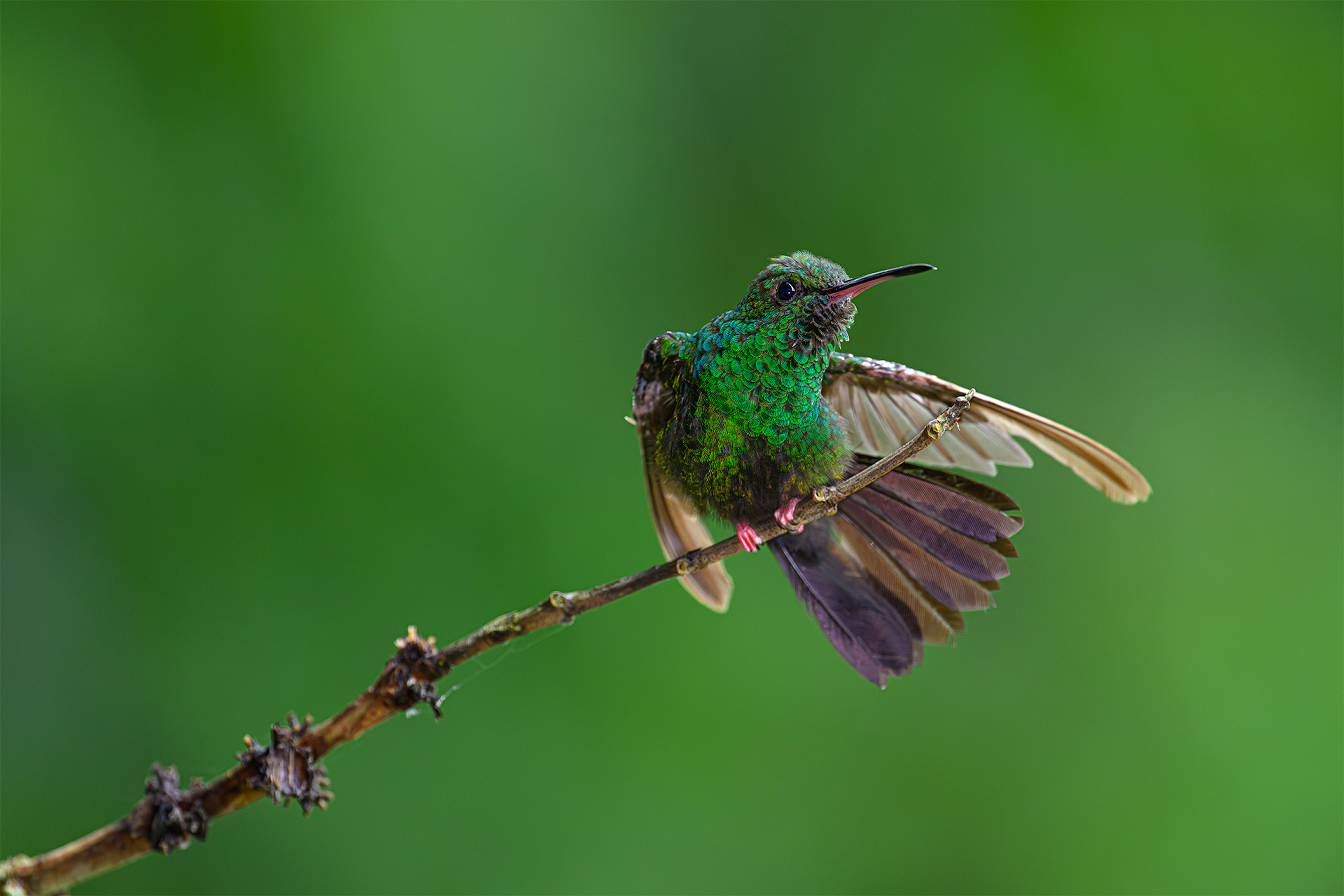
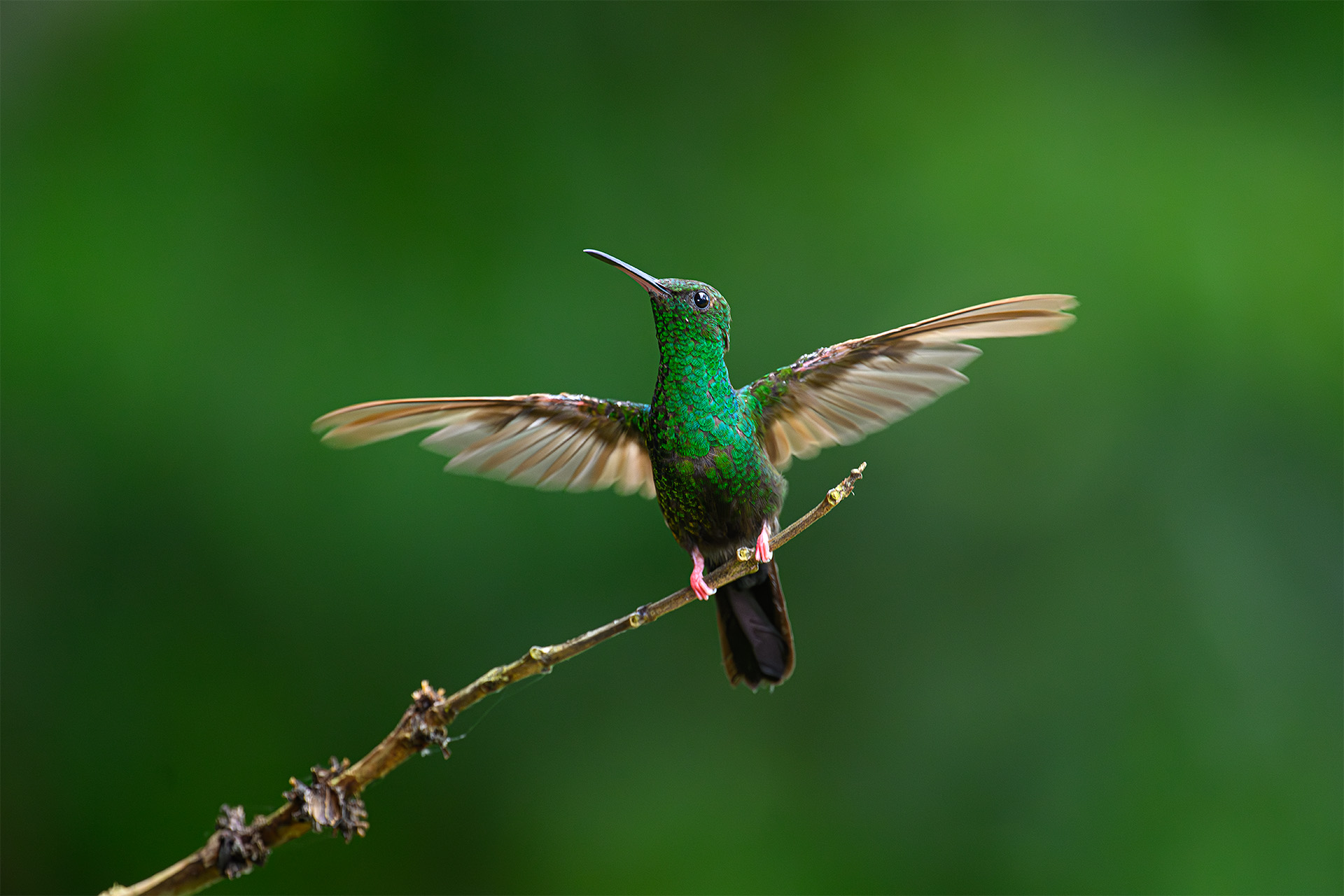
What a difference a year makes! This is the adorable Bronze-tailed Plumeleteer who, last year when I visited Rancho Naturalista in Costa Rica, seemed to be the most elusive of the hummers there, even more so than the Stripe-throated Hermit or the Green Hermit. This year, an immature male Plumeleteer, with wing, tail, and body pinfeathers still emerging, claimed a feeder near the Arabica Coffee tree next to the deck, riding herd (if that idiom can be used on such a tiny bird) on the area and chasing away any hummer that approached it. He maintained his vigilance all day every day we were there. He wasn’t always immediately visible to us as he sometimes perched in the bramble of vines beneath the deck but often as not, he perched in plain sight on a bare branch extending from the Arabica Coffee tree. He sat for such long periods, often preening to rid himself of the itchy sheaths encasing the emerging feathers, that a wing and tail stretch must have felt really good. One of the interesting things about this bird is the color of his feet. Mature Plumeleteers have bright red feet. This immature bird has rosy toes, not yet having turned a brilliant red.

2025—New Species

There are more than fifty species of Hummingbirds in Costa Rica. We saw many species but did not see anywhere close to fifty species. Luckily, we did see a few new species this visit and I managed to capture images of the Green Thorntail, a new-for-me species as it fed at the Blue Porterweed hedge.

2025—Rain in the Rainforest

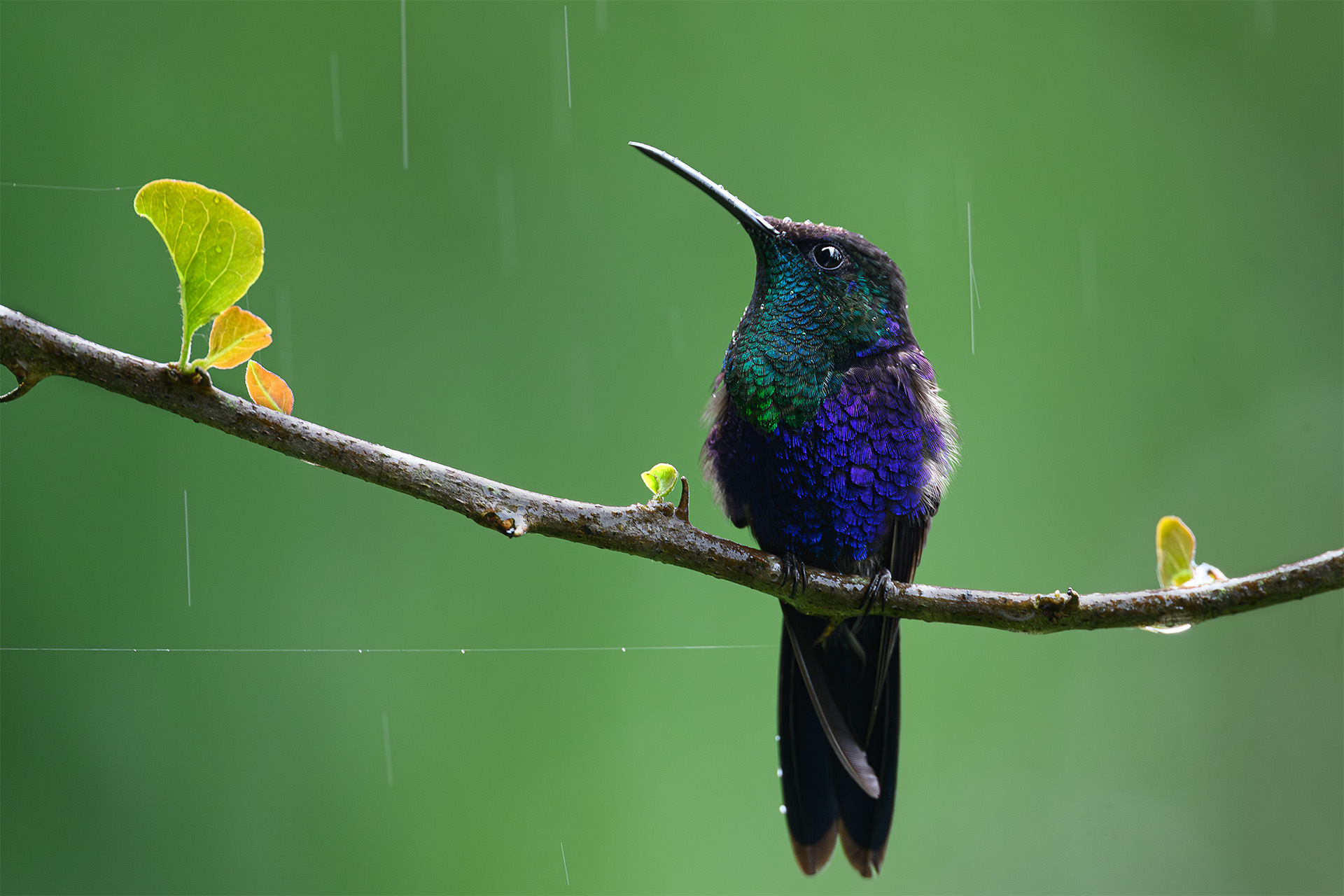
Last week in Costa Rica it rained much of the time we were there. In this shot pf a male Violet-crowned Woodnymph, the raindrops are visible as vertical streaks against the green background as well as a few raindrops visible on the Woodnymph’s head. The horizontal streak that appears to emerge from the left side of the image to the Hummingbird’s tail is another visual of the ever-changing scenario. It is a cobweb protruding from the edge of a twig a foot or so away.

2025—Two Costa Rican Hummers

I have just returned from Rancho Naturalista in Costa Rica. It is a delightful place to see and to photograph hummingbirds as well as dozens of other rainforest denizens. We photographed a number of different hummingbird species on our visit and used two approaches to photographing these tiny, lightning fast birds. In the first, we used a 400mm lens with a 1.4X teleconverter and two Profoto A10 flashes mounted on either side of the camera on a tripod. When we used this rig, on the deck at the Rancho, the birds were close to us, just 8 or so feet away. The flash served simply to bring out the color of the birds, not for exposure. The first image above illustrates shooting with the hummingbird flash rig. This is an immature male Bronze-tailed Plumeleteer. Because the rainforest is so far away, it dissolves into color and subtle patterns, creating a perfect background without distractions. It is a portrait that isolates the bird but doesn’t identify where it is. We used the second shooting approach when we ventured off the deck to the nearby Blue Porterweed hedges that serve as home and shelter to some species of hummers that do not visit feeders. The distance to the hummers was two or three times the distance as it was on the deck, so we used a longer lens (600mm with either a 1.4X or 2.0X teleconverter) and no flash. The second image, taken at the hedge, is a female Crowned Woodnymph. It is more of an environmental portrait that shows where that bird lives. The hedge surrounds her and remains a prominent part of the photograph without detracting from her.