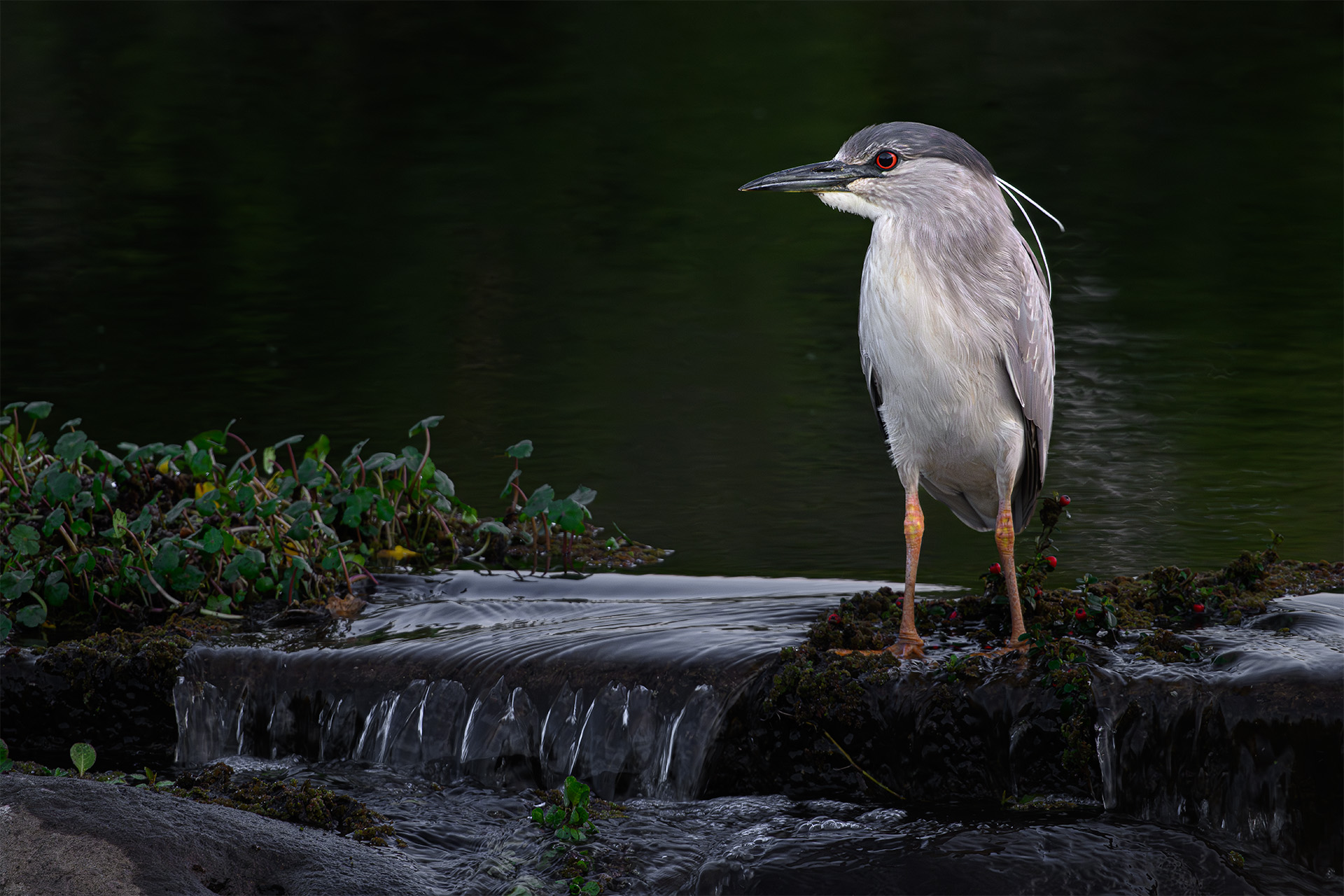
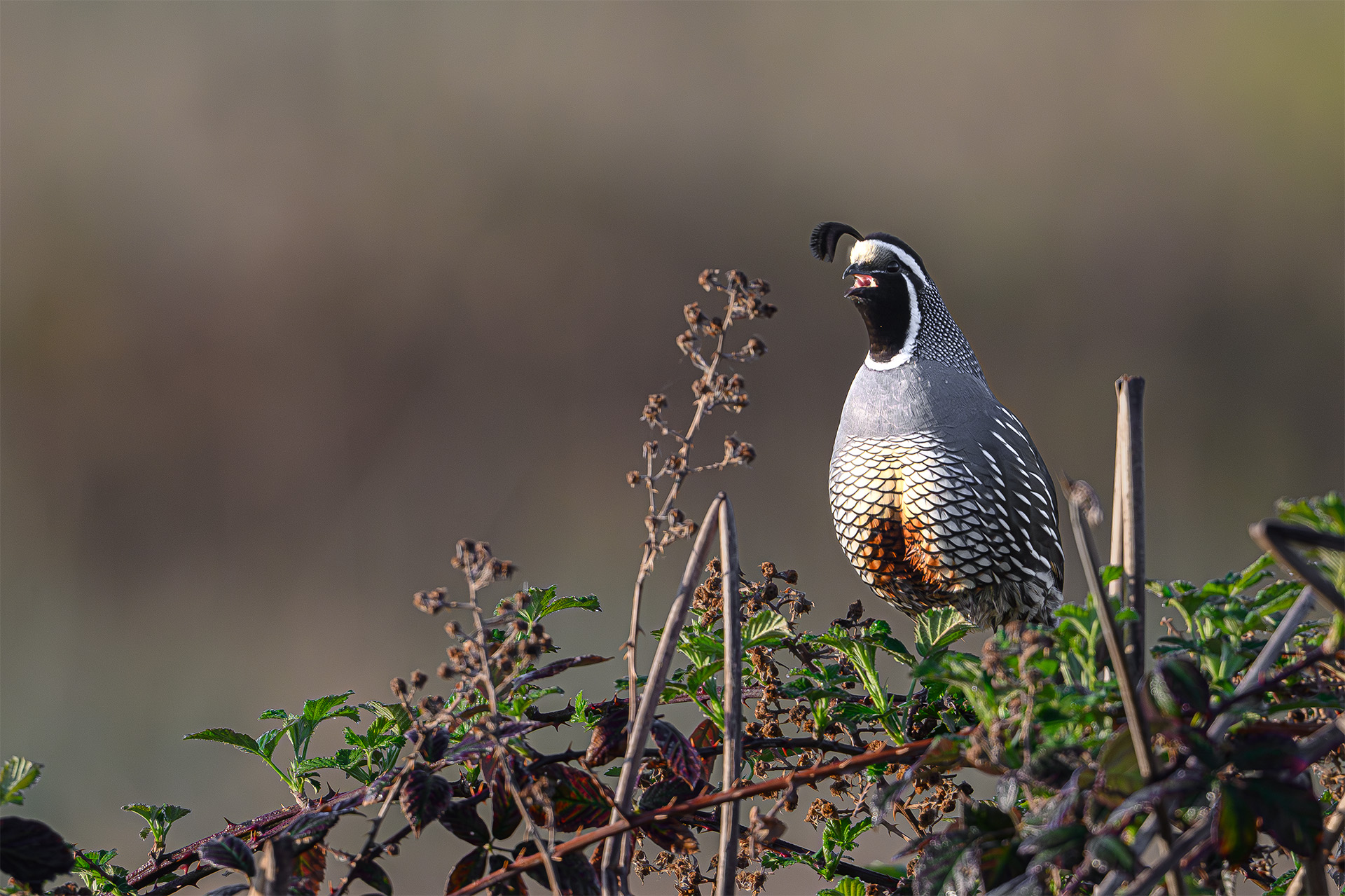
2025—It’s About Time!

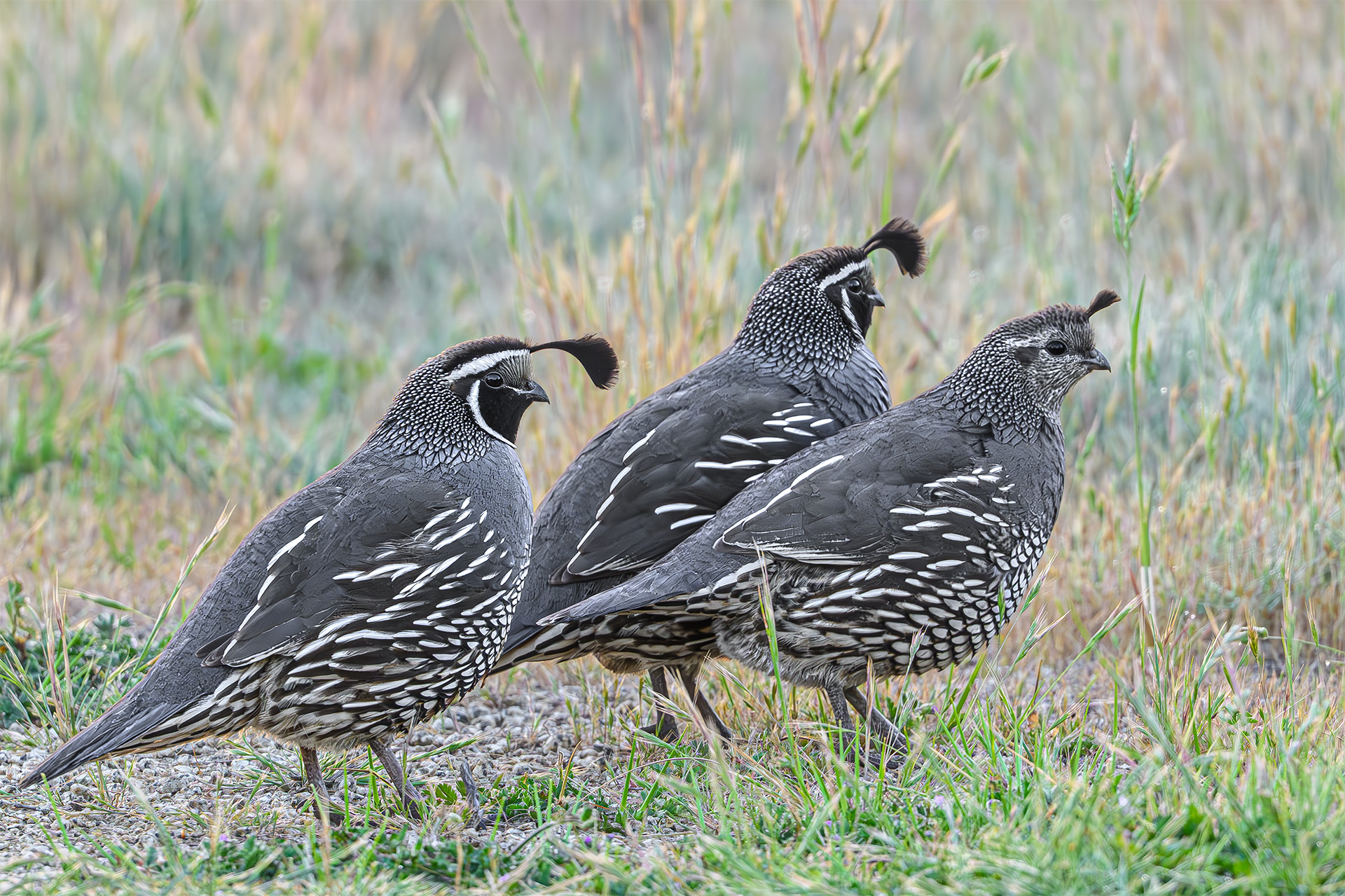
A few years ago, after photographing a number of birds designated as state birds around the country, I decided I would try to photograph each state bird within its respective state. A couple of days ago, I finally photographed California’s state bird, the California Quail, practically in my own backyard. And, it’s about time! There are quite a few California Quail along the Ferrari Pond Trail near my home so I was happy when this trio, two males and a female, crossed our path and posed for a moment in the grasses along the side of the trail. In the second shot, a male sings from a high perch to attract a female or maybe just to assert his dominance. By the way, I have abandoned my fanciful quest to find each state’s bird within that state’s boundaries. Because many states have designated the same birds to represent their state, I have photographed 44 state birds plus the District of Columbia but only four birds in their respective states: the Nene in Hawaii, the Cactus Wren in Arizona, the Northern Mockingbird in Texas, and now the California Quail in California. I have upcoming trips to South Dakota (the Ring-necked Pheasant) and Delaware (the Blue Hen Chicken) so maybe I’ll get lucky and find those birds while I’m there. If I do, I’ll have just four to go: Alabama’s Yellowhammer; Colorado’s Lark Bunting; Georgia’s Brown Thrasher; and South Carolina’s Carolina Wren.

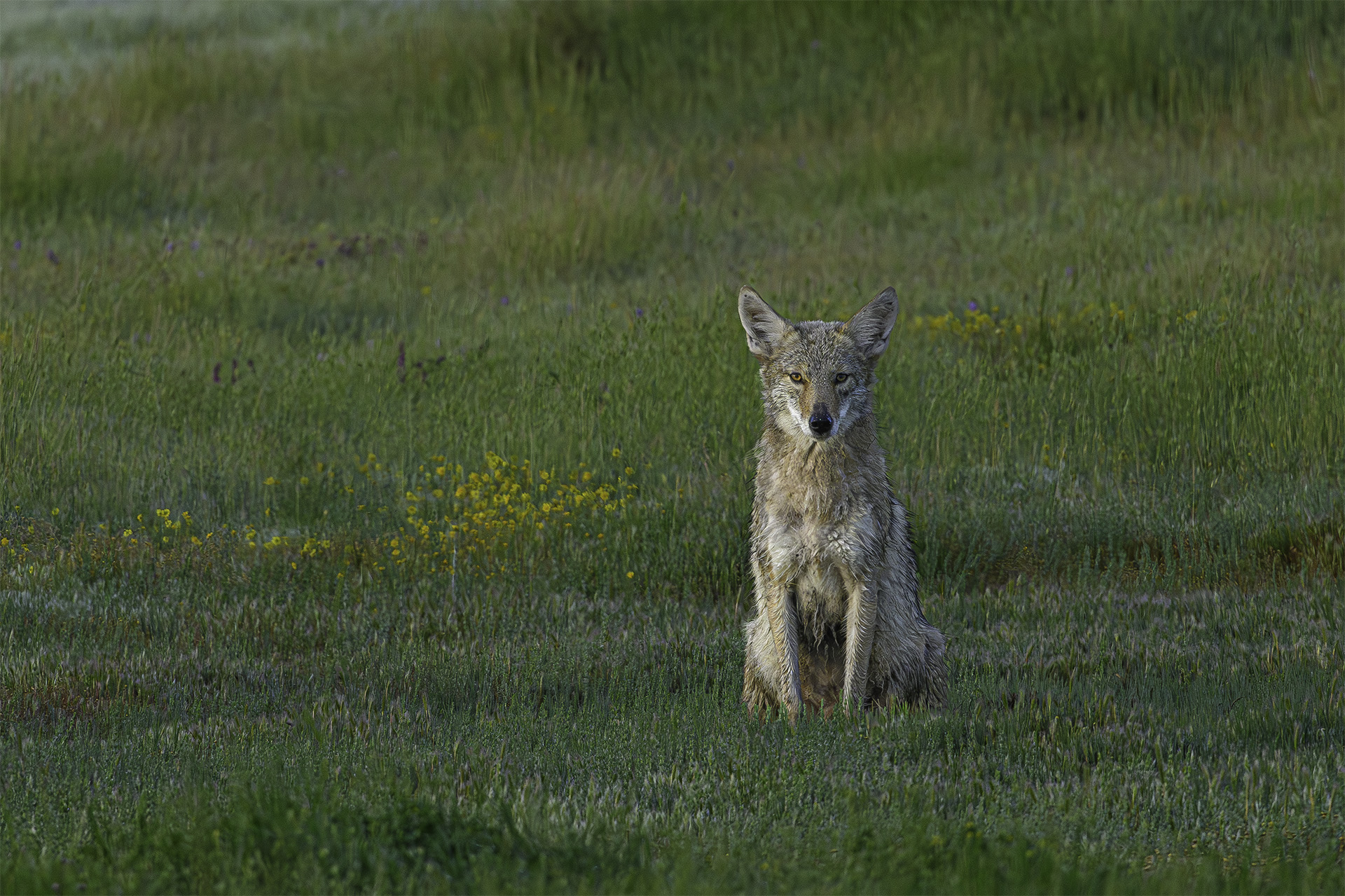
2025—Patiently Waiting

It’s been only a week since I first met the Ingram Slough Coyotes (not sure what they’re actually known as) and I’m smitten. I’ve seen them each morning I’ve been walking there and I now know the pair, which I’ve seen several times, has five pups. This one kept its eyes on us for quite a while the other morning while its mate was resting on a small knoll a ways away but no pups were visible. In the mean time, I’m impatiently waiting to meet the pups.

2025—Posturing

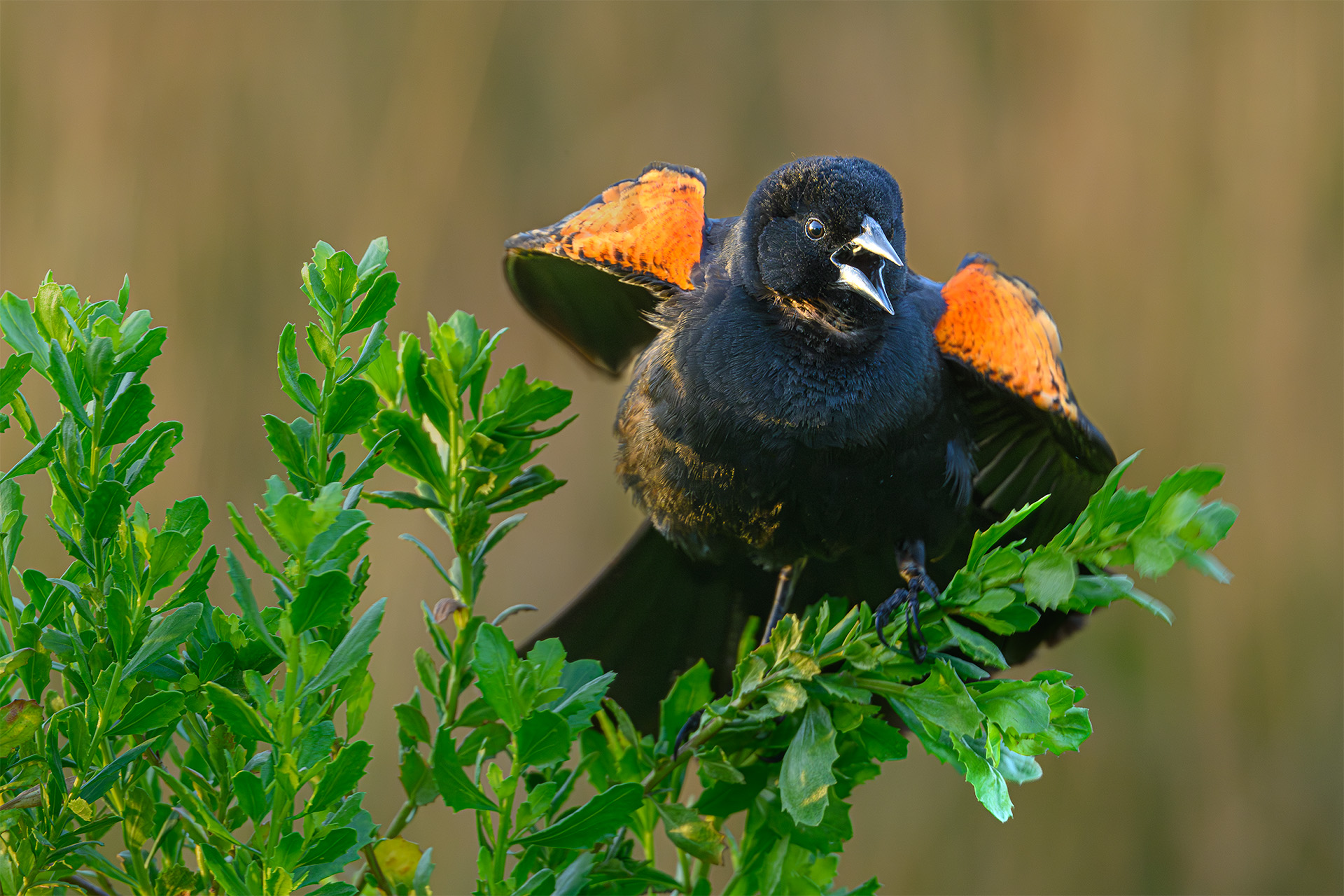
The posturing of a Red-winged Blackbird in breeding season is fascinating to watch. This male Red-winged Blackbird (although his epaulettes appear more orange than red) calls out a warning, puffs up his body feathers, and flares the epaulettes on his shoulders so that other males in the area are aware of his presence. Although there were quite a few male Red-winged Blackbirds along the Ferrari Pond Trail yesterday, I saw only one female and she seemed to be staying out of sight.

2025—One Dog Day

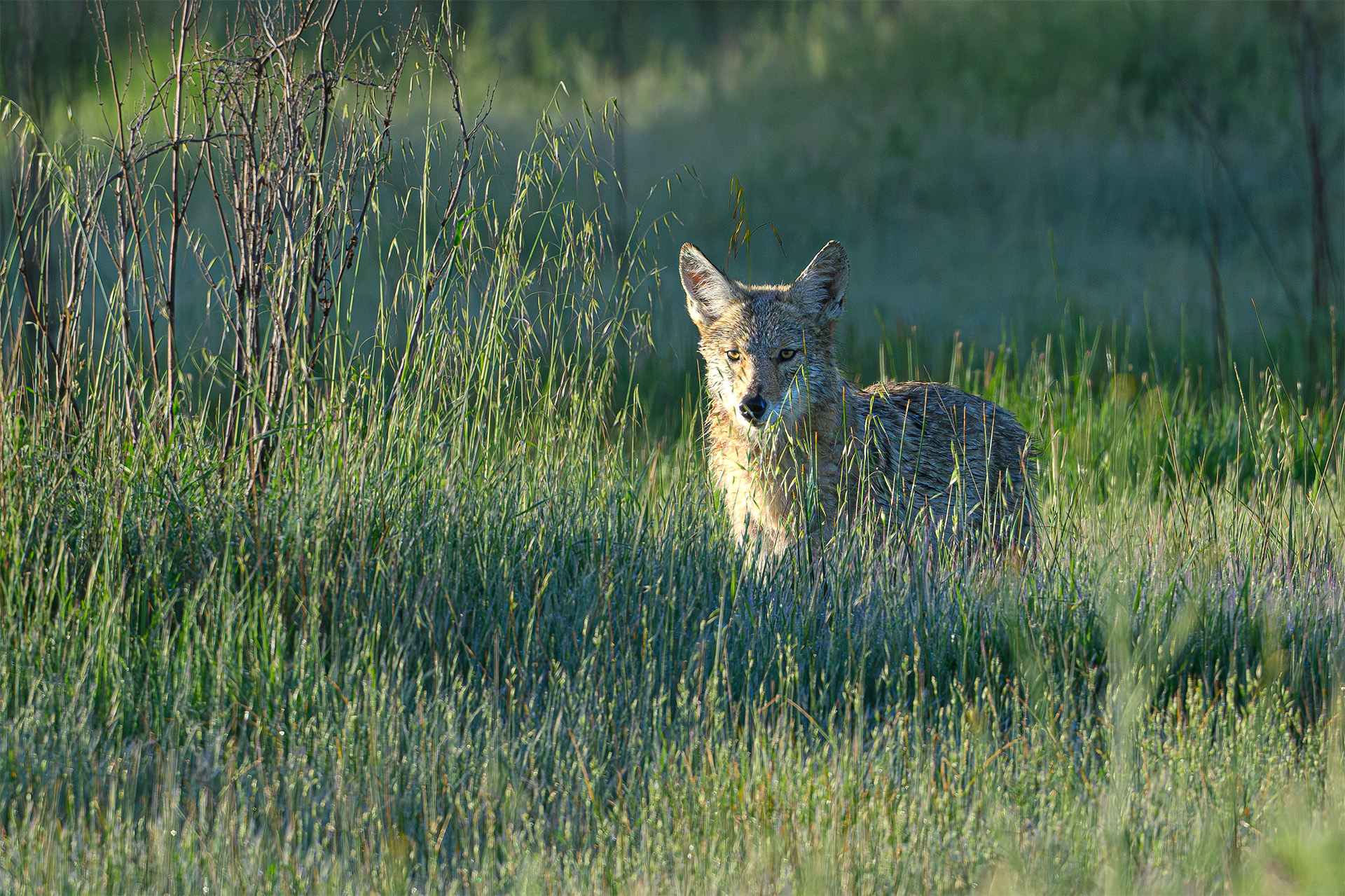
In January, I posted about a twenty-eight dog day in Yellowstone National Park that included twenty-three members of the Wapiti Lake Pack of Gray Wolves, one Red Fox, and four Coyotes. Yesterday here in Lincoln Hills, I had a one dog day—I saw one Coyote from the Ferrari Pond Trail near the Salt Pond. But, to me, it was almost as meaningful as the twenty-eight dog day because this was right in my own backyard. A moment after I took this shot, the Coyote moved behind the taller grasses to the left where I could just barely see it leap and pounce on a vole. I’m so glad I’ve finally convinced myself to be out walking early in the morning, meeting up with friends and discovering what’s right in my own backyard. And the best part, I was outside enjoying the wildlife, I walked three miles, and I was home shortly after 8 AM. Life is good.

2025—An Almost Perfect Reflection

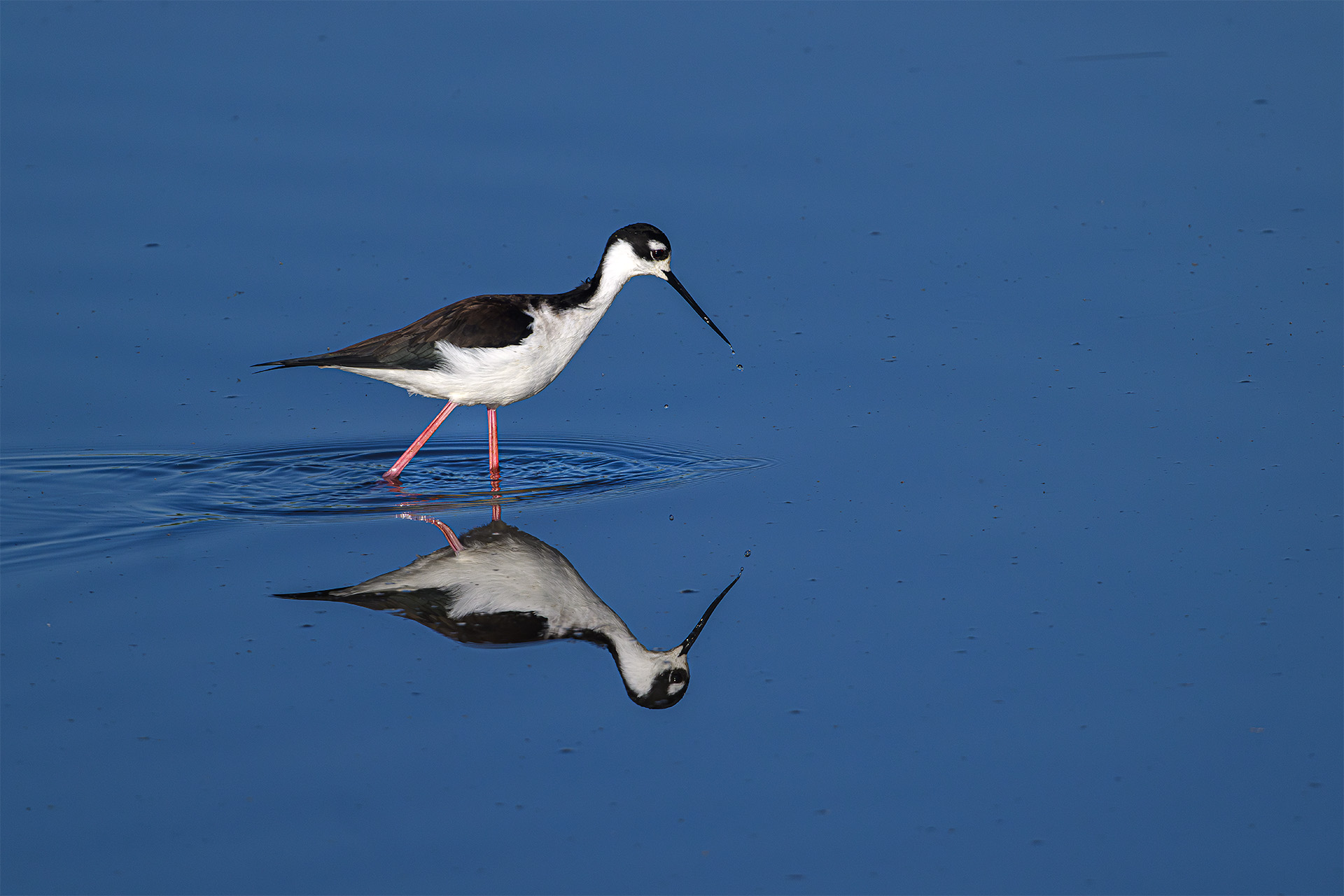
The Salt Pond along the Ferrari Pond Trail in Lincoln Hills has lots of shorebirds, including a pair of Black-necked Stilts. The morning was sunny and the pond was still, resulting in an almost perfect reflection of the Stilt as it foraged through the shallow Salt Pond in search of its next meal. Both the bird and the drops from its beak are almost perfectly replicated in the calm waters.

2025—More Discoveries on the Trail

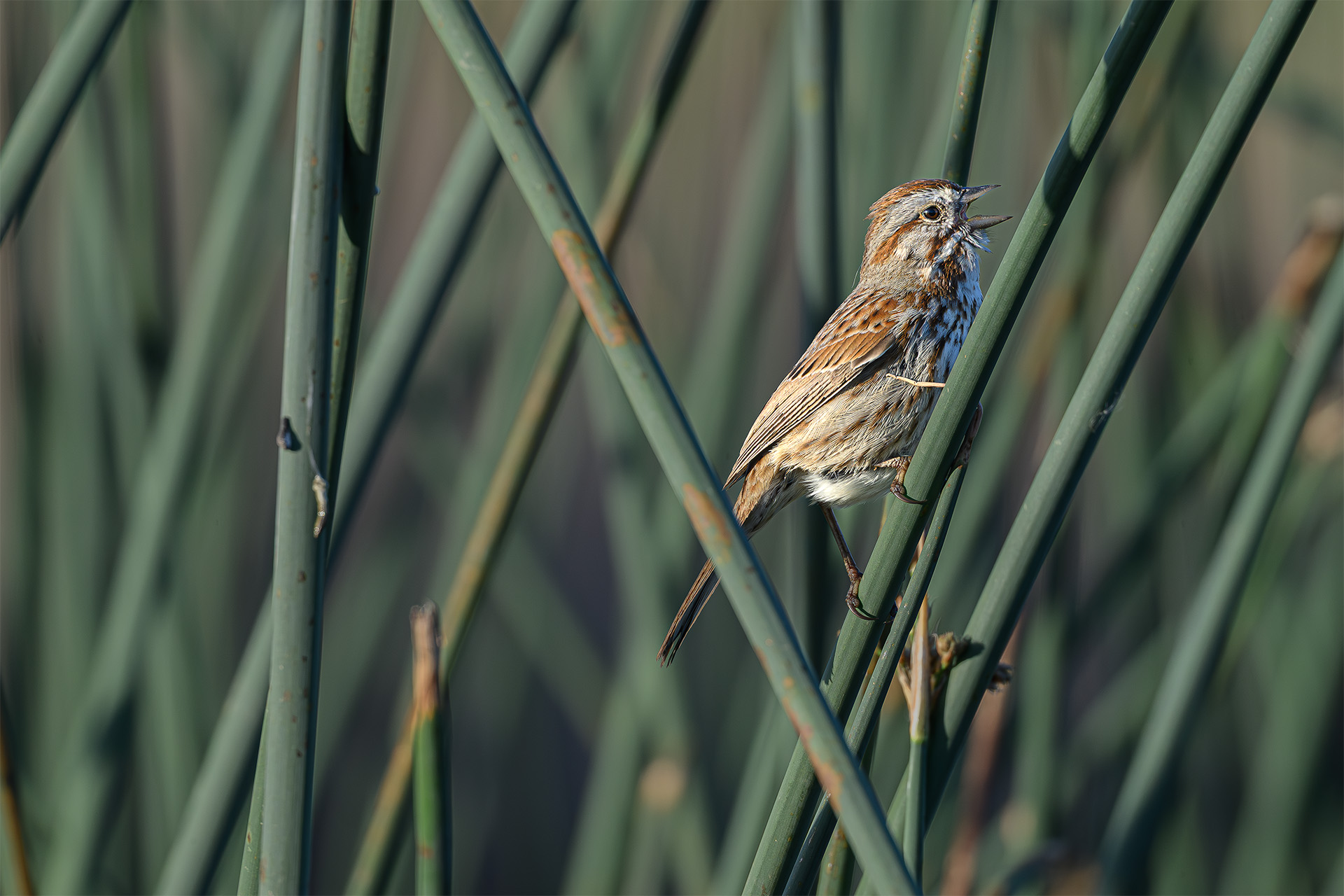
The trails near my home are filled with new discoveries for me. Yesterday morning, I came across a Song Sparrow singing its heart out in the reeds along the slough to a potential mate in the distance to the right. Although the Song Sparrow is one of the most common sparrows the US, I don’t think I have ever photographed one until yesterday. The Red-winged Blackbird is a favorite of mine because of its melodic voice and gorgeous epaulettes. Never tire of photographing them.

2025—Half Hidden

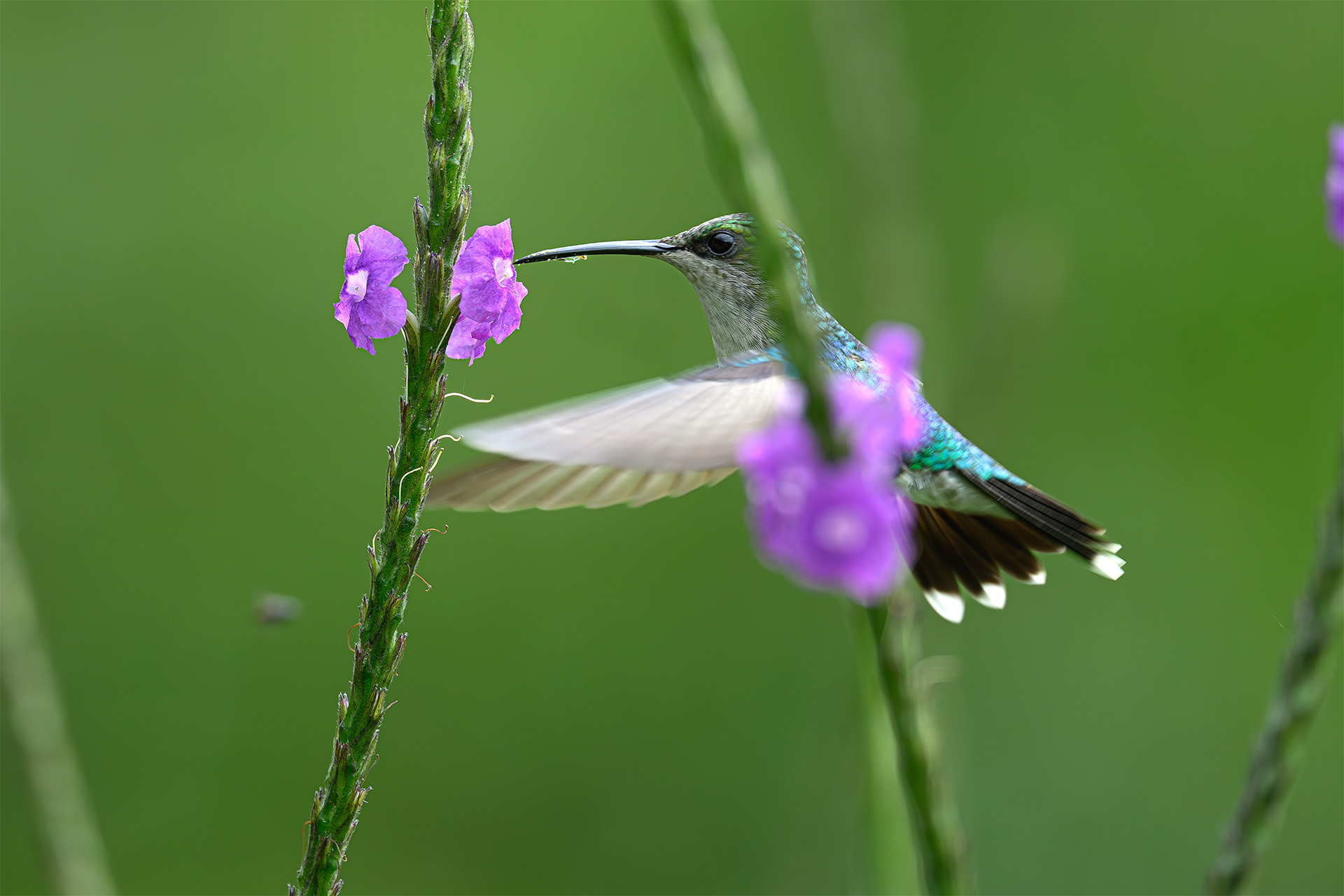
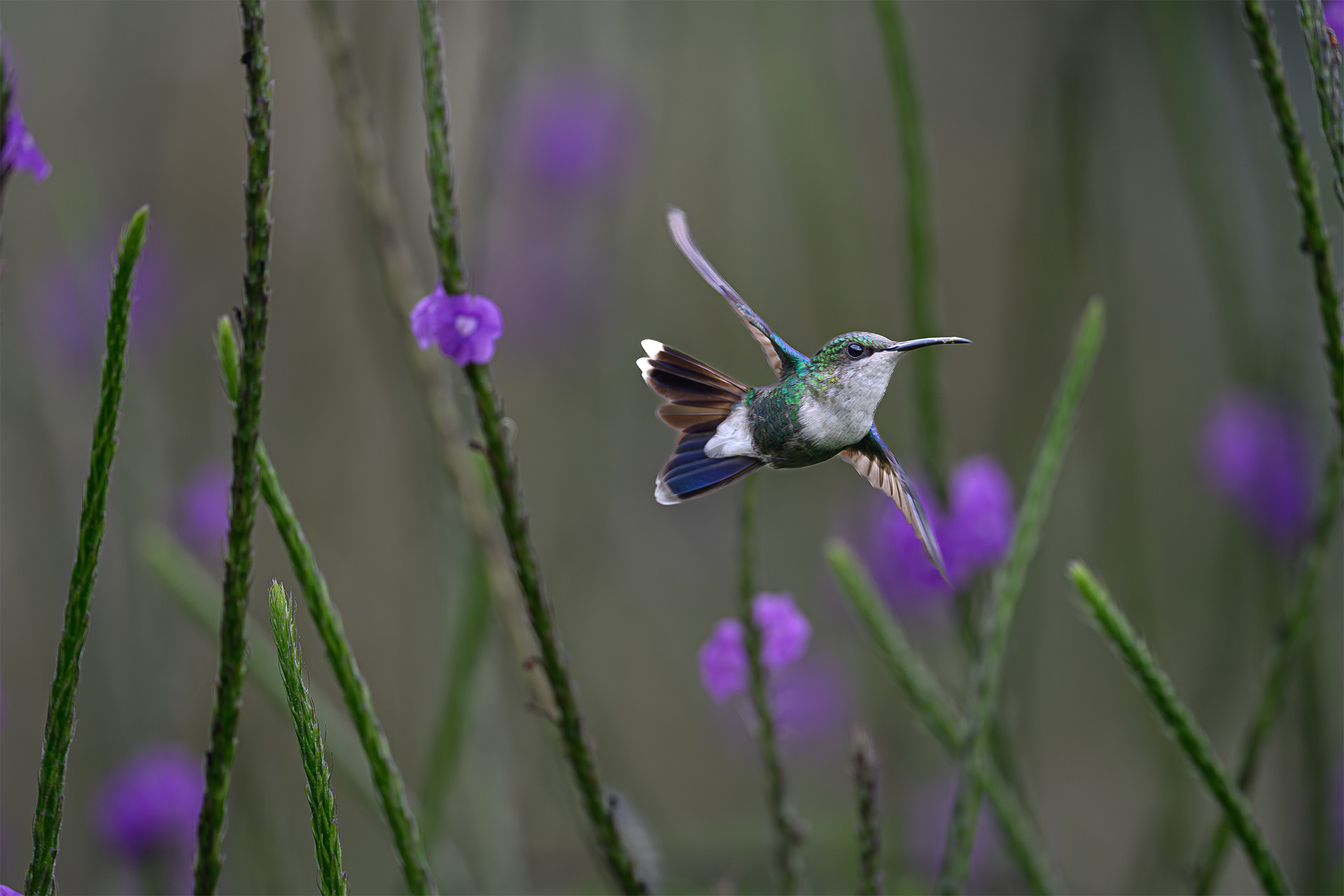
The Blue Porterweed hedges in Costa Rica were home to lots of hummingbird species because they provide a source of both nourishment and protection. The stems of the plant are long and skinny with the occasional flower cluster popping out in the middle of a stem. The hummers tended to stay in the middle of the hedges, protected by the stems. It was quite a challenge to photograph them while they were surrounded and protected by the stems and clusters. I was delighted to be able to isolate this female Violet-crowned Woodnymph as she foraged deep in the midst of the Porterweed hedge, half hidden by the stems.

2025—Construction Supply Site

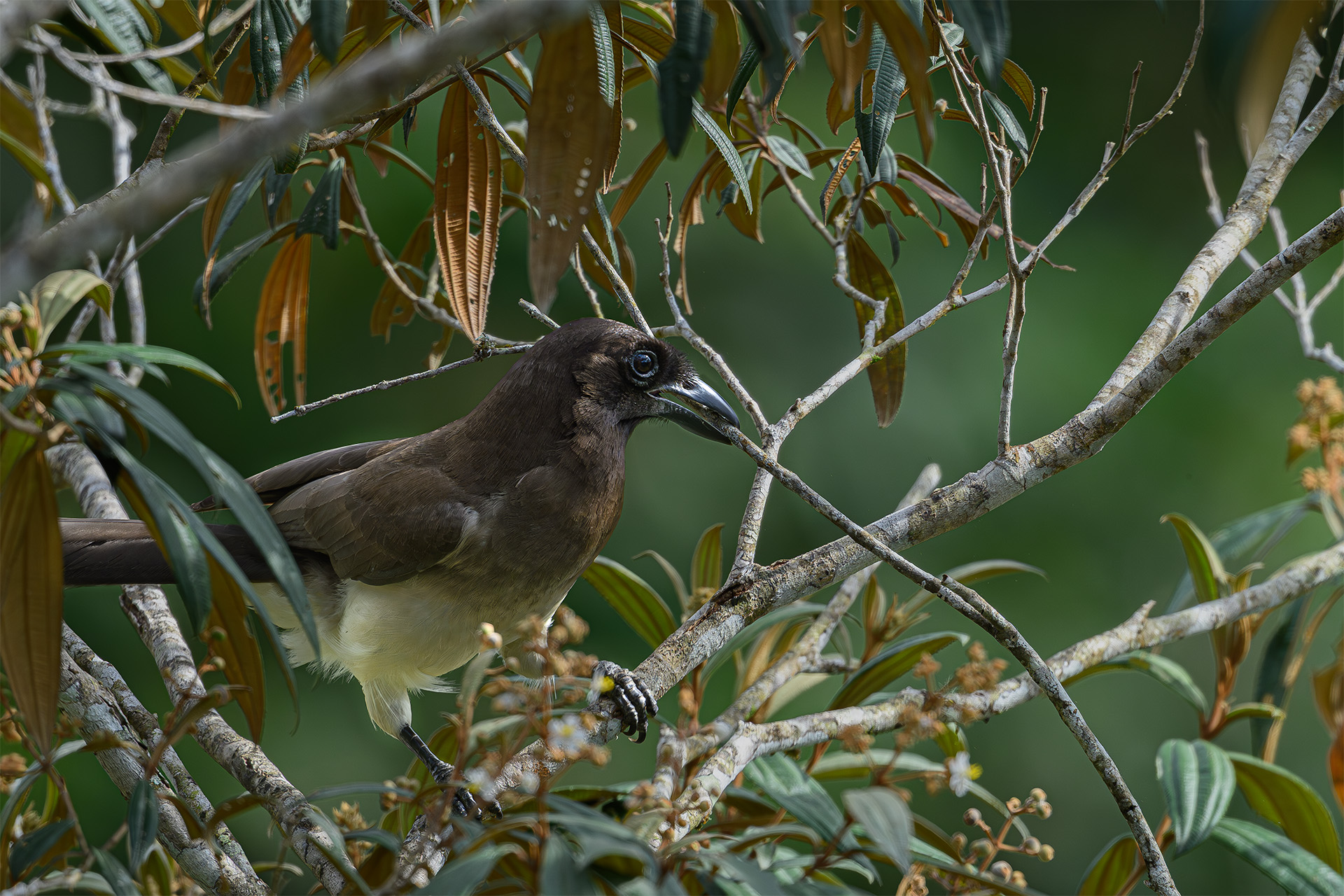
Springtime is nest building time. In Costa Rica this past March, the birds were in full construction mode. This Brown Jay drew my attention away from the hummingbirds in the Blue Porterweed hedge. The Jay was in a tree beyond the hedge and he was intent on extracting this large stick. The stick was long and unwieldy but he eventually managed to ease it through an opening and flew off to his nest that was under construction somewhere else. He returned over and over during the afternoon to find more supplies for his nest.

2025—A Worthwhile Walk

Yesterday I finally joined my friend Truman for an early morning walk from Angler’s Cove to the Salt Pond and back, about a 3 mile round trip through some of the best birding and wildlife parts of Sun City Lincoln Hills. I’ve lived here almost 18 months and this is only the 3rd time I’ve walked there, despite being cajoled and prodded to meet the group for almost that entire 18 months. It was a great walk. I finally saw two of the five coyotes that live in the area. There was great excitement from other walkers we met that the coyotes might be raising pups nearby. When we got to the Salt Pond, a pair of American Avocets had nested in plain view right on the edge of the Salt Pond. We saw and photographed at least a dozen birds including this White-crowned Sparrow, one of my favorite spring birds.

2025—Head-on Feeding

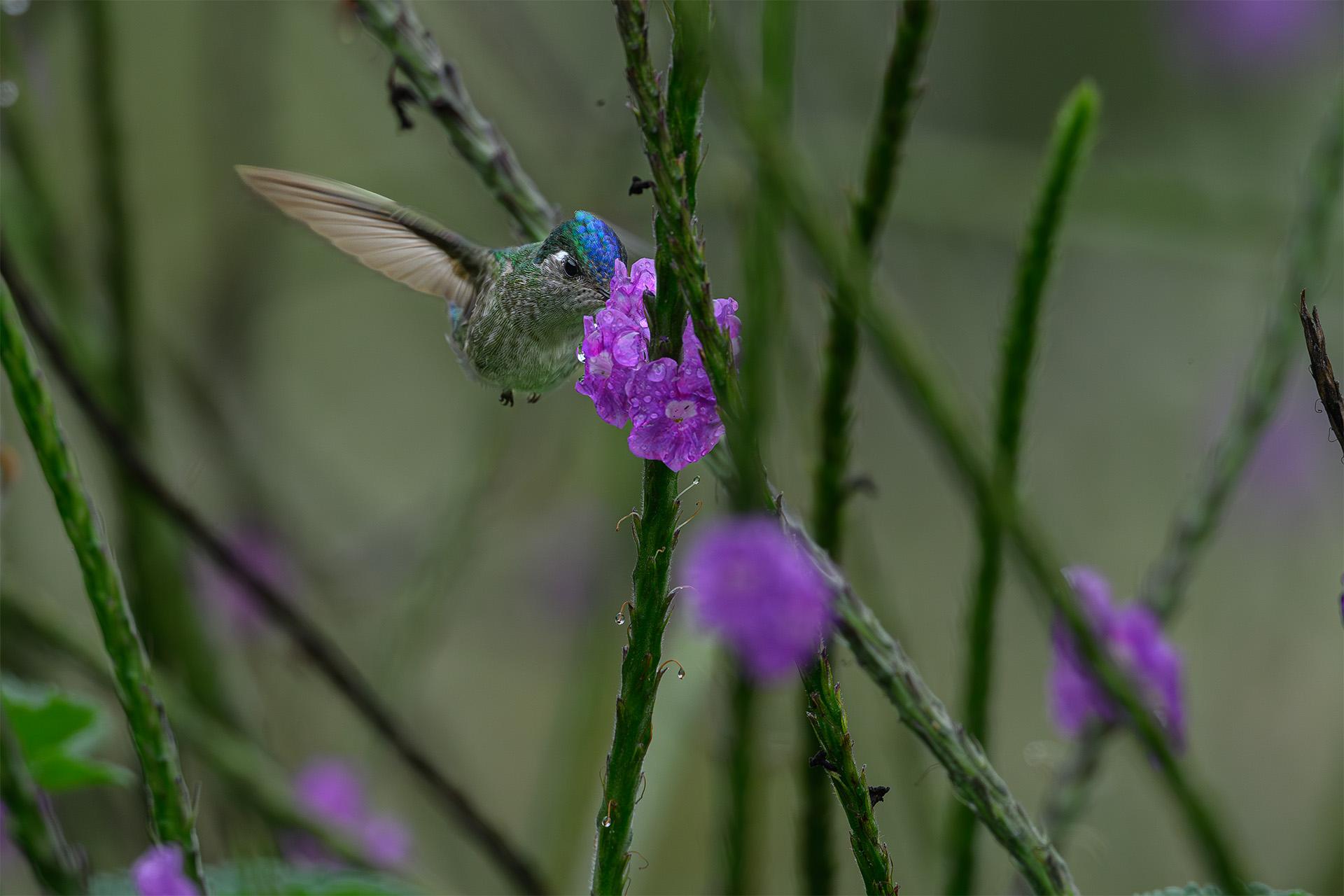
The first few days in Costa Rica were wet. When we walked down to the Blue Porterweed hedge to seek out the more elusive hummingbirds, the rain did not deter the hummers. This is a Violet-headed Hummingbird, so intent on filling up on nectar from the flowers on the Porterweed that it was not bothered by the water-laden flowers from which it sipped nectar. Although this image shows only half the hummingbird, I liked that it is primarily a head-on view. Most feeding shots I get are side views.

2025—Meet Mr. and Mrs. Jacobin

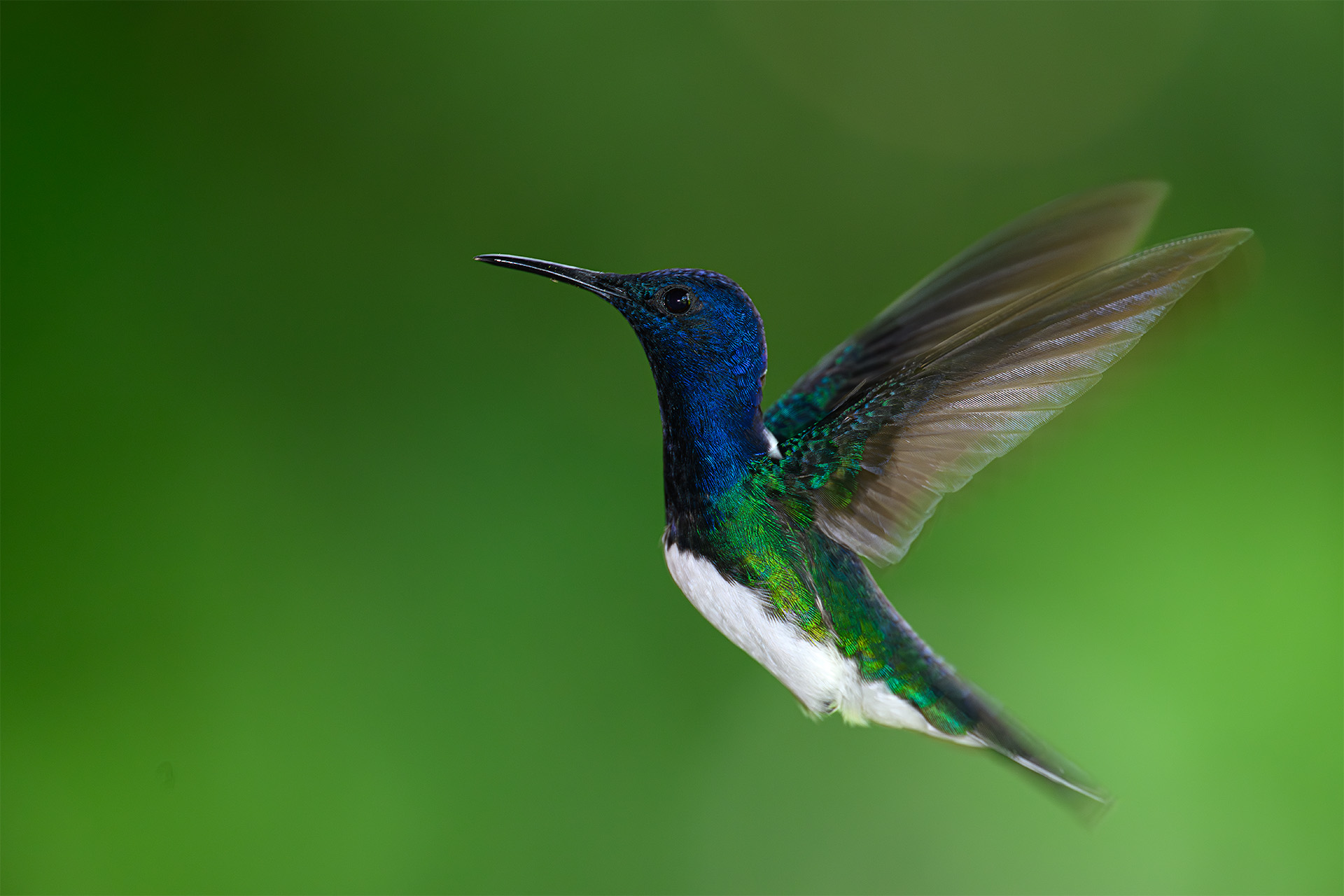
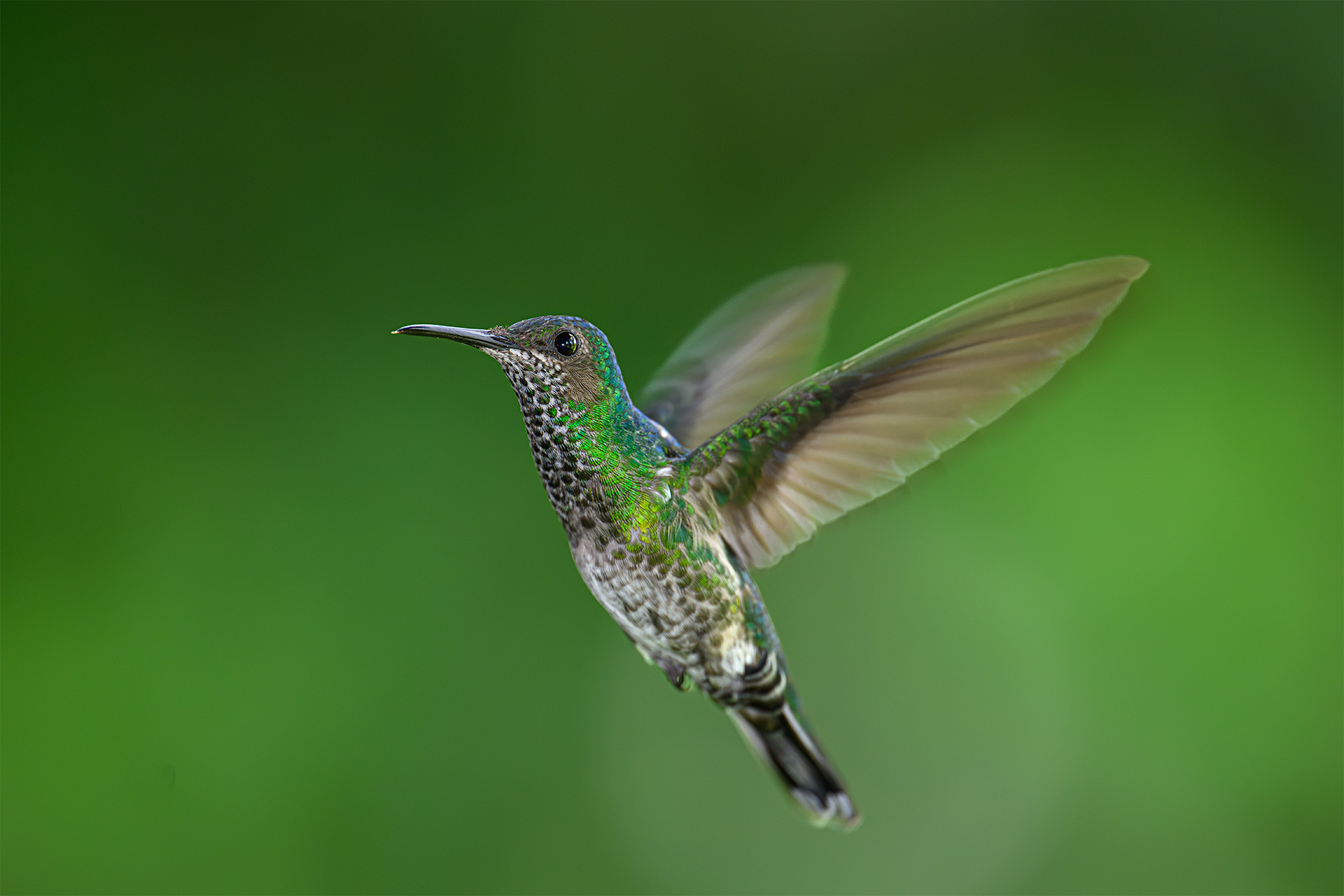
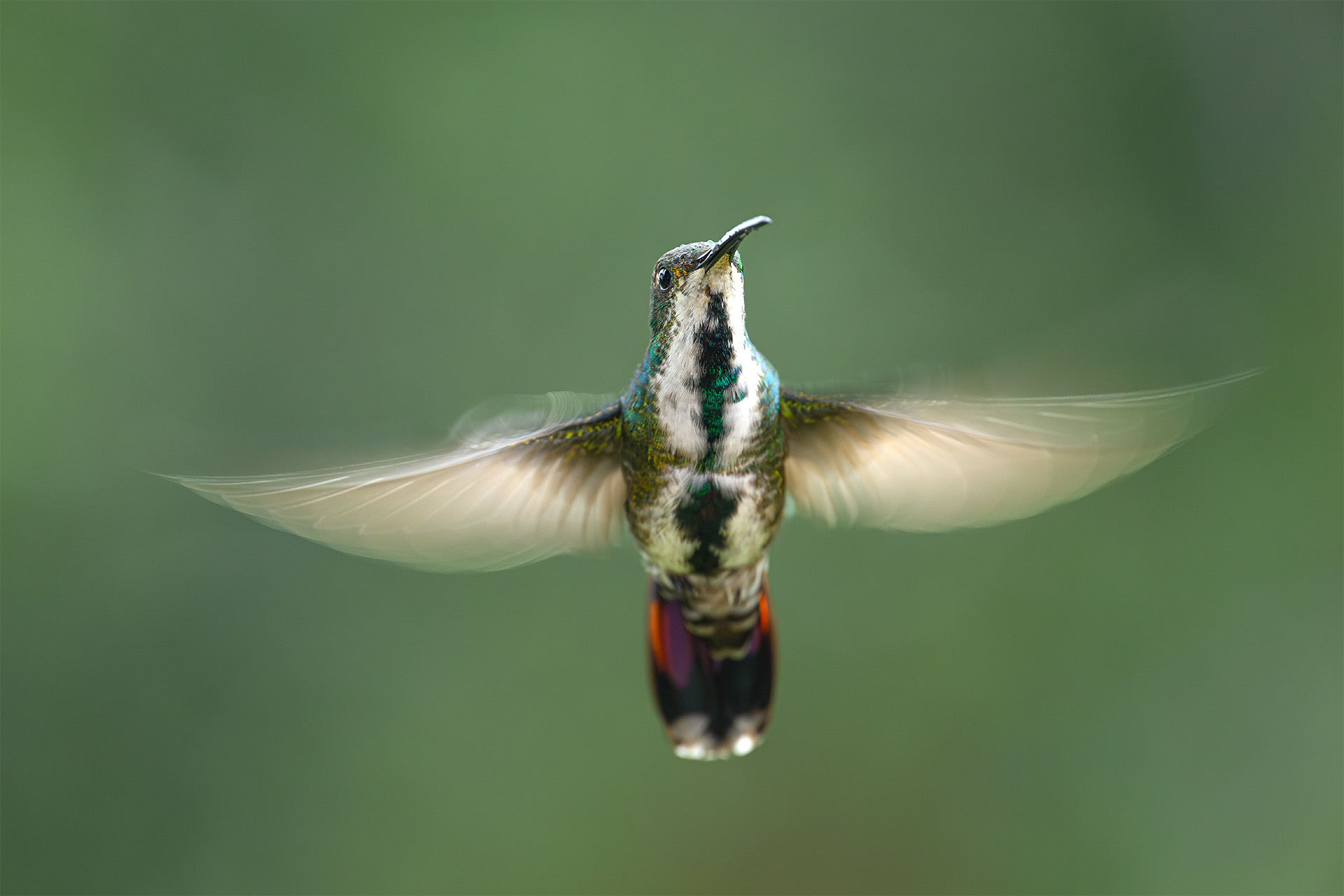
Meet Mr. and Mrs. Jacobin. Yes, another hummingbird in Costa Rica does not have “hummingbird” as a part of its common name. There are hummingbirds that are mangoes and woodnymphs and coquettes and thorntails. This is the White-necked Jacobin, one of the most frequent visitors to the feeders at Costa Rica’s Rancho Naturalista. I got to wondering about its name. I know the word Jacobin as it relates to Dominican monks who were nicknamed Jacobins in the Middle Ages when their first convent was located on the Rue Sainte-Jacques (Jacobus in Latin). As it turns out, the White-necked Jacobin was given that name because of the similarity of his deep blue/black head and neck feathers to the black hooded cape that the Jacobins wore over their white robes. Of course the females don’t have that distinction but are beautiful just the same.

2025—Diminutive Snowcap

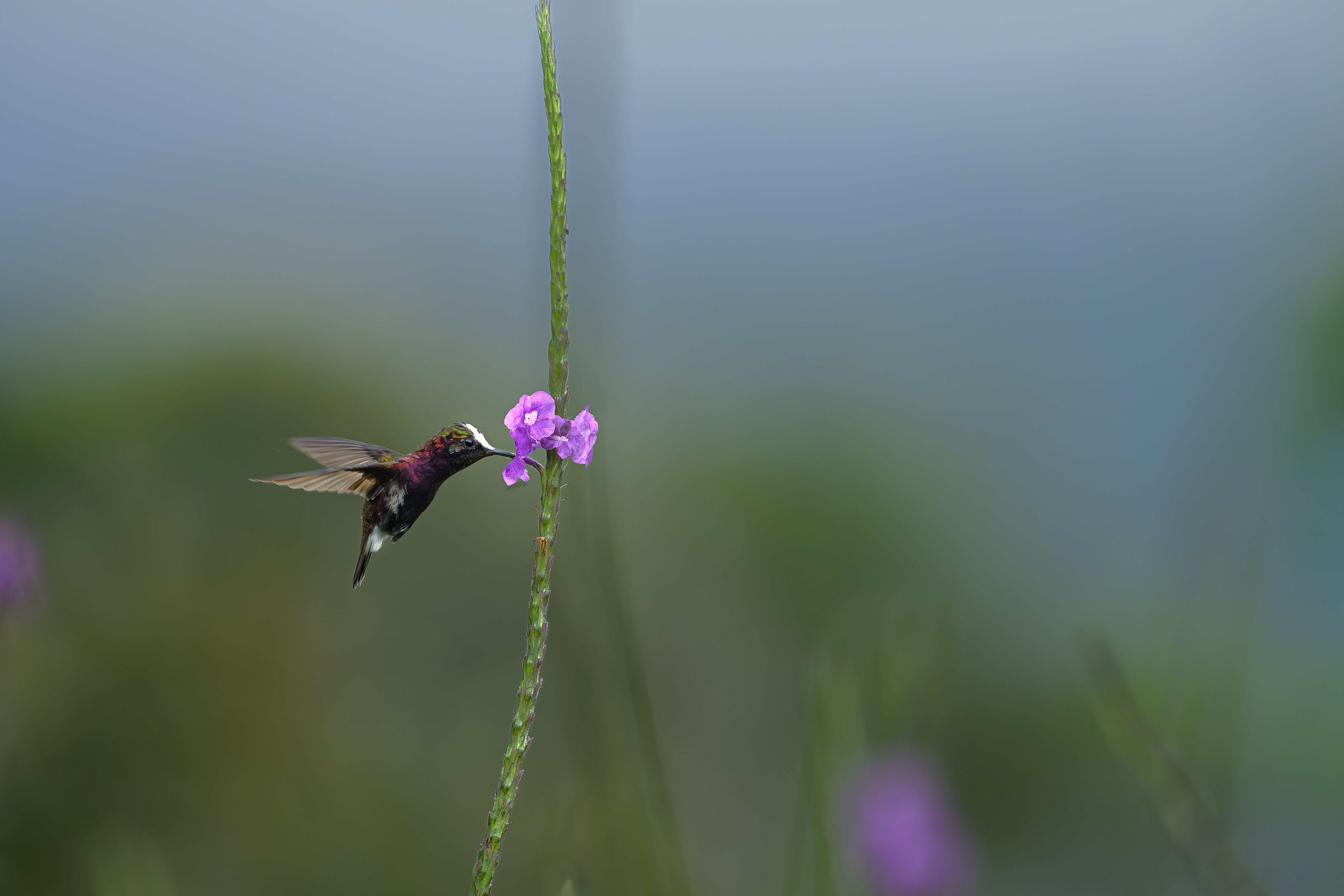
The diminutive Snowcap is Costa Rica’s smallest hummingbird and at 2 1/2 inches is just a quarter inch longer than the world’s smallest hummingbird, the Bee Hummingbird of Cuba. The few times I’ve seen a Snowcap in Costa Rica, it has always been the midst of a Blue Porterweed hedge that usually is a mass of stems and leaves and flowers, making it difficult to see the tiny Snowcap amidst the chaos. I was lucky that he briefly flew to an isolated flower stem with no distractions. Although I captured other images of the Snowcap that were closer, those images had lots of distractions. In the end, I think having the Snowcap so small in the frame illustrates just how tiny he is and shows the environment in which he lives, and, with the clean background, you can’t help but see him.

2025—Wing Stretch

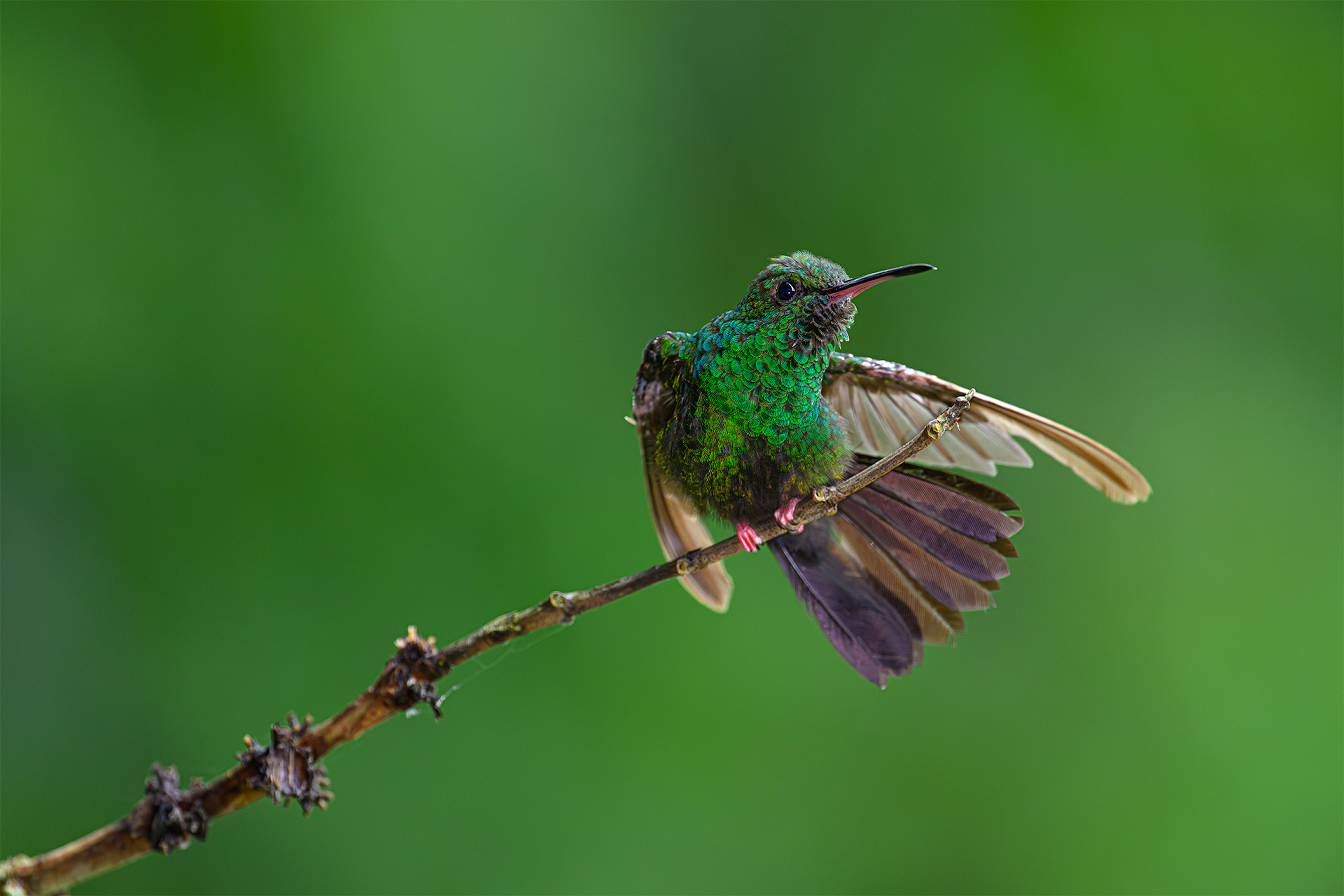
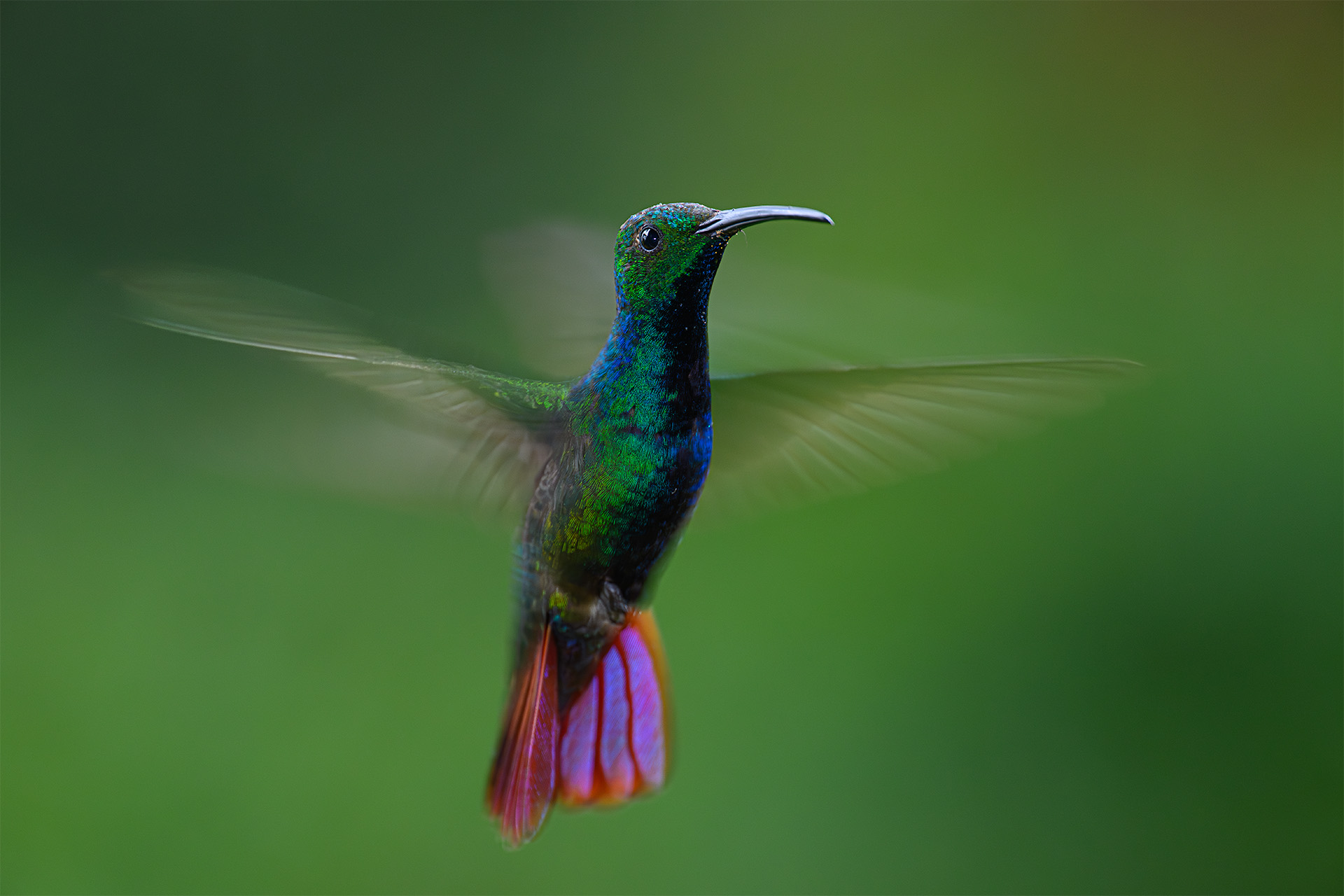
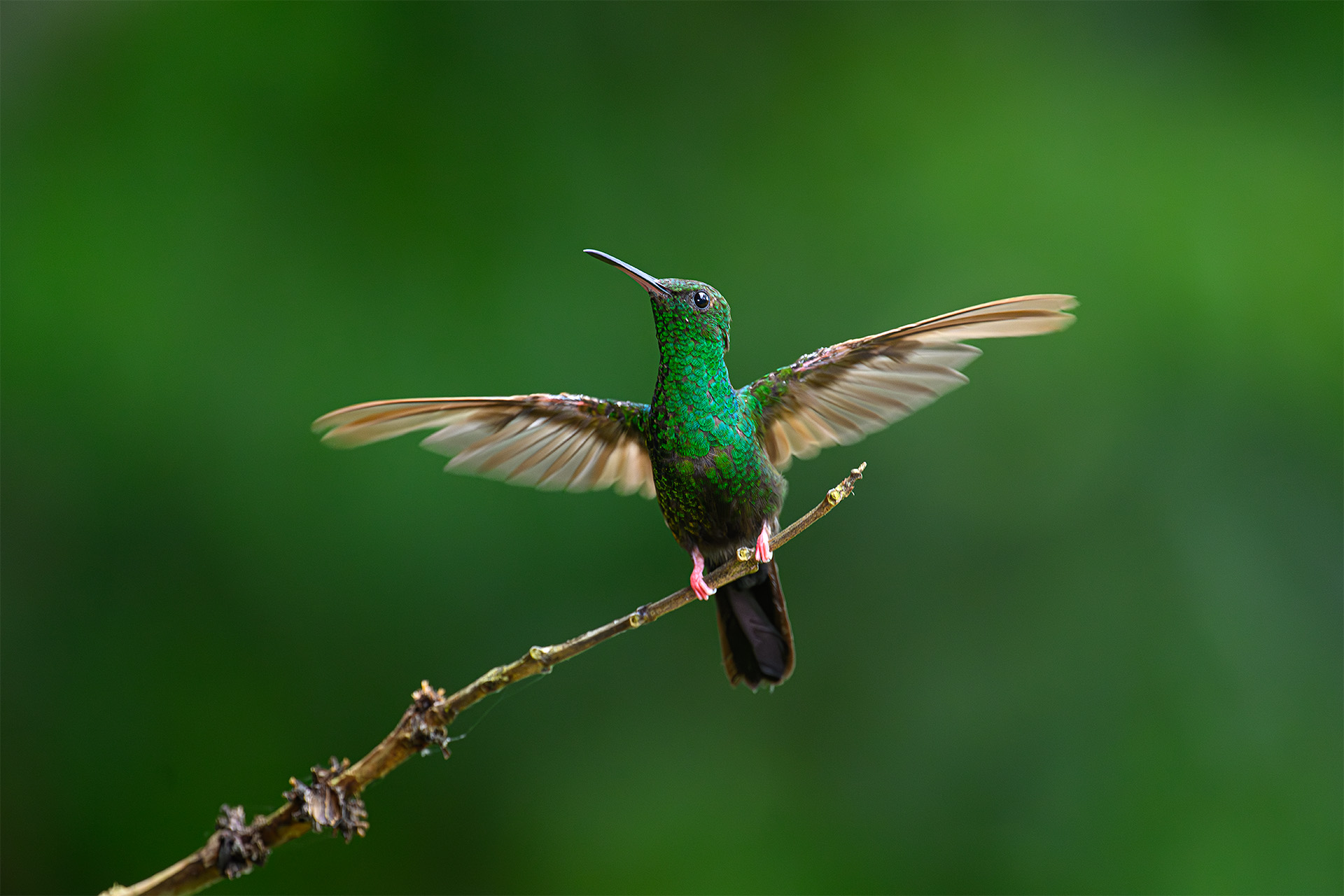
What a difference a year makes! This is the adorable Bronze-tailed Plumeleteer who, last year when I visited Rancho Naturalista in Costa Rica, seemed to be the most elusive of the hummers there, even more so than the Stripe-throated Hermit or the Green Hermit. This year, an immature male Plumeleteer, with wing, tail, and body pinfeathers still emerging, claimed a feeder near the Arabica Coffee tree next to the deck, riding herd (if that idiom can be used on such a tiny bird) on the area and chasing away any hummer that approached it. He maintained his vigilance all day every day we were there. He wasn’t always immediately visible to us as he sometimes perched in the bramble of vines beneath the deck but often as not, he perched in plain sight on a bare branch extending from the Arabica Coffee tree. He sat for such long periods, often preening to rid himself of the itchy sheaths encasing the emerging feathers, that a wing and tail stretch must have felt really good. One of the interesting things about this bird is the color of his feet. Mature Plumeleteers have bright red feet. This immature bird has rosy toes, not yet having turned a brilliant red.

2025—New Species

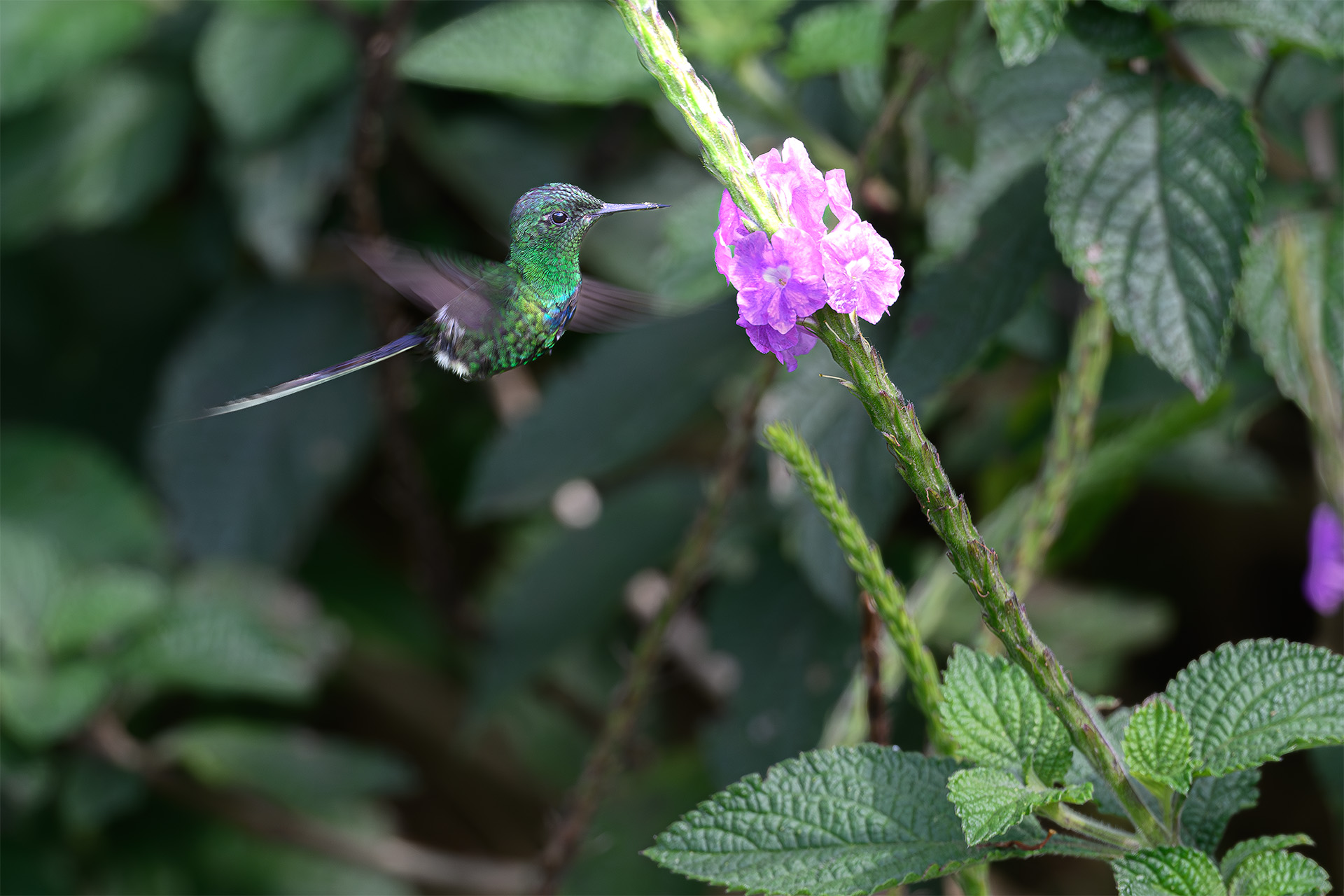
There are more than fifty species of Hummingbirds in Costa Rica. We saw many species but did not see anywhere close to fifty species. Luckily, we did see a few new species this visit and I managed to capture images of the Green Thorntail, a new-for-me species as it fed at the Blue Porterweed hedge.

2025—Rain in the Rainforest

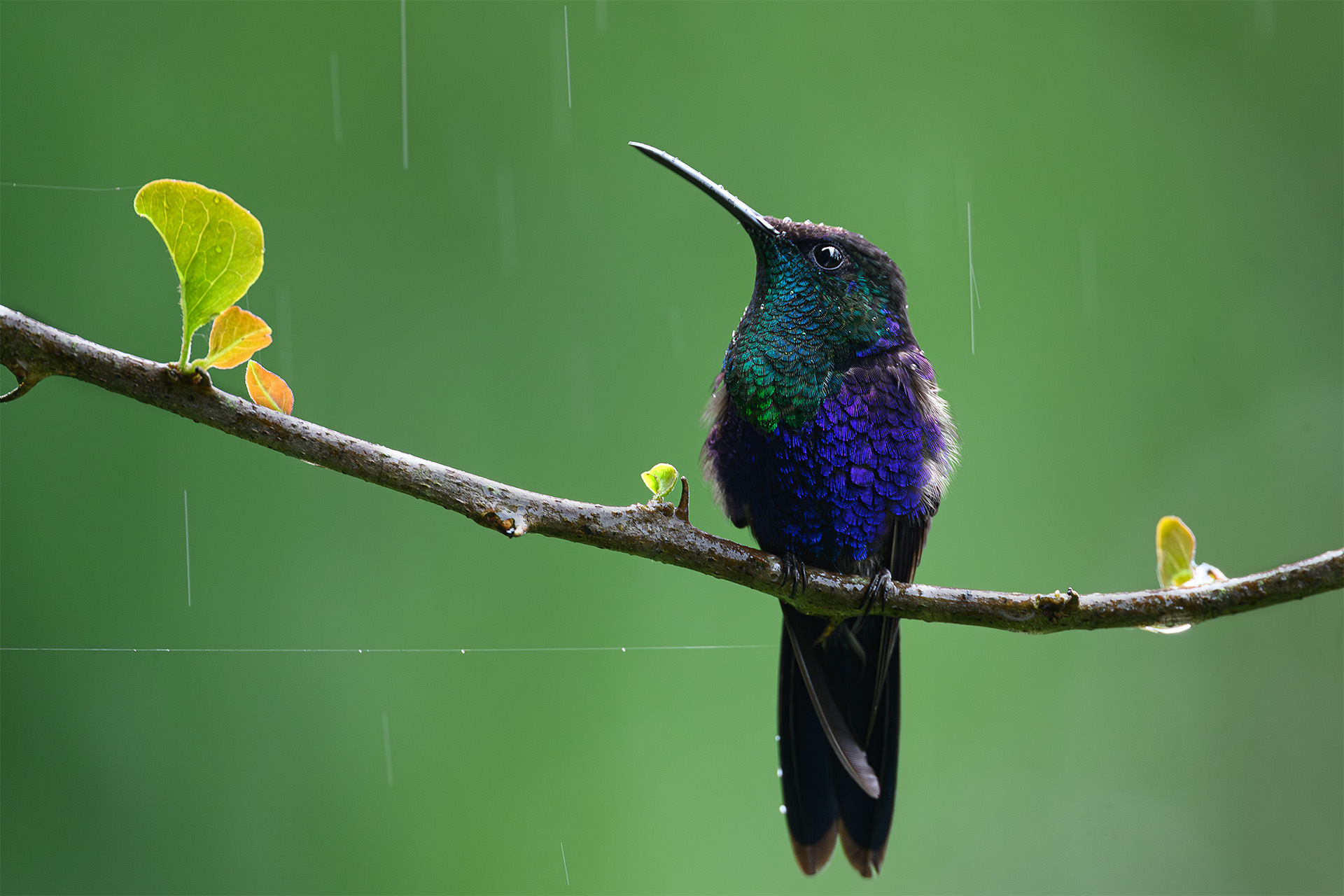
Last week in Costa Rica it rained much of the time we were there. In this shot pf a male Violet-crowned Woodnymph, the raindrops are visible as vertical streaks against the green background as well as a few raindrops visible on the Woodnymph’s head. The horizontal streak that appears to emerge from the left side of the image to the Hummingbird’s tail is another visual of the ever-changing scenario. It is a cobweb protruding from the edge of a twig a foot or so away.

2025—Two Costa Rican Hummers

I have just returned from Rancho Naturalista in Costa Rica. It is a delightful place to see and to photograph hummingbirds as well as dozens of other rainforest denizens. We photographed a number of different hummingbird species on our visit and used two approaches to photographing these tiny, lightning fast birds. In the first, we used a 400mm lens with a 1.4X teleconverter and two Profoto A10 flashes mounted on either side of the camera on a tripod. When we used this rig, on the deck at the Rancho, the birds were close to us, just 8 or so feet away. The flash served simply to bring out the color of the birds, not for exposure. The first image above illustrates shooting with the hummingbird flash rig. This is an immature male Bronze-tailed Plumeleteer. Because the rainforest is so far away, it dissolves into color and subtle patterns, creating a perfect background without distractions. It is a portrait that isolates the bird but doesn’t identify where it is. We used the second shooting approach when we ventured off the deck to the nearby Blue Porterweed hedges that serve as home and shelter to some species of hummers that do not visit feeders. The distance to the hummers was two or three times the distance as it was on the deck, so we used a longer lens (600mm with either a 1.4X or 2.0X teleconverter) and no flash. The second image, taken at the hedge, is a female Crowned Woodnymph. It is more of an environmental portrait that shows where that bird lives. The hedge surrounds her and remains a prominent part of the photograph without detracting from her.

2025—Crowned Woodnymph

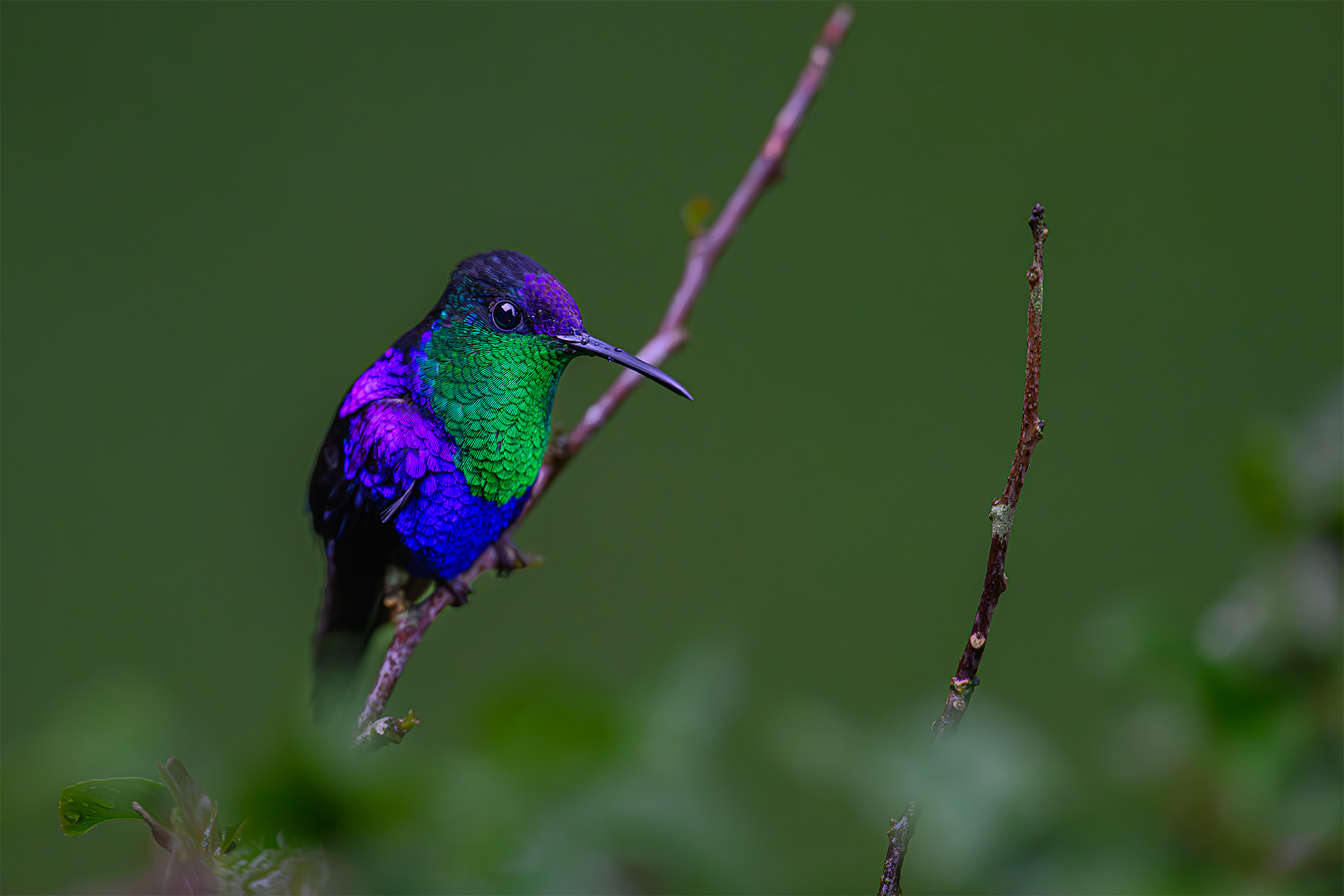
Our visit to Rancho Naturalista started off with a bang. We just wanted to get our feet wet (it was raining and we’re lucky that the wide roof keeps the shooting deck rain-free, so our feet didn’t actually get wet) and late yesterday afternoon as the light was dimming, we gathered on the deck with just cameras and lenses, no tripods or flash rigs to survey the area. Right off the bat, a few of our old favorites made their presence known, including the White-necked Jacobin, the Rufous-tailed Hummingbird, and the Green Breasted Mango. Even the Bronze-tailed Plumeleteer, who last year was so elusive, was busy defending a feeder he’d staked out and I already have more photographs of him in just a few minutes than I managed to get all week last year. And, thanks to Emerson pointing out the gorgeous iridescent purple and green colors of a hummer perched below him, we photographed the male Crowned Woodnymph. Last year, I photographed the female Crowned Woodnymph but I never saw the male. I took this shot on my tiptoes because, if I hadn’t, his tail and feet would have all but disappeared behind the leaves in the foreground. As it is, I couldn’t get up any higher so just a bit of his tail is still obscured but it was a really great way to start off the trip. And for me a bonus, there are raindrops on his beak.