2025—Connection

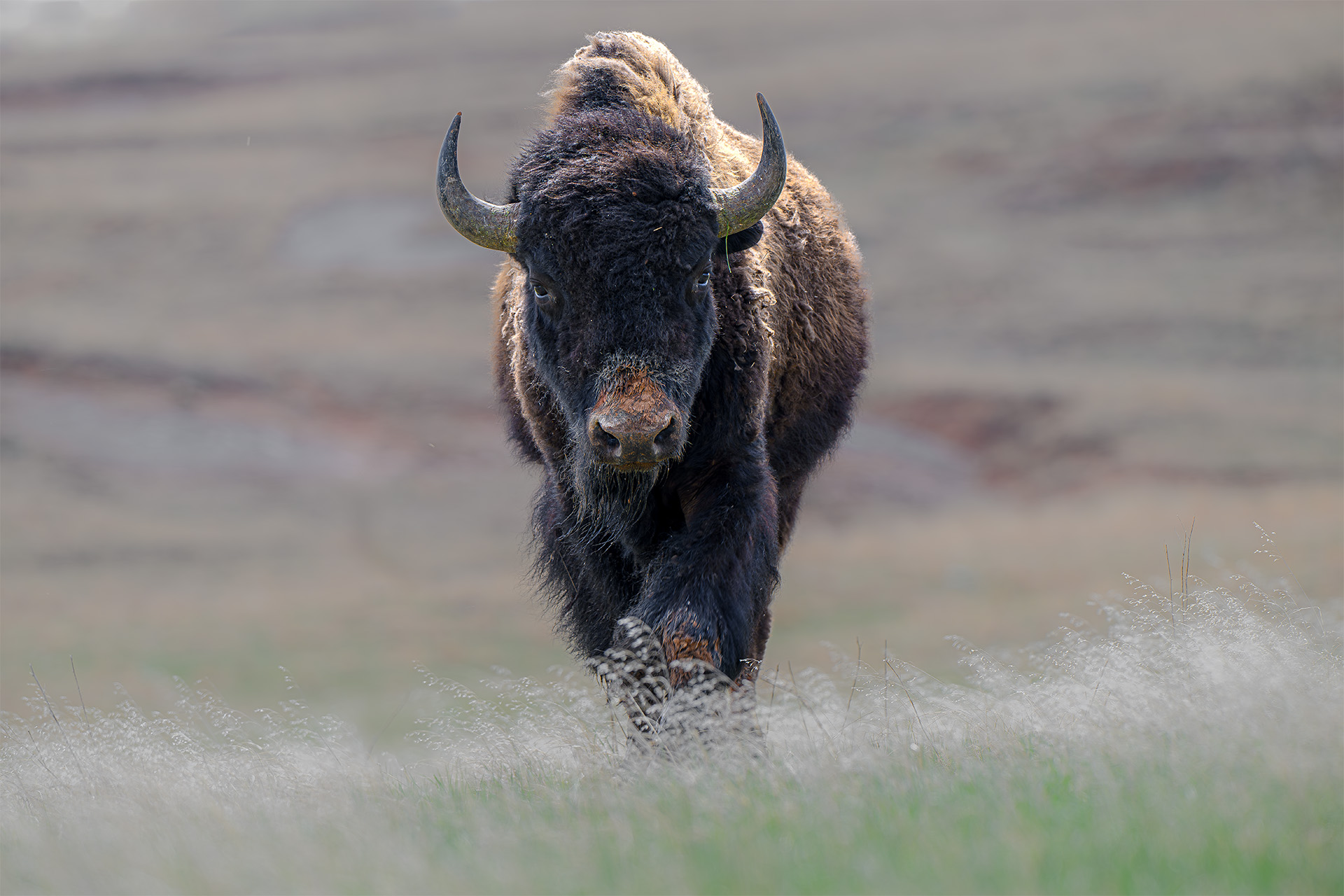
A muddy Bison Bull crosses a Prairie Dog town, hopefully avoiding stepping into burrows and seemingly on a mission. He lumbered steadily and undeterred in my direction yesterday afternoon in Custer State Park staring at me the entire time. I loved the eye contact and the illusion that he is emerging from something and about to step into my space. I felt a definite connection with him…but then he lumbered by me and crossed the road.
2025—When There’s No Barn

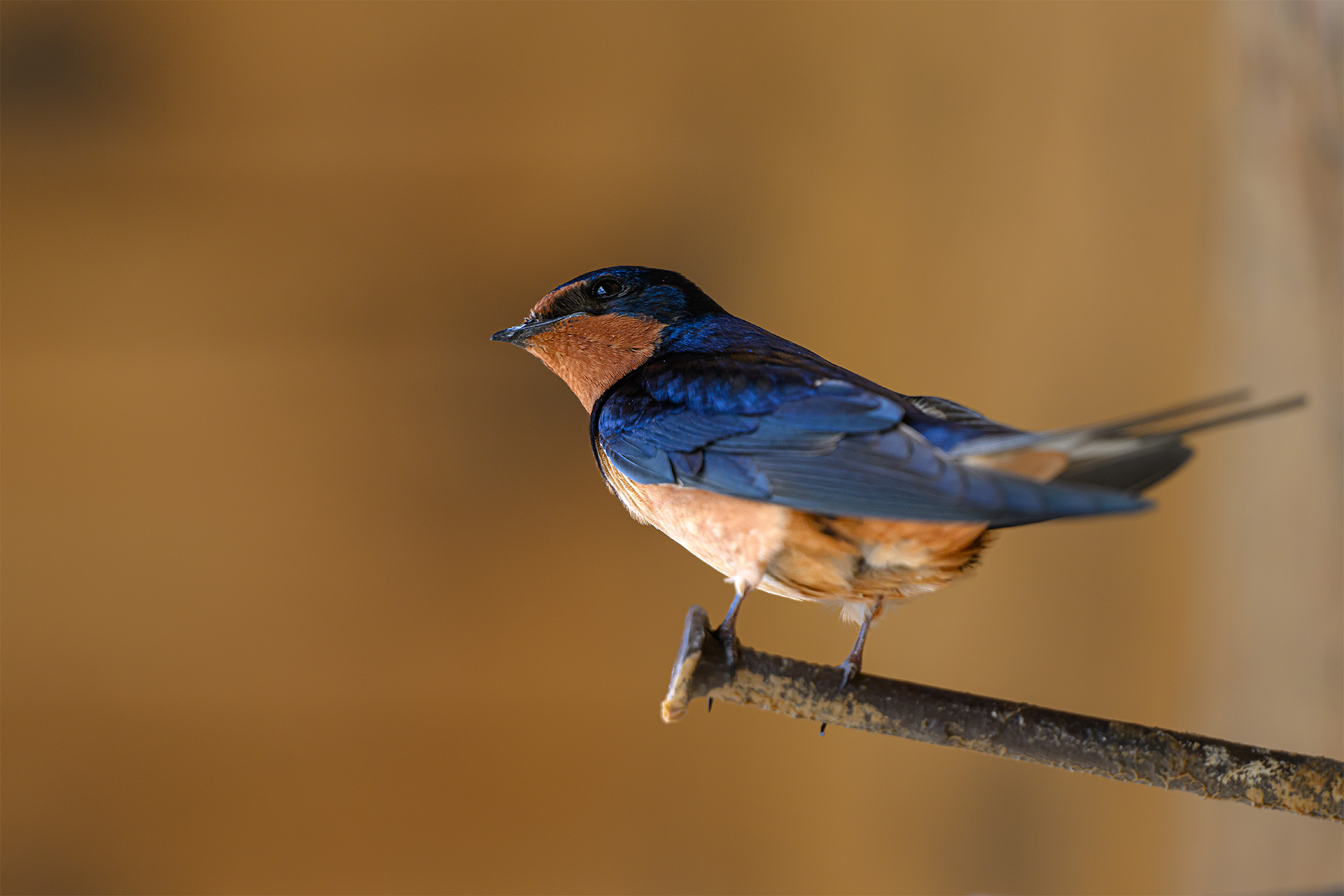
A pair of Barn Swallows was building a mud and straw nest high up on a rafter in the eave of a log outbuilding at the Wildlife Station Visitor Center in Custer State Park. When there’s no barn, they’ve got to nest somewhere. I suppose one rafter is as good as another, especially in the mind of a Barn Swallow. The colorful male perched, on a huge nail protruding from a log near the nest, waits for his mate.

2025—That’s a Big Egg!

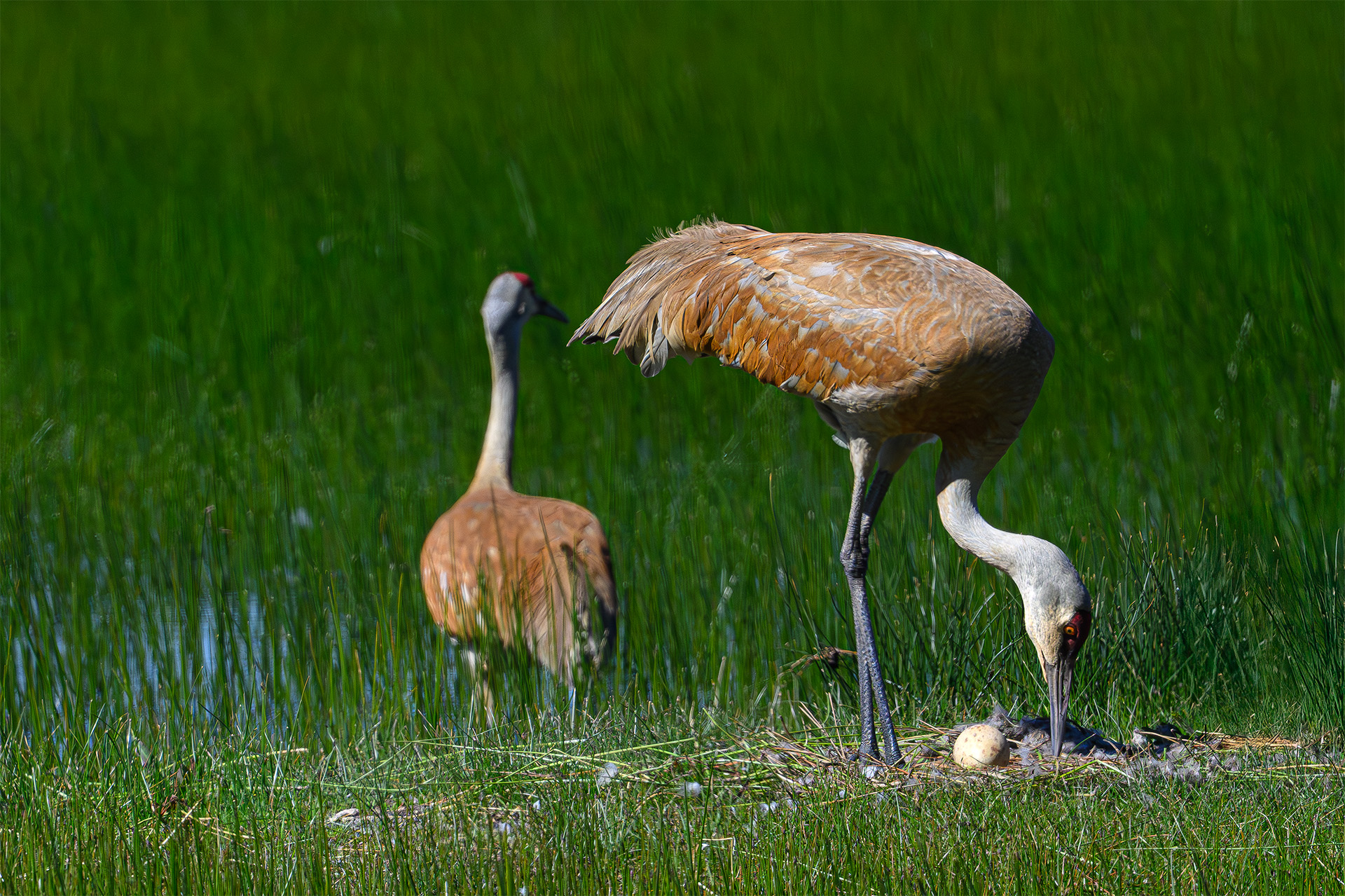
In Sierra Valley last week, we saw about a dozen Sandhill Cranes and two active nests. This nest was on a bright green tussock in the middle of a marshy pond. While we watched, she stood up and tended to her egg, rolling in around in the nest before settling back down again. What a delightful thing to witness. Sandhill Cranes have naturally grayish feathers with a red patch on their heads so I was surprised to see this pair with deep rusty coloration in their feathers. At first I thought it was natural breeding plumage but after a bit of research, I discovered that Sandhill Cranes create this color by painting themselves. They preen mud, often containing reddish iron-oxide, into their feathers before breeding season to stain them. It is thought that this behavior camouflages them while they nest in the midst of the brownish vegetation in the marshes. This pair chose a brilliant green part of the marsh in which to build their nest so their camouflage doesn’t really help them but they were sure gorgeous to see.

2025—Success!

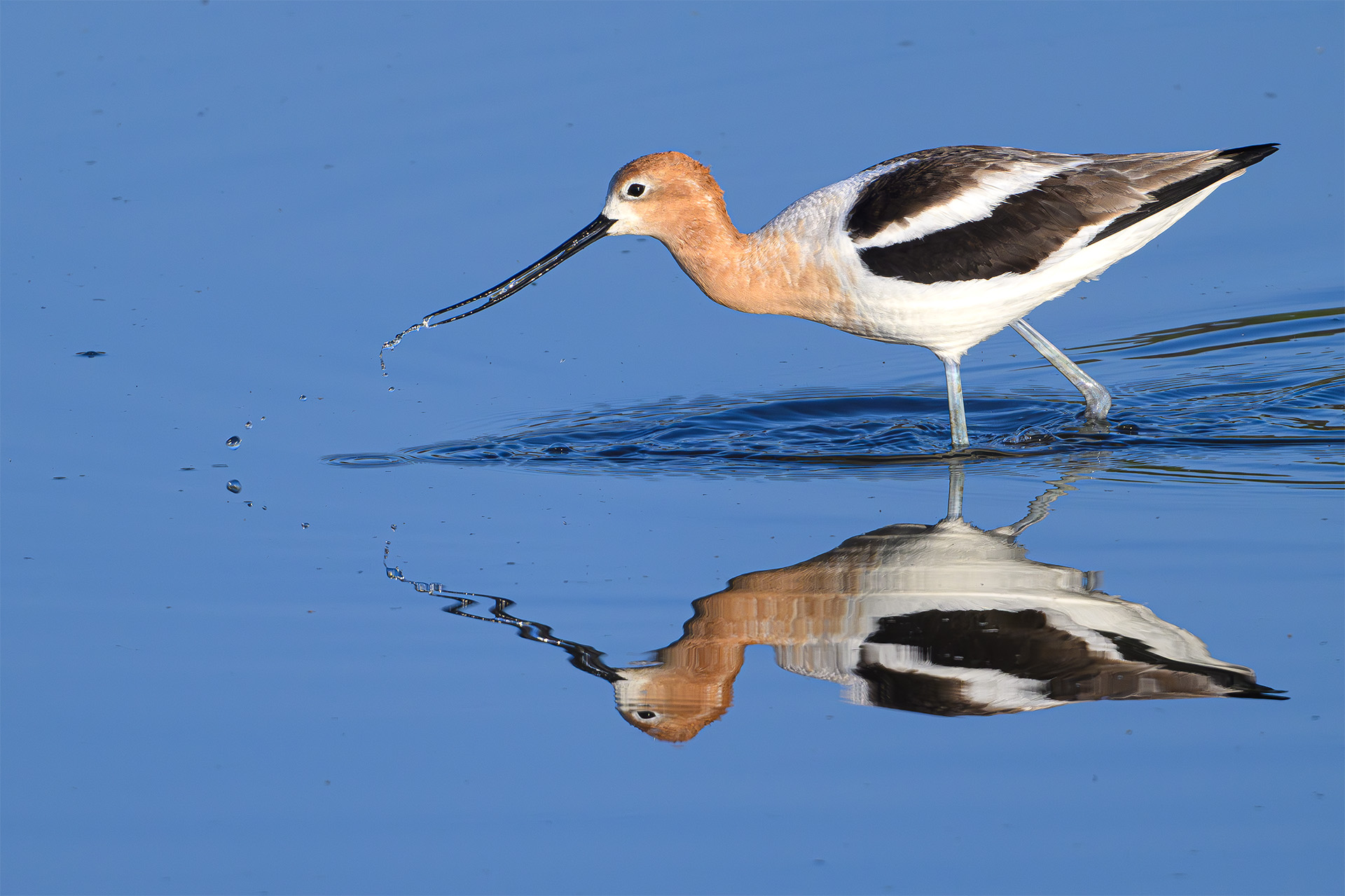
An American Avocet plunges head first into the shallow waters of the Salt Pond and emerges successful, a tasty morsel in its beak. I believe this to be the male (the female’s beak is more upturned). The female Avocet is nesting in plain sight on the gravel sandbar on the far side of the pond.

2025—The Return

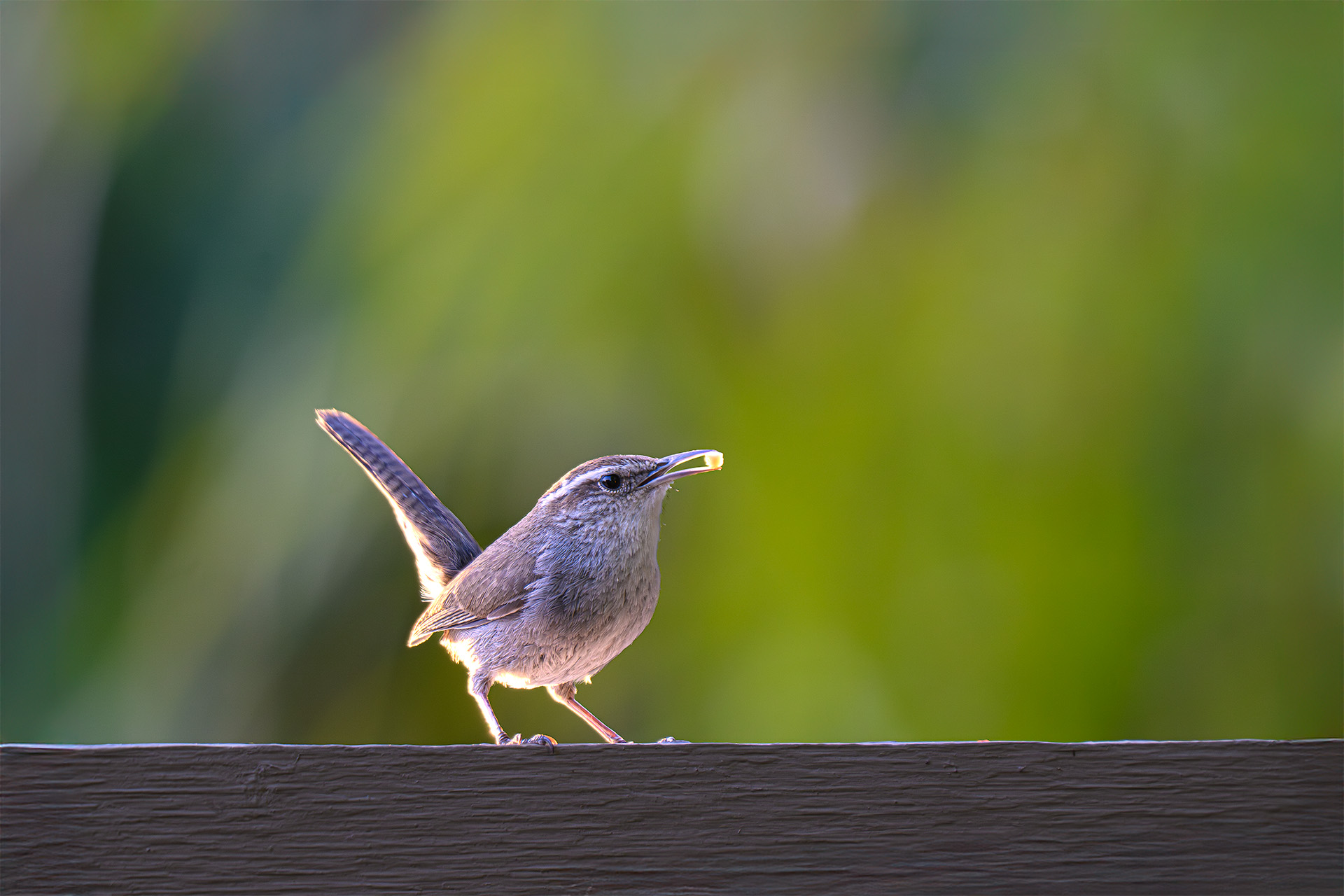
The adorable little Bewick’s Wren has returned to my yard. Maybe he never left. He is the little guy who twice entered my home when I opened the front door where he’d decided to spend the night in an abandoned House Finch nest built on the artificial eucalyptus wreath hanging on my front door. A few days ago there was a pair exploring cavities and other possible nesting sites in my yard. My friends Moose and Sharon, who were visiting at the time, noted this activity and had a wren nest box delivered the next day. Thank you, Moose, Sharon, and Amazon. I have put out dryer lint to serve as nesting material and am anxiously waiting to see if they will nest there. I captured this image two days ago. The wren is just a few feet from the nest box, and he posed there with a morsel of something in his mouth for several minutes. He finally flew off but not to the nest box. I’ll keep watching.

2025—Good Catch

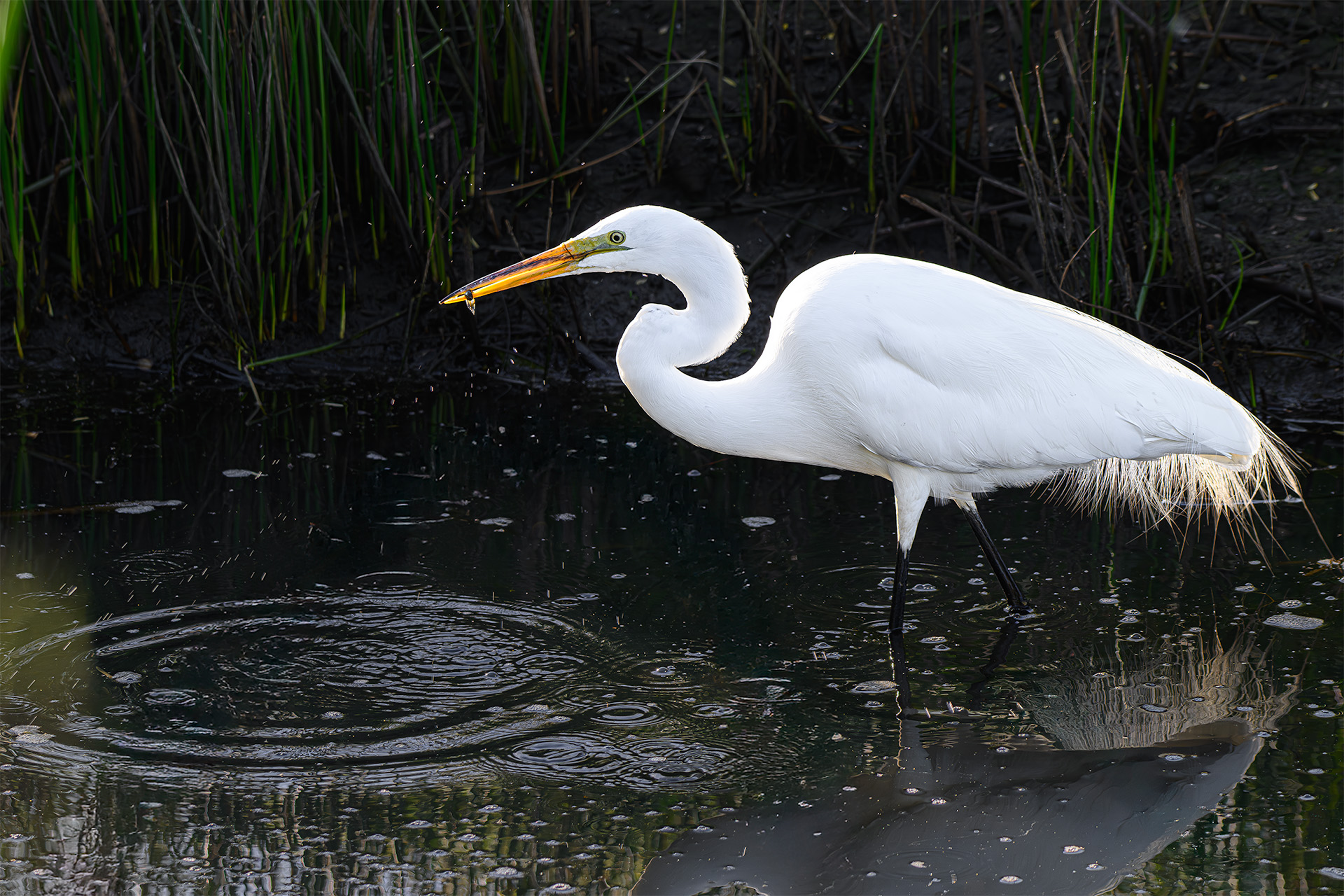
A Great Egret crunches down on a tiny minnow along Ferrari Pond Trail yesterday morning. I got a chance to use my new Nikkor Z180-600mm lens which worked perfectly in this situation. Until a couple of days ago, I’ve been using my Z600PF with the 2X teleconverter when I walk Ferrari Pond Trail because most of the birds and other wildlife are pretty far off. So, I attached it to the Z180-600 and when I saw the Great Egret just a few feet away, I was able to zoom out and capture the Egret as it stalked the minnows in the small marsh pond.

2025—So You Think This Is Easy?

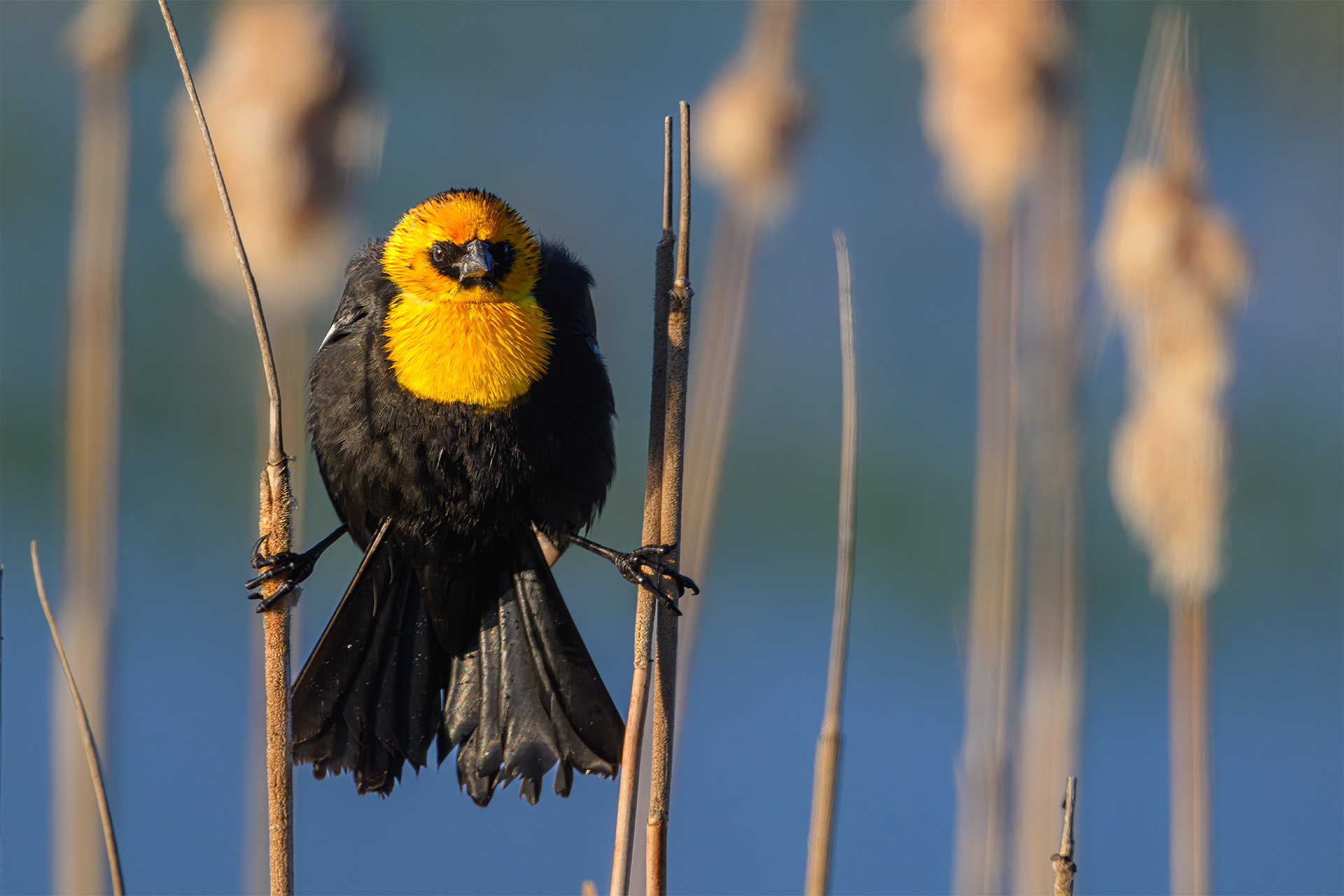
To me, one of the most iconic sights of both the Yellow-headed and Red-winged Blackbirds is one where they straddle two cattails, reminiscent of an acrobatic performance like those in Cirque du Soleil. The marshes in the Sierra Valley are filled with both Yellow-headed and Red-winged Blackbirds but most of the time, they seem to be perched on a metal fence pole supporting barbed wire or on the barbed wire itself. We were lucky to find a few that perched on marsh plants like cattails and even luckier to find even fewer straddling two cattails. This male Yellow-headed Blackbird looks straight at my lens, seemingly thinking something like, “so you think this is easy?”