2024—SNAFU or Serendipity?

SNAFU is a condition that I freely admit afflicts me on occasion. I’ve been home from Costa Rica for two weeks now. I love the results of my efforts there, especially the Hummingbird photographs. But, I also captured images of quite a few other birds that I absolutely love. The SNAFU I’m referring to relates to this bird, a Hoffman’s Woodpecker. Until yesterday I didn’t know I’d seen, let alone photographed it. Why did it take me so long? Well, I took these from the balcony on our first afternoon of shooting at the Rancho in Costa Rica. Here’s the SNAFU! While I was shooting, the camera was set to monochrome from a shoot earlier in the day because I failed to return the camera to the correct settings. I only realized my mistake after the bird had flown away. Lucky for me, the Woodpecker returned about an hour later and I captured those images correctly and in color. I grouped all of the Woodpecker images as “Black-cheeked Woodpecker,” half in black and white and half in color. I focused on and finished the color images first but decided I liked the gesture and background in the image above better than the others. Because I shot in RAW, I could easily convert the black and white images to color. As I compared the images, I realized they were two completely different species of Woodpecker. Because both species were new to me, and because the first group displayed as black and white in PhotoMechanic where I catalog and review images before finishing them in Photoshop, I wrongly thought they were the same species. Fortunately for me, this SNAFU went from blunder to serendipity.

2024—Motmot

Lesson’s Motmots are colorful birds that live in the humid neotropical forests of Costa Rica. The name ‘motmot’ comes from its double-hooting call, which we often heard in the morning from the deck at the Rancho. According to the Cornell Lab of Ornithology in several species of Motmot, like this one, some of the barbs on the two longest tail feathers are fragile and fall off during preening or by other abrasive means. That results in a short length of the feather shaft being left bare. As a result, the remaining feather barbs create the distinctive racket shape at the end of the two longest tail feathers. The Motmots often visited the areas around the deck, and when they did, they usually stayed long enough for us to take a few portraits.

2024—The (Bumble) Bee’s Knees

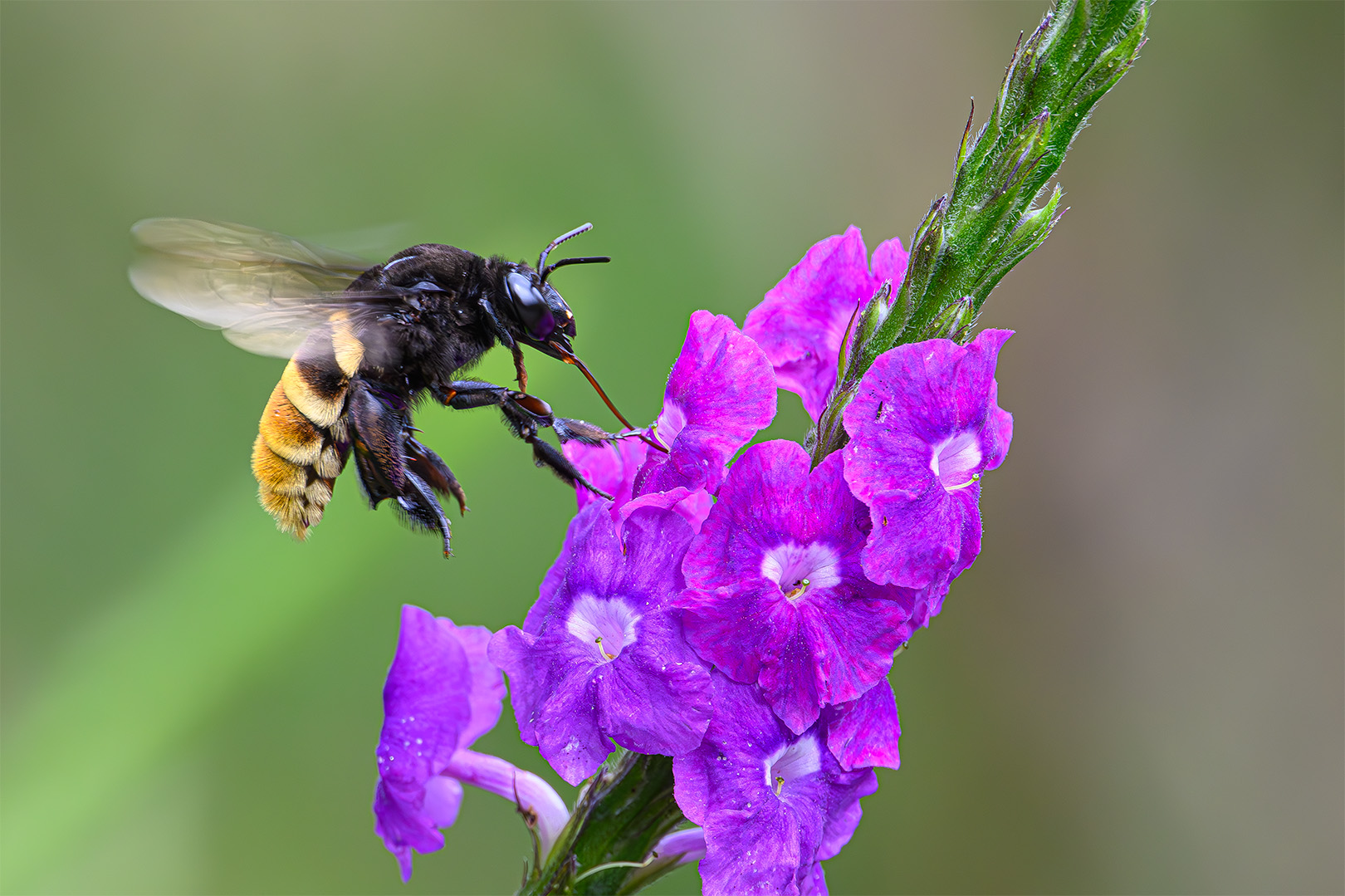
Bumblebees in Costa Rica seem to enjoy sipping nectar from the same flowers that Hummingbirds enjoy. The purple flower cluster on the Rabo de Gato (cat’s tail) hedge offered a big gulp of nectar to the large Bumblebee that visited the hedge. The Bumblebees were so large that I often mistook one for a small Hummingbird as they buzzed from blossom to blossom. The experience of watching them was “the bee’s knees,” as they say.

2024—Sunbittern Nest

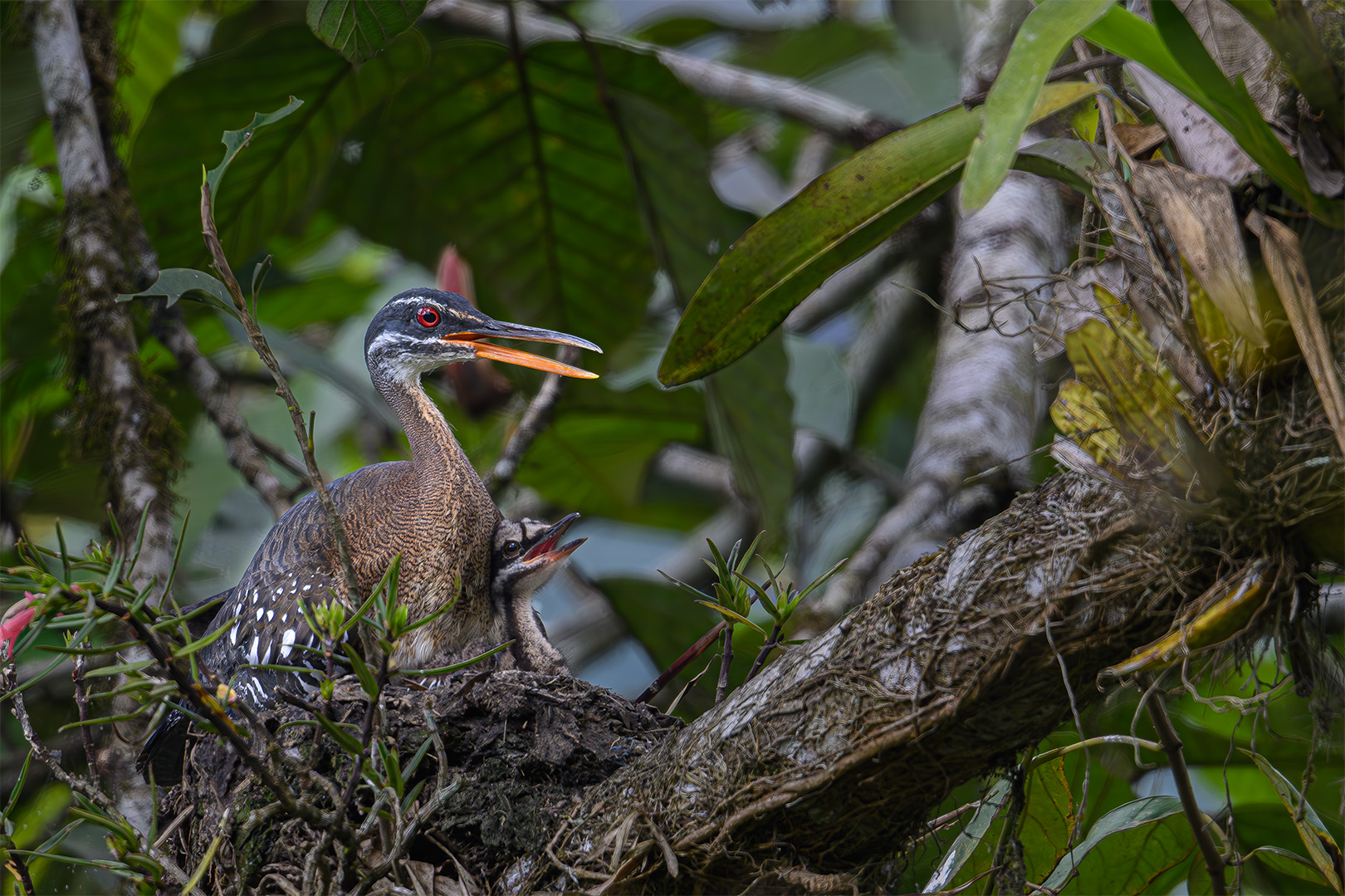
The Sunbittern is a bird I had never heard of let alone seen prior to my recent visit to Costa Rica. The Sunbittern looks a bit like a heron but is related to birds in the South Pacific although it is native to neotropical regions in Central and South America. We’d heard about the Sunbittern and its nest and so we ventured a short distance away from the Rancho to find it. The nest was well hidden in a large tree between a stream and the road. We first saw one adult Sunbittern from a bridge while it searched for food on rocks at the edge of the stream. Then, Moose located the nest. At first, it was hard to see through the leaves and vines and orchids and stag horn ferns that were growing through and around the branches. Getting an unobstructed view was difficult and the sun was high and there were harsh shadows. But finally I found a spot where I could see both the adult and one chick (there were at least two chicks but I photographed only one). Both parents protect the chicks in the nest and take turns sitting on it. For a minute or two, the sun disappeared briefly behind a cloud, softening the light. Soon after I took this, the chick was nestled back under its parent’s breast for an afternoon siesta.

2024—Twisting and A-turning

Hummingbirds are incredibly agile and adept at changing positions in nanoseconds. It is not often that I have a fast enough shutter speed to capture them when they change directions like this but I was pleased to see that this time, I did, at 1/1250 of a second. This is a female Green-breasted Mango as she suddenly twisted her body and turned to fly away and even took that nanosecond to look my way.

2024—First the Razzle and Then the Dazzle

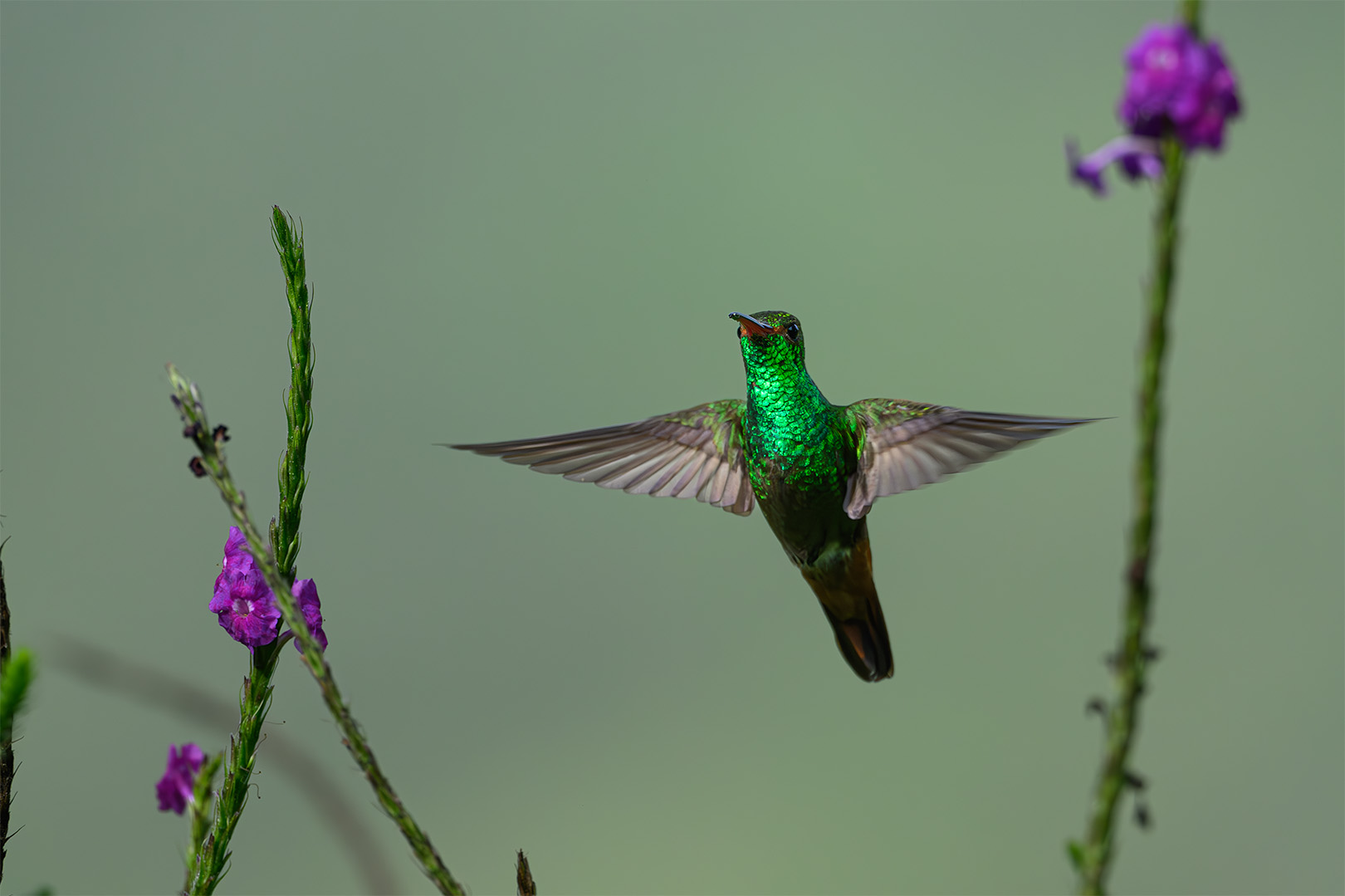
The shimmering iridescence of a Hummingbird’s feathers can take your breath away. And just when you think they couldn’t be any more gorgeous, a sudden movement toward the light can cause some of a Hummingbird’s feathers to explode into a flashy glitter reflecting a stunning array of jewel-like colors. This Rufous-tailed Hummingbird looked absolutely beautiful as it sipped nectar from flowers on the Snakeweed hedge. When it flitted a few inches further down the hedge, it turned toward me suddenly to display an almost blinding flash of emerald green. What started as a razzle, ended with a dazzle!

2024—The Green Hermit

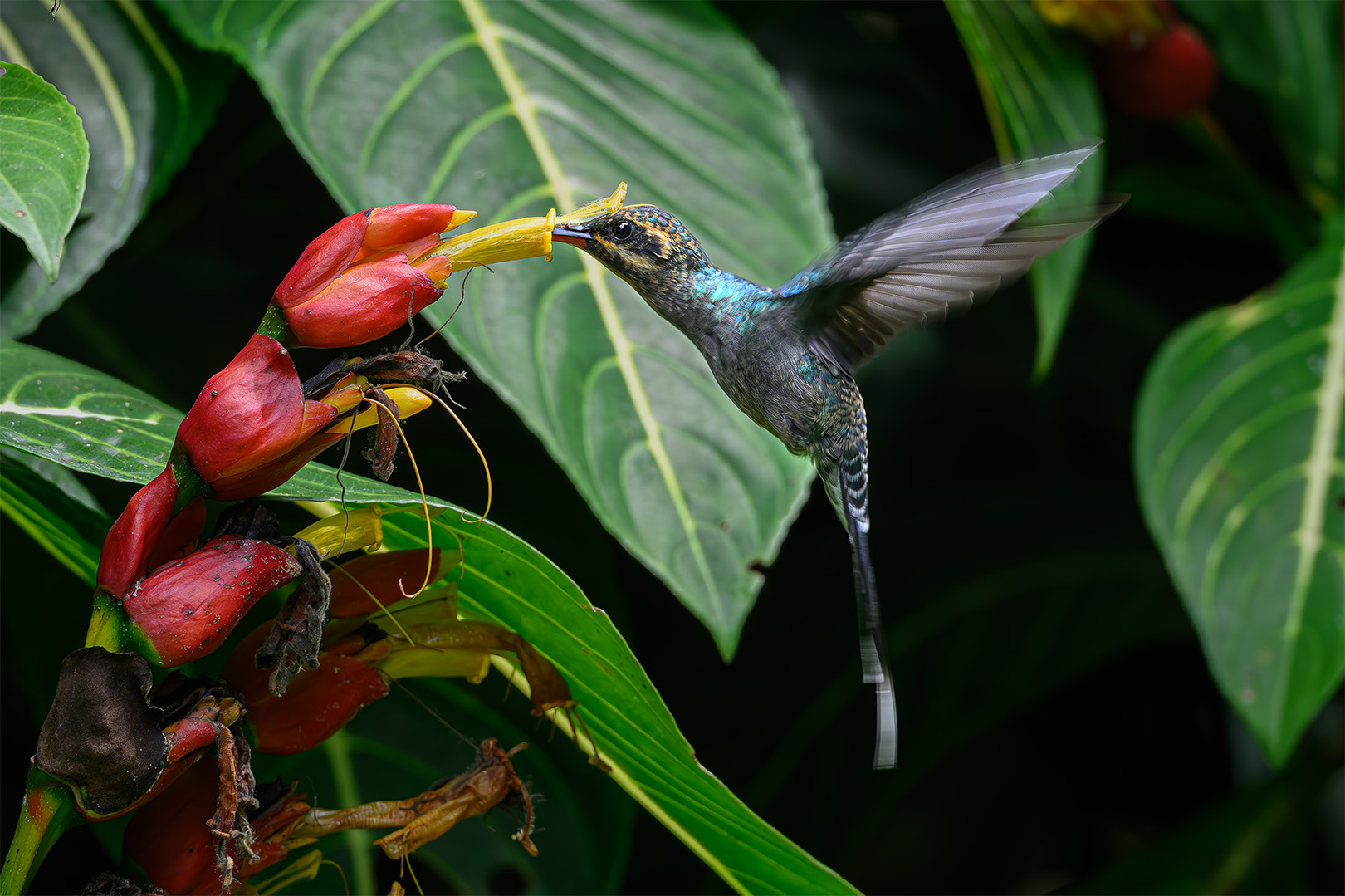
Even in the intense green darkness of the understory beneath the rainforest canopy the Green Hermit stands out. It is large hummingbird, its long, white-tipped tail feathers catch the eye and its long, decurved bill gives it easy access to the tubular flowers of the Zebra Plant. Its back feathers are really more of a blue-green than a green. Despite its size, this hummingbird was elusive to us and hard to spot. A few times, it came tantalizingly close while we were eating, checking out the unopened heliconia (lobster claw or parrot’s beak plant) a couple of feet away from our dining table. During those moments, without a camera nearby, we just had to enjoy the moment.

2024—Collared Aracari

The Collared Aracari is a small toucan that visited the Rancho where we stayed in Costa Rica almost every day we were there, sometimes in groups of three or four. They would usually stay high up in the canopy partially hidden by foliage. It was a treat when this one landed on a bare branch in a large papaya (I think) tree. Its beak is deeply serrated and I noticed that when it opened its beak to flip in a piece of fruit, its tongue also appeared to be serrated or at least feathered. It’s a fascinating bird.

2024—Glare and Flare

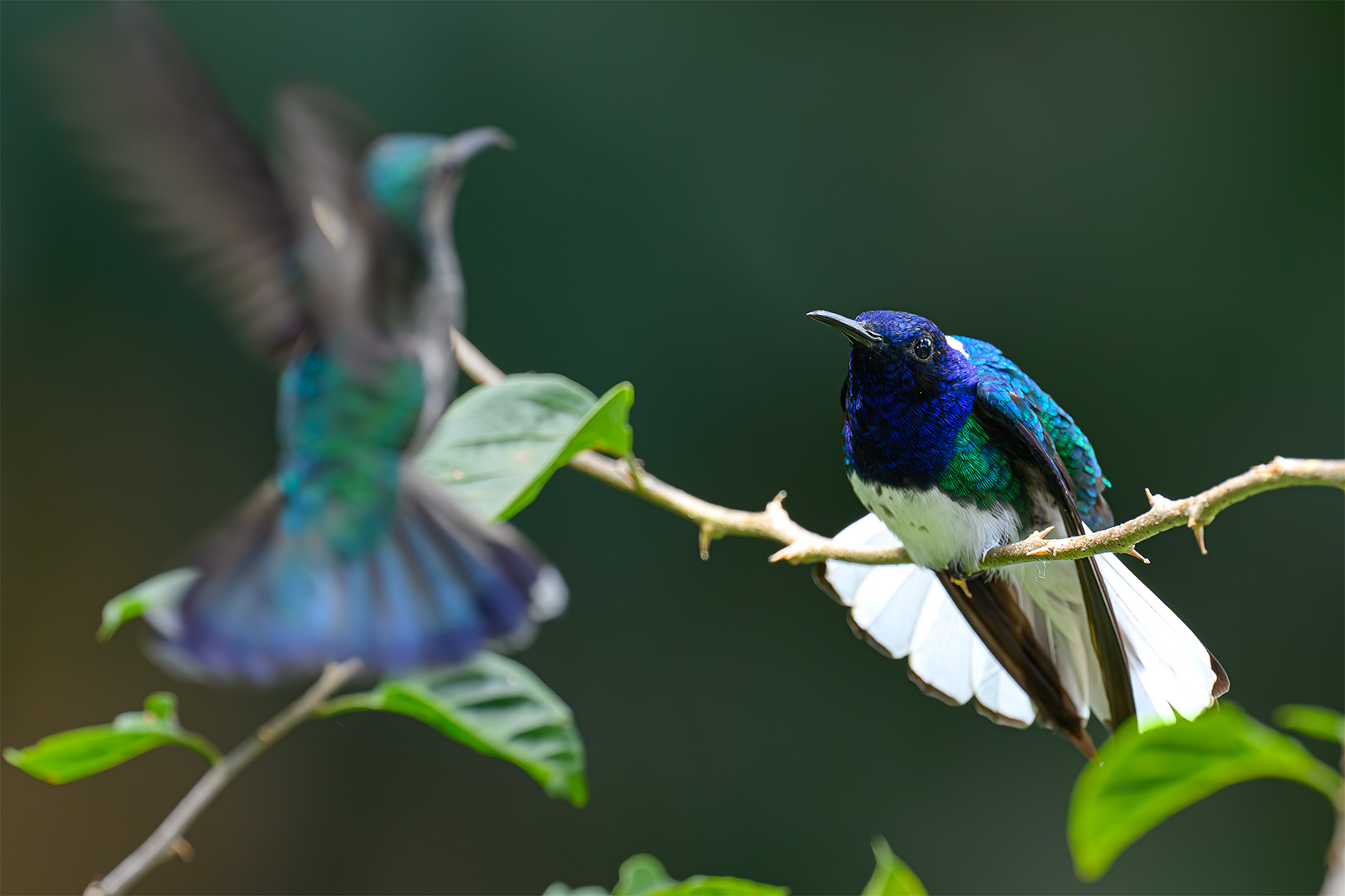
Hummingbirds are good at communicating. If you’ve ever seen a Hummingbird hovering in front of your window staring in, it’s usually an indication that their feeder needs attention. They know who fills the feeder. In this image, the White-necked Jacobin is relating his concern to another Jacobin, a female or juvenile, approaching his perch by glaring at the interloper and by flaring his tail. The glare and the flare are both threatening gestures. The Jacobin seems to be trying to claim that space as his. He didn’t succeed. The bird flew by and landed on a perch right next to him. I guess communication in the bird world can be as difficult as it is in our world.

2024—It’s a Hummingbird!

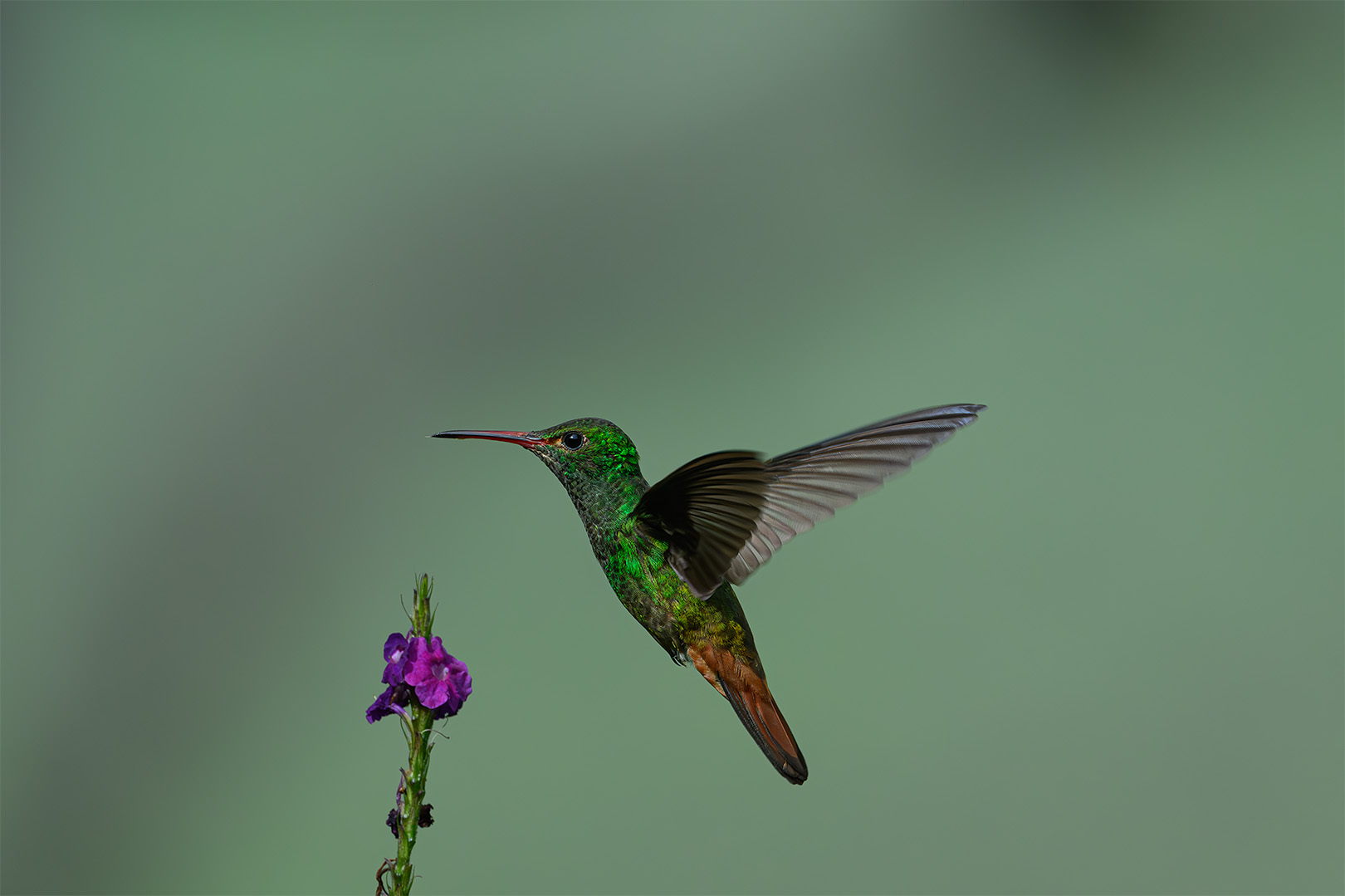
After discovering that most of the Hummingbirds I photographed in Costa Rica recently did not have “Hummingbird” in their common names, it was reassuring to find one called the Rufous-tailed Hummingbird. Not only is it called a hummingbird, it is also very obvious why it’s called a rufous-tailed one at that. Don’t get me wrong. I love Hummingbirds whether they’re called Woodnymphs or Plumeleteers or Jacobins or Hermits or Emeralds. If I have an opportunity to photograph a Hummingbird, and especially some of the exotic ones we found in Costa Rica, I’m there.