2020–All It Takes Is One

Visiting the Skagit River Valley in Washington this past week was a challenging photography experience for me. I have been spoiled by my good fortune over the past several years to spend time photographing wildlife and landscapes with Moose Peterson. Moose always seems to find the best places so that those who shoot with him have the best opportunity for the best photographs. However, on this trip with Moose the weather dictated our photography experience. But, in the end, despite the adverse conditions, Moose’s experience and intuition helped us all achieve our main goal for the trip: To see and photograph owls, in particular Short-eared Owls, in their native habitat.

The weather was the guiding factor for our photography. The rain was non-stop, the light was flat, and the skies were gray, three factors that made our bird photography quite a challenge. The rain tends to keep birds in place so they are more difficult to find and therefore, more difficult to photograph. With flat light, the range of light is very limited and there are no shadows and little contrast. The gray skies are not appealing backgrounds for birds, either in flight or even on the water as the water tends to reflect the same gray skies and subjects are usually backlit.

Due to the conditions, we each took only a handful of photographs the first couple of days and saw our first owl on day 2. On our final day, with the skies still dreary and the rain unrelenting, we returned to the place we saw a Short-eared Owl the day before. During several hours, much of it spent standing in the rain or under the rear canopy of our SUV, we watched at least five and possibly six, Short-eared Owls hunting, sitting on the ground watching and waiting for prey, and fending off opportunist Bald Eagles. In addition to my goal of photographing these owls in their native habitat, the one photograph I wanted to capture was an owl in flight. And with guidance from Moose and a lot of patience, I did just that. The experience reminded me that all it takes is one photograph, something I have known but I needed a reminder.

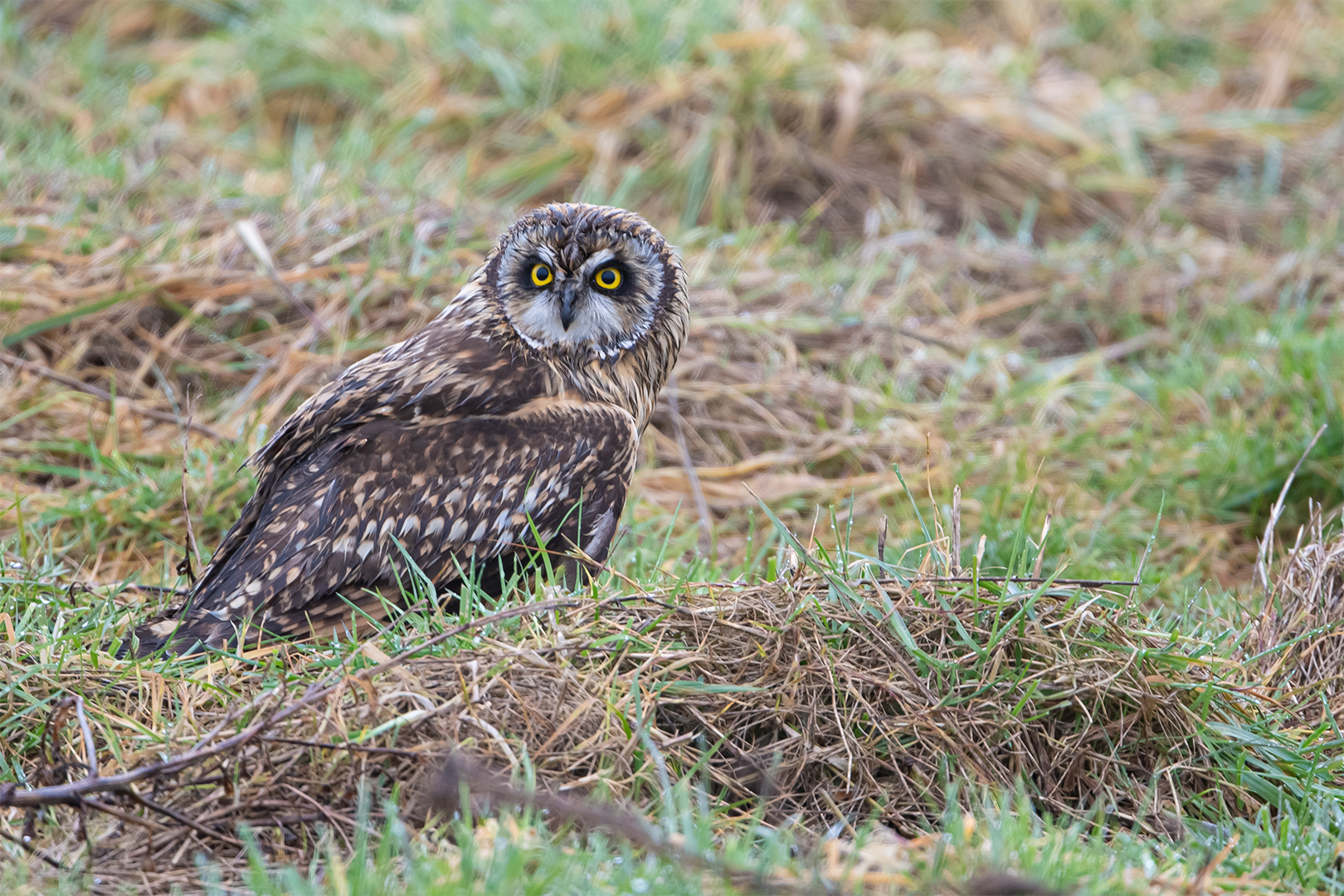
2020—Short-eared Owl

The Skagit River Valley in Washington is a damp and rainy place. It has been raining non-stop since we arrived on Monday and some of the roads we’ve traveled have been flooded at low spots. The rain has kept most birds from venturing far from shelter and we saw one large tree with at least 37 Bald Eagles perched in it for most of the day. But we were at Skagit River to photograph owls, specifically Short-eared Owls, not Bald Eagles and on our second day we finally spotted a couple of them. We returned to the same area on our last day and we had some luck photographing some Short-eared Owls. They were drenched from the relentless rain.

2020—Old Faithful

Old Faithful Geyser in Yellowstone National Park continues its relentless schedule, erupting every 35 to 120 minutes for 1 1/2 to 5 minutes each time it erupts. Its maximum height in each erupotion ranges from 90 to 184 feet. This was not one of Old Faithful’s tallest eruptions but the patterns of the steam make this a gorgeous eruption to see.

2020—Firehole Falls

Capturing a unique image of an iconic view can be a challenge. Firehole Falls, along the Firehole River in Yellowstone National Park is a thundering rush of water that pushes through a narrow gap between rocky cliffs. Many see the falls in the summer but in the winter, there are far fewer visitors so not many can appreciate the view with snowy shores and icicles dripping over the water. Still rarer yet are the views of the wildly rushing waters, slowed to appear as silk by a camera. There are a few ways to do this in camera. Among them, a slow shutter speed can create a silky texture; a 6- or 10-Stop Neutral Density filter can result in a much longer shutter duration causing an even silkier look; or a simple method using the camera’s multi-exposure mode, e.g., 10 separate photographs merged into one. Using a Nikon camera set to a 10 image multiple exposure and setting the camera’s timer to a couple of second delay, all ten photographs will be taken in sequence without having to touch the shutter release. They are merged in camera, into a single RAW image. Beware, however, the Nikon mirrorless Z model cameras can do this but the resulting image is a JPEG, not a RAW image. I learned that the hard way. This image was taken from the edge of the cliff overlooking the falls with a Nikon D5 and a Nikkor 80-400mm lens at 390mm.

2020—Path of Least Resistance

Huge and muscled Bison appear to me to be able to plow through anything. It surprised me, then, to watch them in Yellowstone National Park following deep furrows in deep snow made by other Bison instead of foraging a new path. We were entertained by this herd of mostly cows and calves as they began to stir and start to forage at the start of the day, crusted with ice and snow. This cow follows the path of another Bison, the path of least resistance.

2020—Pine Needle Feast

The Dusky Grouse we saw the other day at Madison Junction in Yellowstone National Park was active in the pine trees on the entry road to the rest stop on our last morning in the park. It garnered quite a bit of attention and a Park Ranger made sure everyone stayed a respectable distance from the bird as it nibbled on pine needles.