2025—Nose to Nose

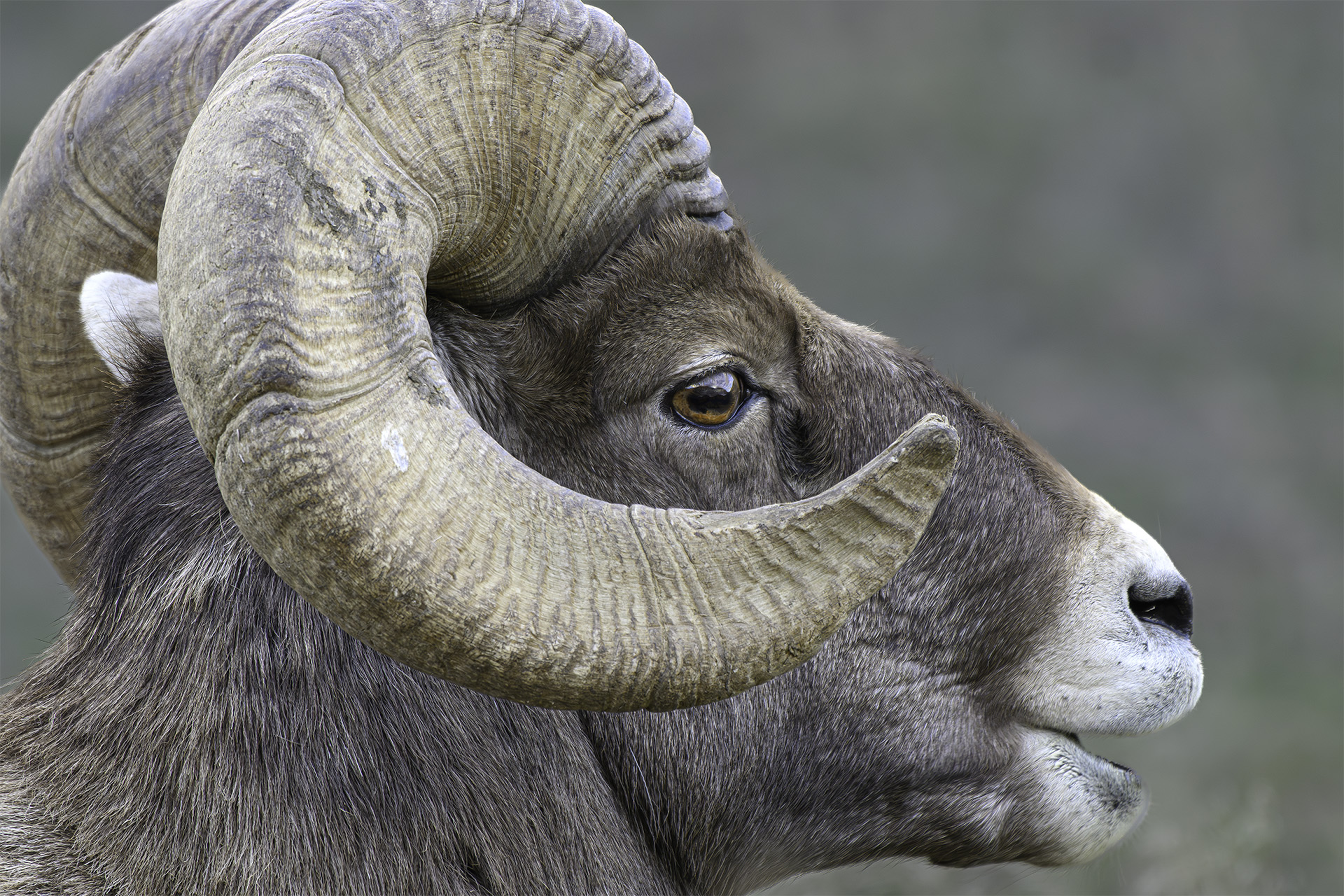
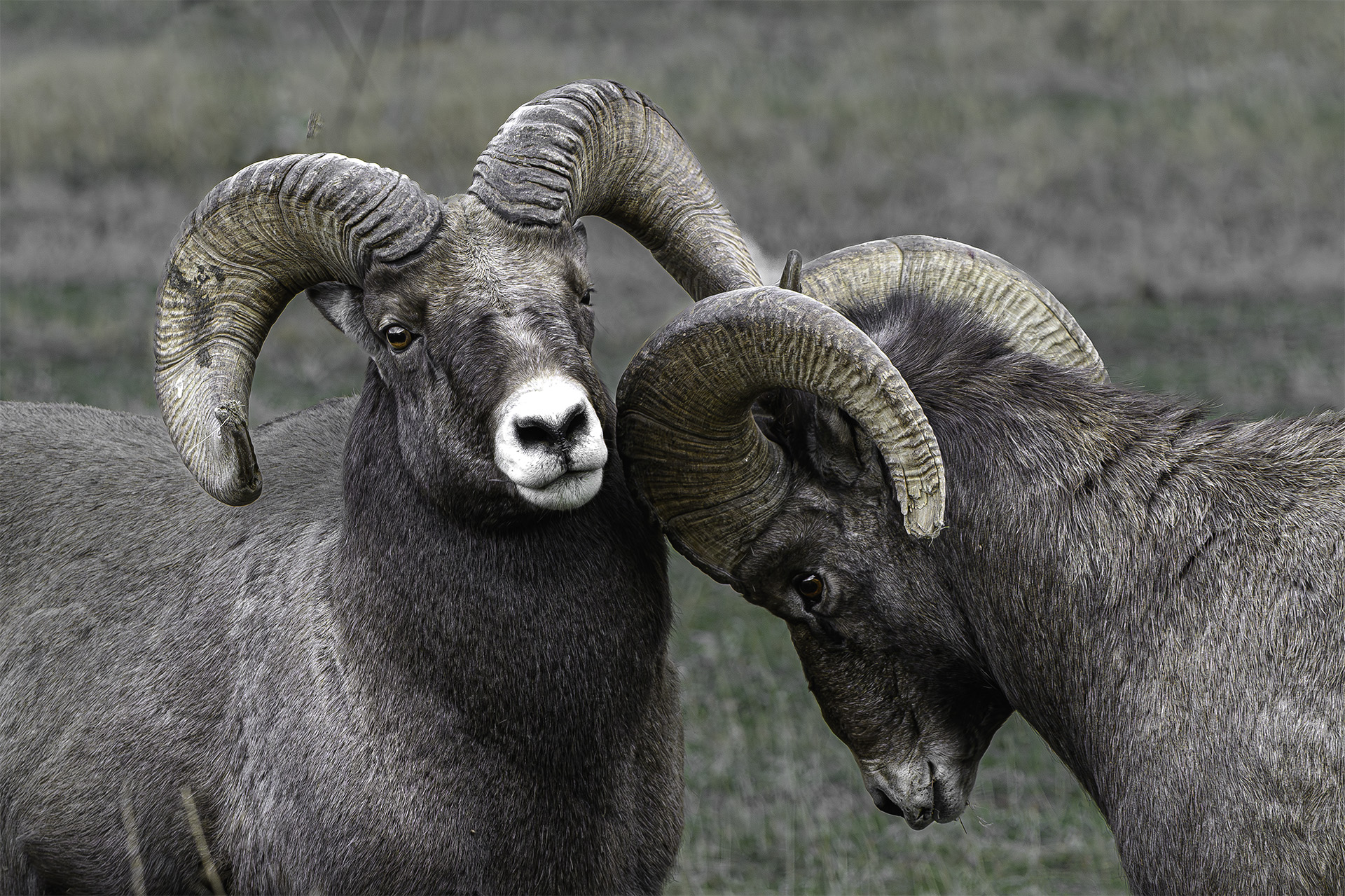
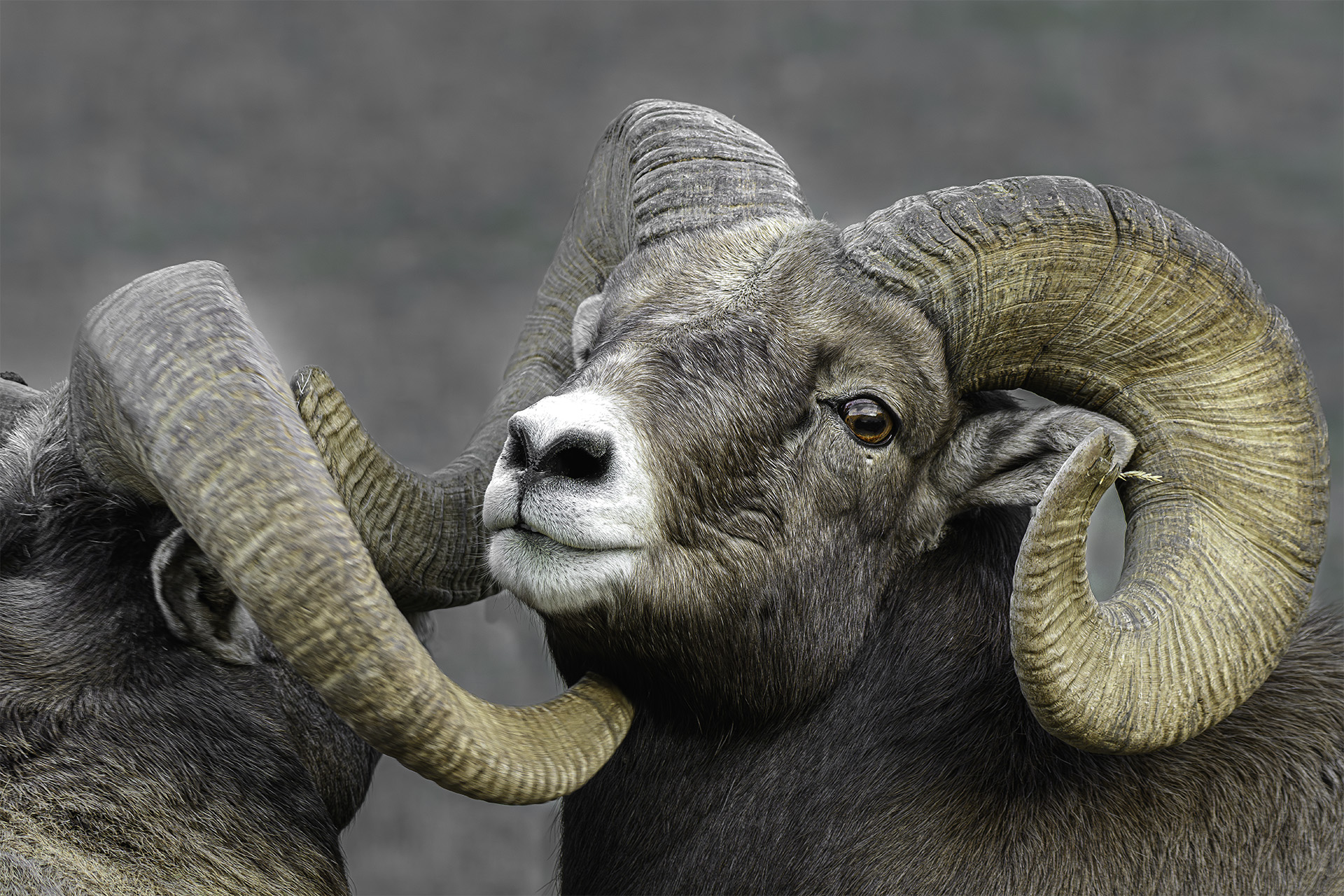
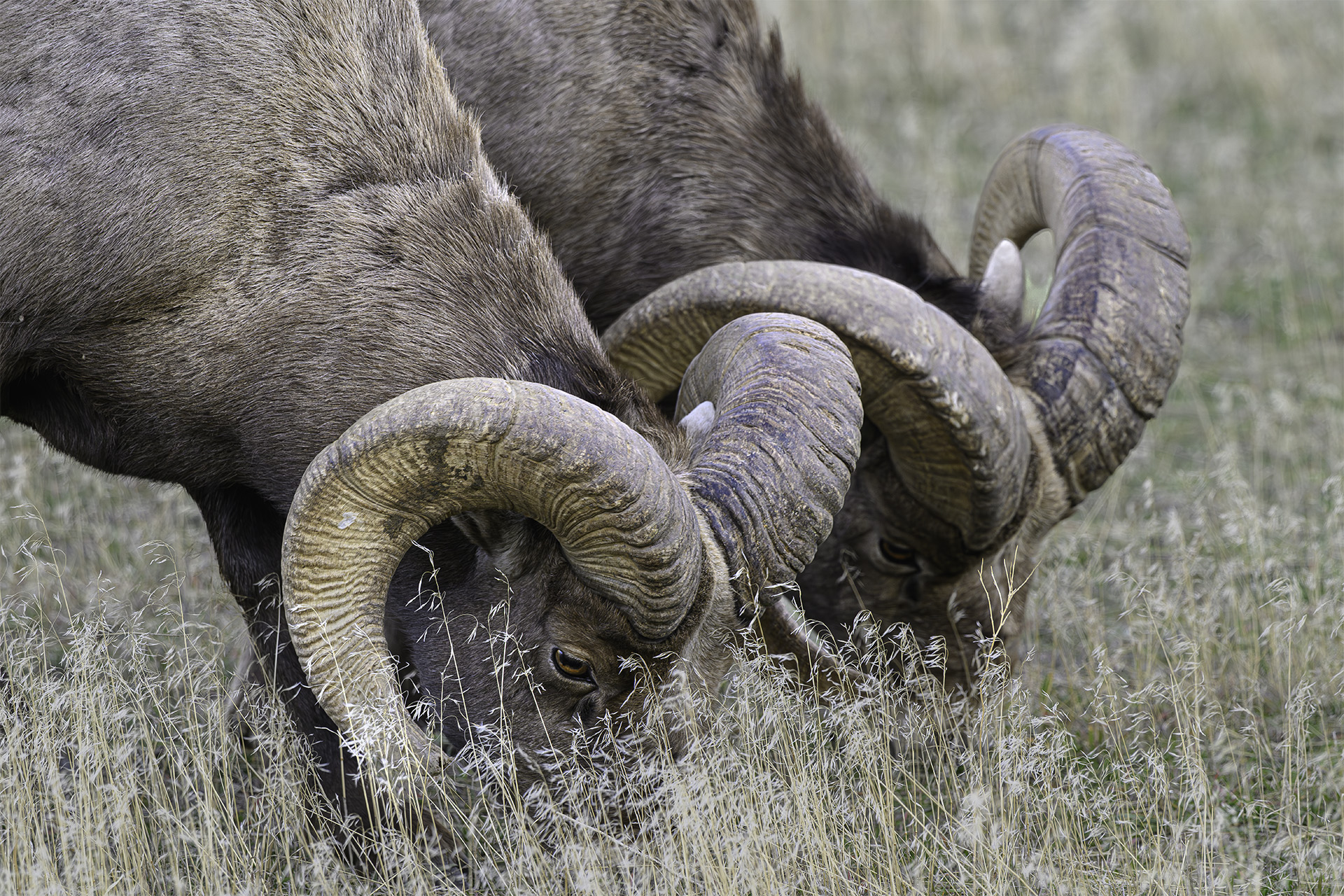
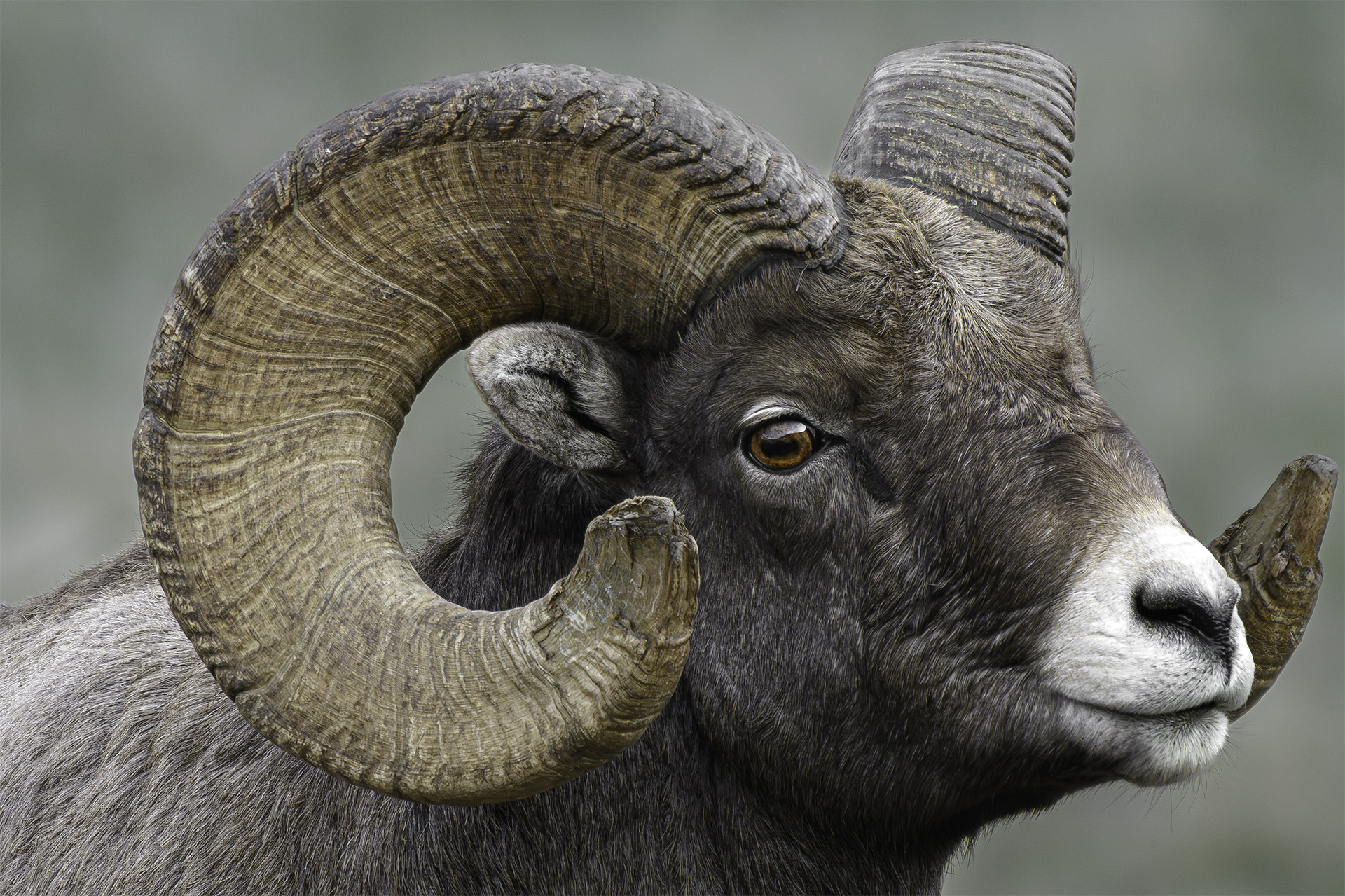
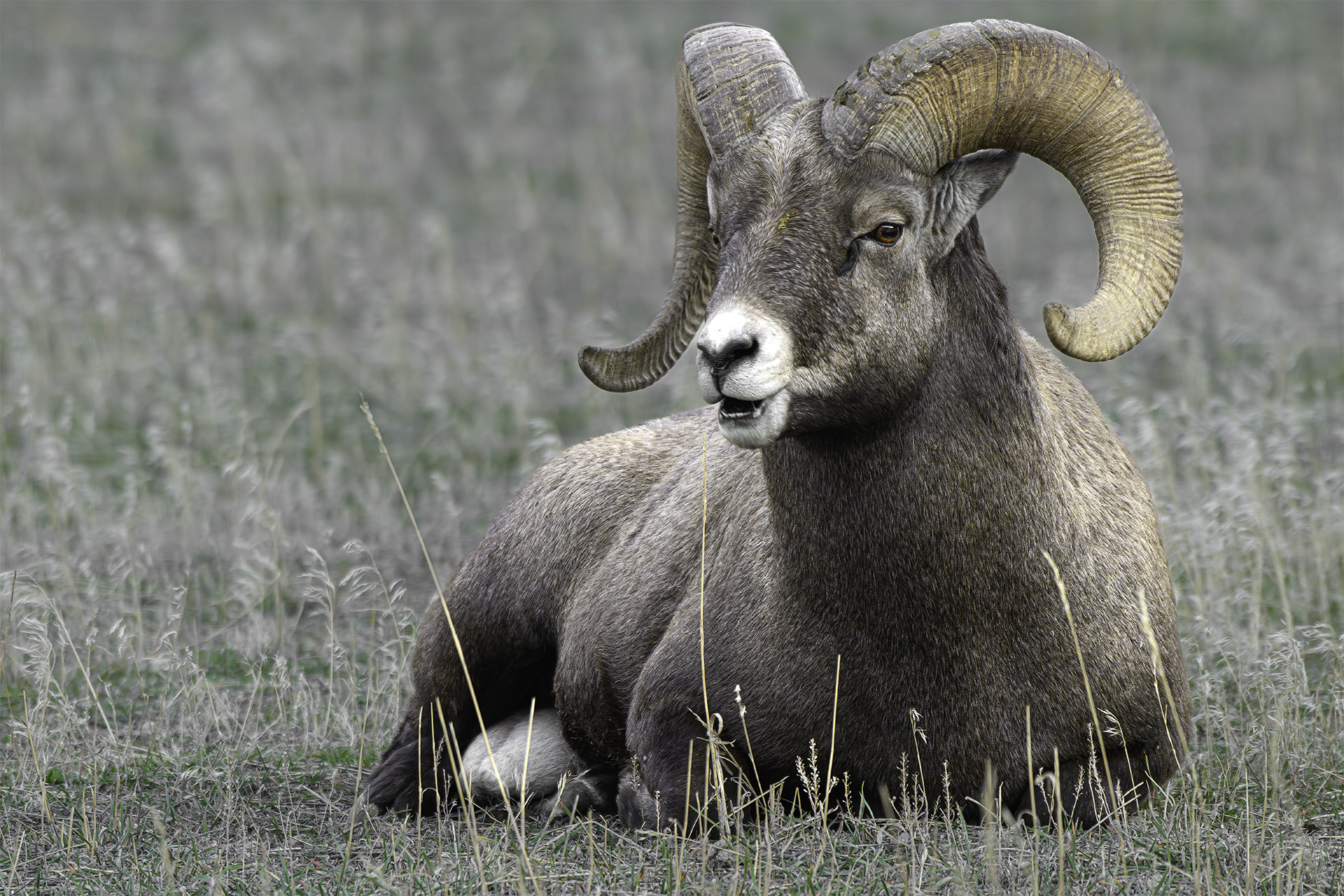
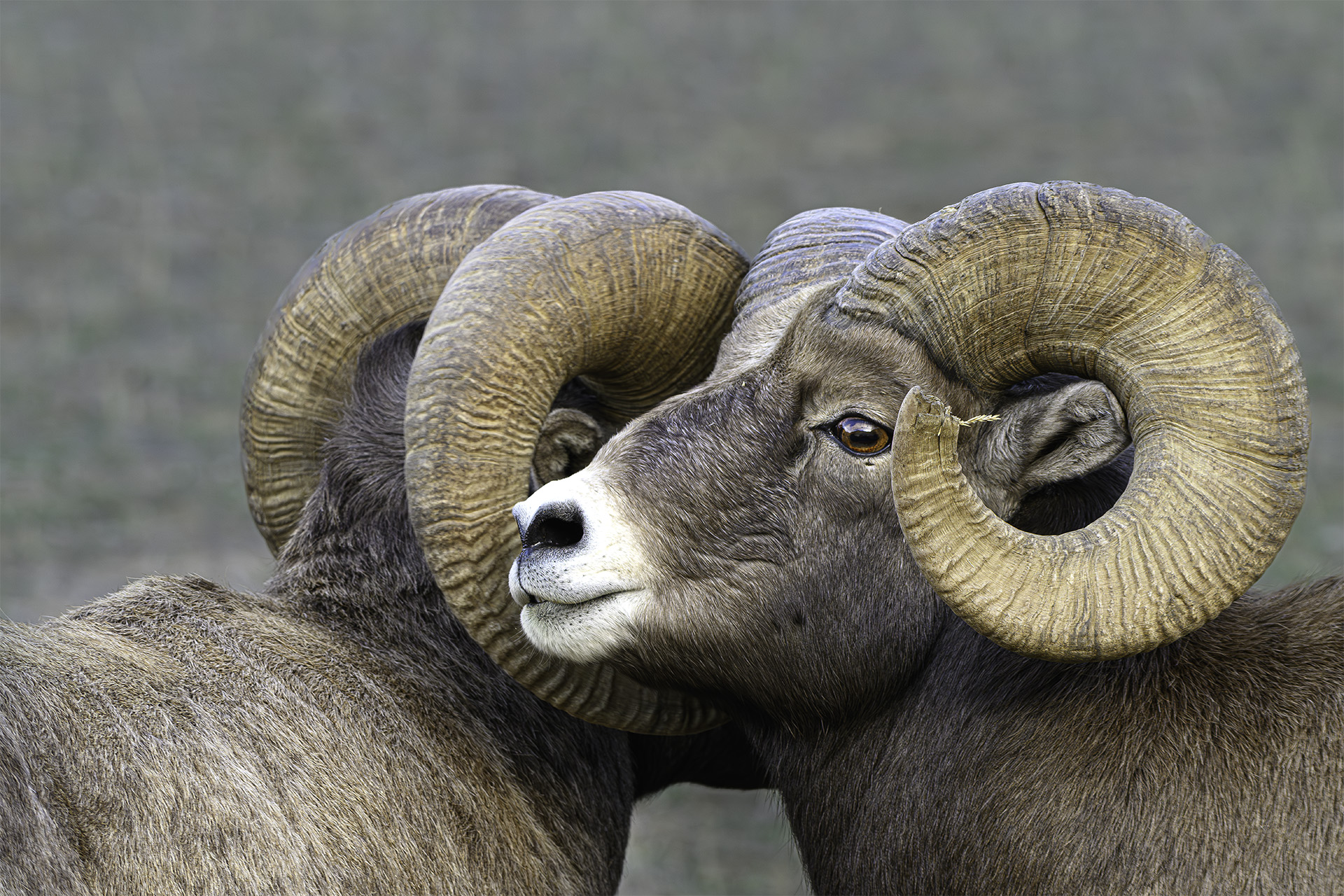
The rivalry between Bighorn Sheep rams during the rut is fascinating to watch. The rams cluster closely together, pawing at each other in an attempt to entice a confrontation and even the violent crashing of heads. Then they quickly rejoin the scrum. Sometimes they knock horns without leaving the group. I loved this image that shows two rams appearing as if they are nose to nose, in what seems to be a stare-down that might result in a challenge and ultimately, a head-on crashing of those huge horns. A set can weigh thirty pounds or more.

2025—And Chaos Ensued

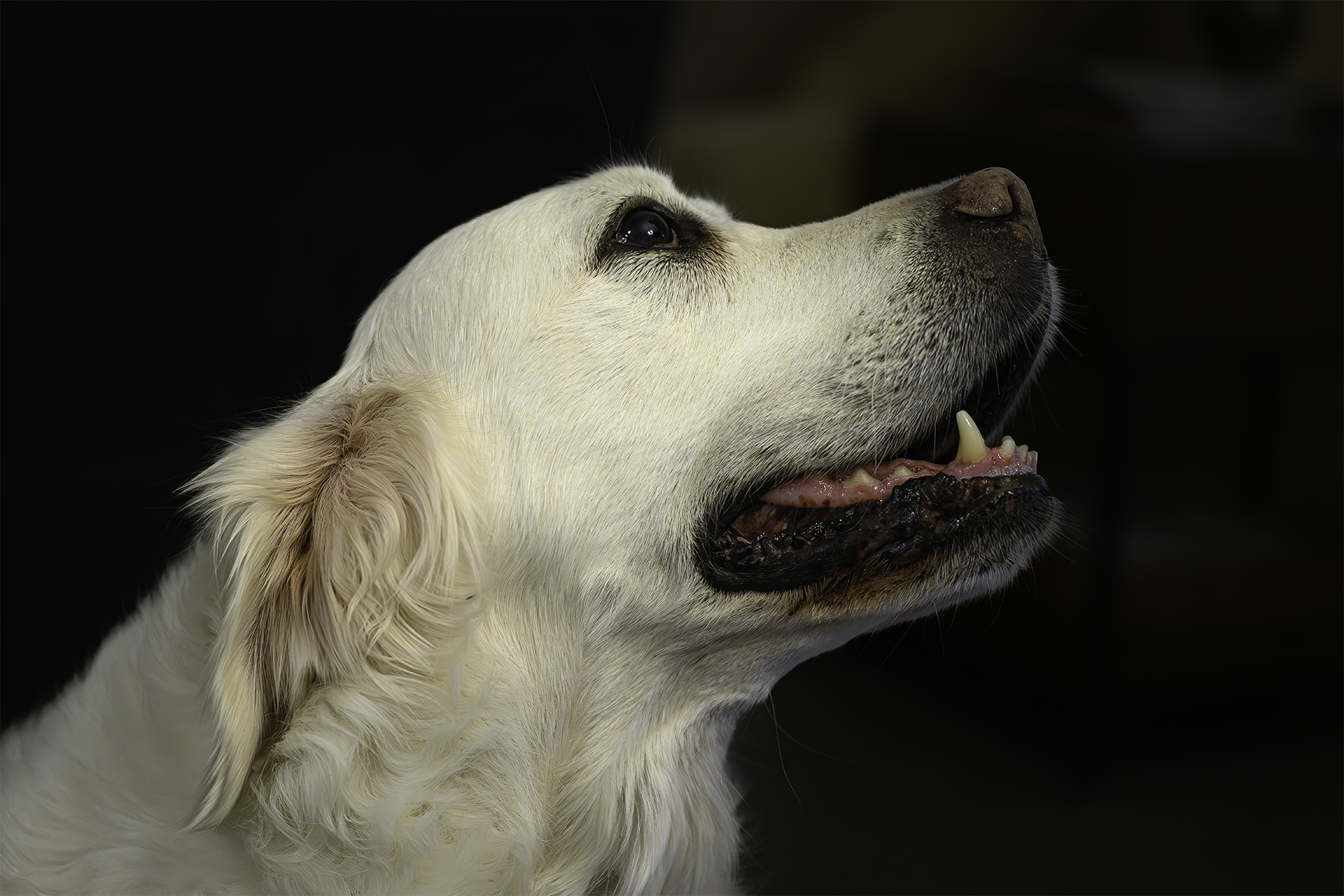
Thanksgiving is over. My brothers, Sisters-in-law, their dogs Bella and Sadie, and I spent a marvelous couple of days together talking, laughing, and reminiscing for the first time in far too long. And, it wasn’t until the last few moments before everyone left yesterday that I realized I hadn’t taken any photographs. I had intended to commemorate the visit with a family portrait, the first in many years, but in the end, I settled for shots of Bella and Sadie. And of course chaos ensued, as it had during much of the short time we were all together. Somehow, the dogs seemed to sense that the end of a fun visit was near and they neither one would hold still for even a fraction of a second. Arthur and John tried unsuccessfully to corral them to pose for me. Instead, they raced up and down the hallway or wriggled under the table or threaded their way through the dining chair legs evading my lens. Finally, each one was briefly distracted long enough to pause for a fraction of a second. Although most of my efforts cut off ears or noses or entire heads or were just a blurry flash of gold or white, I was lucky to capture a few in focus shots. Now the chaos is over, everyone has left for long drives home, and I am smiling as I sweep up piles of gold and white fur.

2025—Big Elk

It’s fun to see a magnificent bull Elk with a huge rack like this one is displaying. He was in the midst of a patch of red, orange, and purple willows. Most of the time I watched him, his eye was obscured by the willow twigs but briefly, he turned to scratch his back so his eye was clear of the twigs and he showed off his rack.

2025—On a Mission

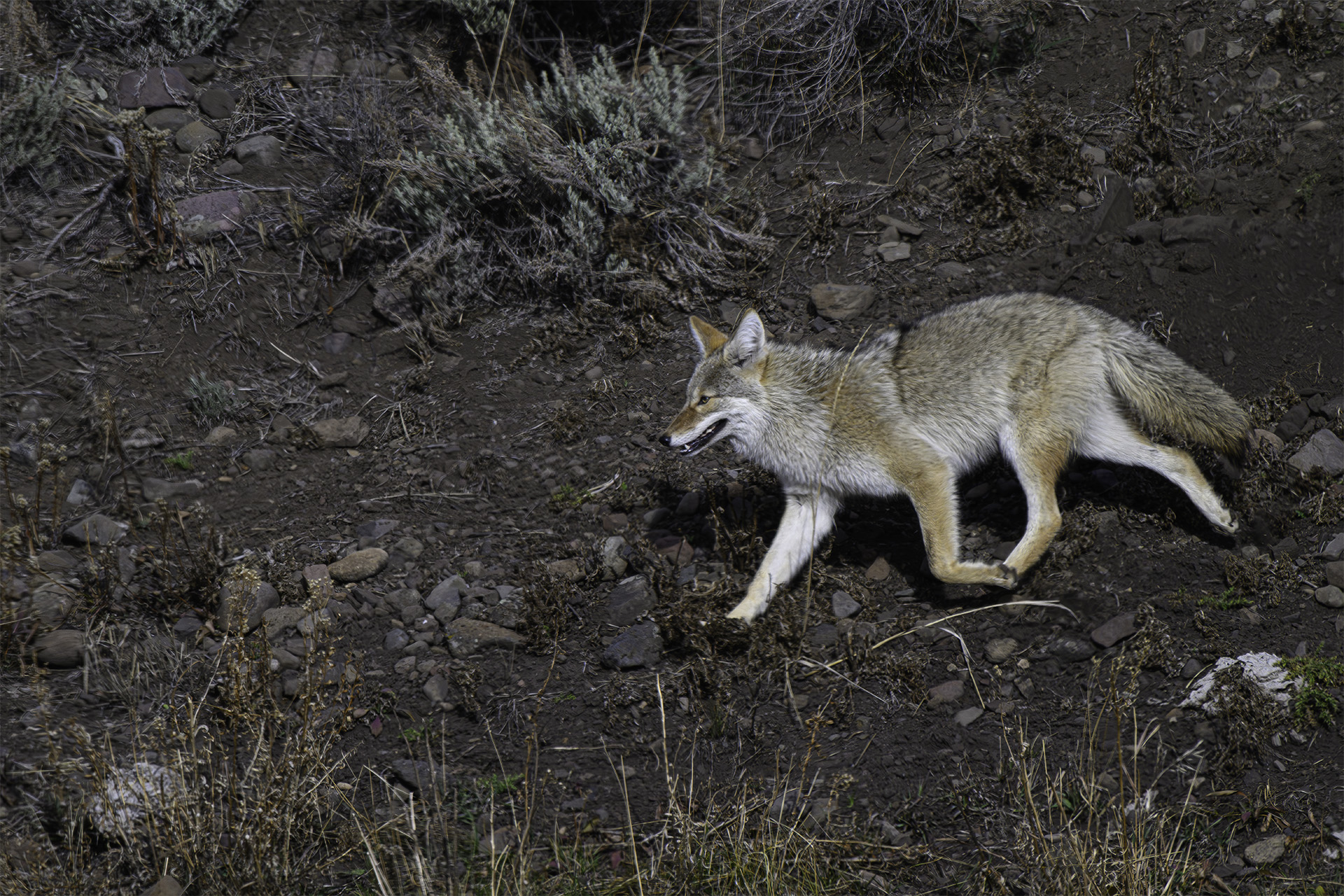
One of a pair of Coyotes trotted down the hillside in the Lamar Valley last week in Yellowstone National Park, seemingly on a mission. While we photographed them from the side of the road, the heat shimmer rising up between us and the Coyotes was a bit of a problem at times, sometimes preventing sharp images. The traffic wasn’t bad and after they came down the hillside, they crossed the road and disappeared from view.

2025—Trio of the Big Boys

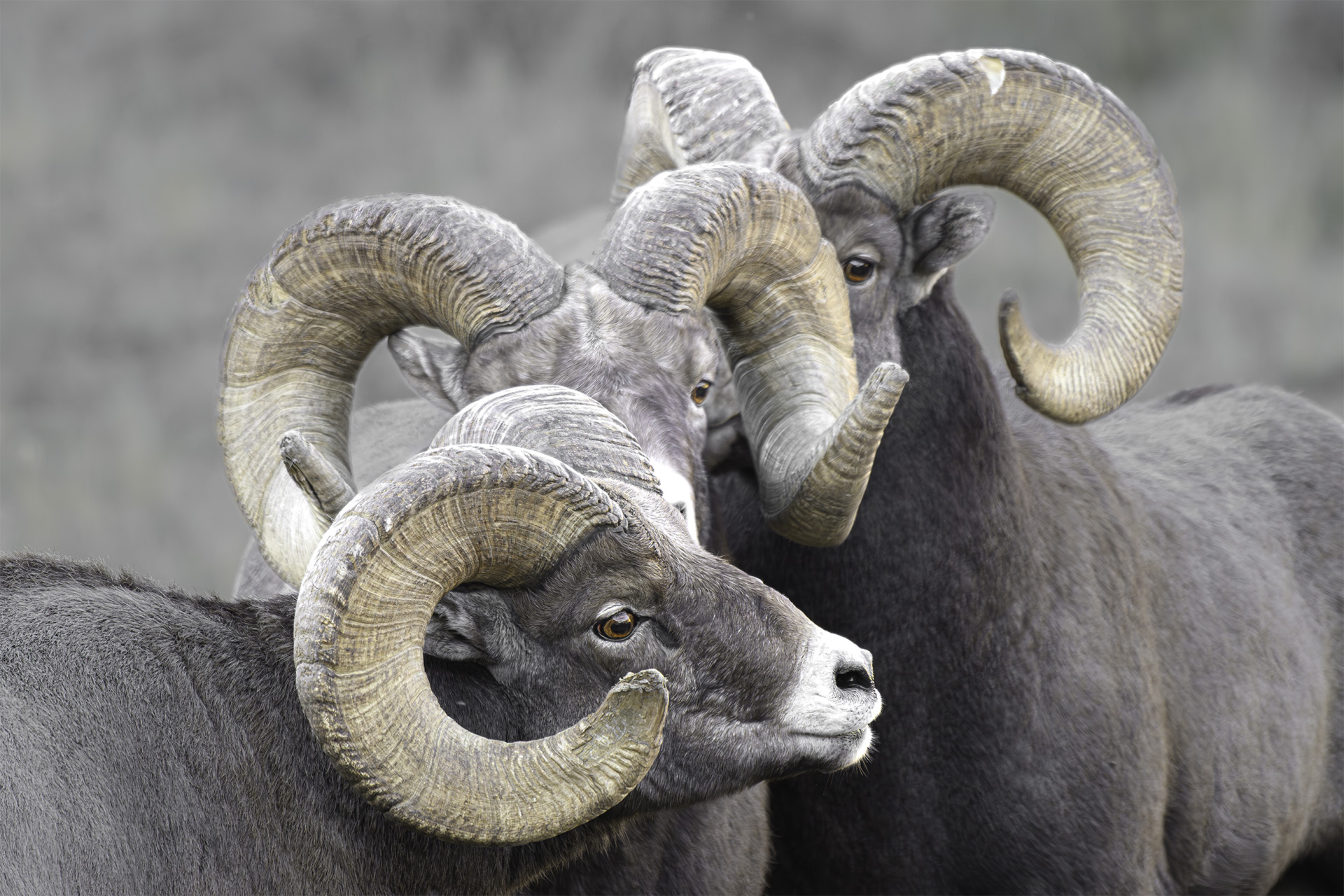
Three of the big boys, those Bighorn Sheep rams with large curled horns, stuck close together in a group of more than a dozen rams gathered up the hill away from the ewes one afternoon. We’d heard the distinct sound of clashing horns from a distance before we found them. They clustered together tightly in a group. One would lift a hoof and paw at another ram to start a confrontation. Eventually, the two might engage in head butting and then back away to charge, crashing those massive horns together. The confrontation was usually one butt or charge, then they’d cluster back together again. The ram furthest back in this image seems to have recently lost of chunk of horn.

2025—Watching

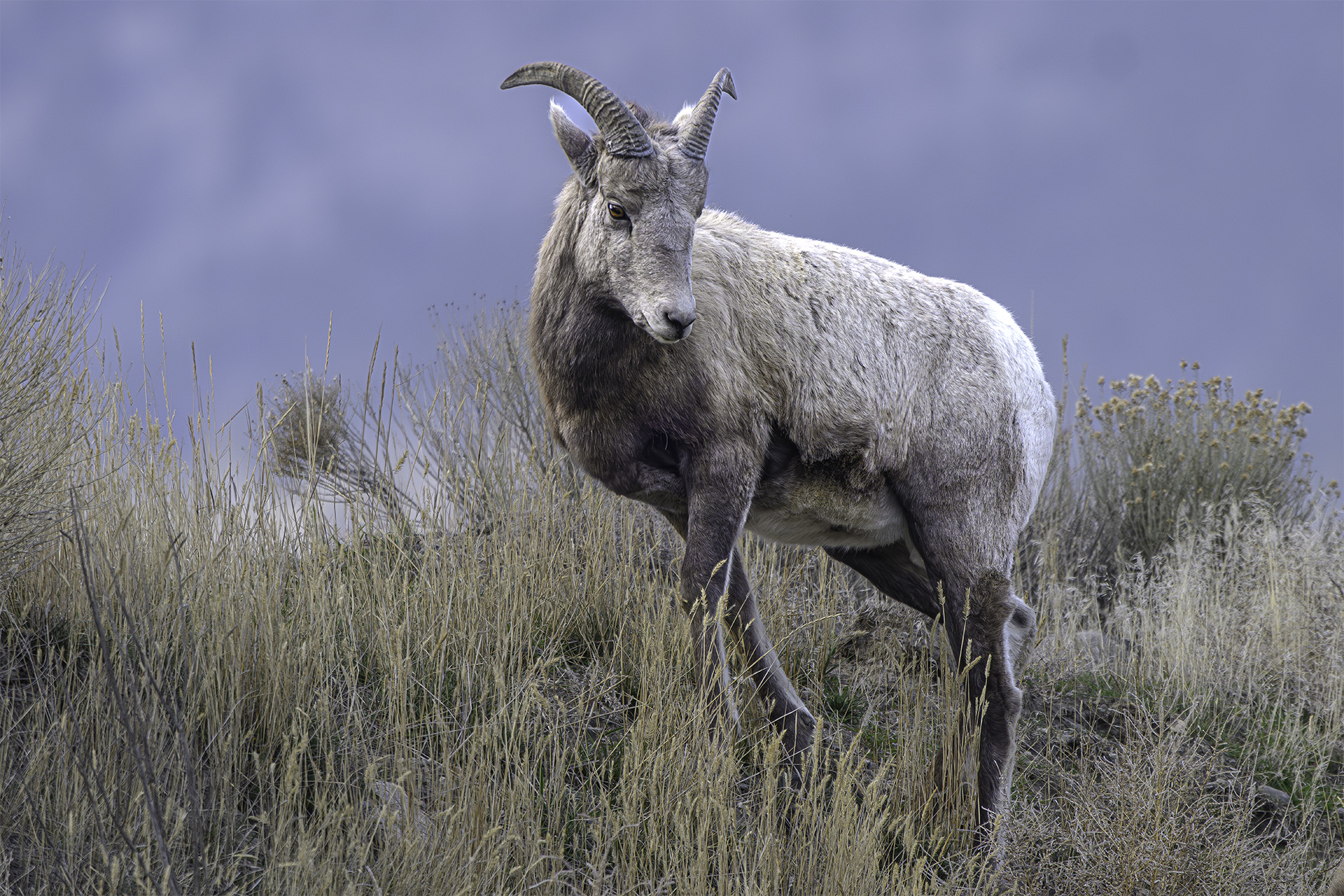
As a flock of Bighorn Sheep made their way to drink at the edge of a river, one of a young ram watched the rest of the flock from the hillside, deciding when to make the move. It was a few minutes before he and a few ewes made their way down. As their moms carefully descended, the lambs bounded down too, leaping as they reached the bottom of the hill.

2025—Good Buddies

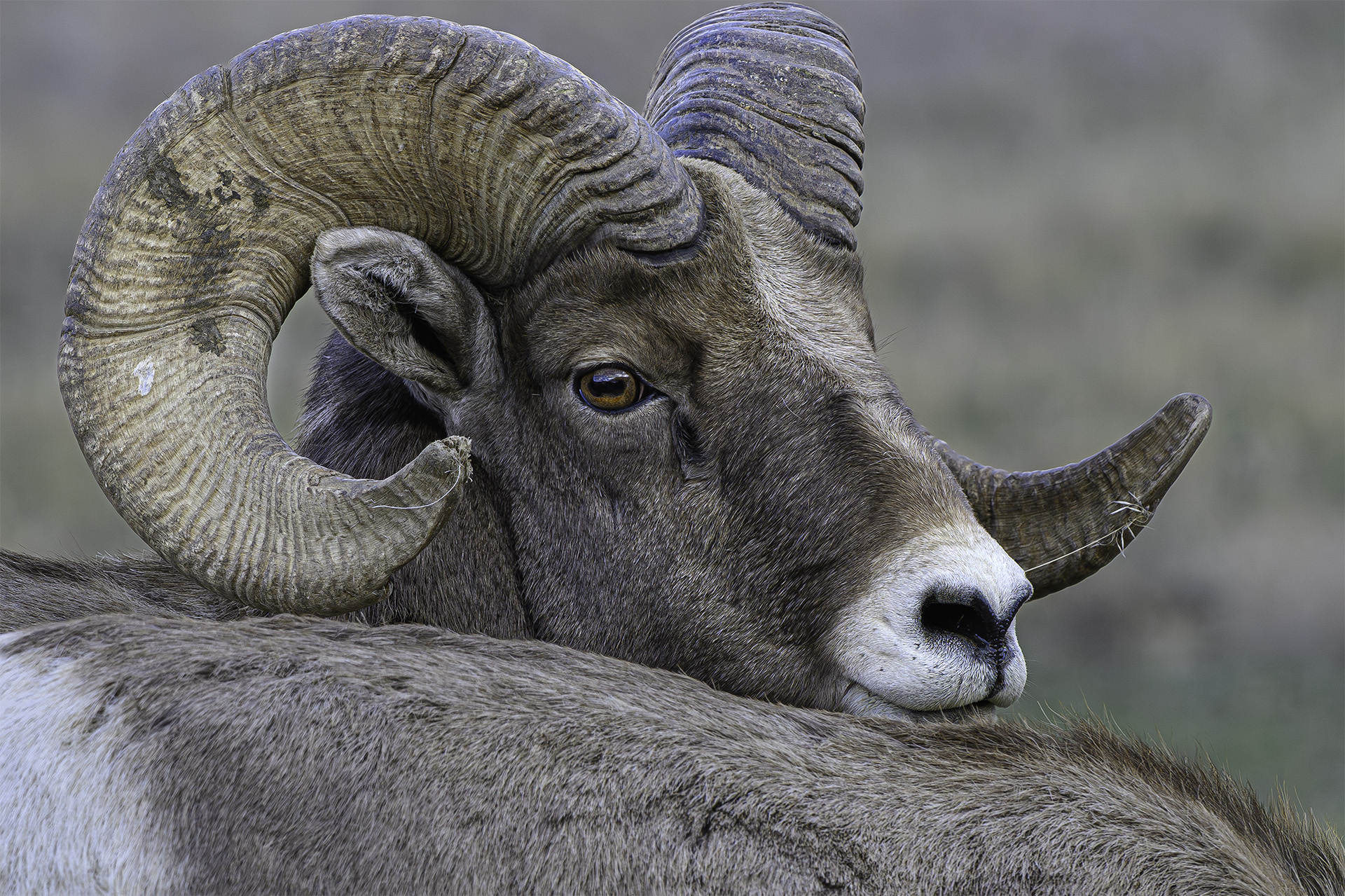
Rocky Mountain Bighorn Rams are fascinating to watch. Yesterday, we again had an opportunity to spend time with a large herd of Bighorn Sheep. During much of the year, the rams stick together in a tight knit gang until fall when they come together with the female family groups during the rut. But, despite their interest in finding a female to mate with, the rams have developed such a bond that they remain close, and seem to spend more time with each other than looking for a female. Of course they are determined to mate and are often distracted but they quickly return to their buddies to feed, nudge, and hang out. There is an occasional clashing of horns but yesterday we didn’t see any serious rivalry,

2025—The Watering Hole

Coyotes are among my favorite critters to photograph in Yellowstone especially when they’re doing something other than just walking across a meadow. Yesterday we watched a pair of Coyotes crossing a rocky area off the road. We’d been photographing a stunning bull Elk and a short distance away first one Coyote, then a second, appeared. The first climbed atop a large moss and lichen covered granite boulder and drank from a depression in the top. A moment later, the first Coyote’s mate appeared and climbed atop the same boulder after the first had walked away. Sure enough, the second Coyote lapped at the water for a couple of minutes before quenching its thirst and joining its mate. The depression in the boulder apparently contained enough water to satisfy at least two Coyotes and it seemed to be familiar to both of them, not just a puddle they encountered. In essence, it’s a Yellowstone watering hole, not unlike watering holes seen in places like Africa that provide life sustaining hydration to critters like Elephants, Zebras, and Giraffes. It’s fascinating to me to witness these manifestations of natural behavior that point to the resourcefulness of wild animals and what they do to survive.

2025—Bighorn!!

Rocky Mountain Bighorn Sheep! It was mid afternoon yesterday, our first day back in Yellowstone, and there they were, a huge herd of them grazing along the road. The herd seems to have grown since last year. There were lots of rams, some majestic and seemingly above it all and some being their FOMO selves, racing to join the scrum of rams already gathered together, seemingly fearful that they were missing something. They nudged each other and nuzzled each other and stood so close together it appeared they were sharing secrets. It wasn’t long before they moved so near to us, that with our long lenses, all we could fit in the viewfinder was their heads. Avoiding cutting off horns was the challenge of the afternoon. What fun! We’re looking forward to seeing them again over the coming week.

2025—Wallowing

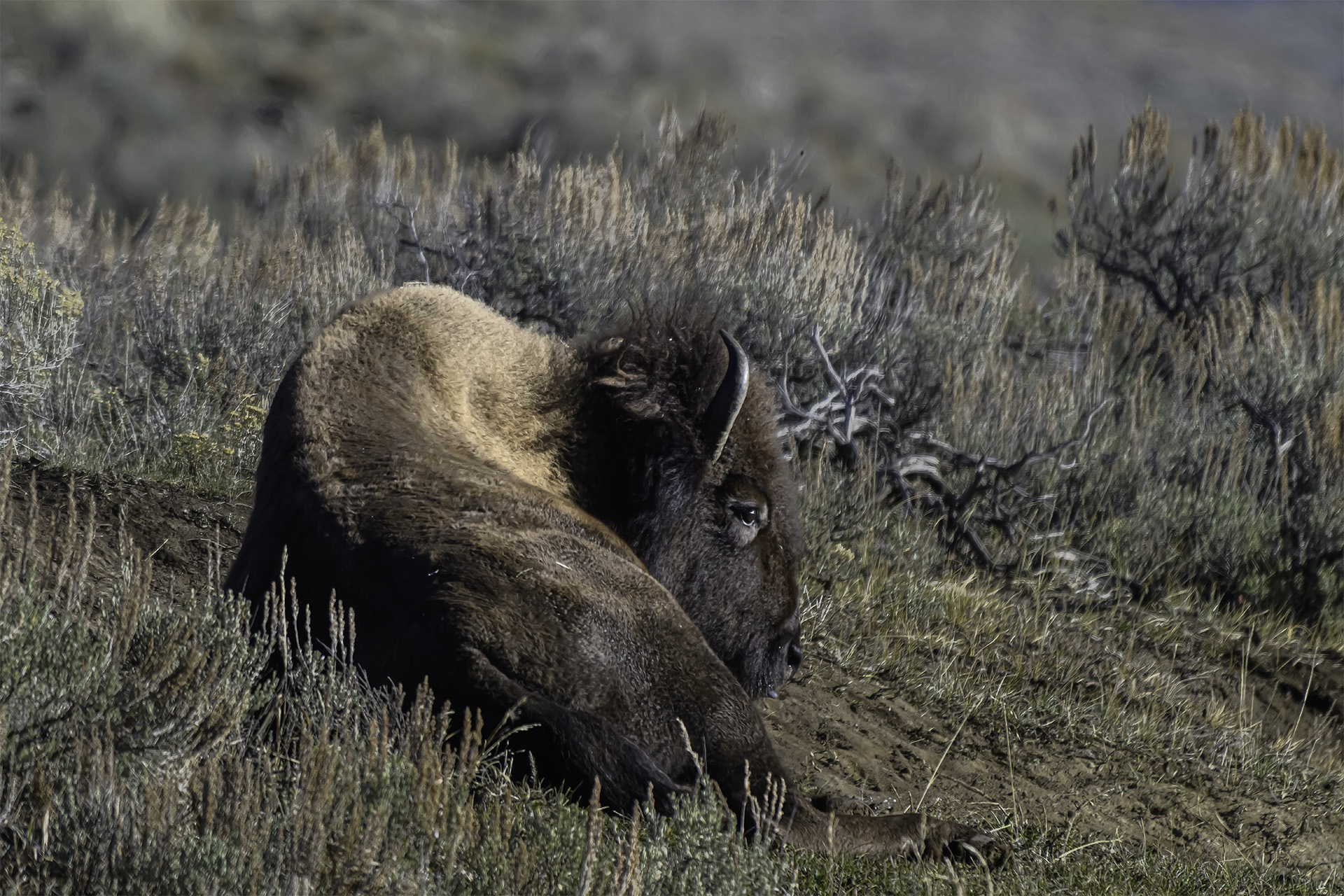
On my last trip to Yellowstone in October, we encountered this bull Bison resting in the middle of a Bison wallow, apparently tuckered out after wallowing. He had just finished coating himself with dirt which is what Bison do to shed excess fur, relieve skin irritations, and stay cool. These Bison wallows are quite common throughout the Yellowstone area where Bison roam and it is. not uncommon to see them take turns in the wallow.

2025—What’s In a Name?

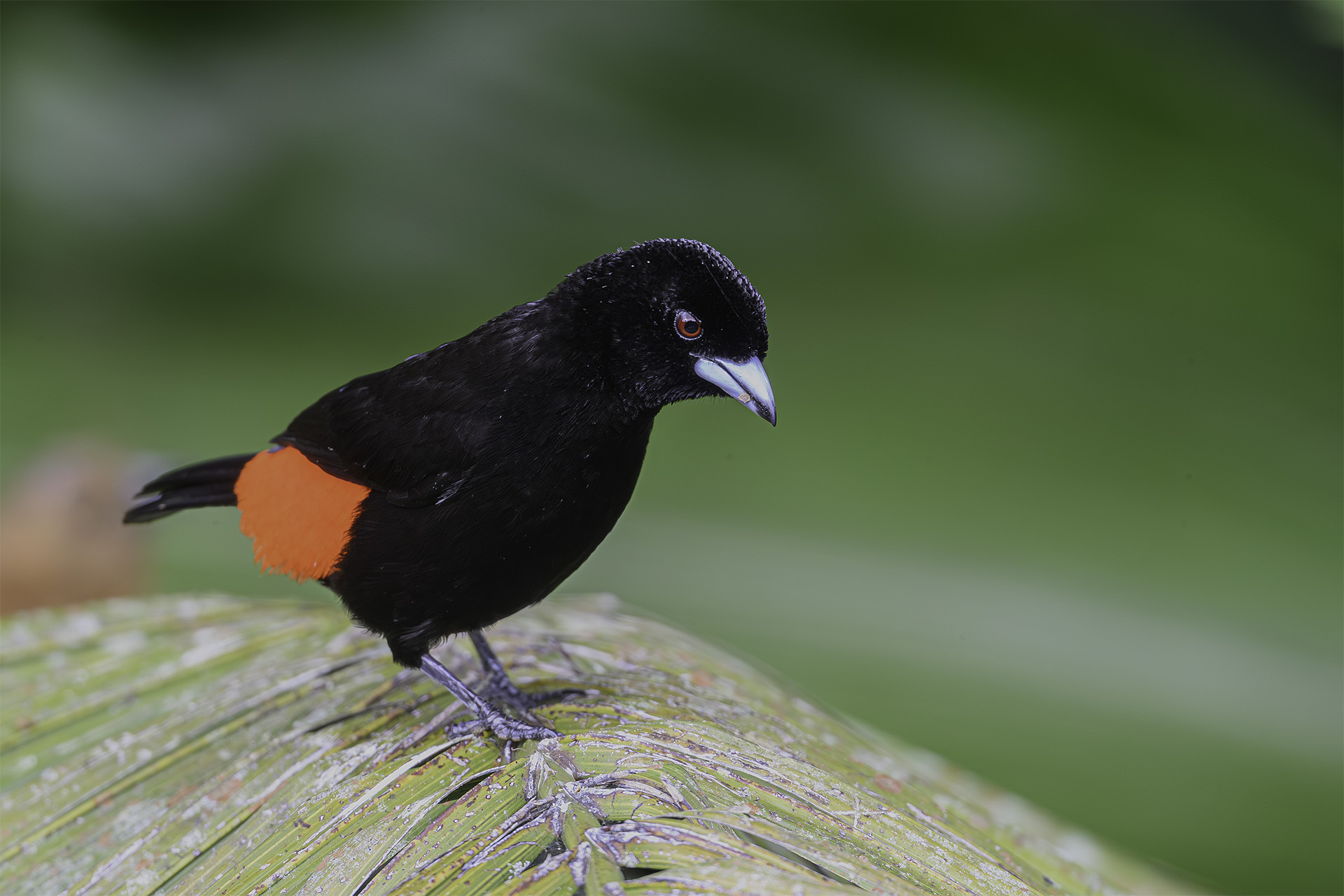
So, what’s in a name? On my first visit to Costa Rica in 2015, I photographed the Cherrie’s Tanager, a striking black bird with a red back. On my most recent trip to Costa Rica, in 2025, I photographed what my guide book said was a Scarlet-rumped Tanager. I thought it looked familiar to me because it is such a striking bird but thought it must not be the same bird because of the different name. Well, I was wrong. And, I was right … at least in thinking that it was the same bird because it is! Apparently, ten years ago, it was known as the Cherrie’s Tanager and in 2018, the Cherrie’s Tanager and the Passerini’s Tanager were lumped back into a single species, the Scarlet-rumped Tanager, which they were originally named before being split into two species at some point in the past. So, as Juliet once so succinctly spoke, “What’s in a name? That which we call a rose by any other name would smell as sweet.”  I guess you could say the same here and with apologies to William Shakespeare, “What’s in a name? That which we now call a Scarlet-rumped Tanager always had a red rump!”

2025—Trying Macro

In Yellowstone a couple of weeks ago, I had a chance to use my new Nikkor Z24-70 f/2.8 S II lens as a macro lens. While it is not a true macro lens, it has great close-focusing capabilities that allow for closeup shots so I tried it out in a small meadow near Soda Butte, where there were lots of flowers but what caught my eye was a kind of brome, a weed that, depending on the species, is either native or invasive. I have no idea which this is. I like the ice crystals on the seed pods. There was a slight breeze and as is often the case with outdoor macro photography, it was almost impossible to keep the subject from moving. This was the best shot I got. I didn’t use a tripod and I didn’t do focus stacking which I think might have helped. The depth of focus is quite narrow and only a few of the seed pods are in sharp focus. This is something I’ll have to work on.

2025—On the Alert

A Coyote, sporting a gorgeous winter coat in Yellowstone National Park a couple of weeks ago, is on the alert, mousing for its next meal. Voles, or whatever it was hunting in the thick grasses, could conceal themselves pretty well so this Coyote had to be very attentive. It pricked its ears to listen for telltale rustling that would point out the location of the voles. We watched it pounce a couple of times but it came up with nothing. Hopefully, it was successful after we left.

2025—Far Forking Out!

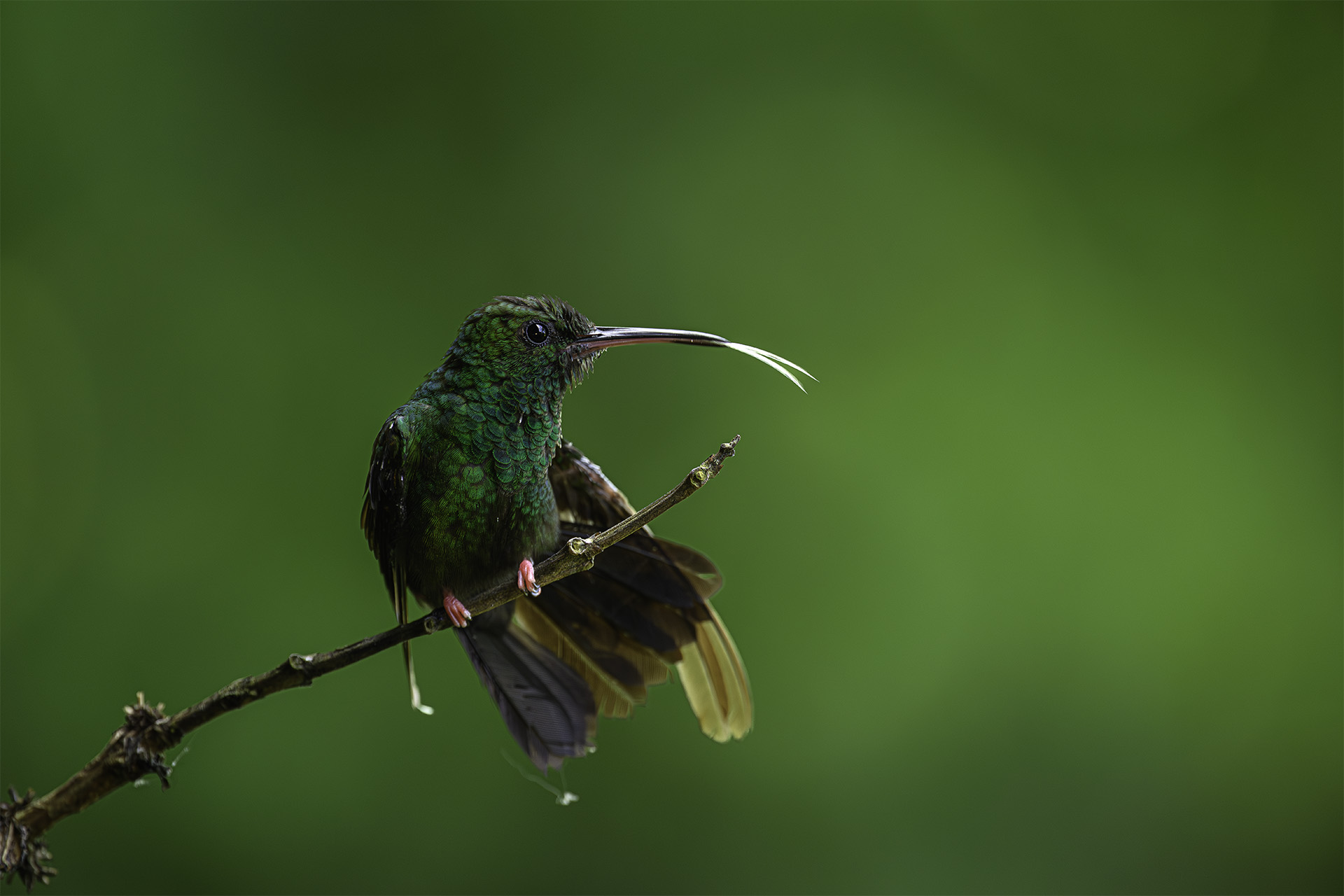
Far forking out! It’s been over half a century (😳) since I’ve heard, let alone used, the slang phrase from the 60’s that embellished the then common phrase for “cool,” only this embellishment was a cleaned up version of the word originally used in that sense. But, the cleaned up phrase popped into my head when I was reviewing my images from my trip to Costa Rica this past March and I came across this gem. I thought to myself that it really was “far forking out!” I have lots of images of hummers with tongues out but this is the only image I’ve found that illustrates the bifurcation, or forking (get it?), of a hummingbird’s tongue. This is a male Bronze-tailed Plumeleteer sitting on the same branch of a coffee tree that the Plumeleteer I posted yesterday sat on, only I took this image two days later. Not only was he bifurcated, he was possessive.

2025—Scratch That Itch!

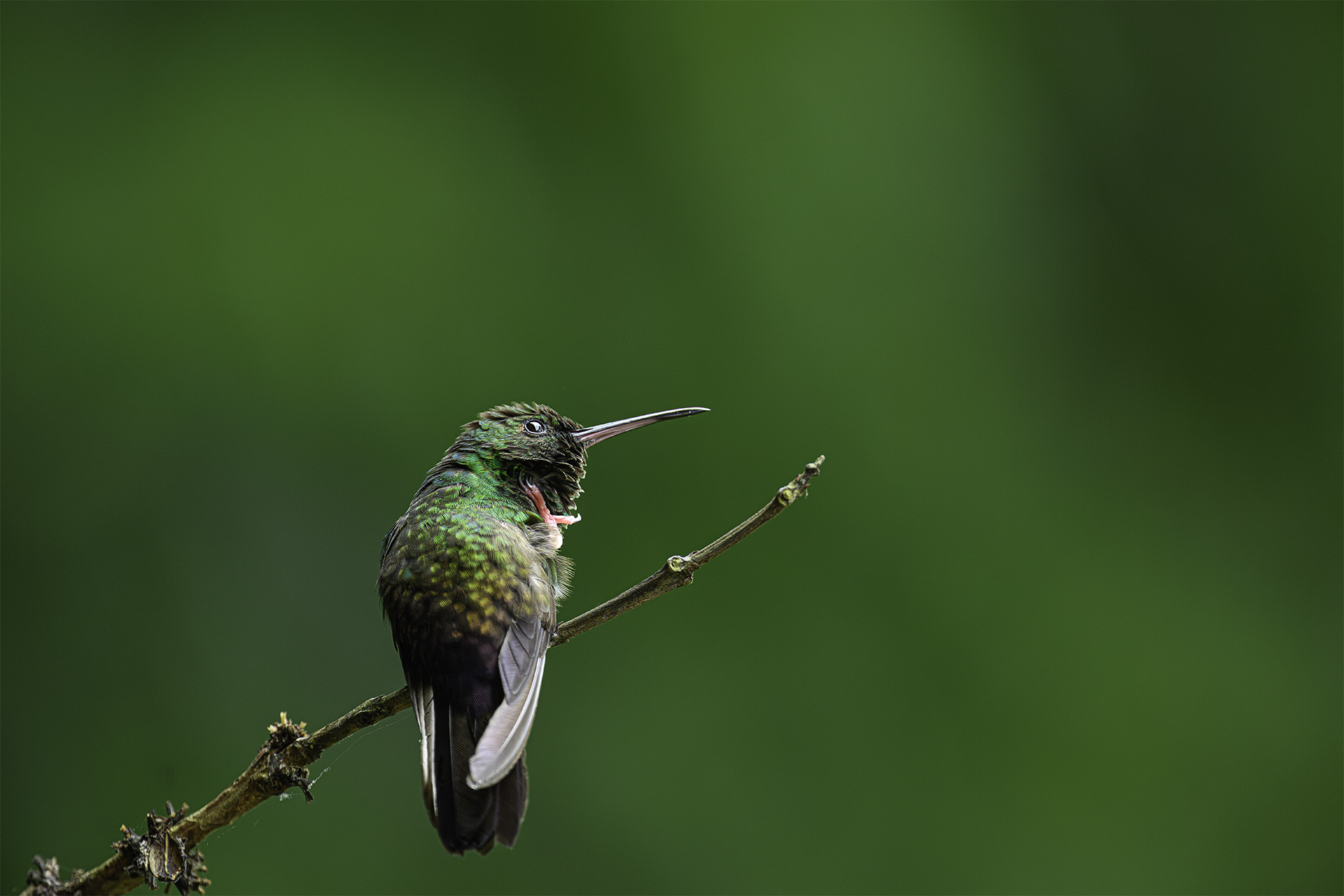
It’s fascinating to watch birds scratching an itch. Over the years, I have been amazed to see how often birds scratch their heads and necks and, how often I have photographed various birds scratching. I ran across this shot yesterday when I was reviewing photographs from a trip to Costa Rica this past March. The Bronze-tailed Plumeleteer that had been so elusive when I visited there in 2024 was constantly on display in 2025, perching, defending his perch, stretching, and preening. Occasionally it would scratch its neck. The hummer’s bright red foot stands out as it reaches up to scratch that itch!