
When I look back at sunrise photographs that I took on Caddo Lake last fall, I am still awestruck by the beauty there.
When I look back at sunrise photographs that I took on Caddo Lake last fall, I am still awestruck by the beauty there.
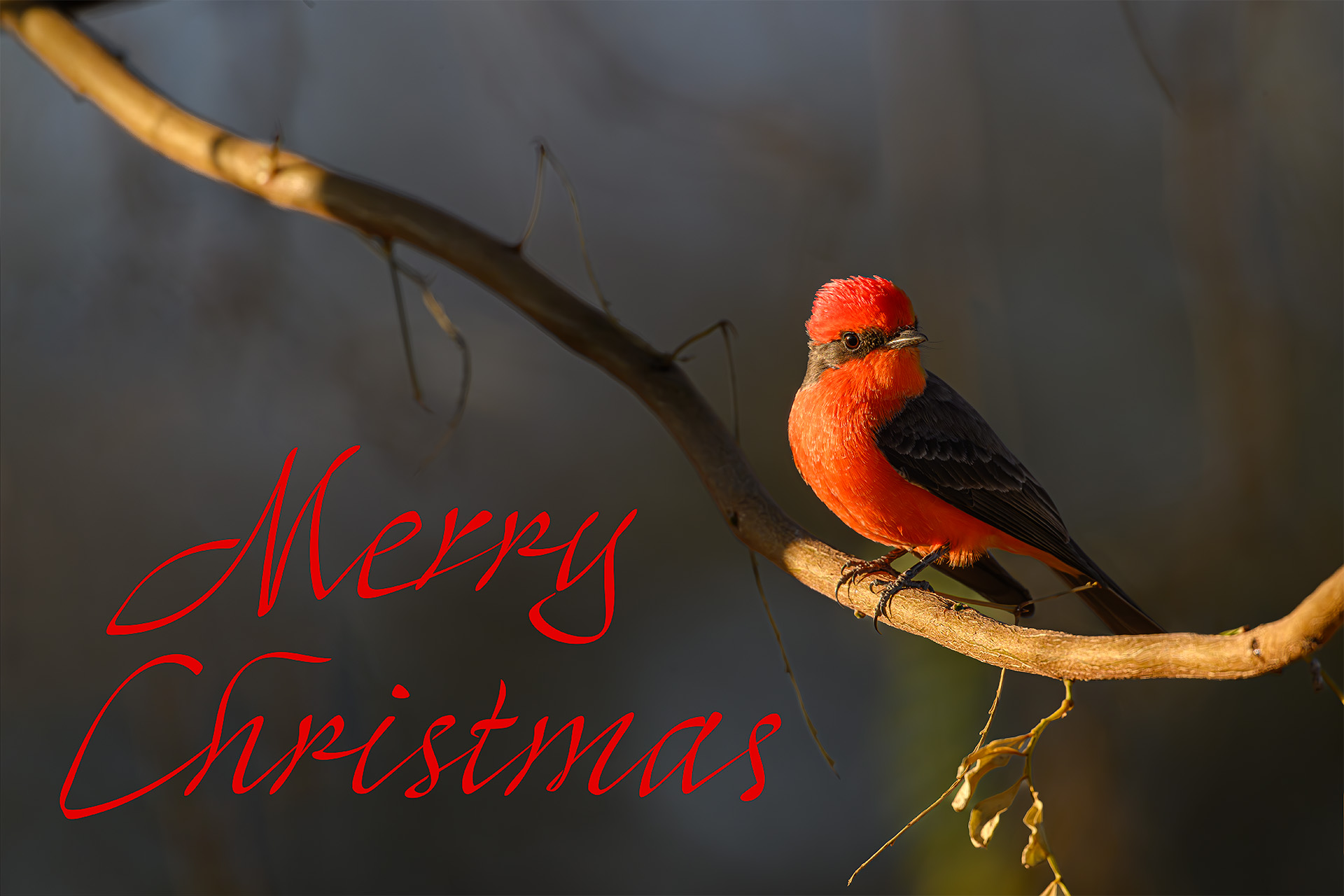
Merry Christmas, everyone!


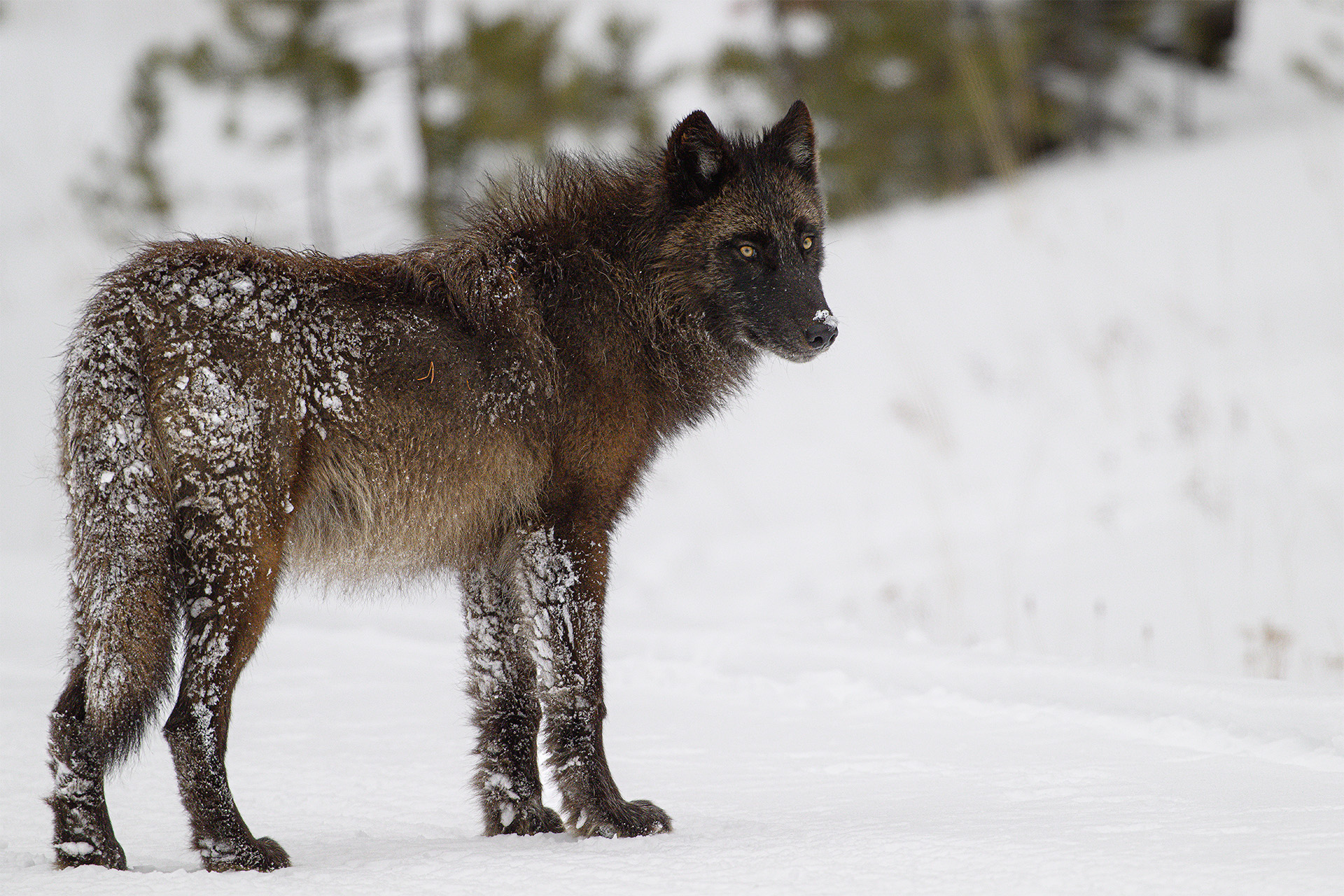
January 2024 offered me an incredible opportunity to photograph canines in the snow, in Yellowstone National Park and in Sax-Zim Bog in Minnesota. Coyotes, in their full, gorgeous winter coats, are so much fun to watch as they “mouse” in the snow and plunge head first after their small prey. This Coyote was on alert for its next meal. In Sax-Zim Bog, although we were there to photograph birds with the Great Gray Owl our primary target, serendipity offered me the opportunity to photograph a Red Fox, also resplendent in its full winter coat, from a vehicle serving as a blind. And, I must admit, as much as I love to photograph Coyotes and Red Fox, the crowning jewel of my January adventures was this Gray Wolf in Yellowstone, walking directly past me as I stood leaning against the Snowcoach. As awestruck as I was to be this close to a Gray Wolf in Yellowstone, I still managed to lift my camera to my eye and shoot until he disappeared into the woods.
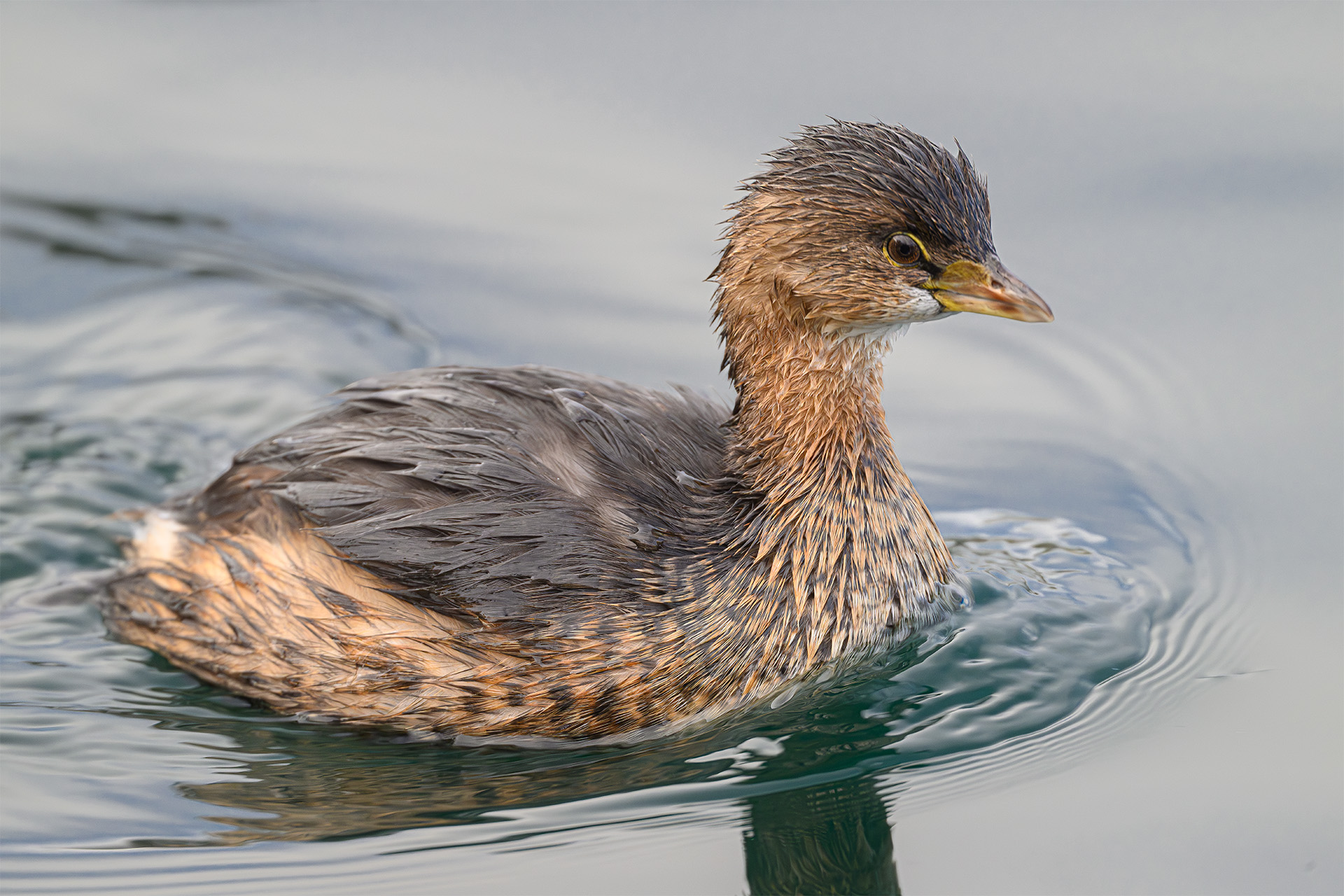
A drenched Pied-billed Grebe paddles across Water Ranch Lake. This little bird with the perpetual smile was diving down under water in search of breakfast. What struck me is that most birds, and especially water fowl, have feathers that repel water. Evidence that they have been diving under water is usually just standing drops of water on their feathers as the water rolls off, not soaking the feathers. Whenever I saw the Pied-billed Grebes, their feathers seemed to be drenched. I guess it works for them.
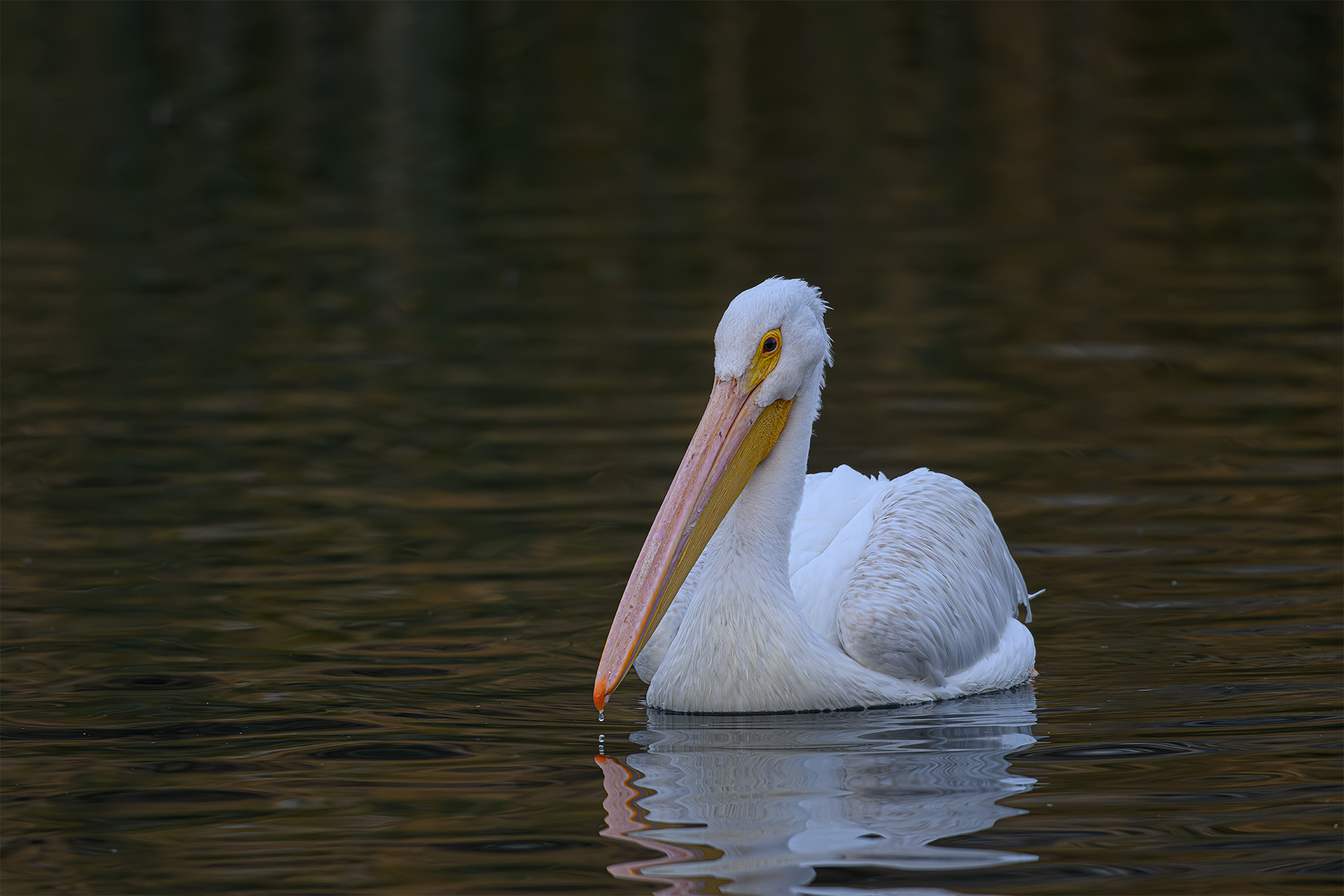
An American White Pelican floats on Water Ranch Lake in the early morning. It was the only American White Pelican we saw at the Riparian Preserve. Last year when we were there, quite a few pelicans were in evidence. I was hoping to get shots of this one gulping down a fish like I did last year but I never saw this one even dip its head under water despite the water drops on its beak.
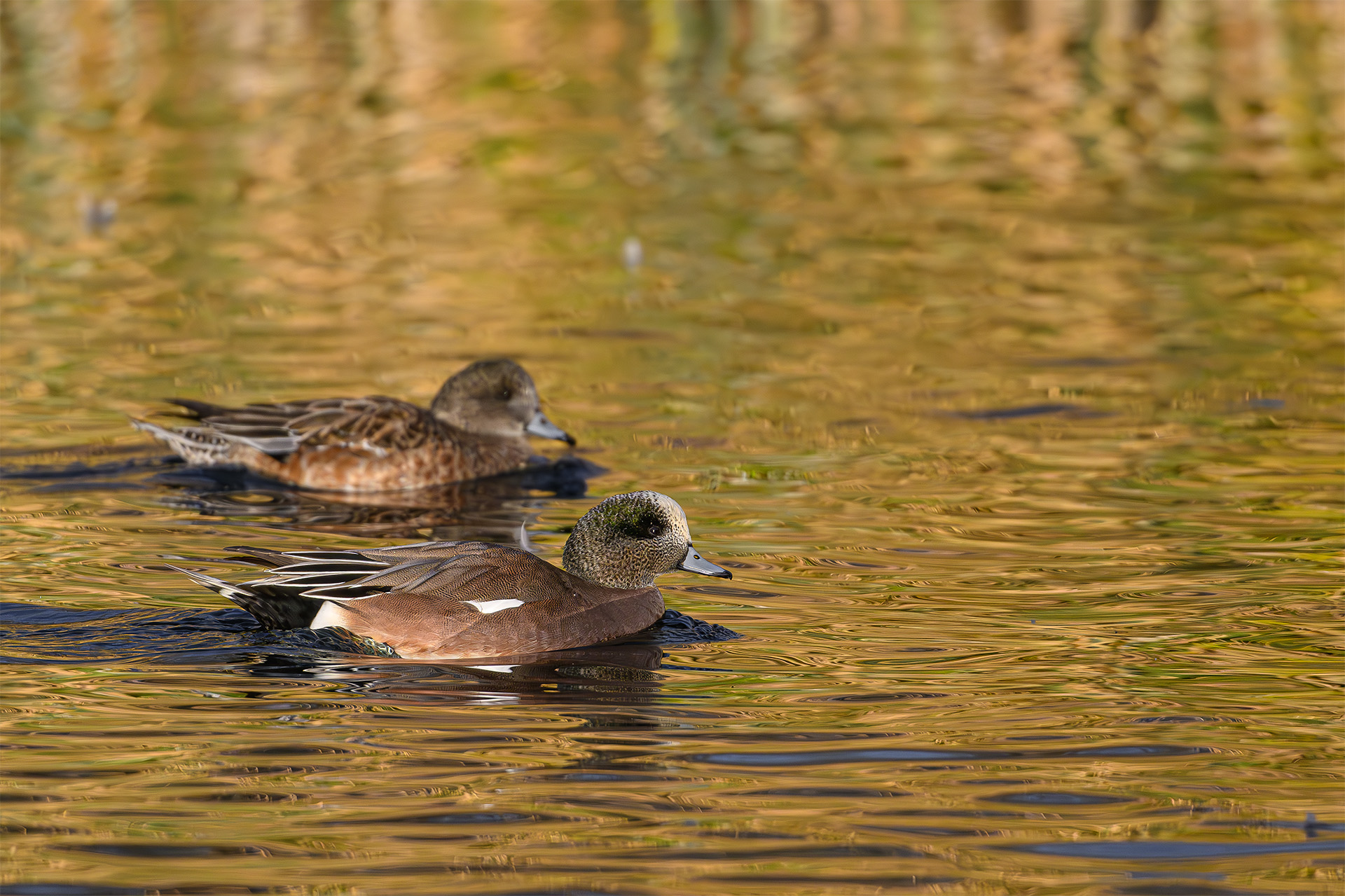
A pair of American Widgeons swims across Water Ranch Lake toward the place on the floating boardwalk where people come to feed the ducks on the lake. As soon as someone walks to that area of the boardwalk, every duck (there are dozens) immediately turns and swims in that direction to reap the rewards. As soon as the feeder stops, all of the ducks return to the area of the lake where we were photographing them. Not sure if they returned thinking they’d get fed there (they did not; it was wishful thinking on their part) or if they normally gather there where we found them floating and sleeping early every morning we were there.
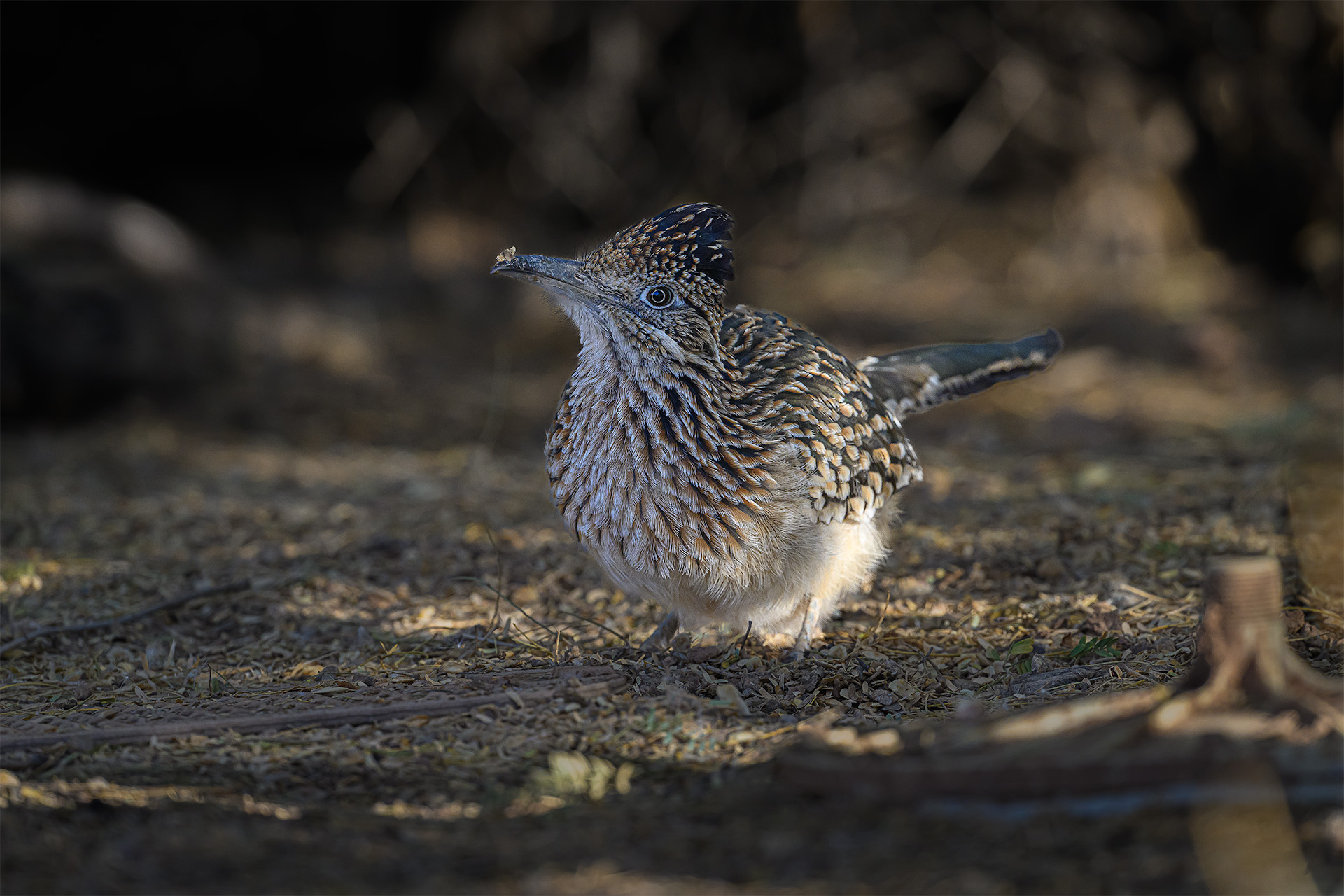
It was definitely “whap whap” that I heard, not “beep beep.” We were exploring the Botanical Garden area at the Riparian Preserve at Water Ranch. A Greater Roadrunner scurried by and disappeared into the sticks and shrubs. We were lined up along the trail when I heard the sound. As I crouched and peered through the dense thicket, I could see movement and each movement coincided with a “whap.” By the time I realized it was the Roadrunner beating an unfortunate frog into submission and was able to move to a place where I could see him, he had already swallowed the frog and was frozen in place in what was probably the avian version of a food coma.
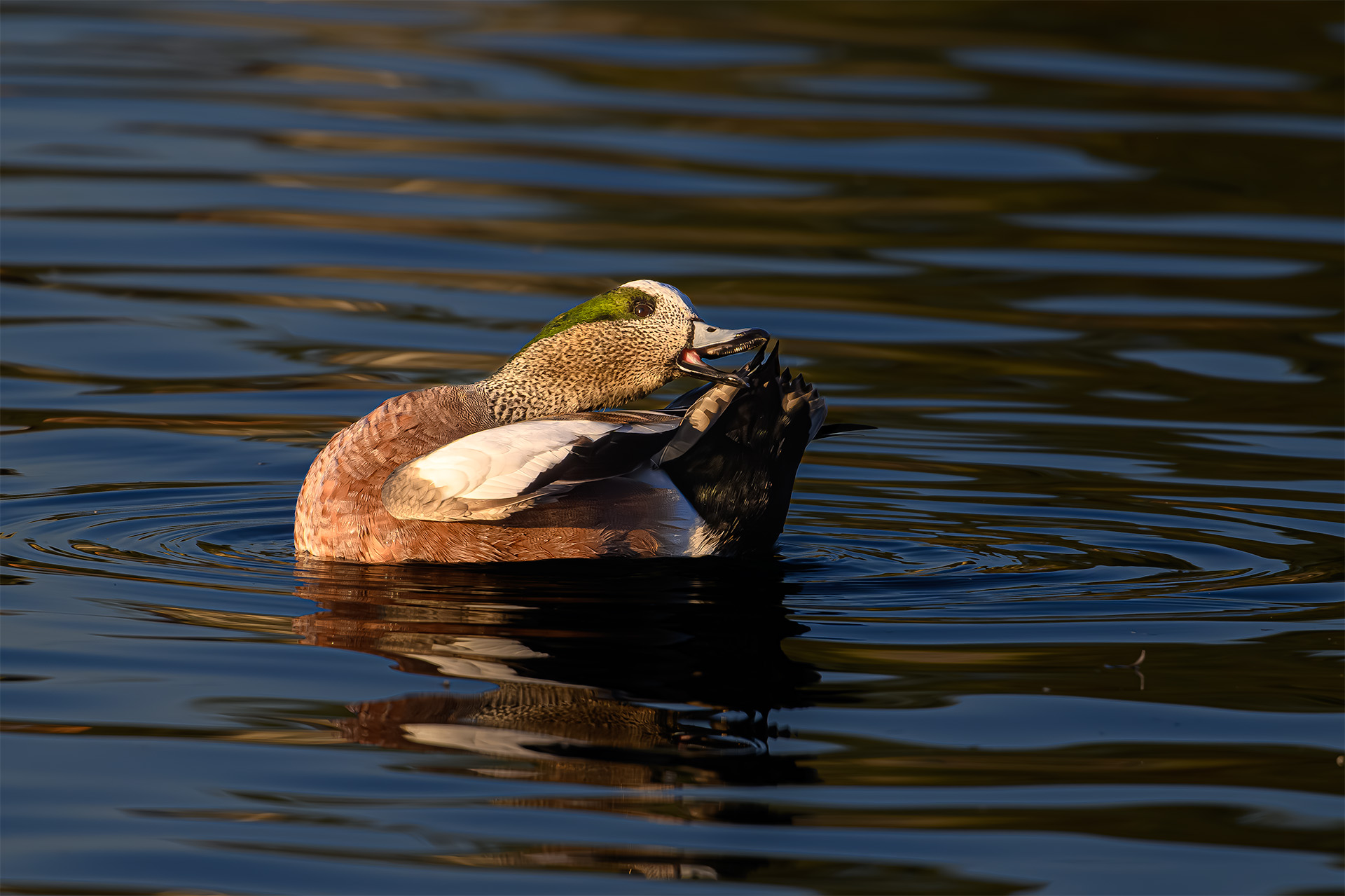
If you love birds, the Riparian Preserve at Water Ranch in Gilbert, Arizona is just the spot. It is a 110 acre wetland and wildlife sanctuary that was developed 25 years ago after the Town of Gilbert made a commitment to reuse 100% of its effluent water. The result is 7 ponds, numerous walking trails, a fishing lake, viewing blinds, an observatory, and dedicated play areas. The riparian area that has been created is a wonderful place to see and appreciate a wide variety of avian life from tiny warblers to shore birds and even seabirds like the American White Pelican. The floating boardwalk that crosses Water Ranch Lake offers opportunities to see and photograph water fowl. This is an American Widgeon, seen preening in early morning light from the floating boardwalk.
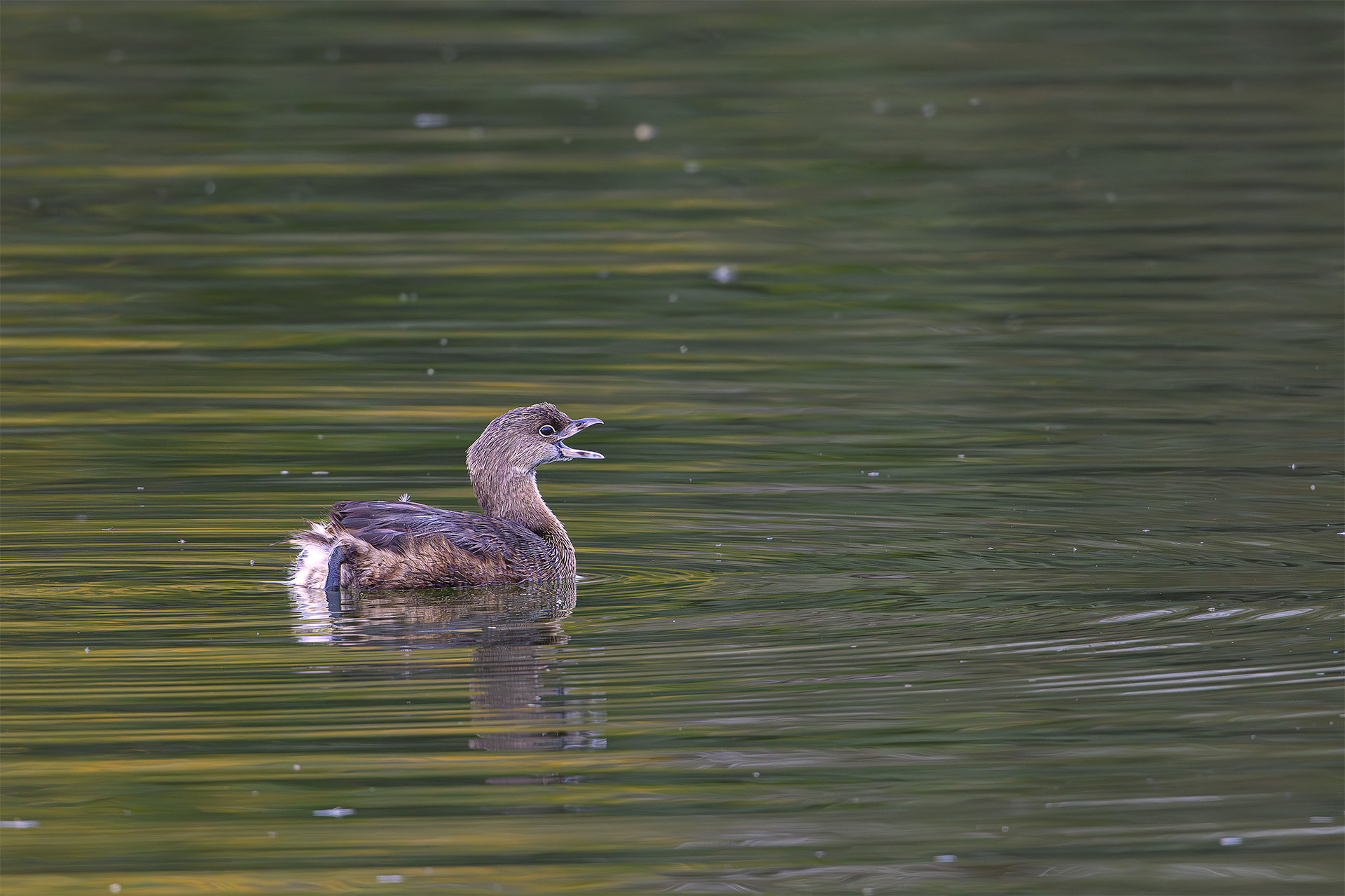
It’s the opposite of “Angry Bird.” The Pied-billed Grebe seems to have a perpetual smile on its face. When it opens its bill, it looks like it is laughing heartily. The adorable little bird swam back and forth on Pond #1 at the Riparian Preserve at Water Ranch in Gilbert, AZ last week always with its perpetual smile.
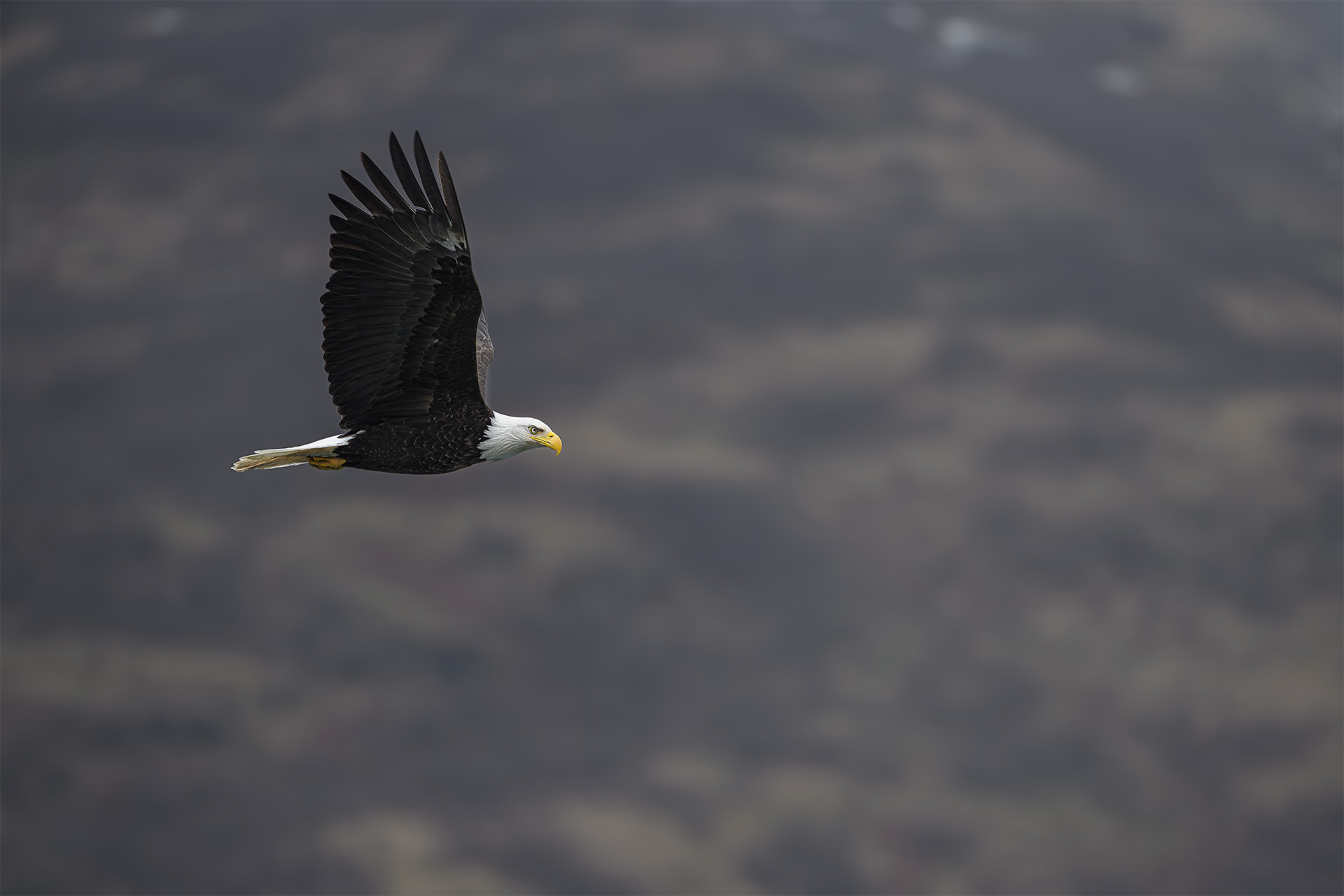
Yesterday, the House of Representatives passed legislation in a voice vote to designate the Bald Eagle as our national bird, following the US Senate’s unanimous vote in July. It is now headed to the President to enact into law. The Bald Eagle is protected by the Migratory Bird Treaty Act and the Bald and Golden Eagle Protection Act, both of which prohibit killing, selling or harming bald eagles, their nests or their eggs. Although the Bald Eagle has been considered a national symbol since the Second Continental Congress put the bird on the Great Seal of the United States in 1782, it has never officially been declared the national bird under U.S. Law. That is about to change and it’s about time

The saguaro cactus is a common perch for Curve-billed Thrashers, birds that live in the Sonoran Desert of Arizona. It’s a rather prickly perch but this bird seems aware of and used to the sharp spines of the saguaro. I guess this could be considered an environmental portrait.
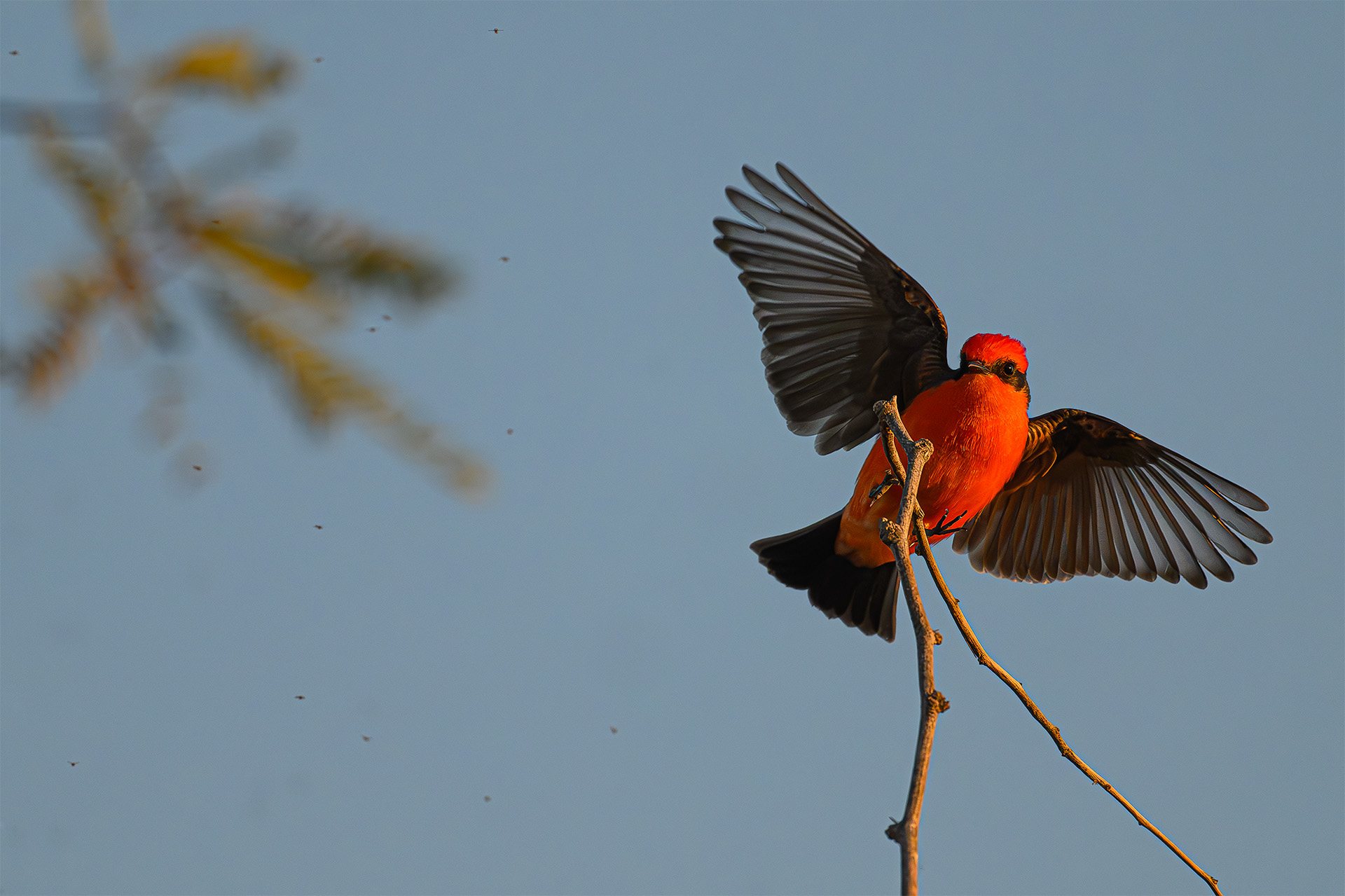
This eye-catching Flycatcher was catching flies at the Riparian Preserve at Water Ranch every afternoon during my recent visit there. This Vermilion Flycatcher’s actions were usually predictable. He preferred a certain area in the preserve where small flying insects swarmed and he would perch on certain branches in certain trees while he waited for his prey to come near. For the most part, his perches were out in the open and I have some really great shots of him perched in great light. But, one of my challenges was to capture him in flight, wings outstretched, while he did his thing. Usually, my reaction time was too slow to capture him when he took off. When Moose suggested that we try capturing him landing on his perch instead of taking off, I had more success because of a simple suggestion Moose made. The idea was to watch the bird take off and count off two seconds, keeping the camera focused on the spot where he took off, then start shooting. More times than not,he returned to the same perch within a couple of seconds. In this shot, the Vermilion Flycatcher is landing back on his perch, still watching the swarm of flies surrounding him.

Northern Shovelers are dabbling ducks with a spatula shaped bill. They forage in shallow wetlands so the Riparian Preserve at Water Ranch is the perfect setting for them. I watched this shoveler as it bathed enthusiastically and then rose up and flapped its wings to shake off the excess water.
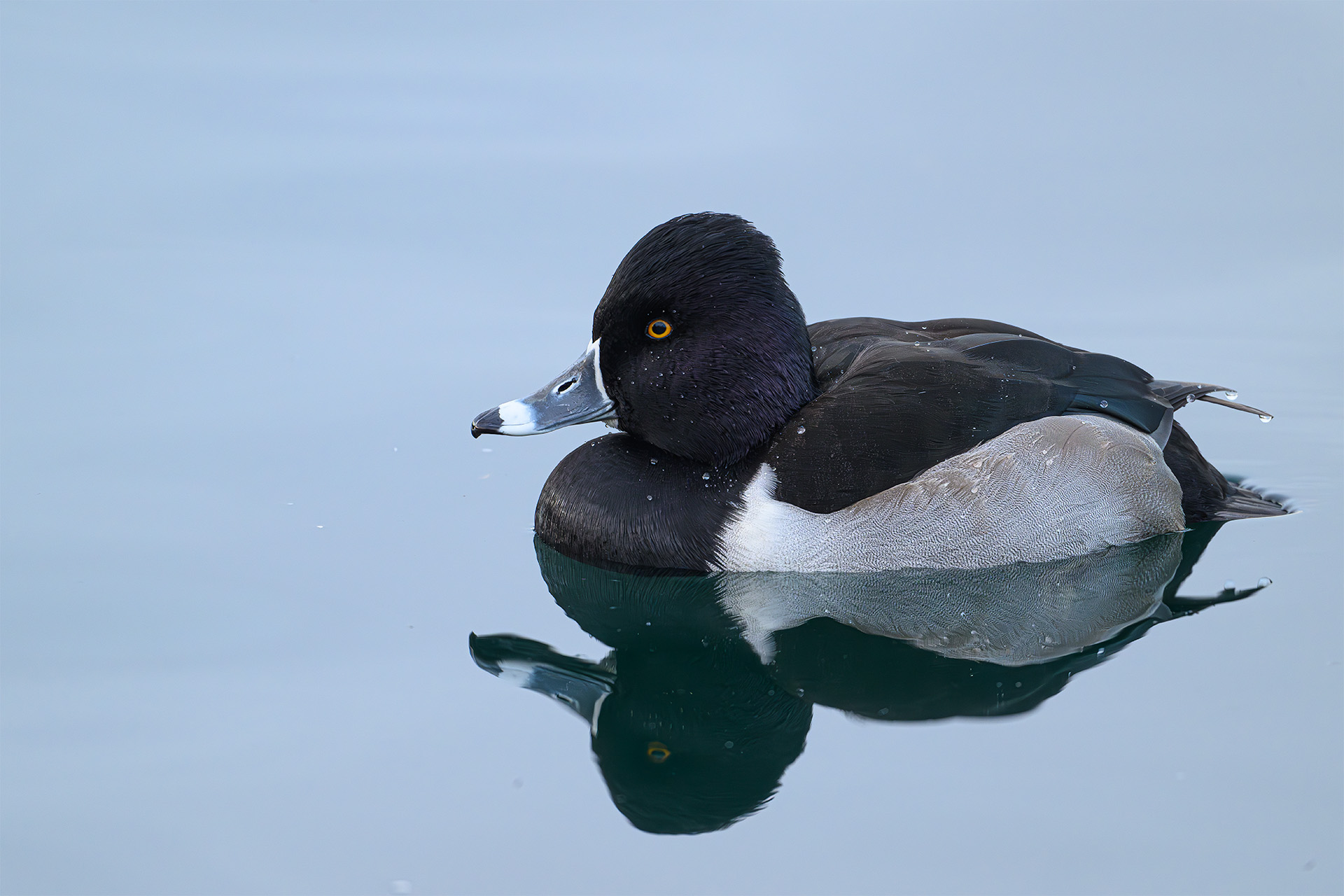
Yesterday morning, the surface of Water Ranch Lake was smooth as glass, nary a ripple to be seen. It was still early and many of the ducks were floating calmly on the surface, some still sleeping. The people who feed the ducks from the boardwalk had not yet arrived so the ducks there had nothing to make waves about. This Ring-necked Duck floated calmly beneath me. He’d already been diving for breakfast as he’s covered with water droplets but the water surrounding him when I took this image had already returned to glass.
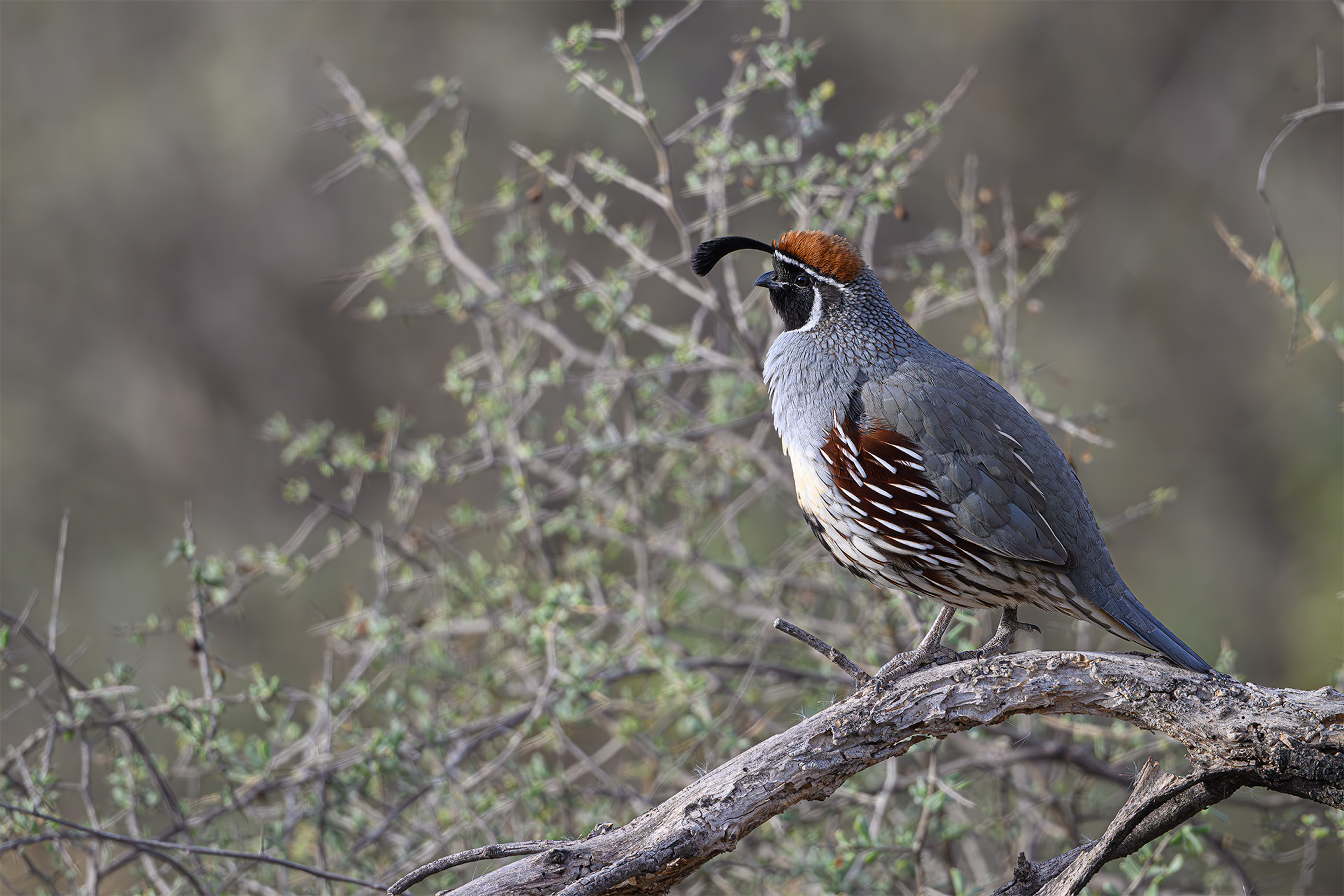
Yesterday, we spotted a covey of quail on our morning walk through the Riparian Preserve at Water Ranch in Gilbert, Arizona. The male Gambel’s Quail was alerted to something and he took the high ground to see what was going on. Most of the other quail took shelter under nearby shrubs as he watched intently for potential dangers to his covey. His gambit paid off as whatever danger he perceived soon dissipated and he walked off the branch and rejoined the covey. We were lucky that the slight overcast mitigated the harsh sunlight that seems to be the norm here, even relatively early in the morning.

There is something really special about the morning reflections on Pond #1 at the Riparian Preserve at Water Ranch in Gilbert, Arizona. The trees and shrubs that surround the pond are turning to oranges and yellows. As the sun climbs, it lights up the colored foliage and that is reflected on the ponds. Yesterday morning, a small group of Black-necked Stilts was hunting in the shallow waters of the pond and as they walked across, they passed from one band of color into another.
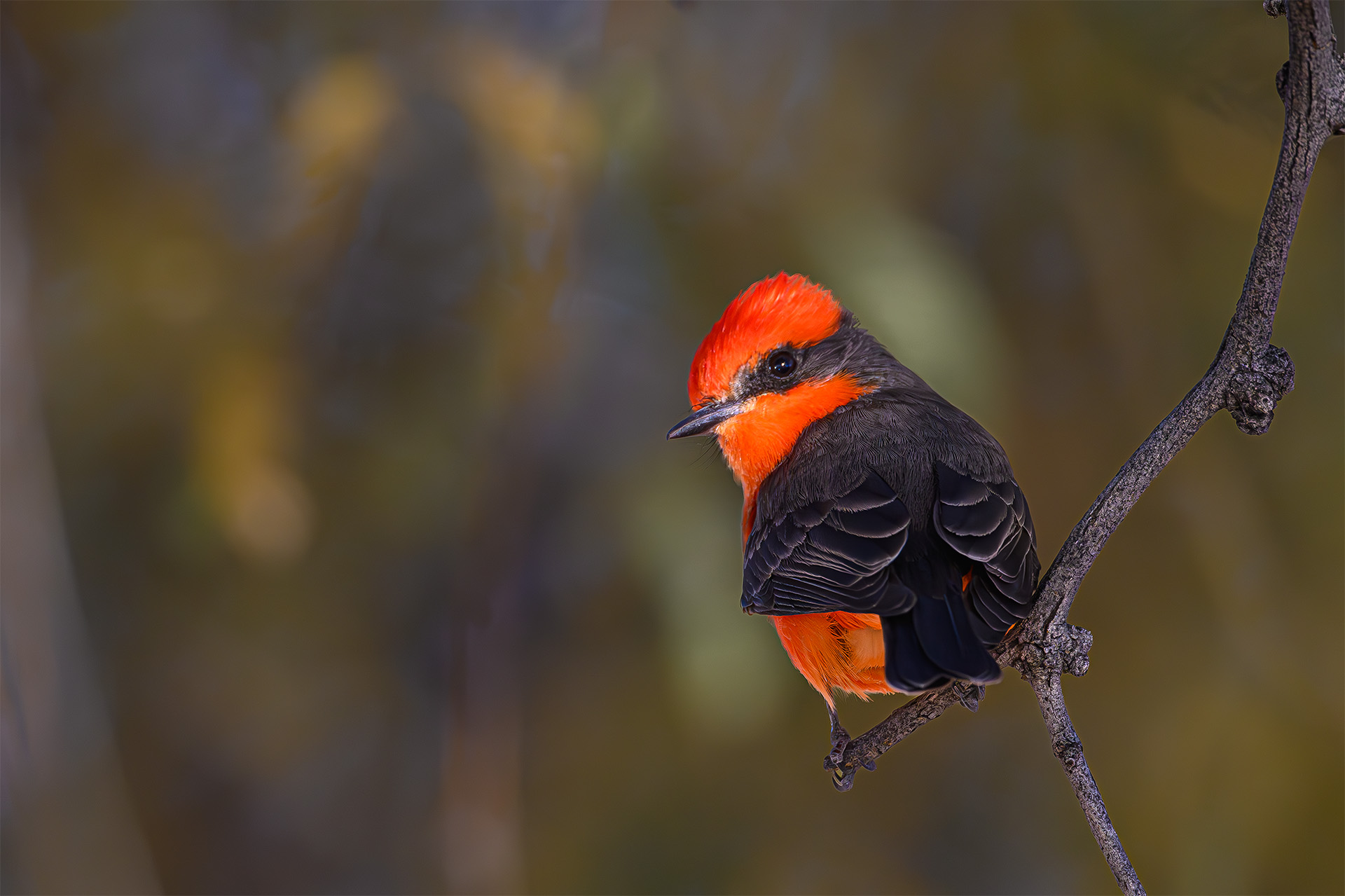
As this adorable Vermilion Flycatcher turns to look behind him, he’s probably thinking “Are you following me?” and the answer would be “Yes! We are!” I’m at the Riparian Preserve at Water Ranch in Gilbert, Arizona. We had a marvelous first day here, ending with the Vermilion Flycatcher who to our delight, returned again and again to a particular perch, much of the time one like this in full view and without obstructions. He would leave the perch in pursuit of small gnats and tiny flying insects only to return to the same perch over and over. Then, as the insects moved on, he’d fly to another perch that afforded him the perfect view and flight path for catching his dinner. And, we would follow as he left one tree for another then another. Lots of people visit the Riparian Preserve at Water Ranch and our tripods and long lenses attracted attention from some of the visitors who asked questions like “what is that bird?” which we were happy to answer. Through all of that, the little flycatcher went about his business of catching flies, having become fairly acclimated to the people passing under his trees
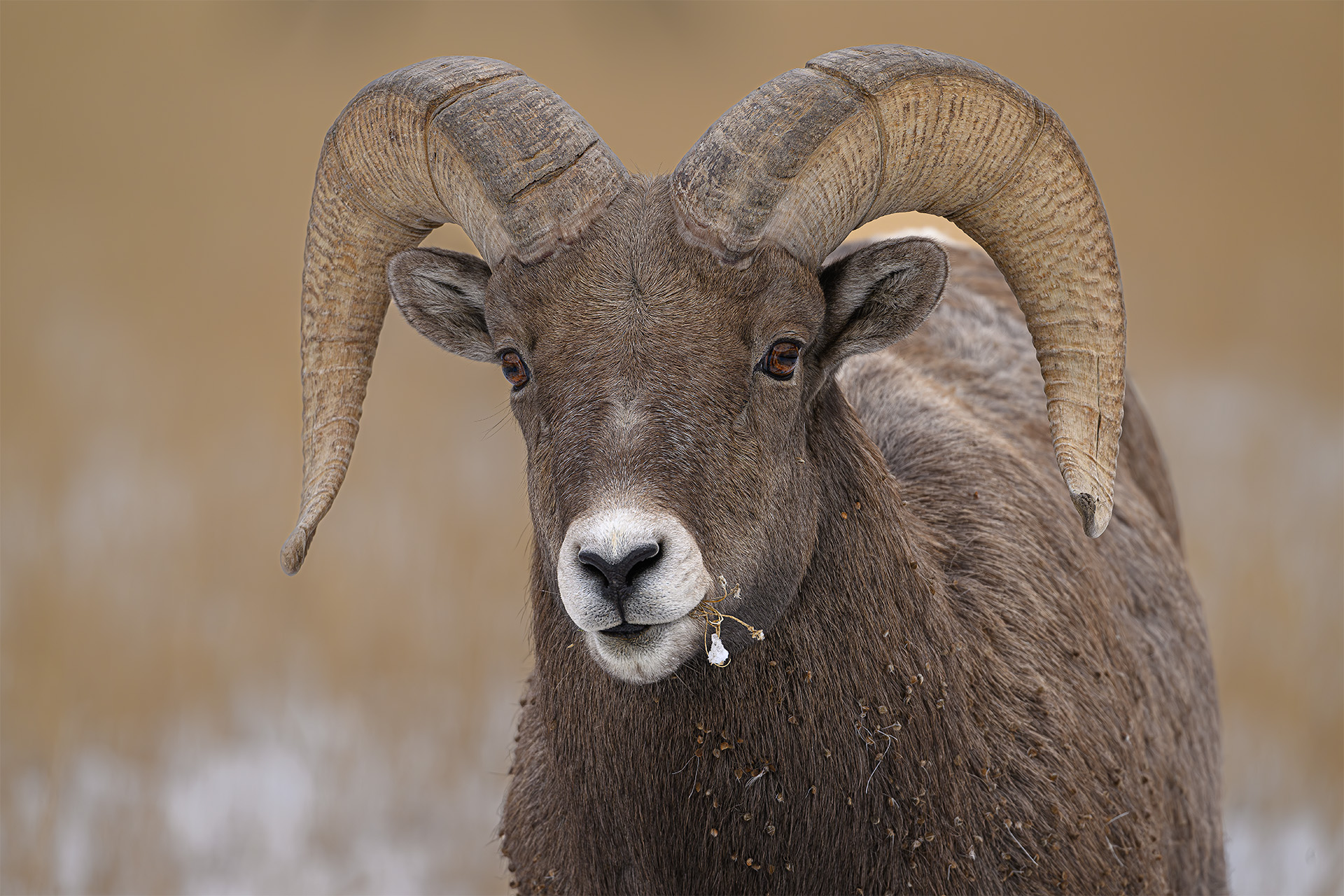
Bighorn Sheep bed down in the grasses and plants they feed on. The seeds and buds and stems from the plants attach themselves to the sheep’s coat, dotting it all over as in this image. This ram was enthusiastically chewing a stem of something that had a small dollop of snow that made it look almost like a flower. It wasn’t until after I took the photograph that I realized it was a dollop of snow and not a flower bud. These magnificent ovines can be an endless source of fascination and entertainment in Yellowstone.

Tracking Common Ravens has shown them to be incredibly competent when it comes to navigation, responding to sounds and remembering sources of food. In Yellowstone, the Common Ravens are where visitors stop. They know how to open hatches on snowmobiles to access visitors’ food and how to enter a snow coach when the windows are down just enough to find any tidbits left in the open. This Raven was perched atop a rock with its mate when we stopped to watch as it played with what appeared to be a partial wing of some type of bird. This Raven has leg bands and a GPS tracking device affixed to its back. The study of Ravens in Yellowstone and surrounding areas is conducted by a research team that uses an App that lets you track the locations of the Ravens based on the color and leg position of their bands. When I searched for this bird based on its leg bands on the Animal Tracker App, it appears to be #7645, white over dark blue on left leg, green over silver on right leg. What I found interesting is that according to the App, this bird has not been tracked or documented recently and it was last documented about halfway between Livingston and Gardiner, MT three years ago. That may mean I misidentified the colors of the bands, that the GPS tracking device has died, or that reporting is spotty or inconsistent. We spotted it about 60 miles south of where it was last documented, now inside Yellowstone National Park. Their research shows that Ravens travel long distances so that is not an unusual occurrence.
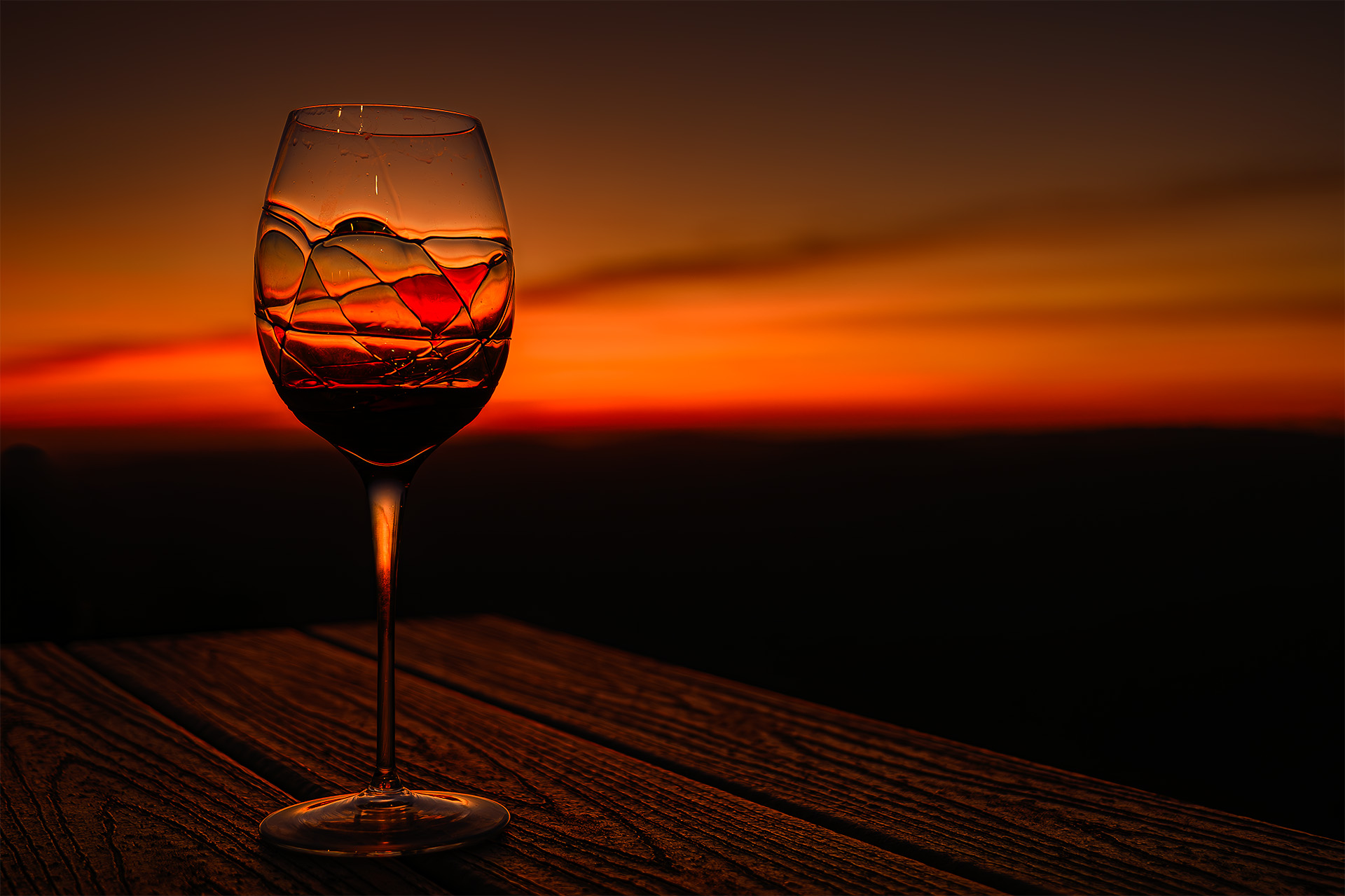
Last evening, the Board of Directors of the Placer County Photography Club convened for a delightful evening of good food, good friends, and good wine at Pam’s home overlooking the North Fork of the American River. What a delightful evening it was with a memorable sunset that was the perfect backdrop for this almost empty glass of Zinfandel. Once the photographs were taken you can rest assured that I refilled it.