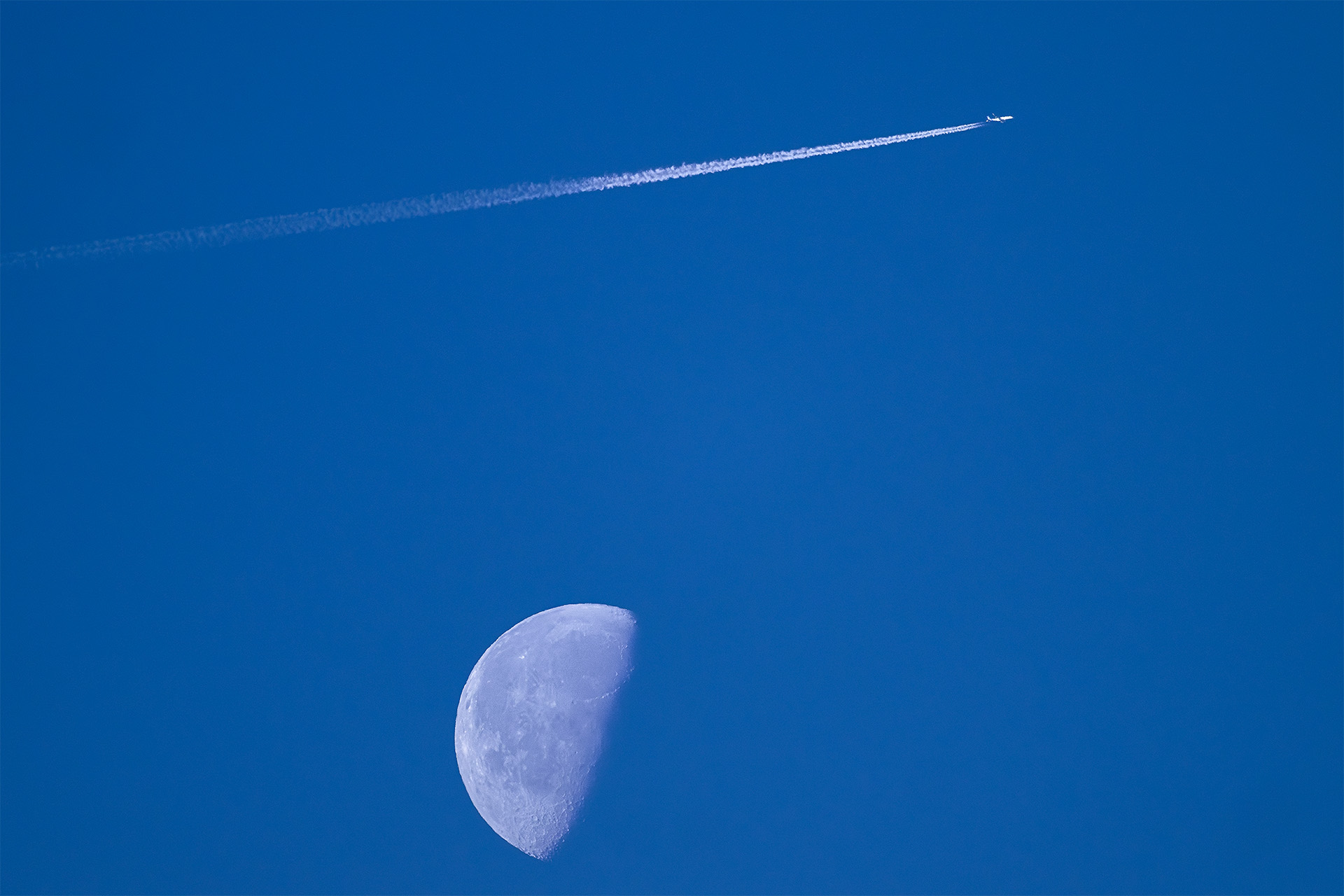
A couple of weeks ago at Gray Lodge, as I watched an Alaska Airlines plane flying over the moon, still visible in the blue morning sky, I kept hearing Frank Sinatra’s voice singing “Fly me to the moon” in the background.
A couple of weeks ago at Gray Lodge, as I watched an Alaska Airlines plane flying over the moon, still visible in the blue morning sky, I kept hearing Frank Sinatra’s voice singing “Fly me to the moon” in the background.
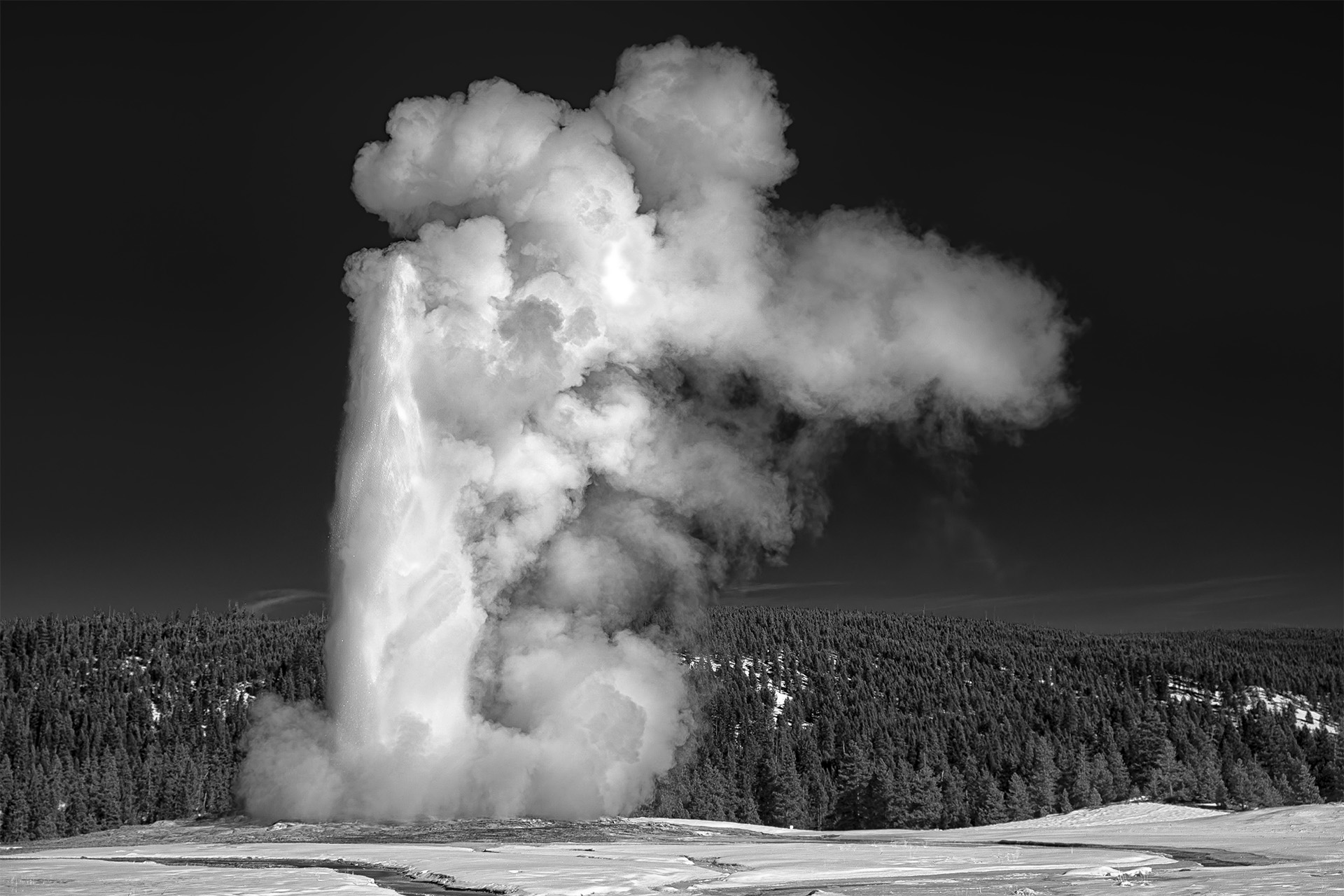
The geysers in Yellowstone National Park are some of its most iconic attractions and heading the list of those iconic geysers is Old Faithful, once known as “Eternity’s Timepiece” because it was thought to erupt every hour on the hour. It apparently has never done that but the National Park Service does its best to predict eruptions for those who want to be there for the show. They always give eruption times with a caveat, + or – 10 minutes. Old Faithful generally erupts at 70 to 90 minute intervals and the eruption lasts from about a minute and a half and up to five minutes, spewing steam and water vapor into the air to well over 100 feet. The NPS was spot on for this eruption, predicted for 12:09 PM a couple of weeks ago. It’s first spurt was at 12:08:33; I took this about 10 seconds later and the show was over in three minutes. Sometimes if you blink, you miss it but after all, it is Old Faithful so give it another hour or so and you’ll get another chance to see the show.
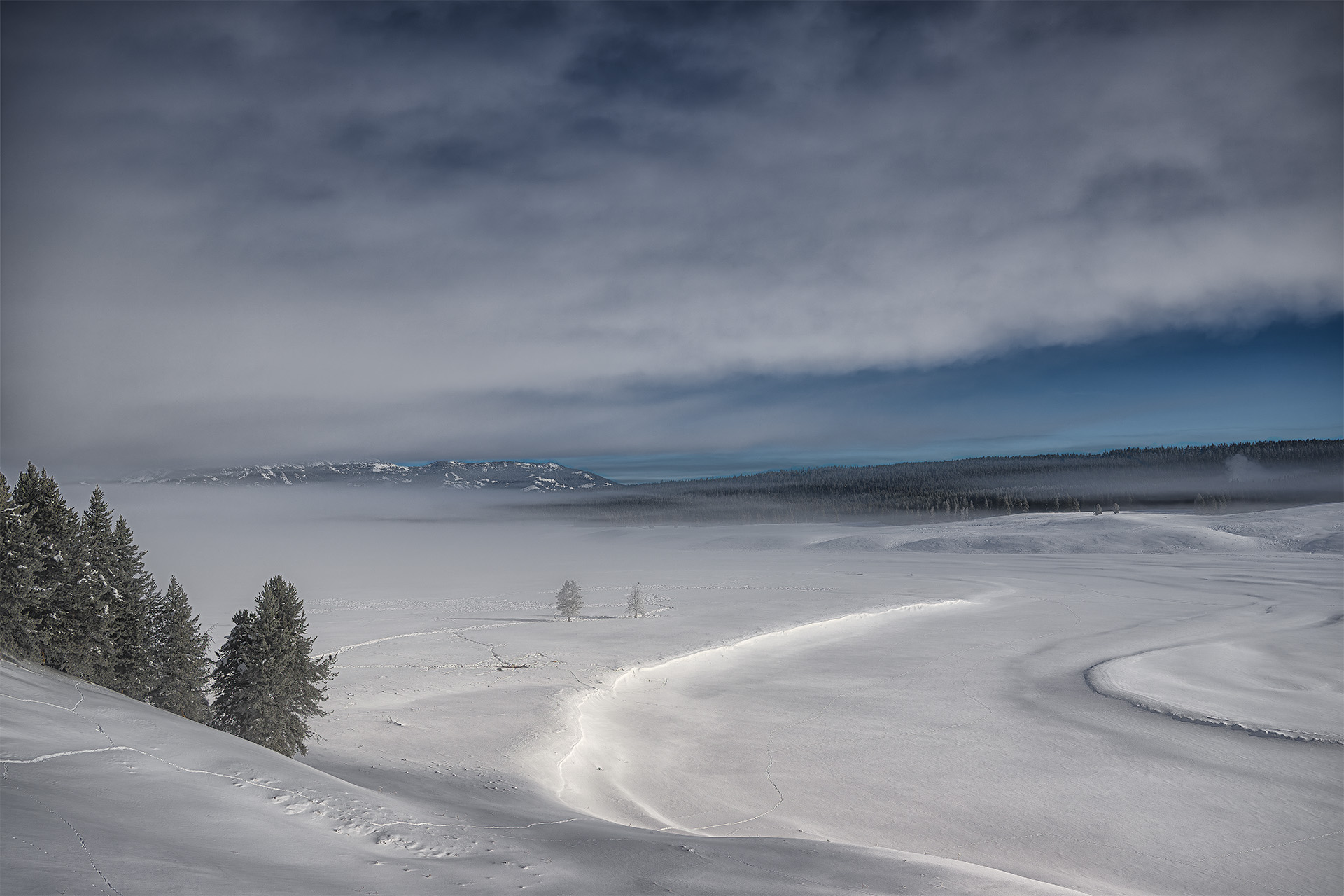
An idyllic looking scene of the frozen Yellowstone River as it winds through Hayden Valley was not so serene just a few days before I took this photograph. What remains of the life and death battle scene from four days earlier is barely visible from this distance. The Wapiti Lake Pack killed a 700 plus pound Bison cow and at least 23 members of the pack feasted on the carcass. After four days, most of the pack have moved on and only a few Gray Wolves are still at the site of the carcass. A lone Bald Eagle waits patiently atop a leafless tree to the right of the site. Very little is left of the carcass and the scavengers are waiting in the shadows to descend on the remains of the day.

The fumaroles, mud pots, and hot springs around Dragon’s Mouth Spring in Yellowstone National Park last week spewed steam and mist into the air, creating a dense fog that clung to the ground. A lone Coyote crossed silently in front of us, seemingly unbothered by the limited visibility.

The first couple of days in Yellowstone National Park last week were pretty chilly — it was minus 26 on Monday and minus 16 the day I took this photograph. Temperatures were relative because different parts of the park registered different temperatures, some even colder. Suffice it to say that the temperatures were cold enough that the breath of this Coyote showed while it was poised on the ridge behind us, slightly backlit, as it did reconnaissance of the kill site where the day before members of the Wapiti Lake Pack had taken down a Bison cow. Coyotes come to the kill after the wolves have finished. At the time, there were still a couple of wolves gnawing on what was left of the carcass, and most of the rest of the pack were still in the area, the older wolves lazing in the snow, the younger wolves romping around them.
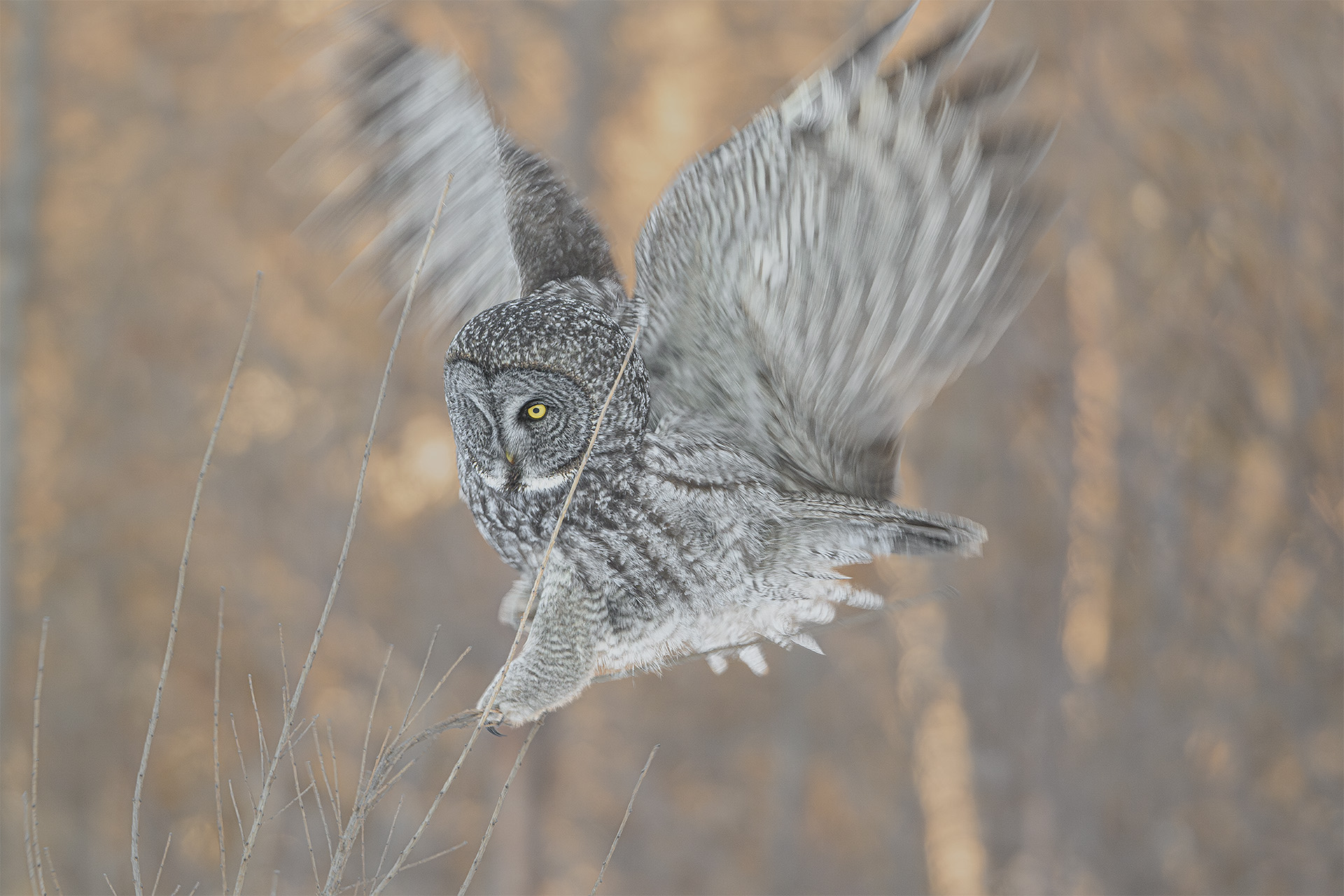
Great Gray Owls, at about 24 inches in length, are North America’s largest owl by length but, not by weight. We watched this Great Gray Owl move from perch to perch over a four-hour period on our last afternoon at Sax-Zim Bog as he sometimes dozed and sometimes listened for prey beneath the snow. When he chose this perch in a spindly leafless shrub close to the ground, a perch that seemed so flimsy I was surprised the owl stayed there, it must have seemed ideal because he performed a balancing act, twirling around until he finally settled down and balanced perfectly on the twig.

We had only one colorful sunrise in Yellowstone National Park last week when the temperatures hovered below zero and the skies were clear. On our last day, a few clouds formed in the skies, portending the storms predicted for the weekend. As the sky turned red, we stopped at a pullout along the Madison River. The colorful sunrise lasted mere minutes and when we walked a few feet further to get more of the river into the photograph, the color disappeared. I was lucky to get the few shots that I did. It was colorful enough to reflect a bit of color in the water as the steam rose into the frigid air.
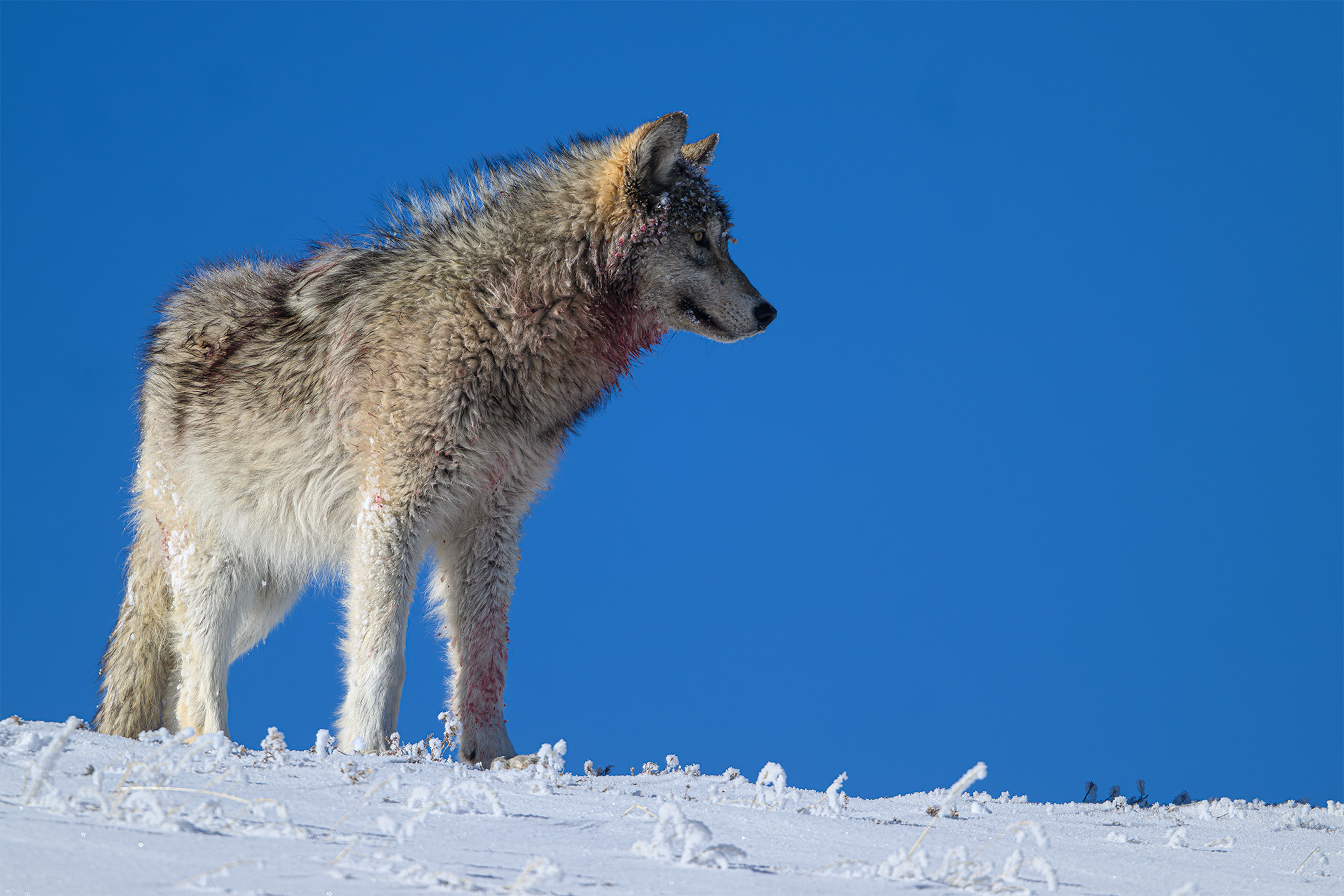
I’m still awed by the scenario we encountered last week in Yellowstone National Park when a pack of Gray Wolves harassed a group of Bison, then killed one they had singled out, right before our eyes. A lone Coyote had the nerve, maybe I should say hubris, to skulk around the periphery but quickly made an exit when one of the Gray Wolves that had already consumed a meal of Bison, went up the ridge to make sure the interloping Coyote changed its mind about trying to access the kill site and left the area. The Gray Wolf’s steady gaze was enough to keep the Coyote going in the opposite direction of the kill.
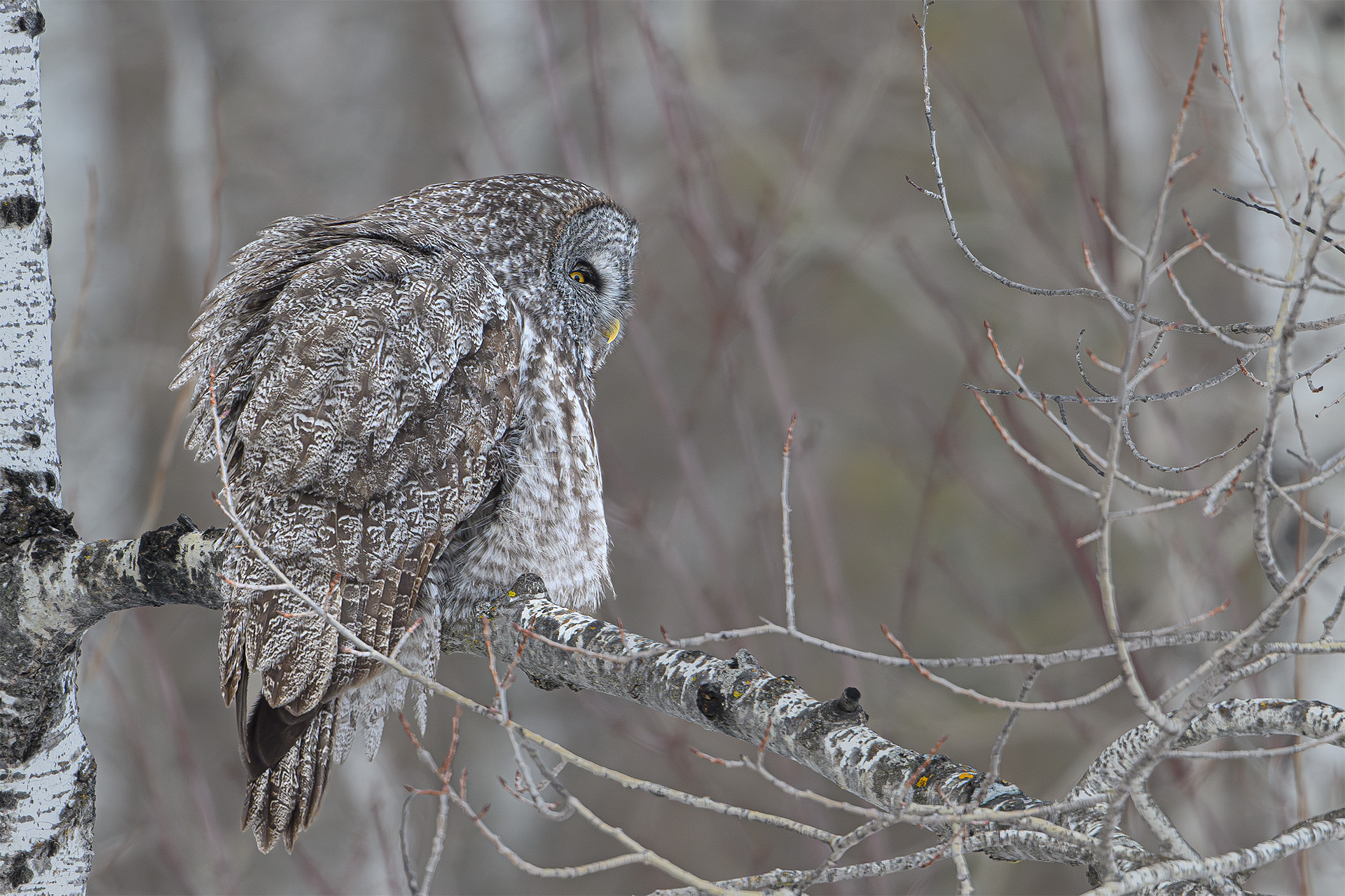
The Audubon Society’s definitions of “Birbs” continues to amuse me and often, when I see a bird, that bird’s appearance in relationship to those definitions is on my mind. Audubon clarifies the online avian classification of “Birb” as birds that are small, round, and the always cute. They go on to define “Borbs” (fat birds), and “Floofs” (fluffed up birds). Most birds of prey are usually, though not always, excluded from “Birbness” and “Borbness,” but they can, and do, “floof” at will so ruffled birds of prey can definitely be “Floofs.” Audubon clarifies that “Birb” and “Borb” are nouns and “Floof” can be either noun or verb. “Floof” is definitely more of an action on the bird’s part. When this majestic Great Gray Owl at Sax-Zim Bog fluffed its feathers a few weeks ago, it suddenly took on the appearance (to me) of a “Birb” or at least a “Borb” and most definitely a “Floof.” In fact, I think that it is round enough and cute enough that it should qualify as both a “Birb” and a “Borb” too.
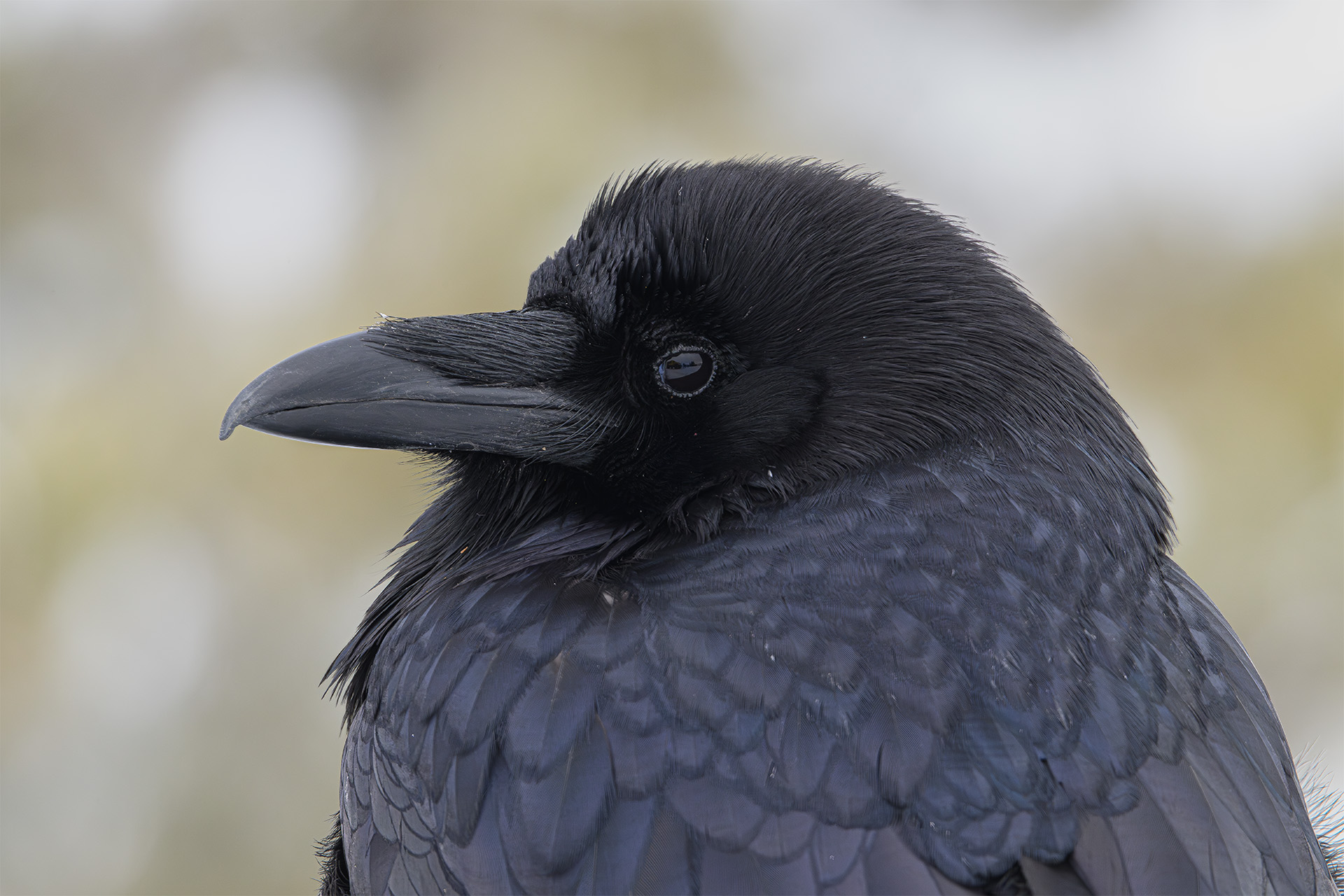
Common Ravens are quite common in Yellowstone National Park. The Ravens are opportunists. Wherever food might be available, there they are. This is very likely one of the Ravens that scavenged the carcass of the Bison that we witnessed the Wapiti Lake Pack of wolves attack and kill on Monday. I photographed this Raven on Friday in the parking pullout, near where we stood to photograph the Gray Wolves on Monday. By Friday, the Wapitis had moved on and almost nothing was left at the kill site. A pair of Coyotes and a few Common Ravens scavenged what few remnants remained. This Raven was perched on a log fence surrounding the parking area, not at all concerned with our presence and he moved only his head to look around occasionally. Maybe he was thinking that we might be a source of food. We were not, but if you look closely, you can see our snow coach reflected in his eye and me standing in front of it photographing him. He was probably trying to figure out how to get into our snow coach to ransack it for any food we might have inside.

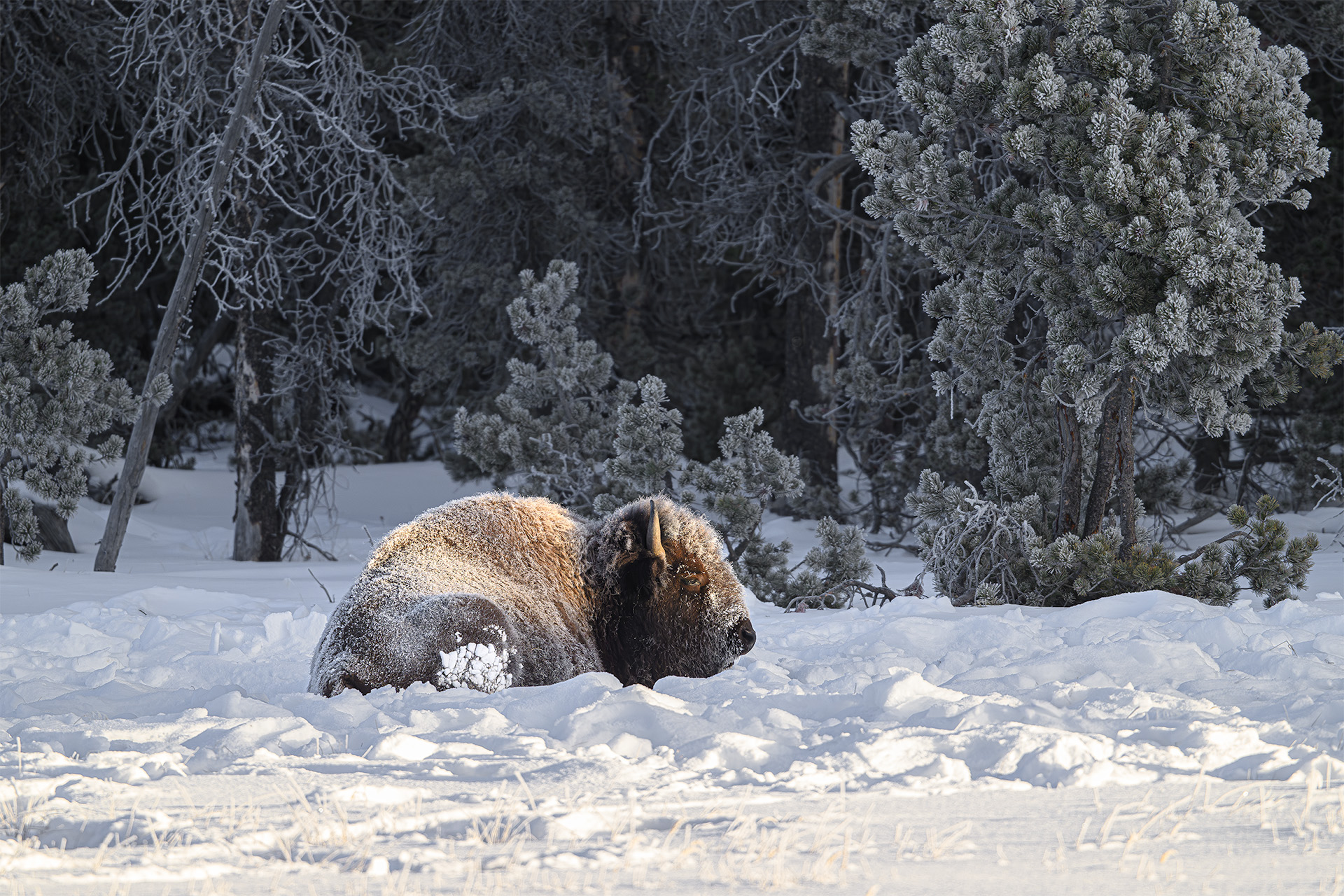
On the way to Old Faithful Geyser yesterday morning, we encountered a herd of Bison bedded down in the snow on the edge of the road. They were still in some shade and the sun was just beginning to hit them so the frost was still covering their heads, backs, and flanks. It’s always fun to see and photograph frosty Bison in Yellowstone.


Day 2 of the Yellowstone Winter Adventure was every bit as spectacular as Day 1. And, it was another Dog Day with about 28 dogs including both Wolves and Coyotes. We returned to the Bison kill from the day before in Hayden Valley as did many of the people who were also fortunate to witness what we did. The Wapiti Lake Pack was still in control of the carcass and at least 22 Gray Wolves were still in the vicinity of the kill. Day 2 brought out more of the scavengers working on the periphery. The Common Ravens and Black-billed Magpies kept their distance from the Wolves but pecked at the scraps surrounding the edge of the kill site, away from the carcass itself. At least three Bald Eagles perched nearby observing the situation. Although one courageous Coyote checked out the carcass on Day 1, Day 2 brought at least three, possibly four, Coyotes to the scene, still lurking at a safe distance from the carcass but keeping a close eye on it. Here are two of the Coyotes that crossed nearby on the rise behind us, possibly on a mission to check out the kill.
Our first day in Yellowstone National Park was a twenty-eight dog day! The day started with the sighting of twenty-three Gray wolves from the Wapiti Lake Pack. As the day continued, we also saw four Coyotes, and a single Red Fox for a total of twenty-eight canines. A tip had us headed to Hayden Valley immediately after entering the park at 7 AM Monday morning. At first, the area was obscured by a low lying fog layer but then Moose noticed movement and there they were, the Wapiti Lake Pack, twenty-three strong on the valley floor. Some members of the pack were harassing a small group of Bison and they took one down.
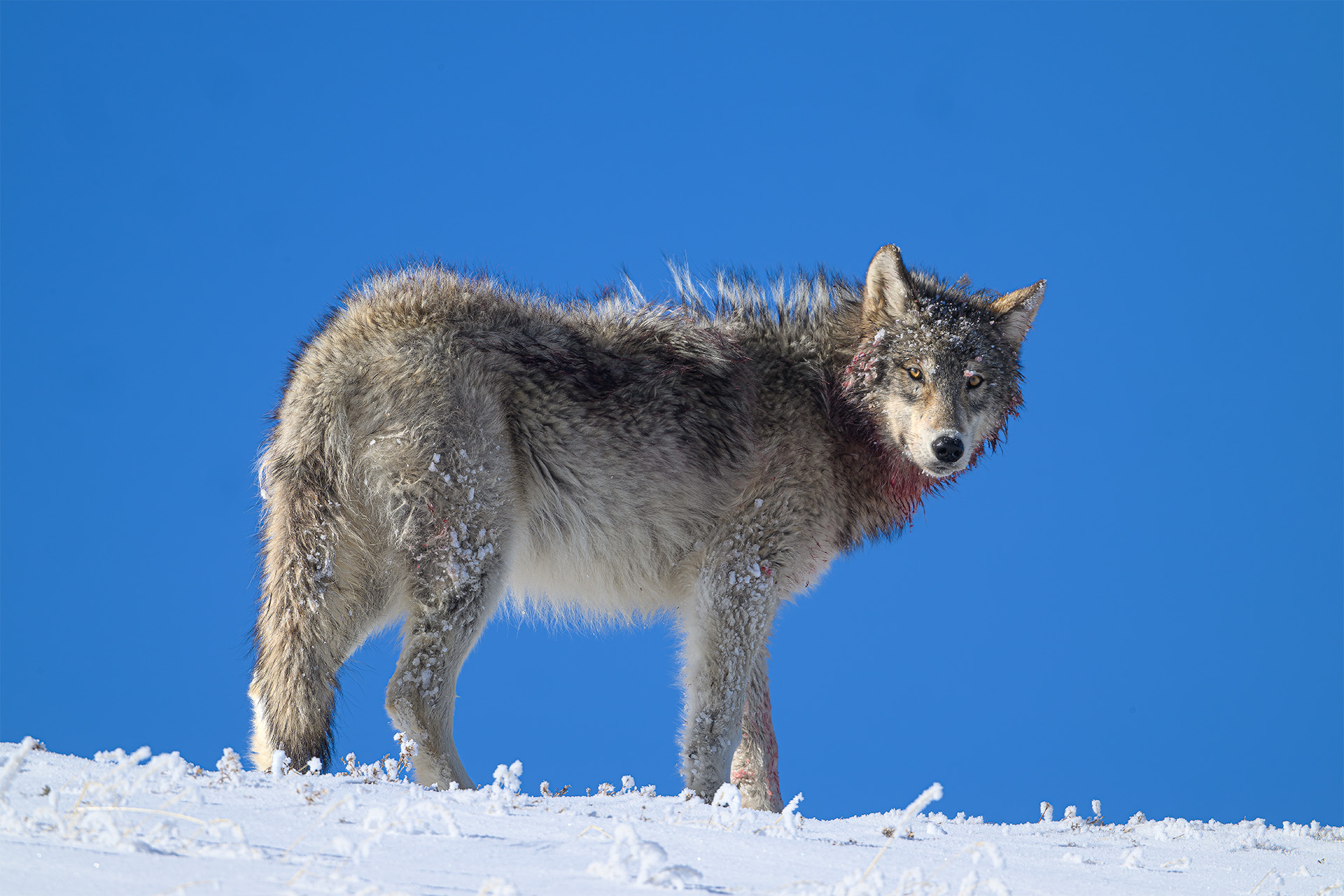
It was at once horrifying and mesmerizing to watch wild nature in action as the wolves killed the Bison. Eventually they set to howling, sounds so captivating that you stop doing what you’re doing to listen to them. A daring Coyote ventured close to the kill when most of the wolves had moved away to rest but he wisely retreated when the few wolves still at the carcass kept an eye on him. The Coyote bounded up the hill behind us and was quickly challenged by this Gray Wolf who also appeared on the rise behind us to make sure the Coyote went on its way. The wolf had already eaten and its face, neck, and chin are stained with blood. Despite the gruesome scene in front of us, we felt privileged to witness something that occurs every day in Yellowstone but mostly out of view of its visitors. What an unexpected but fabulous start to a winter trip there. And, just what will happen on day 2?
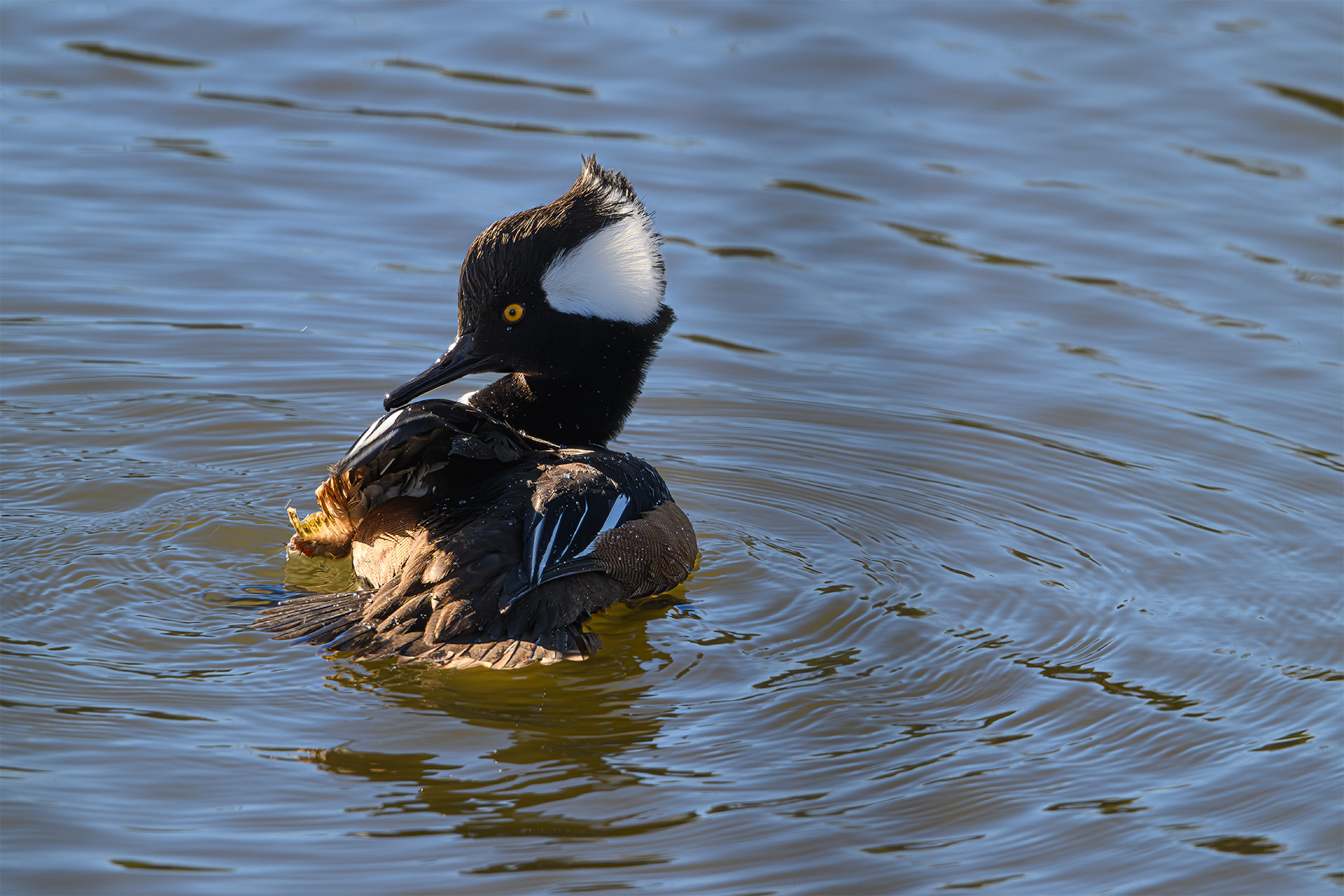
Driving the loop at Gray Lodge was like a treasure hunt. And the birds we found as we drove along the loop were the bounty. This male Hooded Merganser was preening near the edge of a pond. The breeze was stiff and he twirled around as I photographed him from the back seat of the car. I’m not sure if his twirling was on purpose of if the breeze propelled him (look at the feathers on his head, curled up by the breeze) but it was a fun challenge to capture him at the moment he lifted his head from under his wing and when I could see an eye.
Our week in Sax-Zim Bog was capped off on the last afternoon with a four hour visit with a Great Gray Owl. He was amazingly calm and aloof, seemingly unbothered by the people watching him. Much of the time, he sat motionless. When he left one perch for another, he immediately settled down again, watching for prey in the snow beneath him. He would occasionally swivel his head in what seems like a 360° swivel (it’s not) to respond to something he heard behind him, then he’d swivel around again and resume watching in front of him. I took a couple of videos while we watched him. Video is a work in progress for me. I can’t seem to keep the camera and lens still, despite using a tripod. Fortunately, Adobe Premiere has a function that stabilizes shaky video. This is a 15 second clip created from a two and a half minute video that illustrates just how still he can be; then he abruptly swivels in a motion that appears like his head isn’t attached to his body; and after several seconds, he again abruptly swivels back and looks directly into the camera.
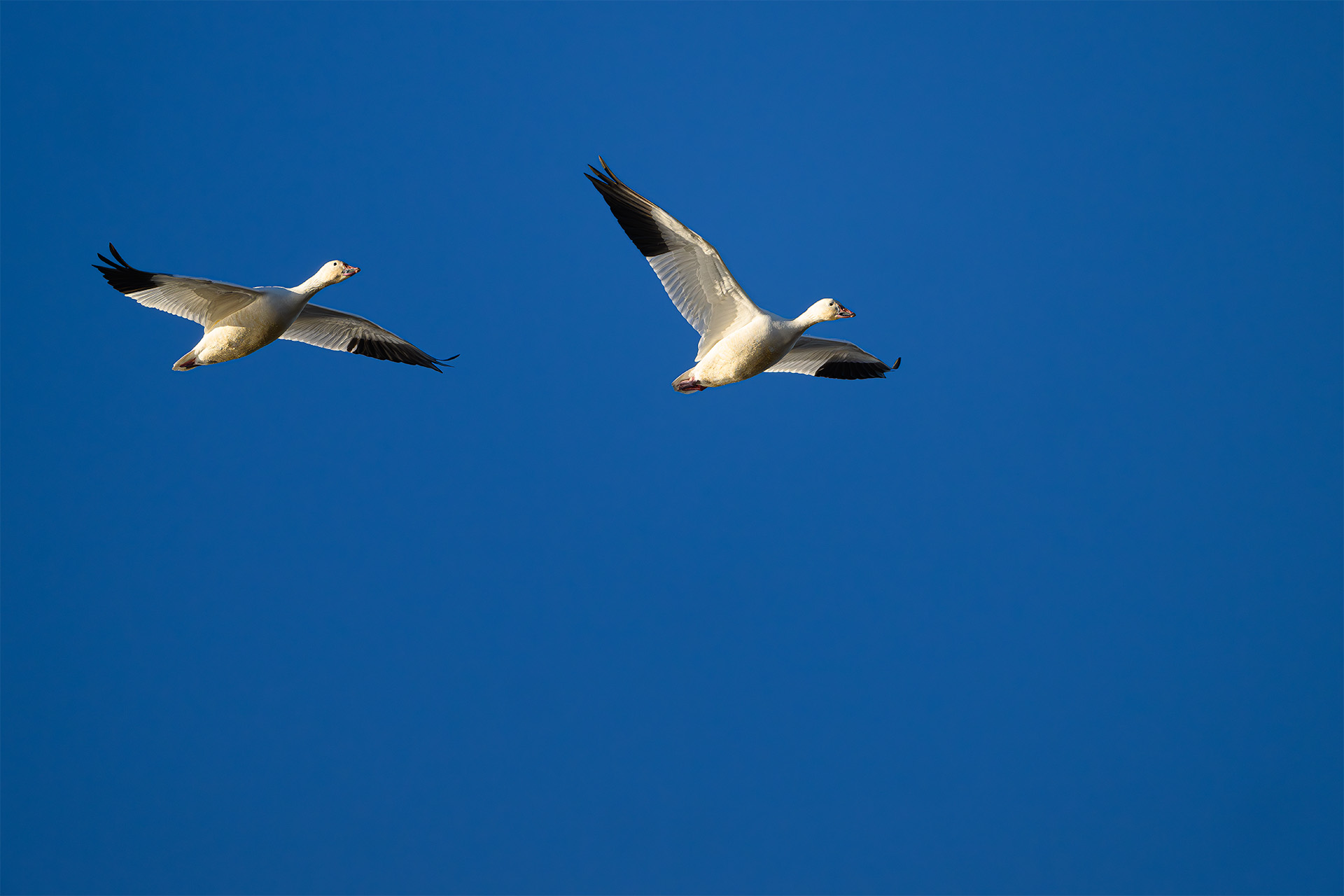
After an explosion, where the Snow Geese rise in unison making lots of noise and fill the air with a wall of wings, they circle for a bit before returning to the ponds at Gray Lodge.
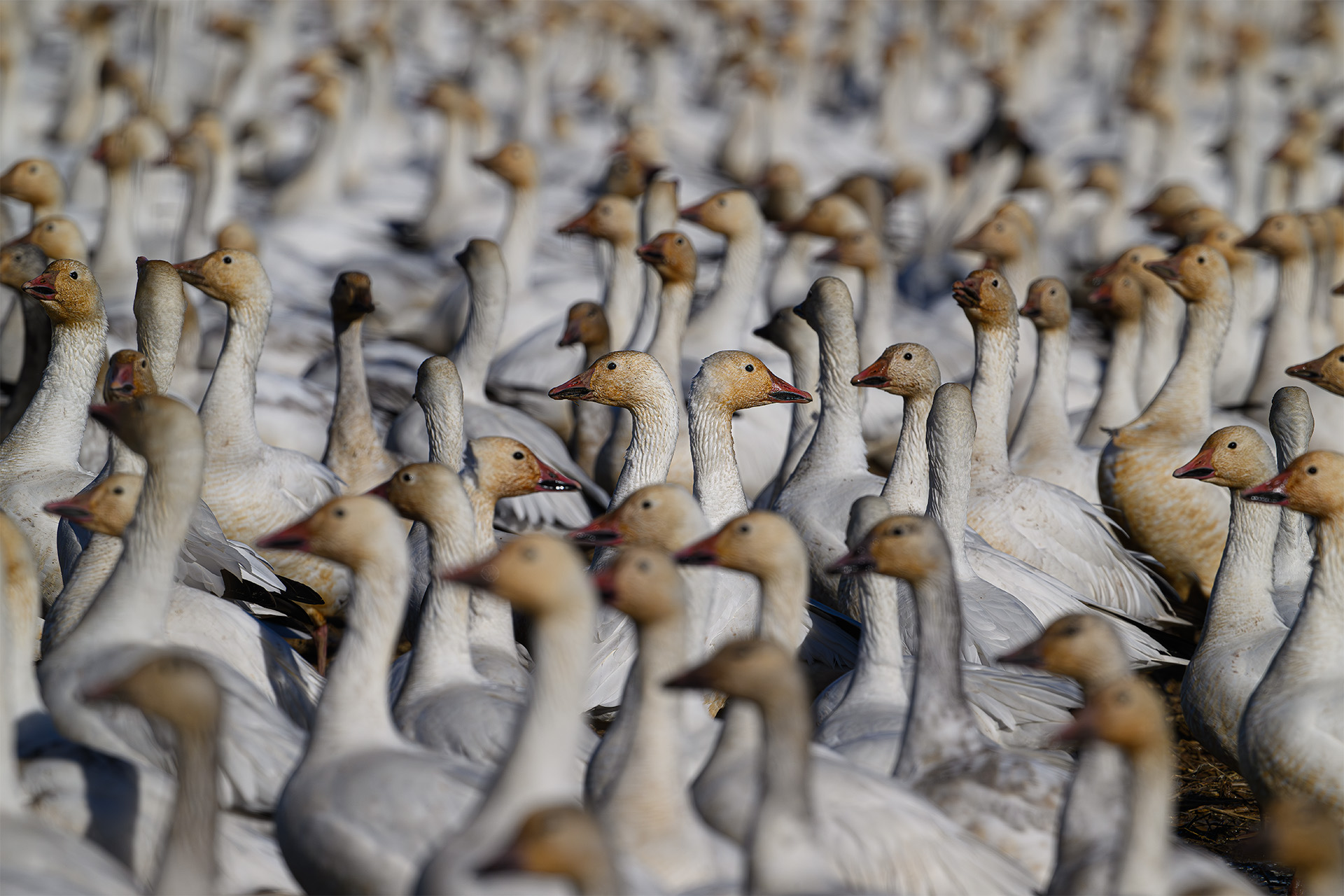
Thousands of Snow Geese filled the ponds at Gray Lodge, occasionally exploding into the air with a cacophony of sound, both wingbeats and squawks. It was a pretty big gaggle of geese. I got a chuckle out of this image because of the one in the center looking behind it, the opposite direction all the other geese were facing— okay, maybe one other is doing it too. It struck me that maybe he’s the lookout to make sure nothing is sneaking up behind the group. It was usually a predator that set them off. There were plenty of predators there, mostly raptors like Bald Eagles, Northern Harriers, Red-tailed Hawks, Red-shouldered Hawks, Cooper’s Hawks, and I’m certain I saw a Sharp-shinned Hawk disappear into the shrubs as we stood photographing the Green Heron. When I’ve seen Snow Geese at Bosque del Apache, they didn’t have the rust staining on their head and breast feathers. I have read that it is caused by the iron-rich soils where they feed here that stain their white feathers with iron-oxide.
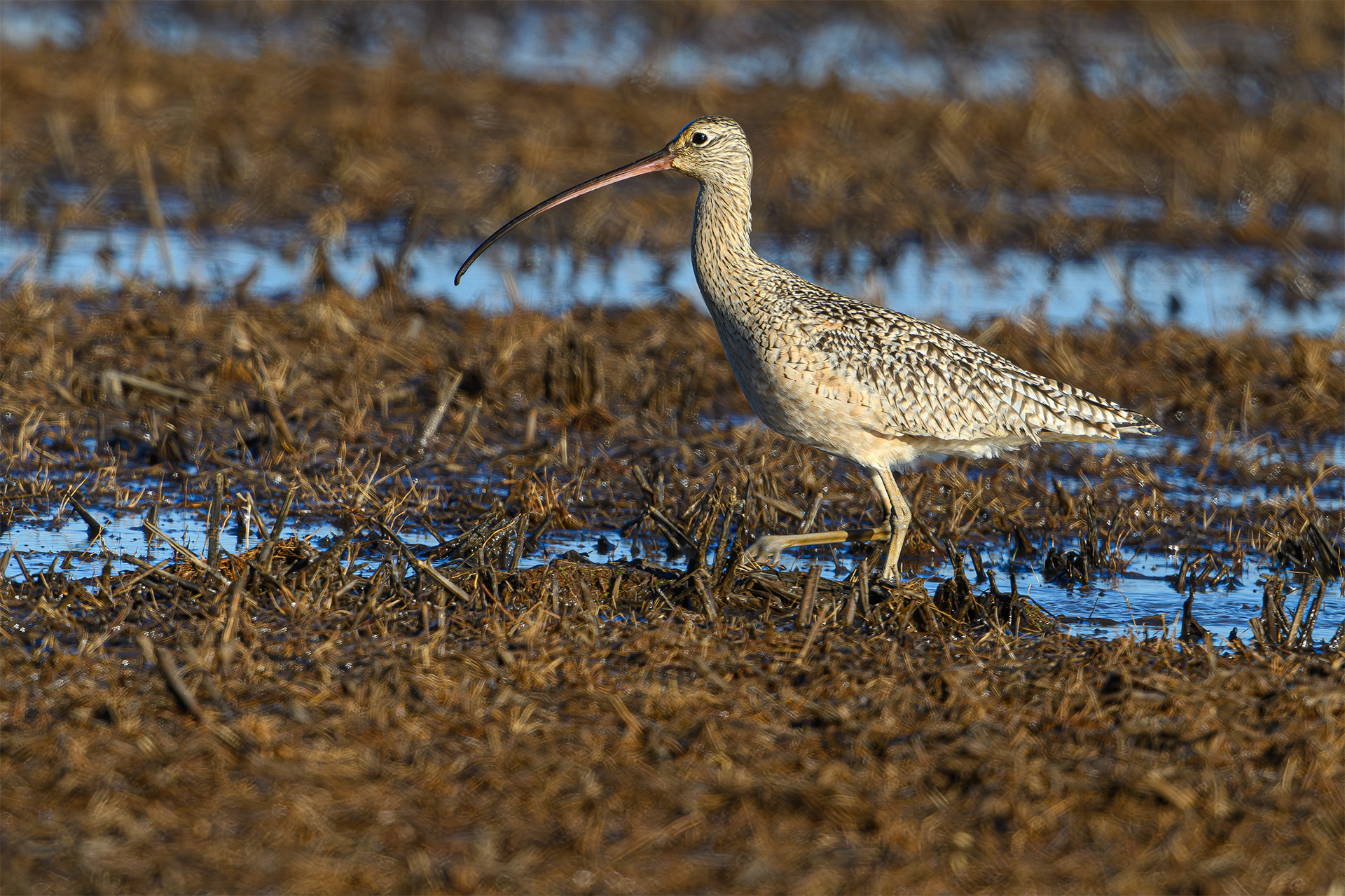
Long-billed Curlews are shorebirds and, until the other day, I thought they stayed at the shore. I’d only seen these large birds with the impossibly long bills on sandy beaches, usually in Texas. Turns out, they do come inland. The other day driving home from Gray Lodge, we diverted through the rice fields in Sutter County and there, in one of the harvested fields, was a lone Long-billed Curlew, poking its long beak through the rice stubble and into the soft mud hunting for whatever lives in that environment. According to Sibley’s, these birds winter in marshes and fields. A rice field is pretty marsh-like so it’s the ideal setting for one. And, I had the perfect vantage point, shooting from the back seat of the vehicle.
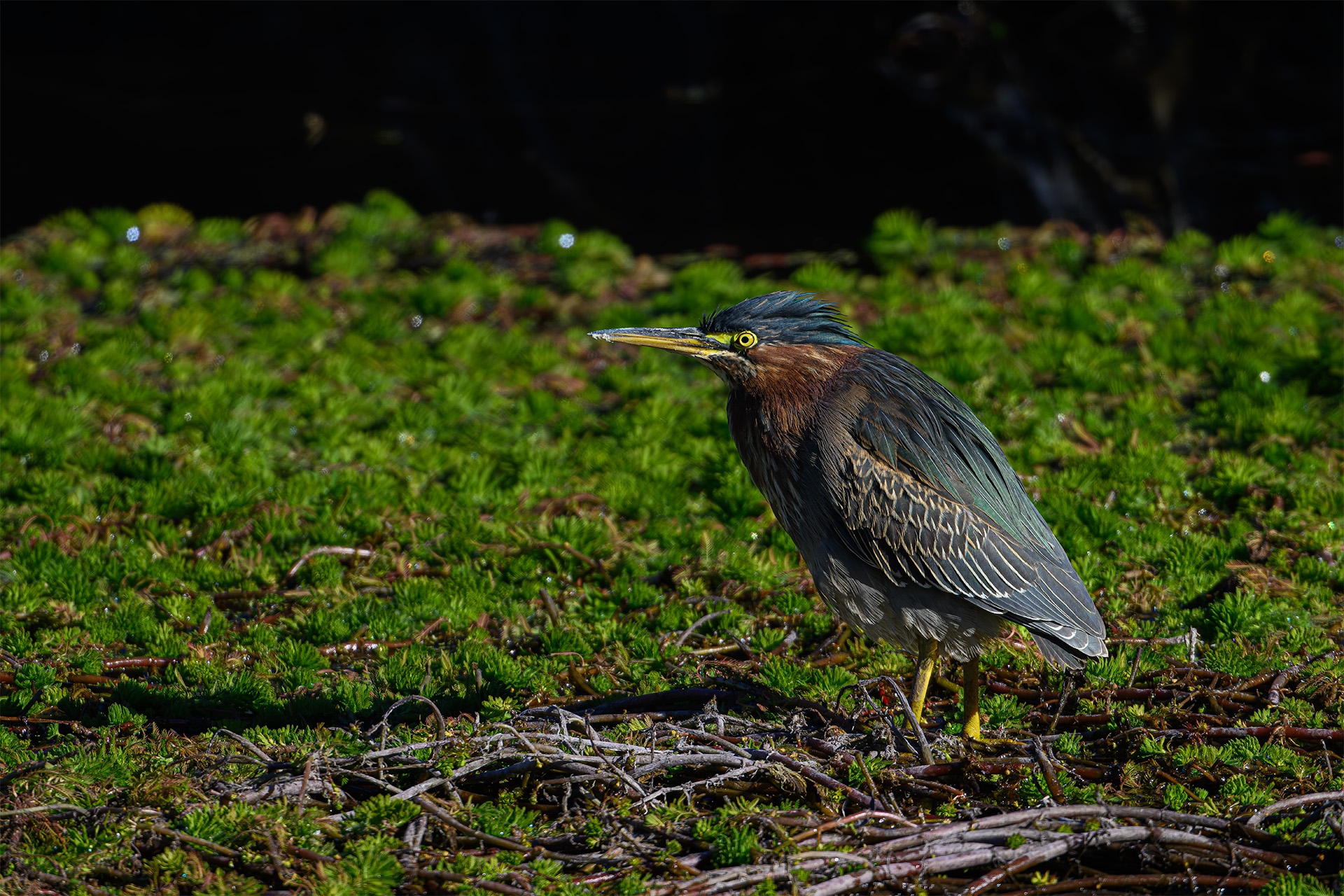
Gray Lodge Wildlife Area is a wetland preserve near Gridley, CA that is known for the variety of birds that it attracts. I was there for the first time on Monday with my Photography Club. I photographed 23 different species of bird and saw at least a half dozen more. After driving the auto loop, we took one of the trails and came upon this Green Heron in a small pond. The edge of the pond where the Heron was standing, was covered with an invasive species of aquatic plant called, among other names, Parrotfeather. Its dense mats of intertwined brownish stems in freshwater lakes, ponds, and canals, like the ponds at Gray Lodge compete with native plant species. The Green Heron didn’t seem to mind as he concentrated on finding his next meal.
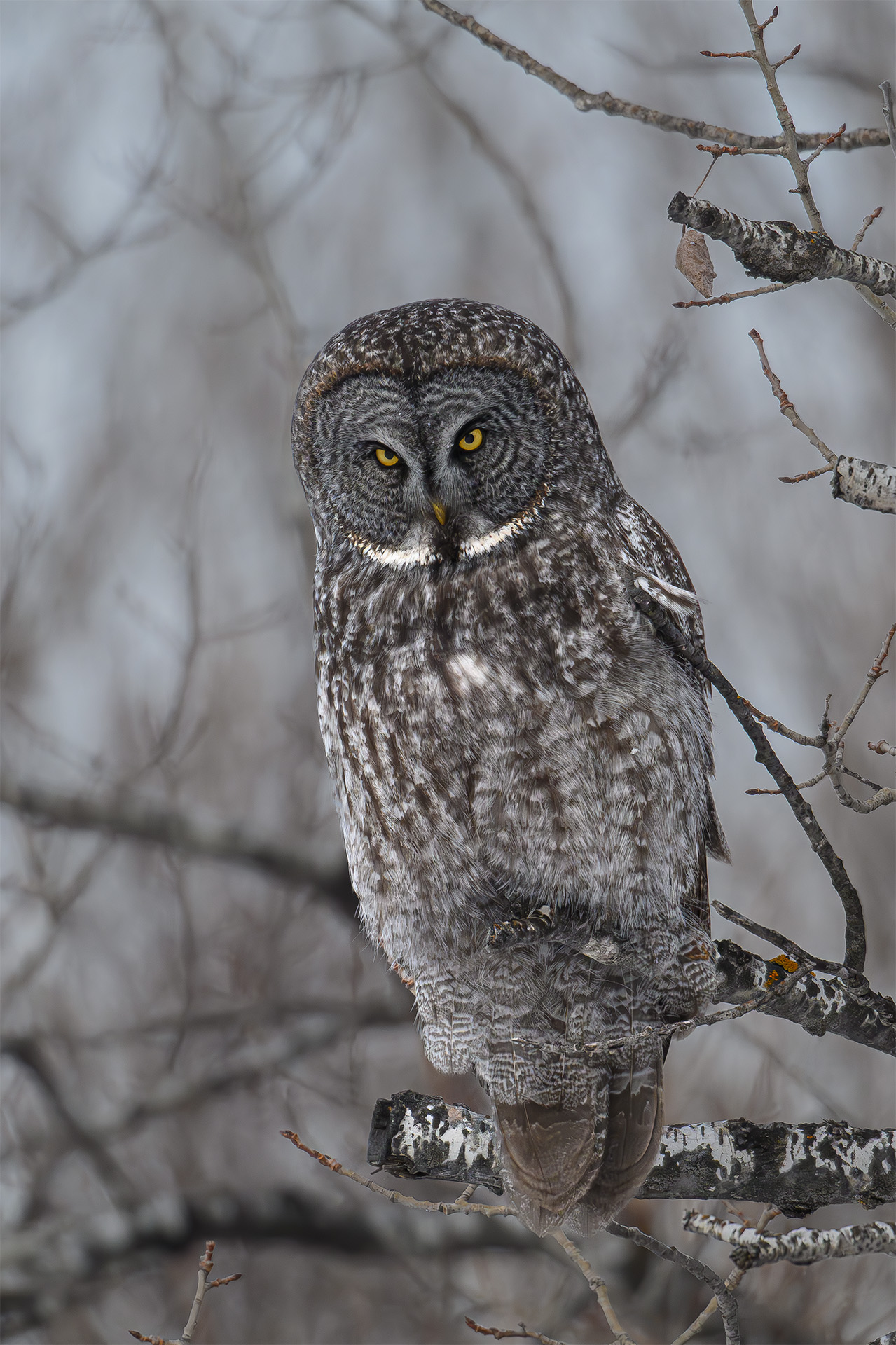
Last week at Sax-Zim Bog in Minnesota, where most of the time the temperatures hovered below zero, we had a number of photographic opportunities with Great Gray Owls that made me realize what expressive eyes they have. Because an owl’s eyes face forward, unlike most other birds, their eyes convey, to us humans anyway, feelings that our innate instincts anthropomorphize. This is one of my favorite looks from a Great Gray Owl. I’ll leave it up to you to decide what you think is on his mind.