2025—Things Are Looking Up

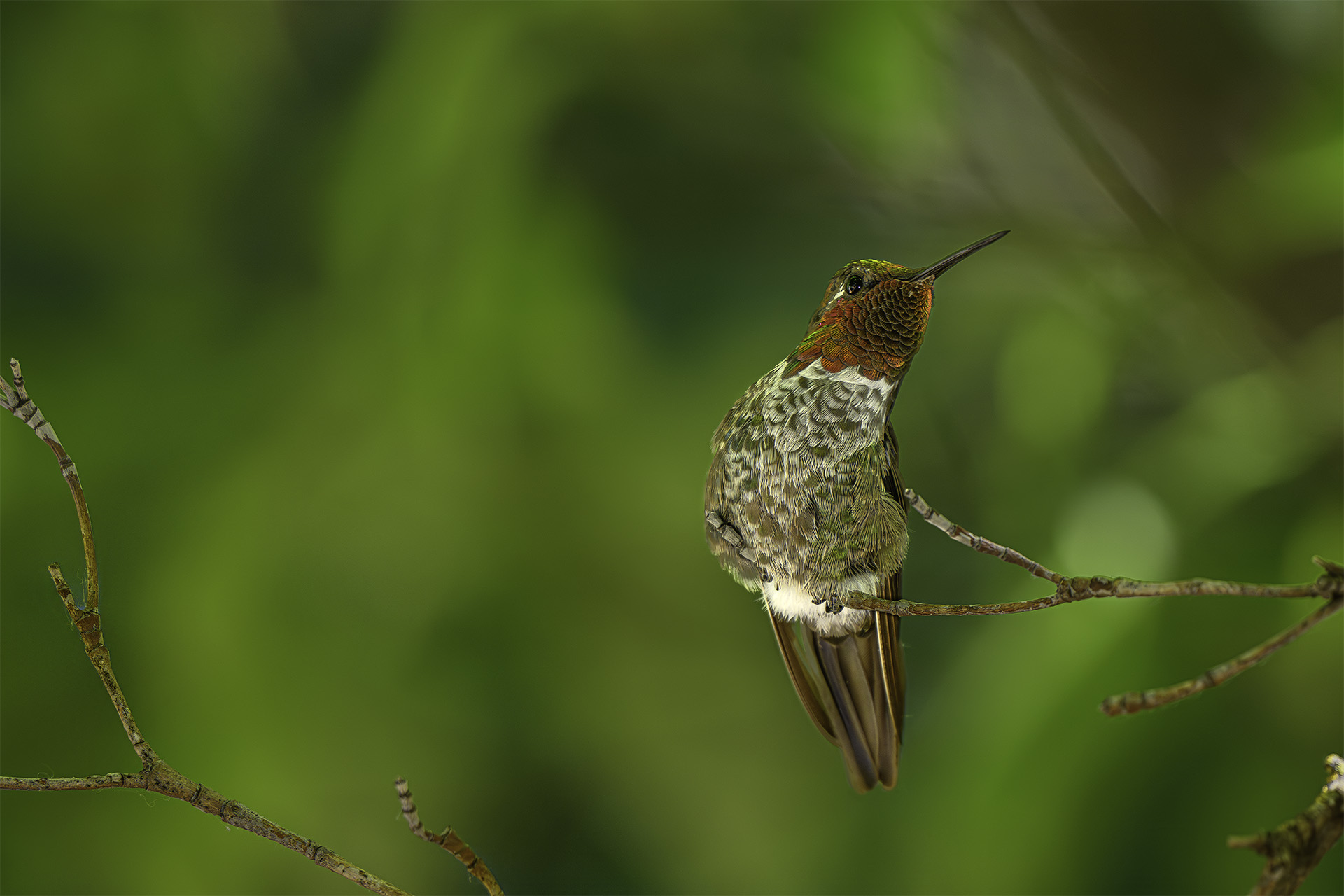
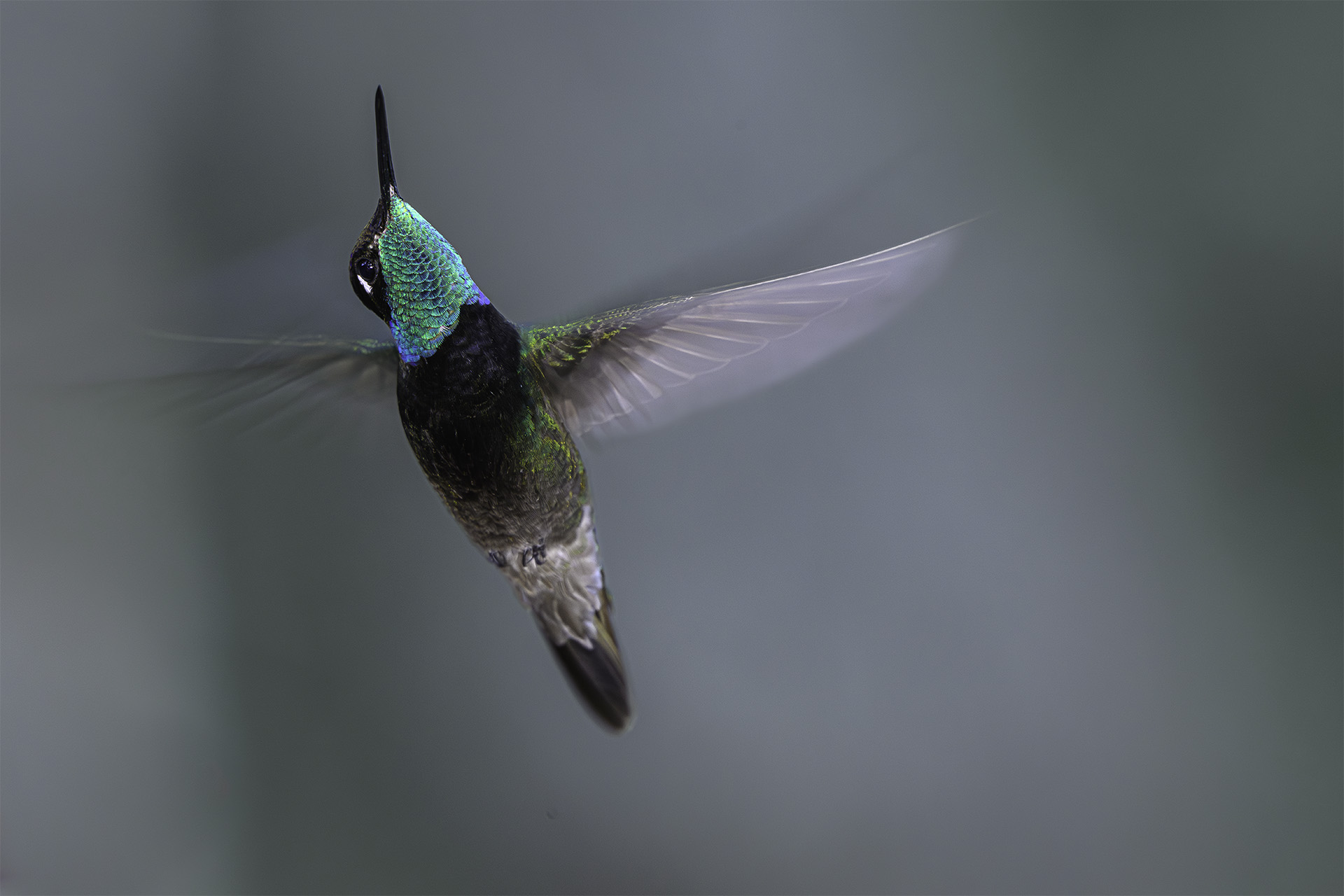
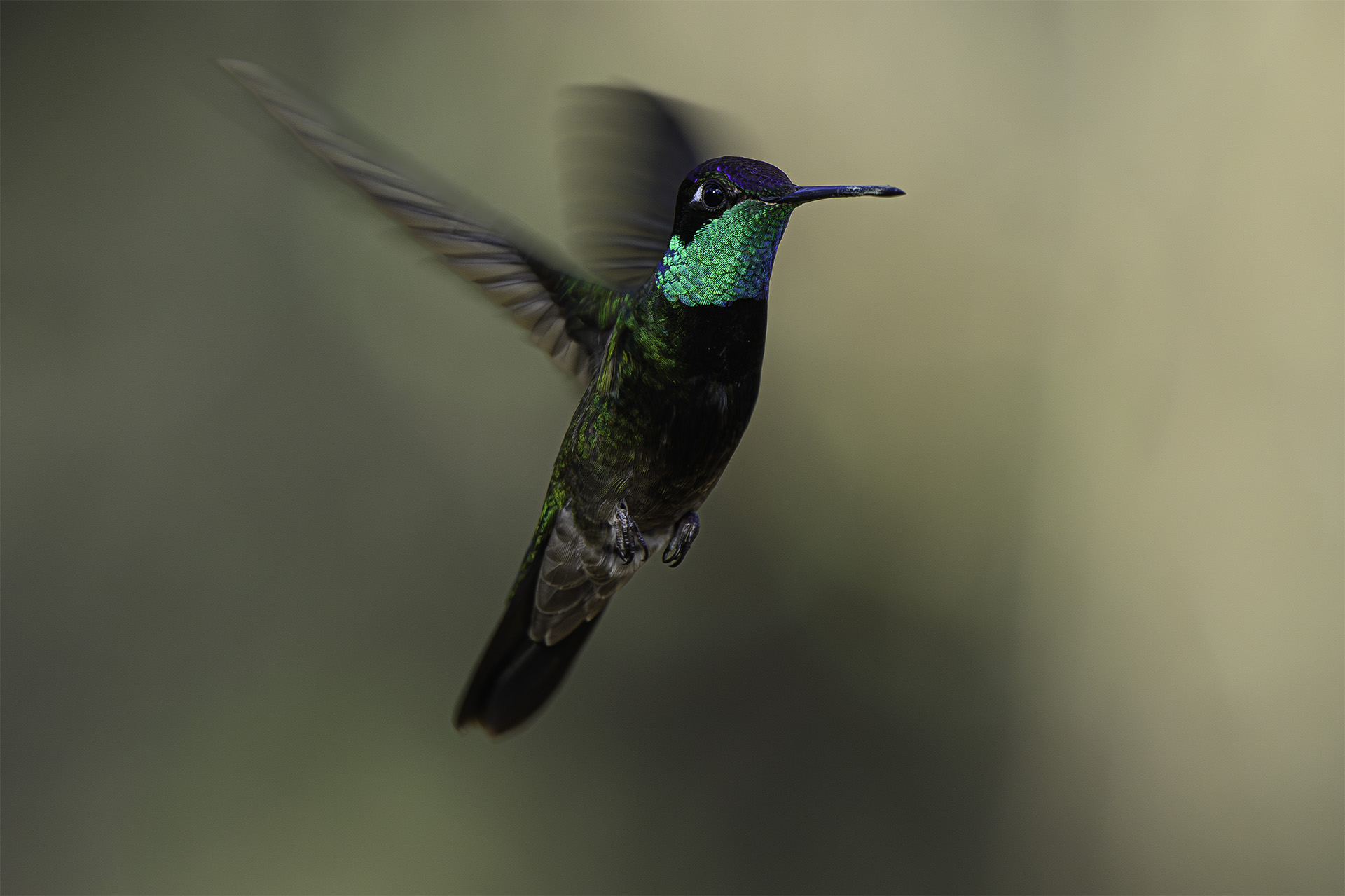
Our last morning in Madera Canyon yesterday did not disappoint. This is a Rivoli’s Hummingbird keeping an eye on the more aggressive and smaller Broad-billed Hummingbird that was on the attack from above. Although the Rivoli’s is the second largest hummingbird in North America at a comparatively massive five inches in length, the much smaller Broad-billed Hummingbird —it is twenty-five percent smaller than the Rivoli’s—dominated the feeders. The Rivoli’s were intimidated by the aggressive Broad-bills and although I did see the Rivoli’s occasionally fighting back, for the most part, they conceded to the smaller hummer and moved away.
2025—Another Jewel

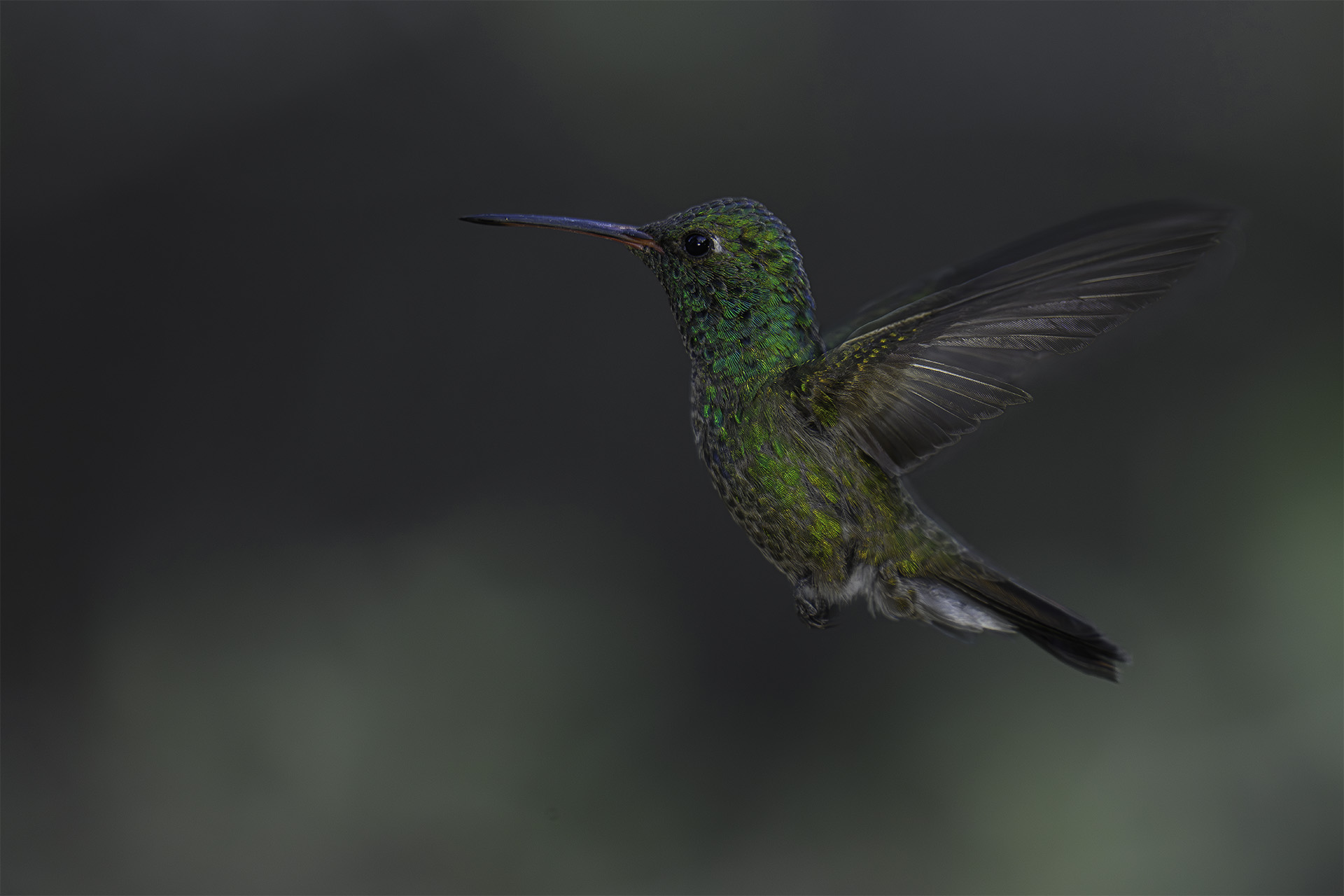
The Berylline Hummingbird is indeed a jewel. Because of the sea-green color of its plumage, it was named after the mineral Beryl, which in its green form is the highly valued Emerald gemstone. There are at least four hummingbirds with Emerald in their names and the Berylline is named for the same jewel because of the color of its plumage. I’m still in Madera Canyon, AZ photographing hummingbirds. This year, the Berylline seems to be the tantalizing star here. We first saw one here a couple of years ago but I never was able to photograph it. This year there are two or three Beryllines here but photographing them continues to be a challenge. They seem to favor one feeder over the others and for a while, they came to the feeder closest to me. But, my photographs of them were mostly “record” shots because they were perched on the feeder and my goal is always to avoid getting the feeder in the photograph. Yesterday morning, I finally managed to capture a juvenile Berylline as he fed, hovering back and forth, not perching.

2025—Mr. Wonderful, Again

The first time I saw a Rivoli’s Hummingbird at Madera Canyon, it was called the Magnificent Hummingbird, but we called him Mr. Wonderful. After the name was changed, I still call him Mr. Wonderful. This year at Madera Canyon, there are several Mr. Wonderfuls so the opportunities to photograph a Rivoli’s has increased a bit which makes the photography here even more wonderful.

2025—Free-Flying Jewelry

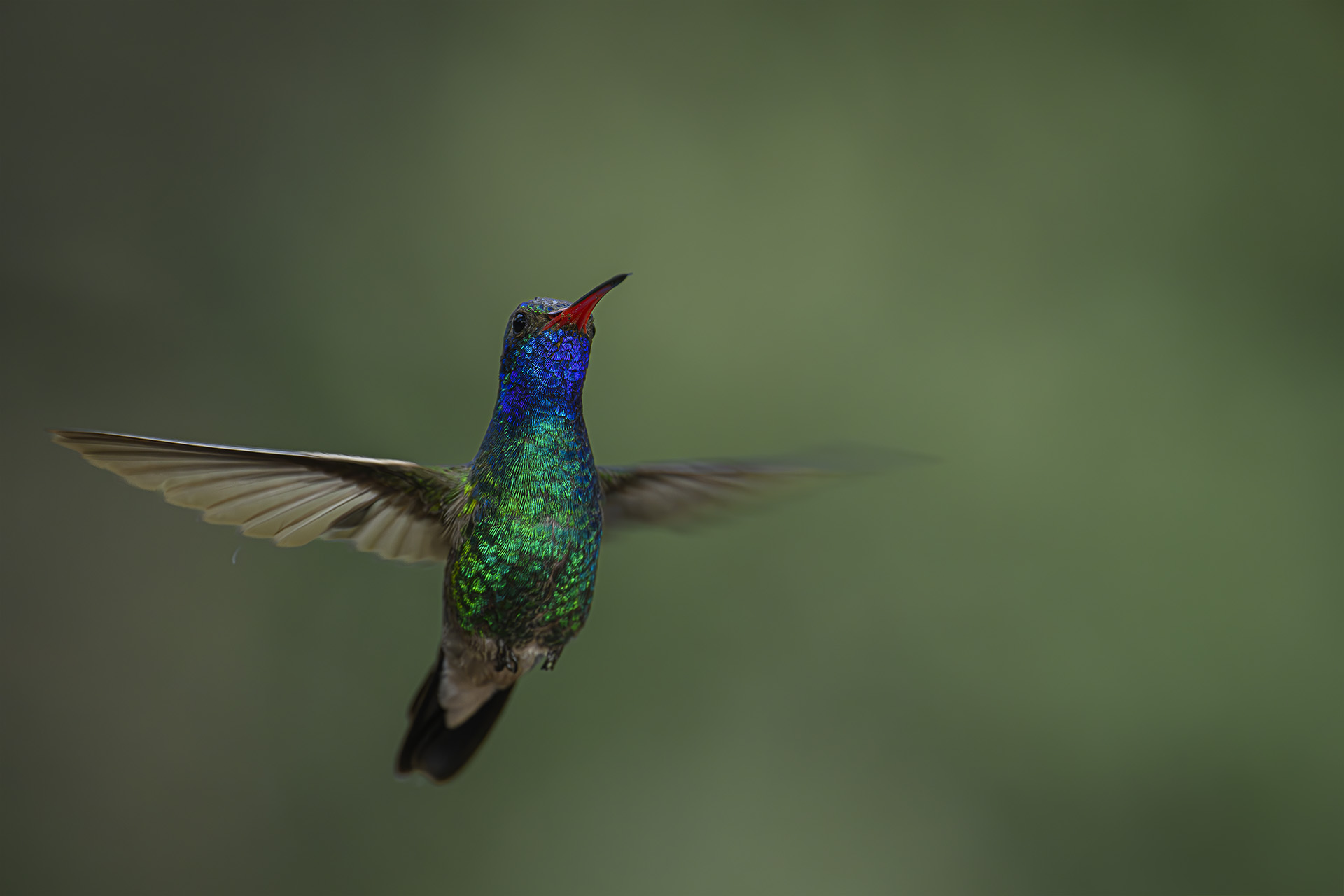
Hummingbirds are the jewels of the bird world. When Broad-billed Hummingbirds are in the right light, their iridescent feathers shimmer like sapphires and emeralds. Their colors once so captivated the hat designers of the Victorian era that hummingbirds, as well as other birds whose plumage became desirable in the millinery trade, were hunted to adorn ladies’ hats. Their feathers were highly prized and were a status symbol among wealthy women. The practice of hunting birds for the fashion trade lead to severely diminished populations of many birds. Eventually, the concerns of citizens lead to the establishment of conservation efforts and eventually to the passage of the Migratory Bird Treaty Act of 1918 which protects migratory birds and prohibits the hunting, capturing, kinlling, selling, trading, and transporting protected species. Now, the beauty of all of the affected birds, including hummingbirds, can be appreciated in their natural habituates. Instead of adorning someone’s hat, they are flying jewelry.

2025—As Anticipated—the Rivoli’s!

Yesterday, I posted an image of a Rivoli’s Hummingbird that I took last year at Madera Canyon. Yesterday morning, after my blog post went live, one of the first birds I photographed here in Madera Canyon was a male Rivoli’s Hummingbird. The male Rivoli’s is truly spectacular and there were three, maybe four, male Rivoli’s (and at least one female) that I observed, more at one time than I can remember from past visits here. This week, I’m looking forward to several more days of spectacular photographic opportunities with the jewels of the bird world.

2025—The Magnificent One

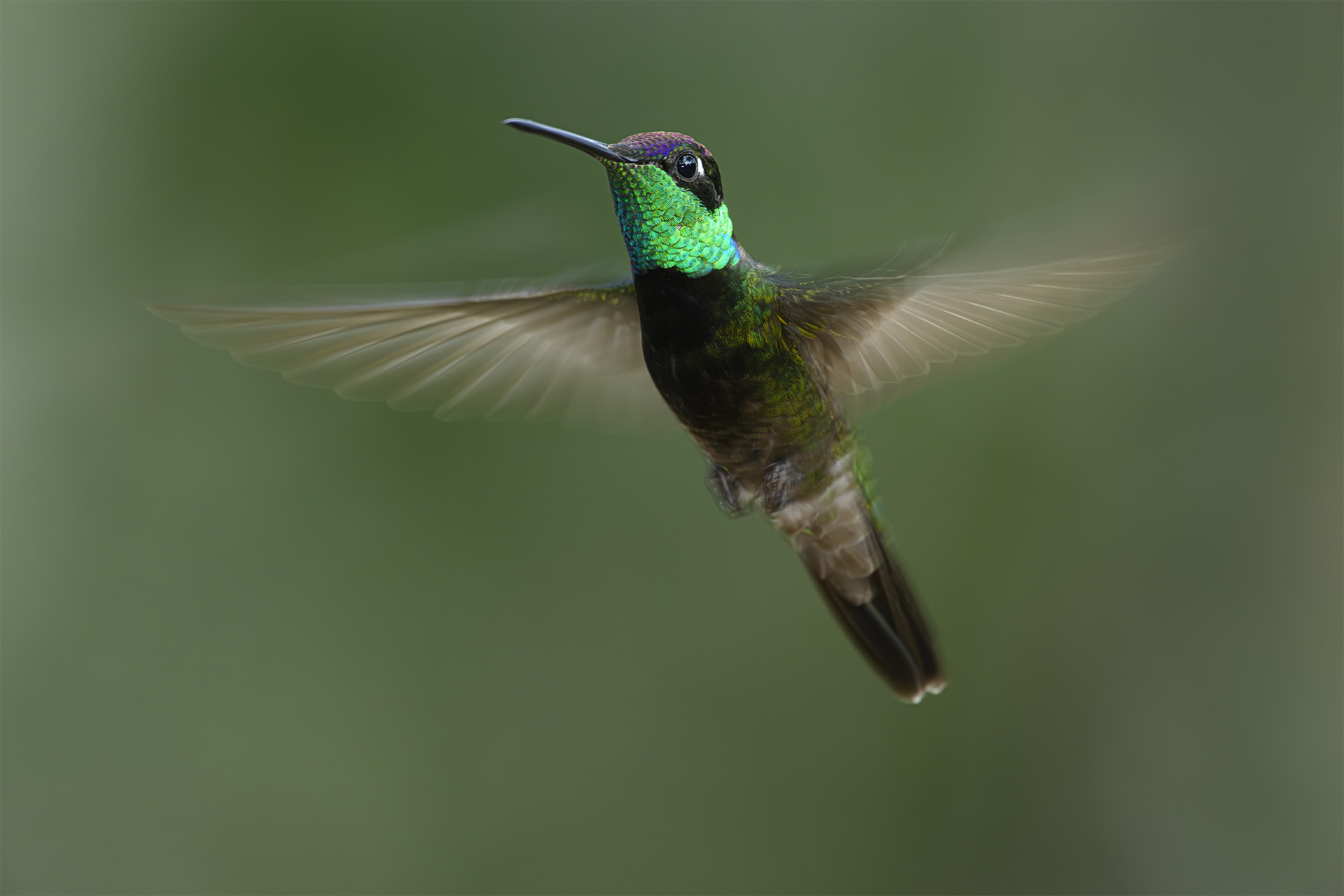
Even though the Magnificent Hummingbird was renamed the Rivoli’s Hummingbird, the first time I saw this magnificent bird he was the Magnificent Hummingbird and so shall he forever remain so in my mind. I photographed him last year at Madera Canyon where I am today, hopefully photographing him again as you are reading this post.

2025—Hummers Again

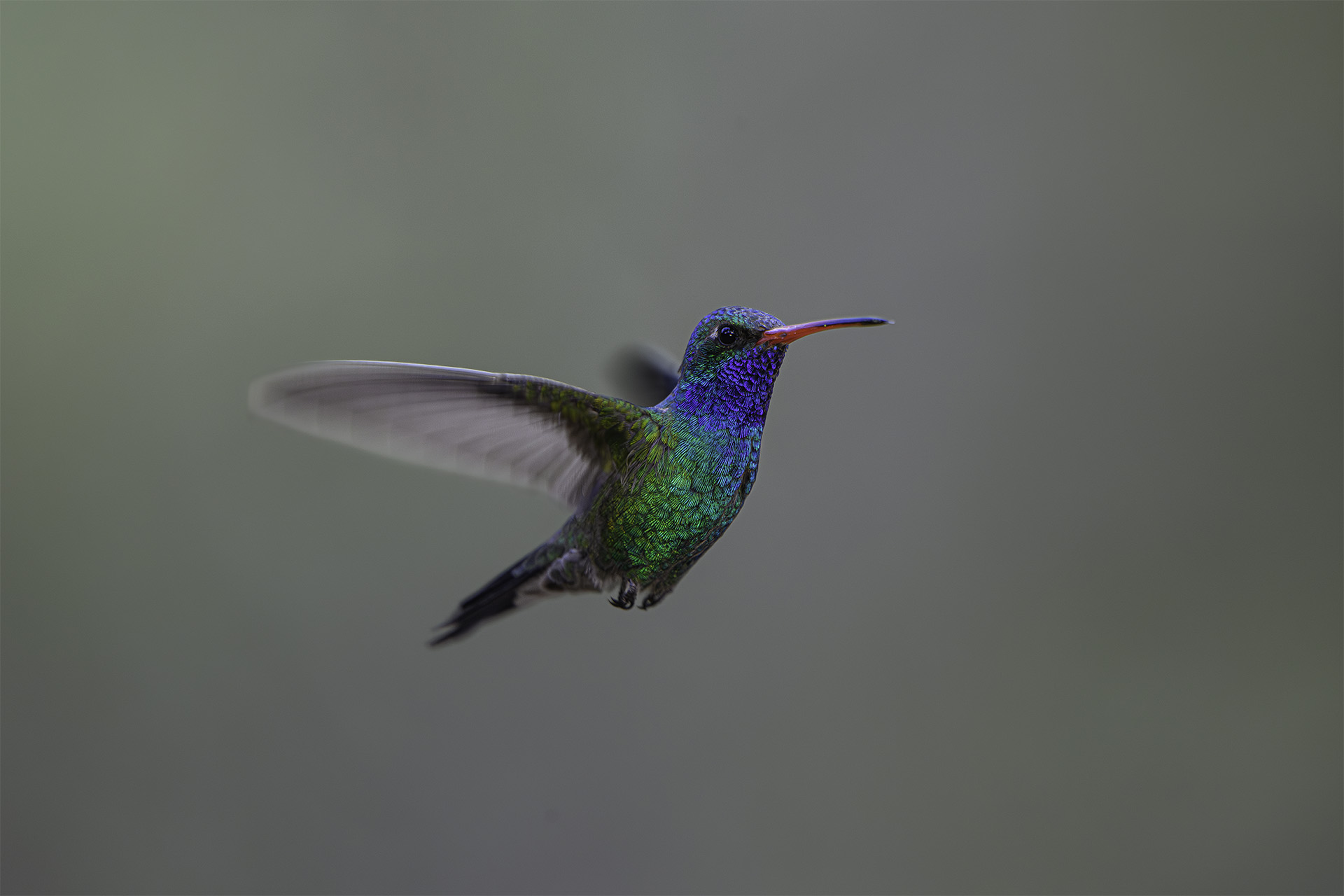
Today I’m heading back to Madera Canyon to photograph Hummingbirds. This male Broad-billed Hummingbird that I photographed last June is one of the most colorful and ubiquitous hummers that we see in the canyon. I can’t wait to see which hummer will be the star of this year’s trip.

2025—The Dance

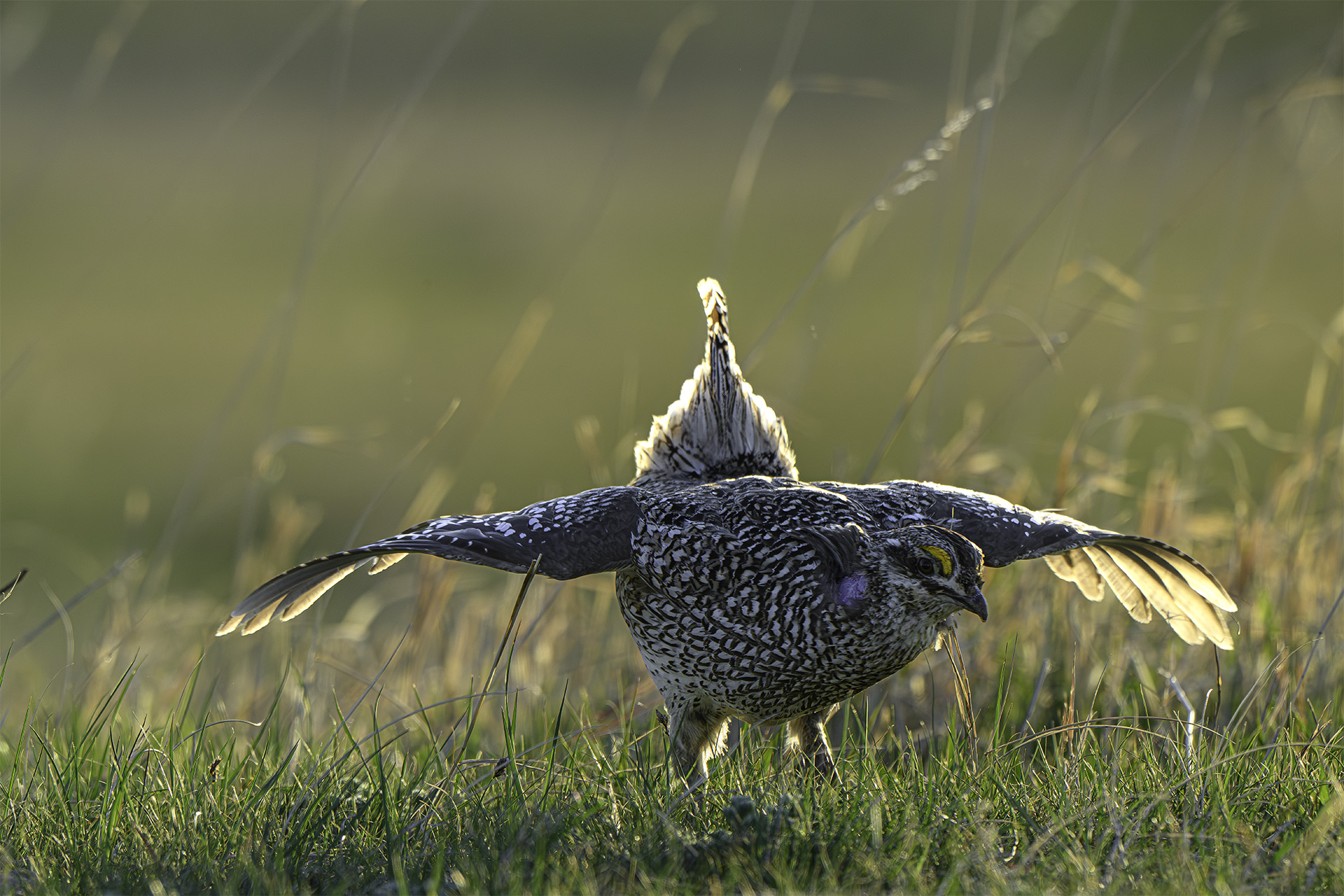
Witnessing a Sharp-tailed Grouse dancing on a lek is a sight that you won’t soon forget. The males gather before the sun comes up on prairie lands with low-growing grasses that allow them to see their rivals. This past May in Custer State Park in South Dakota, on land where a small airport was recently decommissioned and returned to natural habitat, Sharp-tailed Grouse had reclaimed the lek and were dancing in a show dominance and to attract females. Our vehicle served as a blind and the lek was next to the road and a few feet in elevation so it was at eye level. The males stomp the ground and spin around, flutter-jumping at rivals, calling out as the sun begins to light up the lek. It is both a stunning visual and auditory experience.

2025—Time for Practice

I’m leaving in a few days for Madera Canyon in Arizona to photograph the hummingbirds that migrate through that canyon. It’s always a fun trip because we don’t see most of those hummers here in California. It’s been a while since I’ve photographed the Anna’s Hummingbirds that stay here year round and I knew that a little practice before traveling to Madera Canyon wouldn’t hurt so I set up my hummingbird rig and went out onto the patio. I no sooner stepped out and a female Anna’s flew to the feeder while I adjusted my settings. Then it was only moments before a male swooped in and chased the female away. Lucky for me he settled onto a small twig above the feeder to keep his eyes on it. He stayed put for a while but the wind was wreaking havoc and the nearby leaves were blowing back and forth, causing the sun to streak through intermittently and light up his face but not in a good way. I managed a few shots while the direct light stayed off his face. I watched for his gorget to light up but it never did completely. He finally flew to the feeder then disappeared to watch the feeder from the shadows. I found the wind to be too distracting so I, too, disappeared to the shadows of my house.

2025—Morning Stretch

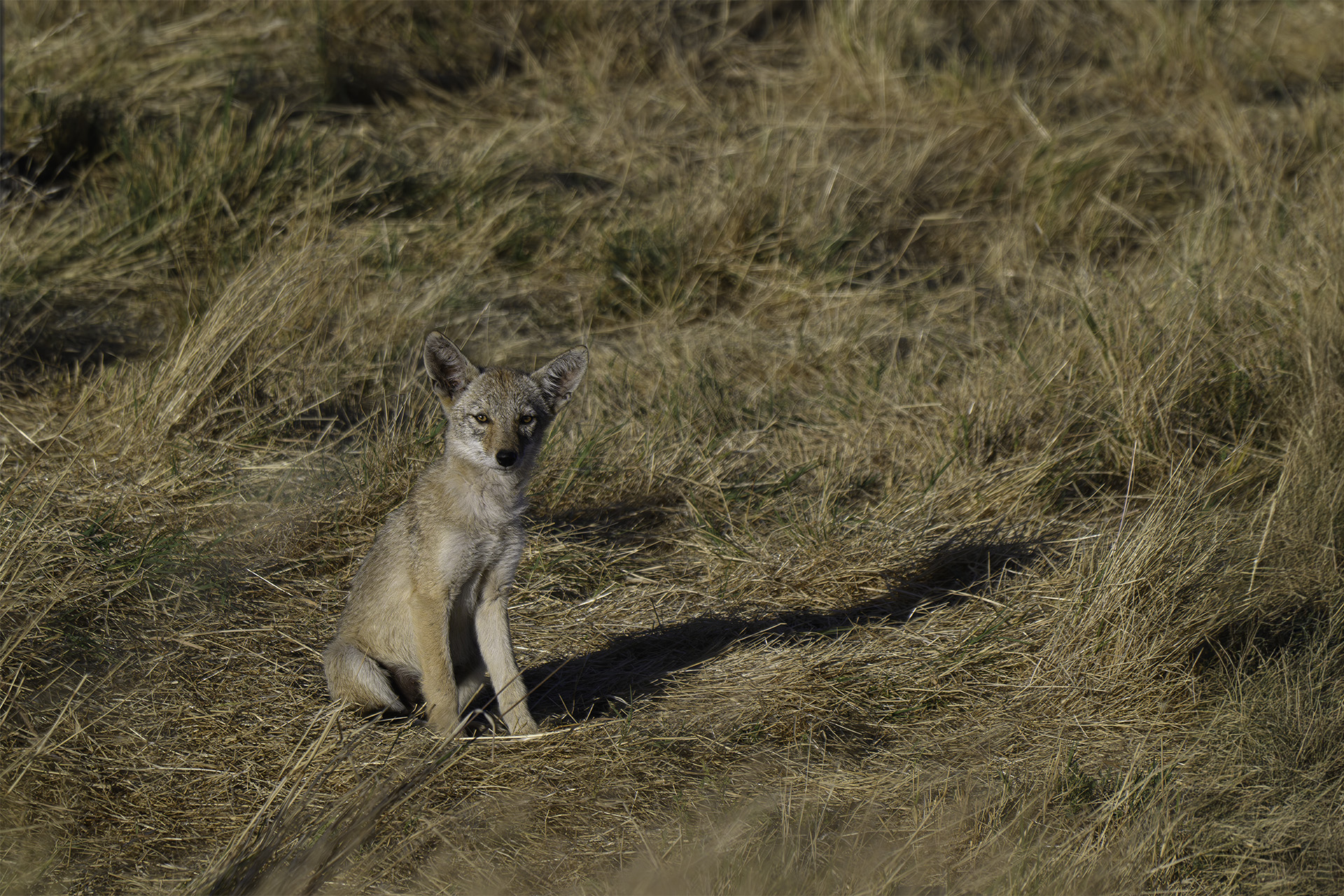
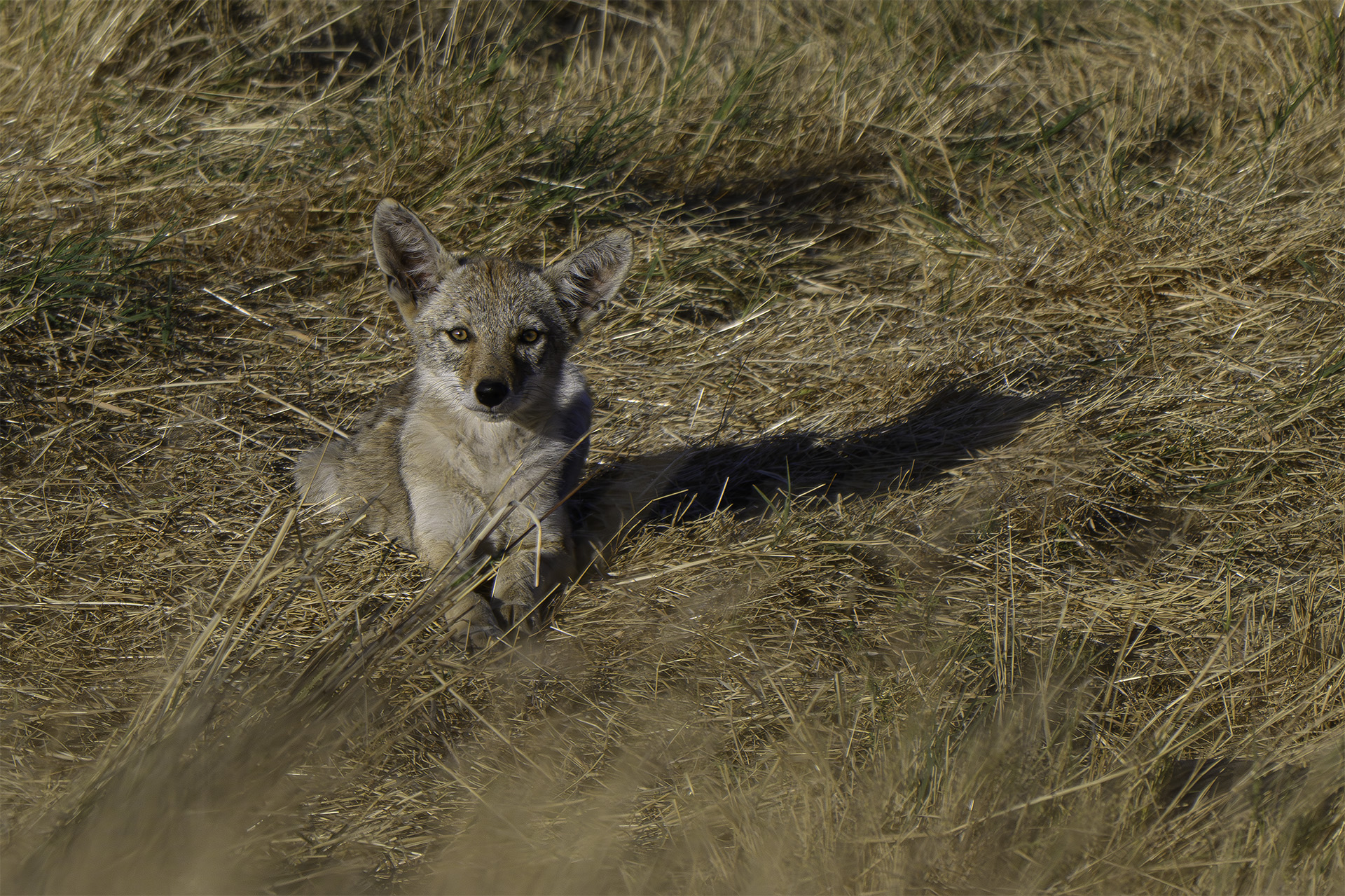
Every day when I walk along Ferrari Pond Trail I look for the resident Coyotes. They conceal themselves much of the time in the bullrushes and when they’re out, they seem to blend in with their surroundings. A couple of mornings ago, the trail was very quiet, very few birds (the American White Pelicans from a few days ago never returned) and no Coyotes. As three of us stood looking out over the now dried salt pond, I noticed a brown lump on a like-colored patch of dirt, between two patches of white salt. It wasn’t moving and at first I thought it was a rock or a pile of dried bullrushes. It was, in fact, a lone young Coyote, enjoying the morning sun. He watched us for a while, then he sat up and watched some more. Finally he stood up, yawned, and stretched. His morning stretch must have felt really good as he did it again after walking a few feet. Finally, he trotted across the dried salt, up over the rise and disappeared into the bull rushes on the other side.

2025—Growing Up

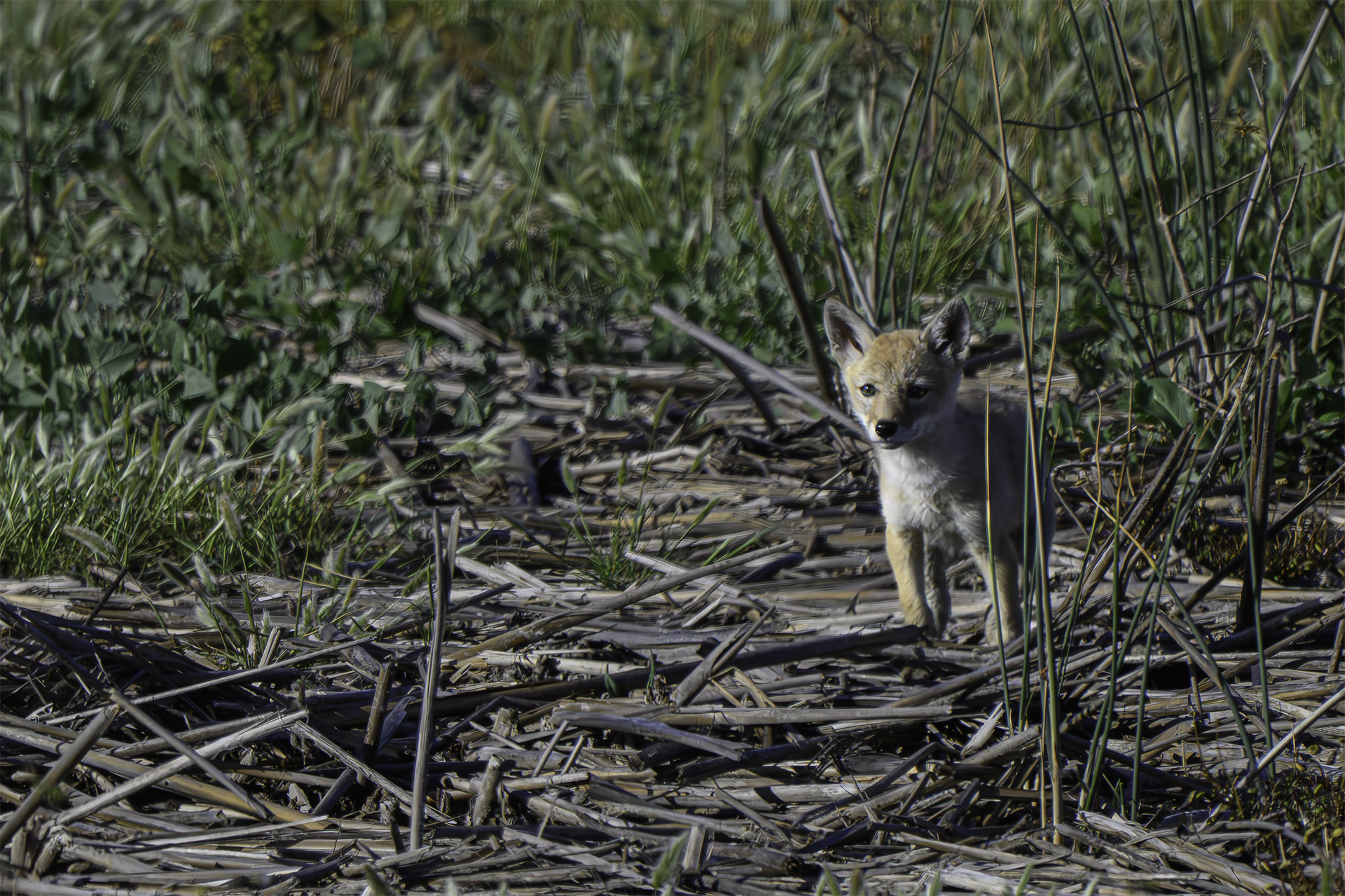
The Coyotes pups along the Ferrari Pond Trail are growing up. I took the first image on June 13 and I took the second image exactly one month earlier on May 13. It may not be the same pup (there were five at last count) but it’s likely from the same litter if not the same pup. There were no reported sightings of any Coyotes between May 13 and about June 12. They seemed to have vanished into thin air but now they’re back again. The daily challenge is where will they be? It keeps me going back out.

2025—Cutie Pie(d-billed Grebe)

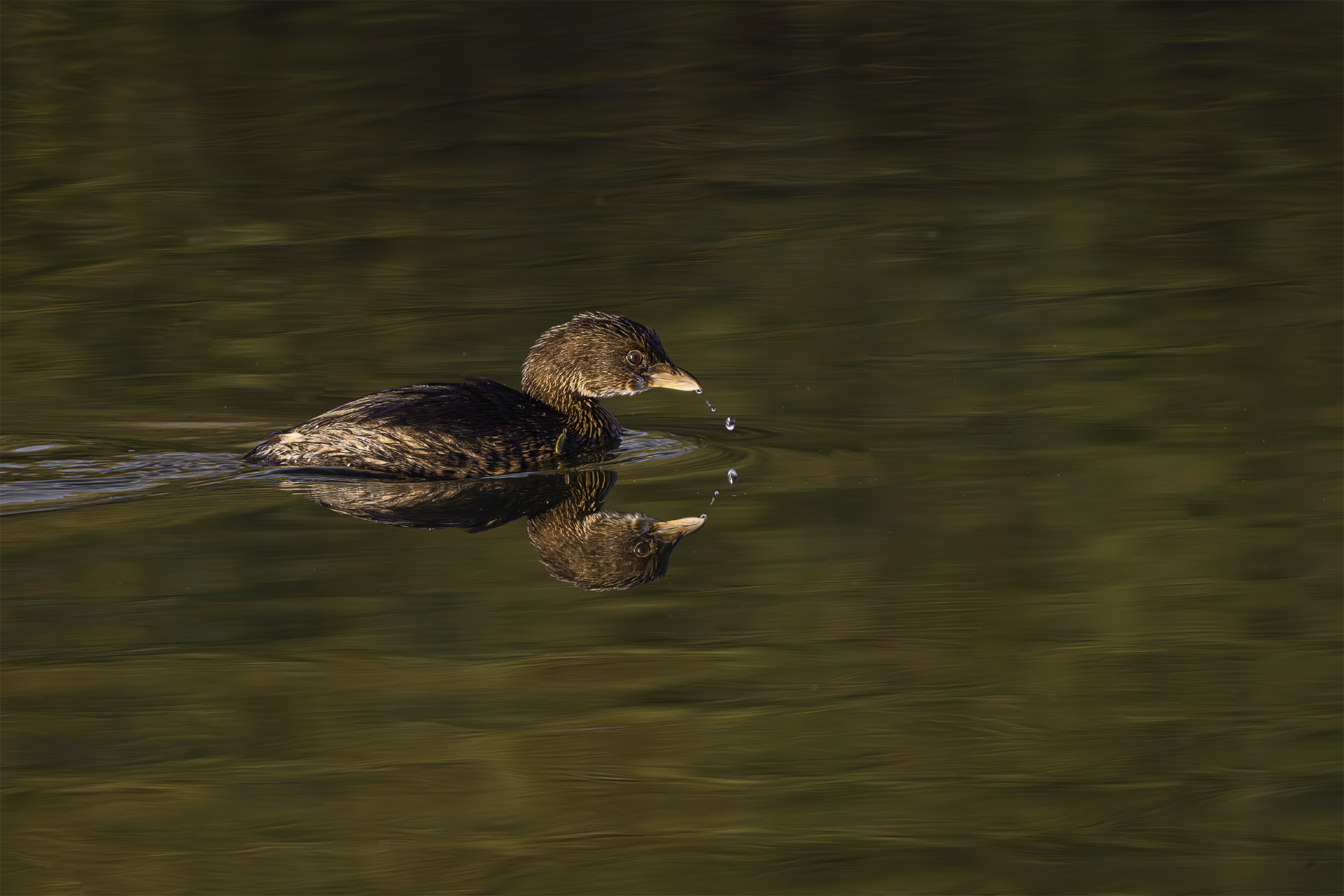
Whenever I see a Pied-billed Grebe, I think, “what a cutie pie!” I guess that matches its name, so it’s a cutie pie(d-billed). Sorry, I couldn’t resist. And, to add to that, this image contains Carolisms, what with the water droplet and its reflection. The reflection is almost perfect but the water doesn’t look at all glassy, so I’m not sure what that’s about. The water has its own “painterly” effect, created by Mother Nature, not Photoshop.

2025—Coyote Pup

It had been exactly one month since I last saw and photographed a Coyote along the Ferrari Pond Trail. On May 13, I photographed a small pup near the Salt Pond. A couple of adults were supervising from a distance as the little one played in the dried bullrushes with one of its littermates. Since that sighting, I have seen no Coyotes along the trail until yesterday morning. I went expecting to see the American White Pelicans that had arrived the previous morning but they were no where to be found. As I walked to the Salt Pond with a couple of other photographers I encountered along the way, we met a friend who said he’d just seen at least two pups that had disappeared into the drainage pipes under trail. As we chatted, I realized that a pup was out in the open near the drainage pipe below us, soaking in a little sunshine on the unseasonably windy and chilly morning. The pup kept his eyes on us and then finally laid down, still watching us as he basked in the morning sun. That pup’s grown up a bit since I last saw him.

2025—The Fleet Is In!

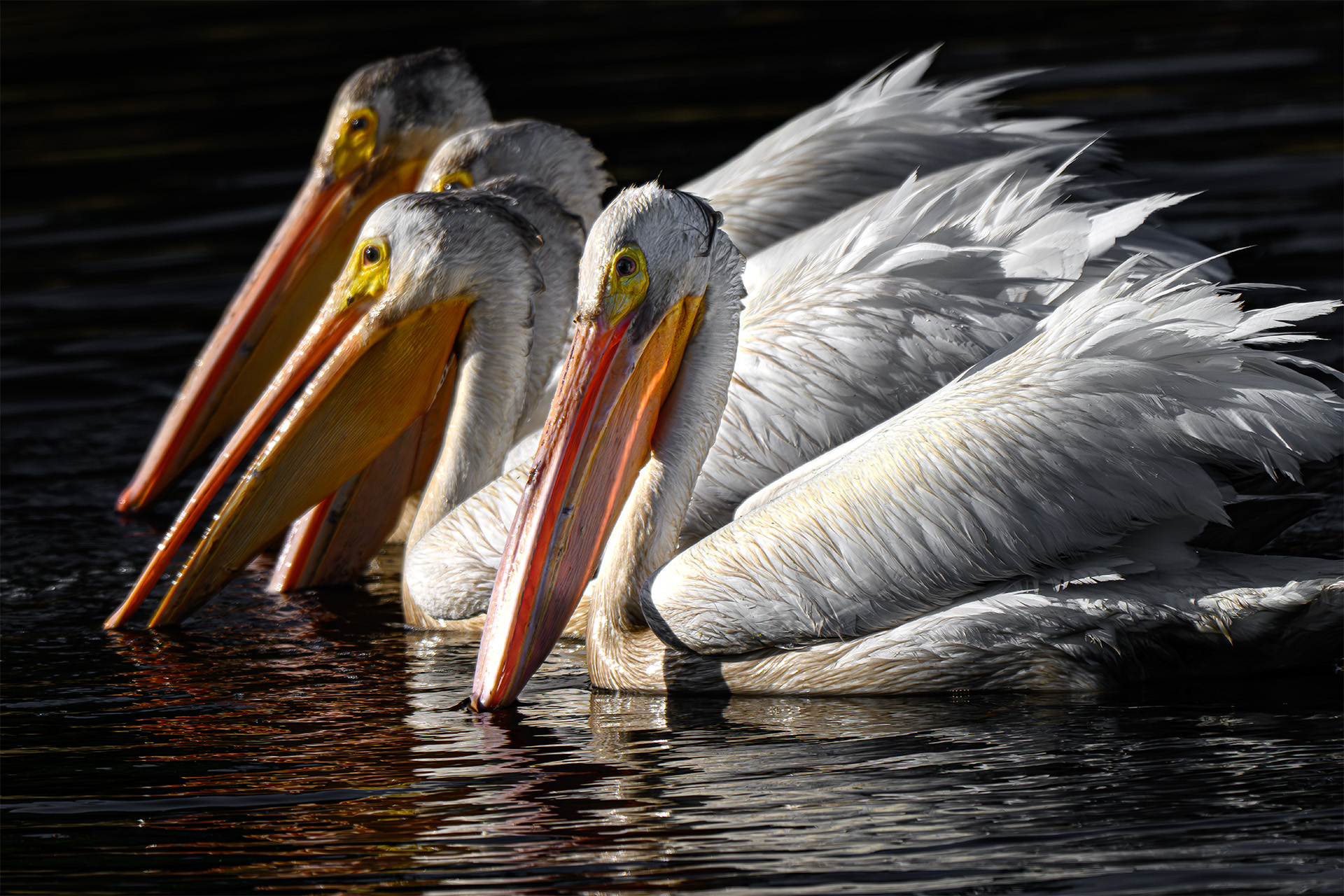
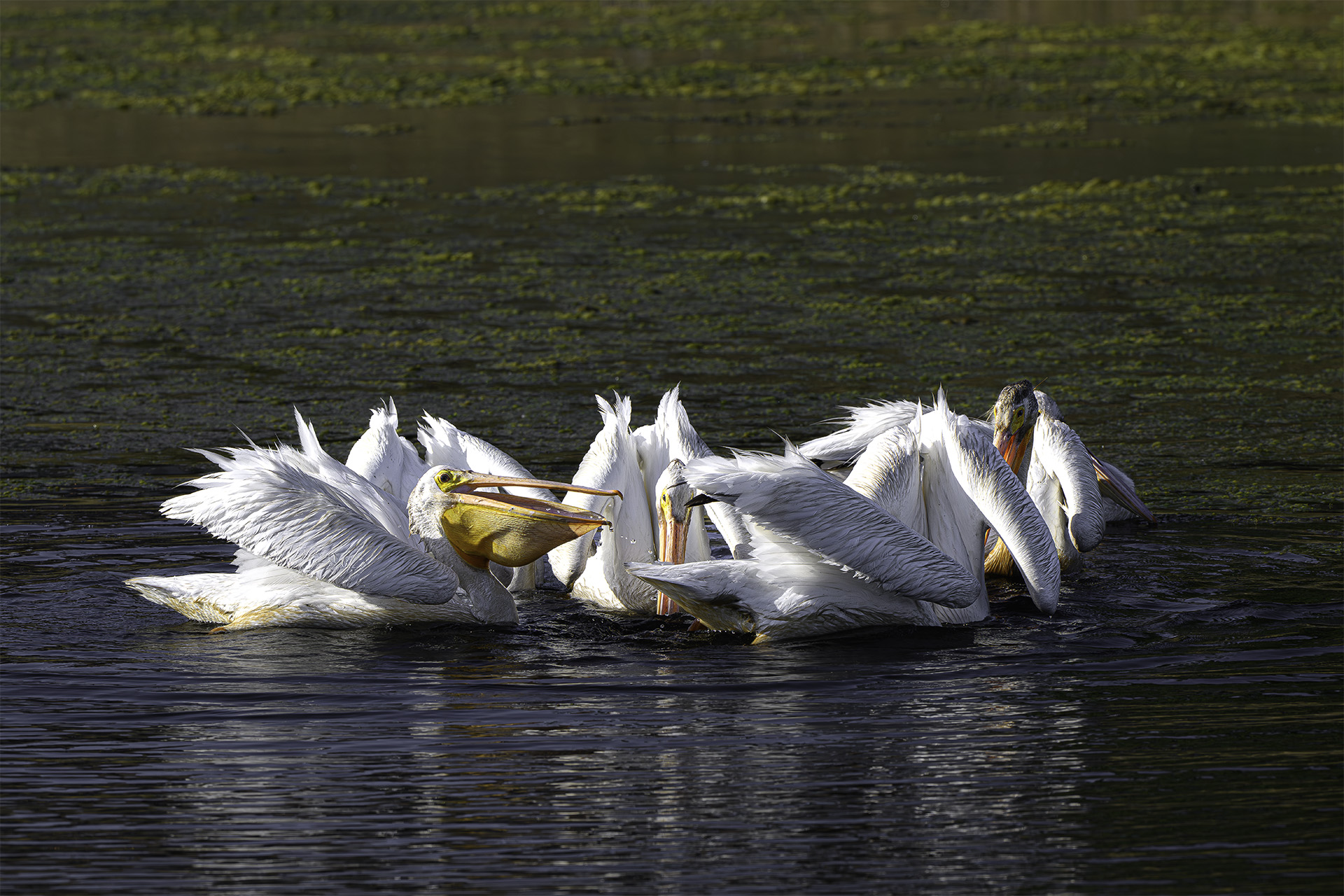
There was great excitement yesterday morning at Ferrari Pond. The word spread fast. The fleet is in! Seven American White Pelicans were cruising gracefully in the water, mostly avoiding the ubiquitous duck weed that floats on the surface around the edges. They were fishing together as a group, surrounding the fish, then plunging heads into the water in unison. White Pelicans often work together to corral fish, paddling into a semicircle before scooping up their next meal. In the second image, the Pelican on the left was successful, the weight of the fish it scooped in ballooning the pouch to accommodate the fish.

2025—Watchful Eyes

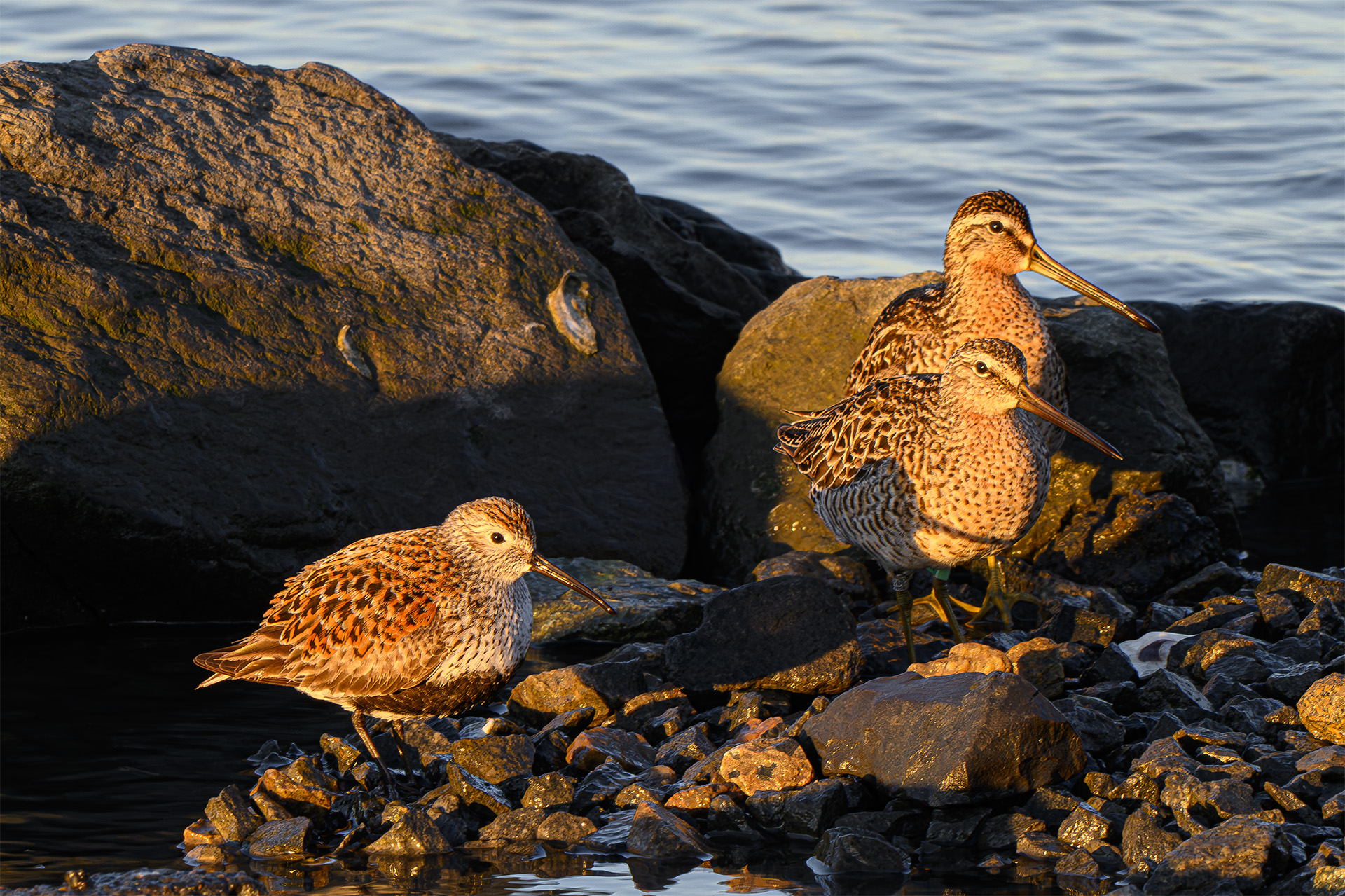
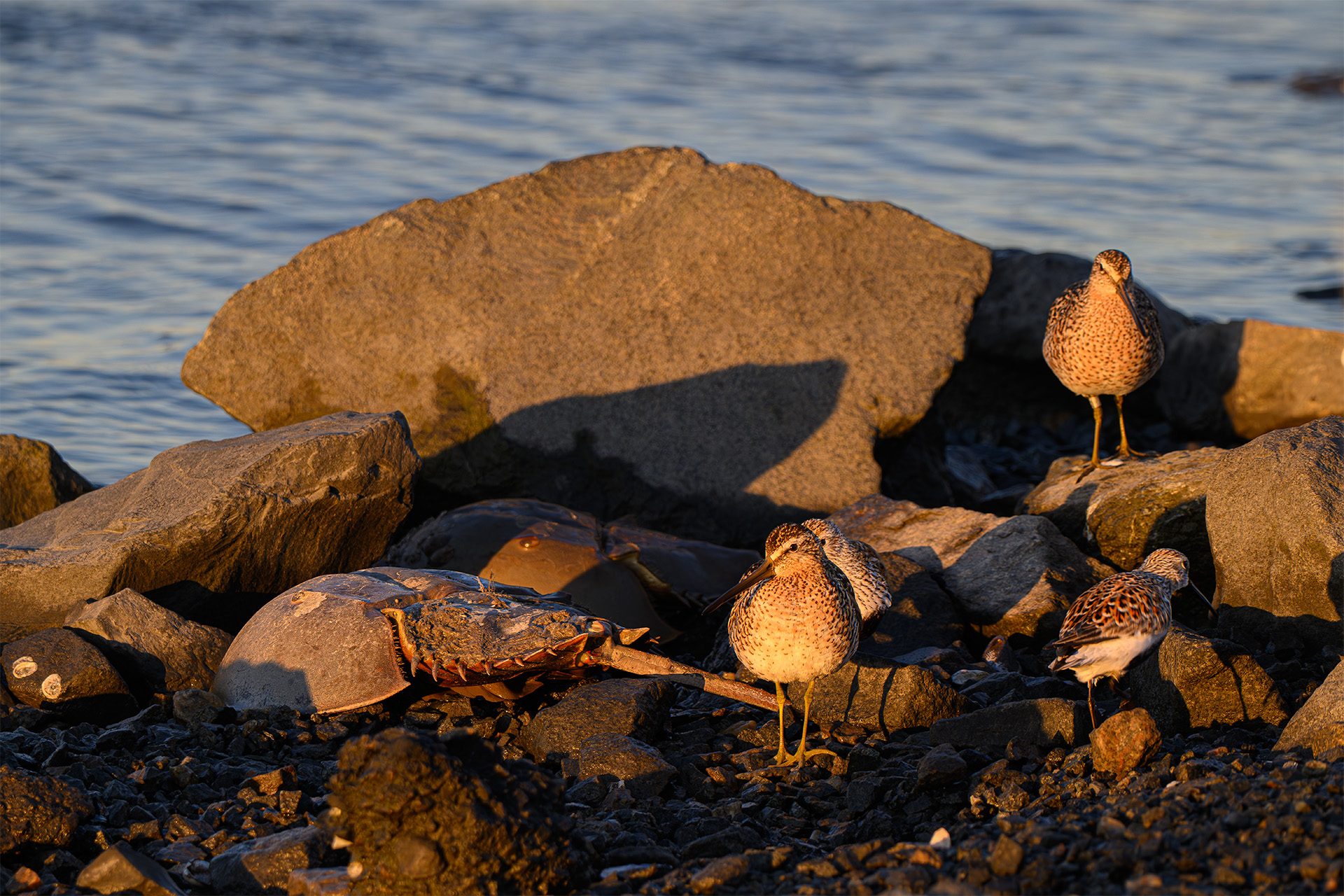
A Dunlin and two Short-billed Dowitchers, all in breeding plumage, wait for Horseshoe Crabs to lay eggs. Horseshoe Crabs are prehistoric arthropods more closely related to scorpions than crabs. Each female crab can lay multiple egg clusters per season totaling tens of thousands of eggs. When the crabs come ashore, the birds congregate to feed on the newly laid eggs. The second image shows two Horseshoe Crabs near where the birds wait. Only a small fraction of the tens of thousands of eggs laid by each female survives, some lost to the whims of the sea, many gobbled up by hungry shorebirds.

2025—Northern Blue Flag

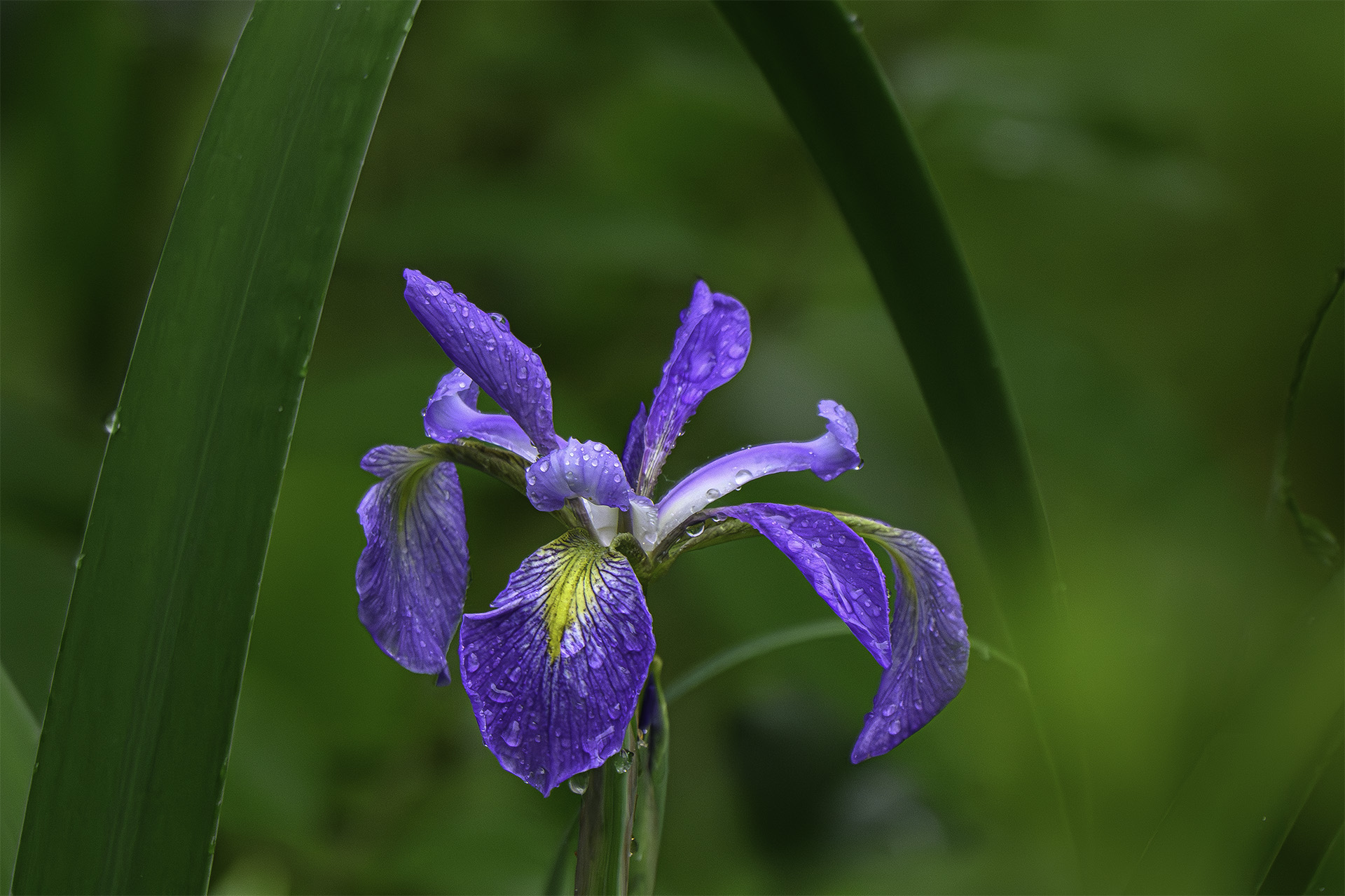
It was hidden behind leafy shrubs but Moose’s sharp eye picked up the bright purple of the Northern Blue Flag, a showy native iris of the northeastern wetlands. He knew I would love to photograph it, yet another Carolism in Magee Marsh, so he called me over. Rain drops from the morning showers dotted the sepals and the purple of the single flower, its color saturated by the cloudy skies, made the flower pop from its green surroundings. It’s always a treat to see and photograph a native plant in its natural environment.

2025—Where Are You??

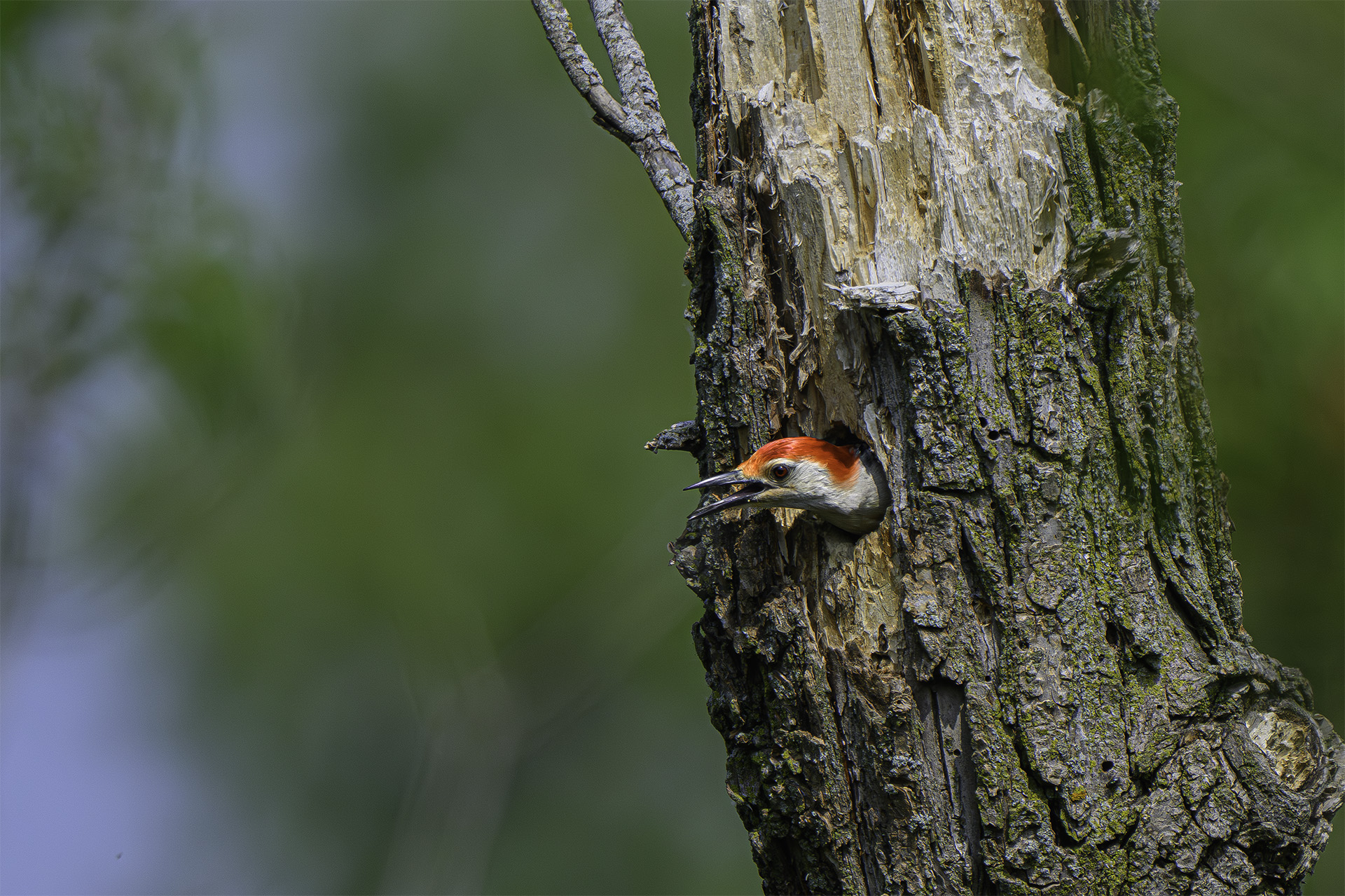
A Red-bellied Woodpecker poking its head out of a cavity in a dead tree stump surrounded by green foliage.
A Red-bellied Woodpecker poking its head out of a nesting cavity in a dead tree stump surrounded by green foliage.

All along the Magee Marsh boardwalk, nesting activity was in high swing last week. We watched a pair of Red-bellied Woodpeckers who had nested in a cavity they had excavated in a dead tree stump. When it was time to switch nesting duties, the first bird, in this case the male, poked his head out of the nest and seemed to make it clear that his shift was done. The female did the same. They didn’t seem to spend a particularly long time on the nest during a shift. But it must be warm and uncomfortable in a tiny space, especially on a warm afternoon, so it makes sense that they were anxious to turn over the egg sitting duties.

2025—Carolism Times Two

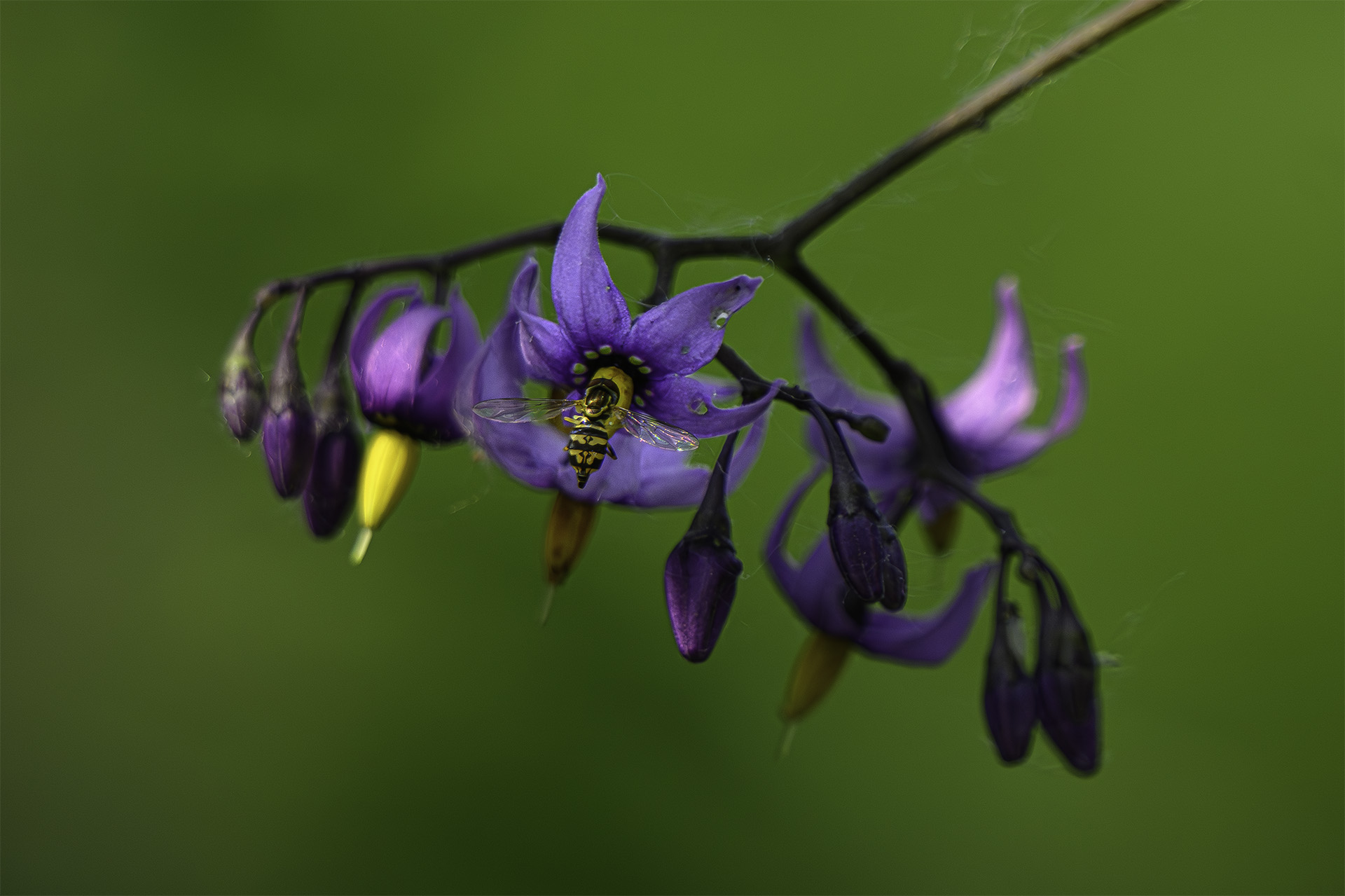
I often photograph things that catch my eye that others seem not to notice. Moose calls these things “Carolisms.” Over the years, Moose has taken to pointing out something that screams “Carolism” that I might not notice. Such was the case a couple of days ago at Magee Marsh. Moose pointed to a spray of purple flowers (turns out to be a toxic plant called Bittersweet Nightshade) that was suspended next to the boardwalk with a great background. It was, in fact, a perfect Carolism. As I focused my lens, an Eastern Calligrapher (a type of hover fly) landed on one of the flowers. Wow! A double Carolism! The breeze was stiff and the spray of flowers swayed back and forth from light to deep shade while the Calligrapher clung to the flower. I was afraid it would fly off before I was able to capture the image I wanted in the right light but luck was with me or maybe it was the ice cream I’d consumed the previous afternoon that helped. Whatever it was, to me, it was a perfect Carolism times two! Thank you, Moose!

2025—Peek-a-boo!

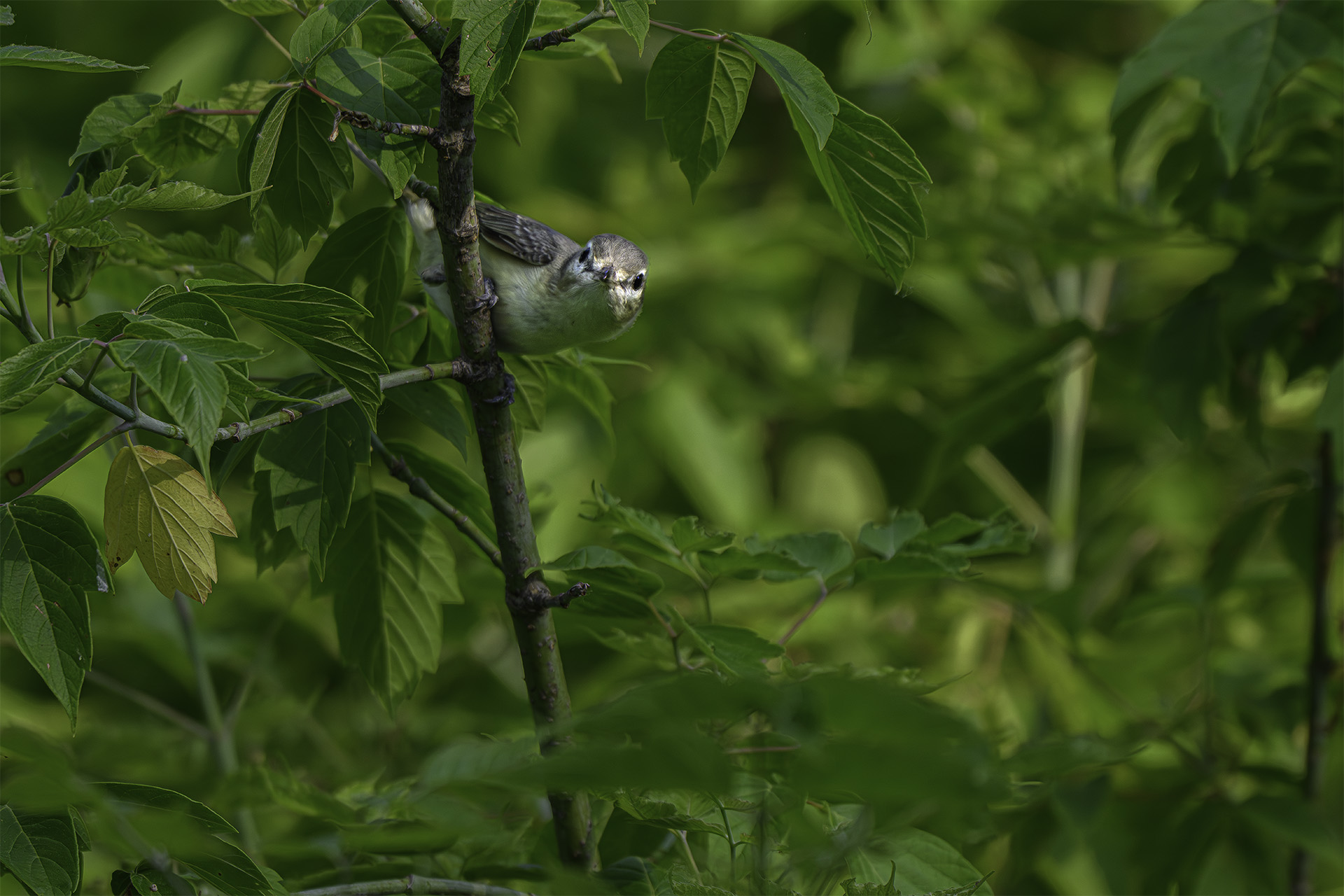
Vegetation surrounding the boardwalk at Magee Marsh is green, lush, and dense. Warblers and many of the other birds that migrate through Magee Marsh are tiny and they can easily hide in the canopy. Hearing birds was not a problem there. Locating them once they have made their presence known could be difficult, especially for people like me. I always seem to be the last person to spot a subject even after I’ve been alerted to it and its location has been pointed out to me. Yesterday morning as we looked for a bird whose voice we heard, Moose called out to me and pointed to a female Philadelphia Vireo on a thin trunk. I spotted it immediately, much to my surprise, probably because it did stick out a bit amidst the green background and I managed to get a few clicks before it disappeared behind a leaf. It looked like it was peeking around and taunting me as if to say, “Peek-a-boo, here I am, try to photograph me if you can.”