2026—Bug Canvas

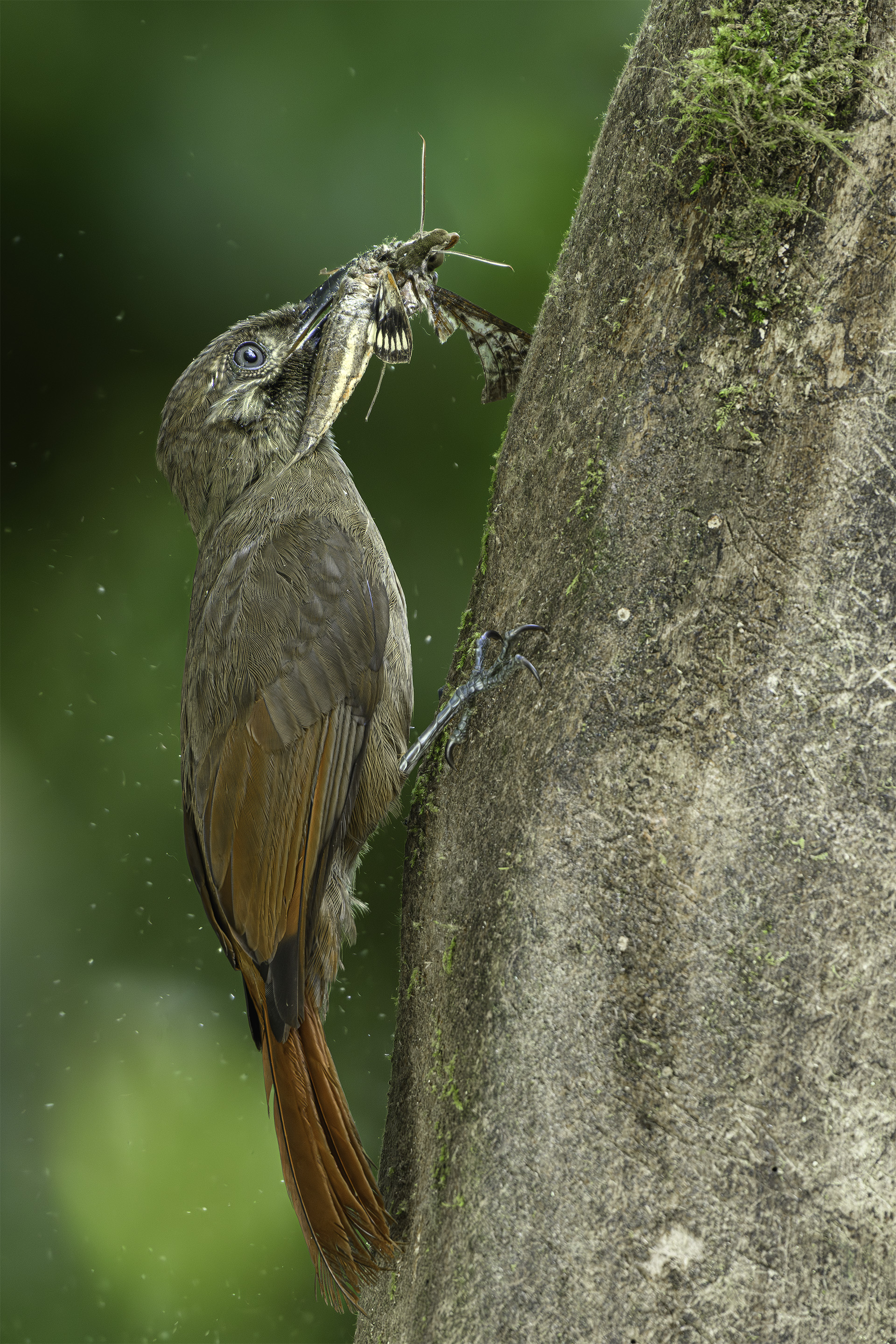
There is a “hide” on the grounds of Sachamatia Lodge in Ecuador that is used by birders to spot birds from an inconspicuous place so that the birds attracted to the area can be seen without stressing them. Inside, there is enough room to set ups tripods and seat about eight photographers. One of the ingenious things about this hide is that a large white canvas stretches across a framework at a 90° angle from the hide that is lit up all night by a large light bulb. During the night, bugs, moths, and other flying insects are attracted to the light and they cling to the white canvas so that in the morning, the canvas provides a smorgasbord of bugs for the birds that arrive at first light. Throughout the morning, birds fly to the canvas and snatch a morsel off the canvas. In the process of subduing the moth, microscopic scales fly everywhere off the wings creating a cloud that surrounds the bird. We watched lots of different bird species snatch a meal from the canvas. To me, the most entertaining was the Plain-brown Woodcreeper that would grab its meal from the canvas then retreat to the trunk of a nearby tree and subdue the bug as it ascended the tree and scales flew.
2026—What’s in a Name?

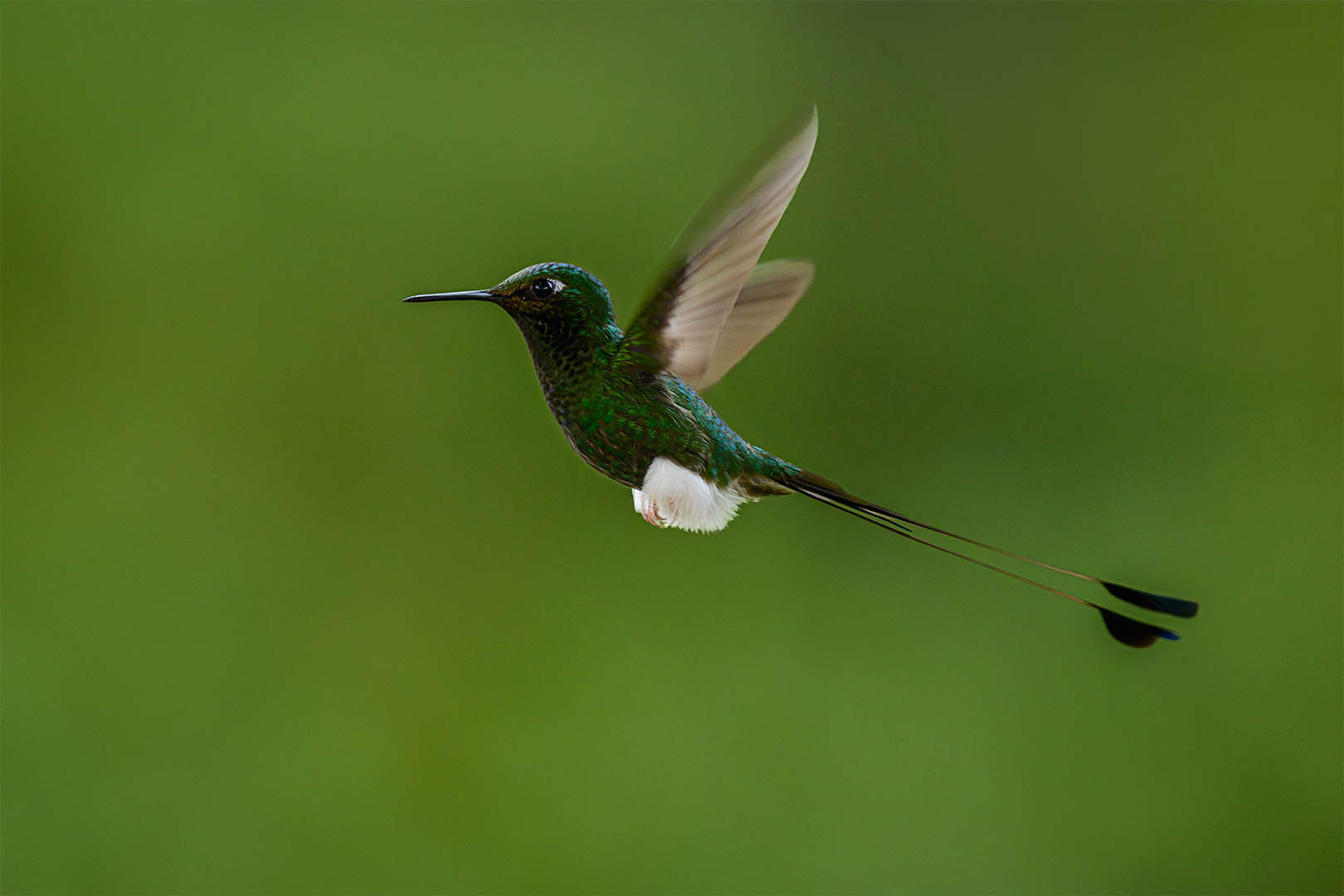
What’s in a name? Very few of the Hummingbirds here in Ecuador bear the moniker Hummingbird. They are Brilliants, or Emeralds, or Incas, or Violetears, or Sylphs, or Coronets. And, they are Racket-tails like the White-booted Racket-tail which to me is one of the most aptly named Hummingbirds of the sixteen species I’ve seen to date. This small-bodied Hummingbird gets its name from two distinct characteristics: the fluffy white puffs of feathers that surround its legs, creating the “boots,” and the pair of long bare-shafted tail feathers with racket-shaped disks at the end of each. It is one of the most recognizable Hummingbirds here in Ecuador and it quickly endeared itself to me, first by almost landing on my finger when we walked by the hummingbird pavilion one afternoon, and second because it is simply adorable. My challenge each afternoon when we photograph Hummingbirds here is to photograph it in flight, not perched on the feeder which it seems very content to do. I’ve been fortunate to achieve my goal a number of times so far this week. This is one of my favorites.

2026—Cloud Forest LBJ’s

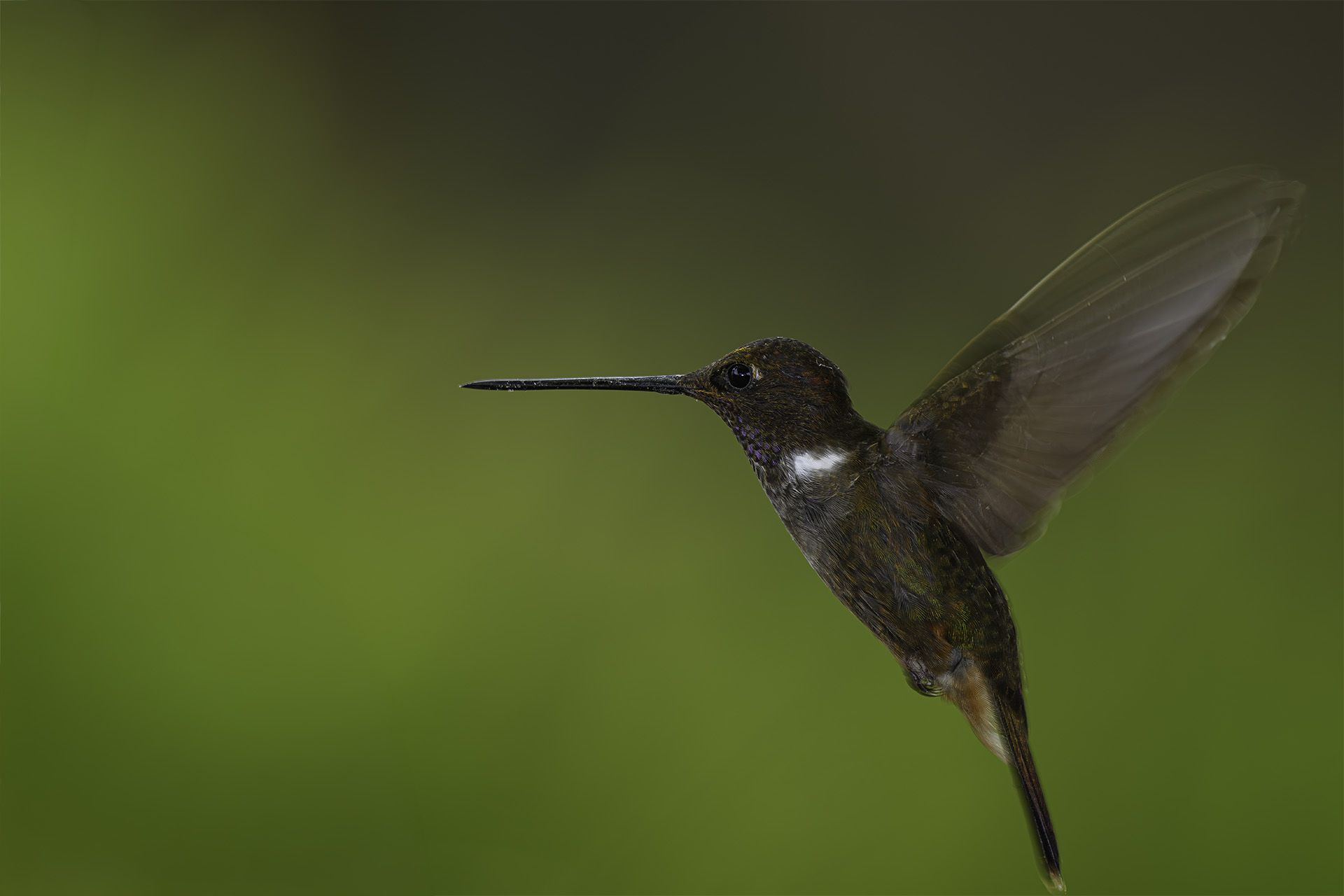
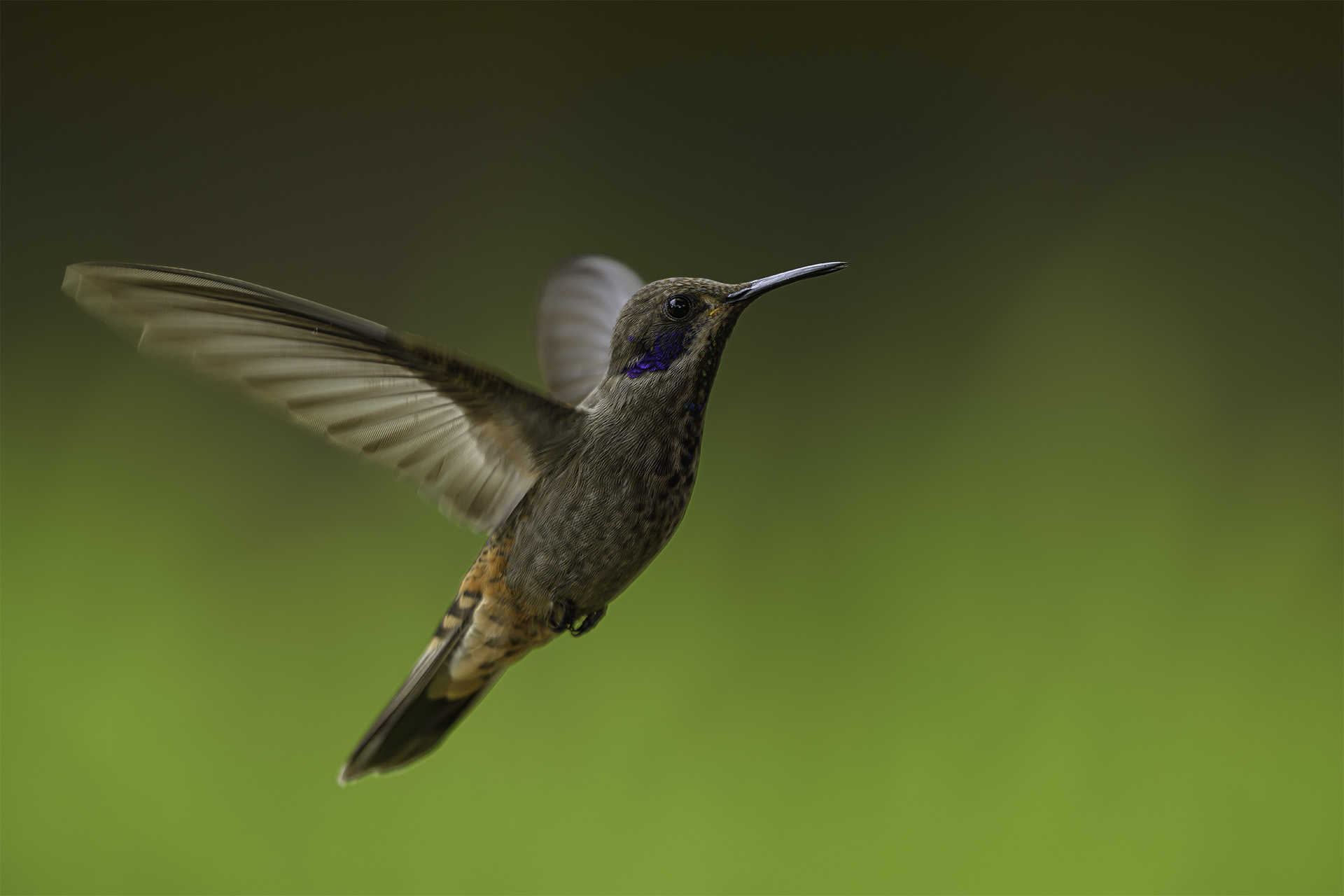
In the birding world, LBJ stands for “little brown jobs,” a colloquial term for small, brownish, and notoriously difficult-to-identify passerine birds. I have discovered that the Cloud Forest of Ecuador has its own LBJ’s, that are small and brownish, but they are not passerines. They are hummingbirds and they have names that are difficult for me to remember. Here are two of the three LBJ’s we’ve encountered here this week, the Brown Violetear and the Brown Inca, both spectacular birds in their own right and not at all forgettable as the name LBJ implies.

2026—Oh, Baby, Baby, It’s a Wild World

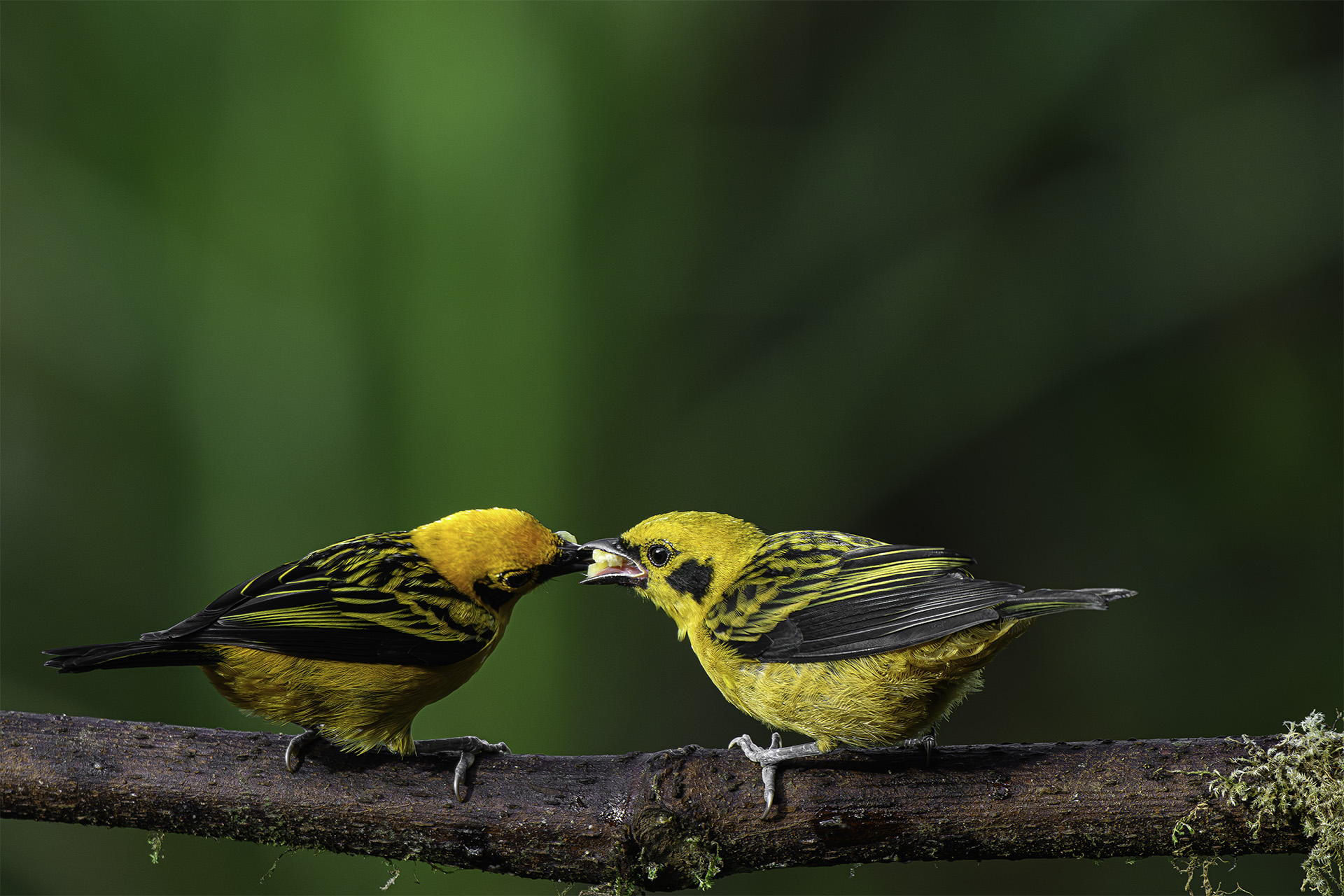
Cat Stevens once sang, “Oh, baby, baby, it’s a wild world.” More than fifty years later, it’s still a wild world. It’s been wild here in Ecuador with all of the amazing birds we’ve seen so far. Cat’s lyrics came to mind the other day when we saw a fledgling Golden Tanager begging for food from its parent, who obliged, feeding it some banana that was gleaned from one of the feeding stations located in areas around Sachamatia Lodge. Although the young bird, on the right, looks almost identical to its parent, to me its exaggerated “Walt Disney beak” was the giveaway. This young bird will face the wild world soon enough, but for now, it is being cared for by a caring parent.

2026—Flaming Gorgeous

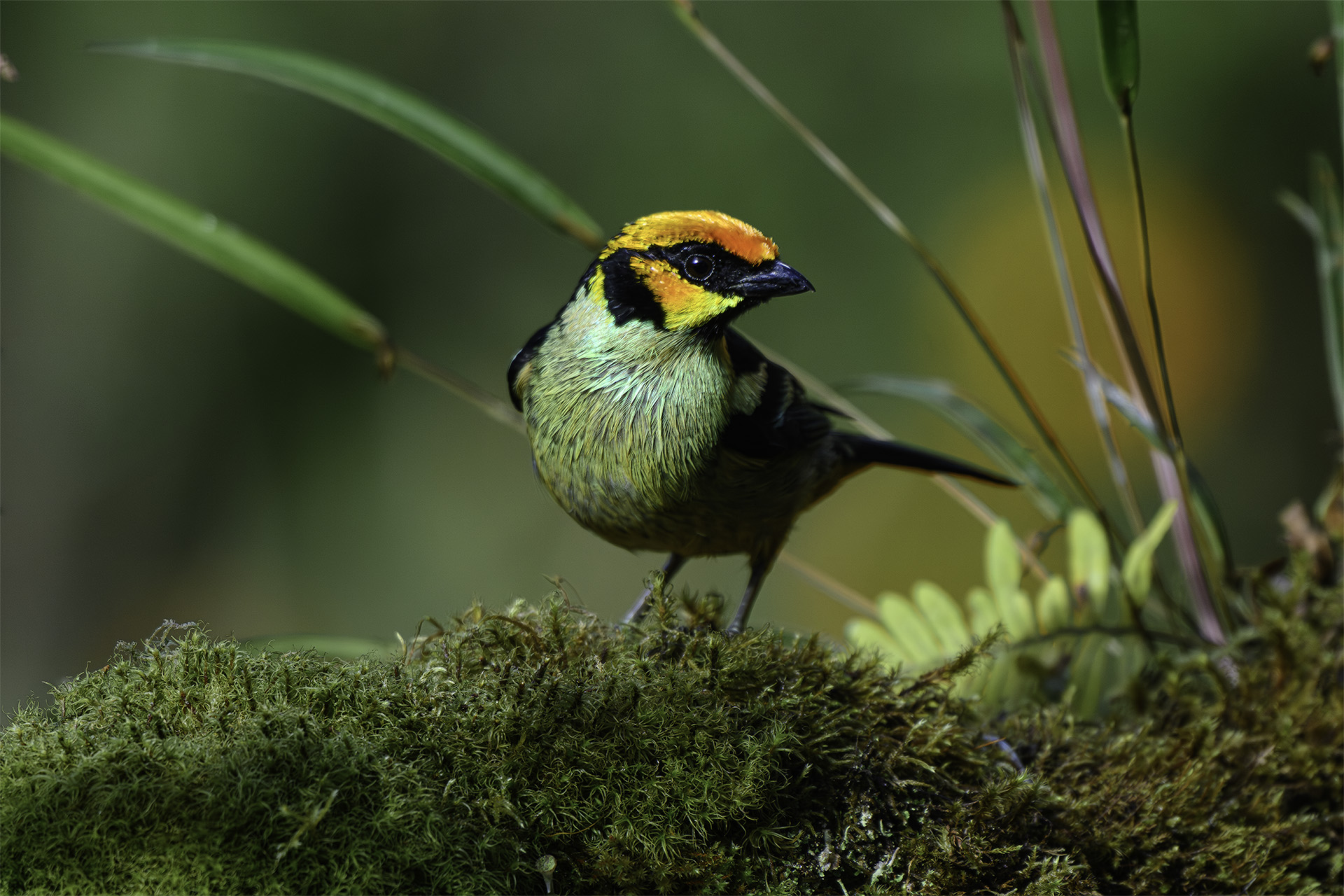
The birds I’ve seen so far in Ecuador are incredibly gorgeous. We came here planning to focus on hummingbirds but there are so many stunning birds here that it’s not easy focusing on one species or family of birds. Yesterday, we spent time photographing birds at a feeding station set up by the lodge that attracts many different species of birds. I found an area of the feeding station that seemed to me to be the perfect staging area for the birds as they came in to feed. I kept my eye on it and prefocused to that area so that when a bird landed there, I could quickly acquire focus and photograph it. The Flame-faced Tanager is flaming gorgeous and a new species for me. When it landed in the staging area, its brightly colored feathers perfectly echoed the colors of the surrounding area.

2026—Need an Umbrella?

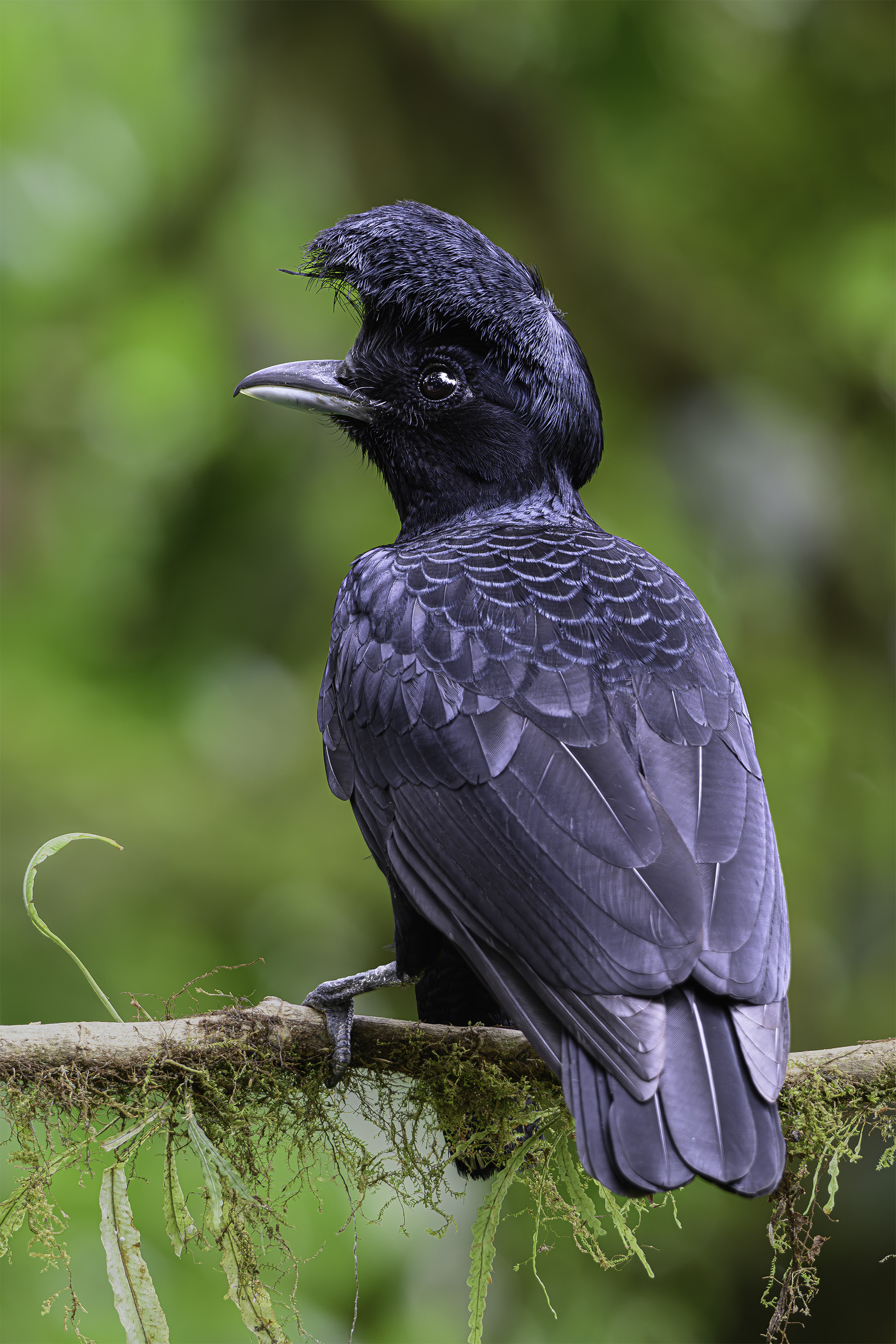
What a spectacular first day of shooting at Sachamatia Lodge in the midst of the Cloud Forest of Ecuador. Most of the more than 30 species we’ve seen here so far are new to me, including the Long-wattled Umbrellabird seen here. It’s easy to see how it got its name. As I write, it is pouring outside. But, as we photographed this bird (and more than a dozen others yesterday morning from the lodge’s hide) I couldn’t help but think of Moe Howard, one of The Three Stooges, with his bowl cut hair-do.

2026—More Practice

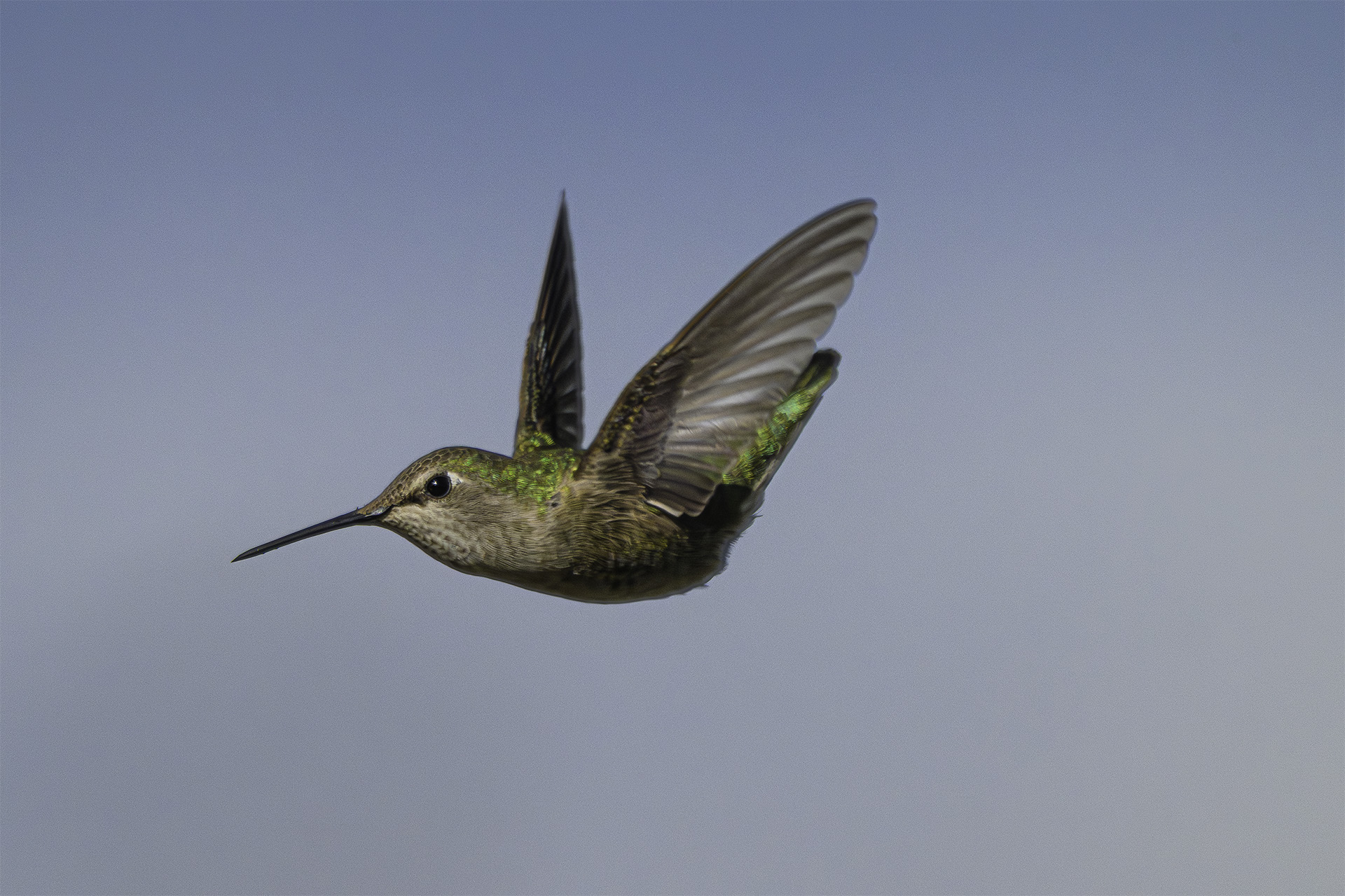
A female Anna’s Hummingbird heads toward a feeder. I took this a couple of weeks ago in my friend Truman’s backyard as I practiced with my hummingbird rig in preparation for my trip to Ecuador. I’m in Ecuador now at the Sachamatia Lodge. After arriving here late yesterday afternoon, we sat in the area dedicated to hummingbirds and watched as they zoomed to and from feeders and fed at some of the flowering plants surrounding the patio. We didn’t have our cameras with us. We were just absorbing the ambiance and getting a feel for the area and the variety of hummers here. I think we’ve already seen about a dozen species I’ve never seen before. I can’t to start.

2026—Lights Out at Ten

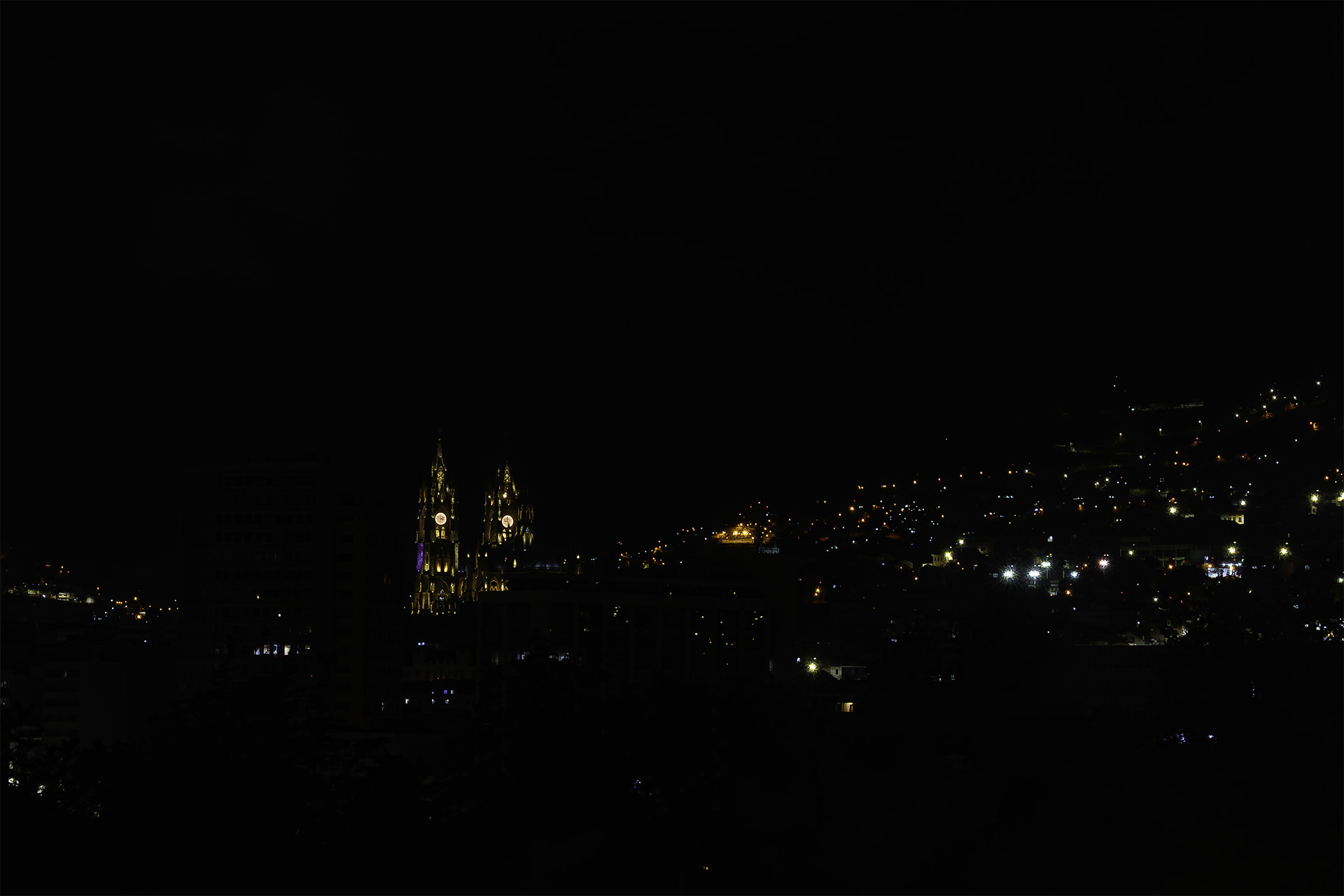
After about five hours of flying, nine hours of waiting, and five more hours of flying to get to Quito, Ecuador, I was happy to finally get to my room at the Hilton Colon Quito about 9PM and go to sleep. It was almost dark and when I opened the curtain I gasped at the view of the city lights with the Basilica del Voto National on display. Despite my weariness, I thought I had to get a quick shot so I grabbed my Nikon Z6iii with the Z70-200 already attached to capture the expanse of the city lights that included the Basilica. It turned out not to be a quick shot. I used a small aperture to try to create star bursts around the lights but the resulting shutter speed was too long for me to hand hold so I had to unpack the tripod. By this time it was much darker and I realized the window of my room was so dirty that the starbursts didn’t materialize the way I hoped. But, I think it’s a fun shot, my first in Ecuador. And, as it turned out, I got it just in time because the lights of the cathedral went out at 10 PM.

2026—There’s Always One

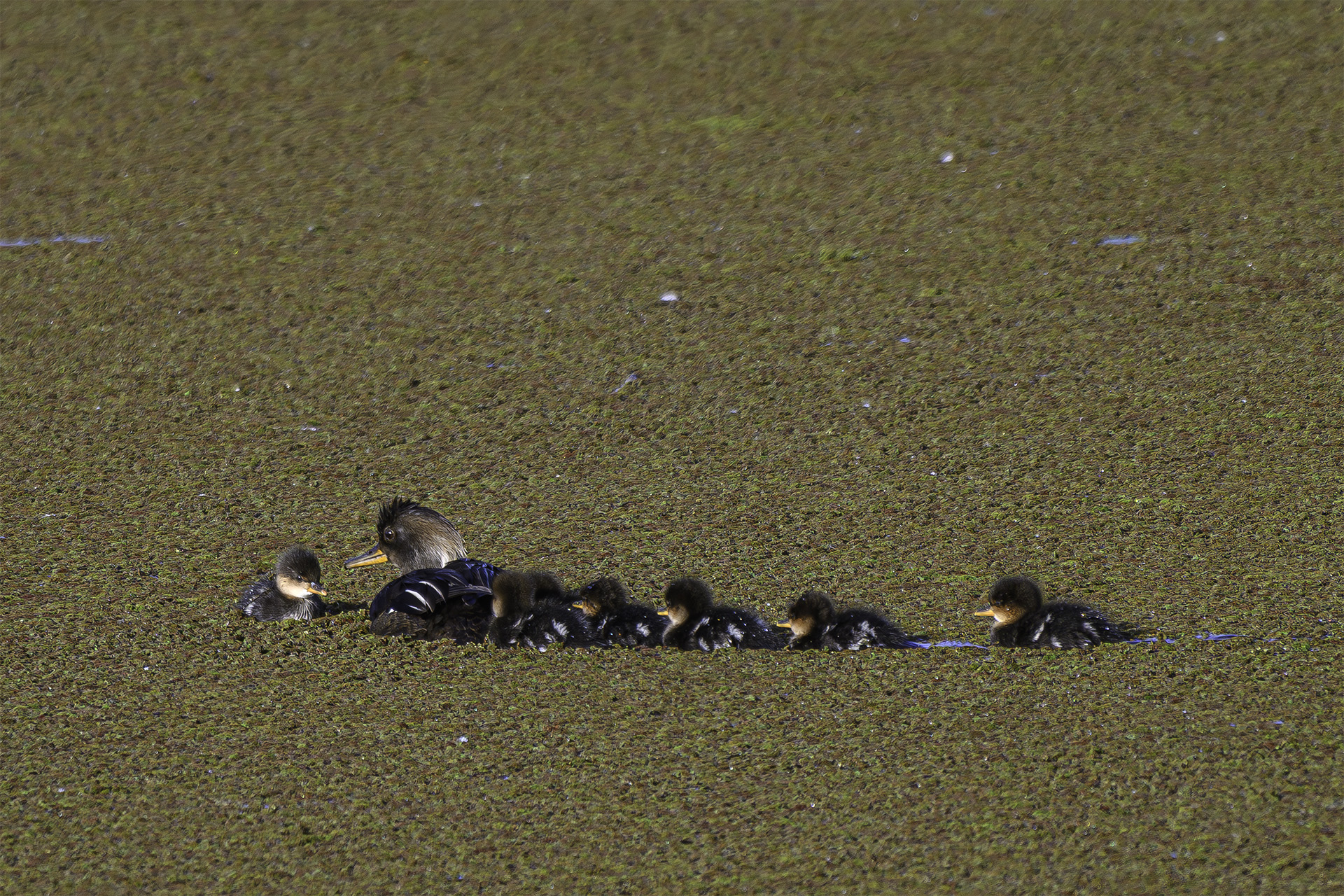
Yep, there’s always one! The Hooded Merganser duckling on the left is reunited with mom and six siblings after deciding to explore the Azolla-covered Salt Pond on his own (it’s gotta be a boy,right?). I watched in amazement as he paddled far ahead of the mother who was preening while the rest of the brood huddled close together next to the reeds several feet away. He made a beeline far past mom then began to dive for food. I’m thinking he must have been the first one to hatch so he’s ahead of his siblings. Their primary diet is small fish and crustaceans but he came up empty each time he slipped under the water. While mom seemed not to be worried, she must have made a signal because suddenly, the wayward duckling turned and headed back toward her while the siblings left the safety of the reeds and headed toward mom, too. They all arrived back at mom-central at the same time.

2026—Sing a Song of Sixpence

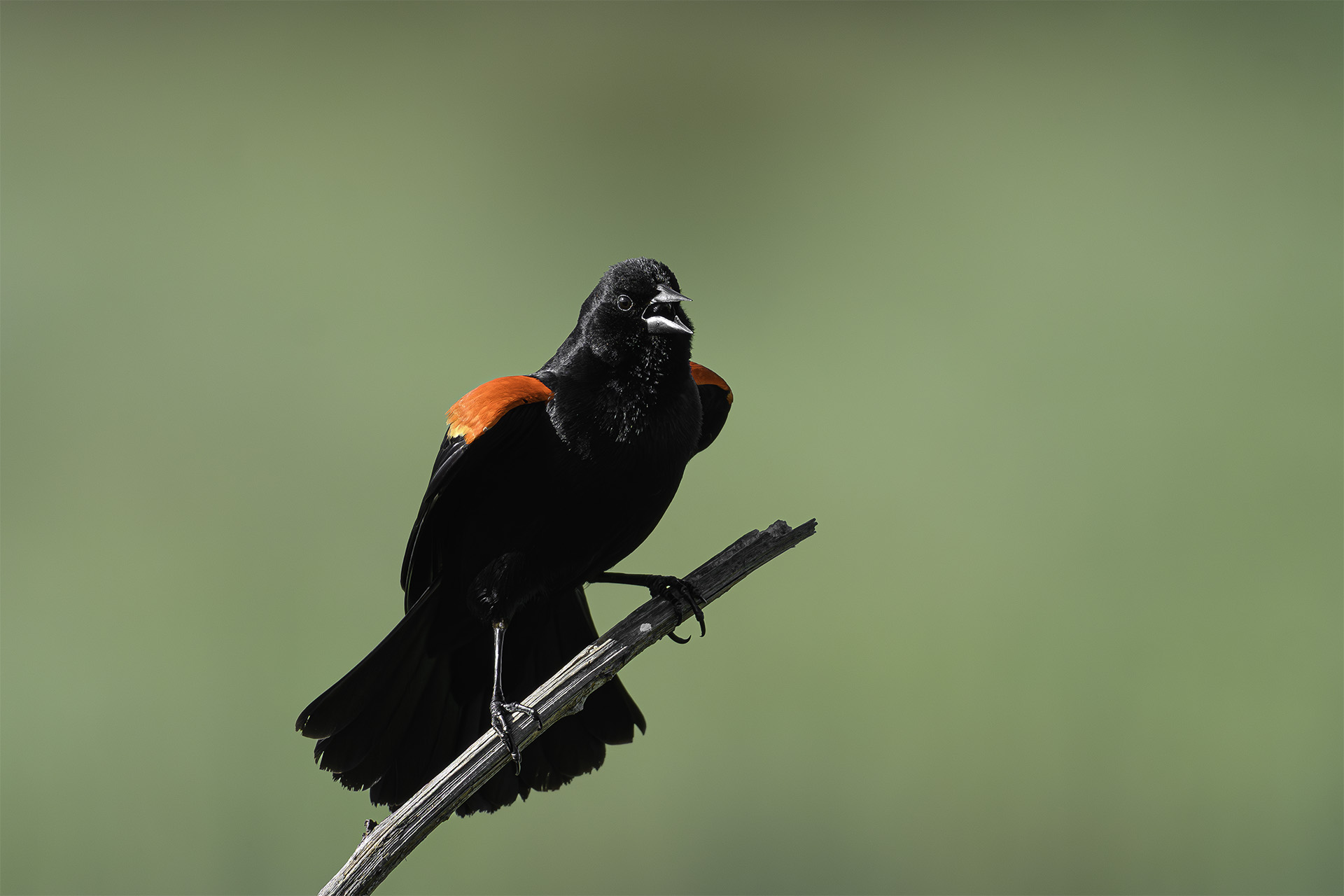
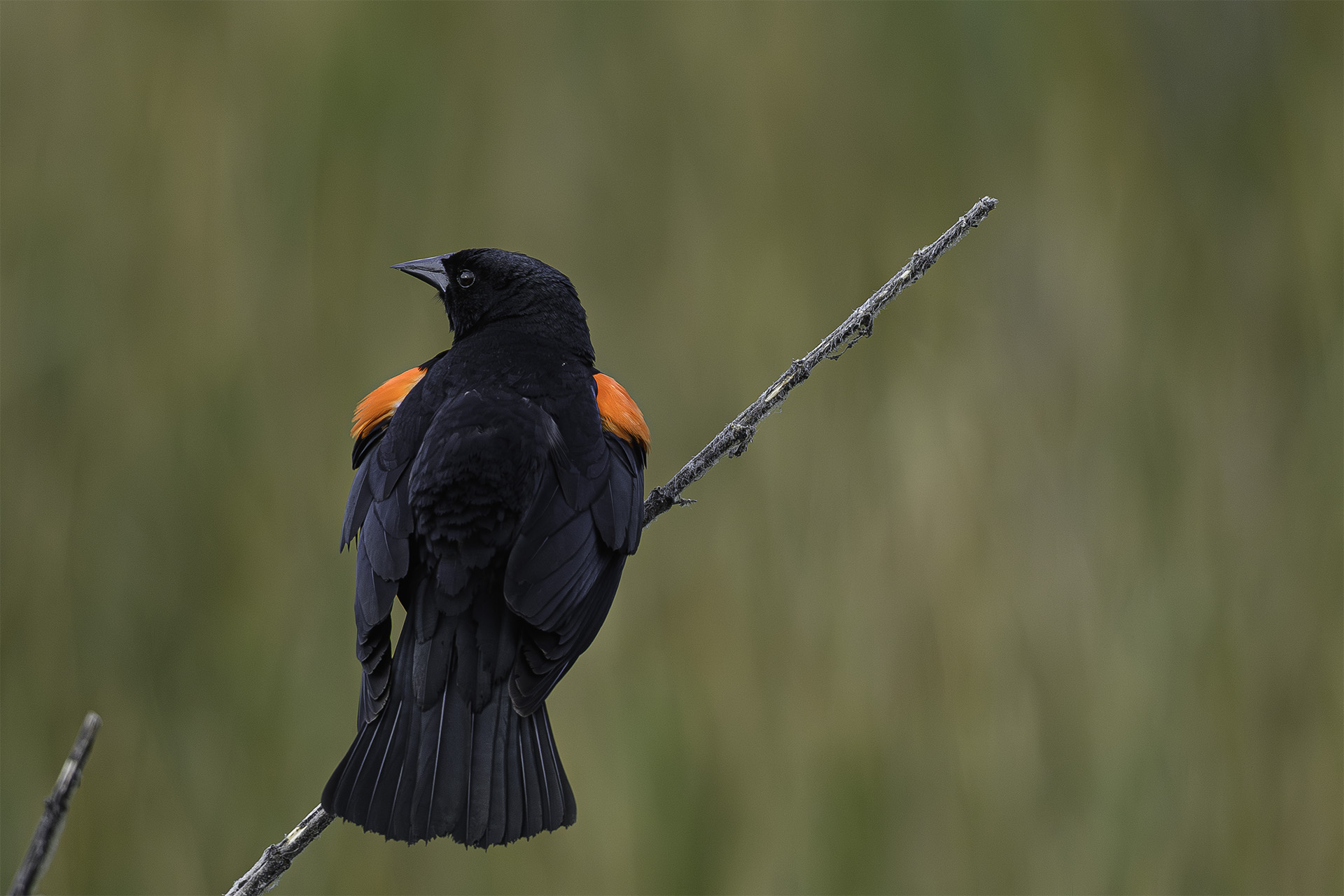
The song of a Red-winged Blackbird is a lovely, lilting song that echoes across the marshes as the males let their presence be known both to rivals and to females. Probably not the Mother Goose “song of sixpence” about Blackbirds baked in a pie but it is a blackbird after all. I particularly liked this image because the background is far enough away from the subject that a telephoto lens creates a plain, soft, and dreamy background color that has no distractions so the subject is perfectly presented on its stage.

2026—Eye on the Prize

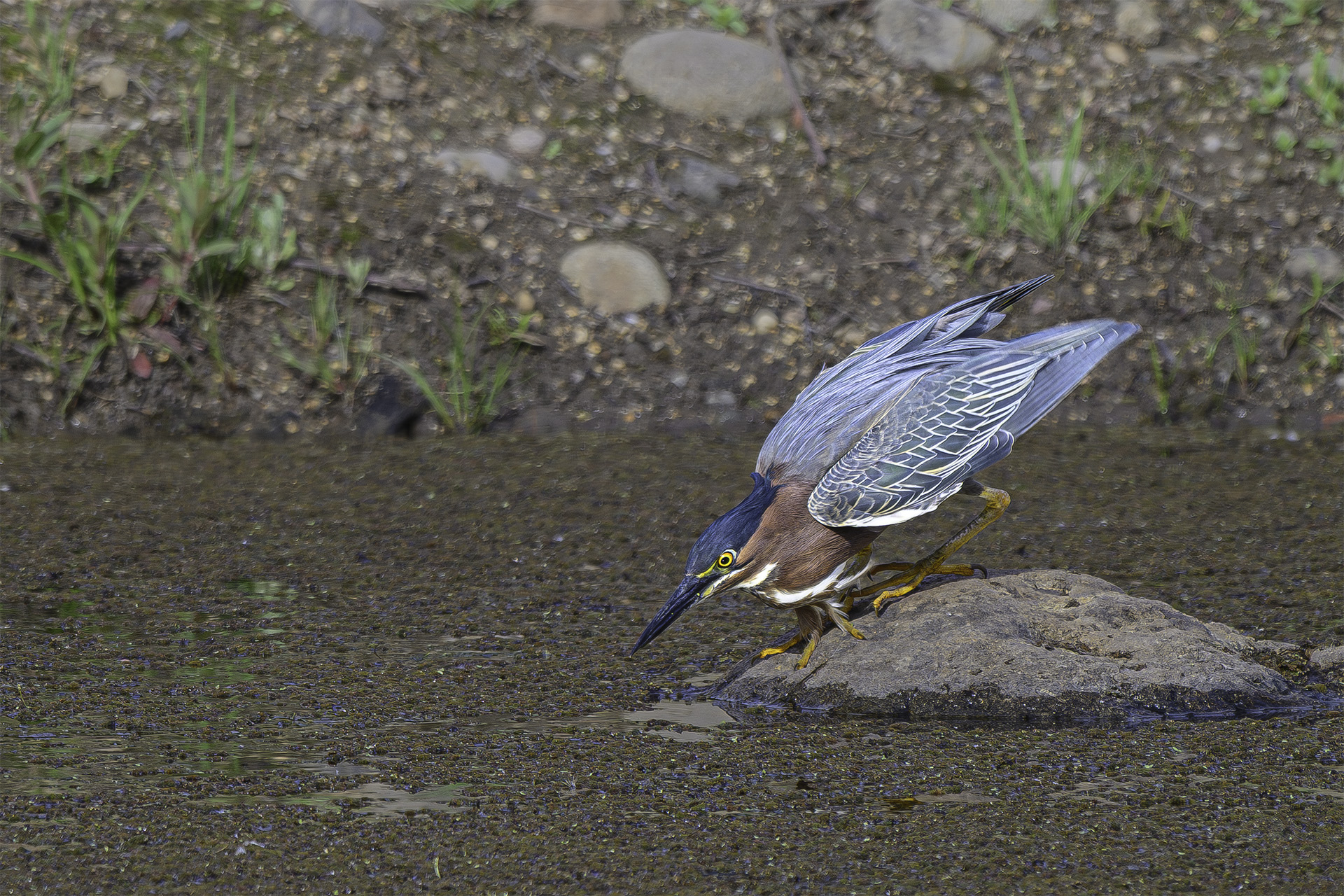
A Green Heron flew to a rock in the midst of floating Azolla probably because the aquatic plant had accumulated at the edges of the pond creating a thick mat which was impenetrable for seeing anything in the water. It found a small clearing where the Azolla had momentarily drifted away, giving it a clear view of what was underneath. While I watched, the Green Heron took a stab into the water, but it was an unsuccessful attempt to grab breakfast. As it resettled it feathers, it prepared to try again, keeping its eye on the prize.

2026—Goose Wars

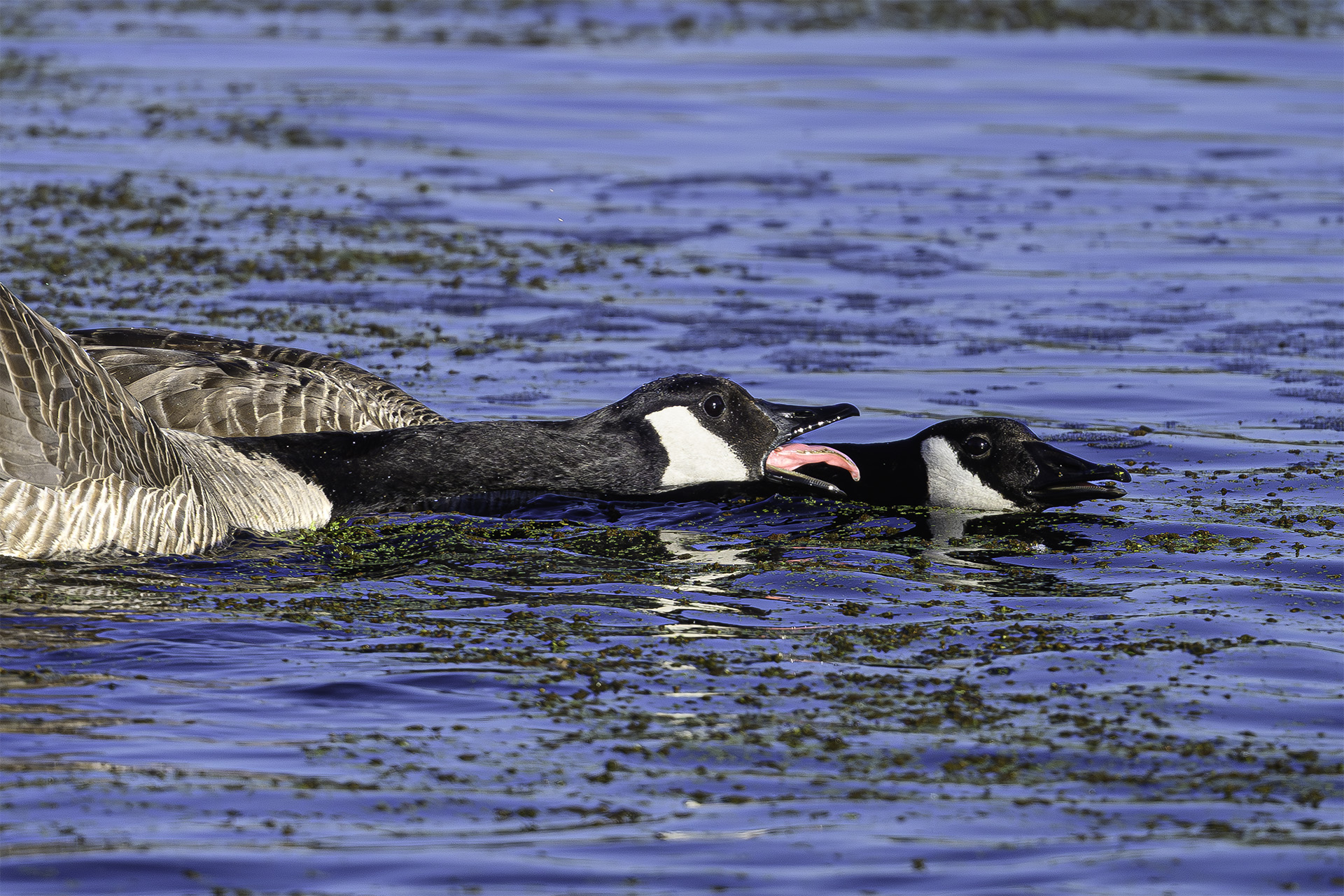
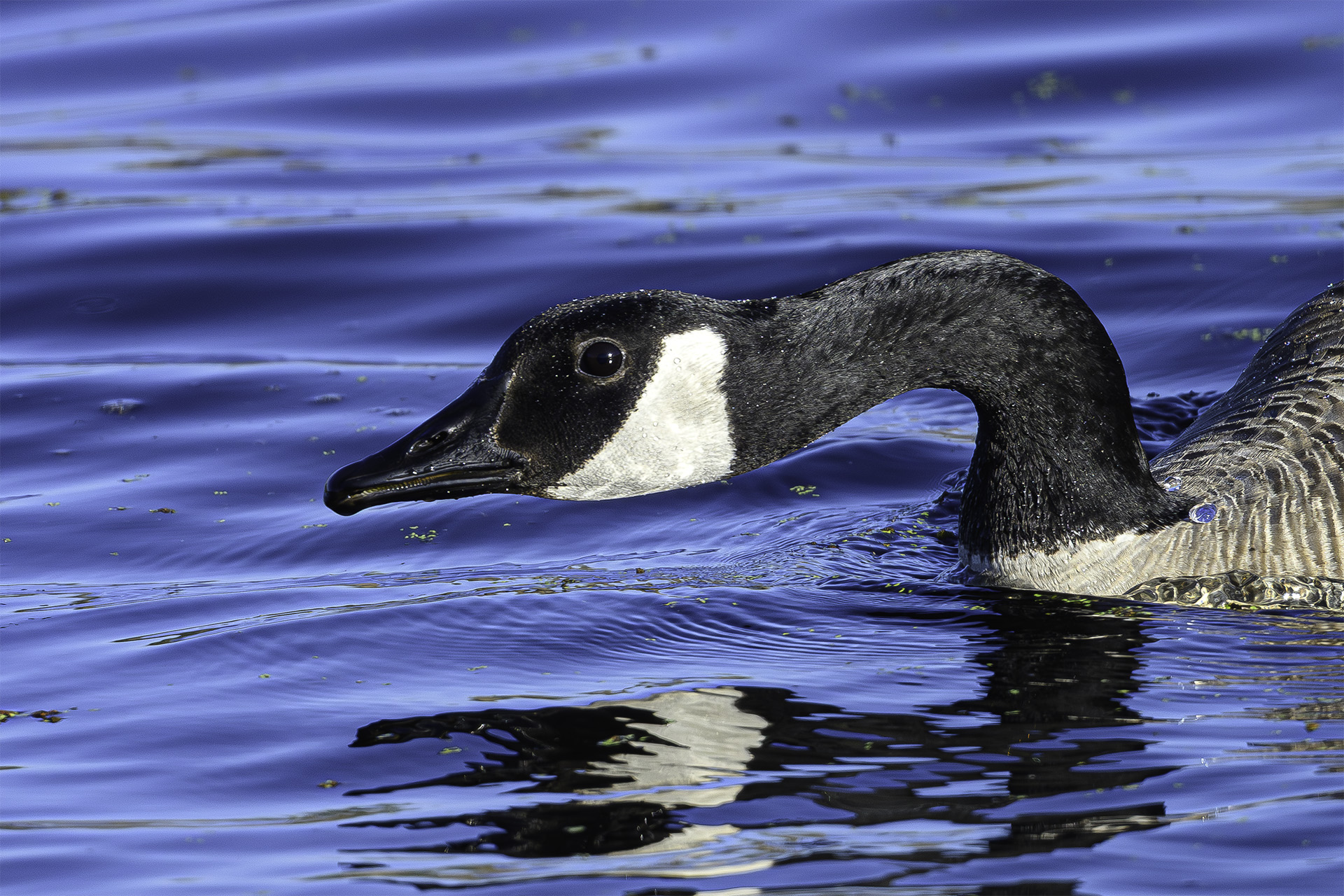
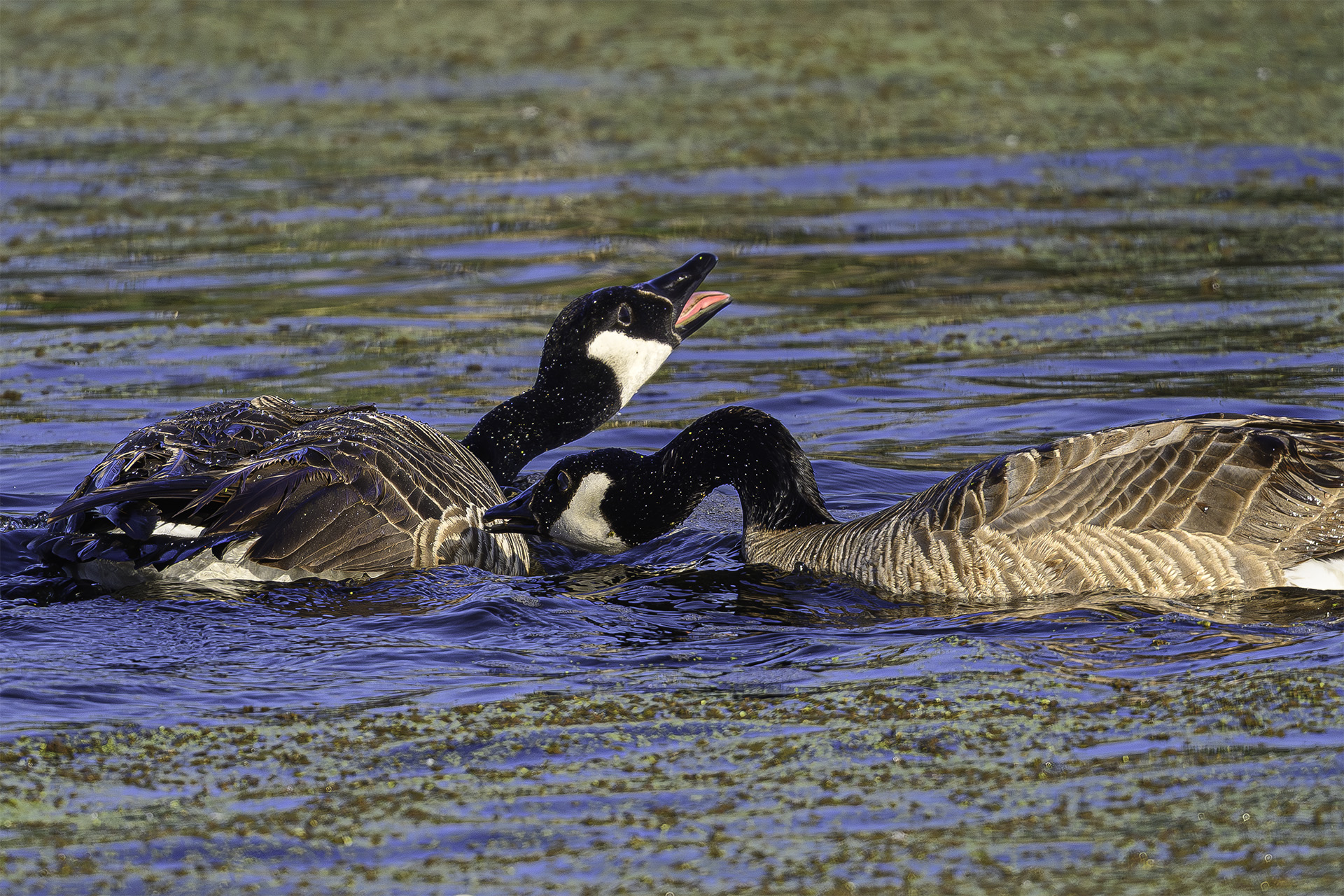
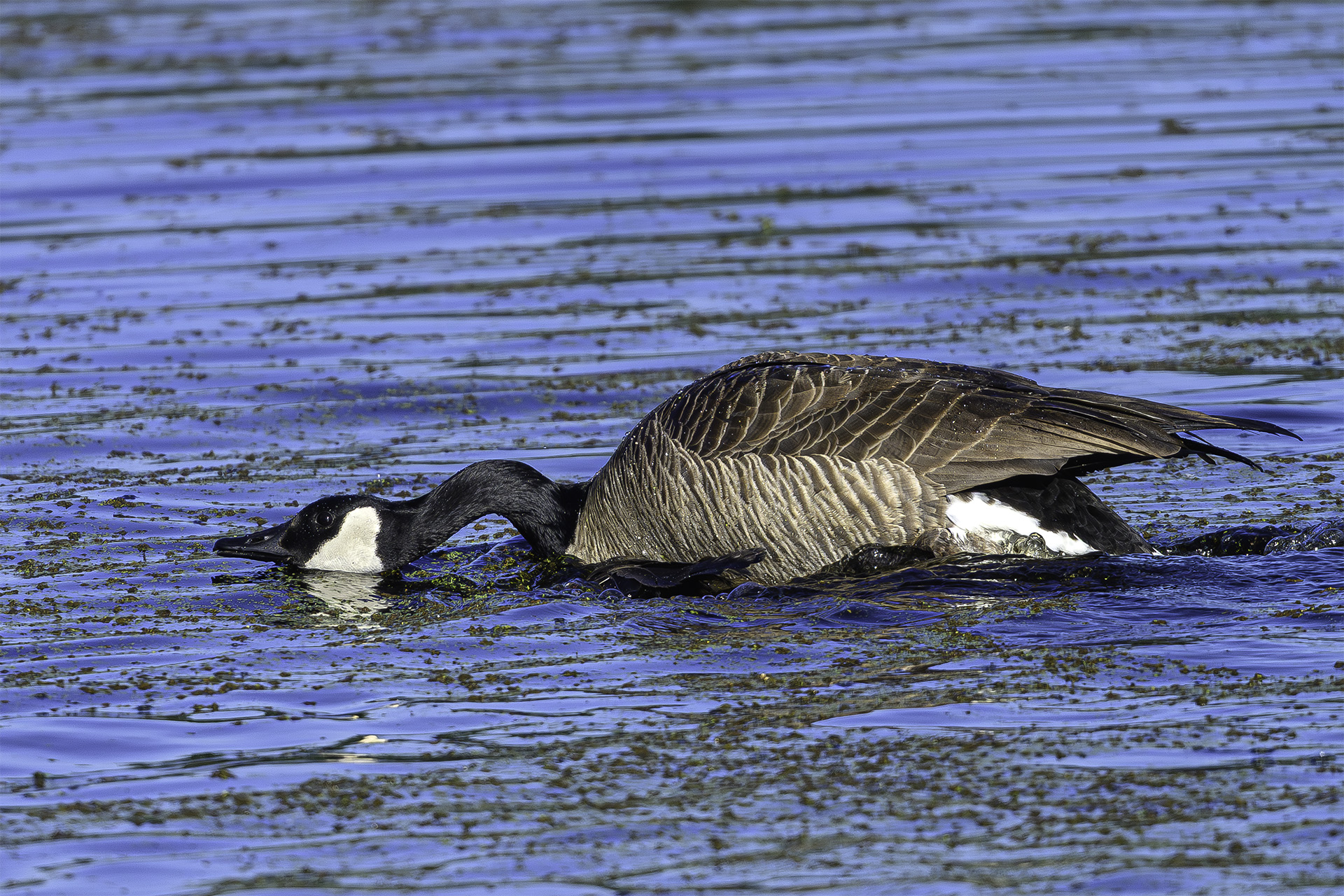
The Canada Geese were in fine fettle here yesterday. Yes those golf course denizens that strut across the streets here in large flocks, daring anyone to drive past them, were creating quite a ruckus. I don’t normally bother photographing them unless they’ve got those adorable chicks. Although they are quite striking-looking birds, they are so common that I usually walk right past them. What I presume to be the males, seemingly with nothing else to do since their mates are either sitting on nests or brooding young, were warring noisily in the pond. I watched from the golf cart bridge as one pursued another, splashing across the water, bashing his beak against the rival’s side, staring the rival down, then, pushing him under the water. I’m thinking that the neck curvature indicates extreme displeasure. In the last image, the rival, just a sliver of his tail showing just behind the neck of the dominant goose, is completely submerged as the other goose appears to push him under water. No blood was drawn and no one drowned but it was a fascinating display to observe.

2026—Hiding in Plain Sight

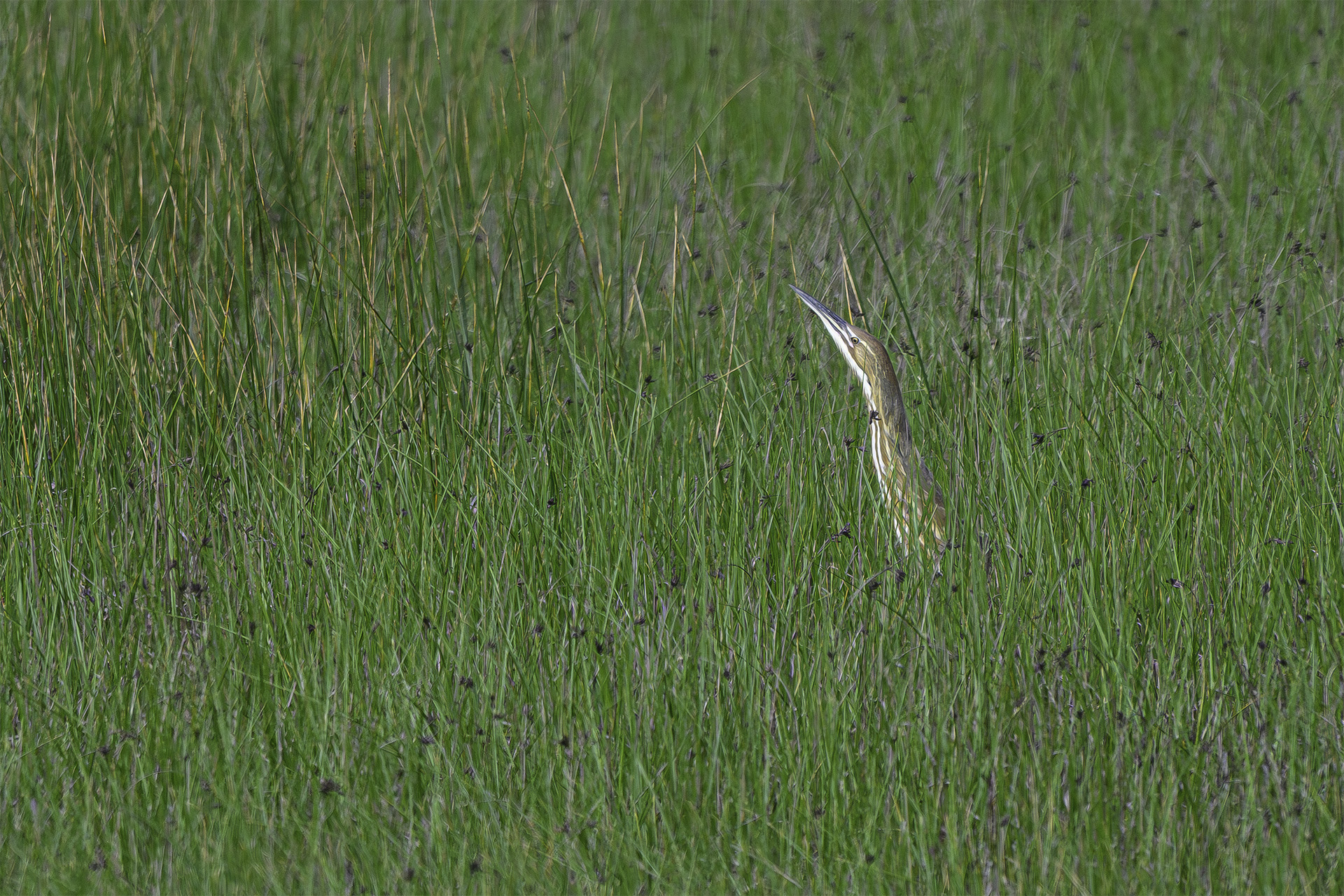
The thing about American Bitterns is that they hide in plain sight. They stand with their long, slender necks outstretched, their beaks pointed upward, and their bodies swaying ever so slightly to match the movement of the reeds and weeds around them. The Merlin App often records an American Bittern along the Ferrari Pond Trail and sightings by others are shared so we know where to look. Despite the color of their surroundings, they can disappear in an instant. In this image, the bottom half of its body is completely obscured by the surrounding grasses so if it dips down it quickly disappears from view. Spotting one at a distance along the trail can be tricky. There are still a few fence posts remaining in the wetlands from its previous use for cattle grazing and I am not the only one that is tricked by those posts thinking I’m seeing a Coyote, a Northern Harrier, or an American Bittern. Yesterday’s sighting was the first American Bittern for me along the trail. Hopefully, it won’t be my last.

2026—Trifecta of Cuteness

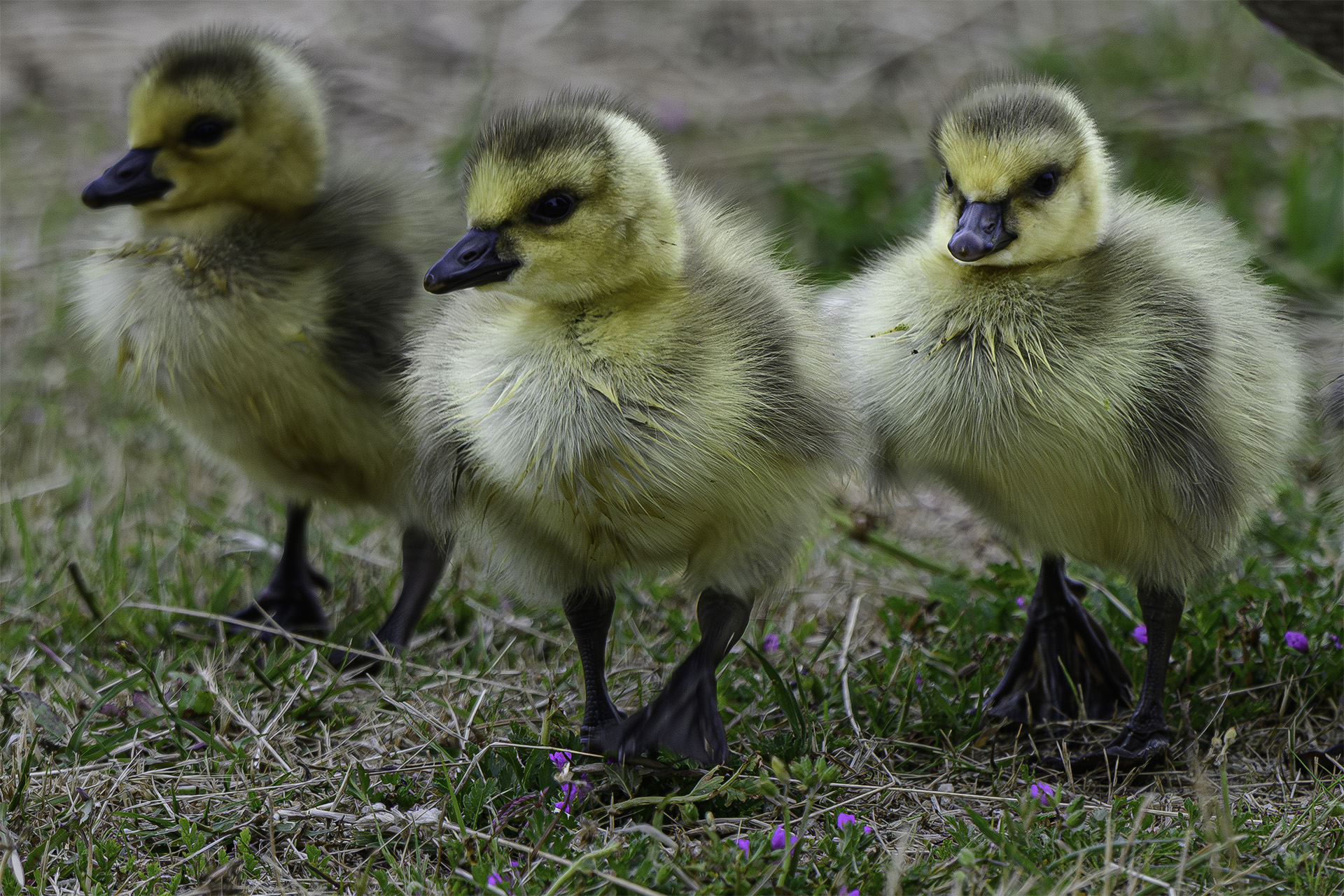
It would be hard to find anything cuter than these three goslings, a trifecta of cuteness, if you will. There are actually seven goslings in this clutch of Canada Geese. And yesterday, as I walked along the Ferrari Pond Trail, the entire clan was scattered across the trail unconcerned about the people passing by them. I stood a ways away as the adults kept an eye on their offspring and spent more than ten minutes photographing them until the adults escorted the chicks back into the weeds and reeds and they disappeared from view. When I returned about an hour later, they were back on the trail and when Mother Goose (!) settled down on the edge of the trail, all seven goslings scooted under her protective breast feathers.

2026—Courting a Loss

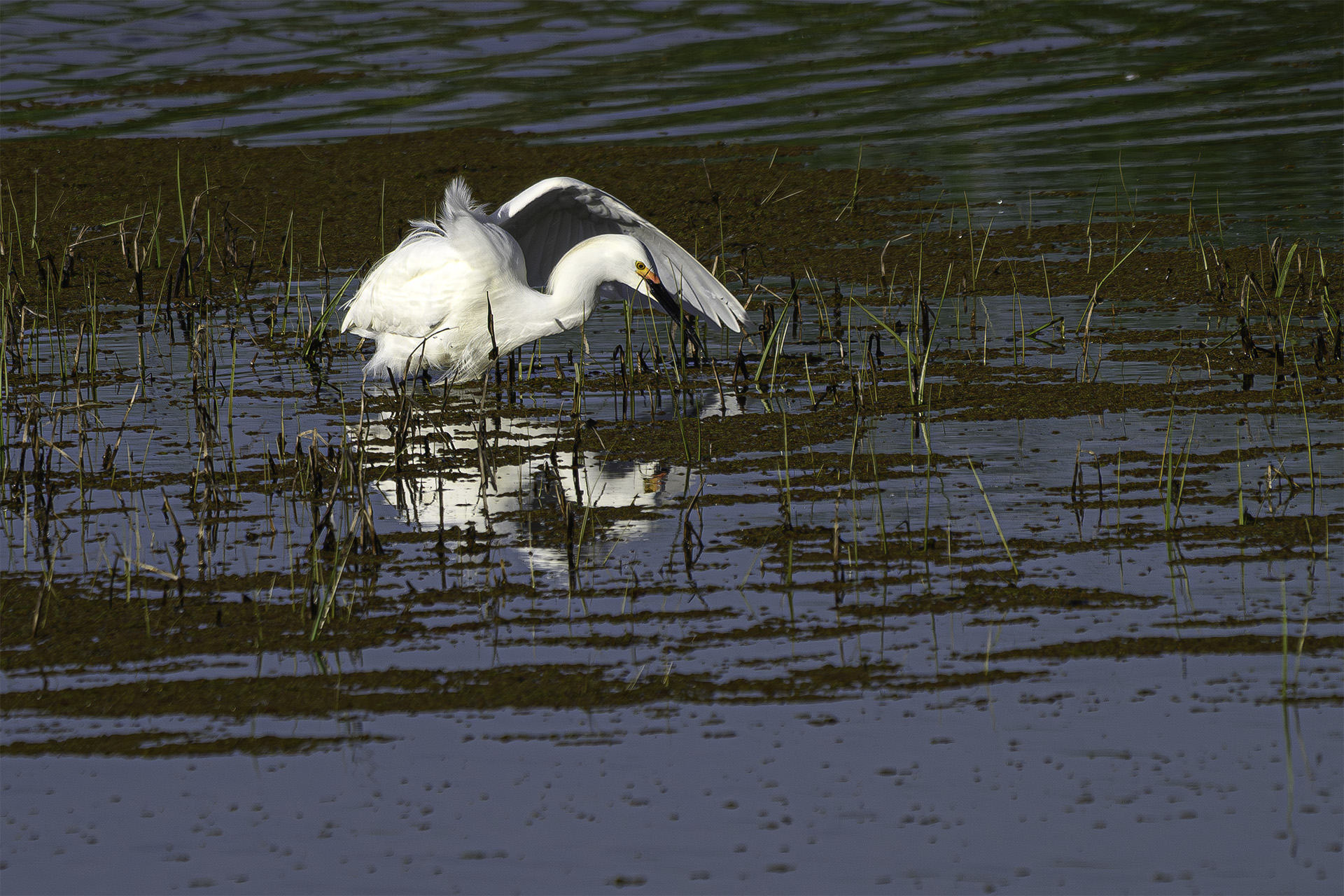
A Snowy Egret, sporting what Sibley Birds describes as “courtship color” (the reddish lores between the beak and the eyes) looks to retrieve a crayfish it had struggled to get under control but ultimately dropped into the shallow waters of the Salt Pond. The Salt Pond is beginning to fill with Azolla, the invasive pond flora that can double its coverage in days, which makes it more difficult for the birds, like this Snowy Egret that rely on their vision, to spot and retrieve prey. Instead of courting a mate, it is courting a loss. But, Snowy Egrets are very efficient hunters so no doubt it soon found another morsel to consume.

2026—Calling Out

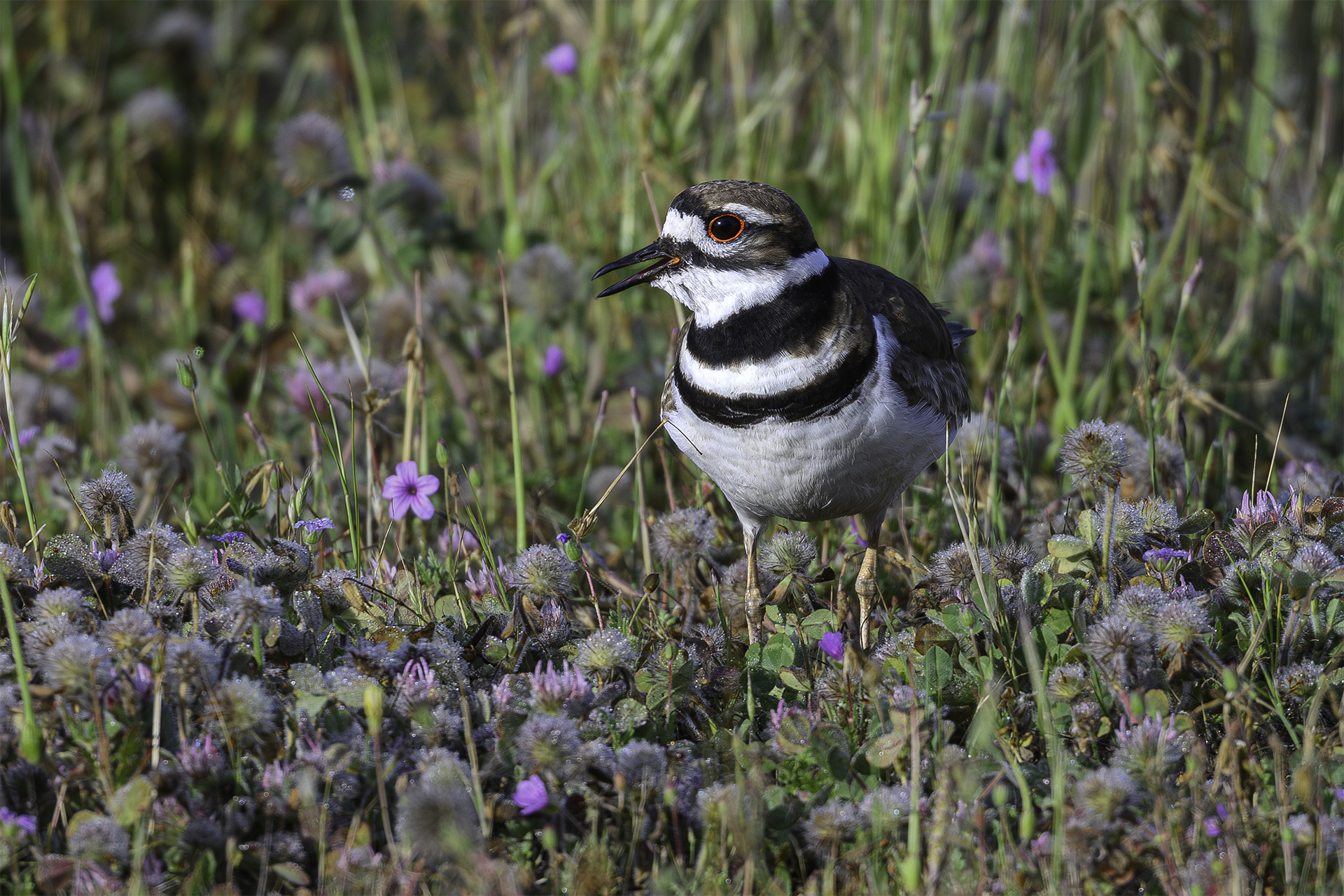
Killdeer nest on the ground. I don’t know if there is a nest near where this Killdeer stands in the midst of the Broadleaf Filaree (AKA Stork’s Bill) and Rose Clover but as we approached on the trail yesterday morning, s/he began to call out. We were probably 30 feet away on the pavement and when s/he finally flew off, still calling, I didn’t see anything that resembled an egg. However, I have seen a Killdeer in this exact spot often but always standing, never sitting on a nest. I guess time will tell.

2026_The Perfect Perch

The other day, a few of the regular walkers were discussing the fate of this rotting tree that sets in the middle of Ferrari Pond and provides a welcome perch for Great Egrets, Double-crested Cormorants, and of course, Great Blue Herons like this one. The talk was about how much longer the tree will stay upright providing a perch. At some point in the past several years, the once erect tree leaned over to an almost horizontal position, supported by a branch under the water. Its weathered and cracked bark gives it character and the lichen and moss that cover much of it add bright colors to its otherwise gray exterior. It is a perfect perch for the large wading birds that use it as a resting and preening stop. I’m hoping it will stay there for a long time.

2026—Face-Off

The Red-winged Blackbirds continue to vie for mates, with the males facing off on perches in the reeds or atop sticks, their melodious warbles echoing across the fields. They’re far enough apart that with my long lens I can’t capture both at the same time but I shot each one as they faced off with their opponent.

2026—Twenty Seconds

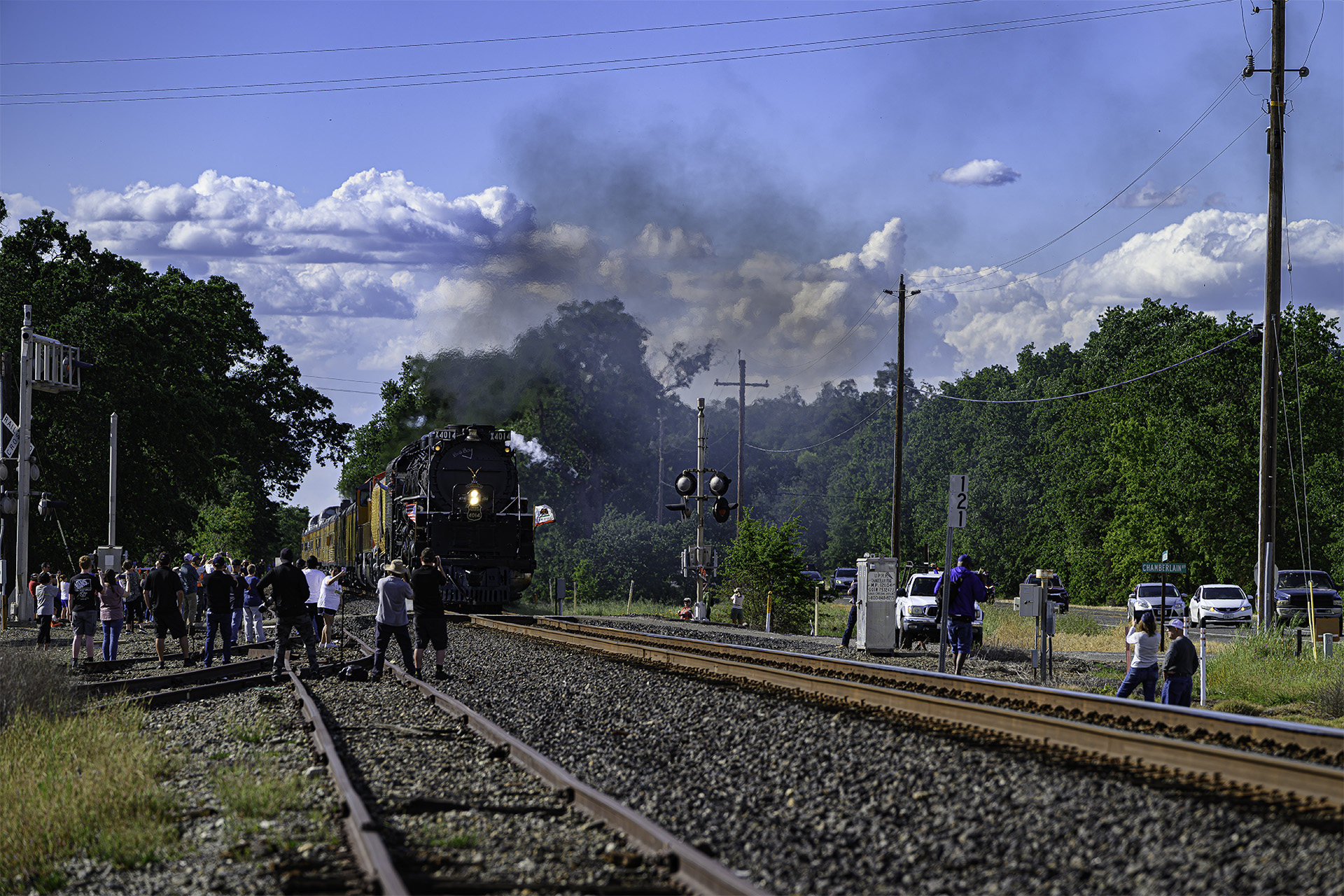
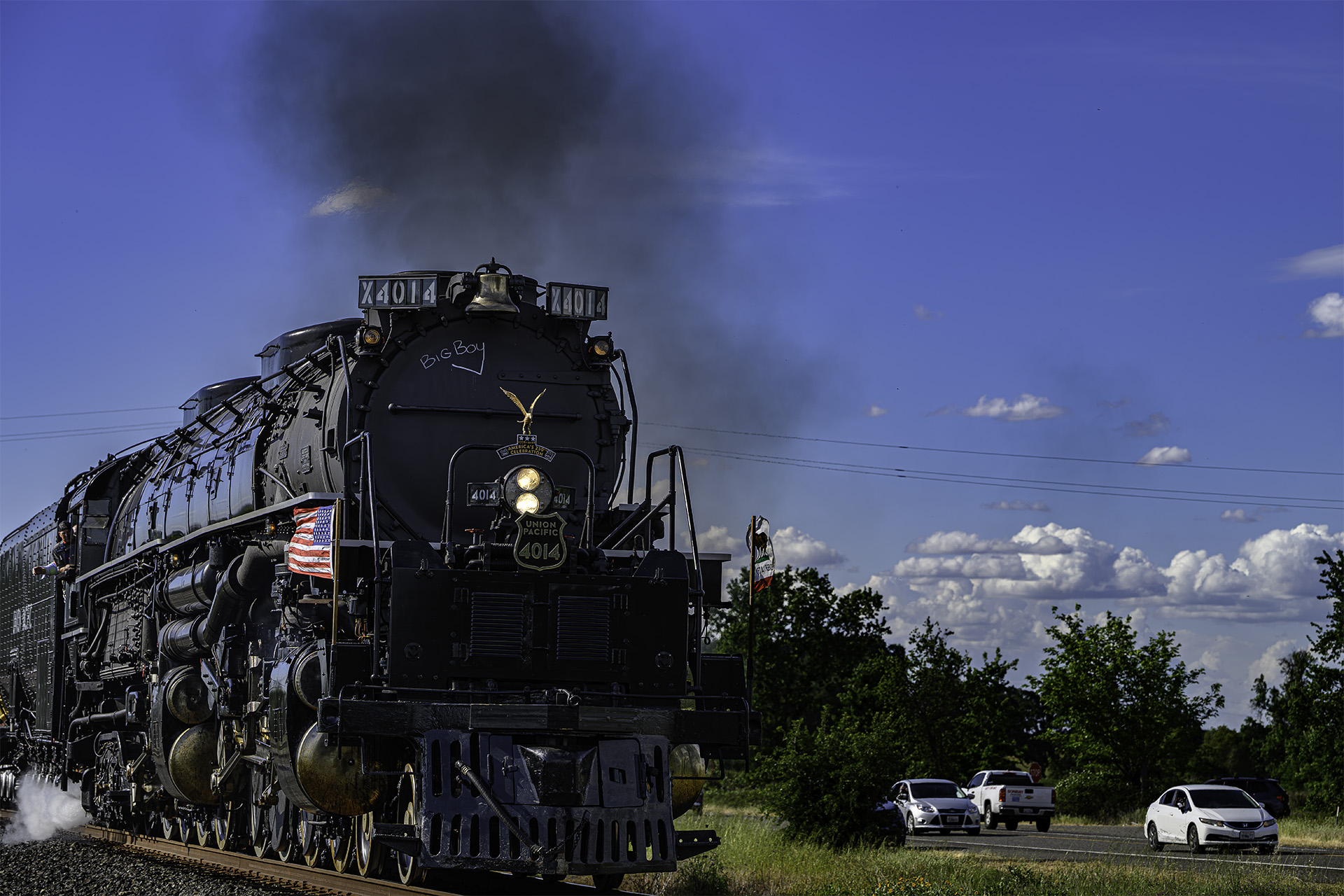
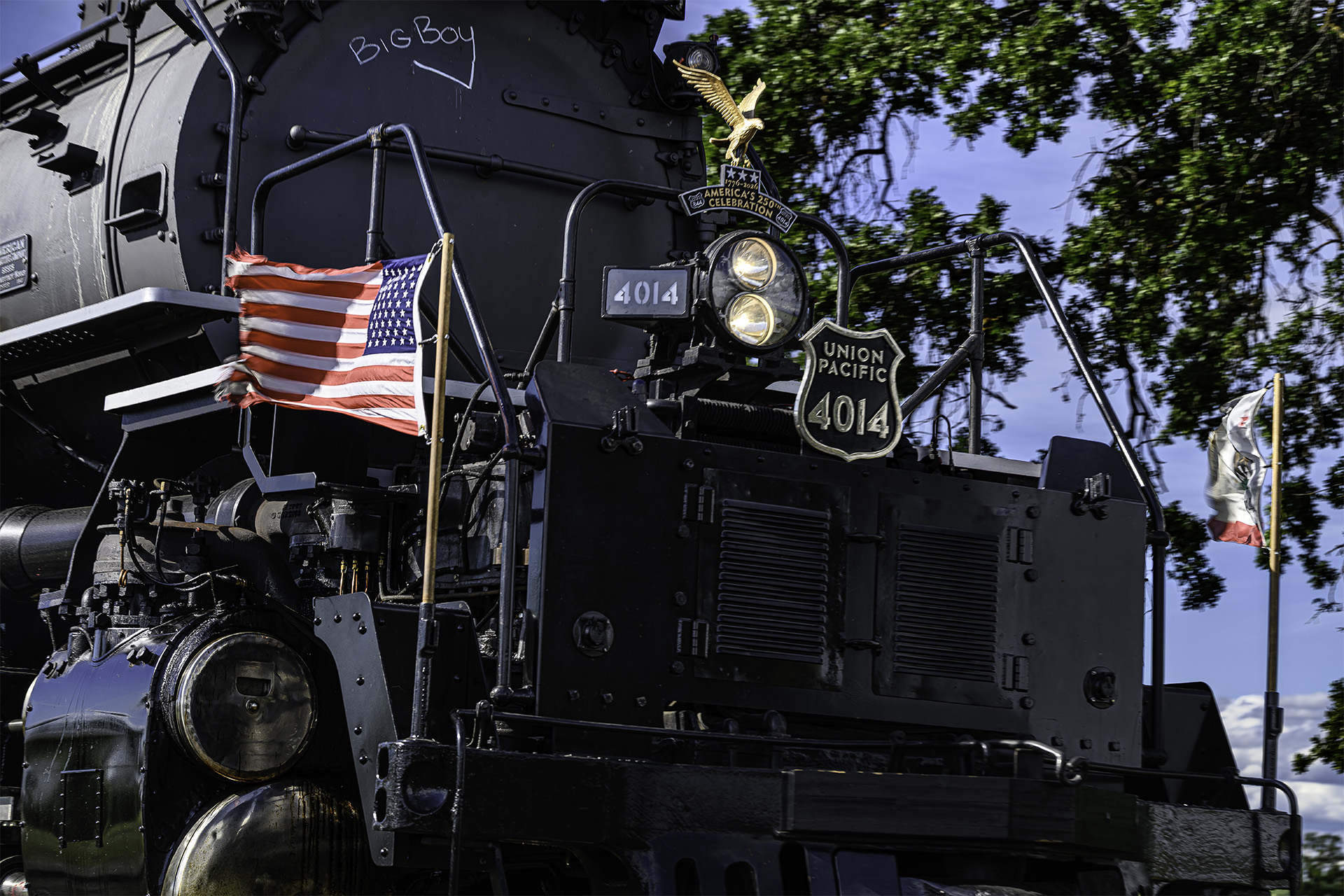
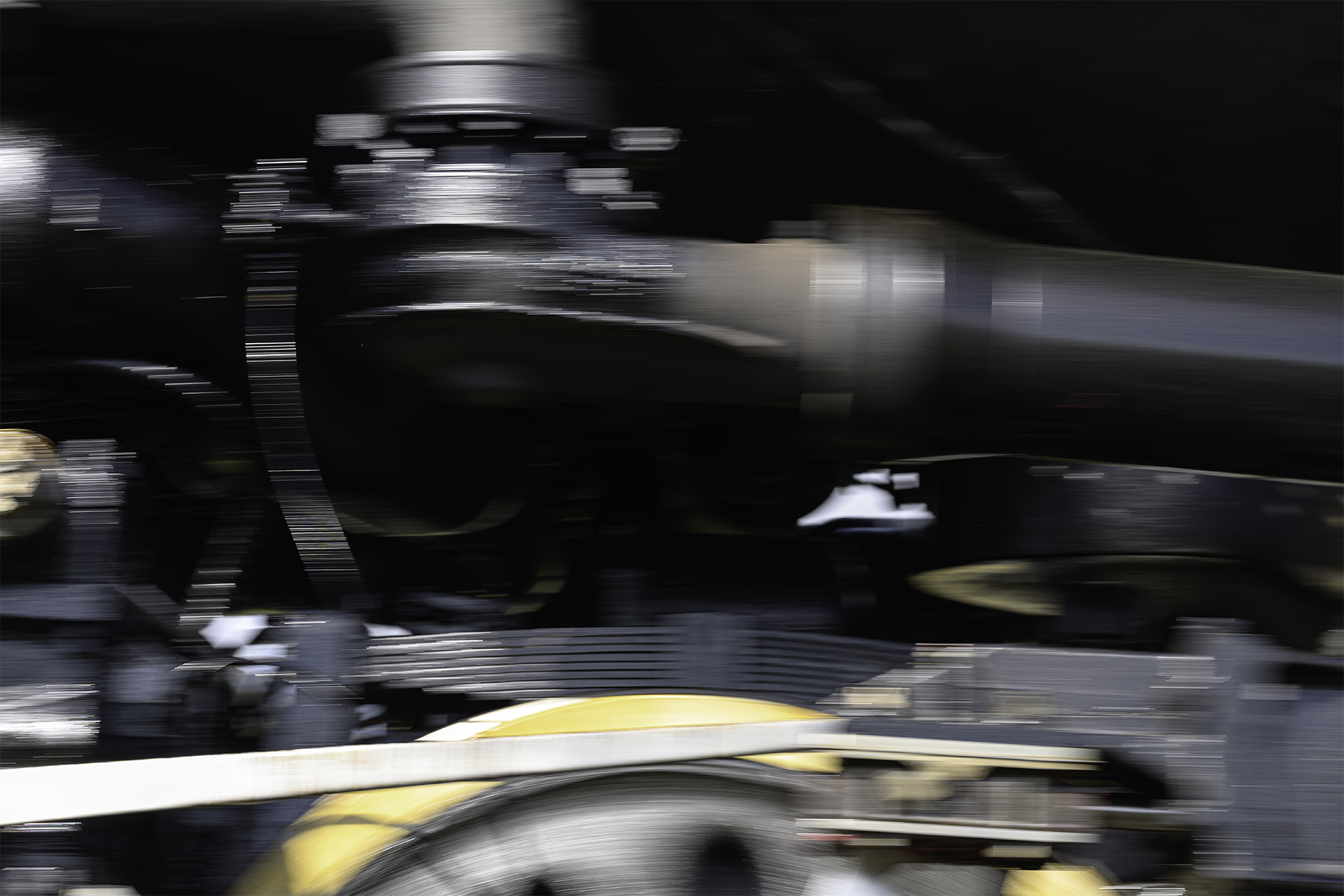
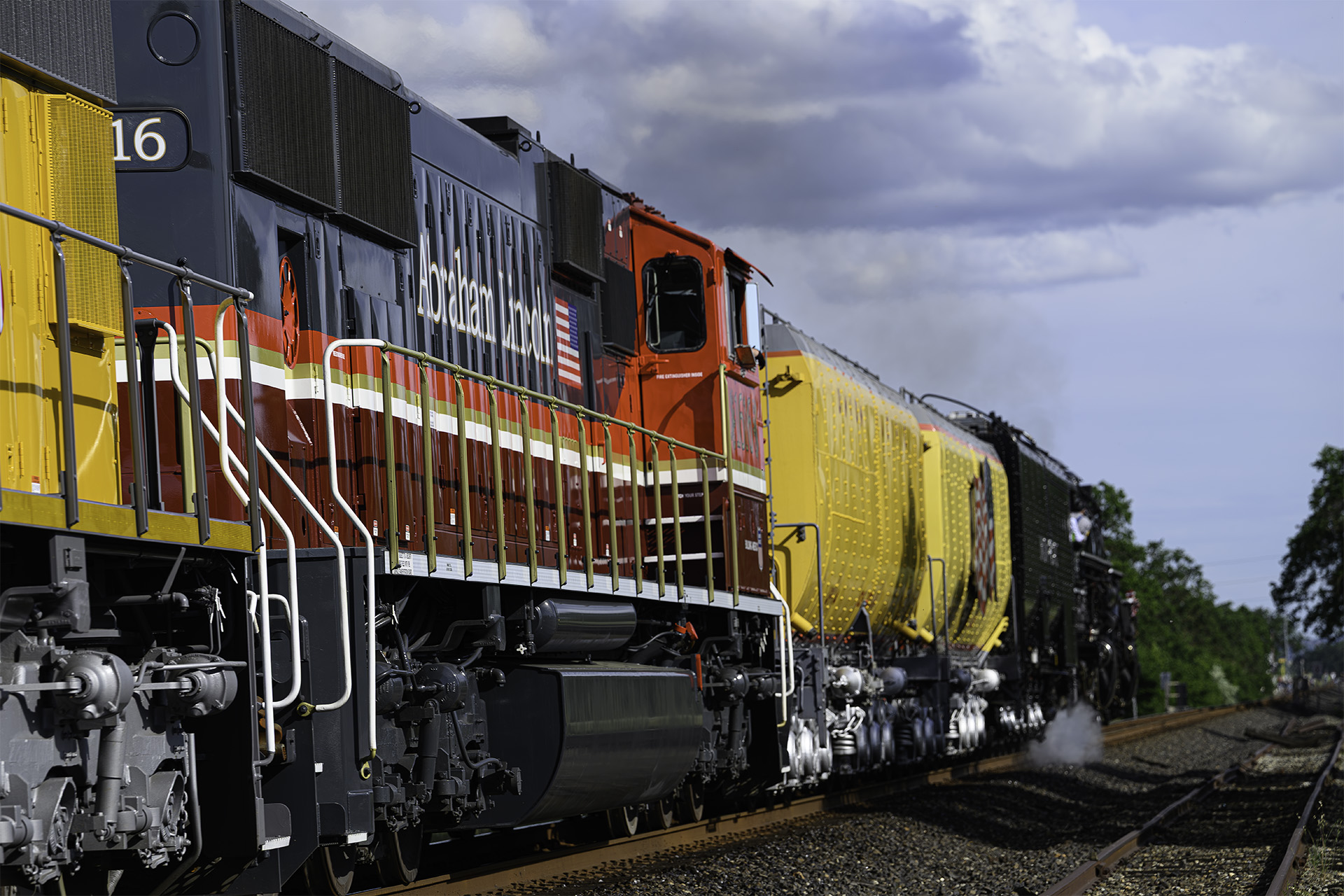
Twenty seconds. That was it. Twenty seconds after waiting 3 hours for Union Pacific Engine 4014 to come into clear view, whoosh past me, and disappear toward its next stop. It is known as the Big Boy because it is the world’s largest, heaviest, and most powerful reciprocating steam locomotive ever built, measuring 133 feet long and weighing 1.2 million pounds. The Big Boy is making a tour across the United States of America to celebrate our nation’s semiquincentennial (gotta love that word!). In my head I had visions of the photographs my friend Marion Pavan took of the Big Boy when it came here on its Westward Bound Tour in 2024. Click here to enjoy his incredible photographs of the Big Boy and read the article he wrote that was published in the Sun City Roseville Magazine. Unlike Marion, I failed to plan, deciding at the last minute to jump in my car and find a good place to shoot. But, I had a great time, I kept the requisite 25 foot distance from the tracks thanks to my Nikon Z70-200 f/2.8 II which gives the distance to subject when manually focusing, and I got some really fun “I was here” shots.

2026—Ready to Pounce

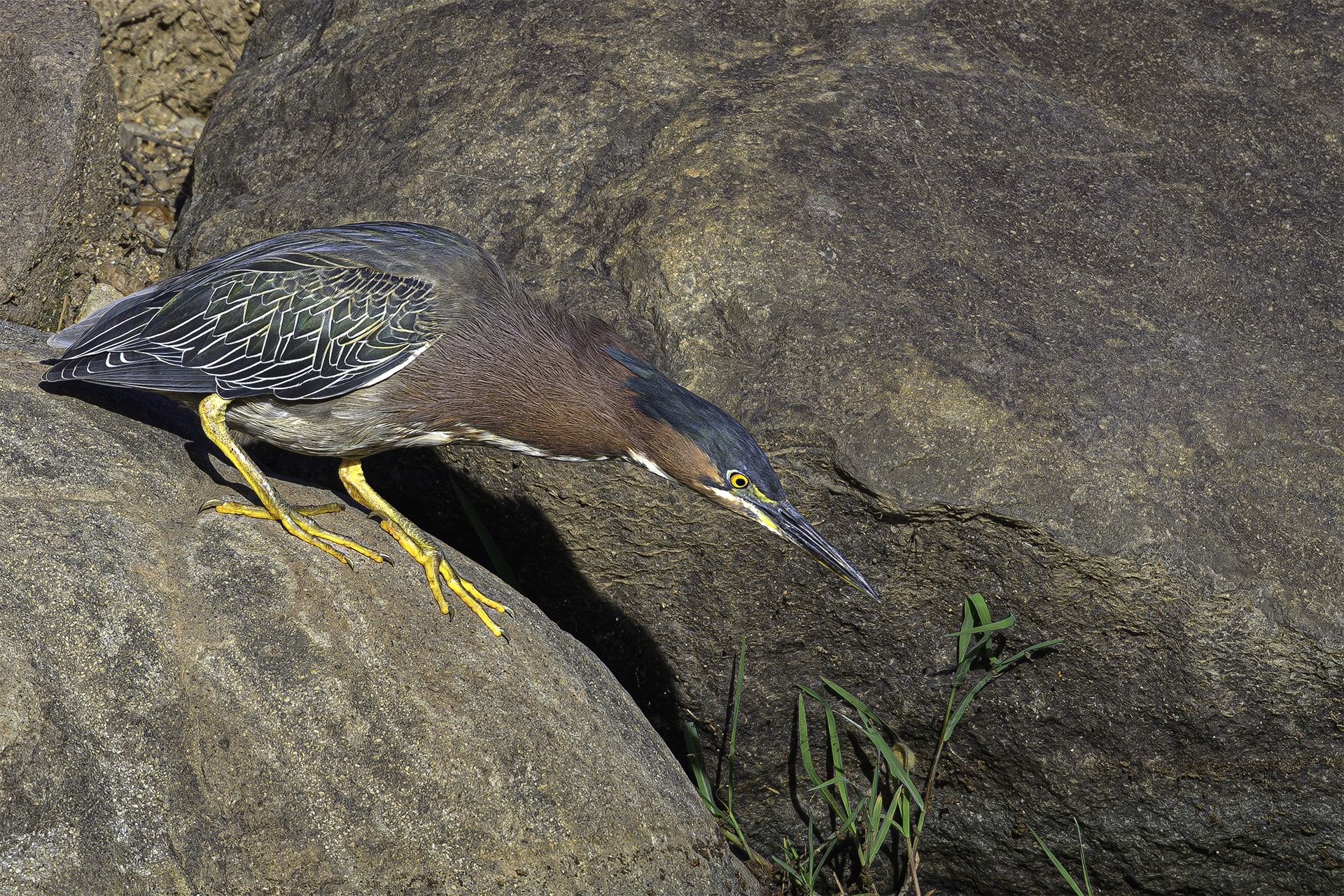
The other morning, a Green Heron lurked on the rocks across Angler’s Cove as I walked by, headed back to my car. A trait that herons share is their patience and ability to stand absolutely still as they wait for prey to pass in the water beneath them, so that is what makes it relatively simple to capture them waiting. The water was about a foot from this Green Heron but herons are so fast, the distance doesn’t seem to matter that much. And, that speed is what also makes it so hard to capture the moment they go for their prey. I was happy to get this bird seconds before it stabbed into the water and flew off.