2025—Hot Pursuit

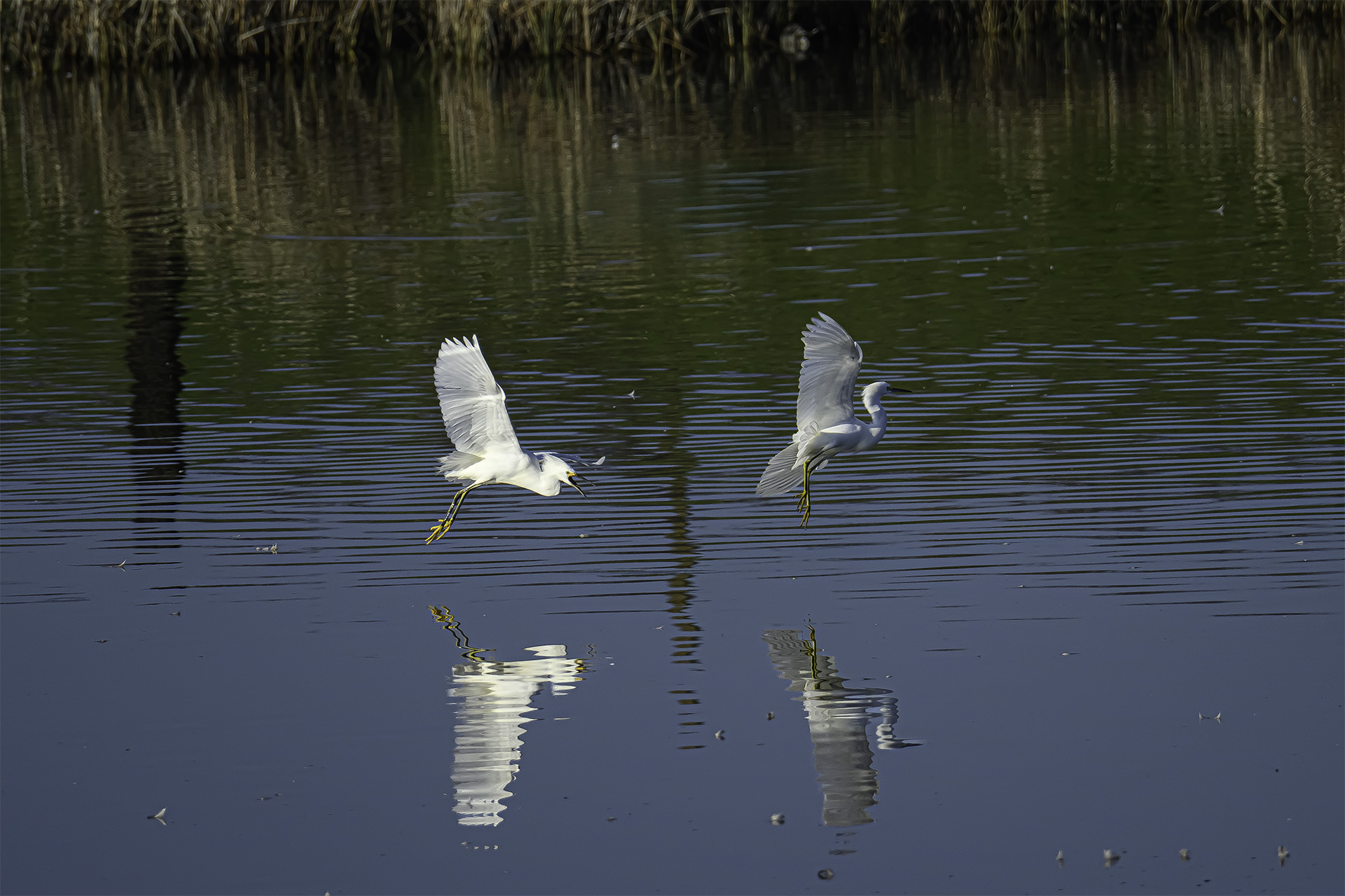
There were three Snowy Egrets foraging in the Salt Pond along Ferrari Pond Trail the other day. I guess it must have been a territorial thing because one of the Snowys was relentless in his pursuit of another Snowy that seemed to be minding his own business, just standing in the pond, swishing his feet to stir up something. The skirmish went on for a few minutes as one angry bird chased the other around the pond.
2025—No More Excuses

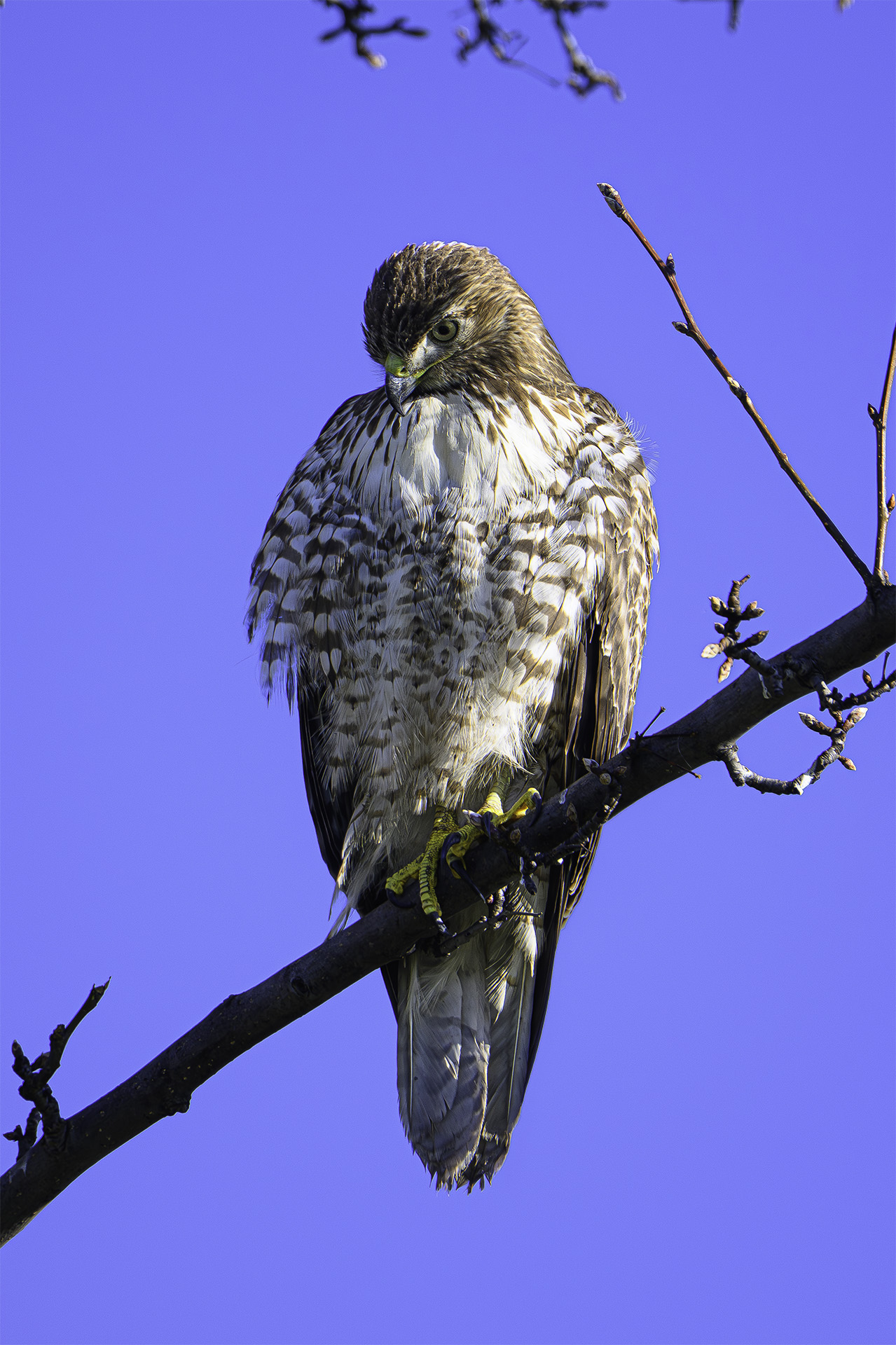
The sun was out yesterday morning after a couple weeks of gloomy fog, thunderstorms, and rain. I had no more excuses to avoid walking. So instead of lounging with my morning coffee, I skipped the coffee and walked over to Ferrari Pond. Even though it was past 9AM, the critters were out. When I arrived at Angler’s Cove, I ran into my friend Don who told me about the Red-tailed Hawk that has been frequenting an area near the Salt Pond for the past few days. It seems not to be bothered by people and isn’t spooked when approached within a few feet. It’s often been seen on the ground foraging for something (worms?). I didn’t notice him (her?) on the way to the Salt Pond but on my way back, after photographing a couple of Coyotes and Snowy Egrets, there he was, in a tree by the side of the trail. I had to move to avoid a cluttered background, but he didn’t flinch when I slowly moved over toward him. I’m glad that I finally made myself move a little bit (5 1/2 miles by noon!) because it paid off.

2025—Showing Some Attitude

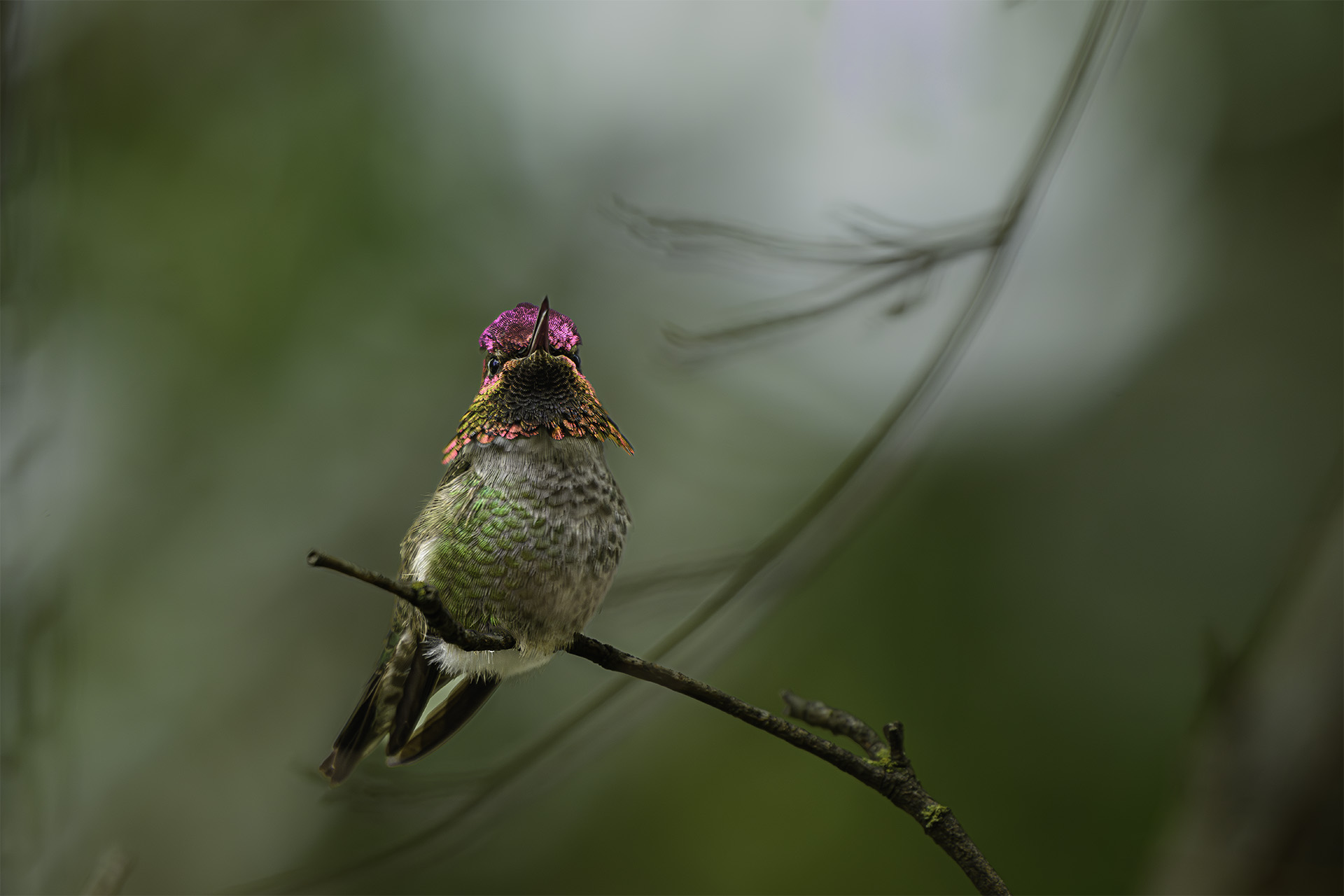
Homer, my backyard Anna’s Hummingbird who thinks he owns the place —— I guess he does; he’s there more than I am —— has been showing some attitude lately. He lets me know when I am intruding on his space and yesterday, he even flared his gorget as he glared at me from his watch perch. At least he was at the correct angle so that his gorget reflected the magenta and orange that made a gloomy day a bit more colorful.

2025—After the Storm

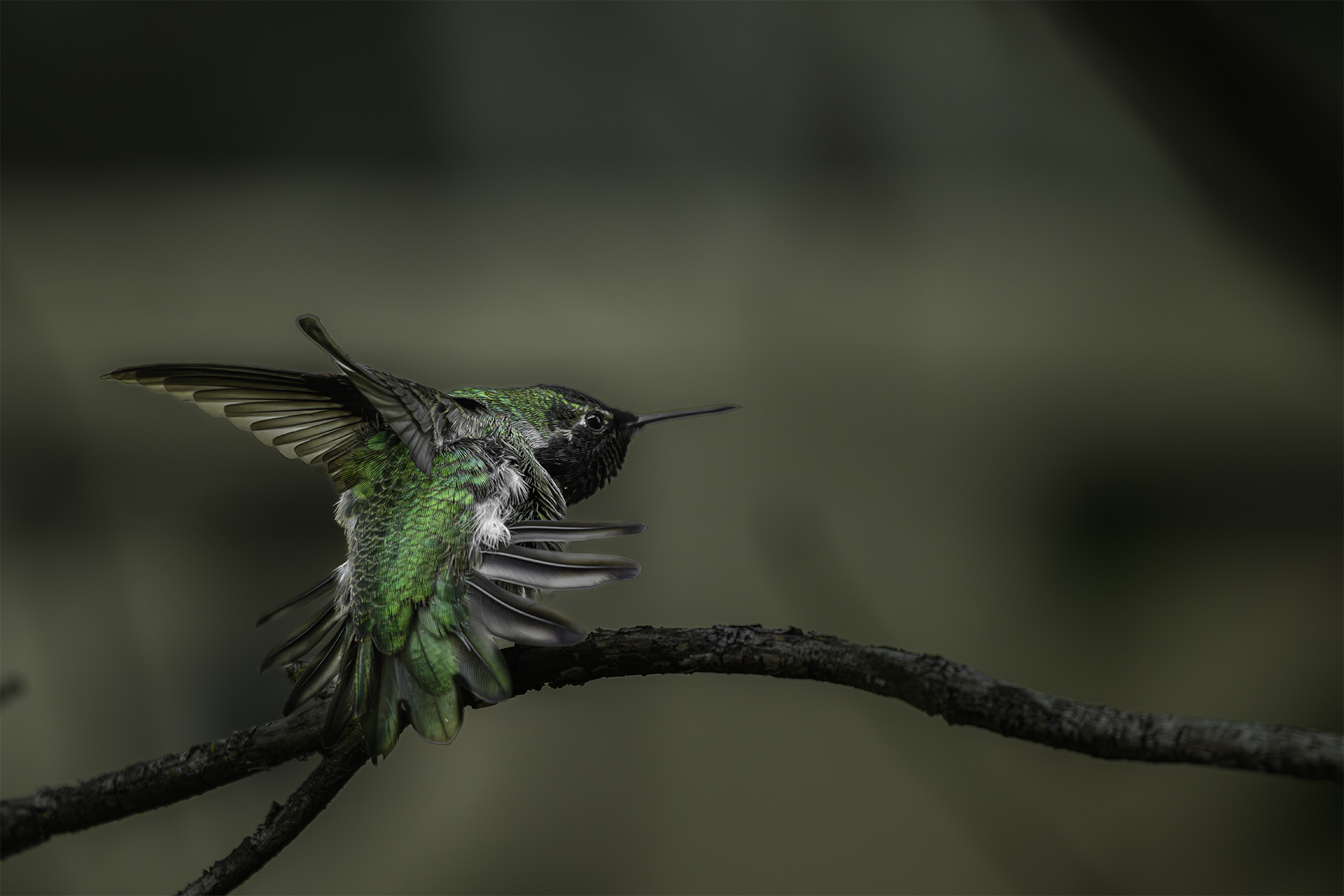
Yesterday, after the Christmas storm, I went out to see if there was any damage in my backyard. One of the hummingbird feeders that I had just refilled the day before, was on the ground after twisting in the high winds for who knows how long. It had completely unscrewed from its hanger and was lying empty on the ground. As soon as I went out, I heard from Homer (I don’t know what else to call him—I’ve always called the male Anna’s at my home, well, Homer) screeching to let me know that he had only three feeders to guard, not four. After chasing away another male (Homer II?) he settled on a perch in the now completely leafless dogwood that until a few days ago was clinging to its last few leaves. Forty plus mile per hour winds with accompanying rain took care of every leaf left on any deciduous tree in my garden. Homer. preened for quite a while as I watched him. A feather or two of his gorget reflected a bit of red as he angled his head but once he fanned his tail, he had turned away and did not reflect any color except his green back feathers. Color or not, I love to see a hummingbird fan its tail.

2025—Merry Christmas!

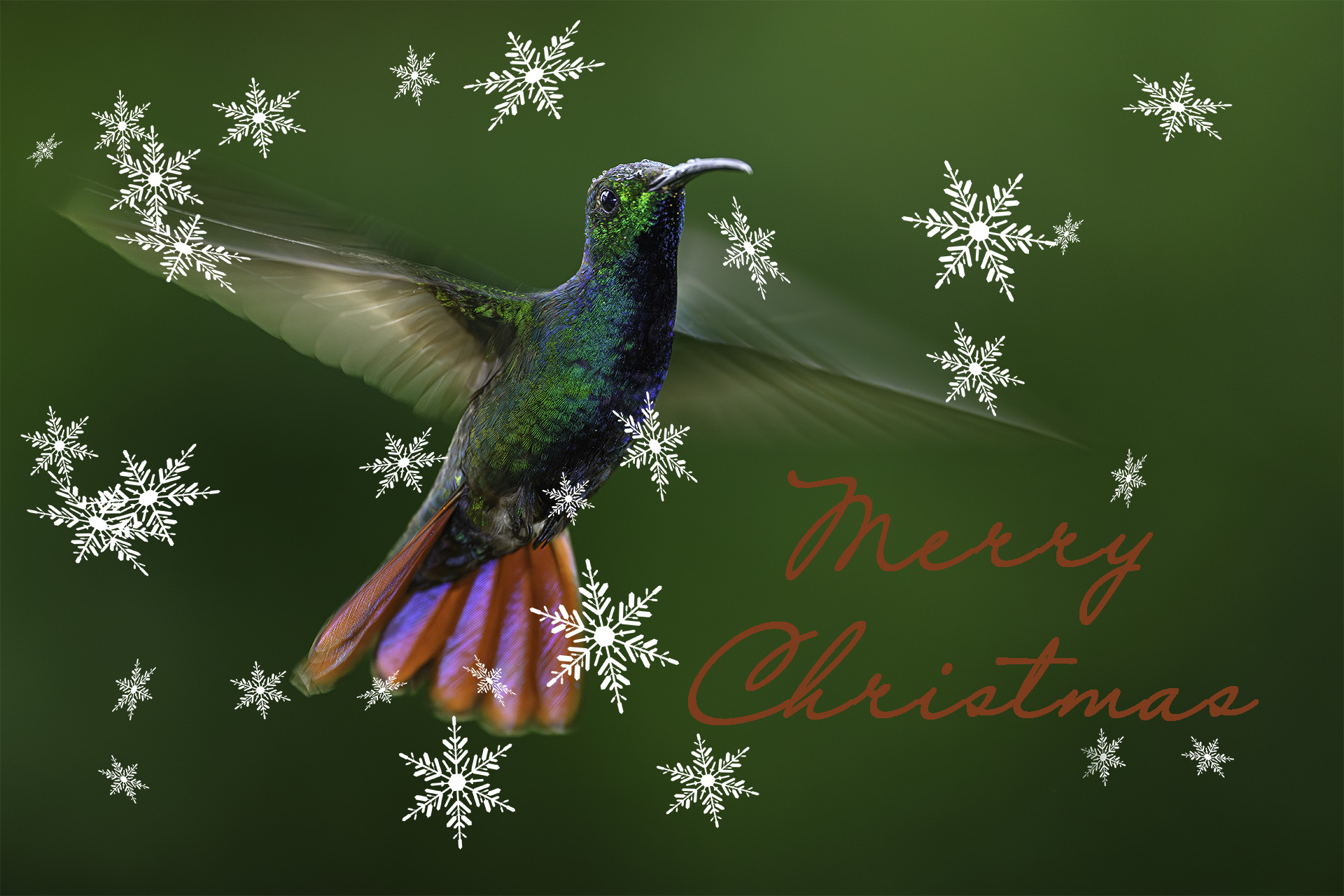
The Costa Rican Green-breasted Mango sports perfect Christmas colors. While green and red are the primary colors of its feathers making it a perfect Christmas card subject, I’m pretty sure this gorgeous hummingbird doesn’t encounter snowflakes so I had to create a snowflake brush in Photoshop to add a little bit more seasonal flavor.

Merry Christmas!!

2025—Clipper

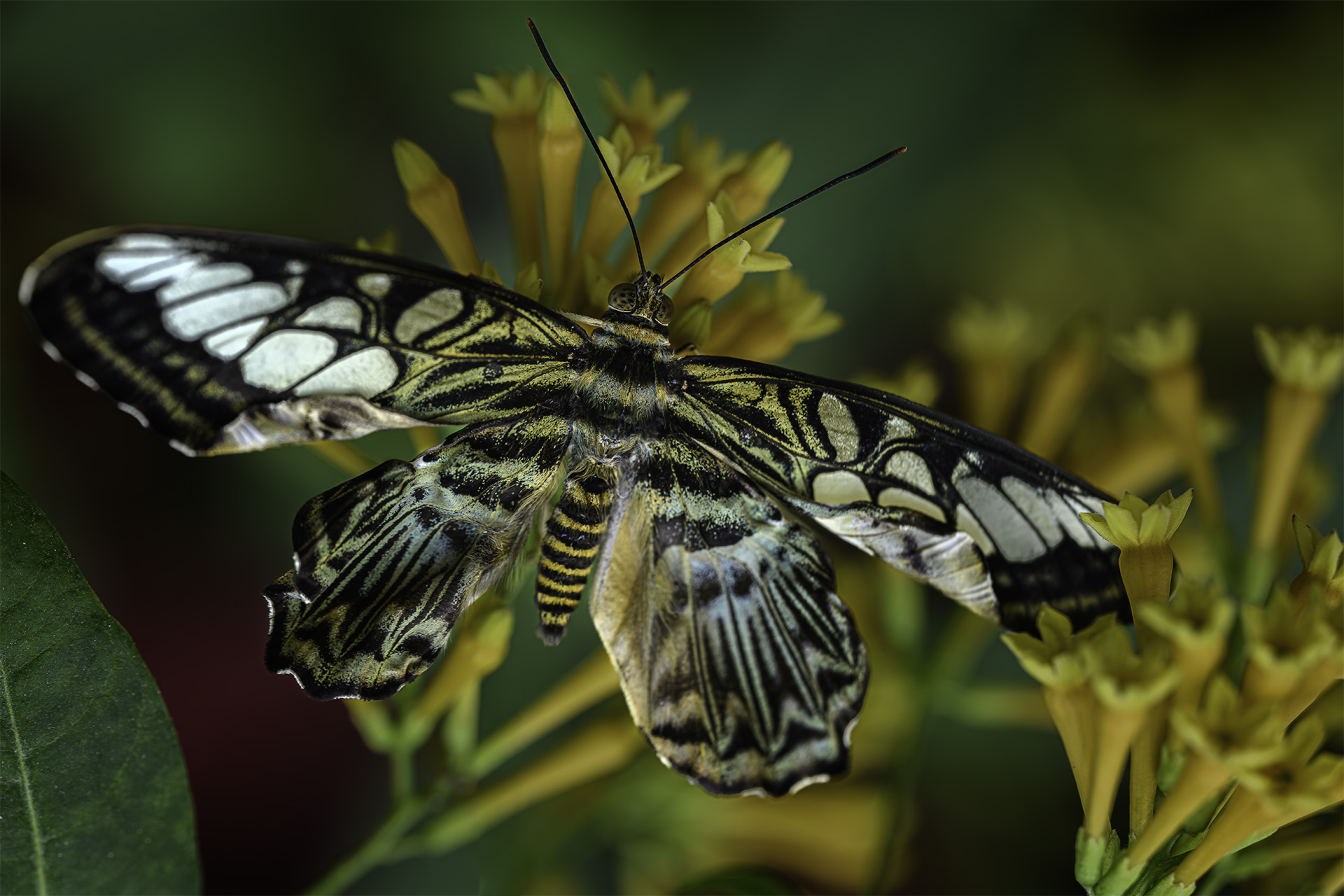
The Clipper is another butterfly from the Missoula Butterfly House and Insectarium that I photographed last year. The Clipper is native to Southeast Asia. I love how the yellow in the striped body mimics the yellow in the flowers its perched on, a plant called orange flowering jessamine that is also from Southeast Asia.

2025—The Magic of Butterflies

The Missoula Butterfly House & Insectarium is a magical place, filled with butterflies from North and South America, Asia and Africa in a habitat that keeps the many represented species thriving. Moose took me there last year and I discovered that photographing butterflies is not easy: not only does it require deep concentration, it requires lightning fast reflexes. I also discovered that the camera’s autofocus system tends to focus on the wings. Of course the wings are what make butterflies, well, butterflies. But butterflies are critters and because they are critters, they have eyes and, like photographs of all critters, the eyes must be in focus. I had taken quite a few images before I realized that I had lots of images with tack sharp wings but not so many with tack sharp eyes. Fortunately, I recognized my mistake early. That doesn’t mean that all of my subsequent images had tack sharp eyes. Far from it. But knowing I had to concentrate on getting the eye and not get distracted by the bedazzling colors of the wings helped me get more than if I hadn’t recognized the problem early on.

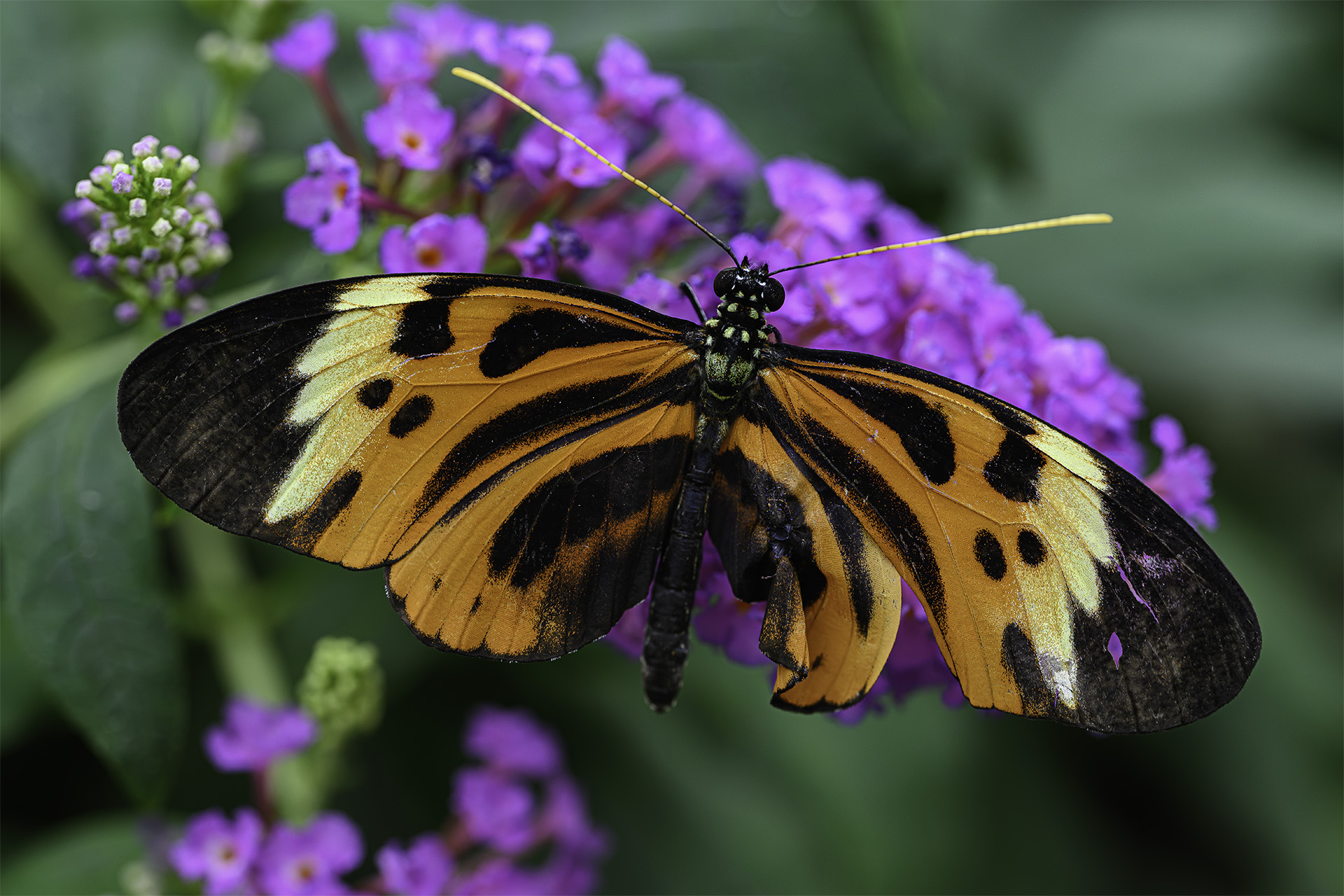
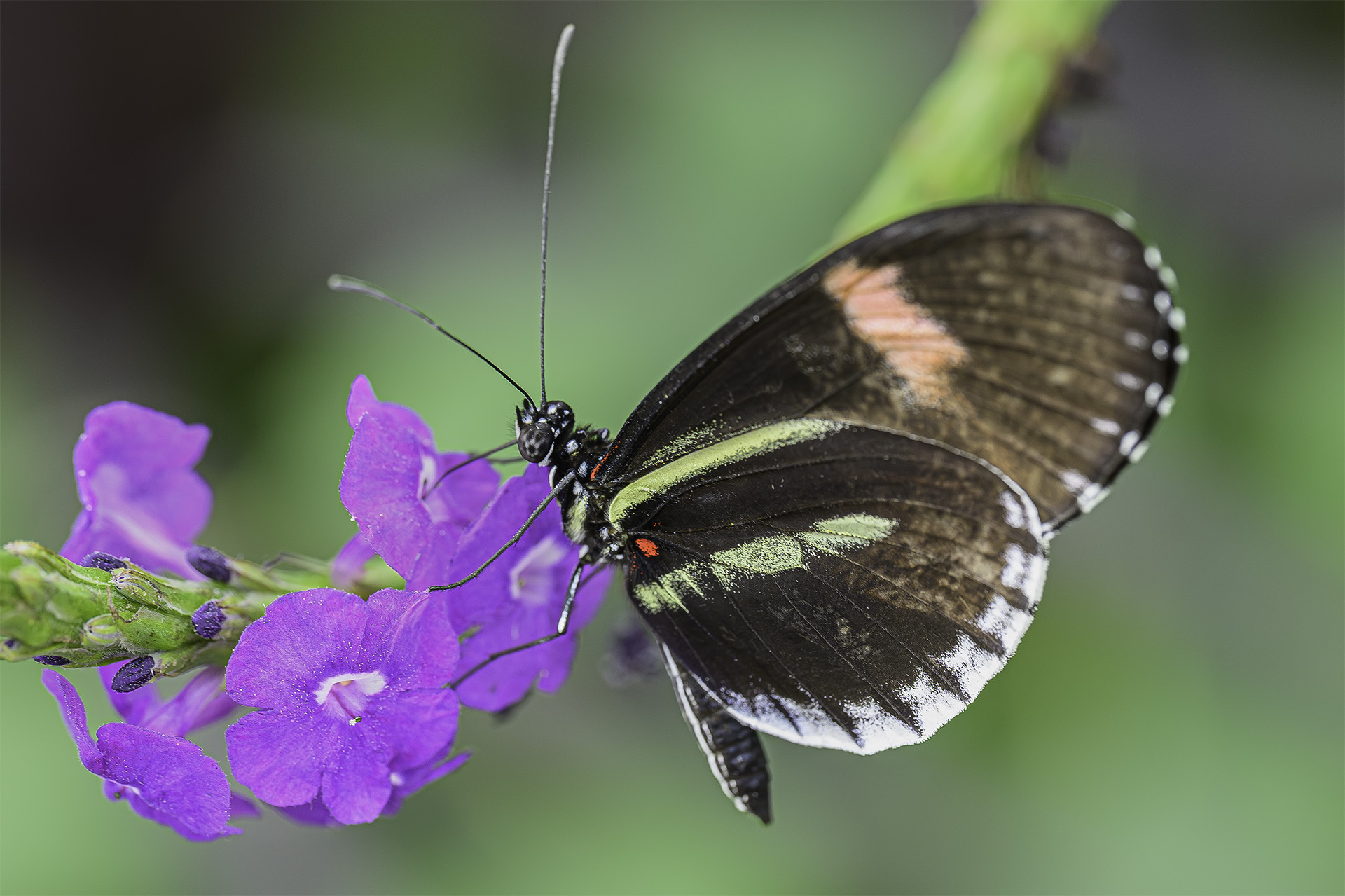
These two butterflies are both members of the genus Heliconius, also known as longwing butterflies, a large group of butterflies from South America. The first, Heliconius Numata, is showing a bit of wear and tear in its wings. The second, with closed wings, is also a Heliconius but it is known as the Postman. It got is name from its unique feeding behavior where it follows a predictable daily route, not unlike a postman, to visit specific flowers.

2025—Saturation

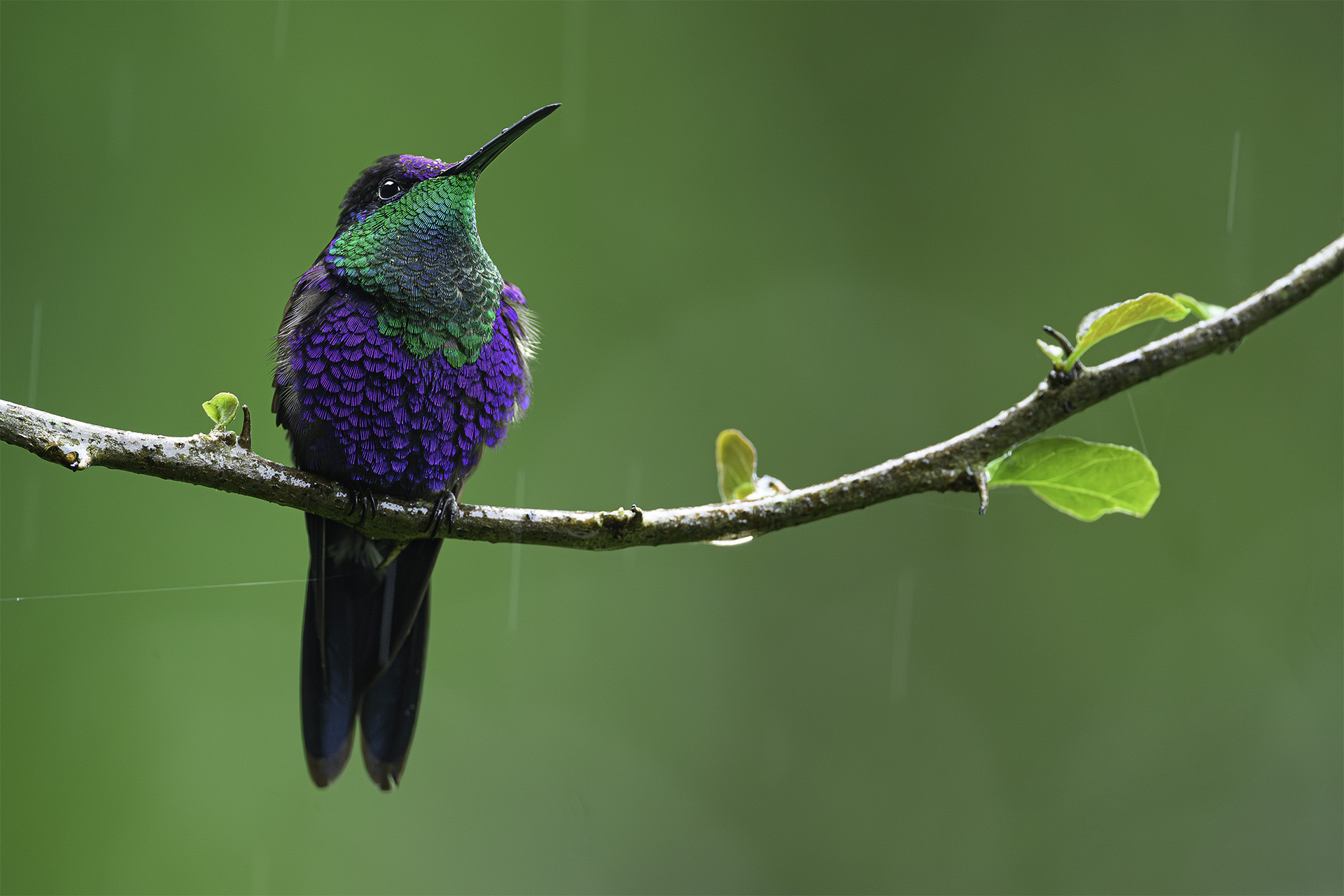
When I was in Costa Rica in March of this year, I was fortunate to successfully photograph ten different species of hummingbirds. One of the most colorful was the tiny male Crowned Woodnymph, only about three and a half inches. He perched in the soft rain as droplets accumulated on his beak and forehead. The overcast skies helped to saturate the already intense colors that this gorgeous bird displays. When I photograph hummingbirds, I use two different approaches. When shooting hummingbirds from a fixed position that is within flash range, I use a 400mm lens with a 1.4X teleconverter and two flashes, one on either side of the lens, to provide a soft light that wraps around the bird’s body just to bring out the color of the bird’s feathers, not to increase exposure. When I’m further away, I use a longer lens such as a 600mm lens with a teleconverter, either 1.4X or 2X and no flashes. In this instance, while the Crowned Woodnymph perched in front of me, I used an 840mm focal length and I didn’t need flash because the sky naturally saturated the colors and provided a gorgeous intensity reflected in his feathers.

2025—December at the Salt Pond

There isn’t much activity at the Salt Pond along the Ferrari Pond Trail this time of year. But a lone Snowy Egret was gulping down something it had found in the shallow pond as I approached the other day. The vortex rings from the Egret stabbing its beak into the water are still visible beneath it and all of the grasses surrounding the pond are perfectly reflected in the salty water.

2025—Badger!

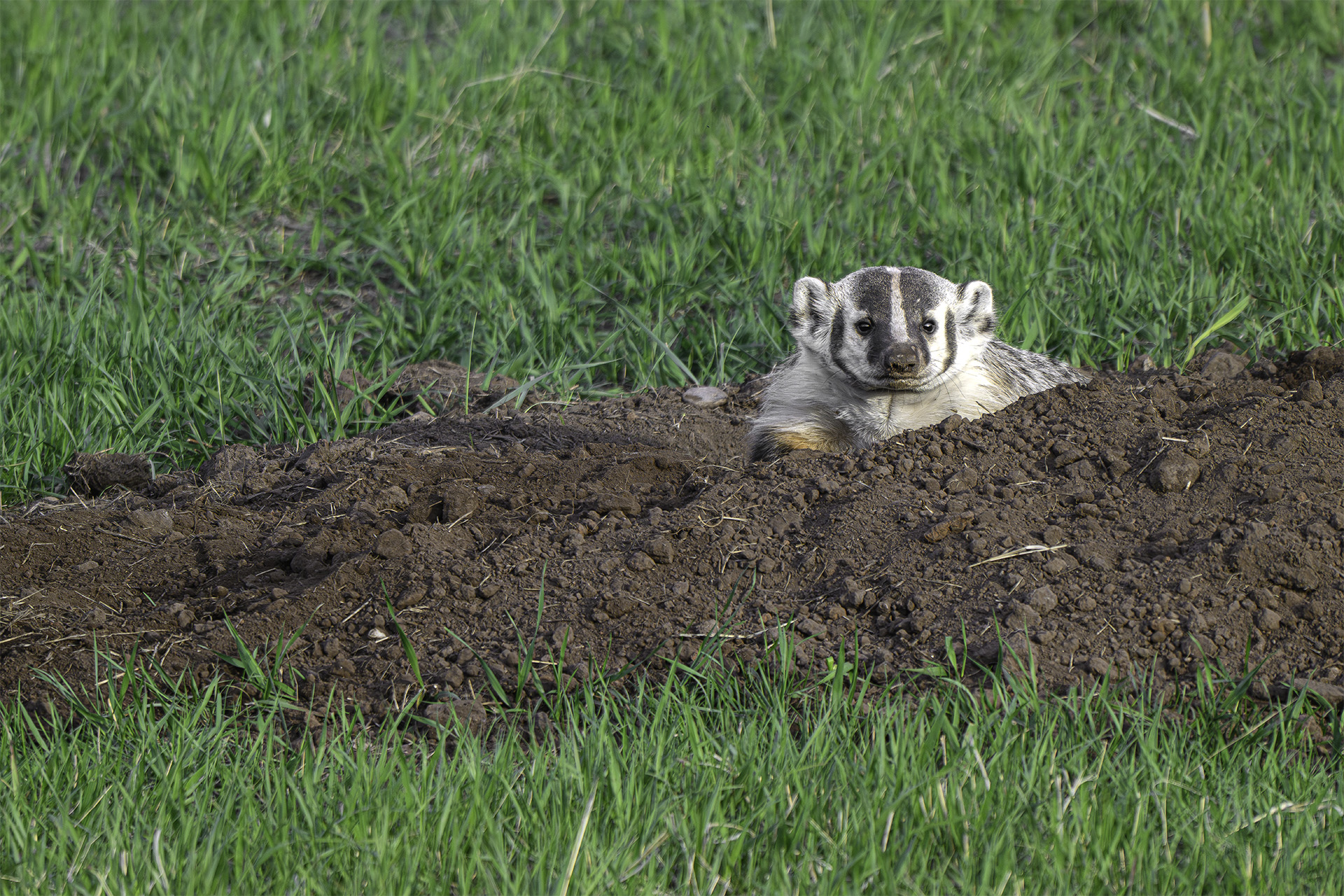
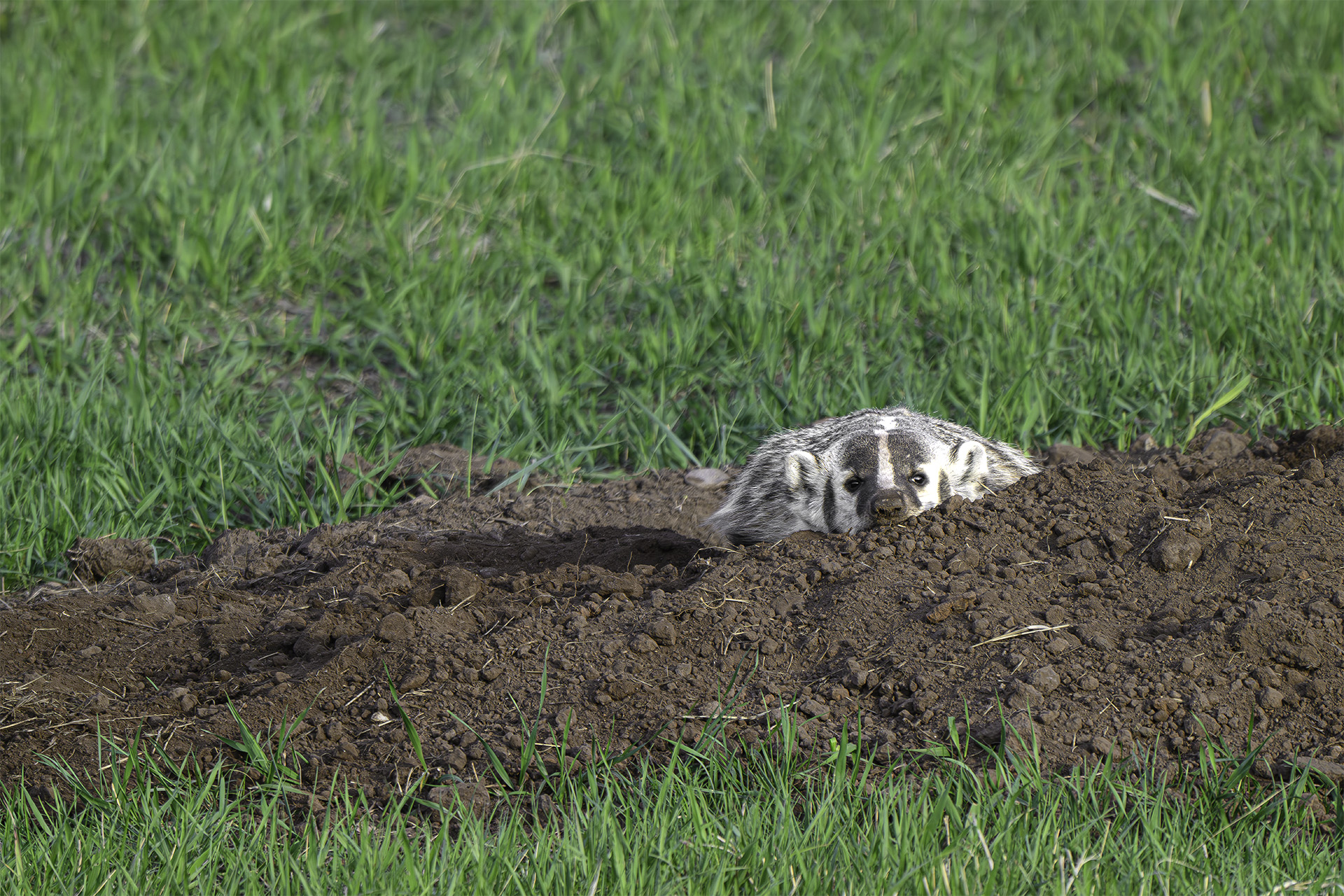
Last May in the Black Hills of South Dakota, I saw and photographed a Badger for the first time. The Badger was in the process of digging a burrow in the middle of a large, grassy field and she looked up at us with curiosity. She paused her digging to watch us, even resting her chin on the pile of dirt as she gazed in our direction.

2025—Burrowing Owls

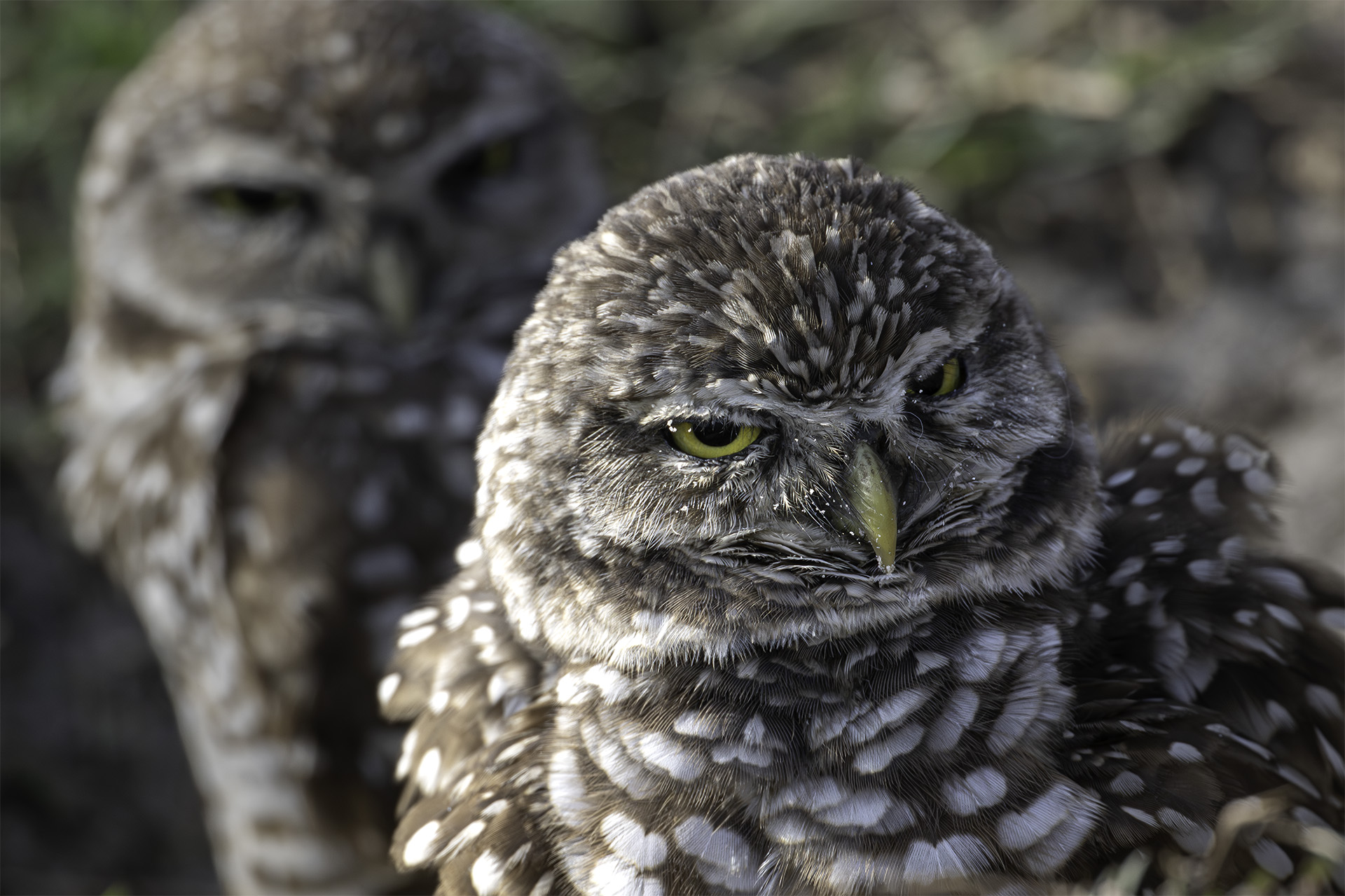
This pair of Burrowing Owls was in the middle of a soccer field at Brian Piccolo Sports Park in Cooper City, Florida in February. Some of the soccer fields were closed to soccer as the owls had burrowed into the sandy dirt. The owl in front, with grains of sand clinging to its beak and facial feathers, had been digging furiously, as the other owl calmly stood as sand cascaded over it, closing its eyes and slowly opening them again only when the digging paused.

2025—More from the Pond

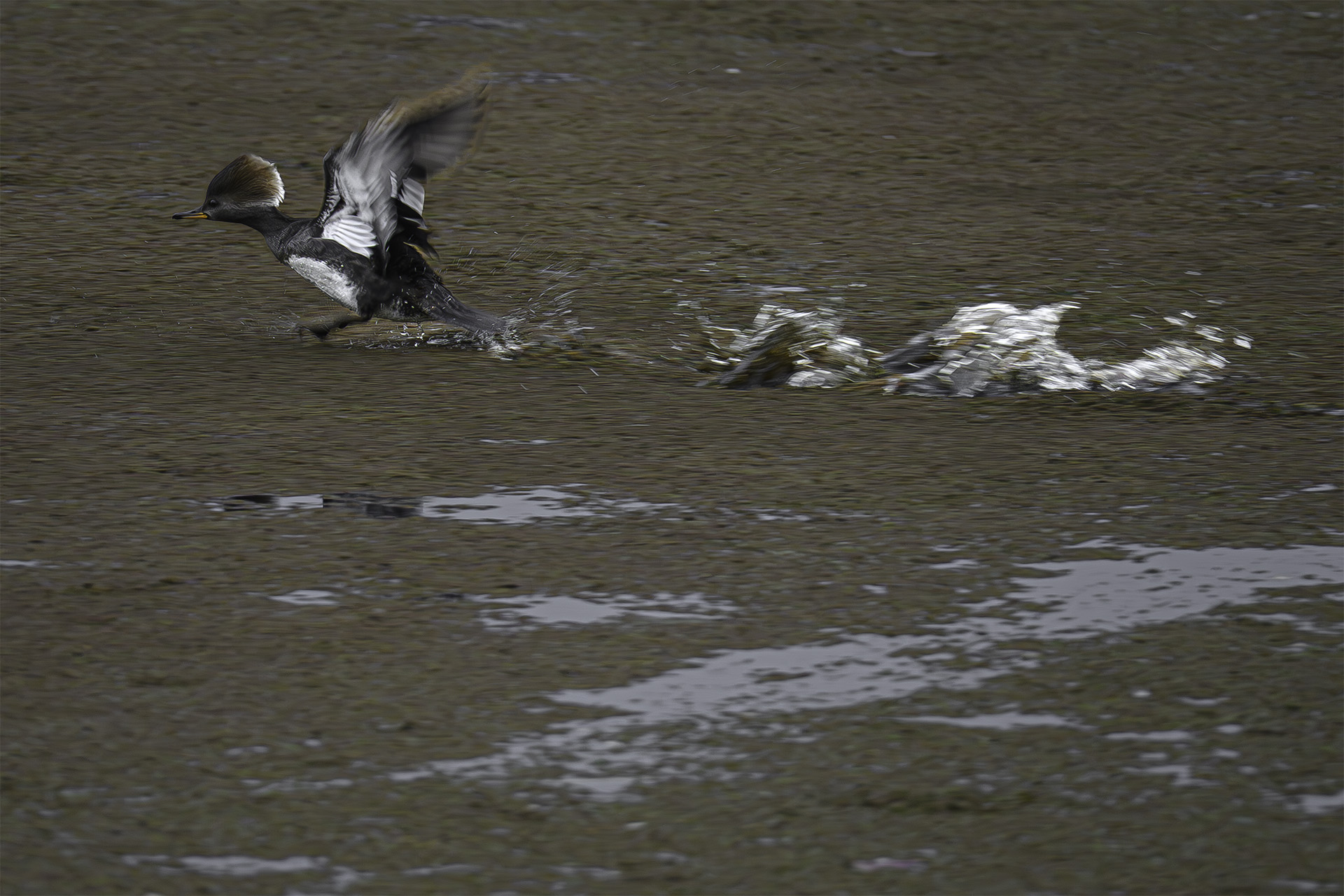
A few Hooded Mergansers are hanging around Ferrari Pond. I’ve been told that there are even a couple of pairs that swim in the pond above the waterfall that I walk by each morning. However, to get to them requires walking across part of the golf course, something I’m reluctant to do after being admonished by a golfer who told me in no uncertain terms that I was walking on a path restricted to golf carts, no foot traffic. At least at Ferrari Pond I don’t have to worry about a golfer yelling at me. This female Hooded Merganser was swimming lazily in the pond the other day, then something either startled her or caught her attention and she ran across the water for several yards before settling down again.

2025—Cloud Drama

Even on a spring day in the Palouse, there is plenty of drama in the clouds. As the clouds merged and then drifted apart, they created small openings that allowed the sun to reach through to reveal the argyle patterns left by farm equipment criss-crossing the undulating hills. After watching my friend Moose Peterson give a presentation about capturing the power of clouds in landscape photography at The KelbyOne on-line Landscape Conference that concluded a couple of days ago, I was inspired to revisit some of the cloud-filled images I’ve taken in the past, including those from my June 2024 visit to the Palouse.

2025—Intimate Scenic

Yesterday and today I’ve been attending an on-line landscape photography workshop through KelbyOne. Landscape photography is not my strong suit and I am always interested in learning new approaches that will improve my landscape images. One of yesterday’s lectures was on Intimate Scenics, by Richard Bernabe, an internationally renowned nature, wildlife, and travel photographer. He focused on what he called intimate scenics, using a long lens instead of a wide angle lens which is most commonly associated with landscape photography. After listening, I recalled a photograph I took last year in Maine as we walked to a place called Moxie Falls. My friend Emerson and I were trailing the rest of the group, stopping often because we kept finding all kinds of interesting and what I now know as “intimate scenics.” One of my favorites was a pair of mushrooms growing in a high hole in a dead tree trunk. I shot this image at 160mm to create this intimate scene.

2025—The Magnificent Rivoli’s

Z9#2

The Rivoli’s Hummingbird, one of the largest hummingbirds in North America at 5 inches, is my favorite hummingbird that I see at Madera Canyon in Arizona. His loud, slow hum, that sounds like a motorbike when he is approaching, is distinct from the other hummers and he commands attention as he zooms in to the feeders. The first year I visited Madera Canyon to photograph hummingbirds was 2017 and I managed only a few shots of the magnificent Mr. Wonderful, most of them perched. At the time, he was known as the Magnificent Hummingbird and we dubbed him Mr. Wonderful. He’s still both magnificent and wonderful in my eyes.

2025—Above the Fog

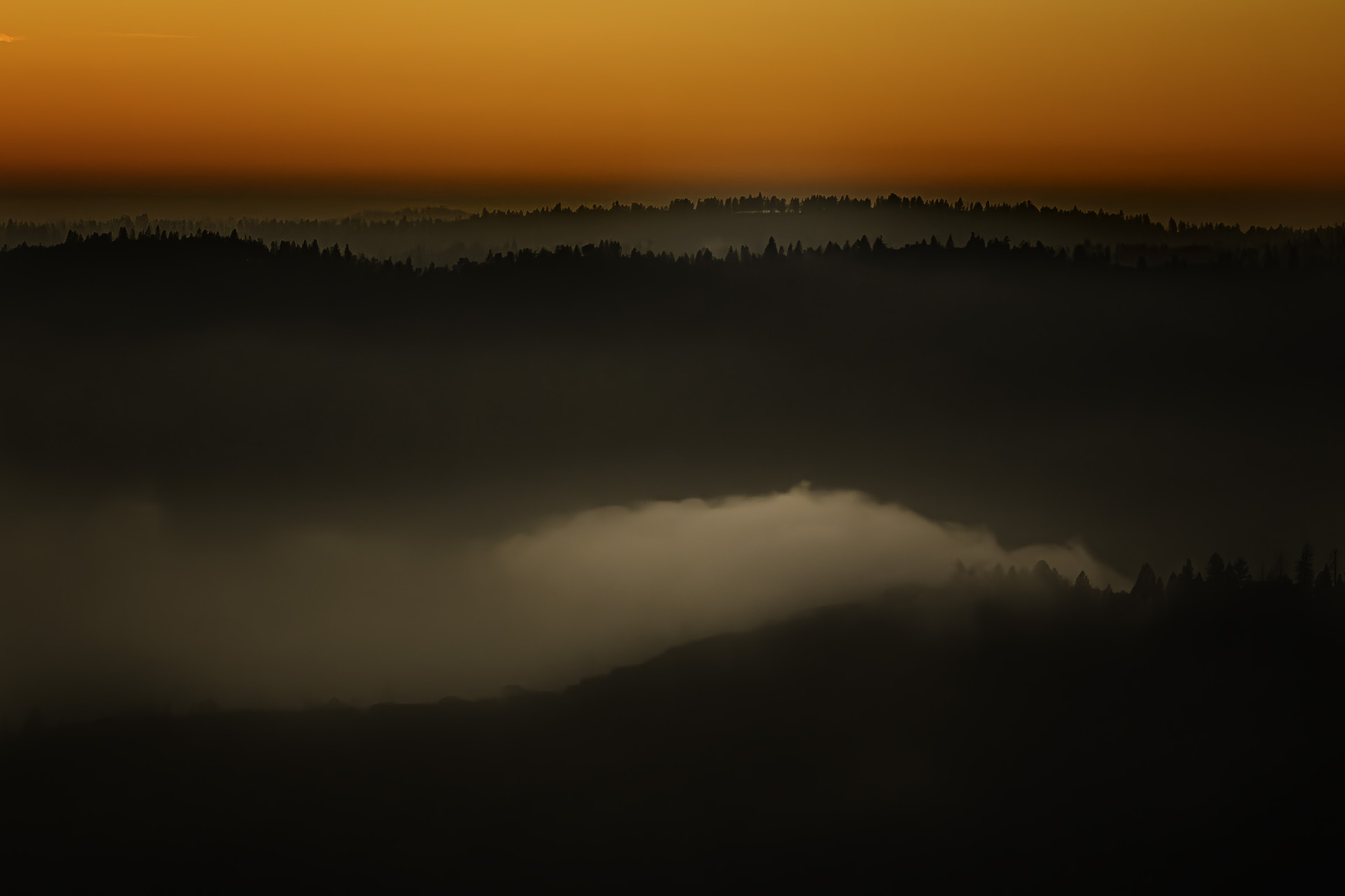
For what seems like an eternity, the Valley has been gloomy, overcast with dense morning fog, and with that damp, bone chilling cold that accompanies the fog this time of year. In contrast, communities in the foothills above 1000 feet have been enjoying the sunshine and warmer temperatures that serve to illustrate their slogan “above the fog and beneath the snow.” This past Friday evening, I briefly escaped the dank foggy cold and visited my friends Pam and Peter at their lovely 2100 foot elevation home in Foresthill for a gathering of board members of the Placer County Photography Club. When we arrived, the fog and overcast gave way to blue sky and sunshine, the likes of which I haven’t seen in weeks here. We actually saw color in the sky at sunset, not the drab gray that kept me from photographing the last full moon of the year. As the sun disappeared and the sky glowed red, we gathered on their deck and appreciated being above the fog.

2025—The Trio

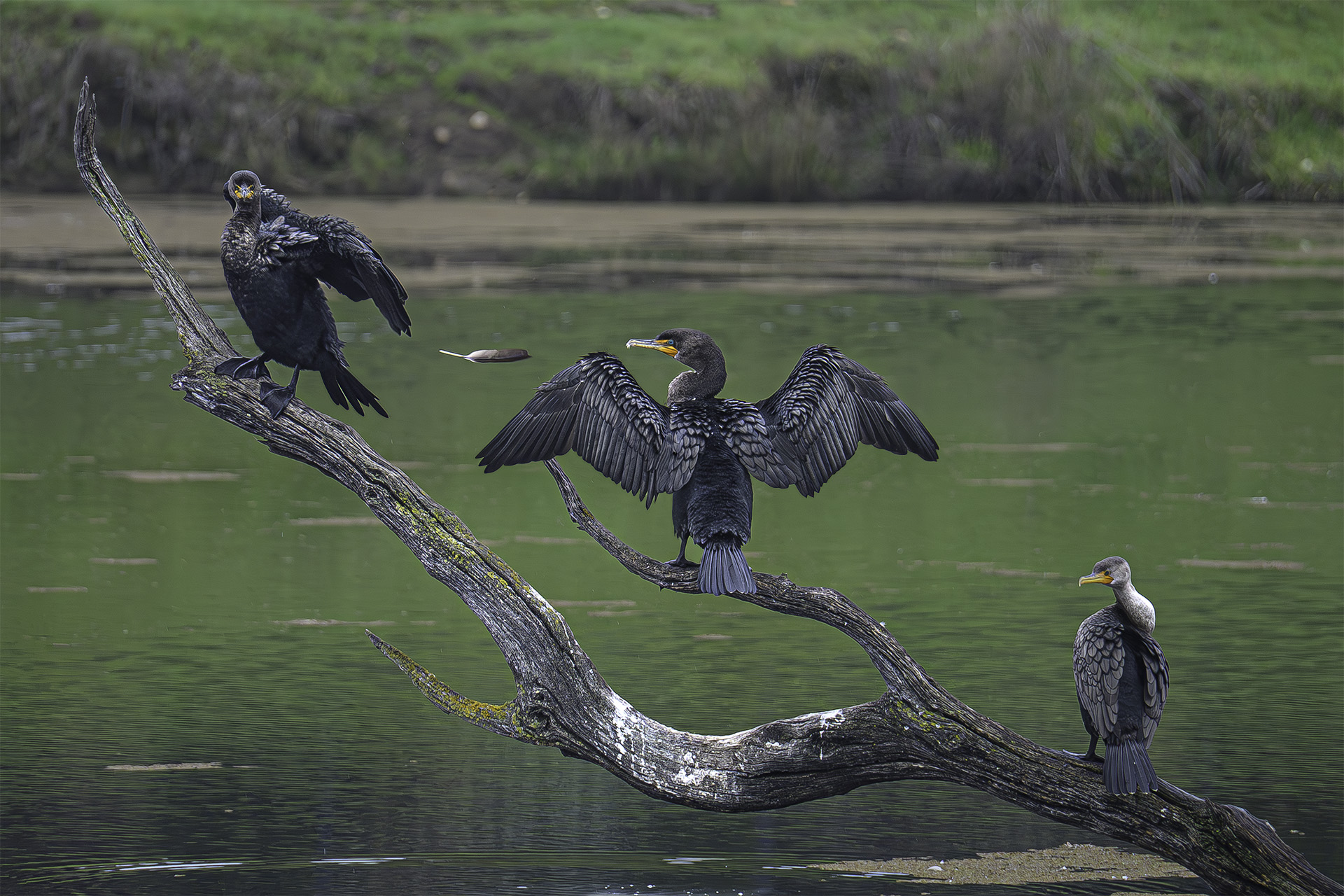
A trio of Double-crested Cormorants gathered on the dead stump in the middle of Ferrari Pond the other morning. The bird in the middle was drying its wings. It is common to see Cormorants with their wings outstretched, drying them, because their feathers are not water proof and they become waterlogged when they dive for fish. As the bird in the upper left preened, one feather detached and floated slowly down to the water. The birds watched the floating feather and as it passed, the middle bird opened its beak in a failed attempt to catch the feather. Then, they watched as the feather, by now shaft down, sliced through the water and disappeared beneath them. I’m discovering that you can never anticipate what you’ll see on any given morning at Ferrari Pond.