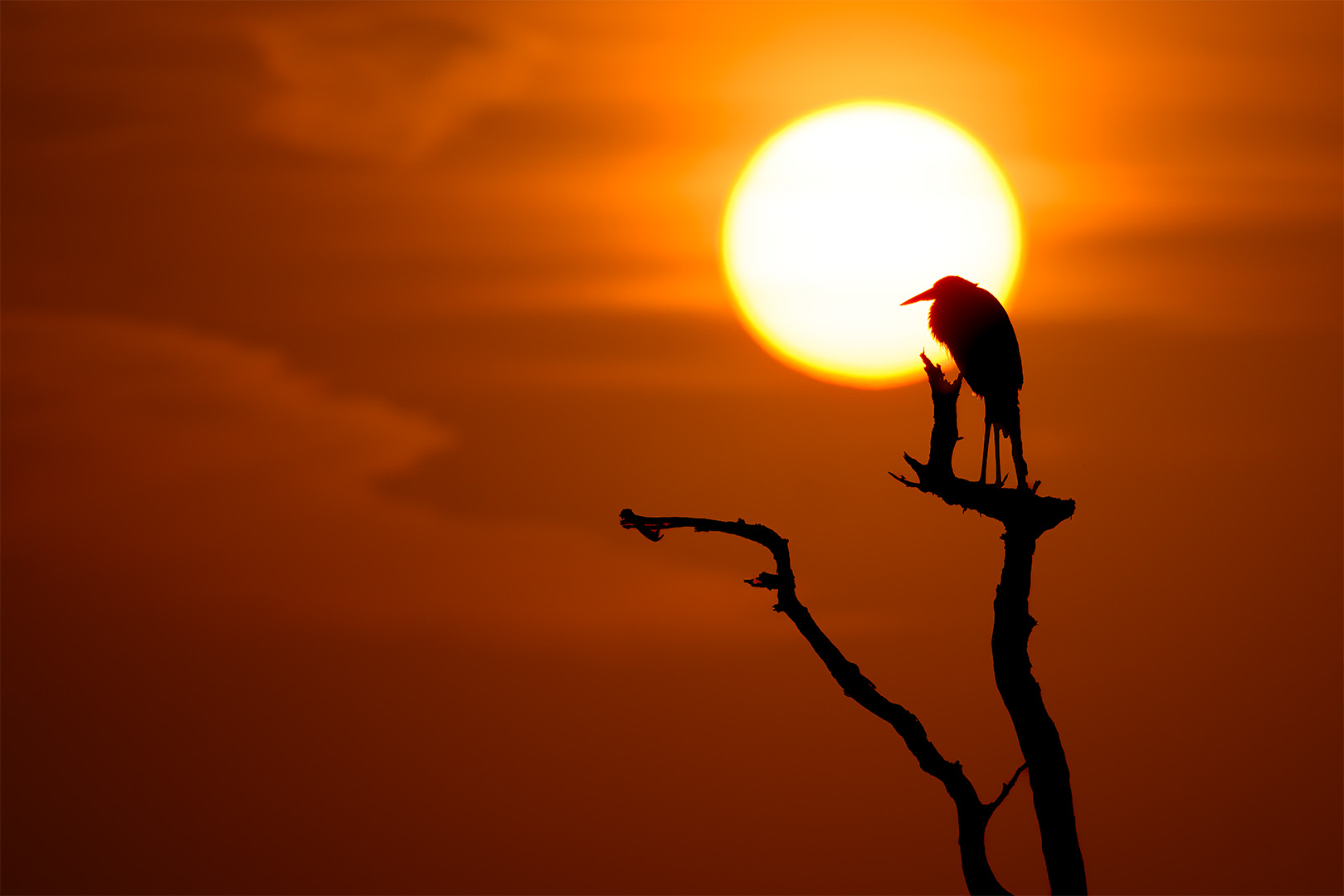
We were hoping for an Osprey but a Great Blue Heron, perched tantalizingly on a dead snag on Grand Isle, Louisiana, made a great Plan B and it beckoned to us to capture its silhouette against the rising sun yesterday morning.
We were hoping for an Osprey but a Great Blue Heron, perched tantalizingly on a dead snag on Grand Isle, Louisiana, made a great Plan B and it beckoned to us to capture its silhouette against the rising sun yesterday morning.
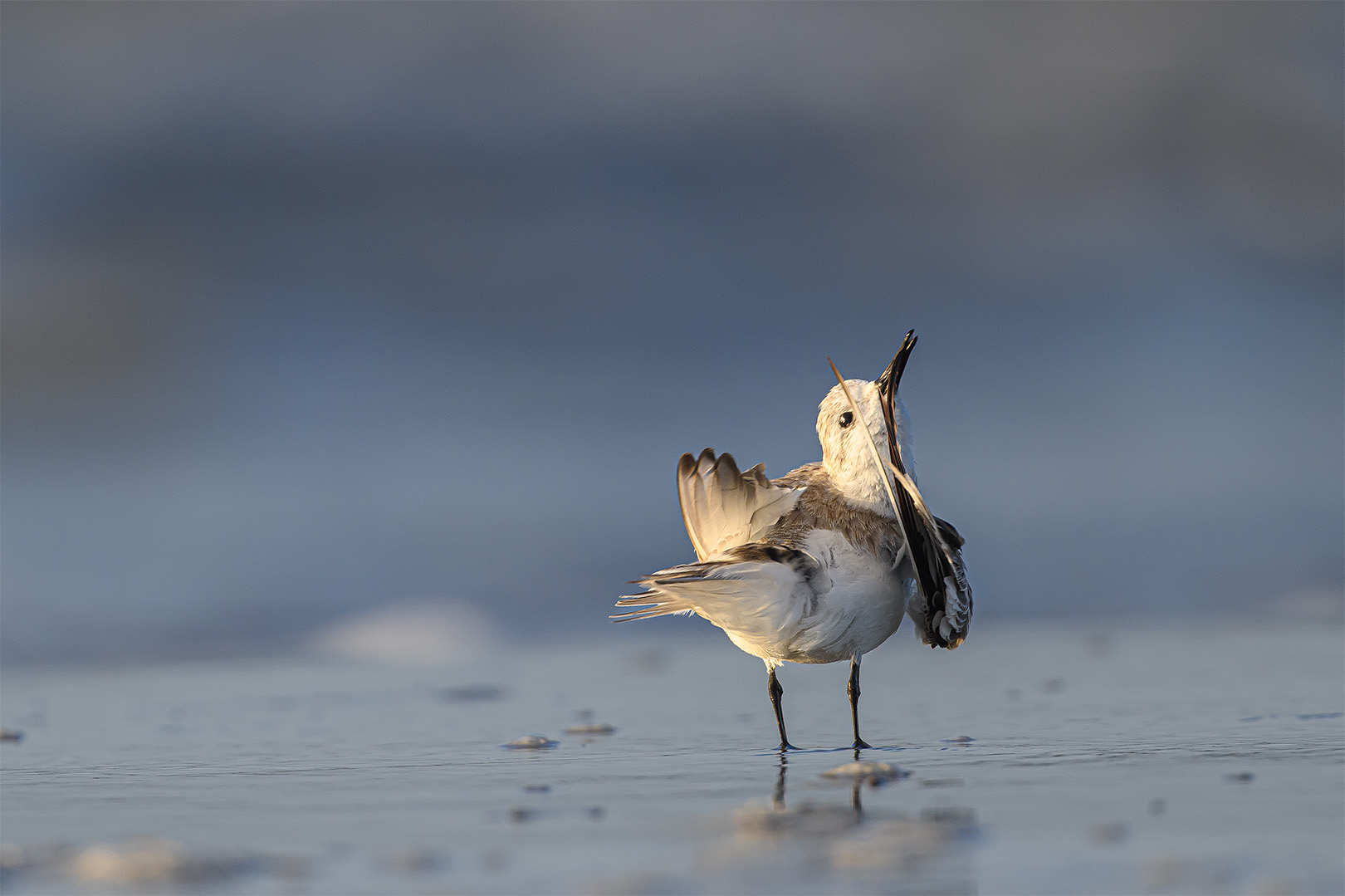
Sanderlings, my favorite shorebirds, rarely stay still for very long. They are always a challenge to photograph because it seems that they endlessly scurry up and down the beach while they seek something to eat under the sand, never stopping. We got to Grand Isle early on Tuesday morning and laid on the sand with our long lenses and panning plates while the sun was still fairly low in the sky. This Sanderling was determined to preen its feathers and stopped in front of my lens to do it. It would scurry a few steps, then stop and grasp a wing feather in its beak, pulling it through to align the barbs. This behavior went on for more than a minute, as it ran a few steps and then stopped and preened a feather, alternating wings. Before this, I don’t think I’ve ever seen a Sanderling take the time to preen. It was fun to watch.

A pair of White Ibis appears to touch beaks in a “V” for Victory sign, celebrating their catch. They spent most of an hour sating themselves with whatever they found in a tiny, isolated puddle of water on the beach far from the edge of the surf in Grand Isle, Louisiana. They feasted mostly on minuscule fish, no more than an inch or so long, that were stranded in the tiny pond. What fascinated me was that time and time again, as I watched them scoop up a fish and flip it up into their beaks, they often as not dropped the fish and scrambled furiously to retrieve it, usually unsuccessfully. Wild nature is a strange and wonderful thing to observe.
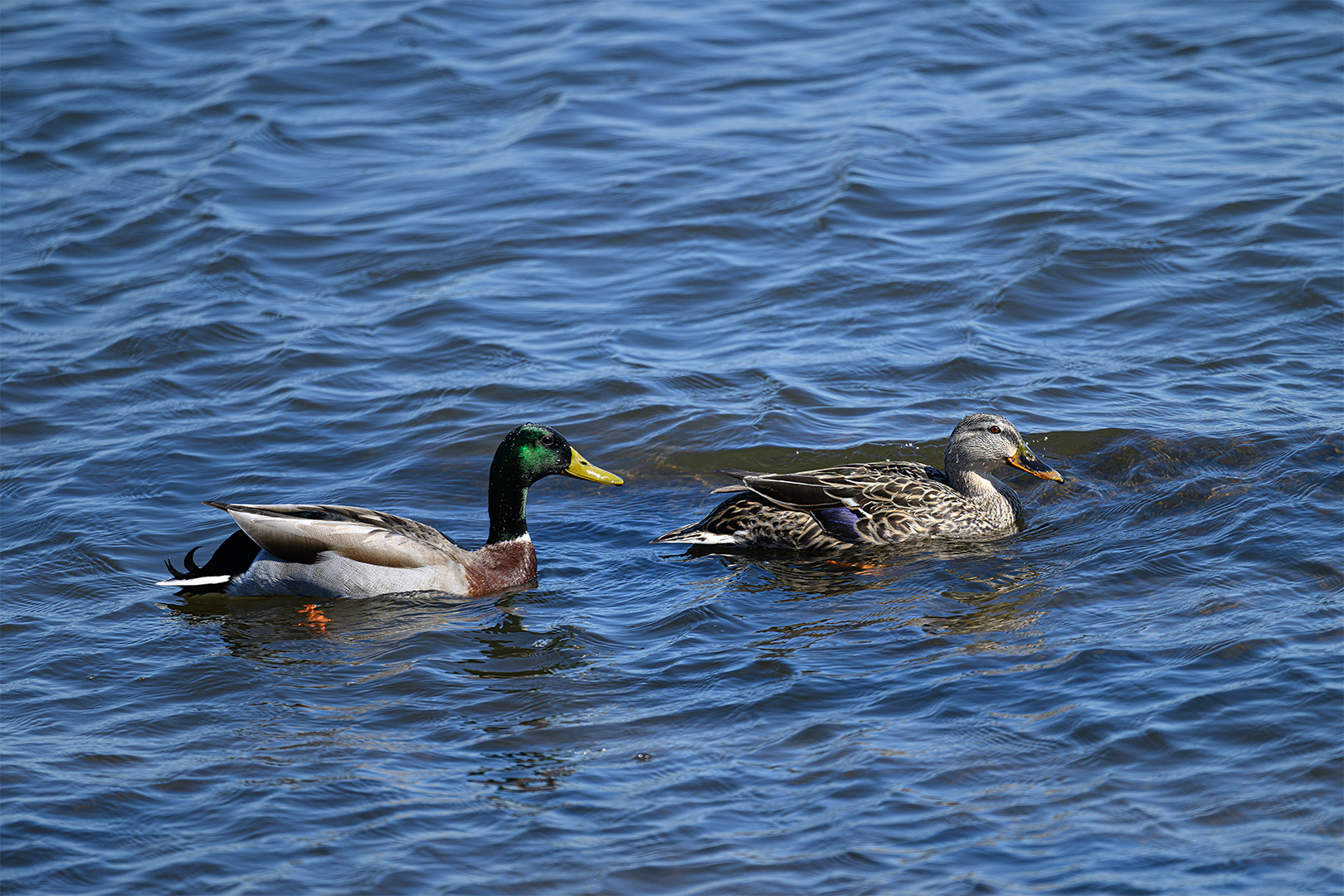
Lake Pontchartrain is an estuary in Louisiana near New Orleans. I flew in a day early for the Grand Isle adventure and discovered that Lake Pontchartrain was across the street from the hotel. Jerry and I walked over to the lake Sunday morning to see what we could see. There were two Brown Pelicans, Louisiana’s state bird, sleeping on a piling out in the lake, some gulls including Laughing Gulls, and a pair of Mallards paddling by as we watched from the shore.
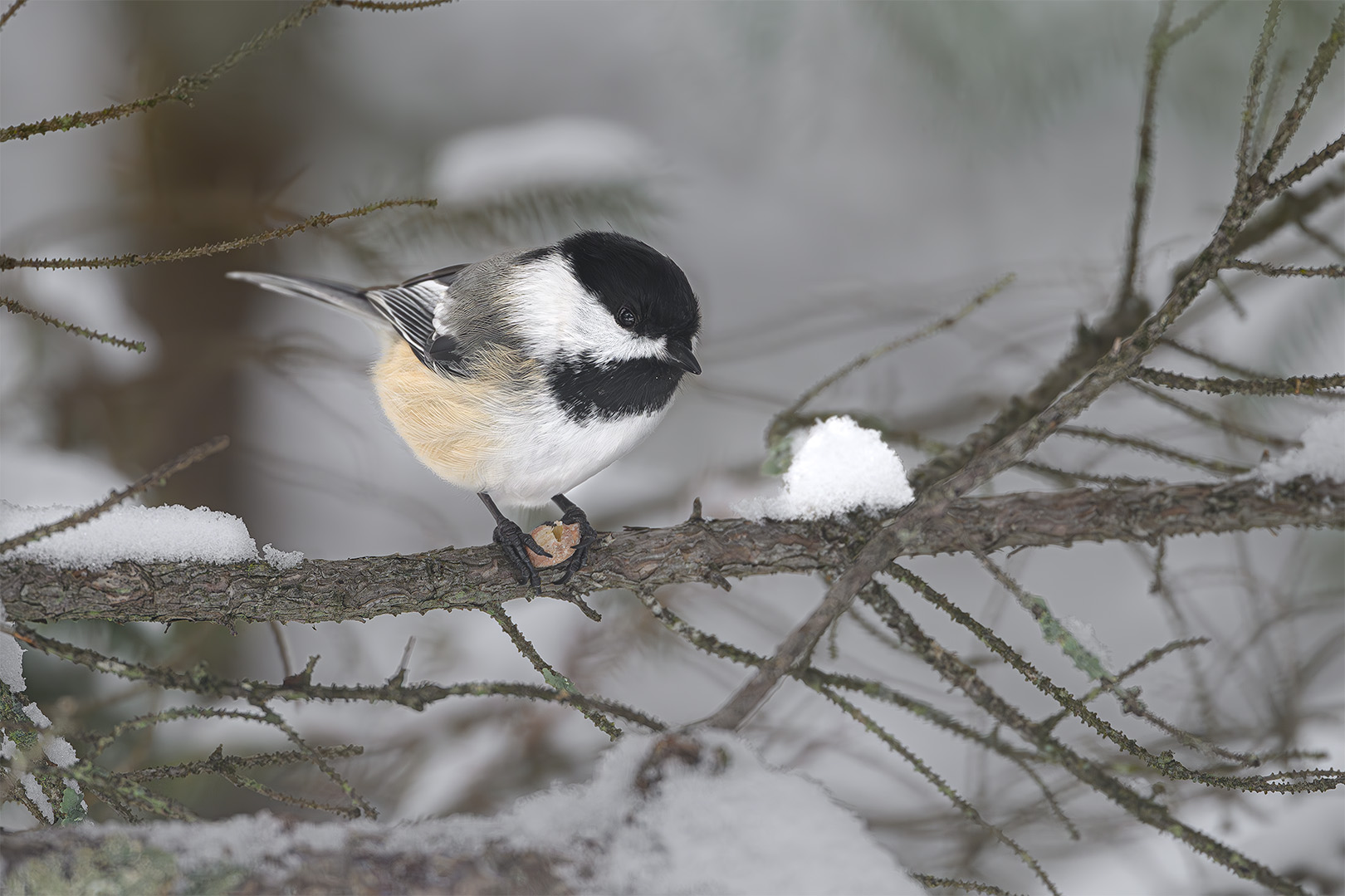
The tiny Black-capped Chickadees that are ubiquitous in Sax-Zim Bog are always delightful to watch. This one grasps a nut in its feet as it excavates the nutmeat.
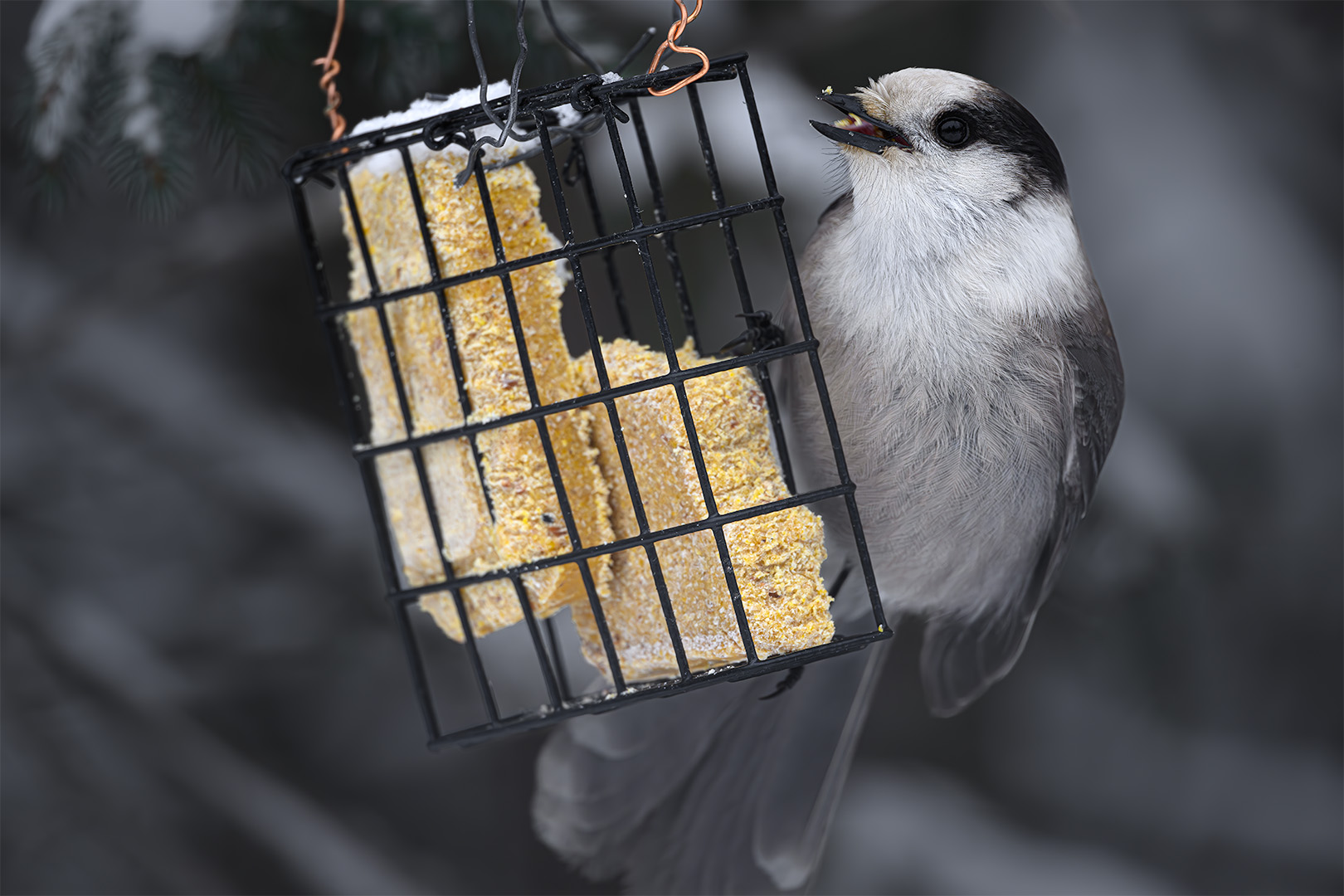
When I’m photographing birds that are attracted to the area because there are feeders there, my goal is to exclude the feeder from the image so that the birds look as natural as possible in their natural habitat. Sometimes, though, I find the bird’s interaction with the feeder to be charming as in this shot of a Canada Jay carving off bits of frozen suet. The bird’s expression is one of delight at having found sustenance in this cold, frozen place. In Sax-Zim Bog this past January, we took a half mile walk through the snow to a feeding station behind the visitor’s center. There were few birds there but a Canada Jay entertained us for a few minutes as it hung from a suet feeder. The feeder itself, with twisted wire closures, shows the efforts of the Sax-Zim Bog volunteers to keep the Red Squirrels from devouring the suet meant for birds.

The rain and wind are wreaking havoc with the Saucer Magnolia. Its buds are almost all opened now and the tree is covered with pink “saucers” but many of them are missing petals and the ground around the tree is littered with pink petals. I took this before the latest storm and before most of the buds opened. They’ll all be gone when I return from my trip this coming week. I’m glad I had a couple of weeks to enjoy the show.
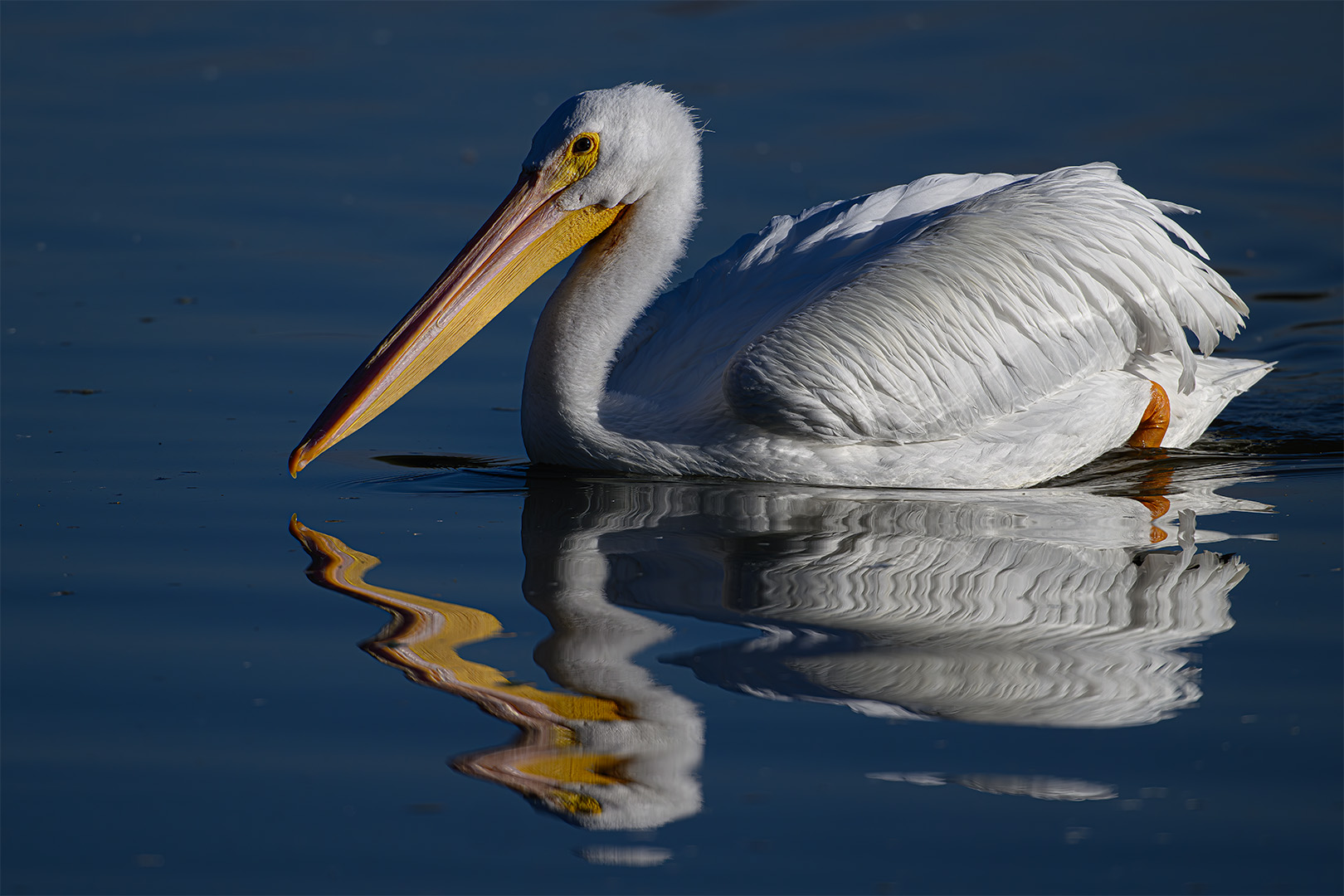
When a pond’s surface isn’t still, the reflections in it aren’t like those seen in a mirror…unless you’re in a funhouse where the mirrors create all kinds of distorted reflections. When this American White Pelican paddled across a pond in Arizona this past November, the pond’s surface was ripply from all of the bird activity in it so that the Pelican’s reflection was more like that seen in a funhouse than in a regular mirror. The reflections are sort of Dali-esque; not showing melting pocket watches as in Dali’s 1931 surrealist painting “The Persistence of Memory,” but appearing more like a melting beak. It’s almost as if the Pelican were swimming in a funhouse.
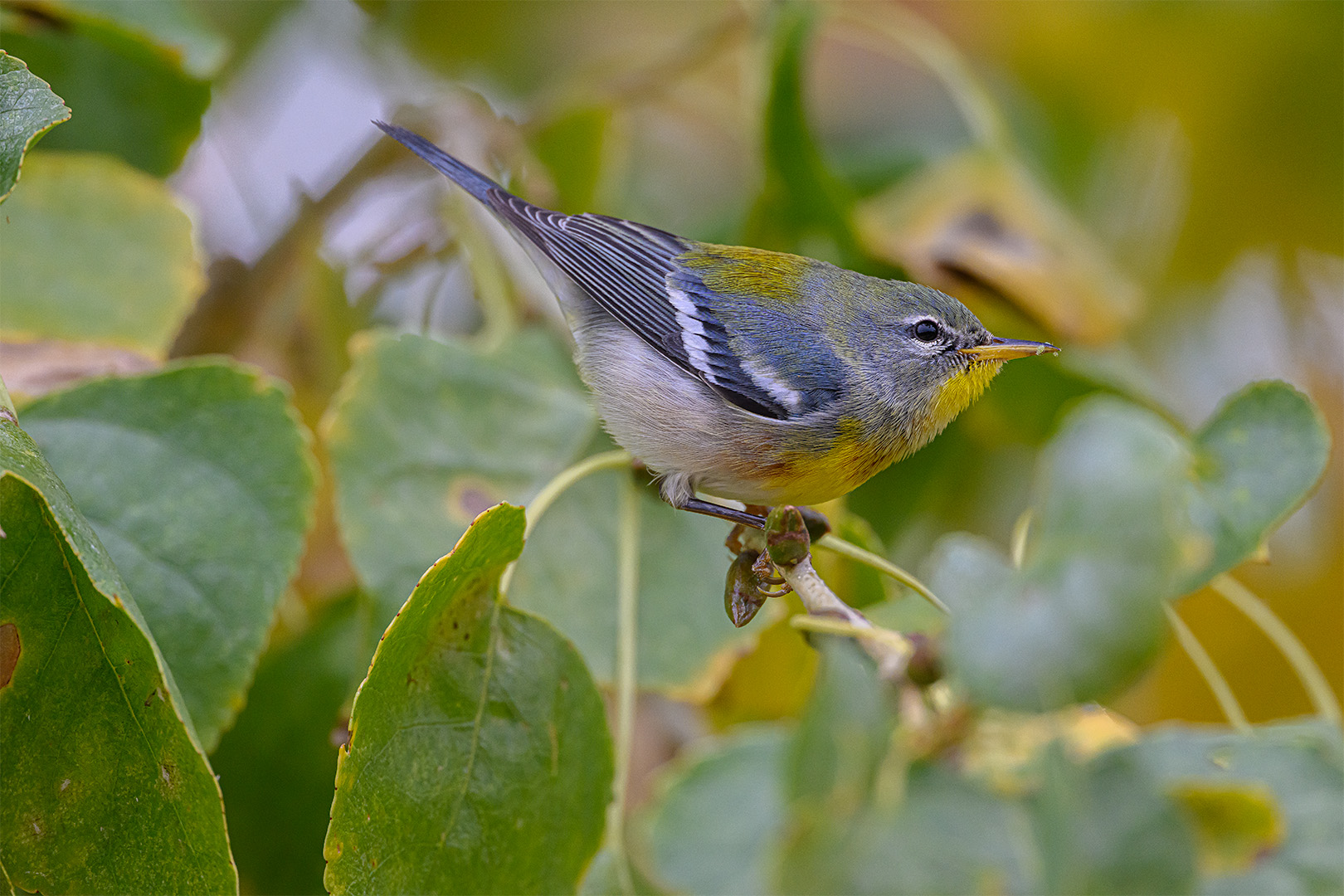
The Cottonwood tree that attracted so many warblers in Arizona in late November hosted lots of different warbler species including this Northern Parula, which until that day in Arizona, I’d only seen onae in Ohio at Magee Marsh as many species of Warbler migrated north across Lake Erie to their nesting grounds. The beak of this Northern Parula is covered with tiny aphids. Those tiny bugs probably stuck to the outside of its beak, instead of being swallowed, because as the bird scooped up the bugs, its beak became coated with the sticky honeydew that aphids secrete.
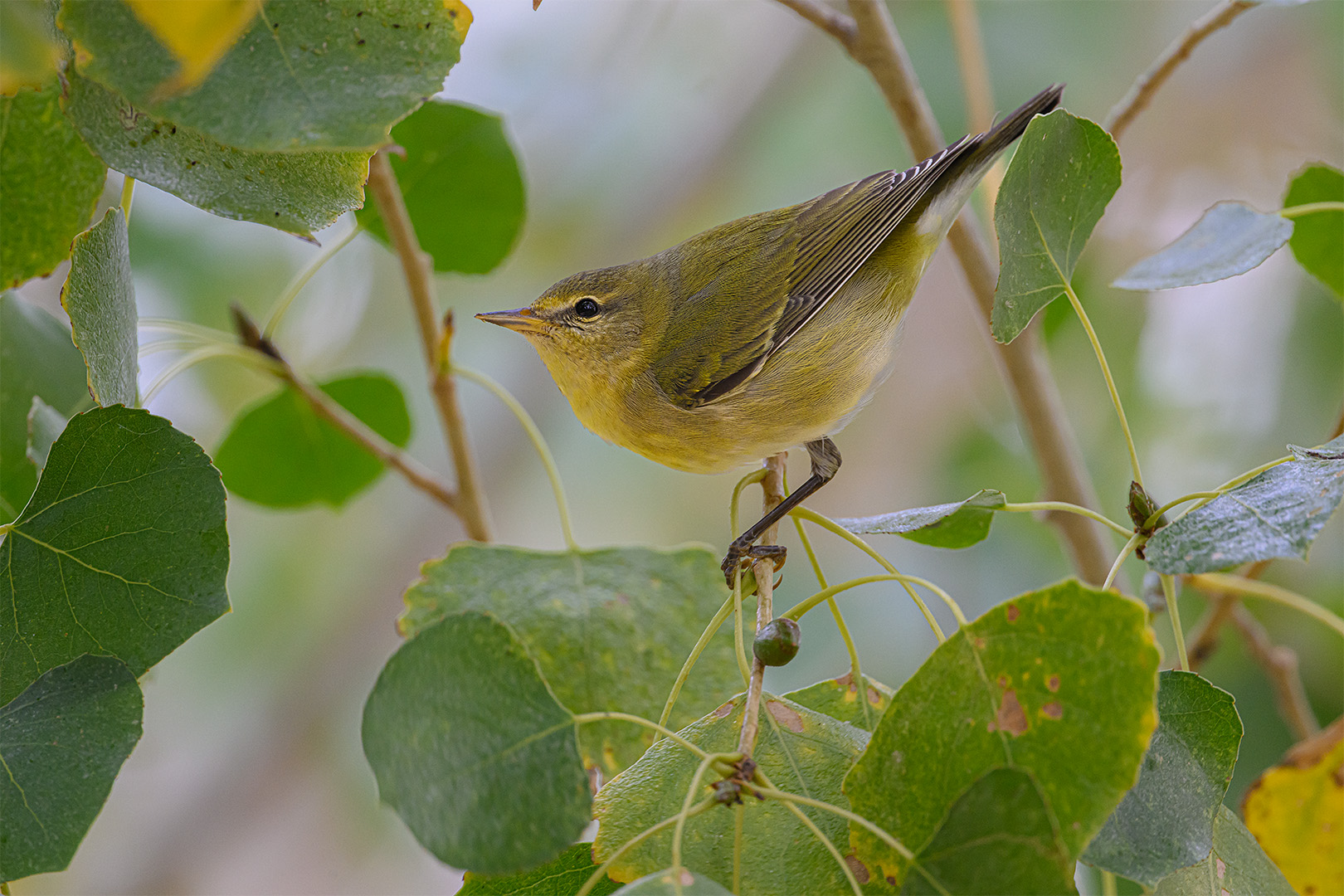
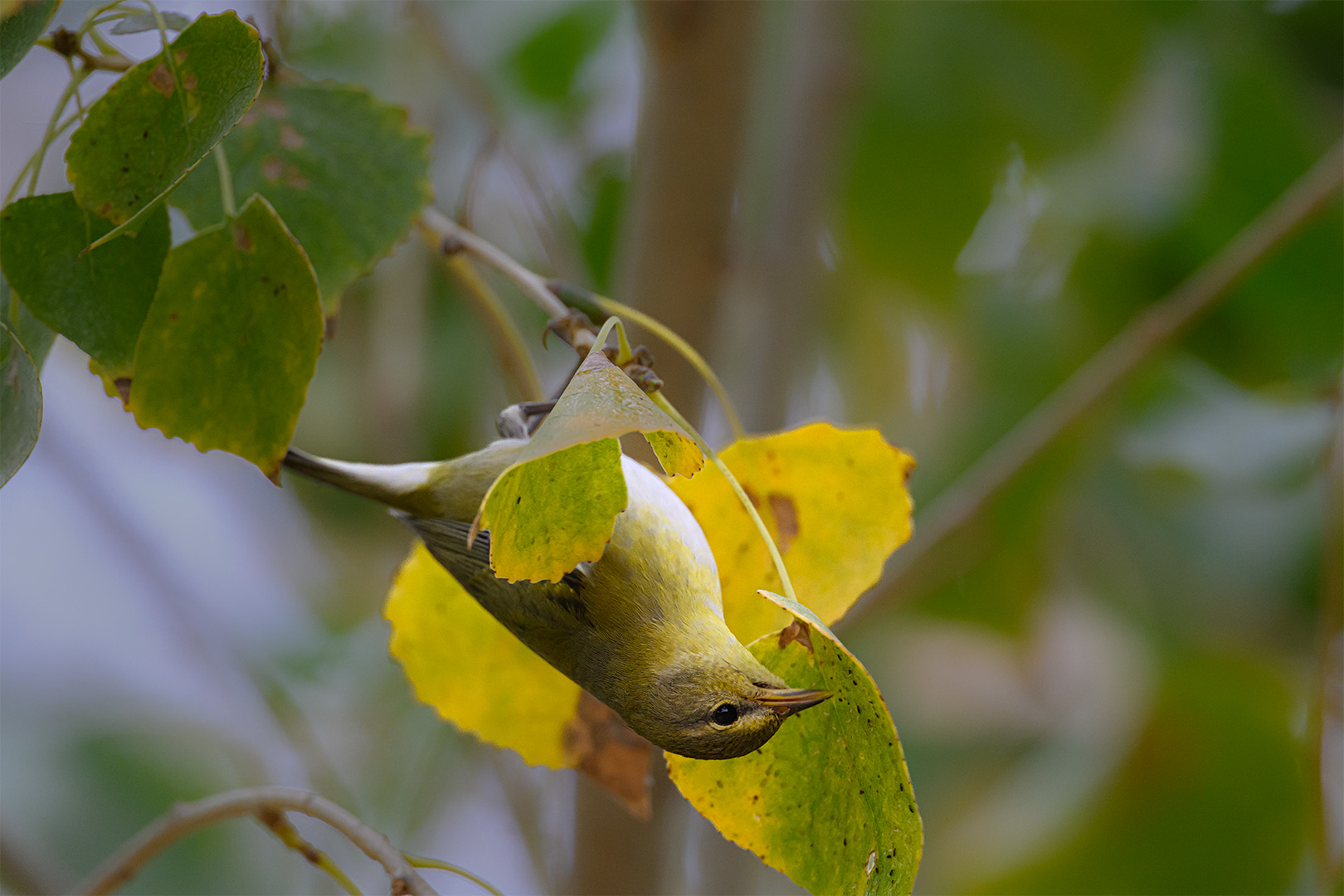
In Arizona in late November, we spent time each day photographing warblers in what I called the Warbler Tree, a Cottonwood on the edge of a pond that was attracting lots of the tiny birds. The reason for their presence in the tree was the abundance of aphids which in the first image are visible as black dots on the leaves at the upper left and in the second image on the leaf by the warbler’s beak. Late one afternoon, a Tennessee Warbler feasted on the aphids showing off its acrobatic abilities by hanging upside down in order to reach the tiny insects.
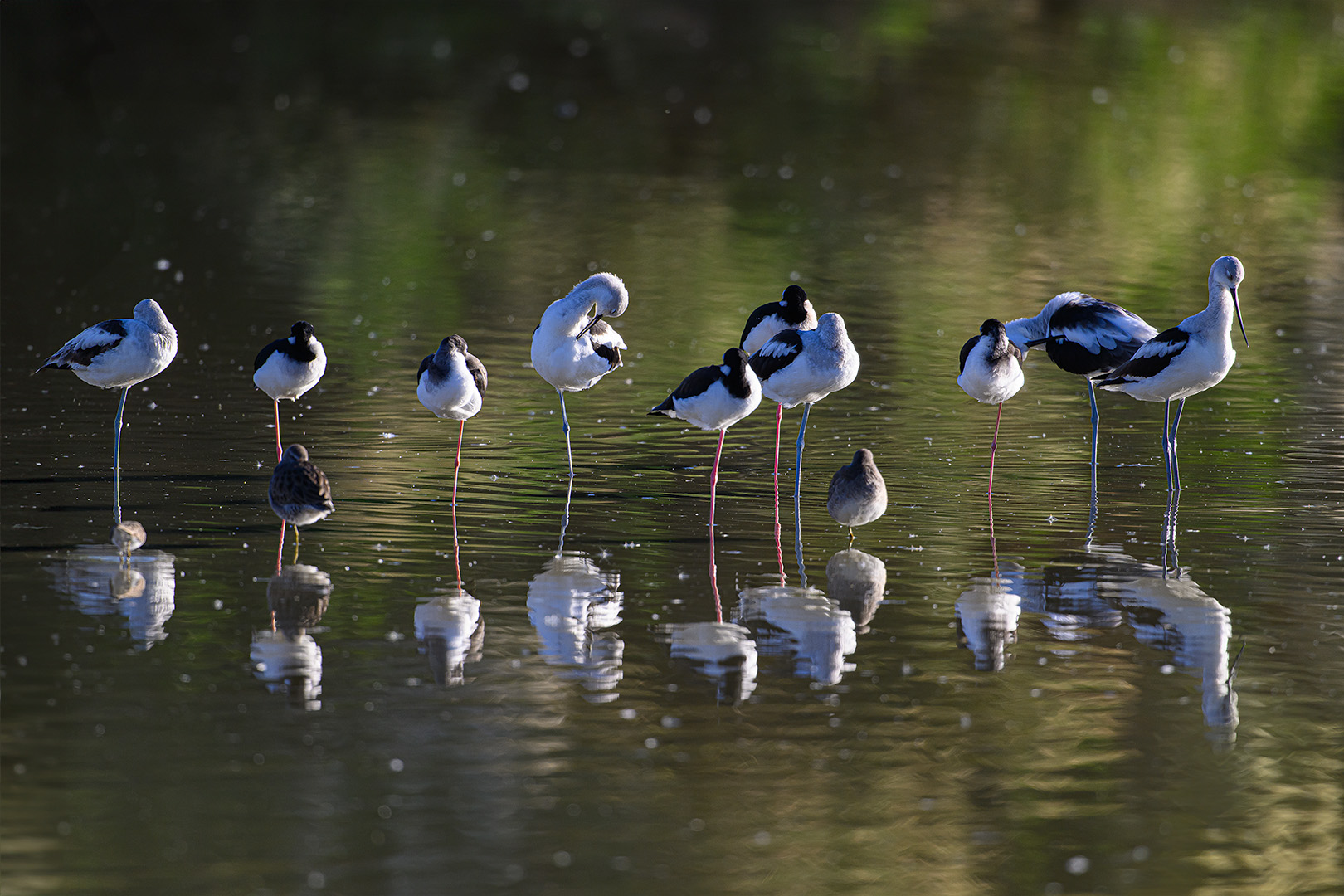
The reflections make their already impossibly long legs appear twice as long. I call it the Stilt Brigade, a group of gray-legged American Avocets in winter plumage and pink-legged Black-necked Stilts lined up in a shallow pond in Arizona in late November to preen and nap, most balanced on a single leg. There are a couple of smaller shore birds joining the line-up, possibly Dunlins and one very small peep I can’t identify.
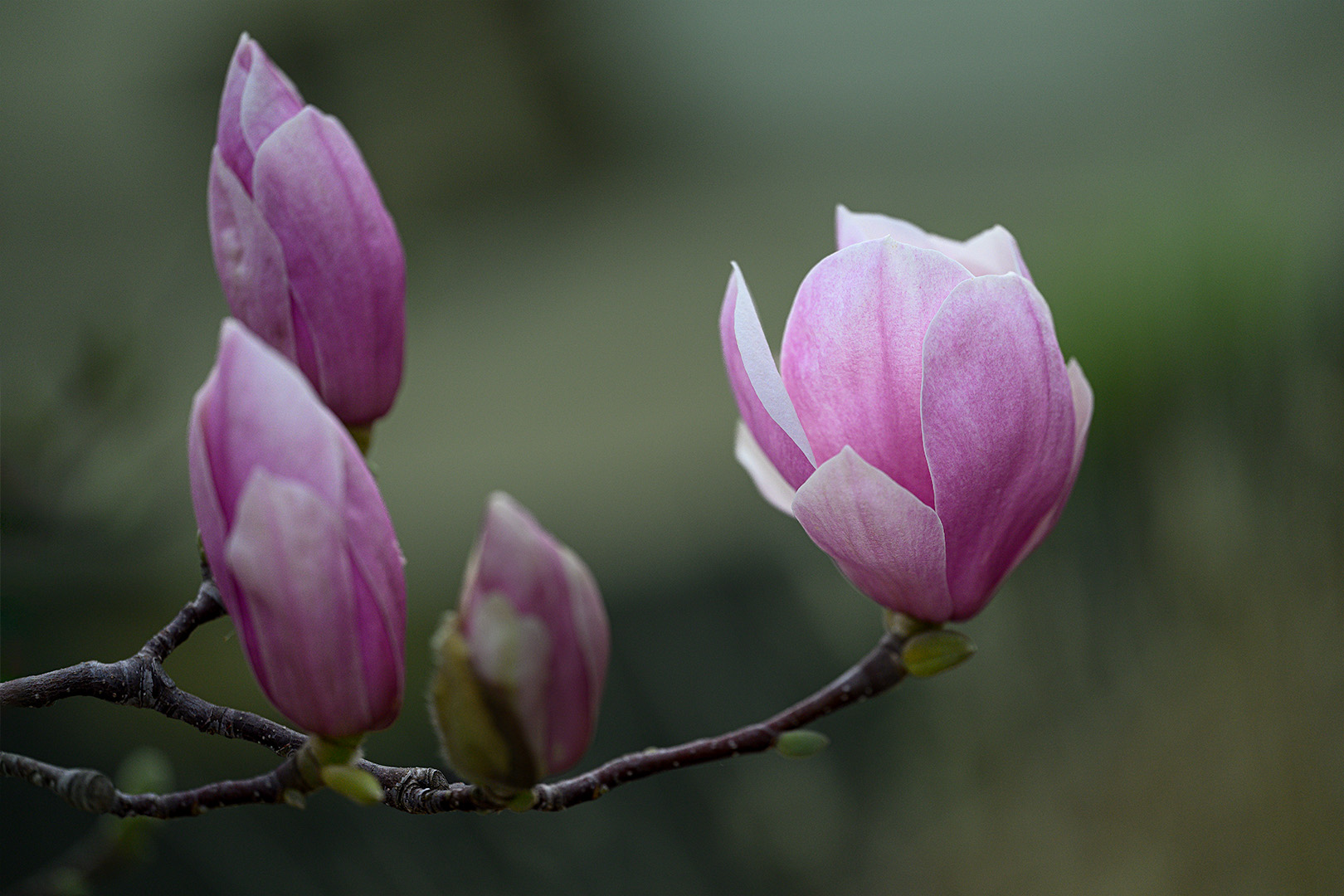
Spring is approaching and I am discovering lots of spring bloomers I didn’t know lived in my new garden. I am thrilled with what I’m finding. This is a Saucer Magnolia and the front yard tree is resplendent in pink buds, some starting to open. Even before I moved in this tree seemed special because hidden among the leaves I found a sequined bird with real feathers clipped to an interior twig. I left that little bird there. It seemed like a nice place to perch. Other discoveries include daffodils along the front walkway, freesia (my favorite spring flower) and other bulbs that I can’t identify yet. I can’t wait to see what else I discover this spring.
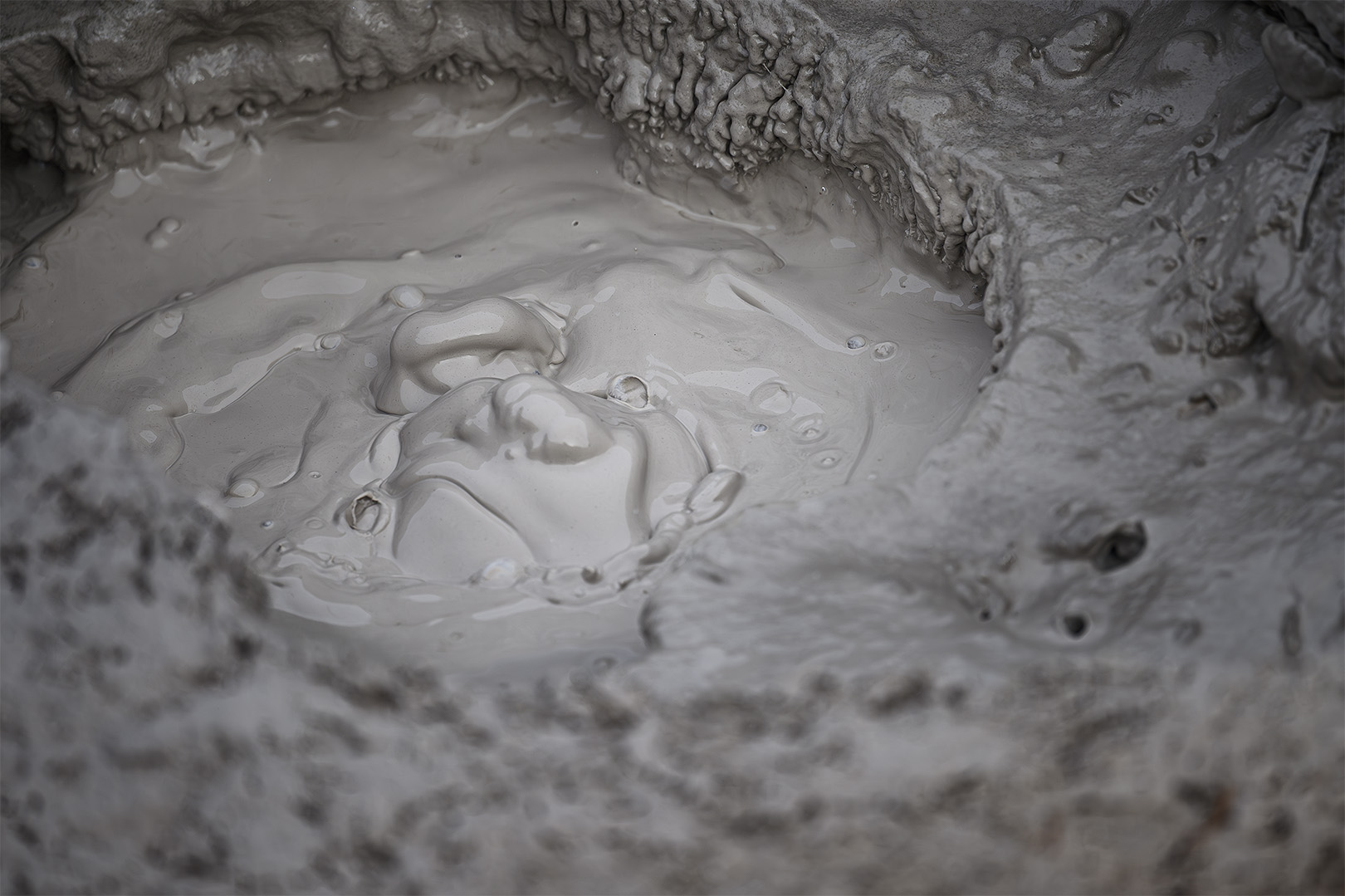
You just never know what (or who) might emerge in the bubbling mud pots of Yellowstone. In yet another “Carolism” post, I once again see things that others might not see. When I first looked at this bubbling mud, frozen in time by my camera, I saw Elmer Fudd. But the more I looked, it morphed into Oliver Hardy without a mustache. Then, I realized it looked like Joe E. Brown, a comedic genius from the 1920’s and 30’s, whose face and mouth were elastic. Who do you see?

Coyotes in Yellowstone live and thrive in its severe winter conditions. With their thick coats that shield them from the cold, their uncanny ability to sense prey beneath a blanket of snow, and their fearlessness to feed on a carcass claimed by wolves, they exhibit what it takes to survive in such an unwelcoming environment. This Coyote is about to pounce on an unsuspecting meadow vole burrowing through the snow. The expression of concentration makes it clear what on its mind at this moment.
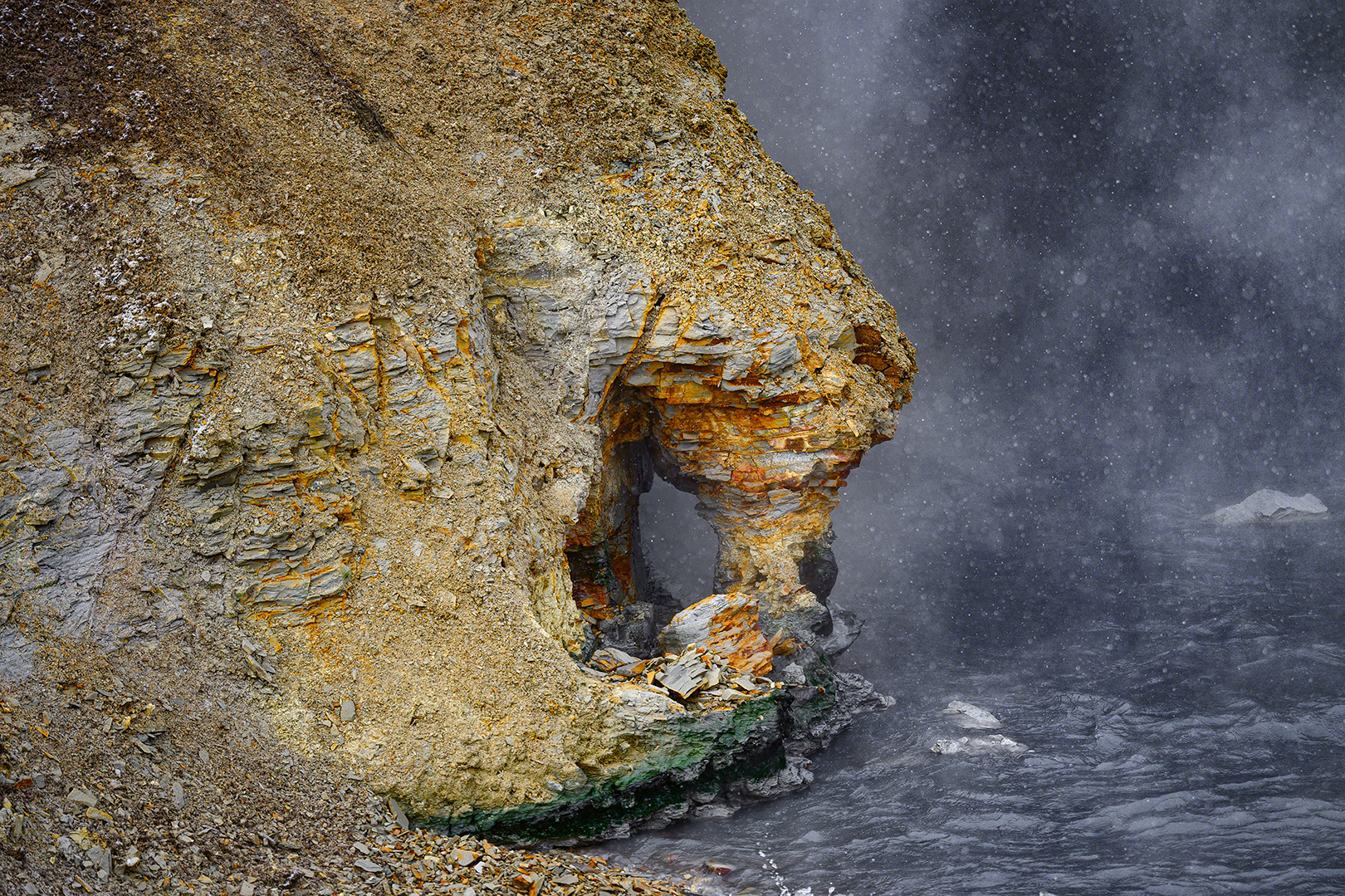
Sometimes I see something that I want to photograph that others just don’t see the same way I do. My friends have taken to calling my whimsical discoveries “Carolisms.” In Yellowstone a few weeks ago, when we walked up to Dragons Mouth Spring, I immediately saw a Kodiak Brown Bear eating a Salmon, something I witnessed first hand on Kodiak Island in September. No matter that the Dragons Mouth was spewing steam and the snow was falling in front of it creating a fascinating display, I was drawn to the rock formation in front. I could see nothing else but the bear eating the salmon, cupping the fish with its massive paw. Weeks later, I still see that bear. Do you see what I see?
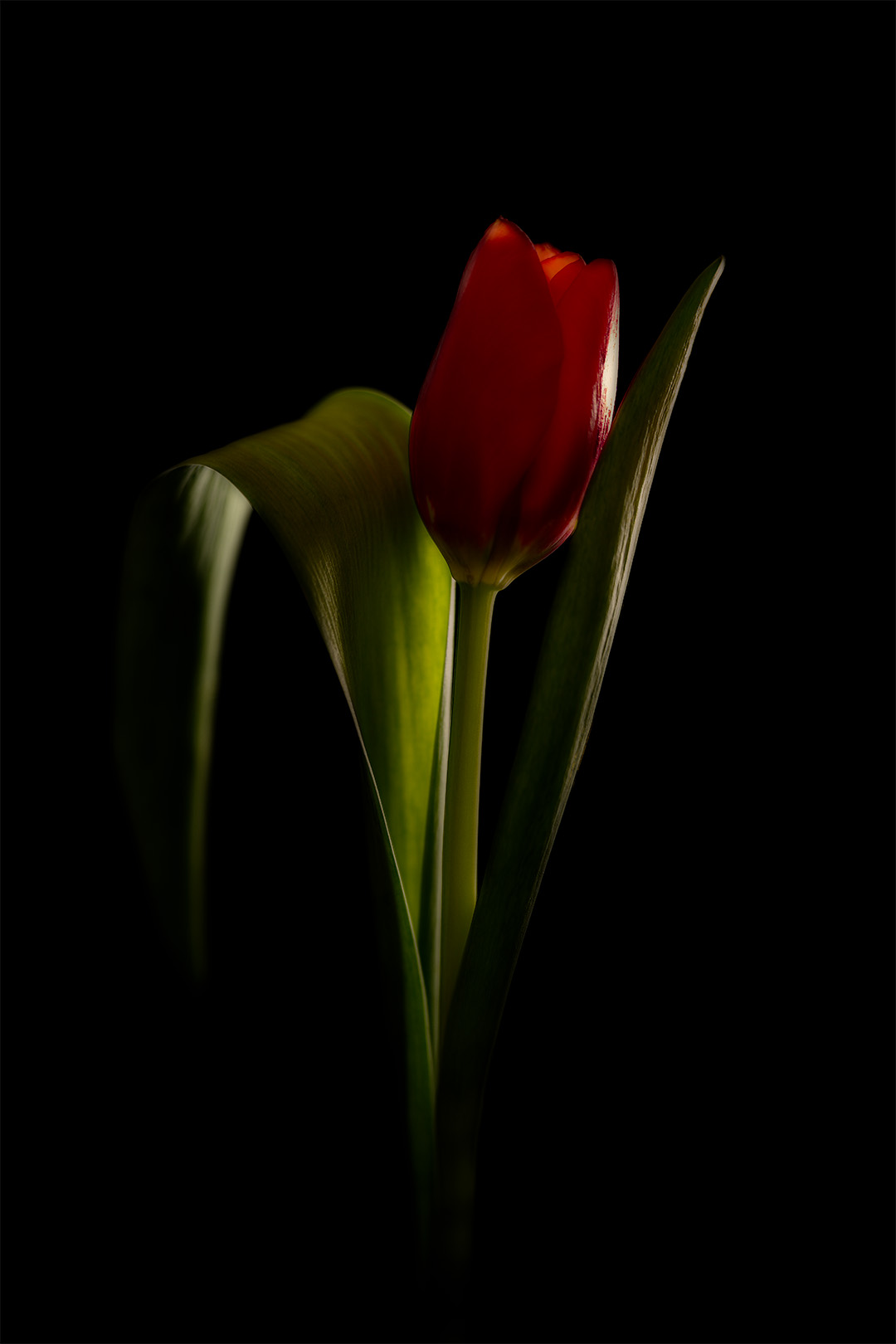
According to Martha Stewart, a red tulip expresses love. Appropriate, I suppose, for Valentine’s Day. In my case, I bought a bouquet of red tulips for myself at the grocery store because I thought they were pretty. Happy Valentine’s Day.
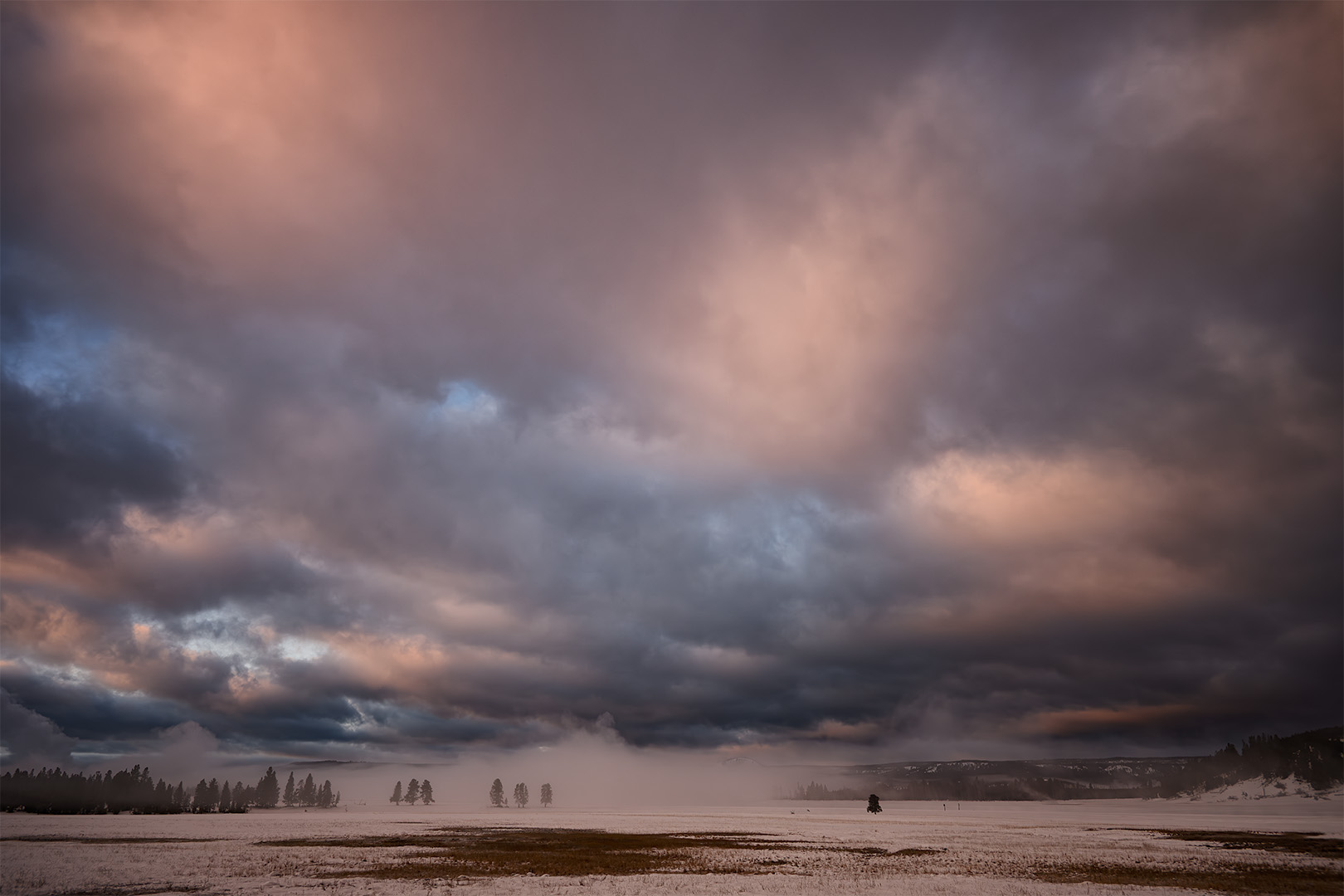
It wasn’t until our last morning in Yellowstone this past January that we finally had color and character in the sunrise. It was cold enough that the mists from the hot springs filled the landscape with its sulfury steam and the sun finally poked through the cloud cover enough to tinge them with pink. The afternoon before on this same meadow, we watched a black Gray Wolf trotting across to meet up with its pack mates but not before stopping and rolling around in some rotting thing it discovered along its path. Dogs will be dogs, after all.
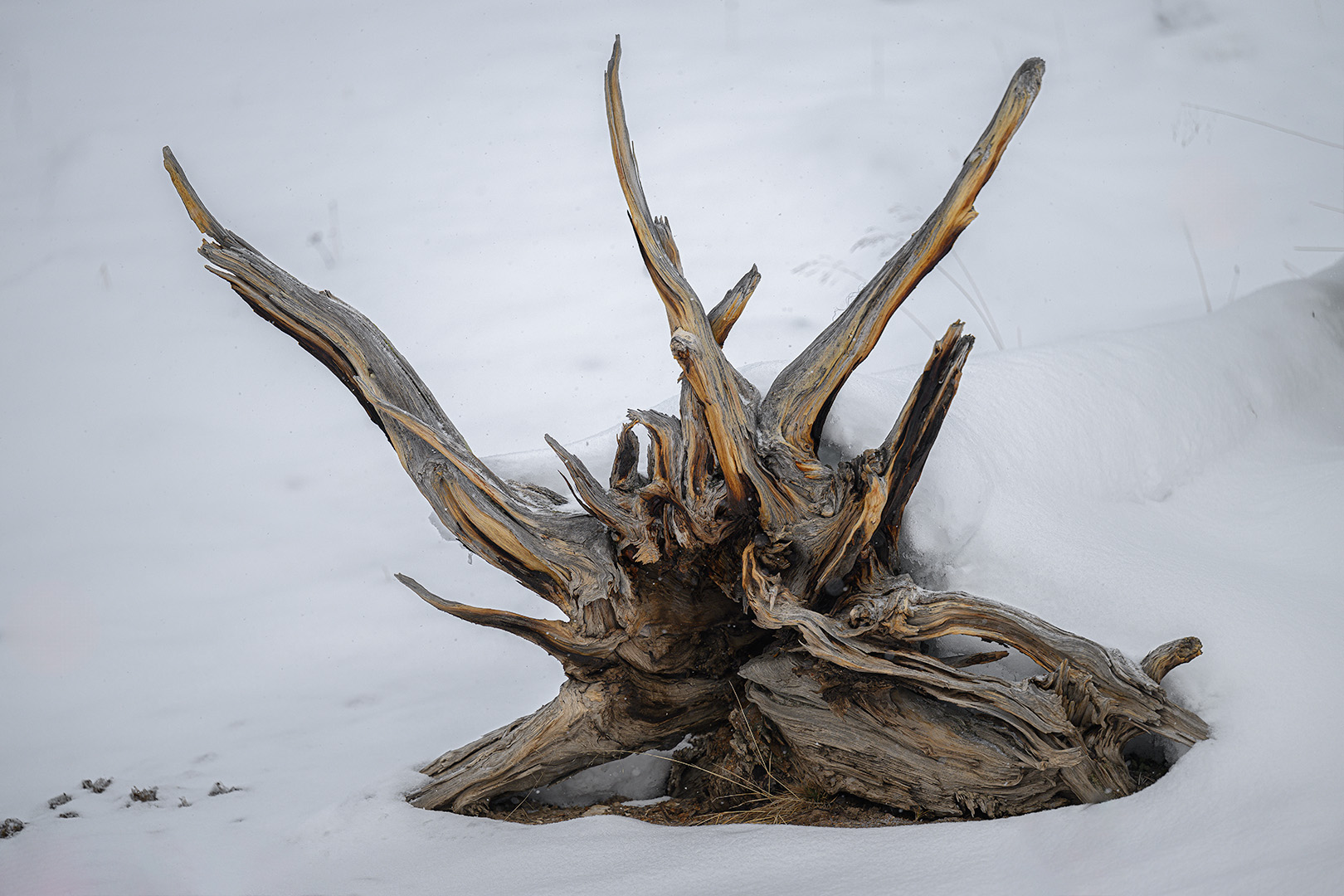
When I was in Yellowstone National Park a few weeks ago, there did not seem to be as much snow as I have seen on other trips there in January. Everywhere we visited, I noticed fallen trees, their bare roots extended into the air, something I had not noticed on previous visits. These were not necessarily newly uprooted trees, however. I’m guessing they were more noticeable to me because the snow was not deep enough to cover them. The bare roots jutted upward and, what snow there was made them stand out instead of blending into the forest background. When we visited the Mud Volcano area, I noticed this root “sculpture” to the side of the boardwalk and to me it was the most compelling of the many root “sculptures” I saw in the park that week. I keep thinking I see faces or animals in the twisted roots and grainy texture of the wood but I’ll leave it up to your imagination to find your own.
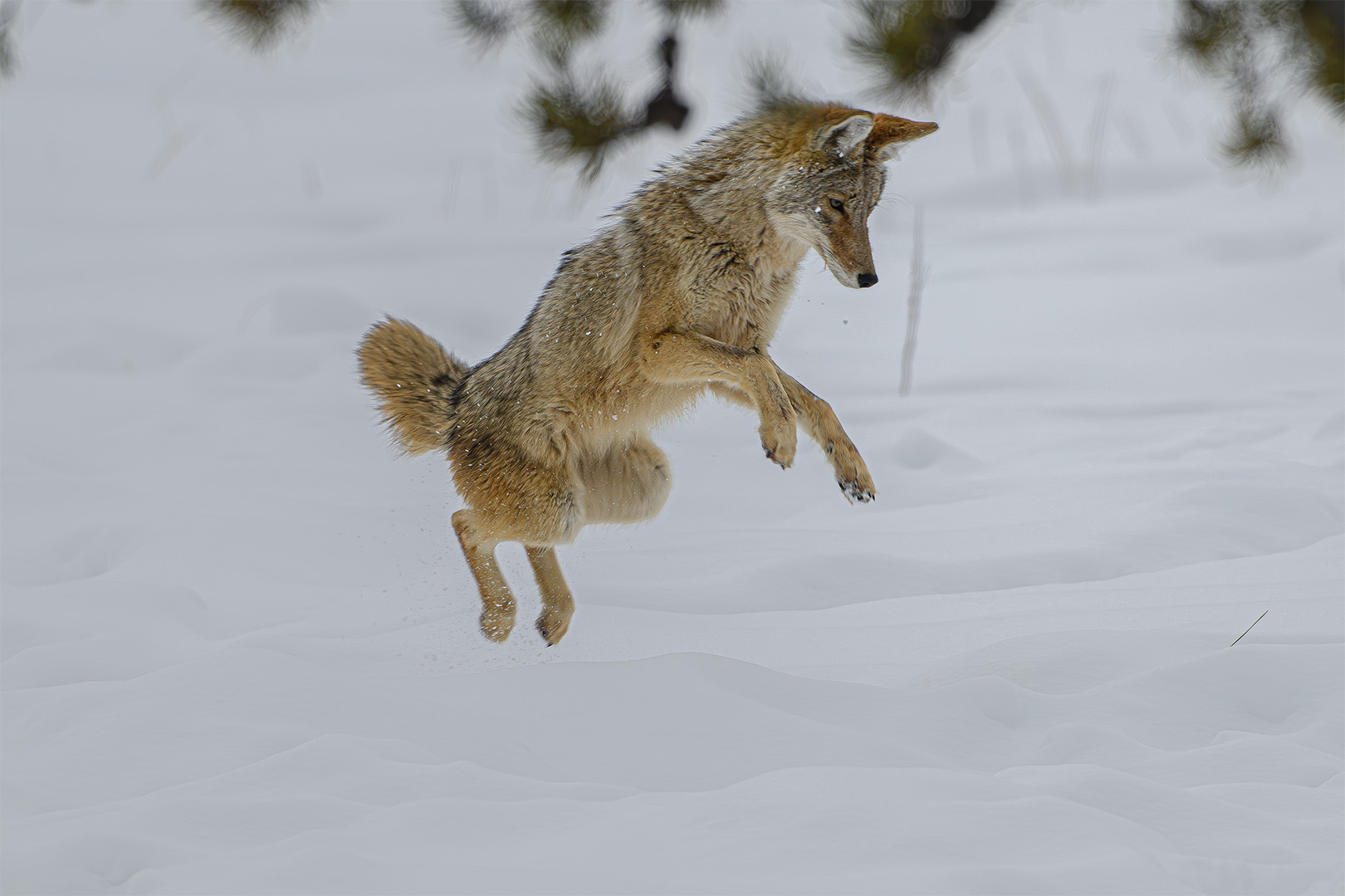
A Coyote in Yellowstone National Park springs into action after sensing something to eat under the snow. Their concentration and their ability to precisely target keeps them fed in this harsh environment. When you see them cock their heads, you know they’re targeting something under the snow and soon will pounce on their prey so it’s time to focus and be ready to shoot the action.

Two Gray Wolves met up in the middle of the roadway in Yellowstone National Park a couple of weeks ago, then both crossed the road in front of us and retreated to the hillside. The Black Wolf had been resting on the hillside and its flanks were still covered with snow as it ambled down and crossed the road, greeting the other wolf as it returned from feasting on the bull Bison carcass in the Firehole River.